- Product Description Description
- Table of Contents TOC
- List of Table & Figure LOT
- Get Free Sample PDF Sample PDF
Market Size, 2025
$8.86 BnMarket Estimate, 2026
$9.39 BnMarket Forecast, 2034
$14.93 BnCAGR, 2026–2034
5.97%Executive Summary: Europe Power Transformer Market
- Market Scope: Comprehensive regional analysis of the European power transformer market covering power ratings, cooling methods, phase configurations, end-user verticals, and grid modernization frameworks.
- Market Valuation: Valued at USD 8.86 billion (2025), estimated at USD 9.39 billion (2026), and projected to reach USD 14.93 billion by 2034, registering a steady CAGR of 5.97% (2026–2034).
- Primary Growth Drivers: Aggressive transition toward renewable energy integration, extensive grid modernization initiatives, replacement of aging infrastructure, and carbon neutrality mandates. Key opportunities are boosted by IoT-enabled smart transformers, biodegradable oil cooling, and EV infrastructure.
Key Market Segment Metrics (2026–2034)
| Category | Leading Segment (2025 Position) | Fastest-Growing Segment |
|---|---|---|
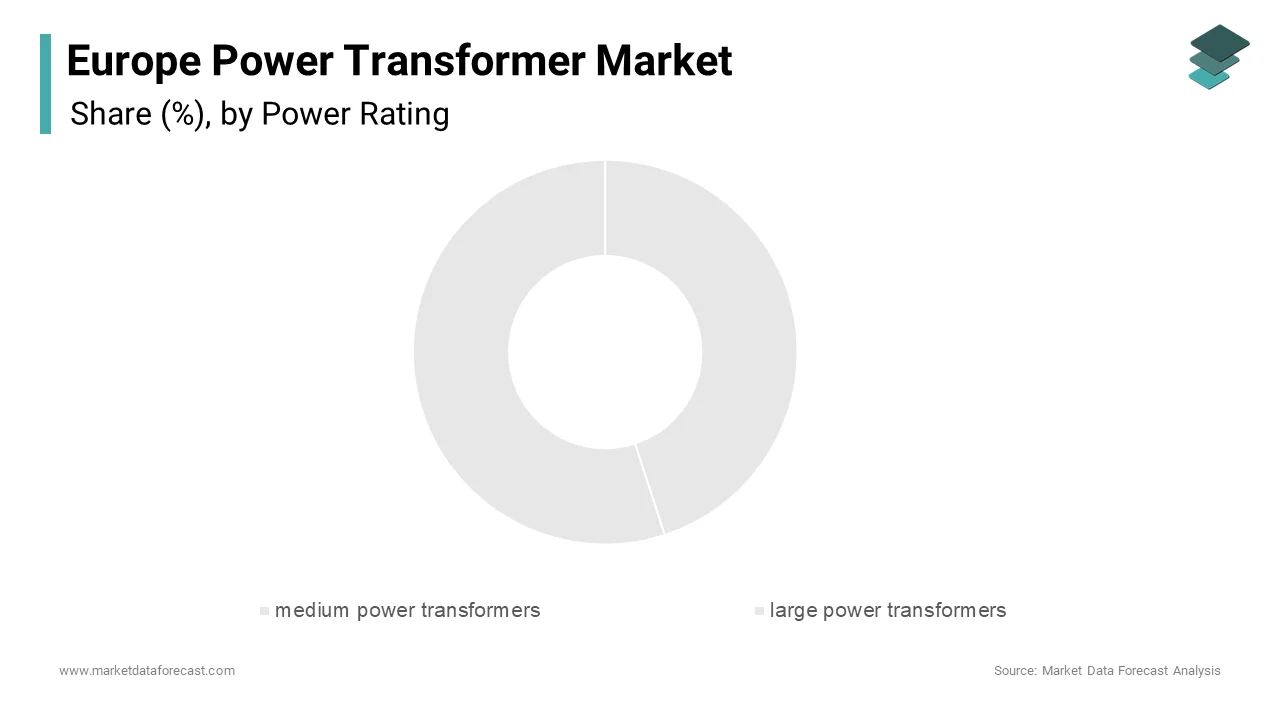
| By Power Rating & Cooling | Medium Power Transformers (45.3% share) & Oil-Cooled Transformers (60.1% share) | Large Power Transformers (CAGR of 9.2%) & Air-Cooled Transformers (CAGR of 8.5%) |
| By Phase & End User | Three-Phase Transformers & Utilities Sector (40.3% end-user share) | Single-Phase Units (CAGR of 7.8%) & Industrial Sector (CAGR of 9.1%) |
| By Region / Country | Germany (led regionally with a 25.8% share in 2025) | Spain (projected to witness the fastest regional growth at a CAGR of 8.3% through 2034) |
Major Market Players & Market Structure
Market Structure: Highly competitive European electrical equipment manufacturing landscape featuring global heavy electrical corporations and regional specialists competing intensely on smart grid integration, HVDC production investments, and eco-friendly biodegradable designs.
Key Companies: Hitachi Energy, General Electric, Siemens, Schneider Electric, Mitsubishi Electric, Eaton Corporation, Hyundai Electric, Fuji Electric, Toshiba Corporation, MGM Transformer Company, CG Power and Industrial Solutions, Ningbo Ironcube Works International Co., Ltd., Chint Group, EFACEC, Hyosung Heavy Industries, Bharat Heavy Electricals Limited, SBG SMIT, WEG, and Transformer & Rectifier India Ltd.
Europe Power Transformer Market Size
The Europe Power Transformer Market is projected to grow from USD 8.86 billion in 2025 to USD 9.39 billion in 2026 and reach USD 14.93 billion by 2034, registering a CAGR of 5.97% from 2026 to 2034.

A power transformer is a static, high-capacity electrical device that transfers energy between circuits through electromagnetic induction. These assets are fundamental to the transmission and distribution infrastructure, enabling efficient long-distance transport of electricity from generation sites to end users. The market is currently undergoing a significant transformation driven by the urgent need to modernise ageing grid infrastructure and accommodate the integration of intermittent renewable energy sources. As per the European Network of Transmission System Operators for Electricity, the continent requires substantial investment in grid reinforcement to handle bidirectional power flows characteristic of decentralised generation. The European Commission has identified grid bottlenecks as a primary obstacle to achieving climate neutrality targets, necessitating the deployment of high-capacity and smart transformers. According to Eurostat, the industrial sector accounts for approximately 23.9% of final energy consumption and remains the single largest total consumer of electricity in the EU (amounting to 815 TWh). The transition toward digitalisation further influences this sector, with utilities increasingly seeking transformers equipped with monitoring sensors for predictive maintenance. Recent geopolitical shifts have also highlighted the strategic importance of energy independence, prompting accelerated upgrades to cross-border interconnectors. This landscape creates a dynamic environment where traditional hardware providers must adapt to offer solutions that align with stringent environmental regulations and enhanced reliability standards. The market thus serves as a pivotal enabler of the European energy transition, ensuring stability and efficiency in an evolving power system architecture.
MARKET DRIVERS
Expansion of Renewable Energy Infrastructure and Grid Interconnectivity
The aggressive expansion of renewable energy infrastructure is a primary driver for the Europe power transformers market. This is due to the inherent need to connect remote generation sites to the main transmission network. Wind farms, particularly those located offshore, and solar parks in southern regions require step-up transformers to elevate voltage levels for efficient long-distance transmission. According to the International Energy Agency, global renewable energy capacity must triple by 2030 to meet climate goals, accelerating the necessity for expanded grid infrastructure. These installations often involve large power transformers capable of handling variable loads and frequent fluctuations associated with wind and solar output. Furthermore, the European Union’s REPowerEU plan emphasises the development of cross-border interconnectors to enhance energy security and facilitate electricity trading among member states. Such projects necessitate high-voltage direct current converter transformers, which are complex and high-value assets. The decentralisation of power generation also drives demand for distribution transformers at the local level to manage bidirectional power flows from rooftop solar installations. Regulatory mandates requiring the integration of green energy sources ensure a steady pipeline of projects for transformer manufacturers. The physical necessity of adapting voltage levels for different stages of the grid ensures that transformers remain indispensable in the renewable energy value chain. Consequently, utilities and independent power producers are prioritizing investments in robust and efficient transformer technologies to support the continent’s decarbonisation agenda.
Replacement of Ageing Grid Infrastructure and Modernisation Initiatives
The widespread replacement of ageing grid infrastructure is a major factor boosting the growth of the Europe power transformers market. This massive infrastructural upgrade is necessary because a significant portion of existing assets has exceeded their operational lifespan. Many transformers installed in Western Europe during the mid-twentieth century are nearing the end of their design life, leading to increased risks of failure and inefficiency. According to T&D Europe, approximately 40% of Europe’s distribution grids are more than 40 years old, driving massive modernisation and grid replacement initiatives. Older units often suffer from higher energy losses and cannot integrate with modern digital monitoring systems. Utilities are therefore investing in new high-efficiency transformers that comply with the European Ecodesign Directive, which sets strict limits on no-load and load losses. This regulatory pressure compels operators to upgrade their fleets with advanced materials such as amorphous steel cores that offer superior performance. Additionally, the modernisation initiatives include the deployment of smart transformers equipped with sensors for real-time health monitoring and fault detection. These intelligent devices enable predictive maintenance strategies, reducing downtime and operational costs. The urgency to prevent unplanned outages and improve grid resilience against extreme weather events further accelerates replacement cycles. Government funding schemes aimed at infrastructure renewal provide financial support for these upgrades, ensuring sustained demand for new power transformers across the region.
MARKET RESTRAINTS
Volatility in Raw Material Prices and Supply Chain Disruptions
Volatility in raw material prices and persistent supply chain disruptions are significant restraints on the Europe power transformers market. This increases production costs and extends delivery timelines. The manufacturing of power transformers relies heavily on critical materials such as copper, aluminium, and electrical steel, which are subject to global market fluctuations. As per the London Metal Exchange, prices for copper and aluminium have experienced significant volatility in recent years due to geopolitical tensions and post-pandemic demand surges. These price increases directly impact the profit margins of manufacturers who often operate under fixed-price contracts with utilities. Additionally, the shortage ofgrain-orientedd electrical steel, a key component for transformer cores, has led to prolonged lead times, delaying project completions. The dependence on imports for certain raw materials exposes European manufacturers to external shocks and trade restrictions, complicating procurement strategies. Logistics challenges, including port congestion and transportation bottlenecks, further exacerbate delays in delivering finished products to installation sites. Manufacturers struggle to pass these increased costs onto clients due to competitive bidding processes, resulting in financial strain. The unpredictability of material availability forces companies to hold larger inventories, tying up capital and increasing storage costs. This supply chain fragility undermines the ability of manufacturers to respond quickly to market demands and hampers the timely execution of critical grid infrastructure projects.
Stringent Environmental Regulations and Compliance Costs
Stringent environmental regulations and high compliance costs further constrain the expansion of the Europe power transformers market. This imposes additional burdens on manufacturers and operators. The European Union’s Restriction of Hazardous Substances Directives and other environmental laws strictly regulate the use of certain materials, such as polychlorinated biphenyls, in older transformers and mandate safe disposal practices. According to the European Commission, the management of waste electrical and electronic equipment governs complex collection and recycling targets for electrical products across member states. New regulations such as the Ecodesign for Sustainable Products Regulation introduce requirements for digital product passports,s necessitating detailed tracking of material origins and environmental impacts. Compliance with these standards requires significant investment in research and development to create eco-friendly alternatives such as ester-filled or dry-type transformers. These advanced units often involve higher initial costs compared to traditional oil-filled models, affecting procurement decisions for budget-constrained utilities. Additionally, the phase-out of sulphur hexafluoride gas in switchgear associated with transformer substations adds another layer of regulatory complexity. Manufacturers must continuously adapt their production processes to meet evolving standards, diverting resources from innovation and expansion. The administrative burden of documenting compliance and obtaining certifications slows down product launches and increases operational overheads. These regulatory pressures create barriers to entry for smaller players and limit the flexibility of established firms in responding to market dynamics.
MARKET OPPORTUNITIES
Integration of Smart Grid Technologies and Digital Monitoring
The integration of smart grid technologies and digital monitoring systems is setting the stage for the Europe power transformers market. Utilities are driving this trend as they seek to significantly enhance operational efficiency and reliability. Modern transformers equipped with Internet of Things sensors and communication modules enable real-time data collection on temperature, load, ad and vibration parameters. As per the European Technology and Innovation Platform for Smart Networks for Energy Transition, the application of artificial intelligence and digital monitoring is accelerating to optimize grid efficiency, enable predictive maintenance, and improve reliability. This shift transforms transformers from passive assets into active components of the grid, providing valuable insights for optimisation. Manufacturers can capitalise on this trend by offering integrated solutions that combine hardware with software platforms for asset management. The ability to monitor transformer health remotely reduces the need for manual inspections, lowering operational costs and improving safety. Furthermore, smart transformers facilitate the integration of distributed energy resources by dynamically adjusting voltage levels to maintain stability. The European Union’s Digital Europe Programme supports the development of such interoperable smart infrastructure, creating a favourable environment for innovation. By partnering with technology firms, transformer manufacturers can develop advanced analytics tools that provide actionable insights to utility operators. This value-added service differentiation allows companies to command higher premiums and build long-term relationships with clients. The growing emphasis on grid digitalisation ensures sustained demand for intelligent transformer solutions that support the modernisation of Europe’s energy infrastructure.
Development of Eco-Friendly and Sustainable Transformer Solutions
The development of eco-friendly and sustainable transformer solutions offers a lucrative opportunity for the Europe power transformers market. This is driven by increasing environmental awareness and regulatory pressure. There is a growing demand for transformers that use biodegradable insulating fluids such as natural esters instead of mineral oil, which poses environmental risks in case of leaks. According to the European Committee for Standardisation, environmental, mechanical, and safety standards are continuously updated to govern the integration of sustainable technologies and electrical equipment within the single market. Manufacturers who innovate in this space can gain a competitive advantage by offering products that align with corporate sustainability goals and regulatory requirements. Ester-filled transformers not only reduce environmental impact but also offer improved fire-safety characteristics, making them suitable for indoor and urban installations. Additionally, the use of recycled materials in transformer construction supports the circular economy principles promoted by the European Union. Companies can also explore the remanufacturing of old transformers to extend their lifecycle and reduce waste. This approach appeals to utilities looking to minimise their carbon footprint while managing costs. The transition toward green hydrogen and other low-carbon technologies also creates opportunities for specialized transformers designed for electrolysis plants. By positioning themselves as leaders in sustainable technology, transformer manufacturers can access new market segments and secure contracts with environmentally conscious clients. This strategic focus on sustainability ensures long-term growth and resilience in a rapidly evolving regulatory landscape.
MARKET CHALLENGES
Shortage of Skilled Labour and Technical Expertise
The acute shortage of skilled labour and technical expertise required for design, manufacturing, and maintenance is one of the major limitations for the Europe power transformers market. The market demands professionals with specialized knowledge in electromagnetic theory, high-voltage engineering, ing and digital technologies, yet the workforce is ageing, and insufficient new entrants are being trained. As per the European Centre for the Development of Vocational Training, there is a growing skills gap in technical sectors, with particular shortages in electrical engineers and technicians. This scarcity leads to increased labour costs and project delays as companies compete for a limited pool of qualified personnel. The complexity of modern smart transformers requires multidisciplinary skills that are not always covered in traditional vocational training programmes. Furthermore, the remote locations of many installation sites make it difficult to attract and retain skilled workers. Service providers are forced to invest heavily in internal training programmes and retention strategies, which strains operational budgets. The lack of standardised certification frameworks across different European countries hinders labour mobility, preventing efficient allocation of human resources. This talent deficit limits the capacity of manufacturers to scale their operations and adopt new technologies rapidly. Addressing this human capital challenge requires significant investment in education and partnerships with technical institutions. Without a sufficient pool of skilled workers, the market risks severe bottlenecks. These constraints could delay the energy transition and compromise the quality of infrastructure delivery.
Cybersecurity Risks Associated with Digital Transformers
The increasing digitisation of power transformers introduces significant cybersecurity risks, which slow down the expansion of the Europe power transformers market. These risks pose a formidable impediment to manufacturers and utilities alike. As transformers become more connected through the Internet of Things, they become vulnerable to cyberattacks that can disrupt operations, manipulate data, or cause physical damage. According to the European Union Agency for Cybersecurity, critical infrastructure sectors, including energy, are among the most targeted by malicious actors, with ransomware attacks rising sharply. The integration of cloud-based platforms for remote monitoring expands the attack surface, requiring robust encryption and access control measures. Many traditional transformer manufacturers lack the expertise to implement comprehensive cyber defence mechanisms, making their products potential entry points for attackers. A successful breach could compromise grid stability, leading to widespread outages and safety hazards. The Network and Information Security Directive II imposes strict cybersecurity obligations on essential entities, mandating incident reporting and risk management practices. Compliance with these regulations adds complexity and cost to product development. Ensuring the security of digital transformers requires continuous investment in threat detection and secure software updates. This diverts resources from core engineering activities and increases the overall cost of ownership. The potential for cascading failures resulting from compromised transformer data threatens the resilience of the European energy grid. Manufacturers must prioritize security by design to mitigate these risks and maintain trust with utility clients.
REPORT COVERAGE
| Market Size Available | 2024 to 2033 |
| Base Year | 2025 |
| Forecast Period | 2026 to 2034 |
| Segments Covered | By Power Rating, Cooling Type, Phase, End Use,r and Country. |
| Various Analyses Covered | Global, Regional, & Country Level Analysis; Segment-Level Analysis, DROC, PESTLE Analysis, Porter’s Five Forces Analysis, Competitive Landscape, Analyst Overview of Investment Opportunities |
| Country Covered | UK, Germany, Italy, France, Spain, Sweden, Denmark, Poland, Switzerland, Netherlands, Rest of Europe. |
| Market Leaders Profiled | Hitachi Energy (Japan), General Electric (US), Siemens (Germany), Schneider Electric (France), Mitsubishi Electric (Japan) |
SEGMENT ANALYSIS
By Cooling Type Insights
In 2025, the oil-cooled transformers segment held the majority share of the Europe power transformers market because of its superior thermal efficiency and cost-effectiveness for high-voltage and high-capacity applications. The domination of this segment is driven by the extensive use of oil-filled units in transmission networks and large industrial facilities where reliable heat dissipation is critical. As per the International Electrotechnical Commission, mineral oil remains the most widely used insulating and cooling medium because of its excellent dielectric strength and ability to transfer heat away from the core and windings effectively. This technical superiority makes oil-cooled transformers the preferred choice for substations handling hundreds of megavolts-amperes where air cooling would be insufficient or require prohibitively large footprints. The established infrastructure for maintaining and recycling transformer oil further supports its widespread adoption across the continent. Utilities favour these units for their proven longevity and robust performance under heavy load conditions, which are common in European industrial hubs. Additionally, the lower initial capital cost compared to alternative cooling technologies makes oil-cooled transformers economically attractive for large-scale grid projects. Regulatory standards such as IEC 60076 provide comprehensive guidelines for the design and testing of oil-filled transformers, ensuring safety and reliability. The maturity of the supply chain for transformer oil and associated components ensures consistent availability and competitive pricing. Consequently, the reliance on oil-cooled technology for critical transmission infrastructure sustains its market leadership despite growing environmental concerns regarding oil leaks.
The air-cooled transformers segment is likely to experience the fastest CAGR of 5.4% from 2026 to 2034 due to stringent environmental regulations and safety requirements in urban areas. This accelerated growth is fuelled by the increasing demand for dry-type transformers, which eliminate the risk of oil leaks and fires, making them ideal for indoor installations and densely populated cities. According to the International Electrotechnical Commission, standardised technical parameters for dry-type and air-insulated transformer systems ensure minimum risk of fire hazards across dense indoor installations. Air-cooled transformers require less maintenance, as they do not need regular oil testing or replacement, reducing operational costs over their lifecycle. The rise of distributed energy resources such as rooftop solar panels also drives demand for compact and safe air-cooled units that can be installed close to consumption points. Technological advancements in resin encapsulation have improved the thermal performance of dry-type transformers, allowing them to handle higher loads efficiently. Furthermore, the European Green Deal’s emphasis on sustainability promotes the use of equipment that does not involve hazardous fluids. Manufacturers are investing in research to enhance the efficiency of air-cooled designs, making them more competitive with traditional oil-filled units. The shift toward smart cities and green building certifications further accelerates the adoption of air-cooled transformers, ensuring rapid market expansion in the coming years.
By Power Rating Insights
The large power transformers segment was the largest in the Europe power transformers market in 2025 and occupied a commanding share. This supremacy of the segment was supported by the need to transport electricity over long distances from remote renewable energy sites to major consumption centers with minimal losses. These transformers play a critical role in high-voltage transmission networks and interconnectors. As per the European Network of Transmission System Operators for Electricity, the continent requires significant investment in high-voltage infrastructure to integrate offshore wind farms and cross-border energy flows. Large power transformers typically rated above 100 megavolt-amperes are essential for stepping up voltage at generation plants and stepping it down at substations. The complexity and high value of these units contribute substantially to market revenue despite lower unit volumes compared to smaller ratings. The phase-out of coal and nuclear plants necessitates the construction of new transmission lines equipped with large transformers to handle variable renewable inputs. Additionally, the development of super grids connecting multiple countries relies heavily on high-capacity converter transformers for direct current links. These projects involve substantial engineering expertise and long lead times, creating high barriers to entry and sustaining demand for specialized manufacturers. The strategic importance of energy security further prioritises investments in robust transmission assets, solidifying the market leadership of this segment.
The small power transformers segment is on the rise and is expected to be the fastest-growing segment in the market by witnessing a CAGR of 6.2% during the forecast period owing to the proliferation of distributed energy resources and electrification of end-use sectors. This rapid expansion is fuelled by the widespread installation of rooftop solar photovoltaic systems, electric vehicle charging stations, and smart home devices,s which require localized voltage regulation. According to SolarPower Europe, the rapid scaling of rooftop solar infrastructure significantly accelerates the grid integration requirements for localized distribution equipment across municipal regions. These units are essential for connecting decentralised generation to the low-voltage grid and ensuring power quality for sensitive electronic equipment. The electrification of heating through heat pumps also increases the load on local distribution networks, necessitating the upgrade or installation of new small power transformers. Urban densification and the development of smart buildings further drive demand for compact and efficient units that can be easily integrated into existing infrastructure. Manufacturers are focusing on developing high-efficiency small transformers that comply with strict ecodesign regulations to reduce energy losses. The modular nature of these installations allows for rapid deployment and scalability, appealing to both utilities and private consumers. As the transition toward decentralised energy continues, the volume of small power transformer installations is expected to outpace other segments significantly.
COUNTRY LEVEL ANALYSIS
Germany Power Transformers Market Analysis
Germany outperformed other countries in the Europe power transformers market and captured a substantial share in 2025. This leading position of the German market was attributed to its robust industrial base and ambitious energy transition policies known as Energiewende. The country is actively modernising its grid to accommodate a high share of renewable energy sources, particularly wind and solar. As per the Federal Network Agency, Germany has one of the most extensive transmission networks in Europe, requiring continuous upgrades to maintain stability and reliability. The phase-out of nuclear and coal power creates immediate opportunities for replacing legacy infrastructure with renewable-compatible transformers. German manufacturers are at the forefront of innovation, developing advanced high-voltage and smart transformers that meet strict efficiency and environmental standards. The government provides significant funding for grid expansion and hydrogen infrastructure projects, creating additional demand for specialized equipment. The strong emphasis on sustainability and circular economy principles influences procurement decisions, favouring suppliers with eco-friendly practices. Additionally, the expansion of electric vehicle charging infrastructure in urban and rural areas is creating new demand for distribution transformers. Germany’s central location in Europe also makes it a hub for cross-border interconnection projects, enhancing its strategic importance in the regional market. The combination of regulatory drive, technological advancement and industrial demand solidifies Germany’s status as a key market for power transformers.
United Kingdom Power Transformers Market Analysis
The United Kingdom followed closely behind in the Europe power transformers market and accounted for a significant share in 2025. This growth of the UK market was driven by its leadership in offshore wind development and nuclear refurbishment. The country has set legally binding net-zero targets which necessitate massive investments in low-carbon power infrastructure. According to the British Energy Security Strategy issued by the government, the UK established a clear national strategy to deploy 50 gigawatts of offshore wind capacity by 2030. The UK market is distinguished by its mature regulatory framework and competitive auction mechanisms that drive down costs while maintaining quality. British utilities are investing heavily in grid reinforcement to handle the variability of renewable generation, driving demand for high-voltage and converter transformers. The ongoing decommissioning of older coal plants and the potential new nuclear builds provide diverse opportunities for equipment suppliers. The separation from the European single market has introduced some trade frictions, but the domestic focus on energy security continues to stimulate local investment. The UK’s island geography also prioritises interconnector projects to ensure supply stability, further boosting transformer demand. Local manufacturers benefit from close ties with national grid operators and a strong tradition of engineering excellence.
France Power Transformers Market Analysis
France is another key player in the Europe power transformers market, supported by its historical reliance on nuclear power and recent push for renewable expansion. The country is undertaking a major programme to extend the life of its existing nuclear fleet while constructing new reactors to ensure baseload stability. According to the French Court of Auditors, Électricité de France is allocating substantial long-term capital for fleet upkeep and nuclear power modernisation, rather than specifically attributing these expenditures to specialized high-capacity transformers. Simultaneously, France is accelerating its solar and wind capacity additions to diversify its energy mix and meet European climate goals. The French government offers long-term contracts for renewable energy, which provides revenue certainty for developers and equipment suppliers. Local manufacturers benefit from close ties with state-owned utilities and a strong tradition of technical excellence. The focus on hydrogen production as a storage solution for renewable energy is also creating new niche opportunities for specialized conversion transformers. France’s centralised grid structure allows for coordinated planning and execution of large-scale infrastructure projects. The country’s commitment to technological sovereignty drives investment in domestic manufacturing and equipment capabilities, reinforcing its market status. Strict environmental regulations also drive the replacement of older oil-filled units with eco-friendly alternatives.
Italy Power Transformers Market Analysis
Italy plays a major role in the Europe power transformers market due to its extensive coastline and diverse terrain that necessitates robust and flexible distribution solutions. The country’s distribution network faces challenges related to ageing infrastructure and exposure to seismic and weather-related risks. As per ARERA, the Italian regulatory authority for energy, networks, and environment, multi-year funding frameworks and incentive initiatives are allocated for grid improvement and resilience projects aimed at enhancing network planning, improving reliability during severe events, and integrating renewable energy sources. Italy’s push for solar energy adoption, particularly in the south, requires upgrades to local distribution networks to handle bidirectional power flows. Transformers capable of managing variable loads and providing voltage stability are widely used to support these decentralised resources. Urban renewal projects in historic cities often involve undergrounding distribution lines, creating opportunities for specialized compact and dry-type transformers. Italian utilities are increasingly focusing on predictive maintenance and smart grid technologies, which require high-quality infrastructure support. The combination of geographical challenges and regulatory incentives creates a dynamic market for advanced transformer solutions.
Spain Power Transformers Market Analysis
Spain is moving ahead steadfastly in the Europe power transformers market owing to its aggressive renewable energy targets and expanding electrification efforts. The country is a leader in wind and solar power generation, which requires a flexible and resilient distribution network to manage variable output. According to Red Eléctrica de España, significant investments are being made in transmission infrastructure to support the integration of renewable sources. Spain’s warm climate and rural landscape favour the use of robust overhead and underground equipment that can withstand harsh weather conditions. However, urban areas are increasingly adopting smart grid solutions to improve reliability and aesthetics. The Spanish government’s support for electric mobility and energy efficiency is driving up electricity demand, necessitating grid upgrades in both residential and commercial sectors. Regulatory frameworks enforced by the National Markets and Competition Commission encourage utilities to invest in modern infrastructure that reduces losses and improves service quality. Spanish companies are actively participating in European projects focused on grid digitalisation, which require robust transformer foundations. The tourism industry’s high energy consumption in coastal regions also places stress on local distribution networks,s prompting regular equipment upgrades. Spain’s commitment to sustainability positions it as a key market for advanced power solutions.
COMPETITIVE LANDSCAPE
The competition in the Europe power transformers market is characterized by a mix of established multinational corporations and specialized regional manufacturers competing on technology and sustainability credentials. Large players leverage their extensive production networks and brand reputation to secure large-scale contracts with national transmission system operators. They compete primarily based on innovation, offering smart transformer solutions that integrate digital monitoring capabilities and enhanced efficiency. Regional specialists often dominate niche segments by providing customized products tailored to specific local regulatory requirements and climatic conditions. The market exhibits moderate consolidation as larger companies acquire smaller firms to expand their geographic reach and technological portfolios. Price competition remains intense for standard commodity transformers, while premium pricing is achievable for specialized high-voltage and eco-friendly products. Barriers to entry are significant due to the need for substantial capital investment in manufacturing facilities and compliance with rigorous European standards. Regulatory compliance serves as a key differentiator, with companies that demonstrate superior environmental practices gaining preferential treatment in public tenders. The transition toward green energy is reshaping competitive dynamics as firms race to develop low-carbon production methods and recyclable materials. Collaboration between manufacturers and utilities on pilot projects for smart grid infrastructure is becoming more common to share risks and validate new technologies. This dynamic environment requires continuous adaptation and investment in sustainability to maintain a strong competitive position in the European landscape.
KEY MARKET PLAYERS
Some of the companies that are playing a dominant role in the Europe Power Transformer Market include:
- Hitachi Energy Ltd.
- GE Vernova (General Electric)
- Siemens Energy AG
- Schneider Electric SE
- Mitsubishi Electric Corporation
- Eaton Corporation plc
- Hyundai Electric & Energy Systems Co., Ltd.
- Fuji Electric Co., Ltd.
- Toshiba Energy Systems & Solutions Corporation
- MGM Transformer Company
- CG Power and Industrial Solutions Limited
- Ningbo Ironcube Works International Co., Ltd.
- CHINT Group Co., Ltd.
- EFACEC Power Solutions
- Hyosung Heavy Industries Corporation
- Bharat Heavy Electricals Limited (BHEL)
- SGB-SMIT Group
- WEG S.A.
- Transformers and Rectifiers (India) Limited (TRIL)
TOP LEADING PLAYERS IN THE MARKET
- Hitachi Energy Ltd is a global technology leader that drives innovation in the Europe power transformers market through its advanced high voltage and digital solutions. The company focuses on enabling a sustainable energy future by providing efficient and reliable transformer technologies for grid modernization projects. Hitachi Energy has recently strengthened its position by expanding its production facilities in Europe to meet the growing demand for renewable energy integration equipment. Their strategic initiatives include the development ofeco-friendlyy transformers using biodegradable fluids and the integration of digital monitoring systems for predictive maintenance. By collaborating with major transmission system operators, Hitachi Energy ensures its products meet stringent European standards. The company’s commitment to research and development allows it to offer cutting-edge solutions that enhance grid stability and efficiency. This focus on sustainability and technological advancement solidifies its reputation as a key partner for utilities across the continent.
- Siemens Energy AG plays a pivotal role in the Europe power transformers market by delivering comprehensive power transmission solutions tailored to the needs of modern grids. The company leverages its extensive engineering expertise to manufacturehigh-performancee transformers for both alternating and direct current applications. Siemens Energy has recently reinforced its market presence by launching new product lines designed specifically for offshore wind connections and cross-border interconnectors. Their involvement in major infrastructure projects demonstrates their capability to handle complex and large-scale requirements. The company actively invests in digitalization efforts, integrating smart sensors into transformers to enable real-time data analysis and improved operational efficiency. By prioritizing sustainability, Siemens Energy develops transformers with reduced environmental impact,t aligning with European regulatory frameworks. Their strong local manufacturing base and technical support network ensure timely delivery and reliable service for customers throughout the region.
- GE Vernova contributes significantly to the Europe power transformers market by offering a robust portfolio of grid solutions that support the transition to cleaner energy sources. The company combines deep industry knowledge with digital innovation to provide transformers that enhance reliability and reduce energy losses. GE Vernova has recently expanded its service capabilities by introducing advanced lifecycle management programs that help utilities optimize asset performance and extend equipment life. Their strategic focus includes the development of compact and efficient transformers suitable for urban environments and renewable energy plants. The company collaborates closely with European stakeholders to address specific regional challenges such as grid congestion and variability. By investing in local talent and manufacturing infrastructure, re GE Vernova strengthens its ability to respond quickly to market demands. Their commitment to quality and innovation ensures they remain a trusted supplier for critical power infrastructure projects across Europe.
TOP STRATEGIES USED BY KEY MARKET PARTICIPANTS
Key players in the Europe power transformers market primarily employ strategies focused on digitalization and sustainability to maintain competitive advantage. Companies are heavily investing in the development of smart transformers equipped with sensors and connectivity features that enable real-time monitoring and predictive maintenance. This shift toward intelligent assets allows utilities to optimize performance and reduce operational costs significantly. Another major strategy involves expanding product portfolios to include eco-friendly alternatives such as dry-type transformers and those using biodegradable insulating fluids. Firms are also forming strategic partnerships with technology providers to integrate artificial intelligence and data analytics into their offerings. Additionally, key participants focus on strengthening their local supply chains to mitigate risks associated with raw material volatility and logistics disruptions. By offering comprehensive lifecycle services including installation, maintenance, and upgrades, these companies differentiate themselves in a crowded market. These approaches allow manufacturers to align with broader energy transition goals while securing stable revenue streams through value-added services and compliant product offerings.
EUROPE POWER TRANSFORMER MARKET NEWS
- In March 2023, Siemens Energy launched its Sensformer® technology, integrating IoT capabilities into transformers to enable real-time monitoring and predictive maintenance. This initiative aims to enhance grid reliability and efficiency by aligning with Europe’s push toward digitalization.
- In May 2023, ABB announced a €200 million investment to expand its manufacturing facility in Sweden, targeting increased production capacity for HVDC transformers to support renewable energy projects. This move amplifies ABB’s commitment to meeting Europe’s growing demand for sustainable energy solutions.
- In July 2023, Schneider Electric partnered with Enedis, France’s largest electricity distributor, to deploy EcoStruxure-enabled transformers for urban electrification projects. This collaboration supports France’s sustainability goals and enhances Schneider’s market presence in the region.
- In September 2023, Hitachi Energy introduced a new line of biodegradable oil transformers designed to reduce environmental impact. This innovation addresses stringent EU regulations and positions Hitachi as a leader in eco-friendly transformer solutions.
- In November 2023, Toshiba Energy Systems collaborated with a German utility to develop specialized transformers for offshore wind farms. This strategic partnership reflects Toshiba’s focus on high-growth renewable energy applications and strengthens its foothold in the European market.
MARKET SEGMENTATION
This research report on the europe power transformer market has been segmented and sub-segmented into the following categories.
By Cooling Type
- oil-cooled transformers
- air-cooled transformers
By Power Rating
- medium power transformers
- large power transformers
By Country
- UK
- France
- Spain
- Germany
- Italy
- Russia
- Sweden
- Denmark
- Switzerland
- Netherlands
- Turkey
- Czech Republic
- Rest of Europe