- Product Description Description
- Table of Contents TOC
- List of Table & Figure LOT
- Get Free Sample PDF Sample PDF
Market Size, 2025
$368.02 MnMarket Estimate, 2026
$413.21 MnMarket Forecast, 2034
$1,043.74 MnCAGR, 2026–2034
12.28%Europe Preventive Vaccine Market Summary
The Europe preventive vaccine market, valued at USD 368.02 million in 2025, is projected to reach USD 1,043.74 million by 2034, expanding at a CAGR of 12.28% driven by disease resurgence, aging populations, and expansion of life-course immunization programs.
Key Market Insights
- 2025 Market Size: USD 368.02 million
- 2026 Market Size: USD 413.21 million
- 2034 Forecast: USD 1,043.74 million
- CAGR (2026–2034): 12.28%
- Base Year: 2025
- Forecast Period: 2026–2034
Quick Growth Drivers
- Resurgence of measles, pertussis, and RSV across multiple EU states
- Expansion of adult and geriatric vaccination programs
- EU-backed vaccine confidence and catch-up initiatives
- Rising burden of respiratory and age-related infectious diseases
- High pediatric immunization coverage sustaining baseline demand
- Increased adoption of next-generation vaccine platforms (mRNA, vectors)
Principal Restraints
- Persistent vaccine hesitancy and misinformation in select regions
- Fragmented national reimbursement and pricing decisions
- Delayed inclusion of newly approved vaccines into public schedules
- Uneven adult vaccination uptake despite availability
- Budgetary constraints in Eastern and Southern Europe
High-Value Opportunities
- Expansion of national immunization schedules to include RSV, shingles, and HPV
- Shift toward life-course vaccination models beyond childhood
- Transition to higher-valency conjugate vaccines
- Deployment of mRNA and recombinant vector technologies
- EU investment in domestic vaccine manufacturing resilience
Key Market Challenges
- Concentrated manufacturing capacity creating supply chain vulnerabilities
- Limited national strategic vaccine stockpiles
- Rapid pathogen mutation and serotype replacement
- Lag between epidemiological shifts and procurement cycles
- Complexity in aligning regulatory, HTA, and tender timelines
Fastest-Growing Segments
- Recombinant Vector Vaccines — outbreak response and adult immunization
- Adult & Geriatric Vaccines — influenza, pneumococcal, shingles, RSV
- Expanded Valency Conjugate Vaccines — pediatric and invasive disease coverage
Regional Leadership & Dynamics
- Germany — largest market, full reimbursement, strong manufacturing base
- France — mandatory vaccination laws and centralized stockpiling
- United Kingdom — NHS-led procurement and real-world effectiveness monitoring
- Italy — rapid adoption of new conjugate and RSV preventive strategies
- Spain — leadership in maternal, occupational, and adult vaccination
What Wins Commercially
- Early alignment with national immunization advisory committees
- Strong health-economic evidence supporting reimbursement
- Lifecycle management through label expansion and valency upgrades
- Reliable EU-based manufacturing and supply continuity
- Platforms adaptable to emerging pathogen threats
Top Strategic Ask for Executives
Invest in next-generation platforms and adult vaccine portfolios while strengthening EU manufacturing resilience and accelerating post-approval reimbursement alignment across member states.
Leading Players
Some of the companies that are playing a dominating role in the Europe preventive vaccine market include
GlaxoSmithKline PLC, Bavarian Nordic, Merck & Co., CSL Limited, Novartis AG, Emergent BioSolutions Inc., Johnson & Johnson, MedImmune LLC, Pfizer Inc., and Sanofi Pasteur.
Europe Preventive Vaccine Market Size
The Europe Preventive Vaccine Market was valued at USD 368.02 million in 2025, is expected to have 12.28% CAGR from 2026 to 2034, and be worth USD 1043.74 million by 2034 from USD 413.21 million in 2026.

Preventive vaccines are immunobiological products administered to healthy individuals to confer acquired immunity against infectious diseases before exposure. These vaccines range from traditional inactivated and live attenuated formulations to advanced subunit conjugate and mRNA platforms that are integral to public health infrastructure across the European Union and associated nations. Preventive vaccination serves as a cornerstone of the EU’s Health Strategy, aiming to reduce morbidity,y mortality, and healthcare system strain through proactive disease control. According to the European Centre for Disease Prevention and Control, vaccine-preventable diseases accounted for over 120,000 reported cases across the EU in 2023, with measles and pertussis showing significant resurgences due to suboptimal coverage. Childhood immunization remains near universal for core antigens like diphtheria, tetanus,s and polio, with uptake exceeding 95% in most Western European countries as per Eurostat’s 2023 health statistics. However, disparities persist. According to the World Health Organization (WHO), infant completion rates for the recommended three doses of pertussis-containing vaccine in the EU fell short of the 90% target in 2023. Concurrently, aging populations amplify demand for adult and geriatric vaccines, particularly against influenza, pneumococcal disease,e and shingles. With over 21% of the EU population aged 60 or older according to the European Commission’s demographic outlook, the preventive vaccine landscape is evolving beyond pediatric schedules toward lifelong immunization paradigms aligned with epidemiological and societal shifts.
MARKET DRIVERS
Resurgence of Vaccine-Preventable Diseases Reinforces Public Health Imperatives
Recent outbreaks of historically controlled infections have reinvigorated national immunization programs and driven renewed investment in preventive vaccines across Europe, which is majorly propelling the growth of the European preventive vaccine market. According to the World Health Organization, measles cases surged to over 30,000 in the WHO European Region in 2023, which is the highest annual total since 2018, with Romania, Ukraine, and the United Kingdom accounting for more than half of confirmed infections. This resurgence stems from declining MMR coverage during the pandemic years, when routine childhood vaccinations dropped sharply. Eurostat data shows that two-dose MMR uptake among two-year-olds fell below 90% in several EU countries in 2022. In response, the European Commission launched the Vaccine Confidence Initiative in early 2024, allocating 85 million euros to restore catch-up campaigns and strengthen surveillance. Germany’s Robert Koch Institute documented a significant increase in MMR procurement in 2023 compared to 2021 levels, directly tied to outbreak containment efforts. Similarly, pertussis notifications rose in France between 2022 and 202,3 prompting mandatory booster requirements for adolescents. These epidemiological reversals underscore that vaccine demand is not static but dynamically responsive to real-time disease threats, reinforcing preventive immunization as a non-negotiable pillar of health security.
Aging Demographics Accelerate Adoption of Adult and Geriatric Vaccines
Europe’s rapidly aging population is fundamentally reshaping vaccine demand patterns by expanding the target cohort beyond children to include older adults who face heightened vulnerability to infectious complications, which is also contributing to the expansion of the European preventive vaccine market. As per the European Commission’s 2023 Ageing Report, over 29% of the EU population is projected to be aged 65 or older by 205,0 up from 21% in 2023, which is creating sustained pressure on healthcare systems to prevent avoidable hospitalizations. Influenza causes thousands of premature deaths annually in the EU according to the European Centre for Disease Prevention and Control, yet seasonal flu vaccine coverage among seniors remains below 50% in most member states. Recognizing this gap, the EU Council adopted a recommendation in December 2023, urging all member states to achieve at least 75% vaccination rates for influenza and pneumococcal disease in adults over 65 by 2030. Italy has already implemented free shingles vaccination for citizens aged 65 to 7,9 following data from the National Institute of Health showing a sharp increase in herpes zoster-related hospital admissions between 2015 and 2022. These policy shifts reflect a strategic pivot toward life course immunization, where preventive vaccines are integrated into chronic disease management and healthy aging frameworks.
MARKET RESTRAINTS
Persistent Vaccine Hesitancy Undermines Uptake Despite Availability
Despite robust supply chains and publicly funded programs, vaccine hesitancy continues to impede optimal coverage across multiple European countries,s eroding herd immunity thresholds and enabling disease resurgence, which is a key restraint to the growth of the European preventive vaccine market. According to the 2023 Eurobarometer survey on vaccine confidence,ce 22% of EU respondents expressed doubt about the safety of routine vaccines,nes with skepticism particularly pronounced in Fr, ance Romania, and Bulgaria, where distrust exceeded 30%. This sentiment translates into tangible coverage gaps. The World Health Organization reported that measles vaccine uptake in infants remained well below the 95% required for elimination in 2023. Social media misinformation plays a significant role. A study published by the London School of Hygiene and Tropical Medicine in 2024 found that exposure to anti-vaccine content on major platforms correlated with reduced parental intent to vaccinate. National responses vary widely, while Portugal mandates school entry vaccination documentation, achieving over 98% MMR coverage.e Sweden relies on voluntary compliance,ce resulting in pockets of susceptibility. Without coordinated digital literacy campaigns and trusted community engagement strategies, the vaccine availability alone cannot guarantee public health impact.
Fragmented Regulatory and Reimbursement Landscapes Delay Access
The absence of a unified EU-wide approval and funding mechanism for new preventive vaccines results in significant delays between authorization and patient access across member states, which is further hindering the preventive vaccine market growth in Europe. Although the European Medicines Agency grants centralized marketing authorization for novel vaccines, national pricing and reimbursement decisions remain sovereign, leading to stark disparities in rollout timelines. As per the European Observatory on Health Systems and Policies, es it takes an average of 14 months after EMA approval for a new vaccine to become publicly reimbursedhigh-incomecome EU countries and over 24 months in Eastern members. The case of the respiratory syncytial virus RSV vaccine illustrates this ga. Despite EMA approval in May 2023, only Germany, France, the Netherlands,ce and the United Kingdom had incorporated it into national programs by early 2024, while others awaited health technology assessments. Spain’s Ministry of Health acknowledged in November 2023 that budget constraints delayed its RSV reimbursement decision. Such fragmentation not only exacerbates health inequities but also discourages manufacturers from prioritizing European launches, especially for high-cost innovations targeting narrow indications. Until harmonization extends beyond safety evaluation to include value-based pricing frameworks, timely access will remain inconsistent.
MARKET OPPORTUNITIES
Expansion of National Immunization Programs to Include New Antigens
European governments are progressively broadening their routine vaccination schedules to incorporate newly developed vaccines against high-burden pathogens, which is creating substantial market opportunities. Human papillomavirus HPV vaccination has seen particularly rapid expansion, with 24 EU countries now offering gender neutral programs as of 2024, according to the European Centre for Disease Prevention and Control. This shift follows compelling evidence that male vaccination enhances herd protection and reduces oropharyngeal and anal cancer. ers, Denmark reported a decline in genital warts among young men within five years of introducing boys into its program. Similarly, pneumococcal conjugate vaccines are being upgraded from 13-valent to 15 or 20-valent formulations to cover emerging serotypes responsible for invasive disease. Italy’s National Prevention Plan 2024 allocated additional funding to transition all infant pneumococcal immunization to the 20-valent version after surveillance data showed that non-vaccine serotypes were increasingly responsible for pediatric invasive cases. These programmatic expansions are not merely reactive but anticipatory, reflecting a strategic commitment to maximize long-term public health ROI through primary prevention rather than treatment.
Advancement of Next-Generation Platforms Enables Broader Disease Targeting
Innovations in vaccine technology, particularly mRNA and recombinant vector platforms,s are unlocking preventive solutions for historically elusive pathogens and thereby diversifying the European vaccine portfolio, which is another prominent opportunity in the European preventive vaccine market. The success of mRNA-baseSARS-CoV-2 2 vaccines has catalysed development pipelines for influenza, RS, cytomegalovirus, and even universal coronavirus candidates. According to the European Medicines Agency,cy dozens of novel preventive vaccines leveraging these platforms entered clinical trials in the EU between 2022 and 2024. Moderna’s mRNA-based seasonal flu vaccine demonstrated higher antibody titers than standard egg-based vaccines in Phase III trials conducted across European sites in 2023. Similarly, Bavarian Nordic’s recombinant MVA vector platform enabled the first approved mpox vaccine, which was rapidly deployed across multiple EU countries during the 2022 outbreak. These technologies offer advantages in spe, ed adaptability and immune potency critical for responding to emerging threats. The EU’s HERA Incubator initiative has committed 400 million euros to support domestic mRNA manufacturing capacity, ensuring future platform access. As these modalities mature, they will redefine the scope of preventable disease far beyond traditional targets.
MARKET CHALLENGES
Supply Chain Vulnerabilities Expose Gaps in Manufacturing Resilience
Europe’s reliance on limited production sites for complex biologicals renders the preventive vaccine supply chain susceptible to disruptions with cascading public health consequences, which is one of the major challenges to the European preventive vaccine market growth. A large share of viral vector and mRNA vaccine bulk manufacturing for the EU occurs in facilities concentrated in Belgium, Germany,y and Switzerland, nd according to the European Commission’s Pharmaceutical Strategy Review 2023. When a sterility issue halted production at a major Belgian plant in early 2023, shortages of pediatric combination vaccines were reported across several member states, prompting emergency allocations. Similarly, the 2022 global adenovirus vector shortage delayed mpox vaccine distribution despite sufficient fill-and-finish capacity. National stockpiling remains inadequate; a 2024 assessment by the European Court of Auditors found that only a handful of EU countries maintained strategic reserves exceeding six weeks of consumption for essential vaccines. This fragility contrasts with the United States Biomedical Advanced Research and Development Authority model, which mandates surge capacity contracts. Without diversified manufacturing footprints and regional redundancies,y even minor technical deviations can trigger nationwide immunization delays, undermining decades of disease control progress.
Evolving Pathogen Epidemiology Complicates Strain Selection and Efficacy
The dynamic nature of circulating pathogens, particularly RNA viruses with high mutation rates, presents persistent scientific and logistical challenges for preventive vaccine effectiveness in Europe. Seasonal influenza vaccines require annual reformulation based on global surveillance,e yet mismatch events remain common. The 2022 2023 Northern Hemisphere vaccine exhibited reduced effectiveness against dominant H3N2 subclades according to the European Influenza Surveillance Scheme. Similarly, pneumococcal serotype replacement following widespread PCV13 use has elevated non-vaccine types such as 12F and 15B, which now account for a significant proportion of invasive pediatric cases in the U, as documented by Public Health England. These shifts necessitate constant monitoring and frequent product updates, es straining regulatory and procurement systems. The emergence SARS-CoV-2V 2 variants rendered original mRNA vaccines less protective against infection within months, requiring rapid iteration. While next-generation platforms accelerate updates, the current reimbursement and tendering cycles often lag behind virological reality. Consequently, even high coverage may not translate into proportional disease reduction if antigenic drift outpaces vaccine adaptation.
REPORT COVERAGE
| REPORT METRIC | DETAILS |
| Market Size Available | 2025 to 2034 |
| Base Year | 2025 |
| Forecast Period | 2026 to 2034 |
| Segments Covered | By Vaccine Type, End-User, and Region. |
| Various Analyses Covered | Global, Regional, and Country-Level Analysis, Segment-Level Analysis, Drivers, Restraints, Opportunities, Challenges; PESTLE Analysis; Porter’s Five Forces Analysis, Competitive Landscape, Analyst Overview of Investment Opportunities |
| Countries Covered | UK, France, Spain, Germany, Italy, Russia, Sweden, Denmark, Switzerland, Netherlands, Turkey, Czech Republic, Rest of Europe |
| Market Leaders Profiled | GlaxoSmithKline, PLC, Bavarian Nordic, Merck and Company, CSL Limited, Novartis AG, Emergent BioSolutions Inc., Johnson and Johnson, MedImmune, LLC., Pfizer, Inc., and Sanofi Pasteur. |
SEGMENTAL ANALYSIS
By Vaccine Type Insights
Among vaccine types, the conjugate vaccines segment dominated the market by holding 26.6% of the regional market share in 2025. The dominance of the conjugate vaccines segment in the regional market is primarily driven by their critical role in pediatric immunization programs targeting bacterial pathogens with polysaccharide capsules that evade immature immune systems. Conjugate technology linking weak polysaccharide antigens to immunogenic carrier proteins enables robust and durable protection in infants, making it indispensable for diseases like invasive pneumococcal disease, Haemophilus influenzae type b, and meningococcal infections. According to the European Centre for Disease Prevention and Control, all 27 EU member states include at least one conjugate vaccine in their routine childhood schedule, with pneumococcal conjugate vaccines achieving high coverage in countries like Germany and the Netherlands. The sustained burden of pneumococcal disease further justifies this prominence. Public Health England reported that serotypes covered by newer 15 and 20-valent conjugate vaccines accounted for a majority of invasive pediatric cases in 2023, accelerating national transitions beyond older 13-valent formulations. Additionally, the European Medicines Agency has fast-tracked approvals for expanded valency conjugates, reinforcing their centrality in public health strategy.
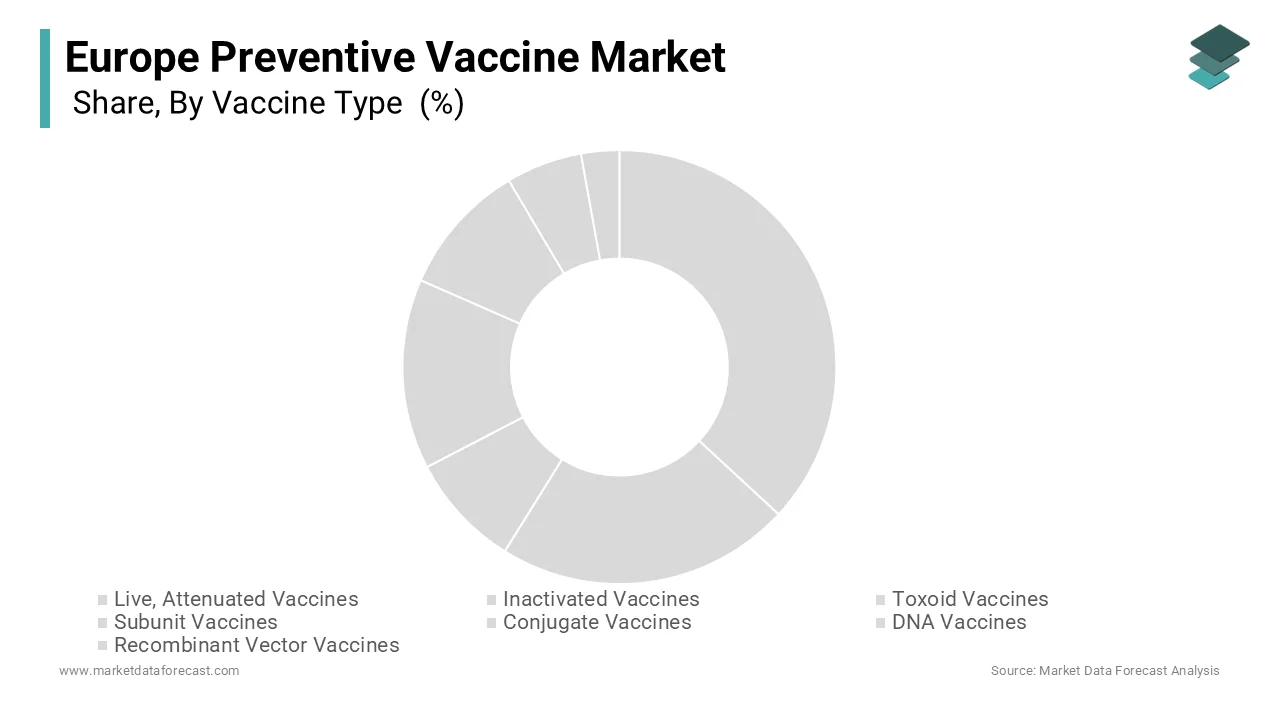
The recombinant vector vaccines segment is the fastest-growing and is expected to register a CAGR of 15.5% over the forecast period, owing to their versatility in targeting complex or emerging pathogens where traditional platforms fall short. Unlike live or inactivated vaccines, recombinant vectors such as modified vaccinia Ankara or adenovirus-based systems deliver pathogen genes without replicating, offering strong cellular and humoral immunity with enhanced safety. The successful deployment of Bavarian Nordic’s MVA BN mpox vaccine during the 2022 outbreak validated this platform’s emergency response utility, according to the European Medicines Agenc,y doses were distributed across multiple EU countries within months of conditional authorization. Beyond outbreak control, the platform supports multivalent design.s, Moderna and AstraZeneca are advancing adenovirus vectored candidates for RSV and universal influenza, currently in Phase II trials across European sites. The European Commission’s HERA initiative has committed 180 million euros since 2023 to scale domestic vector manufacturing capacity, recognizing its strategic value. Furthermore, these vaccines do notrequire ultra-coldd chain logistics, unlike mRNA alternatives, easing distribution in rural and Eastern European regions, a practical advantage that enhances adoption feasibility across diverse healthcare infrastructures.
By End User Insights
The pediatric vaccines segment captured 60.8% of the regional market share in 2025. The dominance of the pediatric vaccines segment in the European market is attributed to the long-established integration of childhood immunization into national public health frameworks, backed by school entry requirements, centralized procurement, and high parental compliance in most regions. Core pediatric vaccines, including DTaP, MMR, PCV, and rotavirus,s are universally recommended across the EU and delivered through well-organized primary care networks. According to Eurostat, over 95% of children in Western and Northern Europe completed the primary immunization series by age two in 2023, ensuring consistent demand. The European Centre for Disease Prevention and Control mandates surveillance for vaccine-preventable diseases in children under 15, creating accountability mechanisms that sustain program fidelity. Moreover, combination vaccines such as hexavalent formulations reduce injection burden and improve adherence. Germany’s Standing Committee on Vaccination reported high uptake of hexavalent vaccines in 2023 due to their inclusion in the national U3 early childhood checkup protocol. This structural embedding of pediatric vaccination within routine healthcare ensures predictable volume and funding, insulating the segment from short term policy fluctuations.
COUNTRY LEVEL ANALYSIS
Germany Preventive Vaccine Market Analysis
Germany led the market by holding 20.2% of the regional market share in 2025. The leading position of Germany in the European market is driven by a highly structured statutory health insurance system that fully reimburses all nationally recommended vaccines and enforces school and daycare immunization mandates. The Standing Committee on Vaccination updates its recommendations biannually based on rigorous health technology assessments, ensuring rapid adoption of new antigens. According to the Robert Koch Institute, childhood vaccination coverage for MMR and DTaP exceeded 97% in 2023, while adult pneumococcal uptake among seniors was among the highest in continental Europe. Germany also hosts major manufacturing and R&D hubs for global vaccine developers,s including BioNTech and CureVac, reinforcing its strategic centrality. The federal government’s 2023 investment of 250 million euros in mRNA production infrastructure under the National Biotechnology Strategy further cements its role as both a leading consumer and innovator in preventive immunization.
France Preventive Vaccine Market Analysis
France held a promising share of the European preventive vaccines market in 2025 owing to its centralized vaccine policy and recent legislative tightening of immunization requirements. The 2018 law, making 11 vaccines mandatory for school entry, significantly boosted coverage, as per Santé Publique France. Two-dose MMR compliance among two-year-olds rose from below 80% in 2017 to above 90% in 2023. The country maintains a robust national stockpile and operates a digital vaccination registry now expanded to track all preventive vaccines. France is also pioneering gender neutral HPV vaccination with high coverage among adolescent girls and increasing uptake in boys following the 2022 policy extension. The Pasteur Institute’s ongoing work on next-generation tuberculosis and HIV vaccine candidates positions France as a scientific leader, while public funding ensures equitable access, and vaccines are fully reimbursed for all residents regardless of age or indication.
United Kingdom Preventive Vaccine Market Analysis
The United Kingdom is anticipated to command a prominent share of the European market during the forecast period due to the National Health Service’s comprehensive and centrally procured immunization program. The UK was among the first in Europe to introduce routine adolescent and infant meningococcal B vaccination and remains a global leader in real-world vaccine effectiveness monitoring through the Clinical Practice Research Datalink. According to Public Health England, the MenB vaccine reduced cases significantly in eligible cohorts within five years of launch. The NHS also rolled out a national shingles program for adults aged 65 to 79 in 2023, followingcost-effectivenesss validation by NICE. Despite Brexit, the UK retains close alignment with EMA standards and continues to participate in EU joint procurement initiatives for pandemic preparedness. High public trust in vaccines, as per the 2023 King’s College London Vaccine Confidence Survey, ey further stabilizes demand across all age groups.
Italy Preventive Vaccine Market Analysis
Italy is expected to exhibit a healthy CAGR in the European preventive vaccines market during the forecast period,iod owing to the regional variation in delivery, but strong national commitment to expansion. The 2017 Lorenzin Law reinstated mandatory vaccination for school enrollment, reversing years of declining coverage. Istituto Superiore di Sanità data shows MMR uptake among two-year-olds climbed from mid 80% levels in 2016 to around 95% in 2023. Italy leads Europe in implementing newer conjugate vaccines, transitioning to PCV20 in 2024 after surveillance revealed that non-13-valent serotypes were responsible for a large share of pediatric invasive pneumococcal disease in 2022. The country also launched a free RSV monoclonal antibody program for infants in late 2023, signaling broader preventive ambition. Regional health authorities manage procurement but adhere to a unified national prevention plan updated annually, ensuring coherence despite administrative decentralization.
Spain Preventive Vaccine Market Analysis
Spain is anticipated to account for a notable share of the European preventive vaccine market during the forecast period, with strength in adult and travel-related immunization alongside solid pediatric foundations. The Spanish Ministry of Health achieved high DTaP coverage in 2023 while pioneering universal varicella vaccination in several autonomous communities. Notably, Spain has one of the EU’s highest documented uptakes of pertussis boosters in pregnancy, credited with a decline in infant cases between 2018 and 2023 per the Carlos III Health Institute. The country also mandates hepatitis A vaccination for food handlers and offers subsidized travel vaccines through public clinics, creating unique demand streams. Digital health cards enable seamless tracking across public and private providers, and recent investments in cold chain logistics have improved rural access. These multifaceted strategies position Spain as a model for integrating preventive vaccination across the life course and occupational settings.
TOP LEADING PLAYERS IN THE MARKET
- GlaxoSmithKline is a cornerstone of thEuropeanpe preventive vaccine market with a diversified portfolio spanning pediatric combination vaccines, adult respiratory immunization,s antravel-relateded prophylaxis. The company’s Shingrix vaccine for herpes zoster has become a standard of care for seniors across Western Europe following strong real-world effectiveness data. GSK has reinforced its position through strategic lifecycle management, including label expansions for its meningococcal and pneumococcal conjugate vaccines. In 202,4 the company completed upgrades to its Dresden manufacturing facility to increase fill and finish capacity for adjuvanted vaccines supporting both routine and pandemic preparedness programs. Its long-standing partnerships with national public health agencies and participation in EU joint procurement frameworks ensure broad access and policy alignment across diverse healthcare systems.
- Pfizer maintains a significant footprint in Europe through its leadership in pneumococcal and respiratory disease prevention. Its Prevnar family of conjugate vaccines remains integral to national childhood immunization schedules, while its newly approved RSV vaccine for older adults is being rapidly integrated into geriatric care pathways. The company has invested heavily in post authorization surveillance to demonstrate long term public health impact, particularly in reducing antibiotic use and hospitalizations. In 202,3 Pfizer expanded its Puurs Belg,ium manufacturing site to support increased productionprotein-basedased preventive vaccines. It also collaborates closely with the European Centre for Disease Prevention and Control on serotype monitoring to guide future valency updates, ensuring its products remain aligned with evolving epidemiological trends across the region.
- Sanofi plays a pivotal role in theEuropeane preventive vaccine landscape through its extensive portfolio that includes influenza, dengue, pertussis, and polio vaccines delivered via both public and private channels. The company’s Vaxelis hexavalent pediatric vaccine is widely used across Southern and Eastern Europe due to its simplified dosing schedule. Sanofi has prioritized innovation in seasonal flu prevention, launching its recombinant influenza vaccine across multiple EU countries in 2024 following EMA approval. The company also co-leads the EU-funded VACCELERATE network to harmonize clinical trial protocols for novel vaccines. Its Lyon-based research center continues to advance next-generation platforms, including mRNA and nanoparticle technologies,s ensuring sustained scientific relevance in Europe’s evolving immunization ecosystem.
TOP STRATEGIES USED BY THE KEY MARKET PARTICIPANTS
Key players in thEuropeanpe preventive vaccine market focus on lifecycle management of established products through label expansions, new indications, and valency upgrades. They invest inlarge-scale post-marketingg surveillance to generate real-world evidence supporting public health value and reimbursement decisions. Strategic collaborations with EU institutions and national health authorities facilitate rapid integration into immunization programs. Companies are localizing or expanding European manufacturing to ensure supply resilience and comply with regulatory sovereignty goals. Additionally, they leverage digital health infrastructure for vaccination tracking and patient outreach to improve coverage and adherence across age groups.
COMPETITIVE LANDSCAPE
Competition in the European preventive vaccine market is defined by scientific credibility, regulatory agility, and deep integration with public health systems, rather than price alone. Incumbents like GS, K Pfizer, and Sanofi dominate through decades-long relationships with national immunization technical advisory groups and robust post authorization safety monitoring. The market features high entry barriers due to complex manufacturing requirements, lengthy clinical development timeline,s and stringent EMA oversight. However, emerging players leveraging mRNA viral vector and recombinant platforms are gaining traction, particularly in outbreak response and adult immunization. Differentiation increasingly hinges on health economic data demonstrating reductions in hospitalization,n antimicrobial use,se and indirect protection. While pediatric vaccines remavolume-drivenven, adult and adolescent segments offer higher margins and faster policy adoption cycles. The competitive landscape is further shaped by EU initiatives promoting vaccine equity platform diversification and domestic production capacity, creating both opportunities and obligations for market participants.
KEY MARKET PLAYERS
A few of the noteworthy companies operating in the European preventive vaccine market profiled in this report are
- GlaxoSmithKline PLC
- Bavarian Nordic
- Merck and Company
- CSL Limited
- Novartis AG
- Emergent BioSolutions Inc.
- Johnson and Johnson
- MedImmune, LLC
- Pfizer, Inc.
- Sanofi Pasteur
MARKET SEGMENTATION
This research report segmented and sub-segmented the European Preventive Vaccines Market into thefollowing categoriesr.ies
By Vaccine Type
- Live, Attenuated Vaccines
- Inactivated Vaccines
- Toxoid Vaccines
- Subunit Vaccines
- Conjugate Vaccines
- DNA Vaccines
- Recombinant Vector Vaccines
By End-User
-
Pediatric Vaccine
-
Pneumococcal
-
MMR
-
Varicella
-
Hepatitis
-
Poliovirus
-
HIB
-
Others
-
-
Adult Vaccines
-
Influenza
-
Cervical Cancer
-
Hepatitis
-
Zoster
-
Others
-
By Country
- UK
- France
- Spain
- Germany
- Italy
- Russia
- Sweden
- Denmark
- Switzerland
- Netherlands
- Turkey
- Czech Republic
- Rest of Europe