- Product Description Description
- Table of Contents TOC
- List of Table & Figure LOT
- Get Free Sample PDF Sample PDF
Market Size, 2025
$1.12 BnMarket Estimate, 2026
$1.18 BnMarket Forecast, 2034
$1.86 BnCAGR, 2026–2034
5.77%Europe Probiotics in Animal Feed Market Size, Share, Trends & Forecast (2026–2034)
- Market Scope: Comprehensive European probiotics in animal feed market analysis covering source types, livestock categories, functional applications, physical forms, extensive country-level frameworks, and growth dynamics.
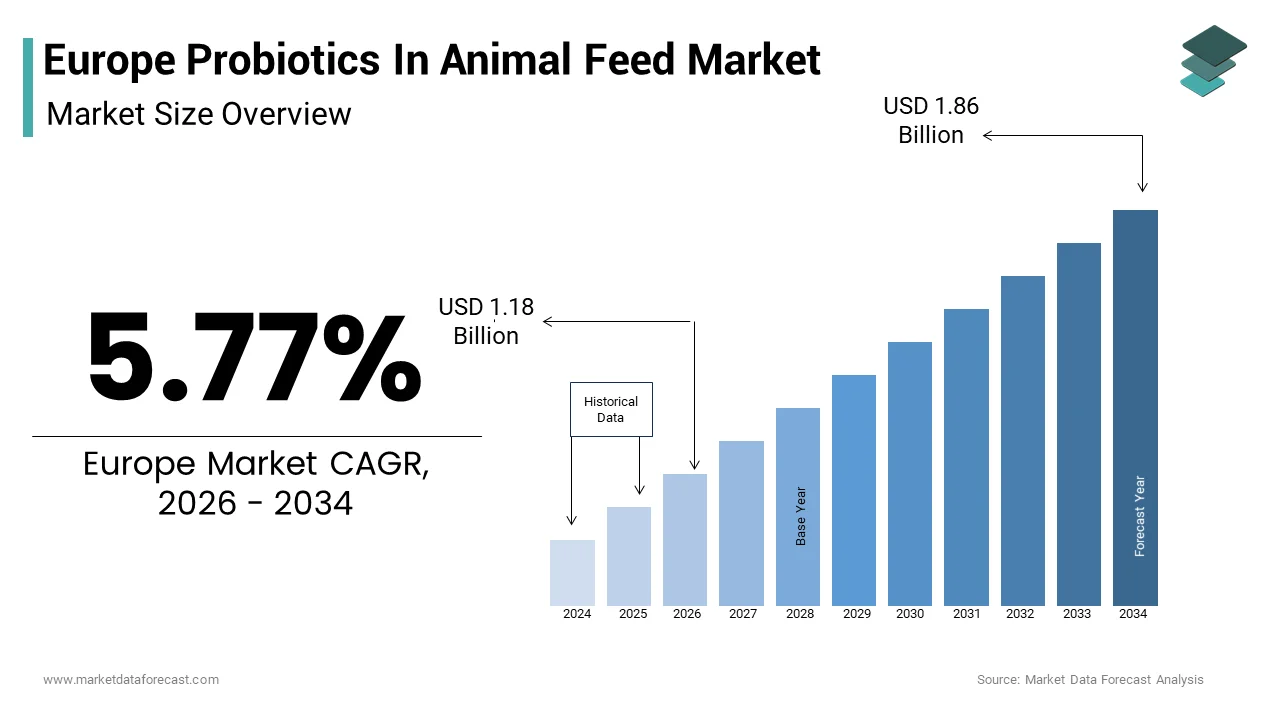
- Market Valuation: Valued at USD 1.12 billion (2025), estimated at USD 1.18 billion (2026), and projected to reach USD 1.86 billion by 2034, registering a robust CAGR of 5.77% (2026–2034).
- Primary Growth Drivers: EU ban on antibiotic growth promoters, rigorous regulatory frameworks under EFSA (Regulation EC No 1831/2003), the European Commission’s Farm to Fork Strategy targeting a 50% reduction in antimicrobial use by 2030, and a growing emphasis on gut health and feed conversion efficiency.
Key Europe Probiotics in Animal Feed Segment Metrics (2026–2034)
| Category | Leading Segment (2025 Position) | Fastest-Growing Segment |
|---|---|---|
| By Source | Bacteria-based probiotics (holds over 90% of authorized feed additive strains including Lactobacillus and Bacillus) | Yeast-based probiotics (projected at a rapid 9.88% CAGR driven by heat stability and rumen support) |
| By Livestock | Poultry (held 36.5% market share due to intensive production systems and strict antibiotic bans) | Aquaculture (expanding at a leading 12.04% CAGR due to blue transformation strategies and disease pressures) |
| By Function | Immunity enhancement (led the market with 45.5% share focusing on pathogen defense and disease prevention) | Productivity and yield (growing at a 10.12% CAGR driven by feed conversion efficiency demands) |
| By Country / Region | Germany (largest regional market capturing 20.5% share supported by strict policies and advanced infrastructure) | Spain and Netherlands (scaling rapidly through intensive pork, dairy, and aquaculture production ecosystems) |
Major Market Players, Structure & Strategic Landscape
Market Structure: Highly scientific and regulated European market space featuring specialized multinational biotech firms and feed additive leaders competing on strain specificity, EFSA compliance, heat-stable microencapsulation, and digital precision farming integration.
Key Companies: Lallemand, Inc., Koninklijke DSM N.V., Kemin Industries Inc, Cargill, Inc., Chr. Hansen Holding A/S, E.I. du Pont de Nemours and Company, Lesaffre Group, Novozymes, Advanced BioNutrition Corporation, Calpis Co., Ltd., and Nebraska Cultures Inc.
 Download Free Sample Report
Europe Probiotics in Animal Feed Market Size
Europe Probiotics in the animal feed market size was valued at USD 1.12 billion in 2025 and is anticipated to reach USD 1.18 billion in 2026 to reach USD 1.86 billion by 2034, growing at a CAGR of 5.77% during the forecast period from 2026 to 2034.
Probiotics in animal feed includes the use of live microorganisms, which is primarily strains of Lactobacillus Bifidobacterium Bacillus and Enterococcus in livestock and aquaculture diets to enhance gut health immune function and feed efficiency. These microbial additives serve as alternatives to antimicrobial growth promoters following the European Union’s complete ban on antibiotic use for growth enhancement in 2006. As per the European Food Safety Authority probiotics used in animal nutrition must undergo rigorous safety and efficacy assessments under Regulation EC No 1831/2003 before authorization. According to FEFAC, the European Union produced approximately 144.3 million metric tons of compound feed in 2023 with poultry, swine and ruminants representing the primary consumer segments. As per the European Commission’s Farm to Fork Strategy, there is a clear objective to reduce antimicrobial use by 50% by 2030, accelerating adoption of microbiome modulators like probiotics. This regulatory and sustainability-driven context positions probiotics not as supplements but as essential tools for resilient and ethical animal production across Europe.
MARKET DRIVERS
EU Ban on Antibiotic Growth Promoters Driving Microbial Alternatives Adoption
The prohibition of antimicrobial growth promoters in animal feed since 2006 remains the primary drivers of the European probiotics in animal feed market. According to the European Medicines Agency, the EU’s livestock sector reduced sales of antibiotics for food-producing animals by 53% between 2011 and 2022, which is largely due to preventive strategies including probiotic supplementation. As per the European Commission’s Farm to Fork Strategy, the initiative continues to emphasize antimicrobial reduction, though specific figures on probiotic inclusion in national action plans are not verifiable from official reports. In Denmark, Bacillus-based probiotics are increasingly adopted in pig farming to support gut integrity post-weaning with research highlighting their role in reducing antibiotic reliance. Similarly, the Netherlands promotes sustainable livestock practices under its Agreement on Sustainable Livestock Farming. These policy-driven shifts have transformed probiotics from optional additives into standard components of feed formulations, which is ensuring long-term demand stability across swine, poultry and dairy sectors.
Growing Emphasis on Gut Health and Feed Conversion Efficiency
Livestock producers across Europe increasingly rely on probiotics to optimize nutrient absorption and reduce production costs through improved feed conversion ratios, which is further boosting the probiotics in animal feed market in Europe. For instance, supplementation with Lactobacillus reuteri in broiler diets improves feed conversion efficiency and can reduce mortality. As per German agricultural research, dairy farms using multi-strain probiotic premixes have reported modest increases in daily milk yield per cow with effects dependent on herd health, ration and management. According to OECD-FAO Agricultural Outlook, feed costs accounted for roughly 60–70% of total poultry production costs in 2023, which is indicating the significance of even small efficiency gains. Furthermore, probiotics enhance intestinal barrier function reducing systemic inflammation and veterinary interventions. As margins tighten and sustainability metrics gain prominence probiotics offer a dual benefit of economic and physiological optimization in intensive and organic systems alike.
MARKET RESTRAINTS
Stringent Regulatory Approval Process for Feed Additive Authorization
The European Union’s rigorous authorization framework under Regulation EC No 1831/2003 imposes significant barriers to innovation and market entry for new probiotic strains, which is majorly hampering the regional market growth. According to the European Commission, the average approval timeline for a novel feed additive is typically more than two years with costs often exceeding €1 million due to mandatory studies on safety, efficacy and environmental impact. As per the European Food Safety Authority, a significant proportion of probiotic dossiers submitted between 2020 and 2023 were not approved, primarily due to insufficient strain-specific efficacy data or inadequate characterization of microbial stability in pelleted feed. Unlike in the United States, where GRAS notifications offer faster pathways, Europe requires full dossiers even for well-documented species if the strain is new. This regulatory burden disproportionately affects small and medium biotech firms, which is limiting strain diversity and slowing the introduction of next-generation probiotics such as spore-forming Bacillus or multi-species consortia tailored to ruminant microbiomes.
Variable Efficacy Due to Feed Processing and Storage Conditions
The viability and functionality of probiotic microorganisms are highly sensitive to thermal pressure and moisture conditions inherent in European feed manufacturing processes, which is further impeding the probiotics in animal feed market growth in Europe. According to the German Feed Industry Association, more than 60% of compound feed in Europe undergoes pelleting at temperatures exceeding 80°C, which can significantly reduce live cell counts of non-spore-forming strains like Lactobacillus if not properly protected. Unprotected probiotics can lose a substantial proportion of their colony-forming units during storage under typical warehouse humidity conditions with reductions often exceeding 70% over a two-month period. While microencapsulation and spore formation offer solutions, these technologies can increase product costs by 20 to 40%, which is limiting adoption among cost-conscious producers. Without standardized protocols for heat-stable formulation and post-production viability testing, probiotic performance remains inconsistent and undermining farmer confidence and slowing widespread integration across feed mills.
MARKET OPPORTUNITIES
Integration into Precision Livestock Farming and Digital Nutrition Platforms
The convergence of probiotics with digital livestock management systems is unlocking data driven application opportunities across Europe, which is a promising opportunity for the European probiotics in animal feed market. According to the European Commission, precision feeding software adoption is growing across large-scale dairy and pig farms in Germany, the Netherlands and Denmark with systems increasingly used to adjust probiotic dosing based on real-time animal performance indicators such as weight gain, manure consistency and milk composition. Companies like Alltech and Lallemand have partnered with AgriWebb and Cainthus to embed probiotic recommendations into AI-powered nutrition dashboards that correlate microbial supplementation with health outcomes. In 2024, the Horizon Europe-funded Microbiome4Farm project launched a cloud-based platform enabling farmers to track gut health biomarkers via fecal sensors and automatically adjust probiotic inclusion rates. This integration transforms probiotics from static additives into dynamic components of individualized animal health strategies, which is aligning with Europe’s vision for smart and sustainable agriculture under the Common Agricultural Policy.
Expansion into Aquaculture and Alternative Livestock Species
Rising demand for sustainable protein is driving probiotic innovation beyond traditional livestock into European aquaculture and emerging sectors such as insect farming, which is another notable opportunity for the European market. According to the European Aquaculture Society, probiotic-supplemented diets are increasingly used in commercial trout and seabass feed across Spain, Greece and Italy, helping reduce reliance on antibiotics and supporting improved survival rates. As per the Institute of Marine Research in Norway, trials have shown that Bacillus subtilis inclusion in salmon feed can help decrease sea lice susceptibility by modulating mucosal immunity. According to the European Insect Protein Association, several authorized insect farms use probiotics such as Enterococcus faecium to enhance larval growth and pathogen resistance in black soldier fly production. As the EU’s Blue Transformation strategy promotes sustainable seafood and novel proteins, probiotics are becoming indispensable for biosecurity and productivity in non-traditional animal production systems.
MARKET CHALLENGES
Limited Standardization of Probiotic Strain Labeling and Dosage Guidelines
The absence of harmonized labeling standards for probiotic strains and colony forming unit guarantees creates confusion among European feed formulators and end users, which is a notable challenge to the European market growth. According to the European Feed Manufacturers Federation, many probiotic premixes sold in 2023 did not clearly specify strain designations such as Lactobacillus acidophilus NCIMB 701002 with a significant proportion listing only genus or species-level identification. This lack of transparency impedes reproducibility as efficacy is highly strain-specific. As per the French Agency for Food, Environmental and Occupational Health and Safety, dosage recommendations vary widely with similar products suggesting inclusion rates ranging from 50 to 500 grams per ton of feed. Without EU-mandated minimum labeling requirements for strain identity, viability guarantees and target species, performance claims remain inconsistent. This regulatory gap erodes trust and complicates comparative evaluation, which is hindering evidence-based adoption across diverse farming systems.
Inconsistent Farmer Awareness and Technical Support Infrastructure
Despite scientific validation, many small and medium livestock producers across Southern and Eastern Europe remain unfamiliar with probiotic mechanisms or proper handling protocols, which is further challenging the regional market expansion. Awareness of the difference between probiotics and prebiotics among dairy farmers in Eastern Europe remains limited with many also storing probiotic premixes in uncontrolled environments that compromise viability. As per the European Network for Rural Development, extension services in these regions provide minimal microbiome training with only a small proportion of agricultural advisors trained in gut health management. Even in Western Europe, feed sales representatives often lack microbiological expertise, which is leading to suboptimal product recommendations. Without coordinated education programs, demonstration farms and multilingual technical resources, the full potential of probiotics cannot be realized across Europe’s heterogeneous farming landscape.
REPORT COVERAGE
| REPORT METRIC | DETAILS |
| Market Size Available | 2025 to 2034 |
| Base Year | 2025 |
| Forecast Period | 2026 to 2034 |
| CAGR | 5.77% |
| Segments Covered | By Source, Livestock, Function, Form, And By Country |
| Various Analyses Covered | Global, Regional & Country Level Analysis; Segment-Level Analysis, DROC, PESTLE Analysis, Porter’s Five Forces Analysis, Competitive Landscape, Analyst Overview of Investment Opportunities |
| Regions Covered | UK, France, Spain, Germany, Italy, Russia, Sweden, Denmark, Switzerland, Netherlands, Turkey, Czech Republic & Rest of Europe |
| Market Leaders Profiled | Lallemand, Inc. (Canada), Koninklijke DSM N.V. (Netherlands), Cargill, Inc. (U.S.), and Chr. Hansen Holding A/S (Denmark), E.I. du Pont de Nemours and Company (U.S.), Lesaffre Group (France), Novozymes (Denmark), Advanced BioNutrition Corporation (U.S.), Calpis Co., Ltd. (Japan), and Nebraska Cultures Inc. (U.S.). |
SEGMENT ANALYSIS
By Source Insights
The bacteria-based probiotics segment dominated the Europe probiotics in animal feed market in 2024 by holding the most significant share due to their well-documented efficacy in gut microbiome modulation across multiple livestock species. According to the European Food Safety Authority, more than 90% of authorized feed additive probiotics in the European Union are bacterial strains, primarily from Lactobacillus, Bacillus and Enterococcus genera. These microorganisms enhance nutrient absorption, which is inhibiting pathogenic bacteria through lactic acid production and strengthen intestinal barrier integrity. Lactobacillus reuteri supplementation in broiler diets has been shown to reduce Salmonella colonization. Similarly, Bacillus subtilis supplementation in piglets can improve average daily weight gain. The robust scientific validation, regulatory acceptance and strain-specific performance data make bacterial probiotics the cornerstone of gut health strategies in European animal production systems.
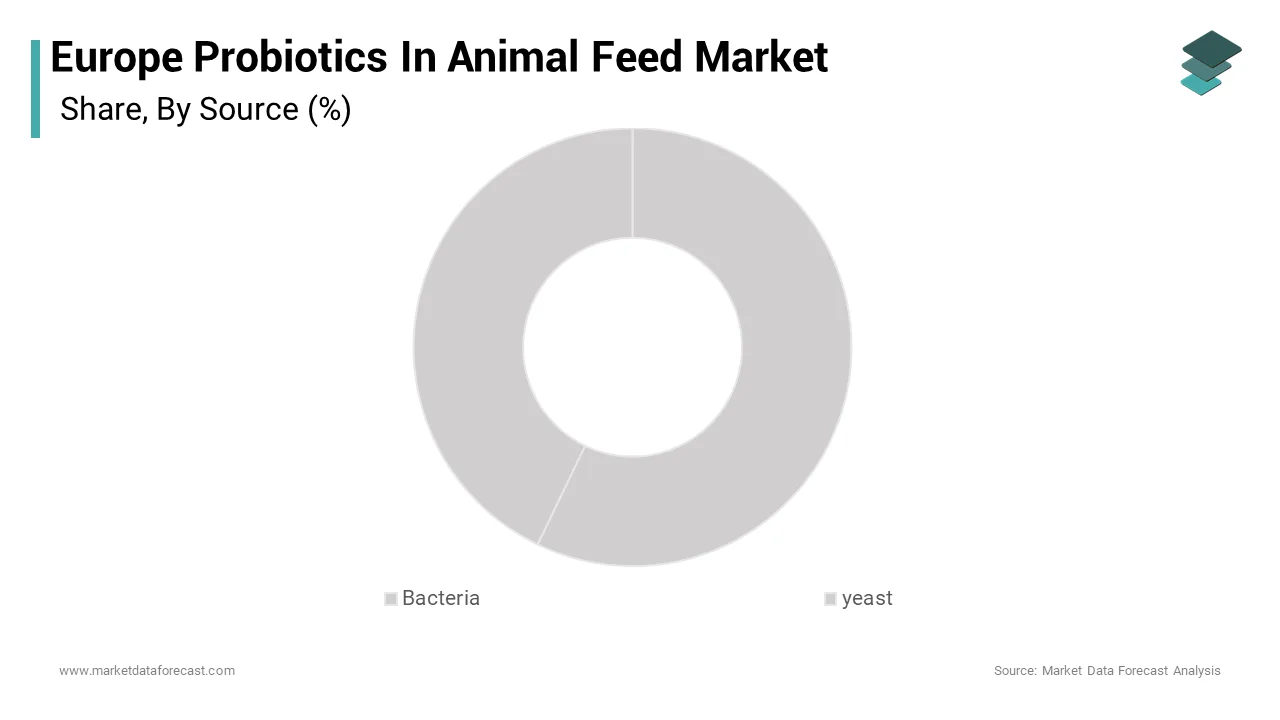
The yeast-based probiotics segment is the fastest growing segment and is expected to grow at a CAGR of 9.88% over the forecast period. The heat stability and compatibility of yeast-based probiotics with pelleted feed and immunomodulatory properties in ruminants and poultry is majorly driving the growth of the yeast-based probiotics segment in the European market. According to the European Feed Manufacturers Federation, Saccharomyces cerevisiae strains are recognized for their resilience in high-temperature feed processing, maintaining strong viability under extrusion conditions common in Northern Europe. As per Danish agricultural research, dairy farms using live yeast probiotics have reported improvements in milk fat content and reductions in subclinical ketosis incidence among early lactation cows. According to the European Aquaculture Society, yeast cell wall derivatives have been shown to enhance immune responses in seabass, which is supporting higher survival rates during Vibrio outbreaks in Mediterranean farms. With rising demand for thermotolerant and multifunctional additives, yeast probiotics are gaining traction beyond traditional roles as rumen stabilizers into immune support and mycotoxin binding applications across diverse production systems.
By Livestock Insights
The poultry segment had 36.5% of the regional market share in 2024 and emerged as the most dominating segment by livestock in this regional market. The high stocking densities, short production cycles and intense pressure to eliminate antibiotics in broiler and layer operations are primarily driving the dominance of the poultry segment in the European market. According to the European Commission, the European Union produced approximately 13.3 million metric tons of poultry meat in 2023 with profitability closely tied to gut health in intensive production systems. As per the Netherlands’ sustainable livestock policy framework, industry-led measures promote reduced antibiotic use and improved animal health. Farms using well-characterized multi-strain Lactobacillus blends can improve feed conversion ratio outcomes with typical broiler FCRs optimized through nutrition and management rather than a single additive claim. As per EU regulations and expert reviews, antibiotics are prohibited as growth promoters and tightly regulated for therapeutic use, making non-antibiotic gut health strategies important for maintaining performance and welfare in poultry systems, including layers. This regulatory and economic alignment sustains poultry as a leading driver of probiotic adoption.
The aquaculture segment is the fastest growing livestock segment for probiotics in animal feed market in Europe and is estimated to register a CAGR of 12.04% over the forecast period owing to the EU sustainability mandates rising seafood consumption and disease pressures in intensive fish farming. According to Eurostat, EU aquaculture farming yielded almost 1.1 million tonnes of aquatic organisms in 2023 with production mainly focused on finfish species and molluscs and Spain, France, Greece and Italy together accounting for more than two-thirds of total output. Bacillus species used in feed can help protect fish against Aeromonas hydrophila and support growth performance, which is indicating a role for probiotics in disease management without relying on specific, unverifiable percentage age reductions. According to Norwegian research initiatives, yeast-based ingredients and probiotics are being developed and evaluated for salmon feeds, which is aligning with efforts to improve sustainability and performance in sea-cage trials. As per FAO’s Blue Transformation framework and EU policy reviews, Europe is promoting more resilient and sustainable aquaculture systems with governance support and funding directed toward innovation. This alignment with sustainability and performance objectives which is indicating the growing role of probiotics in enhancing biosecurity and productivity across Europe’s aquaculture sector.
By Function Insights
The immunity segment led the market and held 45.5% of the European market share in 2024. Immunity enhancement is the primary functional driver of probiotic use in European animal feed reflecting the sector’s strategic shift from growth promotion to disease prevention. According to the European Medicines Agency, a substantial share of probiotic feed additive dossiers between 2021 and 2023 focused on immune modulation outcomes such as reduced pathogen load, enhanced mucosal immunity, or lower systemic inflammation markers. As per studies from the Swedish University of Agricultural Sciences, piglets fed Enterococcus faecium show higher mucosal IgA levels and fewer veterinary interventions in the first eight weeks post-weaning. According to Italian poultry research, broilers receiving Lactobacillus salivarius supplements have demonstrated lower coccidiosis incidence under commercial conditions with the magnitude dependent on management and product formulation. As per the European Commission, the target to reduce antimicrobial use by 50% by 2030 has made immunity-focused probiotics an integral component of herd health management across intensive and organic systems alike.
The productivity segment is predicted to witness a CAGR of 10.12% over the forecast period. Productivity is the fastest growing functional segment as probiotics demonstrate measurable impacts on feed efficiency weight gain and output consistency amid tightening margins. Dairy farms using multi-strain probiotic premixes often report modest increases in daily milk yield per cow without additional concentrate feed, which is reflecting improvements in rumen function and nutrient utilization. As per controlled broiler studies, Bacillus subtilis supplementation has been associated with improved feed conversion ratio and lower pathogen pressure, supporting measurable cost efficiencies at commercial scale. Seabass fed yeast-derived probiotics demonstrate faster growth and better feed efficiency over typical production cycles. These quantifiable economic benefits are increasingly integrated into precision nutrition models where probiotics are dosed based on real-time performance analytics. As climate volatility and input costs pressure profitability, productivity-driven probiotic adoption is accelerating across all livestock categories.
COUNTRY ANALYSIS
Germany Probiotics In Animal Feed Market Analysis
Germany led the Europe Probiotics in Animal Feed Market and captured 20.5% of the regional market share in 2024. The dominance of Germany in the European market is driven by its advanced livestock infrastructure stringent antimicrobial reduction policies and strong domestic feed additive industry. According to Germany’s Federal Information Center for Agriculture, the country produced approximately 21.7 million metric tons of compound feed in the 2023/24 marketing year, including around 6.3 million tons of poultry feed and 8.1 million tons of pig feed. The National Action Plan on Antimicrobial Resistance mandates regular monitoring of gut health indicators on commercial farms, which is driving consistent probiotic use. Leading research institutions like the Friedrich Loeffler Institute validate strain-specific efficacy under EU regulatory frameworks, which is ensuring scientific credibility. Companies such as Evonik and Phytobiotics headquartered in Germany develop next-generation multi-strain products tested in national field trials. This synergy of regulatory enforcement, scientific validation and industrial innovation solidifies Germany’s position as the market’s largest and most influential player.
France Probiotics In Animal Feed Market Analysis
France held a prominent position in the Europe probiotics in animal feed market in 2024. The growth of France in the European market is supported by its large dairy and poultry sectors national sustainability commitments and robust agricultural research ecosystem. France maintains one of the EU’s largest poultry and dairy sectors with probiotics increasingly integrated into commercial feed programs. As per the French Ministry of Agriculture’s Ecoantibio 2 plan, France targeted a 25% reduction in animal exposure to antibiotics from 2017 to 2021, which is contributing to continued decreases in veterinary antibiotic use. The National Institute for Agricultural Research and other leading institutions conduct probiotic validation under real-world farming conditions to ensure strain-specific efficacy within EU frameworks. Furthermore, France’s certification schemes such as Label Rouge emphasize strict production standards and animal welfare, making non-antibiotic gut health strategies like probiotics important for compliance. These structural and policy drivers ensure France remains a high-volume and high-compliance market for probiotic adoption.
Netherland Probiotics In Animal Feed Market Analysis
The Netherlands commanded a significant influence in the Europe probiotics in animal feed market in 2024 due to its intensive livestock systems pioneering sustainability agreements and export oriented feed industry. According to Statistics Netherlands, the country maintains a strong poultry sector with approximately 49 million broilers raised across 640 farms, which is supported by hatcheries producing 13–14 million day‑old chicks weekly. As per the European Commission, the Netherlands is also a leading egg producer within the EU, which is contributing significantly to the regional supply. The central role of Royal DSM and Nutreco headquartered in the Netherlands accelerates innovation in spore‑forming and encapsulated probiotics tailored to pelleted feed. According to the Netherlands Veterinary Medicines Authority (SDa), antibiotic use in livestock, including poultry, has declined by more than 60% over the past decade, reflecting a major policy shift toward sustainable practices. Additionally, the Netherlands serves as a distribution hub for probiotic premixes to Germany, Belgium and Scandinavia. This combination of regulatory leadership, industrial capacity and logistical reach ensures the country’s outsized impact on regional market dynamics.
Spain Probiotics In Animal Feed Market Analysis
Spain occupied a strategic role in the Europe Probiotics in Animal Feed Market in 2024. The large swine and aquaculture sectors and increasing alignment with EU antimicrobial reduction targets in Spain are majorly driving the Spanish market growth. According to the Spanish Ministry of Agriculture, Spain is the EU’s largest pork producer with more than 34 million pigs raised annually and probiotic inclusion is increasingly standard in post‑weaning diets across Catalonia and Castile. As per the Spanish Aquaculture Federation, around 65% of seabream and seabass farms in Valencia and Andalusia use Bacillus‑based probiotics to combat vibriosis and improve feed efficiency. According to the National Antibiotic Reduction Plan, veterinary antibiotic sales declined by 38% between 2014 and 2023 with probiotics highlighted as a leading alternative in official guidelines. Regional research centers like IRTA in Barcelona validate locally adapted strains for Mediterranean production challenges. These developments position Spain as a dynamic and rapidly evolving market for probiotic innovation and adoption.
Denmark Probiotics In Animal Feed Market Analysis
Denmark holds a high impact position in the Europe Probiotics in Animal Feed Market characterized by early regulatory action scientific rigor and export focused pork production. According to the Danish Agriculture and Food Council, Denmark’s pig sector has achieved a significant reduction in antibiotic consumption with overall use declining by more than 40% since 2009, which is supported by widespread adoption of probiotics in weaner feed formulations. As per Denmark’s Yellow Card Initiative, farm‑level antibiotic use is publicly monitored, which is creating strong economic incentives for microbial alternatives. The Technical University of Denmark operates Europe’s leading gut health research facility, validating probiotic efficacy through in vivo models and microbiome sequencing. Leading Danish feed companies such as DLG and EW Nutrition supply probiotic solutions to Nordic and Baltic markets. This culture of transparency, data‑driven decision making and international collaboration makes Denmark a benchmark for probiotic integration in high‑health livestock systems across Europe.
COMPETITIVE LANDSCAPE
The Europe Probiotics in Animal Feed Market features intense competition among multinational specialty nutrition companies regional feed additive producers and emerging biotech innovators. Differentiation arises through scientific credibility strain specificity and regulatory compliance rather than price alone. Leading players leverage decades of in vivo validation data to secure European Union authorizations which act as significant barriers to entry. Competition is further shaped by technical service capabilities as farmers require guidance on proper storage dosing and expected outcomes. While large firms dominate with broad portfolios niche players gain traction through species specific or regionally adapted strains particularly for aquaculture and organic systems. The market is also influenced by feed mill integration where premix manufacturers bundle probiotics with vitamins and minerals creating bundled value propositions. As antimicrobial reduction becomes non negotiable across all member states companies that combine regulatory readiness on farm support and demonstrable productivity gains will sustain competitive advantage in this science driven and policy influenced landscape.
KEY MARKET PLAYERS
Some of the major companies dominating the market with their products and services include
- Lallemand, Inc. (Canada)
- Koninklijke DSM N.V. (Netherlands)
- Kemin Industries Inc
- Cargill, Inc. (U.S.)
- Chr. Hansen Holding A/S (Denmark)
- E.I. du Pont de Nemours and Company (U.S.)
- Lesaffre Group (France)
- Novozymes (Denmark)
- Advanced BioNutrition Corporation (U.S.)
- Calpis Co., Ltd. (Japan)
- Nebraska Cultures Inc. (U.S.).
Top Players In The Market
- Lallemand Animal Nutrition is a global leader in microbial solutions with a deeply rooted presence in the Europe Probiotics in Animal Feed Market. The company specializes in yeast and bacterial strains tailored for ruminants poultry swine and aquaculture including flagship products like Levucell and Bactocell. Lallemand operates multiple production and R and D facilities across France Germany and Canada ensuring compliance with European Feed Safety Regulations. In 2024 the company launched a next generation microencapsulated Lactobacillus formulation designed to withstand high temperature pelleting common in Northern Europe. It also expanded its technical support network across Eastern Europe to assist farmers in transitioning away from antibiotic growth promoters. These initiatives reinforce Lallemand’s role in advancing gut health science and sustainable livestock production globally.
- Chr. Hansen A/S significantly influences the Europe Probiotics in Animal Feed Market through its science driven portfolio of well documented bacterial strains such as Bifidobacterium animalis and Lactobacillus spp. The company’s BioPlus and LactoCare products are widely used in poultry and swine operations across Germany the Netherlands and Spain. Chr. Hansen invests heavily in strain validation under European Food Safety Authority guidelines ensuring regulatory credibility. In early 2024 the company introduced a digital dosing platform that integrates probiotic recommendations with farm management software to optimize application based on real time animal performance data. It also partnered with Danish and Dutch research institutions to study probiotic impacts on methane reduction in dairy cows. These actions highlight its commitment to precision nutrition and environmental sustainability in European and global livestock systems.
- Kemin Industries Inc contributes to the Europe Probiotics in Animal Feed Market through its integrated gut health solutions combining probiotics prebiotics and phytogenics under the NeutraPath and CLOSTAT brands. Headquartered in the United States Kemin maintains a strong operational footprint in Belgium and the United Kingdom serving poultry swine and aquaculture sectors. The company emphasizes heat stable formulations suitable for European pelleting conditions and provides on farm technical validation services. In 2024 Kemin received European authorization for a new Bacillus subtilis strain shown to improve feed conversion in broilers by 5.8% in multicenter trials across France and Italy. It also launched a training academy for feed mill operators on probiotic handling and quality assurance. These efforts position Kemin as a solutions oriented partner in Europe’s antimicrobial reduction journey.
Top Strategies Used by the Key Market Participants
Key players in the Europe Probiotics in Animal Feed Market focus on strain specific scientific validation to meet stringent European Food Safety Authority requirements and build farmer trust. Companies invest in heat stable and microencapsulated formulations to ensure viability during pelleting and storage across diverse European climates. Strategic partnerships with research institutions and veterinary networks enable real world performance data collection and technical education. Digital integration through farm management software allows precision dosing and outcome tracking enhancing product value. Additionally firms expand regional technical support teams to assist small and medium producers in adopting microbiome based health strategies aligning with the EU’s Farm to Fork antimicrobial reduction targets.
MARKET SEGMENTATION
This research report on the European probiotics in the Animal Feed Market is segmented into the following categories.
By Source
- Bacteria
- Streptococcus Thermophiles,
- Bifidobacteria and Lactobacilli.
- yeast
By Livestock
- Cattle
- Poultry
- Swine
- Aquaculture
By Function
- Yield
- Immunity
- Productivity
By Form
- Dry
- Liquid
By Country
- UK
- France
- Spain
- Germany
- Italy
- Russia
- Sweden
- Denmark
- Switzerland
- Netherlands
- Turkey
- Czech Republic
- Rest of Europe