- Product Description Description
- Table of Contents TOC
- List of Table & Figure LOT
- Get Free Sample PDF Sample PDF
Market Size, 2025
$2.03 BnMarket Estimate, 2026
$2.29 BnMarket Forecast, 2034
$5.94 BnCAGR, 2026–2034
12.66%Executive Summary: Europe Prosthetic Heart Valves Market
- Market Scope: Regional analysis of the European prosthetic heart valves market covering product classifications, country-level breakdowns, regulatory factors, and advanced cardiovascular research trends.
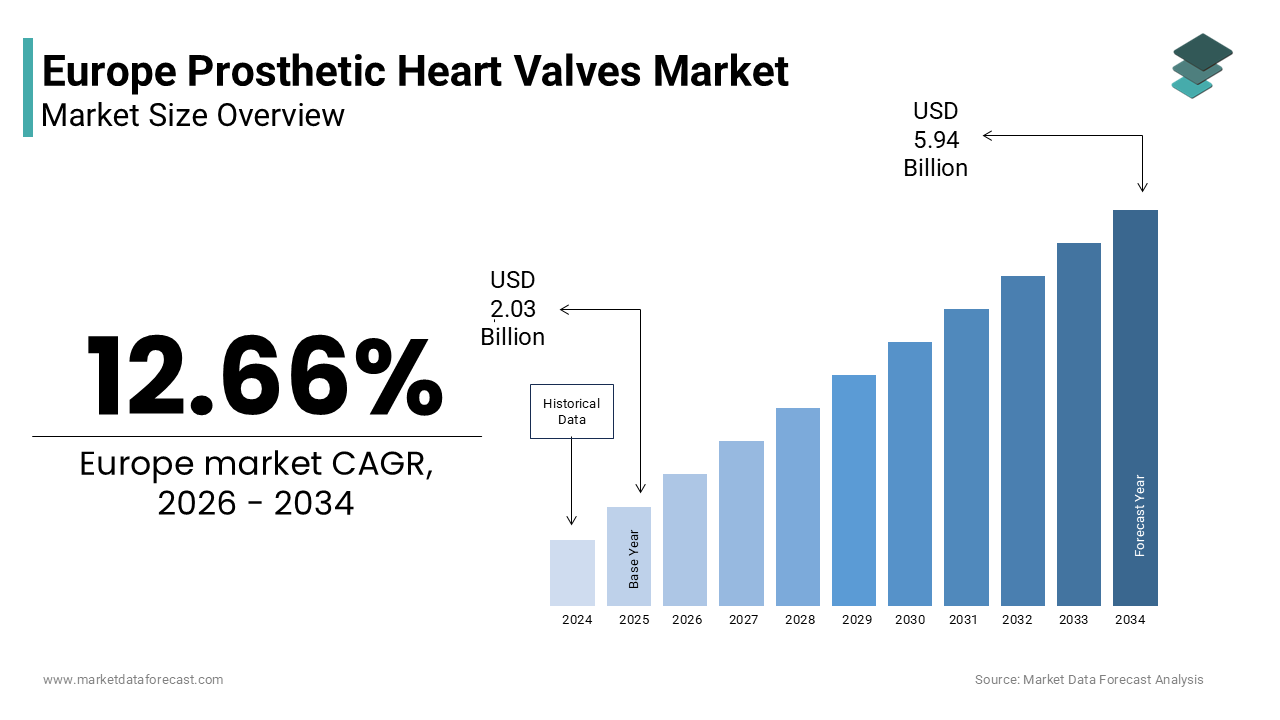
- Market Valuation: Valued at USD 2.03 billion in 2025, estimated at USD 2.29 billion in 2026, and projected to reach USD 5.94 billion by 2034, registering a strong CAGR of 12.66% from 2026 to 2034.
- Primary Growth Drivers: Escalating volume of heart surgeries and valvular heart diseases; rapid growth in the aging European demographic; increasing diagnostic awareness; and favorable reimbursement frameworks coupled with industry mergers and acquisitions.
Key Market Segment Metrics (2026–2034)
| Category | Leading Segment / Position | Segment Details / Breakdown |
|---|---|---|
| By Product | Mechanical Heart Valve, Tissue Heart Valve (Stented & Stentless Tissue Heart Valves) & Transcatheter Heart Valve | Transcatheter and tissue heart valves experience robust adoption driven by preferences for minimally invasive cardiovascular surgeries and enhanced hemocompatibility. |
| By Country / Region | UK (Market Leader) & Germany (Fastest Growing) | UK leads regional market share via device approvals and high patient populations; Germany registers rapid expansion driven by advanced healthcare infrastructure and minimally invasive demand. Additional coverage includes France, Spain, Italy, Russia, Sweden, Denmark, Switzerland, Netherlands, Turkey, Czech Republic, and Rest of Europe. |
Major Market Players & Market Structure
Market Structure: Specialized cardiovascular device landscape driven by pioneering medical technology enterprises and innovators focusing on advanced transcatheter solutions and tissue-engineered heart valve research.
Key Companies: Corvia Medical, CardioKinetix, Biomerics LLC, Lepu Medical Technology, XELTIS BV, Comed BV, HLT, Meril Life Sciences, SYMETIS SA, and Transcatheter Technologies GmbH.
Europe Prosthetic Heart Valves Market Size
The Europe Prosthetic Heart Valves Market size was valued at USD 2.03 billion in 2025 and is anticipated to reach USD 2.29 billion in 2026 from USD 5.94 billion by 2034, growing at a CAGR of 12.66% during the forecast period from 2026 to 2034.
The prosthetic heart valves are the advanced medical devices designed to replace diseased native heart valves, primarily addressing aortic and mitral valve pathologies through surgical or transcatheter interventions. As per Eurostat, the share of the population aged 65 and above is projected to reach 30% by 2050, creating a substantial demographic base requiring valve replacement procedures. The European Centre for Disease Prevention and Control reports that rheumatic heart disease, though declining, still contributes to valve damage in specific regions, while degenerative calcification dominates in aging populations. These epidemiological trends drive the adoption of both mechanical and bioprosthetic valves, as well as minimally invasive transcatheter options.
MARKET DRIVERS
Aging Population and Rising Prevalence of Degenerative Valve Disease
The rapidly aging demographic structure is accelerating the growth of the Europe Prosthetic Heart Valves Market. According to the United Nations Department of Economic and Social Affairs, the number of people aged 80 and older in Europe is expected to triple by 2050, reaching over 60 million individuals. This demographic shift directly correlates with an increased incidence of degenerative calcific aortic stenosis, the most common indication for valve replacement. The inevitable growth in demand for prosthetic valves, as the population ages. As life expectancy improves, more individuals survive to ages where valve degeneration becomes clinically significant. This sustained demographic pressure ensures a consistent and growing patient base for both surgical and transcatheter valve therapies, driving manufacturers to expand production capacity and innovate durable solutions for elderly patients who may have multiple comorbidities.
Advancements in Transcatheter Valve Technologies
The rapid evolution and adoption of transcatheter valve technologies is additional factor boosting the growth of the Europe Prosthetic Heart Valves Market. According to the European Association for Percutaneous Cardiovascular Interventions, transcatheter aortic valve implantation procedures have grown by over 20% annually in major European countries, reflecting a shift away from traditional open heart surgery for eligible candidates. This minimally invasive approach reduces recovery time and complications by making it suitable for patients who were previously deemed inoperable due to age or frailty. The National Institute for Health and Care Excellence in the United Kingdom recommends transcatheter valves as the standard of care for high-risk patients, driving widespread reimbursement and adoption. These technological advancements allow for the treatment of mitral and tricuspid valve diseases, which were historically difficult to address surgically. The expansion of indications beyond the aortic position opens new revenue streams for device manufacturers.
MARKET RESTRAINTS
High Cost of Advanced Prosthetic Devices
The substantial cost associated with advanced prosthetic heart valves, particularly transcatheter models is declining the growth of Europe Prosthetic Heart Valves Market. According to the European Observatory on Health Systems and Policies, the price of a single transcatheter heart valve can range from 20000 to 30000 euros, placing a heavy financial burden on publicly funded healthcare systems. With many European nations facing budget deficits and aging populations, payers are increasingly scrutinizing the cost effectiveness of these high value devices. The Organisation for Economic Co operation and Development states that health expenditure growth has slowed in several member countries, forcing hospitals to prioritize essential services and limit the use of premium technologies. These financial constraints lead to strict procurement policies and tendering processes that drive down prices and margins for manufacturers. As per data from hospital administrators, budget caps often delay the adoption of newer generation valves, forcing clinicians to use older, less optimal devices. Additionally, the high cost limits access in lower income European regions, creating disparities in care quality. This economic pressure restricts market velocity and forces manufacturers to compete aggressively on price, potentially impacting investment in research and development.
Shortage of Specialized Interventional Cardiologists and Surgeons
The crucial shortage of specialized interventional cardiologists and cardiac surgeons by limiting procedural capacity is also hampering the growth of the Europe prosthetic heart valves market. According to the European Union of Medical Specialists, there is a projected deficit of 10000 specialists in cardiovascular disciplines across Europe by 2030, exacerbated by an aging workforce and insufficient training pipelines. Transcatheter valve procedures require highly skilled multidisciplinary teams, including imaging specialists and anesthesiologists, which are scarce in many regions. The World Health Organization states that rural and peripheral areas in Europe face acute staffing shortages, preventing equitable access to advanced valve therapies. As per data, waiting times for valve replacement surgery have increased by 30% in some countries due to staff limitations. This delay can lead to disease progression, rendering some patients ineligible for intervention. Training new specialists takes years, meaning the supply cannot quickly adjust to rising demand. Hospitals struggle to maintain optimal operating schedules, leading to inefficiencies and increased burnout among existing staff.
MARKET OPPORTUNITIES
Expansion into Mitral and Tricuspid Valve Interventions
The expansion into mitral and tricuspid valve interventions by addressing significant unmet clinical needs is ascribed to foster new opportunities for the growth of the Europe prosthetic heart valves market. According to the European Society of Cardiology, mitral regurgitation affects approximately 10% of the population over the age of 75, yet surgical intervention rates remain low due to high procedural risk. The development of transcatheter edge to edge repair and replacement systems offers a minimally invasive solution for these patients, opening a vast new market segment. The American College of Cardiology notes that tricuspid valve disease is increasingly recognized as a major contributor to heart failure, with prevalence estimates rising alongside aging demographics. These statistics indicate a large pool of untreated patients who could benefit from novel prosthetic solutions. As per data from clinical trials, transcatheter mitral valve replacement has shown promising outcomes, encouraging regulatory approvals and reimbursement coverage. Manufacturers are investing heavily in designing devices specifically for the complex anatomy of the right heart valves. By diversifying their portfolios beyond aortic valves, companies can capture growth in these emerging therapeutic areas.
Integration of Artificial Intelligence in Procedural Planning
The integration of artificial intelligence in procedural planning by enhancing precision and outcomes is another factor to boost the growth of the Europe prosthetic heart valves market. According to the European Association for Artificial Intelligence in Medicine, AI algorithms can analyze computed tomography scans to predict optimal valve sizing and positioning, reducing the risk of complications such as paravalvular leak. These capabilities allow for personalized treatment strategies that maximize the longevity and performance of the prosthetic valve. As per data from the European Commission’s Horizon Europe program, funding for AI in healthcare is increasing, supporting the development and validation of these tools. Hospitals can leverage AI to streamline workflow and reduce variability in procedural outcomes, making complex interventions more accessible to less experienced centers. This technological enhancement creates new value propositions for device manufacturers who can bundle software with hardware. By adopting AI, healthcare providers can improve patient throughput and satisfaction, driving demand for integrated smart valve solutions.
MARKET CHALLENGES
Regulatory Complexity and Post Market Surveillance Requirements
The complex regulatory and stringent post surveillance requirements is to pose a major challenge for the growth of the Europe Prosthetic Heart Valves Market. The regulation mandates continuous monitoring of device performance and adverse events, requiring robust data collection systems and transparency. The European Medicines Agency states that non-compliance can result in immediate market withdrawal and significant financial penalties by creating high operational risks for companies. As per data, the transition to the new regulatory framework has delayed the launch of several innovative valve technologies by up to two years. This uncertainty discourages investment in novel designs and limits the speed of innovation. Additionally, the requirement for unique device identification and traceability adds administrative burdens to supply chain management. Small and medium sized enterprises struggle to meet these demanding requirements, leading to market consolidation.
Long Term Durability Concerns and Reintervention Risks
The long term durability concerns and the risk of reintervention, particularly for bioprosthetic and transcatheter valves is also to degrade the growth of the Europe prosthetic heart valves market. According to the Journal of the American College of Cardiology, structural valve deterioration can occur in up to 15% of bioprosthetic valves within 10 years, necessitating complex and risky redo procedures. This limitation is particularly concerning for younger patients who receive bioprosthetic valves to avoid anticoagulation but face higher lifetime risk of failure. The redo valve surgery carries a significantly higher mortality rate compared to initial operations, influencing clinical decision making and patient counseling. This uncertainty limits the market potential for these devices in younger demographics. Manufacturers face pressure to prove long term reliability through extended clinical trials, which are costly and time consuming.
REPORT COVERAGE
| REPORT METRIC | DETAILS |
| Market Size Available | 2025 to 2034 |
| Base Year | 2025 |
| Forecast Period | 2026 to 2034 |
| CAGR | 12.66% |
| Segments Covered | By Product and Region |
| Various Analyses Covered | Global, Regional & Country Level Analysis; Segment-Level Analysis; DROC, PESTLE Analysis; Porter’s Five Forces Analysis; Competitive Landscape; Analyst Overview of Investment Opportunities |
| Regions Covered | United Kingdom, France, Spain, Germany, Italy, Russia, Sweden, Denmark, Switzerland, the Netherlands, Turkey, and the Czech Republic |
| Market Leaders Profiled | Corvia Medical, CardioKinetix, Biomerics LLC, Lepu Medical Technology, XELTIS BV, Comed BV, HLT, Meril Life Sciences, SYMETIS SA, and Transcatheter Technologies GmbH. |
SEGMENTAL ANALYSIS
By Product Insights
The tissue heart valves segment was accounted in holding 33.2% of the Europe Prosthetic Heart Valves Market share in 2025 due to the strong clinical preference for avoiding lifelong anticoagulation therapy, particularly among the aging population. The use of tissue valves eliminates the need for chronic blood thinning, thereby reducing the incidence of hemorrhagic events and improving quality of life. The falls and bleeding disorders are prevalent in elderly populations by making anticoagulant free options clinically superior for this group. These statistics directly drive the dominance of tissue valves as they align with patient safety priorities. As per data, the prescription rate of tissue valves has surpassed mechanical valves in most Western European countries, reflecting a shift in clinical guidelines that favor bioprosthetics for patients over 60. This trend is reinforced by the lower monitoring burden associated with tissue valves, which reduces healthcare costs related to regular blood testing.
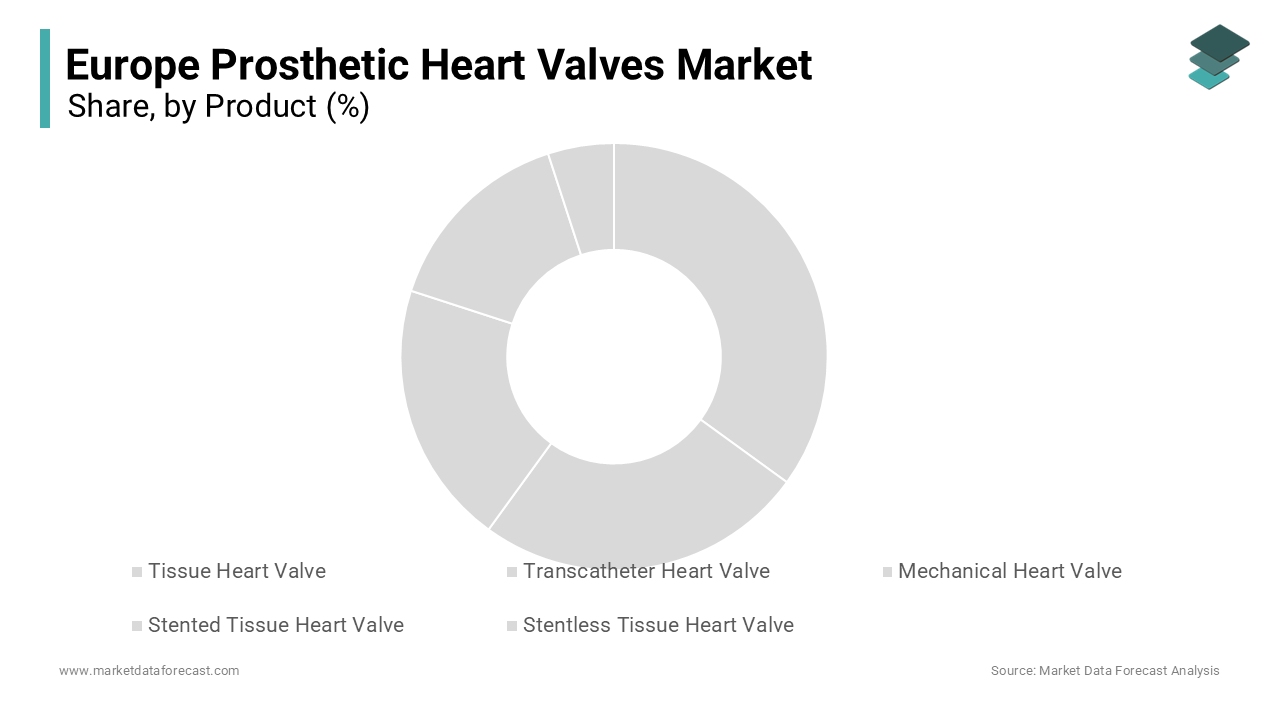
The transcatheter heart valves segment is anticipated to witness a fastest CAGR of 10.6% during the forecast period with their minimally invasive nature and suitability for high risk surgical patients. This growth is fueled by the ability to treat patients who are deemed inoperable or high risk for open heart surgery due to comorbidities such as chronic obstructive pulmonary disease or frailty. The National Institute for Health and Care Excellence in the United Kingdom recommends transcatheter valves as the first line treatment for high risk patients, driving widespread reimbursement and usage. These regulatory endorsements accelerate market penetration. As per data, the average length of stay for transcatheter procedures is 3 days compared to 10 days for surgical replacement, significantly reducing hospital costs and resource utilization. This efficiency makes the technology attractive to healthcare systems facing budget constraints. The reduced trauma and faster recovery times also improve patient satisfaction and outcomes.
COUNTRY ANALYSIS
Germany Prosthetic Heart Valves Market Analysis
Germany was the top performer in the Europe Prosthetic Heart Valves Market by holding 38.1% of share in 2025 with the advanced medical infrastructure and high procedural volumes. The German Society for Thoracic and Cardiovascular Surgery promotes rigorous quality standards and certification programs that drive the adoption of both surgical and transcatheter technologies. The statutory health insurance system provides comprehensive coverage for valve procedures, ensuring financial stability for hospitals investing in advanced equipment. As per the study, the prevalence of valvular heart disease is rising due to an aging population, sustaining steady demand for prosthetic devices. Germany’s strong manufacturing base for medical devices also fosters local innovation and supply chain efficiency.
United Kingdom Prosthetic Heart Valves Market Analysis
The United Kingdom prosthetic heart valves market growth is likely to grow with the national health policies and workforce challenges. The significant shortage of cardiac surgeons, prompting the use of minimally invasive techniques to maximize patient throughput. Data from the Office for National Statistics shows that cardiovascular disease remains a leading cause of death, creating urgent pressure to optimize surgical pathways. The NHS Long Term Plan allocates specific funding for cardiac care modernization, supporting the uptake of advanced valve technologies. As per Macmillan Cancer Support and similar health charities, patient advocacy groups actively push for equitable access to latest treatments, influencing commissioning decisions. The centralized procurement model allows for bulk purchasing of devices and standardized training programs.
France Prosthetic Heart Valves Market Analysis
France prosthetic heart valves market growth is likely to grow with the strong academic research and regional center excellence. According to the study, specialized multidisciplinary teams in comprehensive cancer and heart centers perform the majority of valve replacements, ensuring high-quality care and adherence to best practices. The national screening pilots are identifying earlier stage valve diseases, increasing the pool of operable patients. The social security system reimburses innovative surgical procedures by encouraging hospitals to invest in robotic and advanced imaging systems. The aging population contributes to rising incidence rates, sustaining long term demand. Academic institutions in Paris and Lyon serve as hubs for clinical trials and training, influencing national trends.
Italy Prosthetic Heart Valves Market Analysis
Italy prosthetic heart valves market growth is propelled with the significant variations between northern and southern regions in terms of technology adoption. Northern regions like Lombardy and Emilia Romagna have higher rates of transcatheter valve interventions due to better funded healthcare facilities and specialized centers. The valve disease mortality is declining in areas with high surgical volume, promoting the impact of access to quality care. The national health service provides coverage for valve surgery, but budget constraints in some regions limit investment in expensive transcatheter systems. There is a growing emphasis on training young surgeons in minimally invasive techniques to address workforce gaps. Private insurance plays a supplementary role in accessing cutting edge technologies in some areas.
Spain Prosthetic Heart Valves Market Analysis
Spain prosthetic heart valves market growth is driven by the public health modernization and specialist society advocacy. The Ministry of Health’s cardiovascular strategy prioritizes early diagnosis and multidisciplinary treatment, leading to more referrals for surgical evaluation. Data from the National Statistics Institute indicates that smoking prevalence has decreased but valve disease incidence remains high due to aging by ensuring sustained caseloads. Regional health services in Catalonia and Madrid act as leaders in implementing transcatheter valve programs, setting benchmarks for other regions. The digital health investments are improving connectivity between hospitals, facilitating remote consultations and second opinions. The economic recovery post pandemic has allowed for renewed capital expenditure on surgical equipment.
COMPETITIVE LANDSCAPE
The competition in the Europe Prosthetic Heart Valves Market is characterized by intense rivalry among established multinational corporations and emerging niche brands seeking to capture market share. Large dairy conglomerates leverage their extensive distribution networks and brand recognition to dominate mainstream segments, while specialized biotechnology firms focus on high potency supplements and personalized solutions. Price competition is moderate due to the premium nature of functional foods but private label offerings from major retailers exert pressure on branded products. Innovation serves as a key differentiator with companies constantly launching new formats and strains to appeal to health-conscious consumers. Regulatory compliance creates barriers to entry favoring players with robust scientific validation capabilities. Digital transformation has intensified competition as online platforms enable direct to consumer models that bypass traditional retail channels. Collaborations with healthcare professionals enhance credibility and drive prescription based sales. Consumer loyalty is driven by perceived efficacy and brand trust making reputation management crucial.
KEY MARKET PLAYERS
Some of the top companies leading the Europe Prosthetic Heart Valves Market include
- Corvia Medical
- CardioKinetix
- Biomerics LLC
- Lepu Medical Technology
- XELTIS BV
- Comed BV
- HLT
- Meril Life Sciences
- SYMETIS SA
- Transcatheter Technologies GmbH.
Top Players in the Europe Prosthetic Heart Valves Market
Edwards Lifesciences Corporation
Edwards Lifesciences Corporation is a global leader in the Europe Prosthetic Heart Valves Market, renowned for its pioneering transcatheter aortic valve replacement technology. The company focuses on improving patient outcomes through minimally invasive solutions that reduce recovery time and complications. Recent initiatives include expanding its portfolio with next generation valves designed for improved durability and hemodynamic performance. Edwards actively collaborates with European heart centers to conduct clinical trials and train medical professionals on advanced implantation techniques. Its commitment to innovation and education strengthens its position as a trusted partner for healthcare providers seeking state of the art valve therapies across the continent.
Medtronic plc
Medtronic plc plays a pivotal role in the Europe Prosthetic Heart Valves Market by offering a comprehensive range of surgical and transcatheter valve solutions. The company leverages its extensive research capabilities to develop devices that address complex anatomical challenges and improve long term durability. Recent actions involve launching upgraded versions of its transcatheter valves with enhanced delivery systems for easier navigation. Medtronic emphasizes integrated care models that combine hardware with data analytics to optimize patient management. The company also engages in strategic partnerships with hospitals to streamline supply chains and support value based care. Through continuous product improvement and strong clinical evidence, Medtronic reinforces its reputation for reliability and technological excellence in the European market.
Abbott Laboratories
Abbott Laboratories contributes significantly to the Europe Prosthetic Heart Valves Market through its innovative structural heart division and diverse product portfolio. The company specializes in both transcatheter and surgical valve replacements, focusing on minimally invasive options for high risk patients. Recent strategies include acquiring specialized technologies to expand its capabilities in mitral and tricuspid valve interventions. Abbott invests heavily in clinical research to validate the efficacy and safety of its devices in real world settings. The company also provides extensive training programs for interventional cardiologists and surgeons to ensure proper device utilization.
Top Strategies Used by Key Market Participants
Key players in the Europe Prosthetic Heart Valves Market employ diverse strategies to maintain competitive advantage and drive growth. Product innovation remains a primary focus with companies investing heavily in research and development to create novel formulations that address specific health needs such as immune support and mental well-being. Strategic partnerships and collaborations with academic institutions enable firms to validate product efficacy through rigorous clinical trials enhancing consumer trust and regulatory compliance. Expansion into digital health platforms allows brands to offer personalized nutrition advice and subscription services fostering long term customer loyalty and recurring revenue streams. Mergers and acquisitions facilitate access to new technologies and distribution networks enabling rapid market penetration and portfolio diversification. Sustainability initiatives are increasingly central to corporate strategies with manufacturers adopting eco-friendly packaging and ethical sourcing practices to align with consumer values and regulatory requirements.
MARKET SEGMENTATION
This market research report has been Europe Prosthetic Heart Valves Market segmented and sub-segmented into the following categories.
By Product
- Tissue Heart Valve
- Transcatheter Heart Valve
- Mechanical Heart Valve
- Stented Tissue Heart Valve
- Stentless Tissue Heart Valve
By Country
- UK
- France
- Spain
- Germany
- Italy
- Russia
- Sweden
- Denmark
- Switzerland
- Netherlands
- Turkey
- Czech Republic
- Rest of Europe