- Product Description Description
- Table of Contents TOC
- List of Table & Figure LOT
- Get Free Sample PDF Sample PDF
Market Size, 2025
$3.46 BnMarket Estimate, 2026
$3.63 BnMarket Forecast, 2034
$5.39 BnCAGR, 2026–2034
5.06%Europe Race Car Market Report Summary
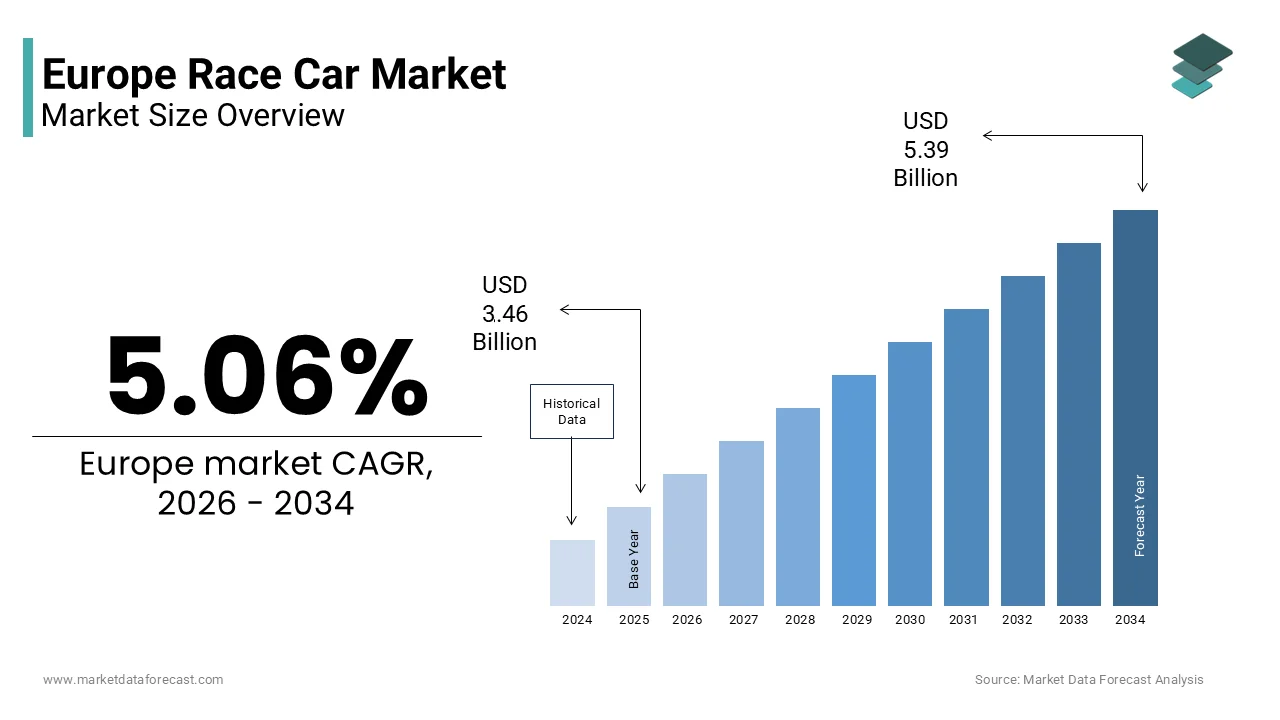
The Europe race car market was valued at USD 3.46 billion in 2025, is estimated to reach USD 3.63 billion in 2026, and is projected to reach USD 5.39 billion by 2034, growing at a CAGR of 5.06% during the forecast period. Market growth is driven by increasing investments in motorsports, rising popularity of racing events, and continuous advancements in automotive engineering and performance technologies. The expansion of professional racing leagues and growing interest in electric and hybrid racing formats are further supporting market development. In addition, strong sponsorship ecosystems and technological innovation are contributing to sustained growth across Europe.
Key Market Trends
- Rising popularity of motorsports and racing events is driving demand for race cars.
- Increasing investments in high performance automotive technologies are supporting market growth.
- Growing adoption of hybrid and electric racing vehicles is shaping future market trends.
- Expansion of professional racing leagues and competitions is boosting market demand.
- Technological advancements in aerodynamics, materials, and engine performance are enhancing vehicle efficiency.
Segmental Insights
- Based on vehicle type, the formula racing cars segment was the largest and held 41.9% of the Europe race car market share in 2025. This dominance is attributed to the global popularity of formula racing championships and continuous technological innovation in this segment.
- Based on fuel type, the petrol segment accounted for 64.5% of the Europe race car market share in 2025. The segment’s growth is driven by the widespread use of high performance petrol engines in traditional racing formats.
- Based on application, the professional racing segment dominated with 71.6% of the Europe race car market share in 2025, supported by established racing leagues, sponsorships, and competitive motorsport ecosystems.
- Based on distribution channel, the OEM segment held 59.4% of the Europe race car market share in 2025, driven by direct manufacturing and customization by automotive companies and racing teams.
Regional Insights
- The Europe race car market is experiencing steady growth across key countries, supported by strong motorsport culture and advanced automotive industry.
- The United Kingdom was the largest contributor, accounting for 26.2% of the Europe race car market share in 2025, driven by the presence of major racing teams, advanced engineering capabilities, and a well established motorsport ecosystem.
Competitive Landscape
The Europe race car market is highly competitive, with leading players focusing on performance innovation, strategic partnerships, and participation in global racing events to strengthen their market position. Companies are investing in advanced engineering, lightweight materials, and next generation propulsion technologies. Prominent players in the Europe race car market include Scuderia Ferrari, Mercedes AMG Petronas Formula One Team, Red Bull Racing, Ferrari, Porsche, BMW, Audi, Lamborghini, McLaren, Aston Martin, Alpine, Peugeot, Jaguar, Nissan, DS Automobiles, Škoda, and Reiter Engineering.
 Download Free Sample Report
Europe Race Car Market Size
The Europe race car market size was valued at USD 3.46 billion in 2025 and is projected to reach USD 5.39 billion by 2034 from USD 3.63 billion in 2026, growing at a CAGR of 5.06%.
Race cars are high performance vehicles engineered specifically for motorsport disciplines ranging from single seater formulas to endurance prototypes and touring cars. This sector serves as a critical technological incubator where advancements in aerodynamics materials science and powertrain efficiency are pioneered before trickling down to consumer automotive applications. The ecosystem is deeply intertwined with a rich cultural heritage of racing that spans iconic circuits such as Monaco Silverstone and Spa Francorchamps. According to the Fédération Internationale de l'Automobile, Europe hosts approximately 40% of all global motorsport events, underscoring its centrality in the international racing calendar. The economic impact extends beyond ticket sales, as per a study by Oxford Economics, the Formula 1 Grand Prix in Britain alone generates over 100 million pounds in economic activity for the local region annually. Regulatory frameworks are increasingly shaping the landscape with the European Union emphasizing sustainability in industrial processes. As per the European Commission, the Fit for 55 package influences manufacturing standards, pushing teams to adopt cleaner production methods. The integration of hybrid technologies in top tier competitions reflects this shift. Furthermore the rise of simulation technology has democratized access to racing skills allowing a broader talent pool to emerge. This dynamic environment combines traditional engineering excellence with modern digital innovation creating a robust and evolving market structure that attracts significant investment and global attention.
MARKET DRIVERS
Technological Innovation and Transfer to Consumer Automotive Sector
The relentless pursuit of technological innovation is primarily driving the growth of the European race car market as manufacturers leverage motorsport as a high visibility testing ground for advanced automotive technologies. Racing teams invest heavily in research and development to gain competitive advantages in areas such as energy recovery systems lightweight composite materials and aerodynamic efficiency. According to the Society of Motor Manufacturers and Traders, the automotive industry in the United Kingdom, which is heavily influenced by motorsport engineering, contributes over 80 billion pounds to the economy annually. This synergy between racing and road car development creates a compelling value proposition for original equipment manufacturers who sponsor teams to showcase their engineering prowess. As per a report by McKinsey and Company, technologies developed in Formula 1, such as kinetic energy recovery systems, have directly influenced the design of hybrid powertrains in commercial vehicles. The rapid iteration cycles in racing allow for faster validation of new concepts compared to traditional automotive development timelines. This acceleration fosters a culture of continuous improvement and innovation. Companies like Mercedes AMG and Ferrari utilize their racing divisions to enhance brand prestige and demonstrate technical superiority. The transfer of knowledge from track to road not only improves vehicle performance but also enhances fuel efficiency and safety features. This reciprocal relationship ensures sustained investment in the race car market as it remains integral to the broader automotive innovation ecosystem.
Growing Popularity of E-sports and Simulation Racing
The burgeoning popularity of e-sports and simulation racing significantly drives interest and participation in the Europe race car market by lowering barriers to entry and engaging younger demographics, which is further fuelling the expansion of the European race car market. Virtual racing platforms provide accessible avenues for enthusiasts to experience competitive motorsport without the prohibitive costs associated with physical vehicle ownership and track time. According to Newzoo, the global esports audience reached 532 million viewers in 2023, with a substantial portion residing in Europe. This digital engagement translates into increased demand for real world racing experiences and merchandise. As per data from the British Automobile Racing Club, membership numbers have seen a steady increase among individuals who initially engaged with the sport through simulators. The credibility of simulation racing has been bolstered by professional drivers participating in virtual events during periods when physical races were suspended. This crossover has legitimized esports as a serious component of the motorsport landscape. Automotive manufacturers and racing teams have established dedicated esports divisions to capitalize on this trend. The integration of virtual and physical racing creates a comprehensive ecosystem that nurtures talent from a young age. Sponsorship opportunities in esports offer cost effective marketing channels for brands seeking to reach tech savvy audiences. This digital expansion broadens the fan base and sustains long term interest in the race car market.
MARKET RESTRAINTS
Stringent Environmental Regulations and Sustainability Mandates
Stringent environmental regulations and sustainability mandates are significant restraints on the Europe race car market growth by imposing costly compliance requirements and limiting traditional engine configurations. The European Union’s aggressive climate goals necessitate a transition away from internal combustion engines which have historically been the heart of motorsport. According to the European Environment Agency, transport accounts for nearly 25% of greenhouse gas emissions in the EU, prompting strict regulatory oversight. These pressures force racing series to adopt alternative fuels and hybrid technologies which require substantial investment in research and infrastructure. As per the Fédération Internationale de l'Automobile, the introduction of sustainable fuels in Formula 1 aims to reduce carbon footprints but involves complex logistical and technical challenges. The cost of developing compliant powertrains can be prohibitive for smaller teams leading to potential consolidation or exit from the sport. Additionally noise restrictions in many European countries limit the number of track days and testing opportunities affecting team preparation. The shift towards electrification also alters the fundamental nature of racing potentially alienating traditional fans who appreciate the sound and mechanics of combustion engines. Balancing environmental responsibility with the spectacle of racing remains a delicate challenge. These regulatory constraints increase operational costs and complicate strategic planning for stakeholders in the race car market.
High Operational Costs and Financial Barriers to Entry
The exorbitant operational costs and financial barriers to entry constitute a major restraint for the Europe race car market limiting participation to well-funded entities and restricting grassroots growth. Competing at a professional level requires significant expenditure on vehicle development maintenance logistics and personnel. According to a financial analysis by RaceFans, the budget cap in Formula 1 was set at 135 million US dollars for 2023, yet this figure remains out of reach for most aspiring teams and drivers. In lower categories such as Formula 3 and Formula 4, costs still range from 500,000 to 1 million euros per season. As per the Royal Automobile Club Motor Sports Association, the cost of karting, a foundational step in racing careers, has increased by 15% in recent years due to inflation and supply chain issues. These financial hurdles deter talented individuals from lower socioeconomic backgrounds from pursuing professional racing careers. The lack of affordable pathways limits the diversity and depth of the talent pool. Smaller racing series struggle to attract sponsors and participants due to high overheads. The concentration of resources among a few dominant teams reduces competitive balance and viewer interest. Without effective cost containment measures and financial support mechanisms, the market risks becoming exclusive and stagnant. Addressing these economic challenges is crucial for the long term vitality and inclusivity of the European race car ecosystem.
MARKET OPPORTUNITIES
Expansion of Electric and Hybrid Racing Series
The expansion of electric and hybrid racing series presents a significant opportunity for the Europe race car market by aligning with global sustainability trends and attracting new audiences. Championships such as Formula E and Extreme E demonstrate the viability of high performance electric vehicles in competitive settings. According to the International Energy Agency, sales of electric cars in Europe surpassed 2 million units in 2023, reflecting a growing consumer interest in electrified mobility. This market shift creates a favorable environment for electric racing series to gain traction and secure sponsorship from automotive manufacturers transitioning to electric portfolios. As per Deloitte, 60% of consumers are more likely to engage with brands that demonstrate commitment to sustainability. Racing series that prioritize green technologies can leverage this sentiment to enhance their brand value and appeal. The development of battery technology and charging infrastructure for racing applications also offers potential spill over benefits for the broader automotive industry. Governments and local authorities are more inclined to support events that align with environmental goals facilitating easier permitting and public acceptance. The novelty of electric racing attracts younger and more diverse demographics expanding the fan base. By embracing electrification the race car market can future proof its operations and remain relevant in a rapidly changing automotive landscape.
Integration of Advanced Data Analytics and Artificial Intelligence
The integration of advanced data analytics and artificial intelligence offers substantial opportunities for enhancing performance and operational efficiency in the Europe race car market. Teams generate vast amounts of data from sensors embedded in vehicles which can be analyzed to optimize strategy and vehicle setup. According to IBM, the use of AI in sports has grown by 30% annually, with motorsport being a key adopter due to the complexity of variables involved. Real time data processing allows engineers to make informed decisions during races improving competitiveness and safety. As per a case study by Amazon Web Services, the collaboration with Formula 1 has demonstrated how cloud computing can enhance fan engagement through personalized content and insights. This technological integration also creates new revenue streams through data licensing and digital services. The application of machine learning algorithms helps predict component failures reducing downtime and maintenance costs. Simulation tools powered by AI enable drivers to practice on virtual tracks with high fidelity accelerating skill development. The adoption of these technologies positions European teams at the forefront of innovation attracting tech focused sponsors and partners. By leveraging data driven insights the race car market can achieve greater precision and efficiency fostering a culture of continuous improvement and technological leadership.
MARKET CHALLENGES
Balancing Tradition with Technological Evolution
Balancing the preservation of traditional racing values with the rapid pace of technological evolution is the primary challenge of the European race car market. Purists argue that the essence of motorsport lies in the mechanical prowess of internal combustion engines and driver skill whereas modern regulations emphasize hybridization and digital assistance. According to a survey by YouGov, 40% of traditional motorsport fans express concern that excessive technology diminishes the authenticity of racing. This tension creates a dichotomy within the fan base potentially fragmenting audiences. As per the Historic Racing Group, the participation in classic car events remains strong, indicating a persistent demand for traditional formats. However the industry must adapt to regulatory and societal pressures for sustainability. Navigating this transition requires careful communication and strategic planning to retain legacy supporters while attracting new ones. The risk of alienating core fans could impact ticket sales and merchandise revenue. Manufacturers must ensure that technological advancements enhance rather than overshadow the competitive spirit of racing. Maintaining the emotional connection between fans and the sport is crucial for long term success. Achieving this equilibrium demands innovative approaches to rule making and event presentation that respect heritage while embracing progress.
Supply Chain Volatility and Component Availability
Supply chain volatility and component availability pose significant challenges to the Europe race car market disrupting production schedules and increasing costs. The industry relies on specialized parts sourced from a global network of suppliers which are vulnerable to geopolitical tensions and logistical bottlenecks. According to the European Automobile Manufacturers Association, the automotive sector faced delays of up to 12 weeks for certain electronic components in 2023. These disruptions affect racing teams who often operate on tight timelines and require just in time delivery of custom parts. As per a report by KPMG, the cost of raw materials such as carbon fiber and aluminum has fluctuated by 20% in the past two years, impacting budget planning. The scarcity of skilled labor in manufacturing further exacerbates these issues. Teams must maintain larger inventories to mitigate risks tying up capital and storage space. The reliance on single source suppliers for critical technologies increases vulnerability to disruptions. Diversifying supply chains is a complex and costly endeavor. The uncertainty surrounding material availability complicates long term strategic planning. Addressing these supply chain vulnerabilities requires collaborative efforts between teams suppliers and regulatory bodies to build resilience and ensure the continuity of competitive operations in the European race car market.
REPORT COVERAGE
| REPORT METRIC | DETAILS |
| Market Size Available | 2025 to 2034 |
| Base Year | 2025 |
| Forecast Period | 2026 to 2034 |
| CAGR | 5.06% |
| Segments Covered | By Vehicle Type, Fuel Type, Application, Distribution Channel, and Region |
| Various Analyses Covered | Global, Regional, & Country Level Analysis; Segment-Level Analysis; DROC, PESTLE Analysis; Porter’s Five Forces Analysis; Competitive Landscape; Analyst Overview of Investment Opportunities |
| Regions Covered | UK, France, Spain, Germany, Italy, Russia, Sweden, Denmark, Switzerland, Netherlands, Turkey, and the Czech Republic |
| Market Leaders Profiled | Scuderia Ferrari, Mercedes AMG Petronas Formula One Team, Red Bull Racing, Ferrari, Porsche, BMW, Audi, Lamborghini, McLaren, Aston Martin, Alpine, Peugeot, Jaguar, Nissan, DS Automobiles, Škoda, and Reiter Engineering. |
SEGMENTAL ANALYSIS
By Vehicle Type Insights
The formula racing cars segment was the biggest segment and accounted for 41.9% of the European race car market share in 2025 due to the unparalleled global visibility and commercial value associated with premier single seater championships particularly Formula 1. The high profile nature of these events attracts substantial sponsorship deals and media rights fees which far exceed those of other racing categories. According to Deloitte, the total revenue of Formula 1 reached a record 3.2 billion US dollars in 2023, reflecting the immense financial power of this segment. As per the Fédération Internationale de l'Automobile, Formula 1 races in Europe, such as those in Monaco Italy and Spain, draw millions of television viewers and hundreds of thousands of trackside spectators annually. The technological prestige associated with Formula racing also drives significant investment from automotive manufacturers seeking to showcase their engineering capabilities. Teams operate with budgets that allow for continuous innovation in aerodynamics and powertrain efficiency creating a high barrier to entry but ensuring sustained dominance. The presence of iconic teams like Ferrari Mercedes and Red Bull Racing further cements the segment's market leadership. The economic impact on host cities and countries reinforces government support for maintaining these prestigious events. This combination of commercial success technological prestige and global appeal ensures that Formula Racing Cars remain the cornerstone of the European race car market.
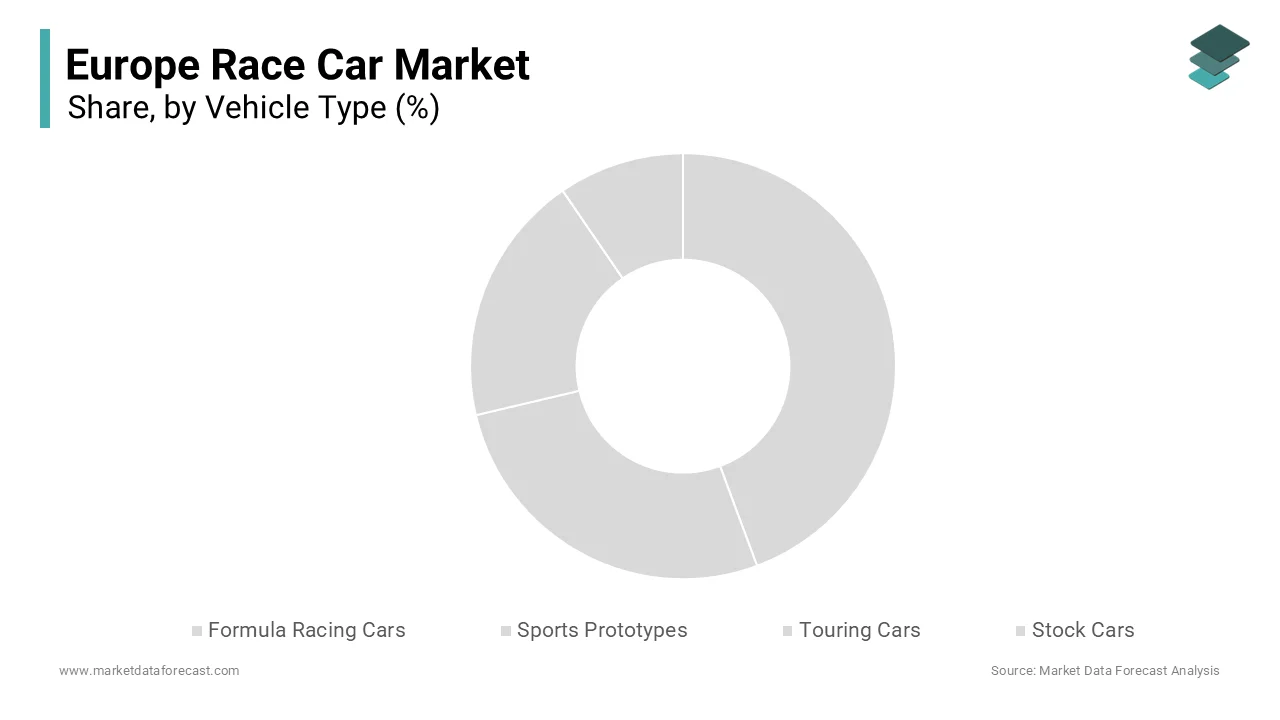
However, the sports prototypes segment is growing at the fastest and is likely to register a CAGR of 8.1% over the forecast period owing to the resurgence of endurance racing and manufacturer interest in hybrid technologies. Championships such as the FIA World Endurance Championship and the European Le Mans Series have gained significant traction due to their focus on sustainability and technological innovation. According to the Automobile Club de l'Ouest, participation in the 24 Hours of Le Mans has increased by 15% in recent years, highlighting growing interest in endurance formats. As per data from major automotive manufacturers like Porsche Toyota and Ferrari, the development of hypercar and LMDh prototypes represents a strategic shift towards showcasing hybrid powertrains in competitive environments. These vehicles serve as test beds for future road car technologies aligning with corporate sustainability goals. The format of endurance racing which emphasizes reliability and efficiency over pure speed appeals to a broader audience including technical enthusiasts. Broadcast coverage of endurance events has expanded globally increasing visibility and sponsorship opportunities. The inclusion of multiple classes allows for diverse participation from privateer teams and factory efforts fostering a competitive ecosystem. This renewed focus on endurance racing as a platform for innovation and brand building drives the rapid growth of the Sports Prototypes segment in Europe.
By Fuel Type Insights
The petrol segment dominated the market by commanding for the leading share of 64.5% of the regional market share in 2025. This dominance is attributed to the widespread use of internal combustion engines in existing racing series and the established infrastructure supporting petrol fueled vehicles. Despite the push for electrification many grassroots and professional categories continue to rely on petrol due to its energy density and performance characteristics. According to the International Energy Agency, petrol remains the primary fuel for most motorsport activities globally, with Europe being a significant consumer. As per the Fédération Internationale de l'Automobile, traditional combustion engine races still constitute the majority of events on the European calendar, including touring cars rally and formula feeder series. The extensive network of fuel suppliers and service stations ensures easy availability and logistical support for teams. Many historic racing series and classic car events strictly mandate the use of petrol to preserve authenticity. The transition to alternative fuels is gradual and requires significant investment in new engine designs and infrastructure. Until electric and hybrid technologies become more cost effective and widely adopted across all levels of competition petrol will remain the standard. The entrenched presence of petrol engines in training programs and amateur racing further sustains its market leadership. This legacy infrastructure and performance reliability ensure petrol continues to dominate the fuel type segment.
On the other side, the hybrid segment is experiencing the fastest growth and is estimated to register a CAGR of 13.3% over the forecast period owing to the regulatory mandates and manufacturer strategies to integrate sustainable technologies into motorsport. Top tier series such as Formula 1 and the World Endurance Championship have mandated the use of hybrid power units to reduce emissions and improve efficiency. According to the European Commission, the Fit for 55 package encourages the adoption of low carbon technologies in all sectors, including sports and leisure. As per data from Formula 1, the introduction of advanced hybrid systems has reduced fuel consumption by 30% while maintaining high performance levels. Automotive manufacturers view hybrid racing as a crucial platform for developing technologies that can be transferred to consumer vehicles. The success of hybrid prototypes in endurance racing has demonstrated the viability of these systems in demanding conditions. Sponsorship from energy companies and technology firms focused on sustainability further supports this growth. The appeal of hybrid racing to environmentally conscious audiences and regulators enhances its market potential. As more series adopt hybrid regulations the demand for related components and expertise increases. This regulatory and technological shift positions the hybrid segment as the primary driver of future growth in the European race car market.
By Application Insights
The professional racing segment led the market by capturing the major share of 71.6% of the European market in 2025 due to the high financial stakes involved in top tier competitions including Formula 1 World Endurance Championship and various touring car series. Professional teams operate with substantial budgets funded by sponsorships media rights and manufacturer support enabling significant investment in vehicle development and talent. According to Statista, the global sports sponsorship market, which is heavily influenced by motorsport, is valued at over 60 billion US dollars, with Europe being a key region. As per the European Broadcasting Union, television rights for major racing events generate hundreds of millions of euros annually, contributing to the segment's financial strength. The presence of world class circuits and facilities in Europe attracts international teams and drivers fostering a competitive environment. Professional racing serves as a marketing platform for automotive brands enhancing brand visibility and prestige. The economic impact of professional events on local economies further justifies public and private investment. The structured nature of professional series with clear regulations and governance ensures stability and long term viability. This concentration of resources and attention ensures that professional racing remains the primary application segment in the market.
However,, the amateur racing segment is the fastest growing application category with an expected CAGR of 10.55 over the forecast period owing to the increasing disposable income and the democratization of racing experiences. Track day events club racing and amateur championships are becoming increasingly popular among enthusiasts who seek the thrill of competitive driving without the commitment of a professional career. According to the Royal Automobile Club Motor Sports Association, membership in amateur racing clubs in the United Kingdom has increased by 10% annually in recent years. As per data from circuit operators across Europe, the number of track days booked by private individuals has risen significantly, reflecting growing interest in participatory motorsport. The availability of affordable entry level vehicles and rental programs lowers barriers to entry for newcomers. Social media platforms facilitate community building and event promotion attracting younger demographics. The rise of sim racing has also inspired many individuals to try real world racing creating a pipeline of engaged participants. Organizers are introducing flexible formats and lower cost categories to accommodate diverse skill levels and budgets. This grassroots expansion broadens the base of the motorsport pyramid ensuring a steady supply of talent and fans. The personal fulfillment and social aspects of amateur racing drive its rapid growth in the European market.
By Distribution Channel Insights
The OEM segment led the market with 59.4% of the regional market share in 2025. The leading position of OEM segment in the European market is driven by the direct supply of purpose built race cars and components by major automotive manufacturers to professional teams and series. OEMs leverage their engineering expertise and production capabilities to deliver high performance vehicles that meet strict regulatory standards. According to the Society of Motor Manufacturers and Traders, the UK motorsport industry, which relies heavily on OEM partnerships, contributes significantly to the national economy through exports and services. As per annual reports from manufacturers like Ferrari Porsche and Mercedes AMG, a substantial portion of their revenue is derived from customer racing programs and specialized vehicle sales. These programs allow private teams to purchase competitive cars directly from the factory ensuring quality and support. The brand loyalty and trust associated with OEM products make them the preferred choice for many competitors. OEMs also benefit from economies of scale and integrated supply chains which reduce costs and improve availability. The technical support and spare parts networks provided by manufacturers enhance the value proposition for customers. This direct relationship between manufacturers and teams ensures that OEMs remain the primary distribution channel in the market.
On the other hand, the aftermarket segment is experiencing the fastest growth and is estimated to showcase a promising CAGR of 9.1% over the forecast period owing to the rising need for customization performance upgrades and maintenance of existing race cars. Teams and individual racers frequently source specialized components such as suspension systems braking kits and aerodynamic parts from third party suppliers to enhance vehicle performance. According to the Specialty Equipment Market Association, the global automotive aftermarket industry is expanding, with motorsport being a significant niche. As per data from European distributors, the demand for high performance aftermarket parts has increased due to the growing number of amateur and semi-professional racing events. The flexibility and innovation offered by aftermarket suppliers allow for tailored solutions that may not be available from OEMs. Online platforms have simplified the procurement process enabling easier access to a wide range of products from international suppliers. The cost effectiveness of aftermarket components compared to factory parts appeals to budget conscious competitors. Collaborations between aftermarket brands and racing teams also provide marketing opportunities that drive sales. The continuous evolution of racing regulations often necessitates updates and modifications further boosting aftermarket demand. This dynamic and responsive sector is poised for sustained growth in the European race car market.
REGIONAL ANALYSIS
United Kingdom Race Car Market Analysis
The United Kingdom led the market by holding 26.2% of the European market share in 2025. The dominance of the UK in the European market is driven by its dense cluster of motorsport engineering companies known as Motorsport Valley which serves as a global hub for race car design and manufacturing. According to the High Performance Group, the UK is home to over 4,000 motorsport businesses, employing tens of thousands of skilled professionals. As per the Society of Motor Manufacturers and Traders, the UK motorsport industry generates billions of pounds in revenue annually through exports and services. The presence of iconic circuits such as Silverstone and Brands Hatch supports a vibrant racing culture and hosts major international events. Government support for high performance engineering and innovation fosters a conducive environment for growth. The UK is also a leader in motorsport education and training producing a steady stream of talented engineers and drivers. The strong heritage of British racing teams and drivers enhances the country’s global reputation. This combination of industrial capability cultural significance and infrastructure ensures the UK’s continued dominance in the European race car market.
Germany Race Car Market Analysis
Germany had the second largest share of the European race car market in 2025 due to its powerful automotive industry and strong racing heritage. The country is home to major manufacturers such as Mercedes Benz BMW and Porsche which actively participate in various racing series including Formula 1 and endurance championships. According to the German Automotive Industry Association, the motorsport sector plays a crucial role in research and development for mainstream automotive technologies. As per data from the ADAC, the German automobile club, there are hundreds of thousands of licensed motorsport participants in the country, reflecting deep public engagement. The Nürburgring circuit is a legendary venue that attracts racers and fans from around the world serving as a testing ground for new technologies. Germany’s emphasis on engineering excellence and precision manufacturing supports a robust supply chain for race car components. Government policies promoting innovation and sustainability align with the evolving trends in motorsport. The strong domestic fan base and corporate sponsorship further sustain market activity. Germany’s integration of motorsport into its industrial strategy ensures its prominent position in the regional market.
Italy Race Car Market Analysis
Italy is predicted to witness a promising CAGR in the European race car market during the forecast period owing to its passionate racing culture and historical significance. The country is synonymous with Formula 1 due to the presence of Scuderia Ferrari the oldest and most successful team in the championship. According to the Italian Automobile Federation, motorsport is deeply embedded in the national identity, attracting millions of fans to events such as the Italian Grand Prix at Monza. As per data from Confindustria, the Italian manufacturing sector benefits significantly from the high technology spin offs generated by racing activities. Italy is also a center for supercar and specialty vehicle production which overlaps with race car manufacturing. The availability of skilled craftsmen and designers supports a niche market for custom race cars and components. Historic racing events and classic car rallies contribute to tourism and local economies. The government recognizes the cultural and economic value of motorsport providing support for infrastructure and events. Italy’s unique blend of heritage passion and industrial capability maintains its strong standing in the European race car landscape.
France Race Car Market Analysis
France is expected to account for a notable share of the European race car market over the forecast period owing to its diverse racing disciplines and strong manufacturing base. The country hosts prestigious events such as the 24 Hours of Le Mans which is a cornerstone of endurance racing globally. According to the Fédération Française du Sport Automobile, motorsport participation in France is robust with a wide range of clubs and competitions. As per data from the French Ministry of Sports, the economic impact of major racing events contributes significantly to regional development. France is home to several key suppliers and engineering firms that specialize in aerospace and automotive technologies applicable to racing. The Circuit de la Sarthe and other tracks provide essential venues for testing and competition. The French government supports innovation in mobility which includes advancements in racing technologies. The presence of Alpine and other manufacturers in racing series enhances the country’s profile. France’s commitment to hosting international events and developing local talent ensures its continued relevance in the European market.
Spain Race Car Market Analysis
Spain is anticipated to showcase a healthy CAGR in the European race car market during the forecast period due to its favorable climate and popular racing venues. The country hosts Formula 1 and MotoGP events which attract large international audiences and generate significant tourism revenue. According to the Royal Spanish Automobile Federation, motorsport is a growing sector with increasing participation in karting and circuit racing. As per data from the Spanish Ministry of Industry, the automotive sector, including motorsport, contributes to industrial innovation and employment. Circuits such as Circuit de Barcelona Catalunya are renowned for their technical challenges and a
COMPETITIVE LANDSCAPE
The competition in the Europe race car market is intense and characterized by high stakes technological rivalry and significant financial investment. Established teams with deep historical roots compete against well-funded newcomers striving for dominance in premier series. Technical regulations frequently change to promote closer racing and sustainability forcing teams to adapt quickly. Innovation in areas such as aerodynamics energy recovery and materials science serves as a primary differentiator. Sponsorship deals and media rights are critical revenue sources driving aggressive marketing and brand visibility efforts. The entry of new manufacturers into top tier championships increases competitive pressure and raises performance standards. Smaller teams face challenges in securing funding and talent often relying on customer car arrangements or niche series participation. Fan engagement through digital platforms and live events influences commercial success and team valuations. Regulatory bodies play a crucial role in shaping competitive dynamics through rule enforcement and cost controls. The interplay between tradition and modernization defines the strategic landscape. Teams must balance heritage with innovation to remain relevant. This dynamic environment ensures continuous evolution and high levels of performance across all categories of European motorsport.
KEY MARKET PLAYERS
Some of the notable key players in the Europe race car market are
- Scuderia Ferrari
- Mercedes-AMG Petronas Formula One Team
- Red Bull Racing
- Ferrari
- Porsche
- BMW
- Audi
- Lamborghini
- McLaren
- Aston Martin
- Alpine
- Peugeot
- Jaguar
- Nissan
- DS Automobiles
- Škoda
- Reiter Engineering
Top Players in the Market
- Scuderia Ferrari stands as an iconic pillar of the Europe race car market with a legacy deeply rooted in Formula 1 history. The team consistently competes at the highest level leveraging extensive engineering resources and a passionate global fan base. Ferrari actively invests in advanced aerodynamics and hybrid powertrain technologies to maintain competitive performance on track. Recent initiatives include strengthening partnerships with technical sponsors and expanding digital engagement platforms to connect with younger audiences. The company utilizes its racing success to enhance brand prestige and drive sales of high performance road cars. Ferrari also participates in endurance racing series demonstrating versatility and technological prowess. Their commitment to innovation and heritage ensures a dominant presence in international motorsport. By integrating sustainable fuel technologies Ferrari aligns with evolving environmental regulations while preserving the essence of competitive racing. This strategic balance solidifies their status as a leading force in the global racing industry.
- Mercedes AMG Petronas Formula One Team is a dominant force in European motorsport known for its technical excellence and operational efficiency. The team has secured multiple world championships through innovative vehicle design and strategic race management. Mercedes leverages its racing program to showcase advancements in hybrid technology and sustainability which translate to consumer vehicles. Recent actions include investing in state of the art simulation facilities and recruiting top engineering talent to maintain a competitive edge. The team actively promotes diversity and inclusion initiatives within motorsport fostering a broader talent pool. Mercedes also engages fans through immersive digital experiences and exclusive content platforms. Their collaboration with industrial partners drives research in materials science and energy efficiency. By maintaining high performance standards and embracing technological evolution Mercedes strengthens its market position. This approach ensures continued relevance and leadership in the rapidly changing landscape of professional racing.
- Red Bull Racing has emerged as a powerhouse in the Europe race car market characterized by aggressive innovation and dynamic team management. The organization combines sporting excellence with bold marketing strategies creating a distinct brand identity globally. Red Bull recently established Red Bull Powertrains to develop in house engine capabilities reducing reliance on external suppliers. This vertical integration enhances technical control and long term competitiveness in Formula 1. The team invests heavily in aerodynamic research and data analytics to optimize vehicle performance. Red Bull also supports junior driver programs nurturing future talent from karting to professional circuits. Their engagement with fans through social media and interactive events expands their reach beyond traditional audiences. By fostering a culture of continuous improvement and risk taking Red Bull maintains a strong competitive stance. This strategic autonomy and innovative spirit reinforce their position as a key player in international motorsport.
Top Strategies Used by Key Market Participants
Key players in the Europe race car market primarily focus on technological innovation and strategic partnerships to maintain competitive advantages. Teams invest heavily in research and development for aerodynamics and powertrain efficiency to comply with evolving regulations. Collaborations with automotive manufacturers and technology firms facilitate knowledge transfer and resource sharing. Digital engagement strategies including esports and virtual reality experiences help expand fan bases and attract younger demographics. Sustainability initiatives such as adopting synthetic fuels and reducing carbon footprints align with regulatory requirements and corporate social responsibility goals. Cost containment measures like budget caps encourage financial discipline and operational efficiency. Talent development programs ensure a steady pipeline of skilled drivers and engineers. These strategies collectively enhance performance brand value and long term viability in a highly competitive global environment.
MARKET SEGMENTATION
This research report on the European race car market has been segmented and sub-segmented based on categories.
By Vehicle Type
- Formula Racing Cars
- Sports Prototypes
- Touring Cars
- Stock Cars
By Fuel Type
- Petrol
- Diesel
- Electric
- Hybrid
By Application
- Professional Racing
- Amateur Racing
By Distribution Channel
- OEMs
- Aftermarket
By Country
- UK
- France
- Spain
- Germany
- Italy
- Russia
- Sweden
- Denmark
- Switzerland
- Netherlands
- Turkey
- Czech Republic
- Rest of Europe