- Product Description Description
- Table of Contents TOC
- List of Table & Figure LOT
- Get Free Sample PDF Sample PDF
Market Size, 2025
$370.55 MnMarket Estimate, 2026
$394.56 MnMarket Forecast, 2034
$652 MnCAGR, 2026–2034
6.48%Europe Renal Biomarkers Market Report Summary
The Europe renal biomarkers market was valued at USD 370.55 million in 2025, is estimated to reach USD 394.56 million in 2026, and is projected to reach USD 652 million by 2034, growing at a CAGR of 6.48% from 2026 to 2034. Market growth is driven by the rising prevalence of chronic kidney disease (CKD), increasing incidence of diabetes and hypertension, and growing demand for early and accurate renal function assessment. Renal biomarkers play a critical role in diagnosing acute kidney injury (AKI), monitoring disease progression, and guiding therapeutic decisions. Advancements in molecular diagnostics, increased screening awareness, and expanding clinical research initiatives are further supporting market expansion across Europe.
Key Market Trends
- Increasing focus on early detection of chronic kidney disease (CKD).
- Rising adoption of advanced immunoassay-based diagnostic platforms.
- Growing demand for biomarkers supporting precision medicine approaches.
- Expansion of hospital laboratory automation and high-throughput testing systems.
- Strengthening integration of renal biomarkers into routine health screening programs.
Segmental Insights
- Based on diagnostic technique, the enzyme-linked immunosorbent assay (ELISA) segment dominated the Europe renal biomarkers market in 2025, driven by its high sensitivity, cost-effectiveness, and widespread clinical adoption.
- Based on type, the serum creatinine segment held the dominant position in 2025, supported by its routine use in assessing kidney function and estimating glomerular filtration rate (GFR).
Regional Insights
The Europe renal biomarkers market is witnessing steady growth across major economies, supported by strong healthcare infrastructure, increasing chronic disease burden, and ongoing investments in diagnostic innovation.
- Germany stood as the leading country in 2025, holding 23.2% of the regional market share, driven by advanced laboratory infrastructure and strong public healthcare funding.
- France maintained a promising share in 2025, supported by structured screening programs and modernization of diagnostic facilities.
- The United Kingdom is expected to account for a significant share during the forecast period, driven by its strong medical research ecosystem and unified National Health Service framework supporting widespread diagnostic adoption.
Competitive Landscape
The Europe renal biomarkers market is characterized by the presence of global diagnostic companies and specialized biomarker developers with strong technological capabilities. Market participants are focusing on expanding biomarker panels, enhancing assay sensitivity, and integrating automated diagnostic platforms. Strategic collaborations, research partnerships, and regulatory approvals are shaping competitive dynamics across the region.
Prominent companies operating in the Europe renal biomarkers market include Abbott Diagnostics, F. Hoffmann-La Roche AG, Beckman Coulter Inc., Astute Medical Inc., Siemens Healthcare Diagnostics Inc., Thermo Fisher Scientific Inc., Alere Inc., bioMérieux SA, and Randox Laboratories Ltd.
Europe Renal Biomarkers Market Size
The Europe application lifecycle management market was valued at USD 370.55 million in 2025, is estimated to reach USD 394.56 million in 2026, and is projected to reach USD 652 million by 2034, growing at a CAGR of 6.48% from 2026 to 2034.

Renal biomarkers encompass a sophisticated diagnostic landscape dedicated to identifying early signs of kidney dysfunction through measurable biological indicators in blood and urine. These biomarkers include traditional metrics like serum creatinine and albuminuria, alongside emerging molecular markers such as neutrophil gelatinase-associated lipocalin and kidney injury molecule 1. The clinical necessity for these tools results from the silent progression of chronic kidney disease, which often remains undetected until significant organ damage occurs. As per data from the Global Burden of Disease Study, the prevalence of chronic kidney disease in Western Europe has risen steadily. According to the European Society of Cardiology, cardiovascular complications linked to renal dysfunction are a major contributor to mortality among patients with advanced kidney disease. This interconnection drives the integration of renal testing into broader cardiovascular risk assessments across primary care settings. National health services in countries like Germany and France have increasingly prioritized early screening protocols to mitigate the long-term economic burden of dialysis and transplantation. The shift toward precision medicine further amplifies the relevance of specific biomarkers that can differentiate between various etiologies of acute kidney injury. Such diagnostic granularity enables clinicians to tailor therapeutic interventions more effectively, while monitoring drug-induced nephrotoxicity in real time.
MARKET DRIVERS
Rising Prevalence of Diabetes and Hypertension Drives Diagnostic Necessity
The escalating incidence of diabetes mellitus and hypertension across Europe is propelling the growth of the European renal biomarkers market. These two conditions remain the leading causes of chronic kidney disease and necessitate regular monitoring to prevent progression to end-stage renal failure. According to the International Diabetes Federation, diabetes continues to affect millions of adults in the European region, with projections indicating further increases in the coming decades. Hyperglycemia damages the delicate filtering units within the kidneys, making early detection through sensitive biomarkers critical for timely intervention. Similarly, as per the World Health Organization, hypertension impacts a significant portion of the adult population in the European Union, with many cases remaining undiagnosed or poorly controlled. Persistent high blood pressure exerts excessive force on renal blood vessels, leading to a gradual loss of function that traditional tests often miss in early stages. Novel biomarkers offer superior sensitivity in detecting subtle glomerular and tubular injuries before serum creatinine levels rise significantly. Healthcare systems in nations like Italy and Spain have begun integrating these advanced tests into standard care pathways for diabetic and hypertensive patients. This proactive approach aims to reduce the overwhelming demand for renal replacement therapies, which currently cost European healthcare budgets billions of euros annually. The demographic shift toward an aging population further intensifies this demand, as older adults exhibit higher susceptibility to both metabolic disorders and renal decline.
Integration of Biomarkers into Precision Medicine Frameworks
The strategic incorporation of renal biomarkers into precision medicine initiatives is further fuelling the expansion of the European renal biomarkers market. Precision medicine relies on detailed molecular profiling to customize treatment strategies based on individual patient characteristics rather than applying a one-size-fits-all approach. As per the European Commission, member states have committed to expanding citizen access to genomic and molecular data to support personalized healthcare delivery. Renal biomarkers play a pivotal role in this paradigm by distinguishing between different subtypes of acute kidney injury, such as septic versus ischemic origins, which require fundamentally different therapeutic responses. Traditional diagnostic methods often fail to provide this level of specificity, leading to delayed or inappropriate treatments that worsen patient outcomes. Advanced biomarkers like tissue inhibitor of metalloproteinases 2 and insulin-like growth factor binding protein 7 allow clinicians to stratify patients based on their risk of developing severe kidney injury within hours of admission. This capability is particularly valuable in intensive care units, where early intervention can prevent irreversible damage and reduce hospital stays. Pharmaceutical companies are increasingly utilizing these markers during clinical trials to identify suitable candidates and monitor drug safety profiles more accurately. Regulatory bodies like the European Medicines Agency have started recognizing specific biomarkers as qualified tools for drug development, which encourages further investment in biomarker discovery. The convergence of big data analytics with biomarker testing enables predictive modeling that anticipates renal deterioration before clinical symptoms manifest.
MARKET RESTRAINTS
Stringent Regulatory Approval Processes Delay Market Entry
The rigorous regulatory framework governing in vitro diagnostic devices in Europe is impeding the growth of the European renal biomarkers market. Manufacturers must navigate complex conformity assessment procedures under the In Vitro Diagnostic Regulation, which replaced the previous directive to ensure higher safety and performance standards. As per the European Commission, the transition to this new regulation has extended approval timelines for many diagnostic innovators. This delay stems from the requirement for more extensive clinical evidence and post-market surveillance plans, which small and medium-sized enterprises often struggle to generate due to limited resources. The lack of harmonized interpretation guidelines for new biomarkers further complicates the approval process, as notified bodies demand robust data demonstrating clinical utility beyond analytical validity. Many promising biomarkers that show excellent performance in research settings fail to secure market access because they cannot meet the stringent thresholds for clinical impact set by regulators. This situation discourages investment in early-stage biomarker research and slows the translation of scientific discoveries into routine clinical use. Healthcare providers remain hesitant to adopt unapproved tests, even when preliminary data suggest significant benefits, due to liability concerns and reimbursement uncertainties. The fragmented nature of national health technology assessment bodies across Europe adds another layer of complexity, as each country may impose additional requirements for market entry. Consequently, patients in several European regions continue to rely on outdated diagnostic methods while innovative solutions remain stuck in regulatory limbo.
Limited Reimbursement Coverage Restricts Clinical Adoption
The absence of comprehensive reimbursement policies for advanced renal biomarkers significantly hampers their widespread adoption in clinical settings across Europe. While traditional tests like serum creatinine enjoy universal coverage under national health insurance schemes, newer molecular markers often fall into a reimbursement gray zone that limits their accessibility. According to the European Observatory on Health Systems and Policies, reimbursement coverage for novel kidney injury biomarkers remains limited across European countries. This financial uncertainty forces hospitals and diagnostic laboratories to absorb the costs of these tests, which strains already tight healthcare budgets, especially in publicly funded systems. Clinicians frequently opt for cheaper, albeit less sensitive, alternatives to avoid billing disputes or out-of-pocket expenses for patients. The lack of standardized coding for many emerging biomarkers further exacerbates the problem, as providers struggle to submit claims that get approved without extensive documentation. Health technology assessment agencies often demand lengthy cost-effectiveness studies before recommending reimbursement, which delays market penetration for years after initial regulatory approval. Private insurance providers in countries with mixed healthcare systems also exhibit reluctance to cover these tests without strong evidence of reduced long term healthcare expenditures. This creates a vicious cycle where limited usage generates insufficient real-world data to prove economic value, thereby perpetuating the reimbursement gap. Patients in lower-income demographics suffer disproportionately, as they cannot afford testing even when clinically indicated. The resulting underutilization stifles market growth and prevents the realization of potential public health benefits associated with early kidney disease detection.
MARKET OPPORTUNITIES
Expansion of Point of Care Testing Infrastructure
The rapid development and deployment of point-of-care testing platforms present a lucrative opportunity for the European renal biomarkers market. These portable devices enable rapid analysis of kidney function markers directly at the patient's bedside or in primary care clinics without requiring centralized laboratory facilities. As per the European Society of Intensive Care Medicine, point-of-care testing for acute kidney injury biomarkers has been shown to accelerate diagnosis in emergency departments across major urban centers. This acceleration facilitates immediate clinical decision-making, which is crucial for preventing irreversible renal damage in critically ill patients. The decentralization of testing aligns perfectly with European healthcare trends favoring community-based care and reducing hospital admissions for manageable conditions. Technological advancements have miniaturized assay systems while maintaining analytical accuracy comparable to traditional laboratory methods. Governments in countries like the Netherlands and Sweden are investing heavily in digital health infrastructure that supports seamless integration of point-of-care results into electronic health records. This connectivity enhances care coordination and allows for continuous monitoring of high-risk populations outside hospital walls. The growing acceptance of home-based diagnostics among patients further expands the addressable market for user-friendly renal testing kits. Manufacturers who can offer cost effective and easy to use point of care solutions stand to gain significant market share as healthcare systems seek to alleviate pressure on overstretched laboratory networks. The scalability of these platforms makes them ideal for screening programs targeting remote or underserved regions where access to specialized diagnostics remains limited.
Strategic Collaborations Between Academia and Industry
Forming strategic partnerships between academic research institutions and biotechnology companies offers a powerful avenue for accelerating innovation in the European renal biomarkers market. These collaborations leverage the deep scientific expertise of universities with the commercialization capabilities of private enterprises to bring novel discoveries to market faster. As per Eurostat, public-private partnerships in the life sciences sector within the European Union have been increasing, reflecting a growing recognition of their value in driving medical breakthroughs. Academic centers often possess unique patient cohorts and longitudinal data sets that are invaluable for validating the clinical utility of new biomarkers in diverse populations. Industry partners contribute essential resources for large-scale manufacturing, regulatory navigation, and global distribution networks that academia typically lacks. Joint ventures facilitate the sharing of intellectual property and reduce the financial risks associated with early-stage research, which is particularly important for high-cost biomarker development projects. Several successful initiatives in Germany and France have already demonstrated how such alliances can shorten the translational timeline from bench to bedside. These partnerships also foster talent exchange programs that cultivate the next generation of researchers skilled in both basic science and commercial application. Funding bodies like Horizon Europe actively prioritize collaborative proposals that address unmet medical needs in chronic diseases, including kidney disorders. The synergistic effect of combining academic rigor with industrial efficiency creates a fertile environment for discovering multi-marker panels that offer superior diagnostic performance compared to single analyte tests. This model ensures that scientific advancements translate into tangible clinical tools that improve patient outcomes across the continent.
MARKET CHALLENGES
Standardization of Biomarker Assay Methodologies
The lack of standardized methodologies for measuring renal biomarkers poses a significant challenge to the European renal biomarkers market. Different manufacturers utilize varying assay platforms, antibodies, and calibration standards, which lead to discrepancies in test results even when analyzing the same patient sample. As per the International Federation of Clinical Chemistry and Laboratory Medicine, inter-laboratory variability for certain novel kidney injury markers remains a concern depending on the platform used. This inconsistency undermines clinician confidence in the reliability of these tests and complicates the establishment of universal reference ranges and diagnostic cutoffs. Without harmonized protocols, it becomes difficult to compare data from different studies or implement multicenter clinical trials that require uniform measurement criteria. Regulatory agencies struggle to evaluate the performance of new biomarkers when baseline comparability remains elusive across competing products. Laboratories face operational challenges in validating multiple assays and training staff on diverse instrumentation, which increases costs and potential for human error. The absence of international consensus on pre-analytical variables such as sample collection timing and storage conditions further contributes to result variability. Efforts by organizations like the Kidney Disease Improving Global Outcomes initiative to develop standardization frameworks have made progress, but widespread adoption remains slow. Until these methodological gaps are addressed, the full potential of renal biomarkers to transform kidney care will remain unrealized due to persistent doubts about their reproducibility and clinical validity.
Shortage of Skilled Professionals for Interpretation
A critical shortage of healthcare professionals trained in the interpretation and clinical application of advanced renal biomarkers is further challenging the expansion of the European renal biomarkers market. The complexity of emerging markers requires specialized knowledge to integrate results into comprehensive patient management plans, yet current medical curricula often lag behind rapid diagnostic innovations. As per the European Renal Association, nephrologists in certain regions of Europe report limited confidence in interpreting novel tubular injury biomarkers for routine clinical decision making. This knowledge gap extends to primary care physicians, who are often the first point of contact for patients at risk of kidney disease but lack exposure to cutting-edge diagnostic tools during their training. The rapid pace of biomarker discovery outstrips the capacity of continuing medical education programs to update practitioners on the latest evidence and best practices. Misinterpretation of results can lead to unnecessary follow-up tests, inappropriate treatments, or missed opportunities for early intervention, which compromises patient safety and increase healthcare costs. The situation is exacerbated by the uneven distribution of nephrology specialists, with rural areas facing acute shortages that limit access to expert guidance on complex diagnostic scenarios. Hospitals struggle to recruit and retain staff with the requisite expertise in molecular diagnostics, creating bottlenecks in implementing new testing protocols. Addressing this workforce challenge requires coordinated efforts from medical schools, professional societies, and healthcare administrators to embed biomarker literacy into core competencies and provide ongoing support for practicing clinicians.
REPORT COVERAGE
| REPORT METRIC | DETAILS |
| Market Size Available | 2025 to 2034 |
| Base Year | 2025 |
| Forecast Period | 2026 to 2034 |
| Segments Covered | By Diagnostic Technique, Type, and Country. |
| Various Analyses Covered | Global, Regional, and Country-Level Analysis, Segment-Level Analysis, Drivers, Restraints, Opportunities, Challenges; PESTLE Analysis; Porter’s Five Forces Analysis, Competitive Landscape, Analyst Overview of Investment Opportunities |
| Countries Covered | UK, France, Spain, Germany, Italy, Russia, Sweden, Denmark, Switzerland, Netherlands, Turkey, Czech Republic, and the Rest of Europe. |
| Market Leaders Profiled | Abbott Diagnostics, F. Hoffmann-La Roche AG, Beckman Coulter Inc., Astute Medical Inc., Siemens Healthcare Diagnostics Inc., Thermo Fisher Scientific Inc., Alere Inc., bioMérieux SA, and Randox Laboratories Ltd. |
SEGMENTAL ANALYSIS
By Diagnostic Technique Insights
The enzyme-linked immunosorbent assay segment dominated the market by commanding the highest share of the European renal biomarkers market in 2025. The dominance of enzyme linked immunosorbent assay segment in the Europe renal biomarkers market is attributed to its widespread adoption in clinical laboratories and cost-effectiveness. This technique remains the gold standard for quantifying specific proteins, such as neutrophil gelatinase-associated lipocalin and kidney injury molecule 1, with high sensitivity. The primary driver for this dominance is the extensive installed base of automated ELISA readers across European hospitals, which facilitates seamless integration into existing workflows without requiring capital-intensive upgrades. As per the European Confederation of Laboratory Medicine, automated ELISA platforms are widely used in clinical chemistry laboratories across the European Union. The versatility of this method allows for the simultaneous detection of multiple biomarkers in a single sample, which enhances diagnostic efficiency and reduces reagent costs per test. Furthermore, the robust regulatory validation of ELISA kits under the In Vitro Diagnostic Regulation provides clinicians with confidence in the reliability of results compared to newer, less established methods. The availability of a wide range of commercially approved kits from major diagnostic manufacturers ensures consistent supply and competitive pricing, which is crucial for public healthcare systems operating under tight budgets. The maturity of this technology also means that laboratory staff possess the necessary expertise to perform and interpret these tests accurately, minimizing operational errors. As chronic kidney disease screening programs expand across nations like Germany and France, the demand for high-throughput and reliable quantification methods continues to solidify the leading position of Enzyme-Linked Immunosorbent Assay in the regional market landscape.
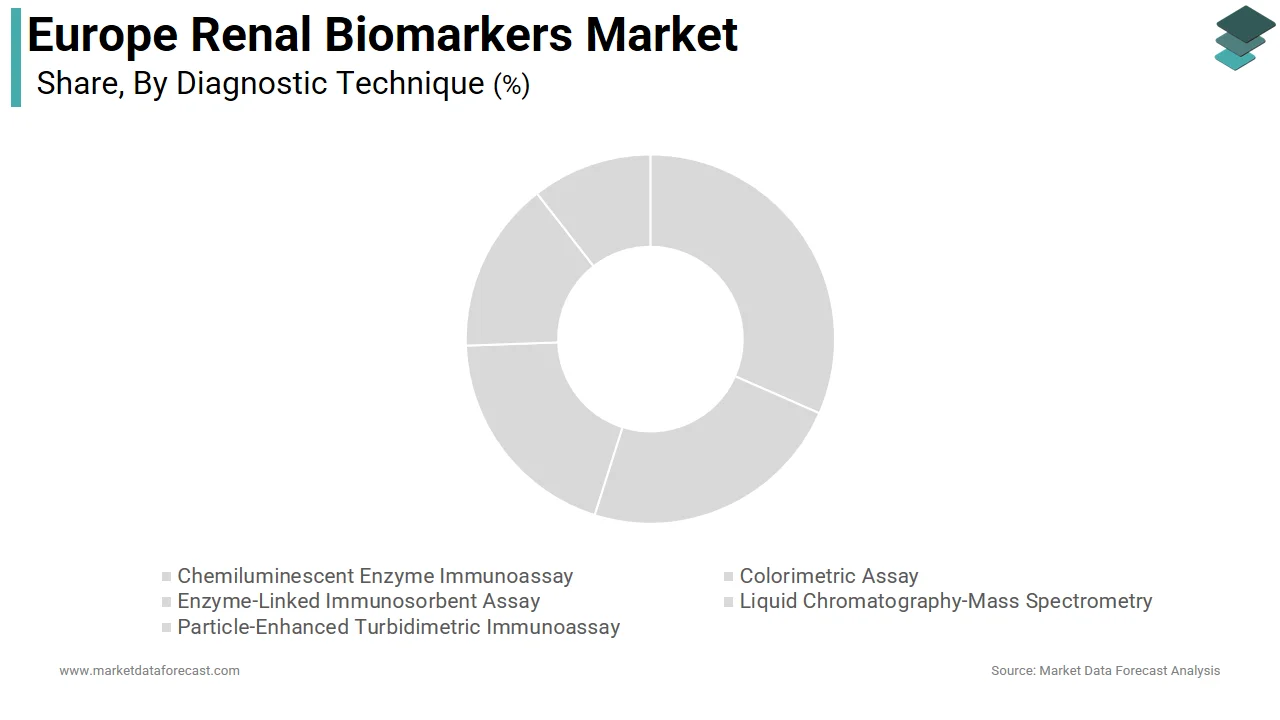
The liquid chromatography mass spectrometry segment is anticipated to register a CAGR of 13.3% over the forecast period, owing to the superior analytical specificity and ability of this technique to detect low-abundance biomarkers that traditional immunoassays often miss. The driving force behind this surge is the increasing recognition of mass spectrometry as the reference method for standardizing biomarker measurements, which addresses the critical issue of inter-assay variability plaguing the industry. As per the International Federation of Clinical Chemistry and Laboratory Medicine, mass spectrometry-based protocols have improved the accuracy of cystatin C measurements in European reference laboratories. The capability to perform multiplexing without cross-reactivity issues allows researchers and clinicians to discover and validate novel biomarker panels that offer deeper insights into renal pathophysiology. Government initiatives in countries like the Netherlands and Sweden are funding advanced proteomics facilities that leverage this technology for large-scale population studies aimed at early kidney disease detection. The declining cost of instrumentation and the development of user-friendly software interfaces have made this high-end technology more accessible to mid-sized diagnostic centers. Pharmaceutical companies are increasingly relying on liquid chromatography mass spectrometry during drug development phases to monitor nephrotoxicity with unprecedented precision. This shift toward precision diagnostics ensures that the segment will continue to outpace others as the clinical community demands higher fidelity data for personalized treatment strategies.
By Type Insights
The serum creatinine segment held the dominant position in the Europe renal biomarkers market by type in 2025. The leading position of the serum creatinine segment in the European market is attributed to its entrenched status as the primary screening tool for assessing kidney function globally. Despite the emergence of novel markers, this functional biomarker remains the first line of defense in detecting renal impairment because of its universal availability and low cost. The key factor sustaining its leadership is the inclusion of serum creatinine testing in mandatory health checkups and chronic disease management protocols across all European national health services. As per the Organisation for Economic Co-operation and Development, serum creatinine measurement is widely used in primary care consultations involving suspected kidney issues in Europe. The long historical data sets associated with creatinine levels allow clinicians to track patient progression over decades, which is invaluable for managing chronic conditions like diabetes and hypertension. Established equations such as the Chronic Kidney Disease Epidemiology Collaboration formula rely heavily on creatinine values to estimate glomerular filtration rate, which guides dosing adjustments for numerous medications. The simplicity of the colorimetric assays used for creatinine detection enables deployment in even the most resource-limited settings, ensuring no patient is left undiagnosed due to a lack of advanced infrastructure. Reimbursement policies universally cover this test, removing financial barriers for both providers and patients, which guarantees consistent volume. While limitations regarding muscle mass and diet are acknowledged, the medical community continues to refine interpretation guidelines rather than replace the marker entirely. This enduring clinical utility, combined with economic accessibility, ensures that serum creatinine will maintain its substantial market share for the foreseeable future.
The neutrophil gelatinase associated lipocalin segment is emerging as the fastest growing segment within the Europe renal biomarkers market and is estimated to witness a promising CAGR of 15.5% over the forecast period owing to the urgent clinical need for early detection of acute kidney injury, where traditional markers like creatinine fail to provide timely warnings and the robust body of evidence demonstrating that elevated levels of this protein appear in urine and blood within hours of renal insult, whereas creatinine may take days to rise. As per the Acute Dialysis Quality Initiative, neutrophil gelatinase-associated lipocalin testing in intensive care units has been shown to support earlier intervention in cases of acute kidney injury. The biomarker's ability to distinguish between prerenal azotemia and intrinsic renal damage offers clinicians a powerful tool for making critical decisions regarding fluid management and nephrotoxic drug administration. Regulatory approvals for commercial assays targeting this marker in the European Union have increased significantly, encouraging hospital procurement and integration into emergency department protocols. The rising prevalence of sepsis and major surgeries in an aging European population creates a large addressable patient pool where early biomarker detection can drastically improve outcomes and reduce length of stay. Research consortia funded by the European Commission are actively validating point-of-care devices for this specific marker, which will further democratize access beyond specialized centers. The transition from research use to routine clinical practice is gaining momentum as health technology assessment bodies begin to recognize the cost savings associated with preventing dialysis dependence.
COUNTRY-LEVEL ANALYSIS
Germany Renal Biomarkers Market Analysis
Germany stood as the preeminent leader in the Europe renal biomarkers market by holding 23.2% of the regional market share in 2025. The dominance of Germany in the European market is driven by its robust healthcare infrastructure and strong emphasis on early diagnostics. The country's position is reinforced by a highly developed network of specialized nephrology centers and university hospitals that prioritize the adoption of cutting-edge diagnostic technologies. A major driving factor is the stringent national guidelines issued by the German Society of Nephrology, which recommend regular screening for high-risk populations using both traditional and novel biomarkers. As per the Robert Koch Institute, chronic kidney disease affects a significant portion of the German adult population, creating a massive demand for accurate diagnostic tools. The statutory health insurance system in Germany provides comprehensive coverage for advanced renal tests, ensuring that financial constraints do not hinder patient access to necessary diagnostics. Furthermore, the presence of leading global diagnostic manufacturers within the country fosters a competitive environment that accelerates innovation and reduces time to market for new biomarker assays. The German government's investment in digital health initiatives facilitates the integration of biomarker data into electronic health records, enabling better longitudinal tracking of kidney health. Collaborative research projects between academic institutions and industry players continue to generate high-quality clinical evidence supporting the utility of emerging markers. This synergy between policy support, clinical excellence, and industrial capability ensures that Germany maintains its dominant status while setting trends for the rest of the continent.
France Renal Biomarkers Market Analysis
France had a promising share of the European renal biomarkers market in 2025. The aggressive public health strategies aimed at combating chronic diseases, a centralized healthcare approach that facilitates the rapid rollout of national screening programs for kidney dysfunction and the Plan National Maladies Rares and other governmental health plans that allocate specific resources for the early detection and management of renal conditions are driving the French market growth. As per Santé Publique France, cardiovascular diseases linked to kidney dysfunction represent a top priority for the national health agenda, prompting widespread use of biomarkers in primary care settings. The high density of medical laboratories across the country ensures that patients in both urban and rural areas have ready access to diagnostic testing services. Reimbursement mechanisms under the Assurance Maladie scheme are well structured to cover innovative biomarker tests once they receive regulatory approval, encouraging swift clinical adoption. The strong tradition of nephrology research in French universities contributes to a steady stream of clinical trials that validate new biomarkers and refine usage protocols. Additionally, the aging demographic profile of the French population, with a significant proportion over the age of 65, increases the prevalence of age-related renal decline, necessitating frequent monitoring. These factors combine to create a dynamic market environment where public policy and clinical demand drive sustained growth in biomarker utilization.
United Kingdom Renal Biomarkers Market Analysis
The United Kingdom is estimated to account for a promising share of the European renal biomarkers market during the forecast period owing to a strong foundation of medical research and a unified national health service, the tension between the need for cost effective solutions and the drive to implement innovative diagnostics within the National Health Service framework and the work of the National Institute for Health and Care Excellence, which evaluates the clinical and cost effectiveness of new biomarkers to guide their adoption across the health system. As per Kidney Care UK, poor kidney health affects millions of people in the country, highlighting the critical need for improved screening tools. The NHS Long Term Plan explicitly targets earlier detection of chronic conditions, including kidney disease, which has led to pilot programs integrating novel biomarkers into general practice. The presence of world-class research institutions such as those in London and Cambridge fosters collaboration with biotechnology firms to develop next-generation diagnostic assays. Despite budgetary pressures, the UK market benefits from centralized procurement processes that can achieve economies of scale for widely adopted tests. The increasing focus on reducing health inequalities has also spurred initiatives to deploy diagnostic resources in underserved communities. These efforts ensure that the UK remains a vital market for renal biomarkers, balancing innovation with the practical realities of public healthcare delivery.
Italy Renal Biomarkers Market Analysis
Italy is predicted to showcase a healthy CAGR in the European renal biomarkers market during the forecast period, owing to one of the oldest population demographics on the continent, the high prevalence of age-related comorbidities such as diabetes and hypertension, and the Italian National Health Service's commitment to managing chronic diseases through regional health plans that emphasize preventive care and early diagnosis. As per the Italian National Institute of Statistics, a significant proportion of the Italian population is aged 65 or older, creating a substantial pool of individuals at risk for renal impairment. The decentralized nature of the healthcare system allows regions with higher burdens of disease to tailor their diagnostic strategies and allocate resources accordingly. Strong collaborations between Italian nephrology societies and international research groups facilitate the adoption of global best practices in biomarker usage. The growing awareness among primary care physicians about the limitations of traditional testing methods is driving a gradual shift toward incorporating more sensitive markers into routine practice. Economic incentives provided by the government for reducing hospital admissions related to acute kidney injury further encourage the use of predictive biomarkers. This convergence of demographic necessity and strategic health planning ensures steady market growth as the country seeks to manage the renal health of its aging citizens effectively.
Spain Renal Biomarkers Market Analysis
Spain is expected to hold a notable share of the European renal biomarkers market over the forecast period due to its healthcare infrastructure and increasing focus on preventive medicine. The market status reflects a transition from reliance on basic diagnostic methods to the integration of more advanced biomarker technologies in major hospital networks. A significant driving factor is the Strategic Action for Chronic Diseases launched by the Ministry of Health, which prioritizes early detection and management of kidney conditions to reduce long term healthcare costs. As per the Spanish Society of Nephrology, chronic kidney disease affects a notable portion of the adult population in Spain, necessitating enhanced diagnostic capabilities. The expansion of private healthcare providers alongside the public system has introduced competition that accelerates the adoption of innovative diagnostic tools to attract patients. Regional governments in autonomous communities like Catalonia and Madrid are investing in state-of-the-art laboratory facilities equipped to handle complex biomarker assays. The increasing participation of Spanish centers in multinational clinical trials provides early access to novel biomarkers and fosters local expertise in their interpretation. Public awareness campaigns regarding kidney health have also empowered patients to seek earlier testing, prompting clinicians to utilize more sensitive diagnostic options. These dynamics position Spain as a growing market with significant potential for expansion as modernization efforts continue to permeate the national health system.
COMPETITIVE LANDSCAPE
The competition in the Europe renal biomarkers market is characterized by intense rivalry among established diagnostic giants and emerging biotechnology firms striving to capture market share through innovation. Major corporations leverage their extensive resources to develop comprehensive testing platforms that combine high throughput capabilities with advanced data analytics. Smaller companies often focus on niche segments by introducing highly specialized biomarkers or point-of-care devices that address specific unmet clinical needs. The landscape is dynamic with frequent mergers and acquisitions as larger entities seek to absorb innovative startups and broaden their technological portfolios. Regulatory compliance under the In Vitro Diagnostic Regulation serves as a significant barrier to entry, favoring companies with robust quality management systems. Competitive differentiation increasingly relies on demonstrating clinical utility and cost-effectiveness to secure reimbursement from national health systems. Collaborative efforts between industry players and healthcare providers are essential to generate real-world evidence that supports the adoption of new tests. This environment fosters continuous advancement in diagnostic accuracy and accessibility, ultimately benefiting patient care across the continent.
KEY MARKET PLAYERS
The leading companies operating in the Europe renal biomarkers market include:
- Abbott Diagnostics
- Hoffmann-La Roche AG
- Beckman Coulter Inc.
- Astute Medical Inc.
- Siemens Healthcare Diagnostics Inc.
- Thermo Fisher Scientific Inc.
- Alere Inc.
- bioMérieux SA
- Randox Laboratories Ltd.
TOP PLAYERS IN THE MARKET
- Hoffmann-La Roche Ltd stands as a pivotal force in the Europe renal biomarkers market through its extensive portfolio of diagnostic solutions and commitment to innovation. The company leverages its advanced cobas analyzer platforms to deliver high-throughput testing for critical kidney injury markers across major European healthcare facilities. Recent strategic actions include the expansion of its assay menu to include novel biomarkers that detect acute kidney injury earlier than traditional methods. Roche actively collaborates with leading nephrology centers to validate new tests, ensuring they meet rigorous clinical standards before widespread adoption. Their investment in digital pathology and data analytics enhances the interpretation of biomarker results facilitating personalized treatment plans for patients with chronic kidney disease. This continuous push for technological advancement solidifies their role as a key contributor to improving renal care outcomes globally while maintaining a strong foothold in the European region.
- Siemens Healthineers AG plays a crucial role in shaping the Europe renal biomarkers landscape by providing state of the art laboratory automation and diagnostic reagents. The company focuses on integrating its Atellica solution platform to streamline workflows and improve the speed and accuracy of renal function testing. Recent initiatives involve launching enhanced immunoassays for cystatin C and other emerging markers that offer superior sensitivity for early disease detection. Siemens Healthineers actively partners with academic institutions to conduct large-scale clinical studies that validate the utility of these biomarkers in diverse patient populations. Their commitment to sustainability and efficiency drives the development of compact analyzers suitable for smaller clinics, thereby expanding access to advanced diagnostics. By continuously refining its technology and fostering strategic alliances, the company strengthens its position as a leader in delivering reliable and innovative renal diagnostic tools to healthcare providers throughout Europe and beyond.
- Abbott Laboratories maintains a significant presence in the Europe renal biomarkers market by offering a comprehensive range of point-of-care and central laboratory diagnostic tests. The company emphasizes accessibility and speed through its Alinity and i STAT platforms, which enable rapid quantification of kidney injury markers at the patient's bedside. Recent efforts include the introduction of new cartridge-based assays that simplify testing procedures and reduce turnaround times for critical results. Abbott engages in extensive educational programs to train healthcare professionals on the optimal use of these biomarkers for managing acute and chronic kidney conditions. Their focus on connecting diagnostic data with electronic health records supports better care coordination and longitudinal monitoring of renal health. Through continuous product innovation and a strong distribution network, Abbott ensures that advanced renal diagnostics reach a broad spectrum of healthcare settings, reinforcing its global leadership in the field.
TOP STRATEGIES USED BY KEY MARKET PARTICIPANTS
Key players in the Europe renal biomarkers market primarily employ strategic acquisitions to expand their product portfolios and gain access to innovative technologies. Companies frequently engage in partnerships with academic research institutions to validate novel biomarkers and accelerate their translation into clinical practice. Product launches featuring enhanced sensitivity and multiplexing capabilities are common tactics used to differentiate offerings and meet evolving clinical needs. Investment in digital health solutions allows firms to integrate diagnostic data with artificial intelligence tools for predictive analytics and personalized medicine. Additionally, market participants focus on expanding their distribution networks to ensure broader access to advanced testing platforms across diverse healthcare settings, including rural areas. These strategies collectively drive growth and foster competition while addressing the increasing demand for early and accurate kidney disease detection throughout the region.
MARKET SEGMENTATION
This research report on the Europe renal biomarkers market has been segmented and sub-segmented into the following categories.
By Diagnostic Technique
- Chemiluminescent Enzyme Immunoassay
- Colorimetric Assay
- Enzyme-Linked Immunosorbent Assay
- Liquid Chromatography-Mass Spectrometry
- Particle-Enhanced Turbidimetric Immunoassay
By Type
- Up-Regulated Proteins
- Interleukin 18
- Kidney injury molecule 1
- Neutrophil gelatinase-associated lipocalin
- Functional Biomarker
- Serum Creatinine
- Serum Cystatin C
- Urine Albumin
By Country
- UK
- France
- Spain
- Germany
- Italy
- Russia
- Sweden
- Denmark
- Switzerland
- Netherlands
- Turkey
- Czech Republic
- Rest of Europe