- Product Description Description
- Table of Contents TOC
- List of Table & Figure LOT
- Get Free Sample PDF Sample PDF
Market Size, 2025
$298 MnMarket Estimate, 2026
$314 MnMarket Forecast, 2034
$479 MnCAGR, 2026–2034
5.43%Europe Rice Flour Market Size
The rice flour market size in Europe was valued at USD 298.06 million in 2025. The European market is estimated to be worth USD 479.71 million by 2034 from USD 314.24 million in 2026, growing at a CAGR of 5.43% from 2026 to 2034.
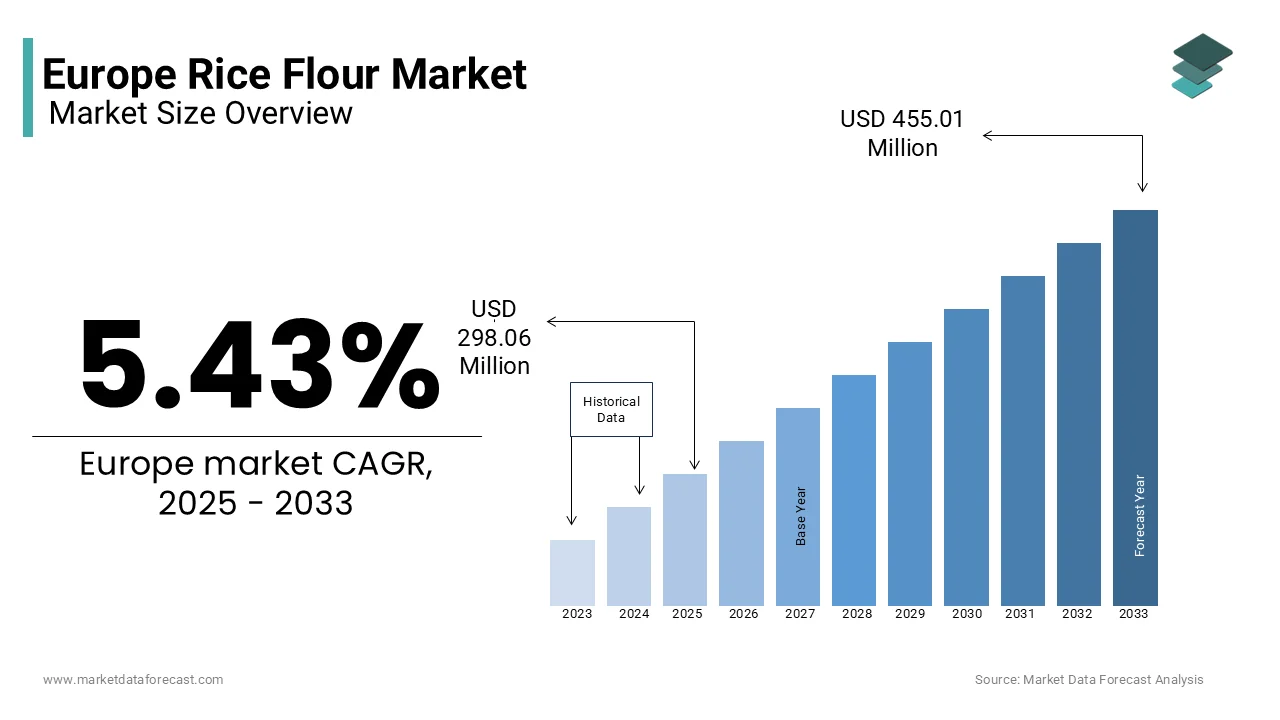
Rice flour is derived from finely ground rice grains and is widely used in various applications, including bakery, confectionery, beverages, and baby food. In Europe, the growing health consciousness, dietary restrictions among consumers, the preference for natural and minimally processed ingredients from the European population, and the rising prevalence of gluten intolerance and celiac disease are contributing to the steady demand for rice flour throughout the European region. According to the European Society for the Study of Coeliac Disease, over 1% of the European population suffers from celiac disease, necessitating gluten-free diets. This has positioned rice flour as a key ingredient in gluten-free formulations.
Additionally, the growing popularity of plant-based diets has bolstered demand, particularly in countries like Germany and France. For instance, as per the reports of Statista, sales of gluten-free products, including rice flour, grew by 8% in 2022. Furthermore, the organic segment of rice flour is gaining traction, with certifications such as EU Organic playing a pivotal role in consumer trust.
MARKET DRIVERS
Growing Demand for Gluten-Free Products
The demand for gluten-free products has surged due to the increasing prevalence of gluten-related disorders and lifestyle-driven dietary preferences. Rice flour is inherently gluten-free and has emerged as a preferred alternative to wheat flour in various food applications. A study by the International Celiac Association reveals that over 6% of Europeans follow a gluten-free diet, either due to medical necessity or personal choice. This trend has significantly impacted the rice flour market, with sales in the bakery and confectionery segment alone reaching €450 million in 2022. Countries like Italy and Spain have witnessed a 15% increase in gluten-free product consumption, driven by heightened awareness and availability. This driver underscores the importance of rice flour as a staple ingredient in gluten-free formulations, catering to a rapidly expanding consumer base.
Rising Popularity of Plant-Based Diets
The shift toward plant-based diets has created a fertile ground for the growth of the European rice flour market. Rice flour serves as a versatile ingredient in vegan and vegetarian recipes, offering a neutral flavor profile and excellent binding properties. According to a report by the German Nutrition Society, over 10% of Europeans now identify as flexitarian, with a focus on reducing animal-based product consumption. This dietary shift has led to a 12% increase in the use of rice flour in plant-based snacks and breakfast cereals. For instance, the UK reported a 20% rise in sales of rice flour-based breakfast cereals in 2022. This driver emphasizes the role of rice flour in meeting the evolving dietary needs of health-conscious and environmentally aware consumers.
MARKET RESTRAINTS
High Production Costs and Price Volatility
High production costs and price volatility pose significant challenges to the European rice flour market. The cost of raw materials, particularly paddy rice, has fluctuated due to factors such as climate change and supply chain disruptions. As per a report by the International Rice Research Institute, global rice prices increased by 10% in 2022, impacting the affordability of rice flour. This restraint is particularly evident in Eastern European markets like Turkey and Russia, where economic instability exacerbates price sensitivity. Additionally, the energy-intensive nature of rice milling and processing further escalates production expenses. For instance, France experienced a 15% rise in rice flour prices during the same period, deterring budget-conscious consumers. This challenge underscores the need for cost-effective production methods and stable sourcing strategies.
Limited Awareness in Certain Regions
Limited consumer awareness about the benefits and applications of rice flour remains a significant restraint in Europe, particularly in rural and economically disadvantaged regions. A survey conducted by the European Consumer Organization reveals that only 40% of consumers in Eastern Europe are familiar with rice flour as a viable alternative to wheat flour. This lack of awareness restricts market penetration, especially in countries like the Czech Republic and Hungary, where traditional diets dominate. Furthermore, misconceptions about the taste and texture of rice flour-based products hinder adoption. For instance, Denmark reported a slower uptake of rice flour in mainstream applications, despite its popularity in niche markets. This restraint highlights the importance of targeted marketing campaigns and educational initiatives to broaden consumer understanding.
MARKET OPPORTUNITIES
Expansion into Emerging Applications
The expansion of rice flour into emerging applications presents a significant opportunity for market growth in Europe. Beyond traditional uses in bakery and confectionery, rice flour is increasingly being utilized in functional foods and beverages, such as protein shakes and energy bars. A study by the German Institute of Food Technologies reveals that the demand for rice flour in sports nutrition products grew by 20% in 2022. This trend is particularly prominent in urban areas, where health-conscious millennials seek convenient and nutritious options. For instance, Sweden reported a 25% increase in sales of rice flour-based energy bars during the same period. This opportunity underscores the potential for manufacturers to innovate and diversify their product portfolios to meet evolving consumer needs.
MARKET CHALLENGES
Regulatory and Certification Hurdles
According to the European Food Safety Authority, stringent regulatory requirements and certification processes pose significant hurdles for rice flour manufacturers. Compliance with labeling, allergen declarations, and organic certifications has become increasingly complex, particularly for small-scale producers. As per a report by the Italian Ministry of Health, non-compliance can result in fines and reputational damage, deterring new entrants. Additionally, the introduction of the Nutri-Score labeling system in France and Belgium has impacted consumer perceptions of rice flour-based products. This challenge emphasizes the importance of navigating regulatory frameworks effectively while maintaining transparency and trust.
REPORT COVERAGE
| REPORT METRIC | DETAILS |
| Market Size Available | 2025 to 2034 |
| Base Year | 2025 |
| Forecast Period | 2026 to 2034 |
| CAGR | 5.43% |
| Segments Covered | By Type, Application, and Region |
| Various Analyses Covered | Global, Regional, & Country Level Analysis; Segment-Level Analysis; DROC, PESTLE Analysis; Porter’s Five Forces Analysis; Competitive Landscape; Analyst Overview of Investment Opportunities |
| Regions Covered | UK, France, Spain, Germany, Italy, Russia, Sweden, Denmark, Switzerland, Netherlands, Turkey, and the Czech Republic |
| Market Leaders Profiled | Burapa Prosper, Archer Daniels Midland Company, Thai Flour Industry, Ardent Mills Canada, Rose Brand, ConAgra Foods, Inc, Koda Farms, Associated British Foods plc, Lieng Tong, General Mills Inc, Pornkamon Rice Flour Mills, and others |
SEGMENTAL ANALYSIS
By Type Insights
The white rice flour accounted for the leading share of 60.6% of the European market share in 2025. The leading position of white flour segment in the European market is attributed to its mild flavor, fine texture, and widespread use in gluten-free baking. The UK and Germany are the largest contributors to this segment, with combined sales exceeding €700 million. According to a report by the European Flour Millers Association, white rice flour is particularly popular in bakery applications, representing 40% of its total usage.
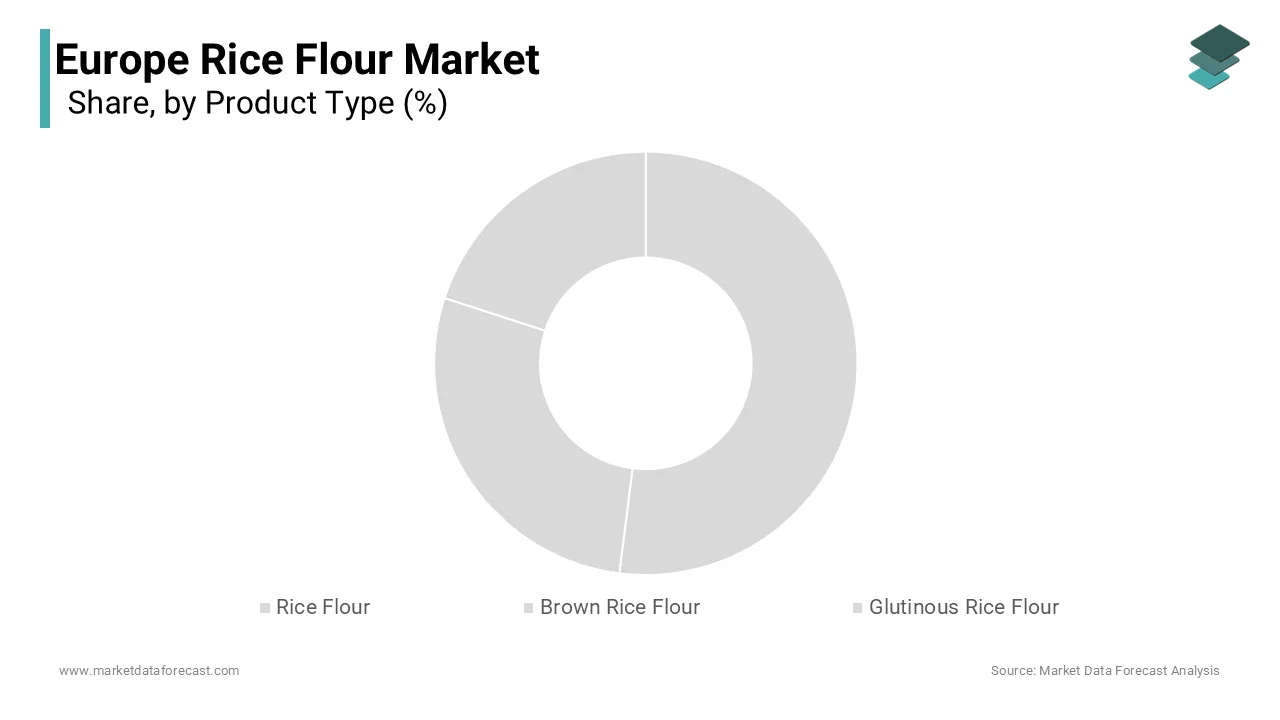
The brown rice flour segment is projected to witness a CAGR of 6.5% over the forecast period due to its higher nutritional value, including fiber and essential nutrients, which appeal to health-conscious consumers. According to a study by the Swedish National Food Agency, brown rice flour sales in Scandinavia grew by 25% in 2022.
By Application Insights
The bakery segment dominated the market and captured 45.7% of the European market share in 2025. As per a report by the Italian Confectionery Association, rice flour is extensively used in gluten-free bread, cakes, and pastries, catering to the growing demand for allergen-free options.
REGIONAL ANALYSIS
Germany had the leading share of 25.5% of the European market in 2025. The dominance of Germany in the European market is attributed to a strong tradition of gluten-free diets and high per capita consumption, which exceeds 2 kg annually. According to the German Nutrition Society, rice flour is a staple in both household kitchens and industrial applications.
The UK is anticipated to account for a prominent share of the European market over the forecast period. The growing urbanization and rising preference for health-conscious products in the UK are boosting the UK rice flour market growth. According to the British Retail Consortium, London alone accounts for 30% of national sales for rice flour.
France is a notable key regional segment for rice flour in Europe. The strong emphasis of France on organic and gourmet offerings is propelling the French market growth. French consumers spend an average of €15 annually on rice flour, reflecting their affinity for high-quality products.
KEY MARKET PLAYERS
The major key players in Europe rice flour market are Burapa Prosper, Archer Daniels Midland Company, Thai Flour Industry, Ardent Mills Canada, Rose Brand, ConAgra Foods, Inc, Koda Farms, Associated British Foods plc, Lieng Tong, General Mills Inc, Pornkamon Rice Flour Mills, and others.
MARKET SEGMENTATION
This research report on the Europe rice flour market is segmented and sub-segmented into the following categories.
By Product Type
- Rice Flour
- Brown Rice Flour
- Glutinous Rice Flour
By Application
- Rice Noodle
- Rice Pasta
- Sweets
- Desserts
- Snacks
- Bakery
- Bread Products
- Thickening Agent
- Animal Feed Including Pet Food
- Non-Food Applications
By Country
- UK
- France
- Spain
- Germany
- Italy
- Russia
- Sweden
- Denmark
- Switzerland
- Netherlands
- Turkey
- Czech Republic
- Rest of Europe