- Product Description Description
- Table of Contents TOC
- List of Table & Figure LOT
- Get Free Sample PDF Sample PDF
Market Size, 2025
$270 MnMarket Estimate, 2026
$281 MnMarket Forecast, 2034
$393 MnCAGR, 2026–2034
4.27%North America Rice Flour Market Report Summary
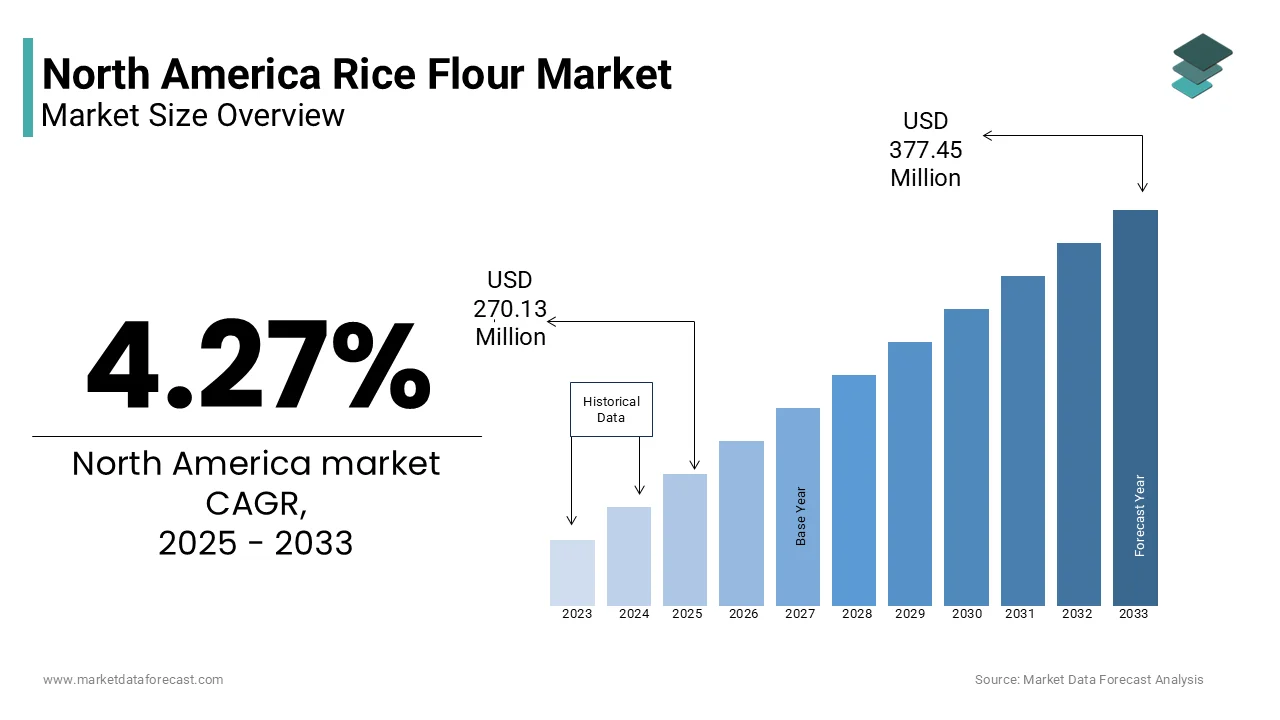
The North America rice flour market was valued at USD 270.14 million in 2025, is estimated to reach USD 281.67 million in 2026, and is projected to reach USD 393.56 million by 2034, growing at a CAGR of 4.27% during the forecast period. Market growth is driven by increasing demand for gluten free products, rising health consciousness, and expanding applications of rice flour in food processing. The growing popularity of clean label and allergen free ingredients is further supporting market expansion. In addition, rising consumption of bakery and convenience foods, along with increasing adoption in ethnic and specialty cuisines, is contributing to steady market growth across North America.
Key Market Trends
- Rising demand for gluten free and allergen free food products is driving the adoption of rice flour.
- Increasing consumer focus on health and clean label ingredients is supporting market growth.
- Growing use of rice flour in bakery and processed food applications is expanding its demand.
- Rising popularity of ethnic cuisines is boosting consumption of rice based ingredients.
- Technological advancements in milling and processing are improving product quality and consistency.
Segmental Insights
- Based on product type, the white rice flour segment was the largest and held 58.9% of the North America rice flour market share in 2025. This dominance is attributed to its wide availability, neutral taste, and extensive use in various food applications.
- Based on application, the bakery and bread products segment accounted for 37.6% of the North America rice flour market share in 2025. The segment’s growth is driven by increasing demand for gluten free baked goods and ready to eat food products.
Regional Insights
- The North America rice flour market is witnessing steady growth across the region, supported by rising demand for specialty and health focused food products. The United States and Canada are key contributors, driven by strong food processing industries and increasing consumer preference for gluten free diets.
Competitive Landscape
The North America rice flour market is moderately competitive, with key players focusing on product quality, innovation, and expansion of distribution networks. Companies are investing in advanced milling technologies and clean label product offerings to strengthen their market position. Prominent players in the North America rice flour market include Burapa Prosper, Archer Daniels Midland Company, Thai Flour Industry, Ardent Mills Canada, Rose Brand, ConAgra Foods Inc, Koda Farms, Associated British Foods plc, Lieng Tong, General Mills Inc, and Pornkamon Rice Flour Mills.
North America Rice Flour Market Size
The North America rice flour market size was valued at USD 270.14 million in 2025, and the market size is expected to be valued at USD 281.67 million in 2026 to reach USD 393.56 million by 2034. and is estimated to be growing at a CAGR of 4.27%, during the forecast period from 2026 to 2034.
Rice flour is a finely milled powder derived from milled rice grains either white, brown, or glutinous, which is a staple ingredient in gluten-free and specialty food formulations across North America. Unlike wheat-based flours, rice flour contains no gluten, making it essential for individuals with celiac disease or non-celiac gluten sensitivity. It is widely used in baked goods, noodles, coatings, and infant foods due to its neutral flavor, fine texture, and functional properties such as water absorption and viscosity stabilization. According to the Celiac Disease Foundation, approximately 3 million Americans are diagnosed with celiac disease, and an estimated 18 million suffer from gluten sensitivity, creating sustained demand for gluten-free alternatives like rice flour. As per the U.S. Department of Agriculture, over 60% of packaged gluten-free products in North America list rice flour as a primary ingredient, underscoring its foundational role in the sector. Additionally, rising interest in grain-free and clean-label diets has expanded its application beyond medical necessity into mainstream wellness-oriented consumption, positioning rice flour as a critical component of modern food innovation in the region.
MARKET DRIVERS
Rising Prevalence of Gluten-Related Disorders and Medical Diagnoses
The increasing diagnosis of celiac disease and non-celiac gluten sensitivity is a major factor accelerating the growth of North America rice flour market. Celiac disease, an autoimmune disorder triggered by gluten ingestion, requires lifelong adherence to a strict gluten-free diet, with rice flour serving as a primary substitute for wheat. According to the Mayo Clinic, the prevalence of celiac disease in the United States has quadrupled over the past 50 years, rising from 1 in 650 in the 1970s to 1 in 133 by 2020. This surge is attributed to improved diagnostic tools, greater physician awareness, and genetic predisposition in certain populations. The U.S. Centers for Disease Control and Prevention reports that nearly 300,000 new cases of gluten-related disorders are diagnosed annually, driving sustained demand for compliant food products. Furthermore, the Food and Drug Administration’s 2013 enforcement of the “gluten-free” labeling rule has increased consumer trust in rice flour-based products, encouraging manufacturers to reformulate offerings and expand distribution in supermarkets and e-commerce channels.
Expansion of Clean-Label and Allergen-Free Food Formulations
The consumer preference for clean-label, minimally processed, and allergen-free ingredients has significantly boosted the use of rice flour in commercial food production, which is additionally driving the growth of North America rice flour market. As per the Institute of Food Technologists, over 65% of North American consumers prioritize ingredient transparency when purchasing packaged foods, favoring recognizable components like rice flour over chemically modified starches. Rice flour is naturally free from major allergens such as wheat, soy, dairy, and nuts, aligning with FDA-mandated labeling requirements under FASTER Act 2021, which expanded allergen disclosures. It is increasingly used in infant cereals, snacks, and organic baked goods by brands like Gerber and Nature’s Path.
MARKET RESTRAINTS
Competition from Alternative Gluten-Free Flours and Starches
The intensifying competition from alternative gluten-free ingredients such as almond flour, coconut flour, tapioca starch, and oat flour, which are perceived as nutritionally superior or more functional in specific applications is certainly hampering the growth of North America rice flour market. Almond flour, for instance, offers higher protein and lower carbohydrate content, making it popular in keto and paleo diets. The U.S. Department of Agriculture reports that almond flour production in California reached 320,000 tons in 2023, reflecting strong supply chain maturity. Additionally, concerns about arsenic content in rice, particularly inorganic arsenic found in rice grown in the southern U.S. that have led some consumers and manufacturers to shift toward alternatives.
Nutritional Limitations and Functional Deficiencies in Baking Applications
The inherent nutritional and functional drawbacks that limit its performance in food manufacturing. It is low in protein, fiber, and essential amino acids, particularly lysine, and has a high glycemic index, making it less suitable for diabetic or protein-enriched diets. As per the U.S. National Nutrient Database, white rice flour contains only 7 grams of protein per 100 grams, compared to 13 grams in whole wheat flour. Functionally, rice flour lacks viscoelasticity due to the absence of gluten, resulting in baked goods that are often crumbly, dense, or dry unless combined with binders like xanthan gum or hydroxypropyl methylcellulose (HPMC). The American Association of Cereal Chemists notes that pure rice flour breads exhibit 30–40% lower volume and 25% higher staling rate than wheat-based counterparts. These limitations necessitate complex formulation adjustments, increasing production costs and R&D investment for food manufacturers.
MARKET OPPORTUNITIES
Integration into Plant-Based and Alternative Protein Products
The use of rice flour as a functional ingredient in plant-based meat and dairy alternatives, where it serves as a binder, texturizer, and bulking agent is solely to amplify the growth of North Americ rice flour market in coming years. Rice flour’s neutral taste and thermal stability make it ideal for extruded meat analogs and vegan cheese formulations. Companies like Beyond Meat and Impossible Foods utilize rice flour to improve moisture retention and chewiness in their products. Additionally, rice protein isolates are often co-processed with rice flour, enabling synergistic use in high-protein snacks and bars. The U.S. Department of Agriculture confirms that over 70 new plant-based products launched in 2022 contained rice-derived ingredients, which is signaling a strategic shift toward integrated rice-based solutions in next-generation food innovation.
Growth in Private Label and Retailer-Branded Gluten-Free Lines
The retailers are expanding their private-label gluten-free portfolios by creating new distribution avenues for rice flour suppliers is additionally to escalate the growth of North America rice flour market. Major chains such as Walmart, Kroger, and Costco have introduced store-brand gluten-free baking mixes, pasta, and snacks, many of which rely heavily on rice flour as a primary ingredient. As per Brick Meets Click, private-label gluten-free products grew by 18% in 2023, outpacing national brands due to competitive pricing and improved quality. Kroger’s Simple Truth and Walmart’s Great Value lines, now include rice flour-based pancake mixes and breads, targeting budget-conscious consumers without compromising on dietary compliance. These initiatives are supported by enhanced supply chain partnerships with rice millers in Arkansas, California, and Missouri, where the top rice-producing states in the U.S.
MARKET CHALLENGES
Arsenic Contamination and Regulatory Scrutiny
The presence of inorganic arsenic, a naturally occurring contaminant absorbed by rice from soil and water, particularly in regions with historical use of arsenic-based pesticides. This factor is ascribed to inhibit the growth of North America rice flour market. According to the U.S. Food and Drug Administration, rice and rice-based products account for nearly 70% of dietary arsenic exposure in the U.S., raising public health concerns. The FDA has established a guidance level of 100 parts per billion (ppb) for inorganic arsenic in infant rice cereal, prompting manufacturers to reformulate or source rice from low-arsenic regions. A 2022 study by the Environmental Defense Fund found that over 40% of rice flour samples from the southern U.S. exceeded 120 ppb, leading to consumer advisories and retailer delistings. This has forced producers to invest in rigorous testing, geographic diversification of sourcing, and advanced milling techniques to reduce contamination, increasing operational complexity and cost across the value chain.
Volatility in Rice Supply and Agricultural Constraints
The vulnerable to fluctuations in rice cultivation due to climate variability, water scarcity, and shifting agricultural policies is also to degrade the growth of North America rice flour market. The U.S. produces approximately 20 million hundredweight of rice annually, primarily in Arkansas, California, and Louisiana, but production is increasingly affected by drought and irrigation restrictions. According to the U.S. Department of Agriculture, California’s rice acreage declined by 28% between 2020 and 2023 due to prolonged drought and state-mandated water cuts in the Central Valley. These disruptions affect both the availability and price stability of rice for milling into flour. Additionally, competition from biofuel and animal feed sectors for rice byproducts creates upstream pressure.
REPORT COVERAGE
| REPORT METRIC | DETAILS |
| Market Size Available | 2025 to 2034 |
| Base Year | 2025 |
| Forecast Period | 2026 to 2034 |
| CAGR | 4.27% |
| Segments Covered | By Product Type, Application, and Region |
| Various Analyses Covered | Global, Regional, & Country Level Analysis; Segment-Level Analysis; DROC, PESTLE Analysis; Porter’s Five Forces Analysis; Competitive Landscape; Analyst Overview of Investment Opportunities |
| Regions Covered | United States, Canada and rest of North America |
| Market Leaders Profiled | Burapa Prosper, Archer Daniels Midland Company, Thai Flour Industry, Ardent Mills Canada, Rose Brand, ConAgra Foods, Inc., Koda Farms, Associated British Foods plc, Lieng Tong, General Mills Inc., Pornkamon Rice Flour Mills |
SEGMENTAL ANALYSIS
By Product Type Insights
The white rice flour segment was accounted in holding 58.9% of the North America rice flour market share in 2025 due to its widespread use in gluten-free formulations across food manufacturing. Its neutral taste, fine texture, and excellent binding properties make it a preferred base ingredient in gluten-free baking and processed foods. The rise in celiac disease and non-celiac gluten sensitivity has significantly boosted demand. The U.S. Centers for Disease Control and Prevention estimates that about 1 in 133 Americans, or roughly 3 million people, suffer from celiac disease, amplifying the need for gluten-free alternatives like white rice flour. Additionally, the Food and Drug Administration’s 2013 enforcement of the "gluten-free" labeling rule has increased consumer trust and product transparency, further accelerating adoption. Major food companies such as General Mills and Bob’s Red Mill have expanded their rice flour-based product lines, reinforcing market penetration.
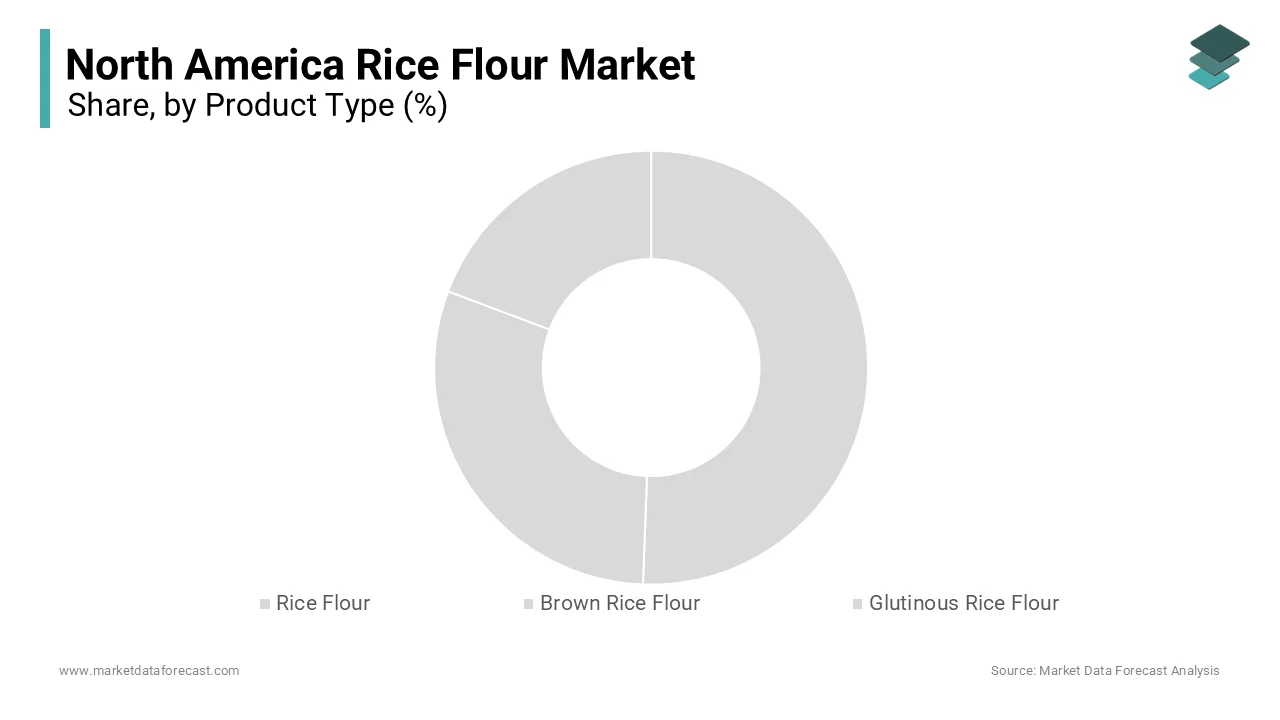
The brown rice flour segment is likely to grow with a significant CAGR of 9.4% from 2026 to 2034 with its superior nutritional profile compared to white rice flour, including higher fiber, vitamins, and mineral content due to the retention of the bran and germ. Health-conscious consumers are increasingly aware of the glycemic impact of refined carbohydrates. Brown rice flour has a lower glycemic index (GI of 68) compared to white rice flour (GI of 85) by making it favorable for diabetic and weight management diets. As per the American Diabetes Association, over 37 million Americans live with diabetes, driving demand for low-GI alternatives. Furthermore, clean-label trends are reshaping ingredient choices.
By Application Insights
The bakery and bread products segment was the largest by occupying 37.6% of the North America rice flour market share in 2025 with the gluten-free bread, muffins, cakes, and cookies. With the gluten-free baking market in North America valued at over $3.2 billion in 2023, rice flour remains a cornerstone ingredient due to its functional properties in mimicking wheat-based textures. The increasing prevalence of gluten-related disorders has directly influenced this trend. The Celiac Disease Foundation states that nearly 3 million Americans are diagnosed with celiac disease, while millions more self-diagnose with gluten sensitivity by creating sustained demand for gluten-free baked goods.
Commercial bakeries and retail chains have responded by reformulating products. Additionally, the rise of e-commerce platforms like Amazon and Thrive Market has made gluten-free bakery items more accessible.
The snacks segment is projected to grow at a CAGR of 10.2% from 2026 to 2034 owing to the rising popularity of gluten-free, non-GMO, and allergen-friendly snack options among health-conscious consumers. Rice flour is a key ingredient in extruded snacks, crackers, and puffed treats due to its crisp texture and clean flavor profile. The shifting consumer behavior toward functional and convenient foods is also escalating the growth of the segment. The International Food Information Council’s 2023 Food & Health Survey found that 61% of Americans prioritize snacks that support digestive health and energy levels, prompting brands to use whole grain brown rice flour for added fiber. Companies like Biena Snacks and Late July have launched rice flour-based chickpea and rice puffs that have seen double-digit sales growth, as per receent survey.
REGIONAL ANALYSIS
United States Rice Flour Market Analysis
The United States was the top performer of the North America rice flour market by capturing 89.7% of share in 2025. As the largest consumer and producer of rice-based ingredients in the region, the U.S. drives innovation, distribution, and regulatory standards. California, Arkansas, and Missouri are leading rice-producing states, collectively contributing over 80% of domestic rice output, enabling a robust supply chain for milling and flour production. The presence of major health food brands like Bob’s Red Mill, King Arthur Flour, and General Mills has institutionalized rice flour in mainstream and specialty food channels. Additionally, the rise of e-commerce and subscription meal kits has expanded access. Companies like Thrive Market reported a 40% increase in rice flour-based product sales in 2022, reflecting strong retail momentum.
Canada Rice Flour Market Analysis
Canada rice flour market growth is likely to grow at an anticipated CAGR during the forecast period. While smaller in scale, the Canadian market exhibits steady growth driven by rising health awareness and government support for dietary inclusivity. Canadian consumers are increasingly adopting plant-based and allergen-free diets. Retailers like Loblaws and Sobeys have expanded private-label gluten-free lines using rice flour, contributing to a 12% year-over-year sales increase in specialty flours, per Nielsen Canada. Additionally, the popularity of Asian cuisine in urban centers like Toronto and Vancouver has boosted demand for rice flour in noodles and dumplings.
COMPETITIVE LANDSCAPE
The competition in the North America rice flour market is intensifying as consumer demand for gluten-free, organic, and clean-label products continues to rise. The market features a mix of established ingredient suppliers, specialty food manufacturers, and regional mills, all vying for dominance through differentiation in quality, sourcing, and innovation. While large agribusinesses leverage scale and R&D capabilities, niche brands focus on transparency, sustainability, and direct-to-consumer engagement. Competitive dynamics are shaped by the growing influence of health trends, including celiac disease awareness and low-carb diets. Companies are increasingly investing in product diversification, such as sprouted and fortified rice flours, to meet functional food demands. Geographic expansion, e-commerce presence, and strategic collaborations with foodservice providers further define the competitive landscape, creating a dynamic and rapidly evolving market environment.
KEY MARKET PLAYERS
Some of the notable key players in the Europe rice flour market are
- Burapa Prosper
- Archer Daniels Midland Company
- Thai Flour Industry
- Ardent Mills Canada
- Rose Brand
- ConAgra Foods, Inc.
- Koda Farms
- Associated British Foods plc
- Lieng Tong
- General Mills Inc.
- Pornkamon Rice Flour Mills
Top Players in the Market
- Bob’s Red Mill is a cornerstone in the North America rice flour market, renowned for its commitment to whole grains and gluten-free innovation. Based in Milwaukie, Oregon, the company has built a trusted brand through stone-ground milling and non-GMO, organic certification across its flour portfolio. It actively educates consumers via recipe development and partnerships with celiac support groups, reinforcing its role as a health-focused leader. Bob’s expanded its rice flour offerings to include sprouted brown rice flour, targeting digestive health trends. The company also strengthened distribution through major retailers like Whole Foods and Kroger, while enhancing e-commerce visibility on Amazon and Thrive Market.
- ADM plays a pivotal role in the North America rice flour market as a global ingredient solutions provider, leveraging its vast agricultural network and food science expertise. The company supplies rice flour to major food manufacturers for use in gluten-free bakery, snacks, and plant-based products. ADM launched its expanded specialty grains portfolio, including customized rice flour blends designed for improved texture and shelf life in baked goods. It also invested in its Decatur, Illinois innovation center to accelerate clean-label product development. ADM has deepened partnerships with private-label brands and contract manufacturers by offering end-to-end formulation support.
- Lundberg Family Farms is a leader in organic and sustainably produced rice products, including a growing range of rice flours that cater to health-conscious and environmentally aware consumers. Based in California, the company has long championed regenerative farming practices, which now extend to its rice flour production. In 2023, Lundberg launched an organic brown rice flour line with QR-coded traceability, allowing consumers to view farm origins and milling dates. The company expanded into foodservice by supplying rice flour to gluten-free bakery chains and school nutrition programs. It also partnered with clean-label food startups to co-develop rice-based snacks and infant cereals.
Top Strategies Used by the Key Market Participants
Key players in the North America rice flour market are deploying strategic initiatives to enhance competitiveness and capture evolving consumer demand. Major strategies include product innovation, particularly in organic, sprouted, and fortified rice flours tailored for gluten-free and functional foods. Companies are investing in R&D to improve texture, shelf life, and nutritional profiles. Vertical integration is another critical approach, with firms securing direct supply from rice farms to ensure quality and sustainability. Strategic partnerships with food manufacturers and retailers enable broader distribution and private-label expansion. Additionally, digital marketing and e-commerce optimization are being leveraged to reach health-focused consumers.
MARKET SEGMENTATION
This research report on the North America rice flour market is segmented and sub segmented into following categories
By Product Type
- Rice Flour
- Brown Rice Flour
- Glutinous Rice Flour
By Application
- Rice Noodle
- Rice Pasta
- Sweets Desserts
- Snacks
- Bakery
- Bread Products
By Country
- The U.S.
- Canada
- Mexico
- Rest Of North America