- Product Description Description
- Table of Contents TOC
- List of Table & Figure LOT
- Get Free Sample PDF Sample PDF
Market Size, 2025
$310.45 BnMarket Estimate, 2026
$323.71 BnMarket Forecast, 2034
$452.30 BnCAGR, 2026–2034
4.27%North America Bulk Food Ingredients Market Size, Growth, Trends & Forecast (2026–2034)
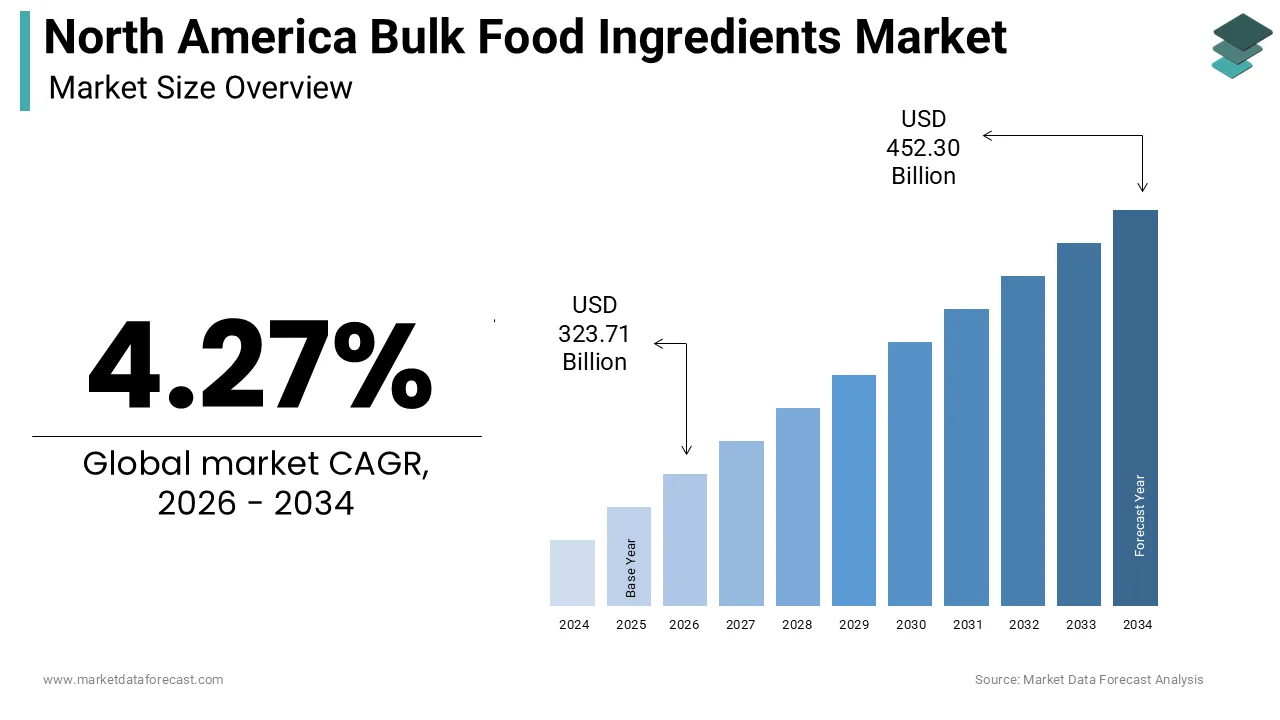
The size of the North American bulk food ingredients market was valued at USD 310.45 billion in 2025, is anticipated to reach USD 323.71 billion in 2026, and is projected to be worth USD 452.30 billion by 2034, registering a compound annual growth rate (CAGR) of 4.27% during the forecast period from 2026 to 2034. Driven by the rising demand for clean-label products, the expansion of the plant-based food industry, and advancements in biotechnology, the market continues steady expansion.
Key Executive Metrics (At-a-Glance)
- 2025 Base Valuation: USD 310.45 Billion
- 2026 Current Valuation: USD 323.71 Billion
- 2034 Forecast Valuation: USD 452.30 Billion
- Compound Annual Growth Rate (CAGR): 4.27% (2026–2034)
- Dominant Type Segment: Primary processed ingredients segment (holding 34.2% of the market share in 2025)
- Fastest-Growing Type Segment: Secondary processed ingredients segment (growing at a CAGR of 6.2%)
- Dominant Application Segment: Bakery products segment (holding 44.3% of the market share in 2025)
- Fastest-Growing Application Segment: Ready meals segment (registering a CAGR of 7.1% during the forecast period)
Core Market Drivers
- Clean Label Shift: Growing consumer preference for transparent, wholesome, and natural products, prompting shifts toward plant-based emulsifiers and natural sweeteners.
- Plant-Based Industry Growth: Surging demand for alternative proteins and fat sources to fulfill flexitarian dietary needs and meat/dairy analogues.
Primary Market Restraints & Challenges
- Commodity Price Volatility & Compliance: Unpredictable agricultural commodity price fluctuations and rigorous regulatory frameworks imposing heavy cost and operational burdens.
North America Bulk Food Ingredients Market Segmentation Breakdown
| Segment Category | Leading Sub-Segment (Base Year) | Fastest-Growing Sub-Segment |
|---|---|---|
| By Type | Primary Processed Ingredients (34.2% share in 2025) | Secondary Processed Ingredients (CAGR of 6.2%) |
| By Application | Bakery Products (44.3% share in 2025) | Ready Meals (CAGR of 7.1%) |
Major Industry Players Profiled
Key market leaders shaping the North American bulk food ingredients industry include Tate & Lyle PLC, Associated British Foods plc, Ingredion Incorporated, Cargill Incorporated, DMH Ingredients, Olam International, E.I. du Pont de Nemours and Company, Archer Daniels Midland Company, EHL Ingredients, and Community Foods Limited.
 Download Free Sample Report
North America Bulk Food Ingredients Market Size
The size of the North American bulk food ingredients market was expected to be worth USD 310.45 billion in 2025 and is anticipated to be worth USD 452.30 billion by 2034, from USD 323.71 billion in 2026, growing at a CAGR of 4.27% during the forecast period.
Bulk food ingredients are raw materials and intermediate products, including sweeteners, starches, fats, oils, proteins, and functional additives that serve as the foundational building blocks for the food and beverage industry. These ingredients are supplied in large volumes to manufacturers, who transform them into consumer-ready goods ranging from baked goods and dairy alternatives to processed meats and beverages. The agri-food sector contributed approximately 135 billion dollars to the national gross domestic product in 2025, according to the study. Consumer demand for transparency and clean-label products has prompted manufacturers to source high-quality bulk ingredients with minimal processing and clear origin traceability. Regulatory bodies, such as the Food and Drug Administration, enforce strict safety standards, ensuring that bulk ingredients meet rigorous purity and contamination limits. The integration of sustainable sourcing practices has become increasingly important as companies seek to reduce their environmental footprint and appeal to eco-conscious buyers. Innovations in biotechnology and fermentation have expanded the range of available ingredients, allowing for the creation of novel textures and flavors.
MARKET DRIVERS
Rising Demand for Clean Label and Natural Products Drives Ingredient Sourcing Shifts
The growing consumer preference for clean label and natural products has fundamentally reshaped sourcing strategies, which is fuelling the growth of the North America Bulk Food Ingredients Market. Shoppers are increasingly scrutinizing ingredient lists, seeking items that are free from artificial colors flavors, preservatives, and synthetic additives. Many consumers in the United States actively avoid foods with artificial ingredients in 2025, reflecting a strong desire for wholesome and transparent food options. This trend forces manufacturers to replace synthetic bulk ingredients with natural alternatives, such as plant-based emulsifiers, fruit-derived colors, and natural sweeteners like stevia or monk fruit. Data from the Clean Label Project indicates that sales of products with simple and recognizable ingredient lists grew by 14% in 2025, driven by health-conscious millennials and Gen Z shoppers. Bulk suppliers respond by investing in extraction technologies that preserve the natural integrity of ingredients, while ensuring functional performance in final products. The demand for non-genetically modified organism certified ingredients has also surged, with many brands requiring verification from third-party organizations. This shift necessitates close collaboration between ingredient suppliers and food manufacturers to develop formulations that maintain shelf stability and taste without relying on synthetic aids. The emphasis on natural sourcing extends to ethical considerations, with consumers favoring ingredients produced through sustainable and fair trade practices.
Expansion of Plant-Based Food Industry Increases Demand for Alternative Protein and Fat Sources
The rapid expansion of the plant-based food industry has created a substantial demand for alternative protein and fat sources, which is also fuelling the growth of the North America Bulk Food Ingredients Market. Consumers are increasingly adopting flexitarian diets, reducing their consumption of animal products in favor of plant-derived alternatives due to health, environmental, and ethical concerns. The need for bulk ingredients, which are essential for creating meat and dairy analogues, is also prompting the growth of the market. Bulk suppliers are scaling up production capabilities to meet this surge in demand, focusing on efficient extraction methods that maximize yield and minimize waste. The versatility of plant-based ingredients allows manufacturers to create diverse products ranging from burgers and sausages to cheeses and yogurts. Additionally, the development of novel ingredients, such as algae-based omega-3s and mycoprotein, offers new possibilities for product differentiation. This structural shift toward plant-based consumption ensures sustained growth for bulk ingredient suppliers, who can provide high-quality, scalable and cost-effective solutions to support the evolving food landscape.
MARKET RESTRAINTS
Volatility in Agricultural Commodity Prices Impacts Cost Stability and Supply Planning
The volatility in agricultural commodity prices, which directly affects production costs and supply chain stability, is hindering the growth of the North America bulk food ingredients market. Prices for key raw materials, such as corn, soy, wheat, and sugar, are influenced by various factors, including weather patterns, geopolitical tensions, trade policies, and global demand fluctuations. Similarly, the price of soybeans rose by 12%, driven by strong export demand and reduced planting areas impacting the availability and cost of soy protein and oil. These price fluctuations create uncertainty for bulk ingredient suppliers and food manufacturers who struggle to maintain consistent pricing for their customers. Data from the World Bank indicates that global food price indices experienced significant volatility in 20,25 exacerbating the financial pressure on supply chains. Manufacturers must implement hedging strategies and long-term contracts to mitigate risks, but these measures require substantial capital and expertise. Smaller suppliers often lack the resources to absorb sudden cost increases, leading to margin compression or potential business failure. The unpredictability of raw material costs complicates budgeting and financial planning, forcing companies to remain agile and responsive to market changes.
Stringent Regulatory Compliance and Safety Standards Increase Operational Burdens
Manufacturers and suppliers operate under stringent regulatory frameworks that govern food safety, labeling, and quality control, imposing significant operational burdens, which is also declining the growth of the North America bulk food ingredients market. Agencies, such as the Food and Drug Administration in the United States and the Canadian Food Inspection Agency, enforce rigorous standards to prevent contamination, ensure accurate labeling, and protect public health. Food facilities must implement preventive controls and maintain detailed records to demonstrate compliance with safety regulations, a process that requires substantial investment in technology and personnel. Suppliers must conduct regular testing for pathogens, allergens, and contaminants, which adds time and expense to the production process. Failure to comply with these regulations can result in product recalls, fines, and reputational damage, which deter new entrants and constrain innovation. The varying regulatory requirements between different states and provinces that further complicate operations for companies seeking nationwide distribution. Additionally, the rise of class action lawsuits regarding mislabeled or contaminated ingredients has heightened the need for legal vigilance and robust quality assurance systems.
MARKET OPPORTUNITIES
Integration of Advanced Biotechnology Creates Opportunities for Novel Ingredient Development
The integration of advanced biotechnology and fermentation technologies that offer enhanced functionality and sustainability is solely to create new opportunities for the growth of the North America bulk food ingredients market. Precision fermentation allows for the production of specific proteins, enzymes, and flavors without the need for traditional agricultural inputs, reducing land and water usage. According to the reports, investment in food tech startups focusing on fermentation increased by 35% in 2025, reflecting strong investor confidence in this emerging sector. Companies are leveraging microbial strains to produce high-value ingredients, such as heme iron for plant-based meats and rare sugars for low-calorie sweeteners. These bio-engineered ingredients offer consistent quality and purity, which appeals to manufacturers seeking reliable supply chains. The ability to customize molecular structures enables the creation of ingredients with specific textural or nutritional properties, opening new avenues for product innovation. Collaborations between biotech firms and traditional ingredient suppliers facilitate the scaling up of production and integration into existing manufacturing processes. This technological advancement not only addresses sustainability concerns but also provides competitive advantages through unique product offerings.
Growth ofE-Commercee and Direct-to-Consumer Models Expands Distribution Channels.
The growth of e-commerce and direct-to-consumer models to reach smaller manufacturers, artisans, and home bakers directly is also driving new opportunities for the expansion of the North America bulk food ingredients market. Online platforms facilitate easy access to a wide variety of ingredients in smaller quantities, which was previously difficult due to minimum order requirements from traditional distributors. Bulk suppliers are developing user-friendly websites and subscription services that allow customers to purchase ingredients conveniently and at competitive prices. This direct engagement enables suppliers to gather valuable feedback and build brand loyalty among niche communities. Social media marketing and influencer partnerships further amplify visibility and drive traffic to online stores. The ability to offer personalized recommendations and educational content enhances the customer experience and encourages repeat purchases. By bypassing traditional intermediaries, suppliers can improve profit margins and respond more quickly to changing consumer preferences.
MARKET CHALLENGES
Supply Chain Disruptions and Logistics Bottlenecks Affect Product Availability
The ongoing challenges related to supply chain disruptions and logistics bottlenecks, which can lead to inconsistent product availability and delayed deliveries is to act as a barrier to the growth of the North America bulk food ingredients market. The complexity of the global supply chain involving multiple stages from farm harvest to processing, packaging, and distribution creates numerous points of vulnerability. These operational inefficiencies result in longer lead times and increased transportation costs, which strain manufacturer resources and impact customer satisfaction. Weather events, such as hurricanes and winter storms, frequently disrupt transportation networks in key production regions, causing temporary shutdowns and inventory shortages. The just-in-time inventory models adopted by many manufacturers leave little buffer for such disruptions, leading to production delays and lost sales opportunities. Suppliers must invest in diversified logistics partners and regional distribution centers to mitigate these risks, but such investments require significant capital outlay. The inability to guarantee consistent supply can damage brand reputation and drive customers toward competitors with more resilient operations, making supply chain reliability a crucial competitive factor.
Labor Shortages in Processing Facilities Constrain Production Capacity
The labor shortages in processing facilities limit production capacity and increase operational costs, which is also expected to decline the growth of the North America bulk food ingredients market. The industry relies heavily on skilled workers for operating machinery, quality control, and maintenance, yet attracting and retaining talent has become increasingly difficult. Aging workforce demographics and declining interest in manual labor roles contribute to this shortage, forcing companies to compete for a limited pool of qualified candidates. The physical nature of bulk ingredient handling requires robust health and safety measures, which further complicates recruitment efforts. Automation offers a potential solution but requires substantial upfront investment and technical expertise, which many smaller suppliers lack. The reliance on temporary or seasonal labor introduces variability in productivity and quality consistency. Training programs and improved working conditions are essential to address this issue but take time to yield results.
REPORT COVERAGE
| REPORT METRIC | DETAILS |
| Market Size Available | 2025 to 2034 |
| Base Year | 2025 |
| Forecast Period | 2026 to 2034 |
| CAGR | 4.27% |
| Segments Covered | By Type, Application, and Region |
| Various Analyses Covered | Global, Regional & Country Level Analysis; Segment-Level Analysis; DROC, PESTLE Analysis; Porter’s Five Forces Analysis; Competitive Landscape; Analyst Overview of Investment Opportunities |
| Regions Covered | US, Canada, And Rest of North America |
| Market Leaders Profiled | Tate & Lyle PLC, Associated British Foods plc, Ingredion Incorporated, Cargill Incorporated, DMH Ingredients, Olam International, E.I. du Pont de Nemours and Company, Archer Daniels Midland Company, EHL Ingredients, and Community Foods Limited |
SEGMENTAL ANALYSIS
By Type Insights
The primary processed ingredients segment accounted for 34.2% of the North America Bulk Food Ingredients Market share in 2025 because they serve as the essential raw materials for almost all food and beverage manufacturing processes. This category includes grains, seeds, sugar, salt, oils, and spices, which are indispensable for basic food production and preservation. The sheer volume of consumption is required by large-scale industrial food manufacturers who rely on these staples for consistency and cost efficiency. These commodities are transformed into fundamental ingredients that are ubiquitous in packaged foods. The economic advantage of primary processed ingredients lies in their long shelf life and ease of storage, which reduces logistics costs for manufacturers. Additionally, the versatility of these ingredients allows them to be used across multiple applications ranging from savory snacks to sweet beverages. The established infrastructure for harvesting, milling, and refining ensures a reliable supply chain that can meet the demands of a growing population.
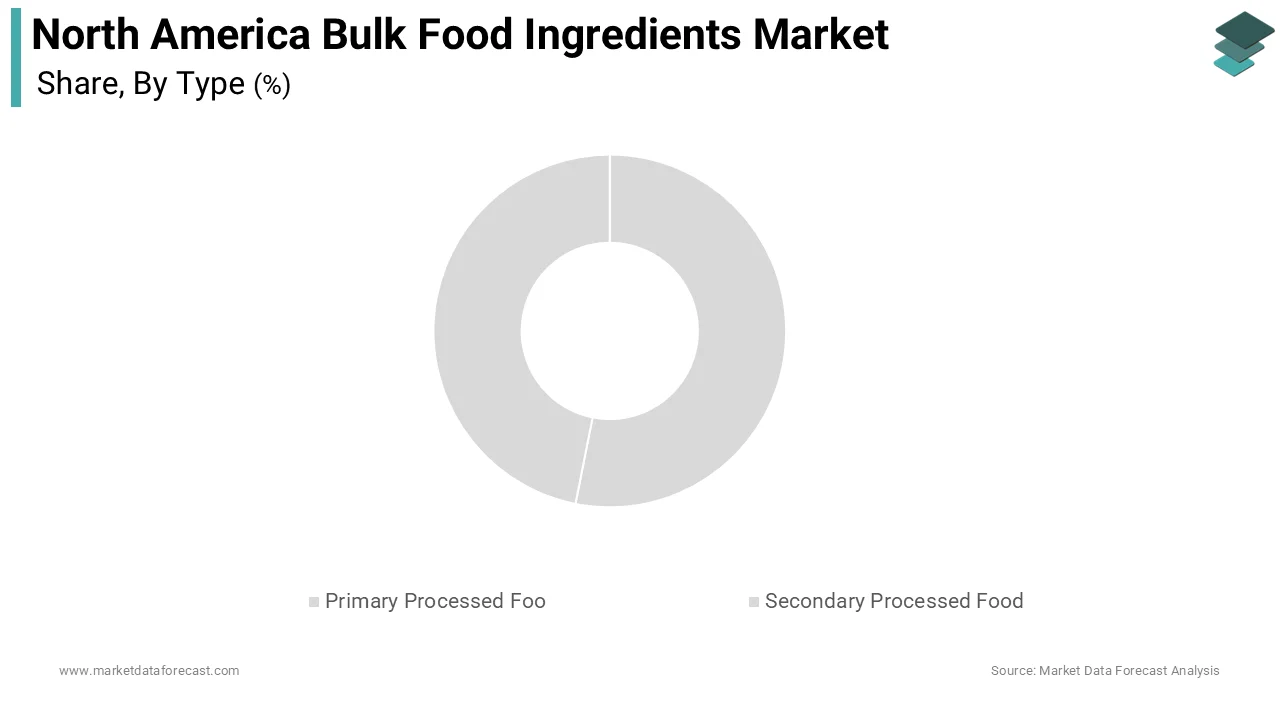
The secondary processed ingredients segment is likely to grow at the fastest CAGR of 6.2% during the forecast period, driven by the increasing demand for value-added and convenience-oriented food solutions. This segment includes items such as pre-mixed flours, flavored salts, dried fruits, and specialized spice blends, which reduce preparation time for both industrial manufacturers and consumers. The shift toward ready-to-eat and ready-to-cook meals requires sophisticated ingredient formulations to deliver consistent taste and texture. Many consumers in North America reported purchasing meal kits or pre-prepared foods in 2025 to save time on cooking. This trend drives manufacturers to source secondary processed ingredients that offer enhanced functionality such as improved solubility or extended freshness. Secondary processing allows for the creation of unique product differentiators, such as gluten-free flour mixes or low-sodium seasoning blends that cater to specific dietary needs. The higher profit margins associated with value-added ingredients encourage suppliers to invest in innovation and customization.
By Application Insights
The bakery products segment was the largest, holding 44.3% of the North America Bulk Food Ingredients Market share in 2025 due to the widespread consumption of bread, pastries, cakes, and other baked goods as daily dietary staples. Bread remains one of the top five most purchased items in supermarkets by ensuring consistent turnover for bakery ingredients. The versatility of bulk ingredients allows manufacturers to produce a wide range of products from whole grain loaves to indulgent pastries, catering to diverse consumer preferences. Innovations in ingredient technology, such as enzyme-treated flours and natural preservatives, have extended shelf life and improved texture, further boosting sales. The rise of artisanal bakeries and home baking trends during recent years has also contributed to increased demand for high-quality bulk ingredients.
The ready meals segment is likely to grow at the fastest CAGR of 7.1% during the forecast period, with the rapid urbanization and changing lifestyle patterns that prioritize convenience. Consumers are increasingly seeking quick and easy meal solutions that do not compromise on taste or nutritional value, leading to a surge in demand for frozen and refrigerated ready meals. The wide array of bulk ingredients, including pre-cooked grains, sauces, proteins, and vegetables, can be assembled quickly in manufacturing facilities. The complexity of ready meals requires specialized ingredients, such as stabilizers, thickeners, and flavor enhancers, to maintain quality during freezing and reheating. Manufacturers are investing in clean label alternatives for these functional ingredients to appeal to health-conscious shoppers. The expansion of delivery services and online grocery platforms has further facilitated access to ready meals, driving volume growth. As the workforce becomes more time constrained, the demand for convenient meal options will continue to rise, making the ready meals segment a key driver of future market expansion.
REGIONAL ANALYSIS
United States Bulk Food Ingredients Market Analysis
The United States was the top performer of the North America Bulk Food Ingredients Market by accounting for 80.3% of the share in 2025 with its massive food processing industry and high per capita consumption. The country’s extensive agricultural base provides a competitive advantage in sourcing raw materials, such as corn, soy, and wheat, which are processed into a wide variety of bulk ingredients. The presence of major multinational food corporations and a vibrant startup ecosystem fosters continuous innovation in ingredient formulations and applications. The regulatory framework enforced by the Food and Drug Administration ensures high safety standards, which builds trust among domestic and international buyers. Additionally, the robust distribution network comprising wholesalers, distributors, and online platforms ensures efficient delivery of bulk ingredients to manufacturers across the country. The trend toward health and wellness has spurred demand for alternative proteins and natural sweeteners, further fostering market growth.
Canada Bulk Food Ingredients Market Analysis
Canada Bulk Food Ingredients Market was ranked next, holding 13.3% of the share in 2025, with a strong emphasis on quality, sustainability, and regulatory compliance. The strict food safety standards enforced by the Canadian Food Inspection Agency ensure high product integrity and consumer confidence. Consumers in Canada are increasingly interested in organic and non-genetically modified organism certified ingredients, driving demand for transparent sourcing practices. The multicultural demographic profile of Canada influences product diversity, with manufacturers offering items tailored to various ethnic cuisines. Urban centers like Toronto and Vancouver serve as hubs for innovation, where startups introduce novel plant-based and functional ingredients. The government’s support for local agriculture through subsidies and research grants strengthens the domestic supply chain. Additionally, the rise of e-commerce platforms has expanded access to bulk ingredients for small businesses and artisans. Collaborative efforts between industry stakeholders and regulatory bodies focus on reducing environmental impact through sustainable packaging initiatives.
COMPETITION OVERVIEW
The competition in the North America Bulk Food Ingredients Market is characterized by intense rivalry among large multinational corporations and specialized regional suppliers who vie for contracts through price, quality, and service differentiation. Large companies leverage economies of scale and extensive distribution networks to maintain dominant positions, while smaller firms focus on niche segments, such as organic specialty or ethnic specific ingredients. Price competition remains fierce, particularly for commoditized items like sugar and flour where margins are thin, and buyers have many alternatives. Manufacturers continuously invest in innovation to develop unique functional ingredients that offer superior performance in final products, thereby distinguishing their offerings. The rise of private label brands has further intensified competition by offering cost-effective alternatives that challenge established branded ingredients. Regulatory compliance and food safety standards serve as barriers to entry, ensuring that only well-capitalized entities can sustain long-term operations. Collaboration with retailers and food manufacturers is essential for securing long-term supply agreements and driving volume sales. Technological advancements in processing and preservation provide competitive advantages by extending shelf life and enhancing product appeal.
KEY MARKET PLAYERS
A few major key players in the North America Bulk Food Ingredients Market include
- Tate & Lyle PLC, Associated British Foods plc
- Ingredion Incorporated
- Cargill Incorporated
- DMH Ingredients
- Olam International
- E.I. du Pont de Nemours and Company
- Archer Daniels Midland Company
- EHL Ingredients
- Community Foods Limited
Top Strategies Used by Key Market Participants
Key players in the North America Bulk Food Ingredients Market primarily employ vertical integration and sustainable sourcing strategies to secure raw material supply and reduce cost volatility. Companies invest heavily in research and development to create clean-label functional and plant-based ingredients that address evolving consumer health preferences. Strategic mergers and acquisitions enable firms to expand their product portfolios and enter new geographic areas or niche segments. Digital transformation is prioritized through the adoption of supply chain transparency tools and data analytics to optimize logistics and enhance customer engagement. Sustainability initiatives form another strategy, as manufacturers adopt eco-friendly packaging and reduce carbon footprints to align with regulatory expectations and consumer values. Marketing efforts focus on transparency and ethical sourcing to build brand loyalty and trust among increasingly informed shoppers who prioritize ingredient quality and production methods.
Leading Players in the North America Bulk Food Ingredients Market
- Cargill Incorporated operates as a global leader in agricultural processing and food ingredient supply with a massive footprint across North America. The company provides a wide range of bulk ingredients, including starches, sweeteners, oils, and proteins, to various food and beverage manufacturers. Recent strategic initiatives include significant investments in sustainable sourcing practices and the expansion of its plant-based protein portfolio to meet growing consumer demand. Cargill has enhanced its digital capabilities by launching platforms that offer customers real-time visibility into supply chain operations and ingredient traceability. The company actively collaborates with farmers to implement regenerative agriculture techniques, which improve soil health and ensure long-term raw material availability.
- Archer Daniels Midland Company leverages its extensive global network to source, process, and distribute a diverse array of bulk food ingredients throughout North America. The company specializes in value-added solutions, such as natural flavors, colors, and texturants that help manufacturers create differentiated products. Recent actions include the acquisition of specialized biotech firms to enhance its capabilities in fermentation-derived ingredients and alternative proteins. ADM has invested heavily in research and development centers focused on creating clean-label and functional ingredients that align with current health trends. The company also emphasizes sustainability by reducing water usage and carbon emissions in its processing facilities. Strategic partnerships with key retail and food service clients enable ADM to co-develop innovative formulations that address specific market needs.
- Ingredion Incorporated is a prominent provider of value-added ingredients and biobased solutions serving the North American bulk food ingredients market with a focus on texture and taste enhancement. The company offers a comprehensive portfolio, including starches, sweeteners, and plant-based proteins that are essential for product formulation. Recent strategies involve expanding its production capacity for specialty starches and investing in advanced application laboratories to support customer innovation. Ingredion has strengthened its market position by launching new lines of organic and non-genetically modified organism certified ingredients to cater to health-conscious consumers. The company actively engages in sustainability programs aimed at reducing waste and improving energy efficiency across its operations. Collaborations with academic institutions facilitate the development of novel ingredients with improved functional properties.
MARKET SEGMENTATION
This research report on the North American bulk food ingredients market is segmented and sub-segmented based on type, application, and region
By Type
- Primary Processed Food
- Grains & Seeds
- Herbs & Spices
- Sugar
- Salt
- Oilseeds
- Nuts
- Others
- Secondary Processed Food
- Dry Fruits & Nuts
- Grains & Seeds
- Flour
- Herbs & Spices
- Sugar
- Salt
- Others
By Application
- Ready Meals
- Bakery Products
- Confectionery Products
- Snacks & Spreads
- Others
By Region
- US
- Canada
- Rest of North America