- Product Description Description
- Table of Contents TOC
- List of Table & Figure LOT
- Get Free Sample PDF Sample PDF
Market Size, 2025
$23.94 BnMarket Estimate, 2026
$30.52 BnMarket Forecast, 2034
$213.21 BnCAGR, 2026–2034
27.5%Europe RNAi Drug Delivery Market Summary
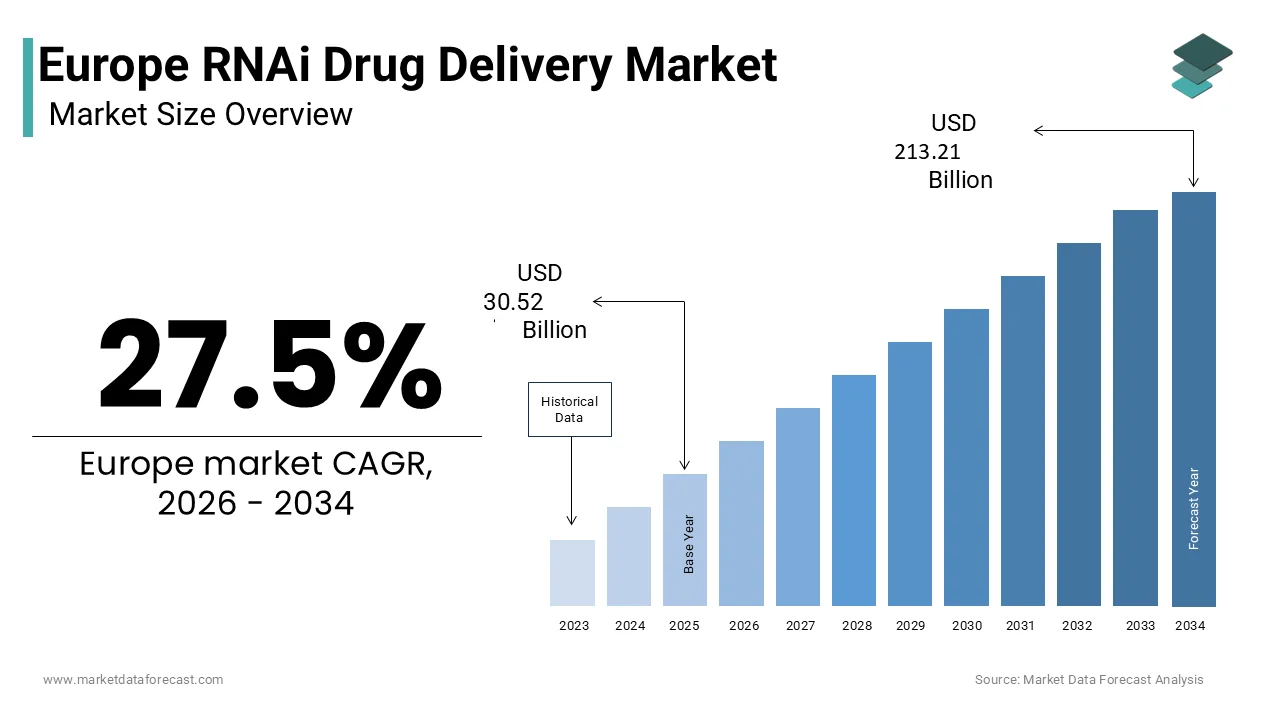
The Europe RNAi drug delivery market reached USD 23.94 billion in 2025, increased sharply to USD 30.52 billion in 2026, and is projected to grow at a CAGR of 27.5% from 2026 to 2034, reaching USD 213.21 billion by 2034, driven by the high prevalence of rare genetic disorders, strong public–private investment in nucleic acid therapeutics, and rapid advances in targeted RNA delivery platforms beyond liver-centric applications.
Key Market Insights
- 2025 Market Size: USD 23.94 billion
- 2026 Estimate: USD 30.52 billion
- 2034 Forecast: USD 213.21 billion
- CAGR (2026–2034): 27.5%
Quick Growth Drivers
- High burden of rare and monogenic diseases across Europe
- Accelerated orphan drug designations and EMA approvals for RNAi therapies
- Strong Horizon Europe funding for nucleic acid delivery research
- Repurposing of mRNA vaccine infrastructure for RNAi delivery
- Rapid clinical adoption of GalNAc and lipid nanoparticle platforms
Principal Restraints
- Stringent EMA requirements for delivery system characterization
- Extensive toxicology and biodistribution studies for novel carriers
- Limited scalability and high cost of GMP-grade nanocarrier manufacturing
- Capacity constraints at EU-based RNAi manufacturing facilities
High-Value Opportunities
- Expansion of RNAi delivery into extrahepatic targets (CNS, lung, oncology)
- Development of inhaled and brain-penetrating RNAi formulations
- Integration of RNAi therapies with companion diagnostics
- Personalized medicine programs matching RNAi to ultra-rare genotypes
Key Market Challenges
- Immunogenicity and off-target effects of delivery vectors
- Regulatory demands for transcriptomic and long-term safety profiling
- Fragmented reimbursement pathways for high-cost RNAi therapies
- Delayed market access in Southern and Eastern Europe
Fastest-Growing Segments
- Neurology Applications: CAGR 16.8% — brain-penetrating delivery breakthroughs
- Pulmonary Drug Delivery: CAGR 14.3% — localized RNAi for respiratory diseases
- Extrahepatic RNAi Platforms: strong pipeline momentum
Regional Leadership & Dynamics
- Germany (22.4%) — strongest RNAi trial density, rapid reimbursement for orphan drugs
- United Kingdom (16.7%) — GMP RNA manufacturing leadership, accelerated regulatory pathways
- France — public funding for rare diseases and pulmonary RNAi applications
- Switzerland — global pharma hubs, CNS delivery innovation
- Sweden — neurological RNAi research and universal reimbursement
What Wins Commercially
- Clinically validated delivery platforms with regulatory precedent
- Tissue-specific targeting that expands beyond hepatocytes
- Scalable GMP manufacturing within the EU
- Demonstrated long-term efficacy with infrequent dosing
Top Strategic Ask for Executives
- Invest aggressively in extrahepatic and CNS-targeted RNAi delivery
- Expand EU-based GMP nanocarrier manufacturing capacity
- Align delivery platform development with EMA scientific advice early
- Integrate companion diagnostics to support reimbursement outcomes
Leading Players
Some of the companies that are playing a dominating role in the Europe RNAi drug delivery market include:
- Alnylam Pharmaceuticals
- Novartis AG
- Arrowhead Pharmaceuticals
- Silence Therapeutics
- Dicerna Pharmaceuticals
- Sirnaomics
- Quark Pharmaceuticals
Europe RNAi Drug Delivery Market Size
The europe RNAi drug delivery market reached USD 23.94 billion in 2025 and USD 30.52 billion in 2026, and is projected to grow at a CAGR of 27.5% from 2026 to 2034, reaching USD 213.21 billion by 2034.
The RNAi Drug Delivery is an advanced therapeutic platform designed to transport small interfering RNA molecules to specific cellular targets by enabling selective gene silencing for the treatment of rare genetic disorders, liver diseases, and certain cancers. Unlike conventional pharmaceuticals, RNA interference therapeutics require sophisticated delivery systems, such as lipid nanoparticles, GalNAc conjugates, or polymeric-based carriers to protect fragile RNA strands from degradation and facilitate cellular uptake. According to the European Commission’s 2024 report on innovative medicines, over 35 RNAi-based therapies are in active clinical development across the EU, with 7 already granted marketing authorization. As per the European Organisation for Rare Diseases, approximately 30 million Europeans live with a rare condition, many of which are monogenic and thus amenable to RNAi intervention. Furthermore, the EU’s Horizon Europe program allocated €280 million in 2023 specifically to nucleic acid delivery research, reflecting institutional commitment to overcoming biological barriers. This confluence of unmet medical need, scientific progress, and policy support defines the strategic importance of RNAi delivery technologies in Europe’s next-generation therapeutic landscape.
MARKET DRIVERS
High Prevalence of Rare and Genetic Disorders Amenable to RNAi Therapy
Europe’s significant burden of monogenic diseases provides a compelling clinical rationale for RNAi drug development and delivery innovation, which is significantly propelling the growth of Europe's RNAi drug delivery market. According to the European Reference Network for Rare Diseases, over 6,000 rare conditions affect 6 to 8% of the EU population, equivalent to 30 million people, with 72% having a genetic origin. Many of these, such as transthyretin amyloidosis and acute hepatic porphyria, are driven by single gene overexpression, which makes them ideal targets for RNAi silencing. The European Medicines Agency has designated 14 RNAi candidates as orphan medicines since 2020, accelerating regulatory review. Similarly, Germany’s Federal Joint Committee reported that RNAi therapies accounted for 18% of all newly reimbursed orphan drugs in 2024. This concentration of genetically defined patient populations creates a fertile environment for targeted RNAi delivery systems, particularly those enabling liver-specific uptake.
Strong Public and Private Investment in Nucleic Acid Therapeutics Infrastructure
The robust innovation ecosystem for RNA therapeutics through coordinated funding, academic collaboration, and specialized manufacturing capabilities, which is additionally fuelling the growth of Europe RNAi drug delivery market. According to the European Federation of Pharmaceutical Industries and Associations, public-private partnerships invested over €1.2 billion in RNA platform technologies between 2021 and 2024, with delivery systems receiving the largest share. In 2023, the UK’s Medicines Manufacturing Innovation Centre opened a dedicated RNA production suite capable of GMP-compliant lipid nanoparticle formulation by reducing reliance on third-party fill finish. Similarly, Germany’s BioNTech and CureVac have repurposed mRNA infrastructure for RNAi delivery R&D, thereby leveraging existing expertise in nucleotide chemistry and nanocarrier design. This strategic alignment of capital, talent, and infrastructure ensures Europe remains a global hub for next-generation RNAi delivery innovation beyond clinical application alone.
MARKET RESTRAINTS
Stringent Regulatory Requirements for Novel Delivery Systems
The European Medicines Agency classifies RNAi delivery platforms as integral components of advanced therapy medicinal products, subjecting them to rigorous quality, safety, and biodistribution assessments. According to EMA’s 2023 guideline on nucleic acid therapeutics, sponsors must provide comprehensive data on nanoparticle size distribution, endosomal escape efficiency, and off-target organ accumulation requirements that significantly extend development timelines. Furthermore, the EU’s novel excipient framework mandates full toxicological profiling of lipid or polymer carriers, even if used in trace amounts. These regulatory hurdles, while ensuring patient safety, constrain smaller biotechs from advancing innovative but unproven delivery modalities.
MARKET RESTRAINTS
Limited Scalability and High Cost of GMP Compliant Nanocarrier Manufacturing
Producing clinical-grade RNAi delivery systems at a commercial scale due to complex manufacturing requirements and fragmented production capacity is hampering the growth of Europe RNAi drug delivery market. According to the European Association for Bioindustries, fewer than 12 facilities in the EU offer end-to-end GMP manufacturing of lipid nanoparticles, with lead times exceeding nine months for batch scheduling. The synthesis of ionizable lipids, key components of delivery vehicles, requires specialized chemistry suites compliant with ICH Q11 standards, which only three European contract development organizations possess. In 2023, the cost of producing one gram of GMP-grade RNAi-lipid nanoparticle ranged from €8,000 to €12,000, as reported by the European Medicines Agency’s cost of goods analysis, limiting accessibility for early-stage developers. Moreover, batch-to-batch variability in particle size and encapsulation efficiency often triggers regulatory queries, delaying approval.
MARKET OPPORTUNITIES
Expansion into Extrahepatic Targeting Beyond Liver Diseases
While current RNAi therapies primarily target the liver via GalNAc conjugates, emerging delivery platforms are unlocking therapeutic potential in neurology, oncology, and respiratory diseases. The expansion into extrahepatic targeting beyond liver diseases is setting up new opportunities for the growth of Europe RNAi drug delivery market. According to a 2024 survey by the European Society of Gene and Cell Therapy, 22 RNAi programs in Europe now focus on extrahepatic indications, including glioblastoma, diabetic neuropathy, and cystic fibrosis. Researchers at Sweden’s Karolinska Institute developed peptide-modified lipid nanoparticles that cross the blood-brain barrier in preclinical models, which is achieving 40% target gene knockdown in cortical neurons, as published in Nature Nanotechnology. Similarly, a French biotech secured EMA PRIME designation in 2023 for an inhaled RNAi therapy encapsulated in polymeric micelles to silence mucus overproduction genes in chronic bronchitis. Success in these areas would transform RNAi from aliver-centricc modality into a versatile platform across multiple disease domains.
Integration of RNAi Delivery with Personalized Medicine and Companion Diagnostics
The genomic medicine is creating synergies between RNAi delivery and precision health strategies, which is also creating new opportunities for the growth of Europe RNAi drug delivery market. In the Netherlands, the Center for Personalized Medicine at Erasmus MC launched a pilot in 2024 matching RNAi candidates to patients with ultra-rare splice site mutations, using companion diagnostics to confirm target expression. Similarly, Germany’s National Decade Against Cancer supports trials of tumor-specific RNAi nanoparticles guided by circulating tumor DNA profiles. The European Medicines Agency’s 2023 reflection paper explicitly encourages co-development of RNAi therapeutics and diagnostics to enrich responsive populations.
MARKET CHALLENGES
Persistent Immunogenicity and Off-Target Effects of Delivery Vectors
RNAi delivery systems continue to trigger innate immune responses or unintended gene silencing, posing clinical and regulatory risks. Certain polymer-based carriers exhibit sequence-independent off-target effects, where a study from the University of Oxford documented unintended microRNA pathway disruption in 18% of animal models receiving cationic dendrimers. The European Medicines Agency now requires comprehensive transcriptomic profiling in non-rodent species to rule outsuch interference, adding six to nine months to preclinical programs. In oncology applications, non-specific uptake by macrophages can also sequester nanoparticles before reaching tumor sites, reducing efficacy. Until delivery platforms achieve true cell type specificity and immunological neutrality, these biological barriers will limit the therapeutic window and complicate clinical translation across diverse patient populations.
Fragmented Reimbursement Pathways for HiHigh-CostNAi Therapeutics
Even when approved, RNAi drugs face inconsistent pricing and reimbursement decisions across European health systems, undermining commercial viability and patient access. This factor is also one of the challenges for the growth of Europe RNAi drug delivery market. According to the European Observatory on Health Systems and Policies, RNAi therapies for rare diseases are reimbursed in only 14 of 27 EU member states as of 2024, with significant delays in Southern and Eastern Europe. In Italy, the AIFA review process for RNAi drugs averages 14 months post-EMA approval, compared to 5 months in Germany. Payers often cite budget impact concerns; an RNAi therapy for hereditary angioedema costs €420,000 annually per patient, as confirmed by the UK’s National Institute for Health and Care Excellence. France’s Transparency Committee downgraded the added therapeutic value of two RNAi candidates in 2023 due to a lack of long-term outcome data, triggering price negotiations. This reimbursement fragmentation discourages investment in delivery platforms for ultra-orphan indications, where small patient pools cannot absorb pricing pressure. Without harmonized health technology assessment frameworks, Europe’s scientific leadership in RNAi may not translate into equitable patient benefit.
REPORT COVERAGE
| REPORT METRIC | DETAILS |
| Market Size Available | 2025 to 2034 |
| Base Year | 2025 |
| Forecast Period | 2026 to 2034 |
| Segments Covered | By Drug Delivery. Therapeutic Application, and Region. |
| Various Analyses Covered | Global, Regional, and Country-Level Analysis, Segment-Level Analysis, Drivers, Restraints, Opportunities, Challenges; PESTLE Analysis; Porter’s Five Forces Analysis, Competitive Landscape, Analyst Overview of Investment Opportunities |
| Countries Covered | UK, France, Spain, Germany, Italy, Russia, Sweden, Denmark, Switzerland, Netherlands, Turkey, Czech Republic, Rest of Europe |
| Market Leaders Profiled | Alnylam Pharmaceuticals Inc. |
SEGMENTAL ANALYSIS
By Drug Delivery Insights
The nanoparticle drug delivery technology segment was the largest by capturing 64.3% of the European RNAi Drug Delivery Market share in 2025. All currently EMA-approved RNAi drugs, such as patisiran and vutrisiran, rely on lipid nanoparticle delivery systems, establishing a strong regulatory and clinical foundation. According to the European Medicines Agency, lipid nanoparticles enabled the first systemic RNAi therapy approval in 2018, with subsequent candidates benefiting from platform data extrapolation. Patisiran, used for hereditary transthyretin amyloidosis, demonstrated a 79% reduction in mutant TTR protein in Phase III trials, directly attributable to nanoparticle-mediated hepatocyte uptake. This track record reduces development risk and accelerates regulatory review, making nanoparticles the default choice for both startups and large pharma. Nanoparticle formulations, particularly lipid-based systems that align with existing nucleic acid production capabilities, expanded during the mRNA vaccine rollout. According to the European Biopharmaceutical Review, over 80% of GMP RNA fill finish facilities in Europe, such as Germany, Belgium, and Switzerland,d are equipped with microfluidic mixing platforms suitable for nanoparticle encapsulation. In 2023, the UK’s Medicines Manufacturing Innovation Centre reported that nanoparticle batch yields exceeded 92% with less than 5% size variability, meeting EMA quality thresholds. France’s biomanufacturing cluster Genopole houses three dedicated nanoparticle suites that reduced process development timelines by 40% for RNAi startups.
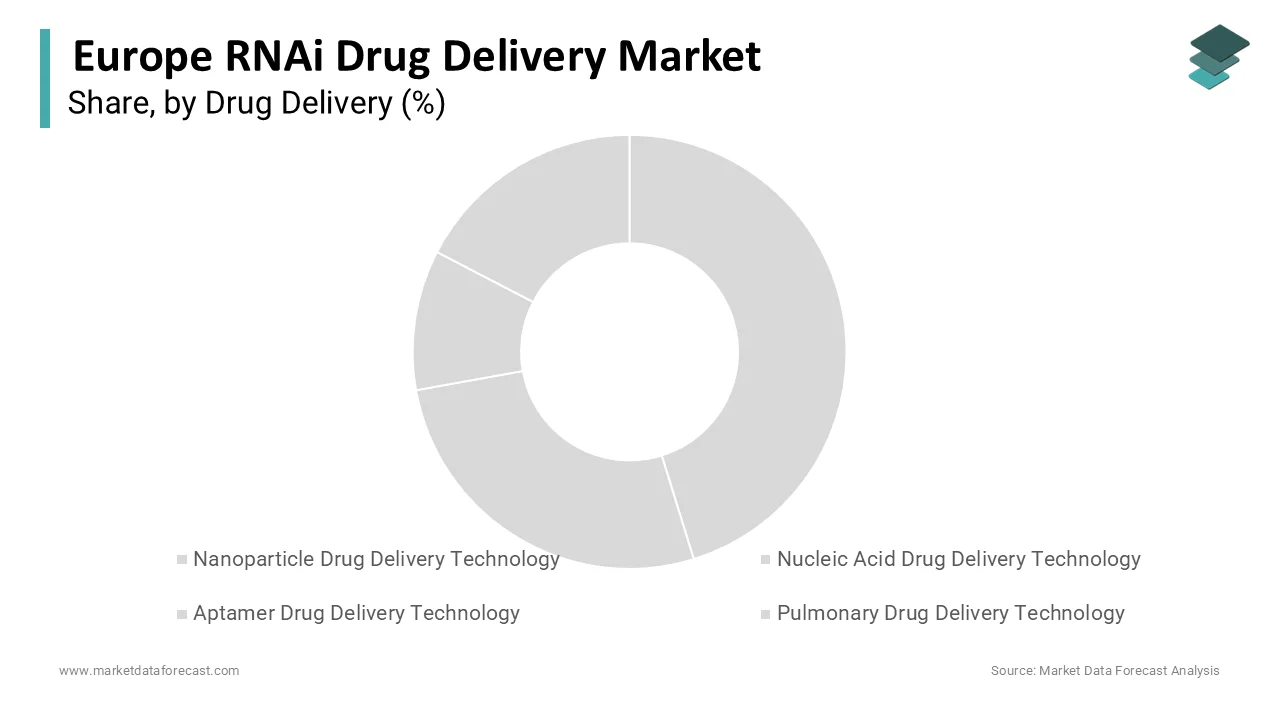
The pulmonary drug delivery technology segment is projected to expand at a CAGR of 14.3% from 2025 to 2033. Europe faces a growing burden of obstructive and inflammatory lung conditions that are ideal for localized RNAi intervention. In 2023, a French biotech initiated Phase II trials of an inhaled RNAi therapy targeting IL4Rα in eosinophilic asthma, delivered via nebulized polymeric nanoparticles that achieved 68% target knockdown in bronchial biopsies. Similarly, the UK’s National Institute for Health and Care Research funded a program to silence MUC5AC in chronic bronchitis using dry powder inhalers, showing reduced mucus viscosity in preclinical models. The localized delivery minimizes systemic exposure while maximizing therapeutic concentration at the disease site, offering a compelling advantage over oral or injectable biologics. Recent innovations in particle engineering have overcome historical barriers of RNA degradation and poor lung retention. According to a 2024 study published in the European Journal of Pharmaceutics and Biopharmaceuticstrehalose-stabilizeded lipid nanoparticles retained 95% RNA integrity after nebulization, with aerodynamic diameters of 1.8 to 2.5 micrometers ensuring deep alveolar deposition. Switzerland’s ETH Zurich developed charge masking polymers that prevent macrophage clearance, extending RNAi half-life in lung tissue from 6 to 48 hours. Additionally, the European Medicines Agency issued a draft guideline in early 2024 specifically for inhaled nucleic acid products, clarifying requirements for aerosol characterization and regional deposition modeling.
By Therapeutic Application Insights
The metabolic disorders segment accounted in holding 38.3% of the European RNAi Drug Delivery Market share in 2025, due to the liver’s accessibility and the monogenic nature of many metabolic conditions. Numerous inherited metabolic disorders originate in hepatocytes, making them ideal for RNAi therapy via systemically delivered nanoparticles. According to Orphanet, Europe is home to over 250,000 patients with amyloidosis, porphyria, or hypercholesterolemia caused by single gene defects. The European Medicines Agency has approved three RNAi drugs for such conditions as patisiran, givosiran, and inclisiran, with inclisiran alone projected to treat 1.2 million EU patients with familial hypercholesterolemia by 2026, as per the European Atherosclerosis Society. In Germany, statutory health insurers added inclisiran to the early benefit assessment list in 2023 by enabling rapid reimbursement due to its twice-yearly dosing advantage over PCSK9 inhibitors. Payers across Europe recognize the long-term cost offsets of RNAi therapies for chronic metabolic conditions. In the Netherlands, the National Health Care Institute calculated a 23% lifetime cost reduction per patient treated with givosiran for acute hepatic porphyria, factoring in avoided emergency interventions. Moreover, the EUnetHTA joint clinical assessment framework explicitly favors therapies with durable effects and infrequent dosing, key attributes of RNAi.
The neurology segment is expected to witness the fastest CAGR of 16.8% during the forecast period. Historically, the central nervous system was considered inaccessible to RNAi, but novel vectors are now overcoming this barrier. According to researchers at Sweden’s Karolinska Institute, angiopep2 conjugated lipid nanoparticles achieved 5.3-fold higher brain accumulation in primate models compared to conventional carriers, enabling silencing of mutant huntingtin in preclinical Huntington’s disease studies. In 2024, a Swiss biotech secured EMA PRIME designation for an RNAi therapy targeting SOD1 in amyotrophic lateral sclerosis, delivered via exosome mimetics that showed 41% target reduction in cerebrospinal fluid biomarkers. These technological breakthroughs are transforming previously untreatable neurodegenerative diseases into viable RNAi targets. Europe has a dense population of patients with monogenic neurological conditions lacking disease-modifying treatments. According to the European Reference Network for Rare Neurological Diseases, over 120,000 individuals in the EU suffer from hereditary ataxias, spinal muscular atrophy variants, or familial ALS, with 68% expressing interest in gene silencing trials. In France, the National Plan for Rare Diseases 2023–2027 prioritized RNAi as a therapeutic modality for ultra-rare neurological conditions, fast-tracking ethics approvals. Germany’s Federal Joint Committee recently updated its innovation funding criteria to include intrathecal RNAi delivery systems, covering trial costs for up to 500 patients annually.
COUNTRY LEVEL ANALYSIS
Germany Rnai Drug Delivery Market Analysis
Germany's RNAi Drug Delivery Market was the top performer by accounting for 22.4% of the share in 2024, due to world-class biopharmaceutical infrastructure, robust reimbursement for orphan drugs, and strong academic-industry collaboration. Over 35 RNAi clinical trials are active in Germany, the highest in Europe, with 12 focused on delivery platform optimization. The Paul Ehrlich Institute maintains a dedicated RNA therapeutics review unit that reduces approval timelines by 30% compared to EU averages. Companies like BioNTech and CureVac have repurposed mRNA lipid nanoparticle expertise for RNAi, while universities in Heidelberg and Munich lead in exosome and polymer vector research. Germany’s early benefit assessment system also ensures rapid market access for high-value RNAi therapies, making it the continent’s most dynamic ecosystem for RNAi delivery innovation and adoption.
United Kingdom RNAi Drug Delivery Market Analysis
The United Kingdom was ranked second by capturing 16.7% of the European RNAi Drug Delivery Market share in 2025. Its strength lies in pioneering academic research, dedicated manufacturing infrastructure, and streamlined regulatory pathways. The UK’s Medicines Manufacturing Innovation Centre in Glasgow operates Europe’s first GMP facility exclusively for RNA delivery systems, supporting over 20 startups since 2022. Oxford and Cambridge universities rank among the top three globally for RNAi delivery publications, with recent breakthroughs in peptide-guided nanoparticles for tumor targeting. Post Brexit, the MHRA’s Innovative Licensing and Access Pathway enables accelerated conditional approval, attracting global RNAi developers to launch European trials first in the UK, cementing its role as a scientific and commercial gateway.
France Rnai Drug Delivery Market Analysis
France RNAi Drug Delivery Market growth is likely to grow with the prominent growth opportunities in the coming years. The country excels in clinical translation and public health integration of advanced therapies. Over 28 RNAi trials are ongoing in French hospitals, with a strong focus on metabolic and pulmonary applications. The National Plan for Rare Diseases provides full public funding for RNAi therapy access, covering 100% of costs for eligible patients. Institut Curie and INSERM lead in oncology-focused delivery, developing pH-responsive nanoparticles that release RNAi payloads selectively in tumor microenvironments. In 2023, France became the first EU nation to include RNAi delivery R&D in its national AI for Health strategy, using machine learning to optimize lipid compositions. This fusion of public health commitment, clinical research excellence, and digital innovation sustains France’s position as a cornerstone of Europe’s RNAi delivery ecosystem.
Switzerland Rnai Drug Delivery Market Analysis
Switzerland RNAi Drug Delivery Market growth is expected to grow with the global pharmaceutical headquarters, cutting-edge academic institutions, and regulatory agility. Novartis and Roche conduct over 40% of their global RNAi delivery development in Basel and Zurich, focusing on GalNAc alternatives and CNS vectors. ETH Zurich and EPFL rank among the world’s top five universities for nanomedicine research, with breakthroughs in charge-reversible polymers that enhance endosomal escape. Swissmedic operates a parallel review process with the EMA, often delivering opinions 2 to 3 months faster. Additionally, Switzerland’s bilateral agreements with the EU allow seamless clinical trial data acceptance, making it a preferred launchpad for European RNAi programs. This unique convergence of industry scale, scientific excellence, and regulatory efficiency amplifies Switzerland’s outsized impact on the market.
Sweden RNAi Drug Delivery Market Analysis
Sweden RNAi Drug Delivery Market growth is likely to grow with neurological and rare disease applications, driven by world-renowned research and integrated health data systems. Karolinska Institute hosts Europe’s largest RNAi clinical program for neurodegenerative diseases, with six active trials using novel brain-penetrating vectors. The Swedish Research Council allocated €42 million in 2023 to RNA delivery platforms, with emphasis on biodegradable lipids to reduce toxicity. Furthermore, the country’s universal reimbursement system covers all EMA-approved RNAi drugs within 90 days of launch. This seamless integration of discovery, data, and delivery ensures Sweden remains a high-impact hub for next-generation RNAi therapeutics in Europe.
COMPETITIVE LANDSCAPE
Competition in the European RNAi Drug Delivery Market is characterized by a dynamic interplay between multinational biopharmaceutical leaders, specialized RNAi innovators, and academic spin-offs, all vying to overcome biological and regulatory barriers to effective gene silencing. Unlike conventional drug markets, competition here centers on delivery platform sophistication, target tissue specificity, and the ability to navigate Europe’s fragmented but rigorous approval and reimbursement landscape. While US-based firms bring clinical-stage assets, European entities contribute foundational science in nanoparticle engineering, polymer chemistry, and biodistribution modeling. The market is highly innovation-driven, with success dependent on achieving cellular precision, minimizing immunogenicity, and demonstrating long term durability. Regulatory harmonization remains limited, compelling companies to adopt country-specific launch strategies. Despite high capital intensity, the unmet need in rare and chronic diseases continues to attract investment, making Europe a critical arena for next-generation RNAi delivery advancement.
KEY MARKET PLAYERS
Companies playing a prominent role in the European RNAi drug delivery market profiled in this report are
- Alnylam Pharmaceuticals Inc.
- Merck & Co. Inc.
- Dicerna Pharmaceuticals Inc.
- Tekmira Pharmaceuticals Corp.
- Access Pharmaceuticals Inc.
- Sirnaomics Inc.
- Isis Pharmaceuticals Inc.
- RXi Pharmaceuticals Corp.
- Calondo Pharmaceuticals Inc.
- Quark Pharmaceuticals Inc.
- Silence Therapeutics plc
- Traversa Therapeutics Inc.
- Marina Biotech Inc.
- Tacere Therapeutics Inc.
- PhaseRx Inc.
TOP LEADING PLAYERS IN THE MARKET
- Alnylam Pharmaceuticals is a global pioneer in RNA interference therapeutics and maintains a significant footprint in the European RNAi Drug Delivery Market through its clinically validated lipid nanoparticle and GalNAc conjugate platforms. The company’s EMA-approved therapies patisiran, givosiran, lumasiran, and vutrisiran treat rare metabolic and hepatic disorders using proprietary delivery technologies that ensure hepatocyte-specific uptake. In 2024, Alnylam expanded its European commercial infrastructure with a dedicated RNAi delivery development center in Berlin focused on next-generation extrahepatic vectors. It also partnered with the European Organisation for Rare Diseases to enhance patient identification for ultra-orphan indications. These initiatives reinforce Alnylam’s role as both a therapeutic innovator and a delivery platform leader, shaping regulatory standards and clinical adoption pathways across the continent.
- Novartis AG contributes significantly to the European RNAi Drug Delivery Market through its strategic collaboration with Arrowhead Pharmaceuticals and internal R&D in targeted nucleic acid delivery. The company markets inclisiran, an siRNA therapy for hypercholesterolemia delivered via GalNAc conjugation, which is now reimbursed in over 20 European countries. In 2023, Novartis launched the “RNAi Advance” initiative from its Basel headquarters, investing €150 million to develop tissue-selective delivery platforms beyond the liver, including renal and vascular targeting systems. It also established a joint lab with ETH Zurich to engineer biodegradable lipidoids with reduced immunogenicity.
- Arrowhead Pharmaceuticals plays a pivotal role in the European RNAi Drug Delivery Market through its proprietary Targeted RNAi Molecule platform, which uses ligand-conjugated lipids for cell-specific delivery. The company’s partnership with Novartis for cardiovascular RNAi programs has brought its technology into mainstream European clinical practice. In early 2024, Arrowhead initiated Phase II trials in Germany and France for ARO-HSD, an RNAi candidate for non-alcoholic steatohepatitis delivered via a novel hepatocyte targeting ligand. It also opened a European regulatory affairs office in Amsterdam to streamline EMA interactions and support future filings.
TOP STRATEGIES USED BY THE KEY MARKET PARTICIPANTS
Key players in the European RNAi Drug Delivery Market prioritize the development of tissue-specific delivery platforms to expand beyond liver-targeted therapies. They form strategic partnerships with European academic institutions to leverage local expertise in nanomedicine and biomaterials. Companies invest in GMP manufacturing capabilities within the EU to ensure supply chain resilience and regulatory compliance. They actively engage with the European Medicines Agency through scientific advice procedures to align delivery system characterization with evolving guidelines. Additionally, they integrate companion diagnostics and real-world evidence generation to support health technology assessment and reimbursement across diverse European payer systems.
MARKET SEGMENTATION
This research report on the European RNAi Drug Delivery market has been segmented and sub-segmented into the following categories.
By Drug Delivery
- Nanoparticle Drug Delivery Technology
- Nucleic Acid Drug Delivery Technology
- Aptamer Drug Delivery Technology
- Pulmonary Drug Delivery Technology
By Therapeutic Application
- Infectious Diseases
- Cardiology
- Oncology
- Neurology
- Ophthalmology
- Metabolic Disorders
By Country
- UK
- France
- Spain
- Germany
- Italy
- Russia
- Sweden
- Denmark
- Switzerland
- Netherlands
- Turkey
- Czech Republic
- Rest of Europe