Europe Sesame Seeds Market Size, Share, Trends & Growth Forecast Report, Segmented By Application (Food Processing, Baking Industry, Confectionery Industry, Industrial Uses (Cosmetics & Pharmaceuticals), Seed Use for Oil Extraction), And Country (UK, France, Spain, Germany, Italy, Russia, Sweden, Denmark, Switzerland, Netherlands, Turkey, Czech Republic & Rest Of Europe) - Industry Analysis From (2026 To 2034)
Market Size, 2025
$0.61 BnMarket Estimate, 2026
$0.64 BnMarket Forecast, 2034
$0.94 BnCAGR, 2026–2034
4.82%Europe Sesame Seeds Market Report Summary
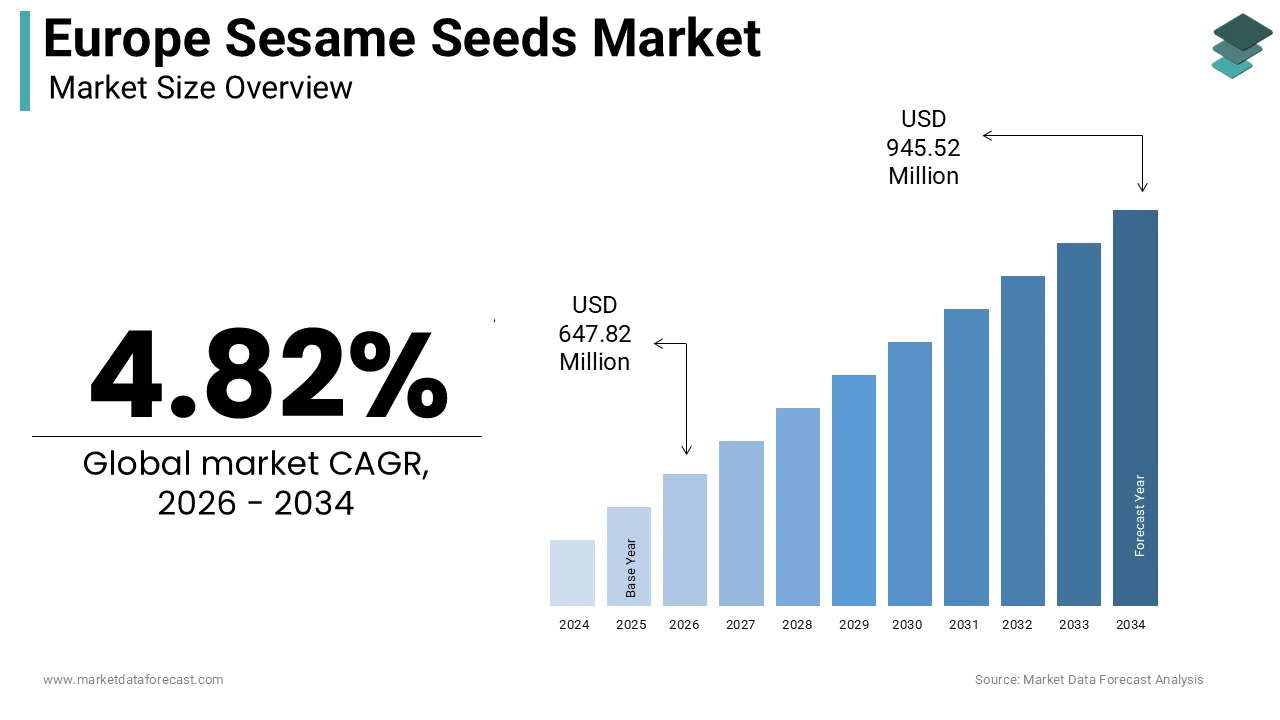
The Europe sesame seeds market was valued at USD 617.91 million in 2025, is estimated to reach USD 647.82 million in 2026, and is projected to reach USD 945.52 million by 2034, growing at a CAGR of 4.82% during the forecast period. The growth of the Europe sesame seeds market is driven by increasing demand for healthy and nutrient-rich ingredients, rising adoption of plant-based diets, and the growing use of sesame seeds in bakery, confectionery, and processed foods. Sesame seeds are widely valued for their high protein, fiber, and healthy fat content, making them a popular ingredient in functional foods and clean-label products. The market is further supported by the expansion of ethnic cuisines, particularly Middle Eastern and Asian foods, and the increasing use of sesame-based products such as tahini and sesame oil. Additionally, rising consumer awareness regarding organic and natural food products is contributing to steady market growth across Europe.
Key Market Trends
- Increasing demand for plant-based and nutrient-dense ingredients is boosting sesame seed consumption.
- Rising use of sesame seeds in bakery, confectionery, and fast-food applications.
- The growing popularity of ethnic cuisines and sesame-based products, such as tahini and sesame oil.
- Expansion of clean-label, organic, and non-GMO food products, supporting market growth.
- Increasing incorporation of sesame seeds in snacks, salads, and ready-to-eat foods.
Segmental Insights
- Based on application, the baking industry segment dominated the Europe sesame seeds market by accounting for 38.2% of the market share in 2025, driven by widespread use in bread, buns, crackers, and bakery toppings.
Regional Insights
- Germany dominated the Europe sesame seeds market in 2025, accounting for 22.3% of the regional market share, driven by strong demand from the bakery industry and a well-established food processing sector.
- The Netherlands held 17.4% of the Europe sesame seeds market share in 2025, supported by its role as a major trade hub and strong import-export activities.
- France is expected to witness notable growth, fueled by increasing demand for premium and organic food products.
- The United Kingdom is projected to grow steadily, driven by rising demand for plant-based and free-from food products, along with strong usage in fast food and bakery industries.
- Italy is experiencing steady growth, supported by unique applications of sesame seeds in confectionery and traditional regional specialties.
Competitive Landscape
The Europe sesame seed market is moderately competitive, with the presence of global agribusiness companies and regional suppliers focusing on quality, sustainability, and supply chain efficiency. Market players are investing in organic certifications, product innovation, and expanding distribution networks to strengthen their market position.
Prominent players in the Europe sesame seeds market include Olam Group, Archer Daniels Midland Company, Bunge Limited, Cargill Incorporated, ETG (Export Trading Group), SHILOH Farms, Dipasa Group, SunOpta Inc, Organic India Pvt Ltd, HL Agro Products Pvt Ltd, Selet Hulling PLC, AOS Products Pvt Ltd, Virdhara International, Shyam Industries, and Sresta Natural Bioproducts Pvt Ltd
Europe Sesame Seeds Market Size
The Europe sesame seeds market size was calculated to be USD 617.91 million in 2025 and is anticipated to be worth USD 945.52 million by 2034, from USD 647.82 million in 2026, growing at a CAGR of 4.82% during the forecast period.
The sesame seeds are valued not only for their distinct nutty flavor but also for their dense nutritional profile, which includes high levels of calcium, iron, and healthy fats. The region relies heavily on imports since climatic conditions in most European nations do not support large-scale commercial cultivation of this tropical crop. According to Eurostat, the European Union imported approximately 185000 metric tons of sesame seeds in 2024, with Germany and the Netherlands acting as primary entry points for distribution across the bloc. Consumer behavior has shifted significantly toward clean-label products, driving demand for natural ingredients over synthetic additives. As per the European Food Safety Authority, sesame remains one of the fourteen major allergens that require mandatory labeling on prepacked foods, a regulation that shapes supply chain transparency. This demographic shift forces manufacturers to incorporate sesame into meat alternatives and dairy-free formulations.
MARKET DRIVERS
Rising Demand for Plant-Based Protein and Vegan Formulations
The surge in plant-based dietary preferences is majorly fuelling the growth of Europe sesame seed market. As consumers increasingly seek alternatives to animal-derived proteins, sesame seeds have emerged as a vital component due to their high protein content and essential amino acid profile. This expansion directly correlates with the utilization of sesame in various forms such as tahini, seed butters, and protein-enriched bakery items. Manufacturers are reformulating products to meet the nutritional expectations of the 30 million Europeans who actively reduce their meat intake. Sesame seeds offer 17.7 grams of protein per 100 grams, making them a competitive option against other legumes and nuts. Furthermore, the clean label movement encourages brands to use whole seeds rather than isolated proteins, enhancing the appeal of sesame in premium product lines. Retailers report that shelves dedicated to vegan goods expanded in major supermarket chains during 2025. This structural shift in consumer habits ensures a sustained upward trajectory for sesame demand as food innovators continue to leverage its functional properties to create texture and flavor in non-dairy applications.
Expansion of the Artisanal Bakery and Gourmet Food Sector
The expanding artisanal bakery and gourmet food industry is additionally bolstering the growth of Europe sesame seeds market. Bakers and confectioners increasingly utilize sesame seeds to enhance the aesthetic appeal, texture, and nutritional value of breads, crackers, and pastries. Sesame-topped buns and seeded loaves have become staples in cafes and retail outlets, driven by the perception of healthfulness associated with whole grains and seeds. The gourmet sector also leverages sesame oil and toasted seeds to add depth to salads, dips, and finishing touches on savory dishes. Culinary trends favoring Middle Eastern and Asian cuisines have further integrated sesame into mainstream European dining, increasing its presence in restaurant menus and ready meal kits. The premiumization of food products means that consumers are willing to pay higher prices for items featuring visible, high-quality ingredients like hulled or black sesame seeds. This trend is particularly evident in urban centers where food culture drives innovation by ensuring that sesame remains a key ingredient for chefs and bakers aiming to differentiate their offerings in a competitive world.
MARKET RESTRAINTS
Stringent Allergen Labeling and Regulatory Compliance Burdens
The strict allergen labeling regulations and the associated compliance costs are inegatively impactingthe growth of Europe sesame seeds market. Sesame was officially recognized as the fourteenth major allergen under European Union food law, mandating explicit declaration on all prepacked foods starting in January 2021. This regulatory shift has forced manufacturers to overhaul their production lines and labeling protocols to prevent cross-contamination and ensure accurate information for consumers. According to the European Food Safety Authority, sesame allergies affect approximately 0.2% of the European population, yet the severity of reactions necessitates rigorous safety measures. The cost of implementing dedicated processing facilities or thorough cleaning procedures between batches has increased operational expenses for small and medium-sized enterprises, as per industry analysis from FoodDrinkEurope. Many smaller bakeries and food producers have hesitated to introduce sesame-containing products due to the fear of liability and the complexity of supply chain tracking. The requirement for traceability from the point of origin to the final shelf adds layers of administrative work that strain resources. Additionally, any failure in compliance can lead to costly product recalls and reputational damage, discouraging innovation in this segment. The heightened scrutiny means that importers must provide detailed documentation regarding pesticide residues and allergen control plans, creating barriers to entry for suppliers from regions with less developed regulatory frameworks.
Volatility in Global Supply Chains and Climatic Instability
The dependence on imports, coupled with climatic instability in key producing nations, creates significant supply chain volatility that is restraining the growth of Europe sesame seeds market. Europe produces negligible quantities of sesame domestically, relying almost entirely on imports from countries such as India, Sudan, Nigeria, and Ethiopia. Weather patterns in these regions are becoming increasingly unpredictable due to climate change, leading to fluctuating yields and inconsistent quality. This reduction in supply triggers sharp price spikes that ripple through the European market, making cost forecasting difficult for manufacturers and retailers. Logistics disruptions further exacerbate the issue, with shipping delays adding 15 to 20% to landing costs during peak congestion periods, according to data from a recent survey. The lack of local cultivation means European buyers have little buffer against global shocks, leaving them vulnerable to geopolitical tensions and trade policy changes in exporting countries. Currency fluctuations between the euro and the currencies of producing nations also impact affordability, squeezing margins for downstream users. The inconsistency in supply forces companies to maintain larger inventory buffers, tying up capital and increasing storage costs.
MARKET OPPORTUNITIES
Innovation in Sesame-Based Functional Foods and Nutraceuticals
The development of functional foods and nutraceuticals, as consumers prioritize health and wellness, is creating new opportunities for the growth of Europe sesame seed market. Sesame seeds are rich in lignans such as sesamin and sesamolin, which possess antioxidant and anti-inflammatory properties highly sought after in the health supplement sector. Researchers and food technologists are increasingly isolating these bioactive compounds to create fortified beverages, capsules, and snack bars targeting specific health outcomes like heart health and bone density. Startups are launching innovative products such as sesame milk and protein powders that cater to lactose-intolerant and vegan demographics. The clean label trend supports the use of whole seed extracts over synthetic additives by aligning with consumer desires for natural efficacy. Pharmaceutical companies are also exploring sesame oil derivatives for drug delivery systems due to their biocompatibility. As scientific evidence supporting the health benefits of sesame accumulates, regulatory bodies may approve additional health claims, further boosting consumer confidence.
Growth of Ethnic Cuisine Integration and Ready Meal Segments
The deepening integration of ethnic cuisines into mainstream European dining habits for sesame seed utilization in the ready meal and convenience food sectors is also surging new opportunities for the growth of Europe sesame seed market. As European palates become more adventurous, flavors from Middle Eastern, Asian, and Mediterranean traditions featuring sesame prominently are gaining widespread acceptance. Products such as hummus, falafel, stir fry kits, and noodle bowls frequently rely on sesame seeds or tahini as key flavor components. Food manufacturers are capitalizing on this trend by launching authentic, ready-to-eat meals that require minimal preparation, appealing to busy urban professionals and younger demographics. Supermarkets have expanded their world food aisles, especially in the last two years, to accommodate this demand, providing greater shelf visibility for sesame-laden products. The rise of food delivery platforms has further accelerated the popularity of these cuisines, introducing millions of consumers to sesame-based dishes they might not otherwise try. Culinary influencers and social media trends continue to popularize recipes using black and white sesame seeds, driving household adoption. This cultural shift ensures a broadening consumer base that views sesame not as a niche ingredient but as a pantry staple.
MARKET CHALLENGES
Persistent Threat of Aflatoxin Contamination and Food Safety Risks
The persistent risk of aflatoxin contamination, threatening both public health and trade continuity, is one of the major challenges for the growth of Europe sesame seeds market. Aflatoxins are toxic metabolites produced by certain molds that can grow on sesame seeds under warm and humid storage conditions, presenting serious carcinogenic risks to humans. The European Union maintains some of the strictest maximum residue limits for aflatoxins globally, set at 2 micrograms per kilogram for aflatoxin B1 and 4 micrograms per kilogram for total aflatoxins according to regulations enforced by the European Commission. Consignments exceeding these limits are immediately rejected and destroyed, leading to significant financial losses for exporters and importers. Data from the Rapid Alert System for Food and Feed indicates that sesame seeds were among the top ten commodities subject to border rejections in 2024 due to mycotoxin detection. The challenge lies in the difficulty of controlling mold growth during harvest and transit in tropical producing countries, where infrastructure may be inadequate. European importers must invest heavily in testing protocols and certification schemes to mitigate this risk, increasing the overall cost of goods. Repeated incidents of contamination can erode consumer trust and prompt retailers to delist affected brands permanently. Furthermore, the uneven distribution of toxins within a shipment makes sampling and detection complex, requiring sophisticated analytical equipment. This constant vigilance creates a barrier for smaller traders who lack the resources for comprehensive quality assurance, consolidating the market around large players capable of managing these stringent safety requirements.
Intense Price Competition from Substitute Seeds and Ingredients
The intense price competition from alternative seeds and ingredients within the European food industry is also expected to act as a major barrier for the growth of Europe sesame seeds market. Consumers and manufacturers often view seeds, such as sunflower, pumpkin, and chia, as viable substitutes depending on price fluctuations and availability. Sunflower seeds, which are widely cultivated within Europe, offer a locally sourced and often cheaper alternative that reduces dependency on volatile import markets. According to the European Oilseed Association, sunflower seed production in the EU exceeded 9 million metric tons in 2024 by ensuring a stable and cost-effective supply chain for domestic buyers. When sesame prices spike due to supply shortages, formulators quickly switch to these substitutes to maintain profit margins without significantly altering product texture or nutritional profiles. Chia seeds have also gained traction due to their superior omega-3 fatty acid content and gelling properties, capturing market share in the health food segment. The elasticity of demand means that even minor price differentials can shift purchasing behavior rapidly. Private label brands are aggressive in sourcing the most economical ingredients, often opting for blends that minimize sesame content. This substitution pressure forces sesame suppliers to constantly justify their premium pricing through unique flavor profiles or specific functional benefits that alternatives cannot replicate. The lack of exclusive functionality in certain applications makes sesame vulnerable to displacement, requiring continuous marketing efforts to reinforce its unique value proposition amidst a crowded field of competing oilseeds and grains.
REPORT COVERAGE
| REPORT METRIC | DETAILS |
| Market Size Available | 2025 to 2034 |
| Base Year | 2025 |
| Forecast Period | 2026 to 2034 |
| CAGR | 4.82% |
| Segments Covered | By Application, And Region |
| Various Analyses Covered | Global, Regional & Country Level Analysis; Segment-Level Analysis; DROC, PESTLE Analysis; Porter’s Five Forces Analysis; Competitive Landscape; Analyst Overview of Investment Opportunities |
| Regions Covered | UK, France, Spain, Germany, Italy, Russia, Sweden, Denmark, Switzerland, Netherlands, Turkey, and the Czech Republic |
| Market Leaders Profiled | Olam Group, Archer Daniels Midland Company, Bunge Limited, Cargill Incorporated, ETG (Export Trading Group), SHILOH Farms, Dipasa Group, SunOpta Inc., Organic India Pvt Ltd, HL Agro Products Pvt Ltd, Selet Hulling PLC, AOS Products Pvt Ltd, Virdhara International, Shyam Industries, Sresta Natural Bioproducts Pvt Ltd |
SEGMENTAL ANALYSIS
By Application Insights
The baking Industry segment was the largest by holding 38.2% of the Europe sesame seeds market share in 2025. The profound cultural integration of seeded bread varieties is certainly one of the major factors propelling the growth of the segment. In nations like Germany and France, bread is a dietary staple, and the addition of sesame seeds is often mandatory for specific traditional recipes. This preference is not merely aesthetic but is driven by a long-standing consumer perception that seeded breads offer superior nutritional value. In the United Kingdom, the popularity of sesame seed buns for burgers has surged, with fast food chains reporting that many of their burger sales involve sesame-topped buns. This widespread acceptance ensures a consistent and high-volume demand that other applications cannot match. The ability to use sesame seeds as a natural ingredient rather than a synthetic additive appeals to the clean label movement, which prioritizes recognizable components. Retailers have responded by expanding their health-focused bakery sections, where sesame-laden products occupy prime shelf space.
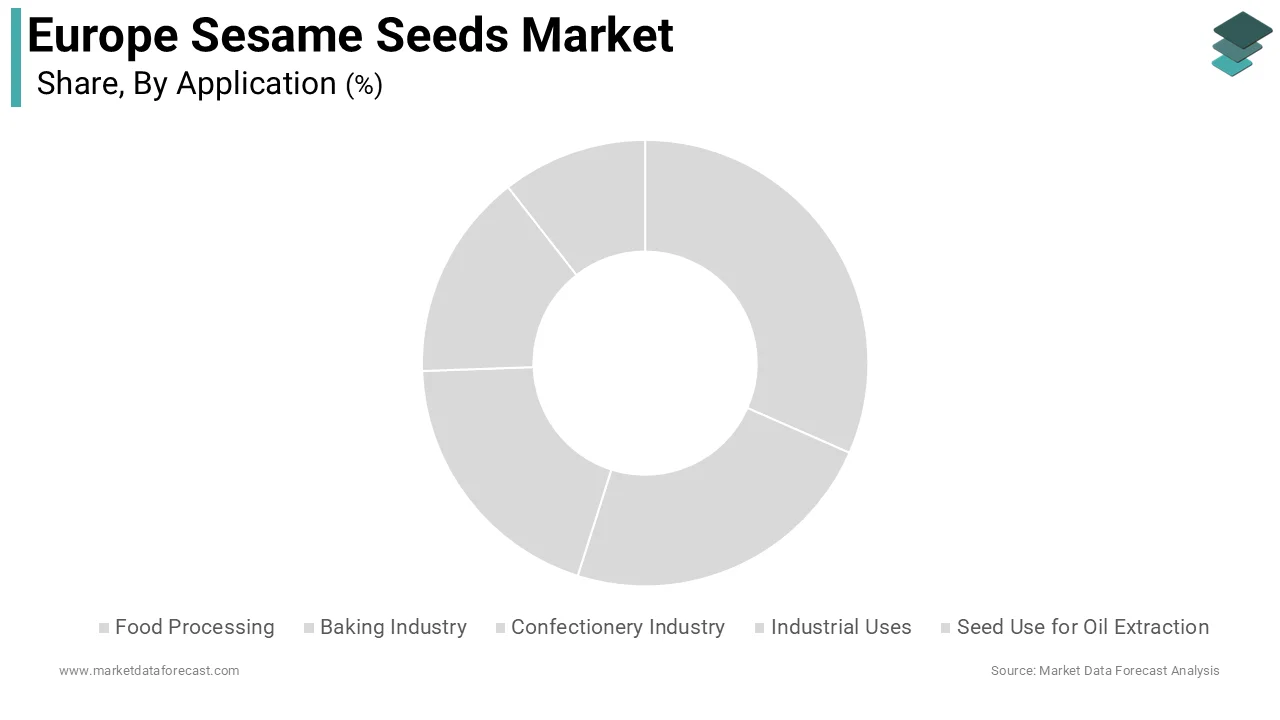
The industrial uses segment is likely to register the fastest CAGR of 9.2% from 2026 to 2034, owing to the rapid expansion of sesame usage in industrial applications. Consumers are increasingly wary of synthetic chemicals and parabens, driving brands to formulate products with plant-based oils known for their stability and skin benefits. Sesame oil is highly prized in this sector for its high content of vitamin E and sesamol, which act as natural preservatives and antioxidants, extending the shelf life of formulations without synthetic additives. Data from the Soil Association shows that sales of certified organic skincare products containing sesame oil rose by 22% in the last year alone. The oil's excellent emollient properties and ability to penetrate deep into the skin make it a preferred base for massage oils, serums, and moisturizers. Major beauty conglomerates are reformulating their lines to include sesame derivatives, responding to European consumers, who state they prefer products with natural origins. This shift in consumer preference creates a robust and expanding demand pipeline that outpaces traditional food sectors.
REGIONAL ANALYSIS
Germany Sesame Seeds Market Analysis
Germany was the top performer in the Europe sesame seeds market by holding 22.3% of the market share in 2025. The nation's status as the largest economy in Europe, coupled with its robust baking tradition, creates an insatiable demand for high-quality sesame seeds. The unparalleled bakery culture and the strict adherence to quality standards are also expected to leverage the growth of the market in this country. Germany boasts over 13000 registered bakeries, more than any other country in Europe, according to the Central Association of the German Bakery Trade. These establishments consume vast quantities of sesame seeds for their famous Brotchen and burger buns, which are staples in the daily diet. The average German consumes approximately 80 kilograms of bread per year, and a significant portion of this includes seeded varieties. Furthermore, the country serves as the primary logistics hub for the continent, with the Port of Hamburg handling nearly 40% of all sesame seed imports into the European Union, as per data from the German Federal Statistical Office. This strategic advantage allows Germany to re-export significant volumes to neighboring countries while satisfying domestic needs. Consumers are willing to pay a premium for certified organic sesame seeds, driving importers to source higher quality grades. The combination of massive domestic consumption, logistical dominance, and a premium-oriented consumer base ensures Germany remains the undisputed leader in the regional market.
Netherlands Sesame Seeds Market Analysis
The Netherlands sesame seed market was ranked second by holding 17.4% of the market share in 2025, with the sesame entering the European continent. While domestic consumption is moderate compared to its neighbors, the country's role as a distribution and processing hub elevates its market status significantly. The dominance of the Netherlands' sesame seeds market is driven by the operational capacity of the Port of Rotterdam, which serves as the largest seaport in Europe and the primary entry point for agricultural commodities from Africa and Asia. This transshipment activity inflates the apparent market size of the Netherlands but reflects its genuine strategic importance. Beyond logistics, the Netherlands hosts several major food processing facilities that specialize in cleaning, sorting, and hulling sesame seeds for the entire European market. Data from the Dutch Food and Consumer Product Safety Authority indicates that the country processes nearly 80000 metric tons of sesame annually for re-export. The presence of multinational food corporations with European headquarters in the Netherlands further stimulates demand for bulk sesame ingredients for industrial use. The country's efficient customs procedures and established trade relationships with producing nations like India and Sudan ensure a steady flow of goods.
France Sesame Seeds Market Analysis
France's sesame seeds market growth is likely to have positive growth opportunities in the coming years, with the dynamic fusion of traditional baking heritage and a booming gourmet food sector. The growth of the market in France is propelled by the enduring popularity of seeded breads and the rapid expansion of the ethnic food segment. The National Interprofessional Cereal Bureau reports that seeded baguettes and specialty breads now account for 30% of all bakery sales in France, a figure that has doubled since 2018. Sesame seeds are increasingly used in pain de campagne and other rustic loaves, appealing to consumers seeking healthier alternatives to plain white bread. Additionally, the French palate has embraced Middle Eastern and Asian cuisines, leading to a surge in demand for tahini and sesame oil. The country is also a leader in the organic food movement, with 11% of all agricultural land dedicated to organic farming, fostering a domestic demand for organic sesame that exceeds supply. Retailers like Carrefour and Auchan have expanded their organic ranges significantly, prioritizing sesame products that meet strict eco labels. This dual drive from traditional bakery innovation and the gourmet ethnic food wave ensures France remains atop-tierr market with a focus on quality and diversity.
United Kingdom Sesame Seeds Market Analysis
The United Kingdom sesame seeds market is likely to grow with the rising demand for the plant based and free-from food sectors, alongside the ubiquity of sesame in the fast food and bakery industries. Data from the Vegan Society indicates that the number of vegans in the UK quadrupled between 2014 and 2024, reaching 1.2 million people, which has spurred demand for sesame as a protein and fat source in dairy-free products. The fast food sector also contributes heavily, with major chains sourcing millions of sesame buns annually to meet the demand for burgers and sandwiches. Furthermore, the UK has seen a significant rise in the consumption of "world foods," with Asian and Middle Eastern meal kits becoming household staples. Although supply chain friction has posed challenges, the underlying consumer demand remains robust, driven by health consciousness and culinary curiosity.
Italy Sesame Seeds Market Analysis
Italy's sesame seeds market growth is driven by its unique application of sesame in confectionery and regional specialties rather than just bread. The deep-rooted tradition of sesame usage in confectionery, combined with a rising interest in healthy snacking. In regions like Sicily and Calabria, sesame is a historic ingredient in nougat and cookies, with local production of these sweets remaining strong. According to the Italian Confectionery Association, traditional sesame sweet production has remained stable, but new innovative products are driving growth. Additionally, the farm-to-table movement in Italy has encouraged chefs to use toasted sesame seeds as a finishing touch in gourmet salads and fish dishes, elevating their status in the culinary scene.
COMPETITION OVERVIEW
The competition in the Europe sesame seeds market is characterized by a mix of large multinational corporations and specialized regional traders who vie for dominance through supply chain reliability and product quality. The market landscape is fragmented yet consolidated at the top tier, where major global players leverage their extensive networks to offer comprehensive solutions that smaller competitors cannot match. Intense rivalry exists primarily around securing high-quality raw materials from source countries, given the total dependence on imports and the frequent volatility caused by climatic and geopolitical factors. Companies differentiate themselves by investing in advanced processing technologies that ensure superior purity levels and by obtaining various sustainability certifications that appeal to environmentally conscious European buyers. The threat of new entrants remains moderate due to the high capital requirements for establishing robust logistics and quality control systems compliant with strict European Union regulations. Price competition is fierce, particularly in the bulk commodity segment, forcing players to optimize operational efficiencies and explore value-added product lines to maintain margins. Strategic partnerships and long-term contracts with suppliers have become essential tools for managing risk and ensuring steady availability in this highly competitive environment.
KEY MARKET PLAYERS
A few major players of the Europe sesame seeds market include
- Olam Group
- Archer Daniels Midland Company
- Bunge Limited
- Cargill Incorporated
- ETG (Export Trading Group)
- SHILOH Farms
- Dipasa Group
- SunOpta Inc
- Organic India Pvt Ltd
- HL Agro Products Pvt Ltd
- Selet Hulling PLC
- AOS Products Pvt Ltd
- Virdhara International
- Shyam Industries
- Sresta Natural Bioproducts Pvt Ltd
Top Strategies Used by Key Market Participants
Key players in the Europe sesame seeds market primarily employ vertical integration strategies to secure control over the supply chain from farm to fork. Companies invest heavily in establishing direct contracts with farmers in producing nations to ensure consistent quality and reliable volumes while reducing dependency on volatile spot markets. Another major strategy involves the expansion of local processing facilities within Europe to enhance value addition through cleaning, hulling, and roasting capabilities closer to the end consumer. Participants also focus intensely on product differentiation by launching organic, non-genetically modified, and sustainably certified sesame variants to cater to the discerning European consumer base. Strategic acquisitions of smaller regional distributors allow large corporations to broaden their reach and improve logistics efficiency across the continent. Furthermore, key players prioritize investment in advanced traceability technologies such as blockchain to provide transparency regarding origin and safety, which is crucial for complying with strict European allergen and food safety regulations.
Leading Players in the Europe Sesame Seeds Market
- Olam Food Ingredients stands as a global powerhouse in the agricultural commodity sector with a profound impact on the Europe sesame seeds market. The company manages an extensive supply chain that connects farmers in Africa and Asia directly to European processors and manufacturers. Their contribution to the global market involves providing sustainably sourced seeds while implementing rigorous quality control measures to meet strict European safety standards. Recently, the company has intensified its focus on traceability by deploying digital farming tools that allow buyers to track the origin of every batch. This initiative strengthens their market position by ensuring compliance with European allergen regulations and building trust with premium brands. Olam also invests heavily in local processing facilities near ports to reduce logistics costs and improve delivery speed. Their commitment to farmer support programs ensures a steady supply of high-quality seeds despite climatic challenges.
- Sesaco Corporation operates as a specialized leader in the sesame industry with a significant footprint in the European market through its dedicated processing and distribution networks. The company distinguishes itself by offering a wide variety of sesame products, including hulled, unhulled, toasted, and organic seeds, tailored to specific industrial requirements. Their global involvement includes strategic partnerships with growers to secure consistent volumes and maintain superior quality standards throughout the harvest cycle. In recent developments, Sesaco has expanded its processing capacity in Europe to handle larger volumes of organic sesame seeds, responding to the surging demand for clean-label ingredients. They have also launched new product lines featuring ready-to-use sesame pastes and oils designed for the convenience food sector. The company actively participates in industry forums to advocate for better food safety protocols and sustainable farming practices.
- Dipasa Group is a prominent international trader and processor of oilseeds with a strong presence in the Europe sesame seeds market, driven by its extensive global sourcing network. The company plays a critical role in the global market by facilitating the flow of sesame seeds from major producing regions in Africa and India to European consumption centers. Their operations emphasize quality assurance and logistical efficiency, ensuring that products arrive in optimal condition for further processing or direct use. Recently, Dipasa has strengthened its market position by investing in advanced cleaning and sorting technologies at its European facilities to meet the increasingly stringent purity requirements of local regulators. They have also developed strategic alliances with organic certification bodies to expand their portfolio of certified organic sesame seeds, which are in high demand across Western Europe. The group focuses on building long-term relationships with suppliers to mitigate supply risks and stabilize prices for their customers.
MARKET SEGMENTATION
This research report on the Europe sesame seeds market has been segmented and sub-segmented based on application & region.
By Application
- Food Processing
- Baking Industry
- Confectionery Industry
- Industrial Uses (Cosmetics & Pharmaceuticals)
- Seed Use for Oil Extraction
By Region
- UK
- France
- Spain
- Germany
- Italy
- Russia
- Sweden
- Denmark
- Switzerland
- Netherlands
- Turkey
- Czech Republic
- Rest of Europe
Frequently Asked Questions
1. What are the key drivers of the market?
Increasing demand for plant-based foods, health awareness, and use in bakery and confectionery products drive growth
2. Why are sesame seeds popular in Europe?
They are valued for their nutritional benefits, including high protein, healthy fats, and antioxidants
3. What are the main product types?
Hulled sesame seeds, natural sesame seeds, and black sesame seeds
4. Which segment dominates the market?
Hulled sesame seeds dominate due to their wide use in bakery and food processing
5. What are the major applications?
Bakery products, confectionery, tahini, oils, and ready-to-eat foods
6. What trends are shaping the market?
Growth of organic sesame seeds, clean-label products, and plant-based diets
7. What challenges does the market face?
Price volatility, supply chain disruptions, and dependence on imports
8. What opportunities exist in the market?
Expansion of organic products, value-added sesame products, and an increasing vegan population
9. How does sustainability impact the market?
Demand for ethically sourced and sustainably produced sesame seeds is increasing
10. Who are the key players in the market?
Olam Group, ADM, Cargill, Bunge, ETG, and SunOpta are major players
Related Reports
Access the study in MULTIPLE FORMATS
Purchase options starting from
$ 2000
Didn’t find what you’re looking for?
TALK TO OUR ANALYST TEAM
Need something within your budget?
NO WORRIES! WE GOT YOU COVERED!
Call us on: +1 888 702 9696 (U.S Toll Free)
Write to us: sales@marketdataforecast.com