- Product Description Description
- Table of Contents TOC
- List of Table & Figure LOT
- Get Free Sample PDF Sample PDF
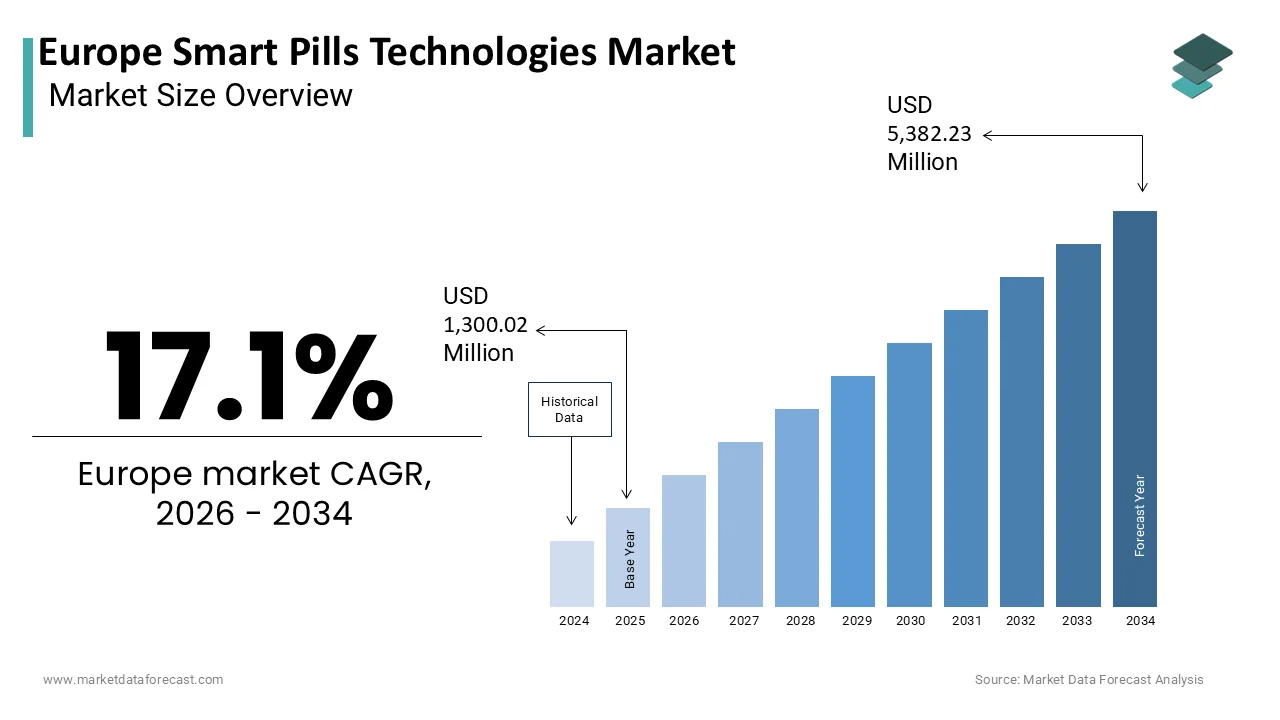
Market Size, 2025
$1,300.02 MnMarket Estimate, 2026
$1,522.32 MnMarket Forecast, 2034
$5,382.23 MnCAGR, 2026–2034
17.1%Executive Summary: Europe Smart Pills Technologies Market
- Market Scope: Comprehensive European smart pills market analysis covering capsule endoscopy, drug delivery, patient monitoring applications, regulatory frameworks, and country-level adoption dynamics.
- Market Valuation: Valued at USD 1,300.02 million (2025), estimated at USD 1,522.32 million (2026), and projected to reach USD 5,382.23 million by 2034, registering an exceptional CAGR of 17.1% (2026–2034).
- Primary Growth Drivers: Rising prevalence of chronic gastrointestinal disorders (Crohn's disease, ulcerative colitis, IBS), aging populations requiring advanced medication adherence solutions, and national policy pushes toward precision medicine and remote patient monitoring.
Key Market Segment Metrics (2026–2034)
| Category | Leading Segment (2025 Position) | Fastest-Growing Segment (2026–2034) |
|---|---|---|
| By Application | Capsule Endoscopy (captured 64.7% market share in 2025, driven by gold-standard non-invasive diagnostics for obscure GI bleeding and Crohn's disease) | Patient Monitoring (exhibiting a robust CAGR, driven by telehealth integration, chronic disease management, and digital adherence tracking) |
| By Country | Germany (dominated the market with a 21.3% share in 2025, supported by advanced healthcare infrastructure and statutory reimbursement policies) | United Kingdom, France, and the Netherlands (expanding rapidly through centralized NHS initiatives, fast-track digital approvals, and integrated health ecosystems) |
Major Market Players & Market Structure
Market Structure: Highly innovation-driven and tightly regulated landscape governed by the EU Medical Devices Regulation (MDR). Leading players differentiate through diagnostic accuracy, data integration capabilities, AI-enhanced analytics, and strategic partnerships with national health services.
Key Companies: Medtronic plc, Olympus Corporation, Proteus Digital Health Inc. (Otsuka Pharmaceutical), Given Imaging, Philips Healthcare, Medimetrics S.A. de C.V., Smartpill, Inc., Pentax Medical Company, Boston Scientific Corporation, CapsoVision, Inc., and Chongqing Jinshan Science & Technology Group Co., Ltd.
Europe Smart Pills Technologies Market Size
The Europe Smart Pills Technologies Market is projected to grow from USD 1,300.02 million in 2025 to USD 1,522.32 million in 2026 and reach USD 5,382.23 million by 2034, registering a CAGR of 17.1% from 2026 to 2034.
Smart Pills Technologies are ingestible medical devices embedded with sensors, microelectronics, and wireless communication systems designed to monitor physiological parameters, deliver targeted therapeutic agents, or perform internal diagnostics as they transit through the gastrointestinal tract. These technologies represent a convergence of digital health microengineering and personalized medicine, offering non-invasive alternatives to endoscopy biopsies and fixed-dose drug regimens. Many diagnostic endoscopies performed for gastrointestinal conditions might be partially replaced with capsule-based imaging methods. The burden of chronic digestive diseases further underscores clinical need. A significant portion of the population in Europe is affected by functional or organic gastrointestinal disorders, such as Crohn’s disease, ulcerative colitis, and irritable bowel syndrome. Concurrently, the region’s aging population intensifies demand for medication adherence solutions. A notable percentage of older adults in Europe manage multiple chronic conditions, which often require complex medication schedules, leading to challenges with adherence. These intersecting epidemiologic, al behavio, and technological currents position smart pills not as futuristic novelties but as pragmatic tools aligned with Europe’s strategic priorities in precision medicine, remote patient monitoring, and health system efficiency.
MARKET DRIVERS
Rising Prevalence of Gastrointestinal Disorders Fuels Diagnostic Capsule Adoption
The escalating burden of chronic and complex gastrointestinal diseases across the region is a key driving force for the European smart pill deployment. This is particularly notable in diagnostic imaging and motility assessment. According to research, Inflammatory bowel disease impacts a significant number of individuals in Europe, with occurrences increasing, especially among younger populations. Traditional endoscopy, while effective, is invasive resource resource-intensive, and often inaccessible in rural regions. Smart pills offer a compelling alternative. Capsule endoscopy is a valuable tool for identifying sources of obscure gastrointestinal bleeding. National health systems are responding. The use of capsule endoscopy for monitoring Crohn’s disease has expanded in France following coverage decisions. Similarly, Smart pill diagnostic methods are covered by health insurance in Germany for examining the small bowel when standard diagnostic procedures are insufficient. The clinical validationn, coupled with policy support, rt ensures sustained integration into gastroenterology pathways, making diagnostic smart pills a cornerstone of modern digestive care.
Policy Emphasis on Medication Adherence Drives Therapeutic Smart Pill Innovation
European public health strategies increasingly prioritize medication adherence as a determinant of treatment efficacy and cost containment, particularly for polypharmacy populations, which further boosts the expansion of the European smart pills technologies market. According to sources, non-adherence to medical regimens has significant negative impacts on patient health outcomes and places a substantial financial burden on healthcare systems. In response, regulatory and reimbursement frameworks are evolving to support adherence-enhancing technologies. The European Medicines Agency has established a dedicated pathway for digital therapeutics, including ingestible sensor-enabled pills that confirm drug ingestion. Digital tools designed to support medication adherence are increasingly being recommended for managing critical health conditions. Pilot programs reflect this shift. The use of smart pill systems in patient care settings has shown promising results in improving adherence rates compared to traditional methods. These real-world outcomes validate smart pills as more than monitoring devices but as clinical interventions that improve therapeutic success, aligning perfectly with Europe’s value-based healthcare transformation.
MARKET RESTRAINTS
Stringent Regulatory Classification Delays Market Entry and Scalability
Smart pills in the region face a complex and often protracted regulatory landscape that restrains the growth of the European smart pills technologies market. This is due to their hybrid nature as both medical devices and drug delivery systems, which triggers dual oversight under the Medical Devices Regulation and the Clinical Trials Regulation. For instance, the ingestible sensors that transmit physiological data are frequently categorized as Class III devices, demanding extensive clinical validation even when used adjunctively. The regulatory friction disproportionately affects small and medium enterprises lacking resources for multi-year dossiers. Furthermore, divergent interpretations by national competent authorities, such as differing views in Germany and Italy on data privacy for ingestible transmitters, fragment market access. These delays not only stifle innovation but also limit patient access to potentially transformative technologies, undermining Europe’s ambition to lead in digital health.
Limited Reimbursement Frameworks Restrict Clinical Integration and Adoption
These technologies encounter significant reimbursement barriers across European healthcare systems, hindering the expansion of the European smart pills technologies market. This is primarily because payment models remain anchored to procedural codes rather than digital health outcomes. Some regions are beginning to establish specific policies for the reimbursement of ingestible sensor systems. The coverage for certain technologies, like capsule endoscopy, may be limited to specific medical conditions rather than general monitoring. Similarly, therapeutic adherence smart pills face even greater hurdles. In many areas, these advanced systems are not consistently included in standard insurance plans, meaning individuals often cover the expenses themselves. This financial disincentive severely limits adoption even in clinically appropriate scenarios. The absence of health technology assessment frameworks that evaluate digital adherence tools on long-term outcomes, such as reduced hospitalizations or graft survival, further impedes value recognition. Until reimbursement pathways evolve to reflect real-world impact, smart pills will remain niche rather than mainstream.
MARKET OPPORTUNITIES
Integration with National Digital Health Ecosystems Unlocks Scalable Deployment
The region’s accelerating investment in interoperable digital health infrastructures offers a major opportunity for the European smart pills technologies market. This provides a pathway for smart pills to transition from isolated tools to integrated components of longitudinal care. The European Health Data Space initiative aims to establish secure cross-border data exchange by 2025, enabling real-time transmission of ingestible sensor data to electronic health records. Many countries are using digital health platforms to manage remote monitoring services. Smart pill data can be seamlessly embedded within these ecosystems. This systemic integration transforms smart pills from transactional diagnostics into continuous care enablers enhancing clinical decision making while satisfying EU data governance standards through certified infrastructure.
Expansion into Neurological and Psychiatric Care Creates New Clinical Indications
Smart pills are gaining traction in managing complex neurological and psychiatric conditions, where precise drug timing and verification are critical to therapeutic success, beyond gastroenterology and adherence monitoring, which in turn creates fresh prospects for the expansion of the European smart pills technologies market. According to the sources, many individuals across Europe experience various brain disorders, such as epilepsy, schizophrenia, and bipolar disorder. In response, clinicians are exploring sensor-enabled antipsychotics and antiepileptics. Recent research in Sweden suggests that patients with schizophrenia who use an ingestible sensor formulation may experience fewer psychiatric hospitalizations compared to those receiving standard care. Regulatory recognition follows. National mental health strategies are also adapting. This clinical expansion diversifies the market beyond traditional domains and aligns smart pills with Europe’s growing focus on brain health and integrated psychiatric care.
MARKET CHALLENGES
Data Privacy and Cybersecurity Concerns Undermine Patient and Clinician Trust
The transmission of sensitive physiological and behavioral data from ingestible devices raises substantial privacy and security challenges under Europe’s stringent data protection regime. This hampers the growth of the European smart pills technologies market. GDPR provides a strong foundation, but fails to fully clarify data ownership, consent granularity, and third-party access issues unique to smart pills and their continuous health metrics. According to sources, the regulatory classification of data produced by ingestible medical devices is unclear, particularly regarding how internally generated health data compares to external sensor data. Real-world incidents amplify concern. Security assessments have revealed that some commercial smart pill systems may utilize unencrypted communication channels. Such vulnerabilities deter adoption. Patients have expressed concerns regarding the potential for data misuse, leading to hesitation about adopting smart pill technology. Manufacturers must integrate robust end-to-end encryption, strong anonymization methods, and clear data governance practices that comply with EU cybersecurity certifications. Otherwise, consumer trust issues will hinder market penetration.
High Out of Pocket Costs and Health Inequity Limit Broad Accessibility
The premium pricing of these technologies creates significant access disparities across the region’s diverse socioeconomic landscape, which obstructs the expansion of the European smart pills technologies market. According to sources, A significant portion of the EU population experiences a risk of poverty or social exclusion, a situation that affects many children. For these populations, even partially reimbursed smart pills remain financially out of reach, particularly in Eastern and Southern Europe, where co-payments for advanced diagnostics can exceed monthly disposable income. Access to certain advanced medical procedures, such as capsule endoscopy, is significantly different across various EU member states, partly due to disparities in health insurance coverage policies. This inequity extends beyond geography. Elderly patients managing multiple chronic conditions on fixed pensions often forego smart adherence systems despite clinical benefit. "Europe's principle of universal health coverage will be contradicted if these technologies are restricted to affluent urban cohorts, a likely outcome without the implementation of targeted subsidies, risk-stratified pricing, or inclusion in essential health benefit packages.
REPORT COVERAGE
| REPORT METRIC | DETAILS |
| Market Size Available | 2025 to 2034 |
| Base Year | 2025 |
| Forecast Period | 2026 to 2034 |
| Segments Covered | By Application and Region. |
| Various Analyses Covered | Global, Regional, and Country-Level Analysis, Segment-Level Analysis, Drivers, Restraints, Opportunities, Challenges; PESTLE Analysis; Porter’s Five Forces Analysis, Competitive Landscape, Analyst Overview of Investment Opportunities |
| Countries Covered | UK, France, Spain, Germany, Italy, Russia, Sweden, Denmark, Switzerland, Netherlands, Turkey, Czech Republic, Rest of Europe |
| Market Leaders Profiled | Given Imaging, Inc., Medimetrics S.A. de C.V., Philips Healthcare, Smartpill, Inc., Medtronic Inc.NC, Proteus Digital HealInc..Inc., Olympus Corporation, Bio-Images Research Limited, Novartis, Given Imaging Ltd, Pentax Medical Company, Boston Scientific Corporation, IntroMInc.c Inc., CapsoViInc.n, Inc., Chongqing Jinshan Science & Technology Group Co., Ltd, GE Healthcare, Siemens Healthcare, Stryker Corporation |
SEGMENTAL ANALYSIS
By Application Insights
The capsule endoscopy segment European Smart Pills Technologies Market and captured a share of 64.7% in 2025. The supremacy of the capsule endoscopy segment is driven by widespread clinical adoption in gastroenterology for non-invasive small bowel and colon visualization. Capsule endoscopy has become the gold standard for evaluating obscure gastrointestinal bleeding and Crohn’s disease due to its superior diagnostic capability compared to traditional imaging. This efficacy is reinforced by robust reimbursement. These combined factors, clinical validation policy support, and regulatory clarity, have institutionalized capsule endoscopy as a first-line diagnostic tool across European gastroenterology practices. Recent advancements have expanded capsule endoscopy beyond the small bowel into colonic imaging and motility analysis, addressing previously underserved clinical needs. Countries like the Netherlands and Sweden now include colon capsule in alternative screening pathways for non-responders to fecal immunochemical testing. These innovations transform capsule endoscopy from a niche tool into a comprehensive gastrointestinal assessment system, sustaining its market dominance.
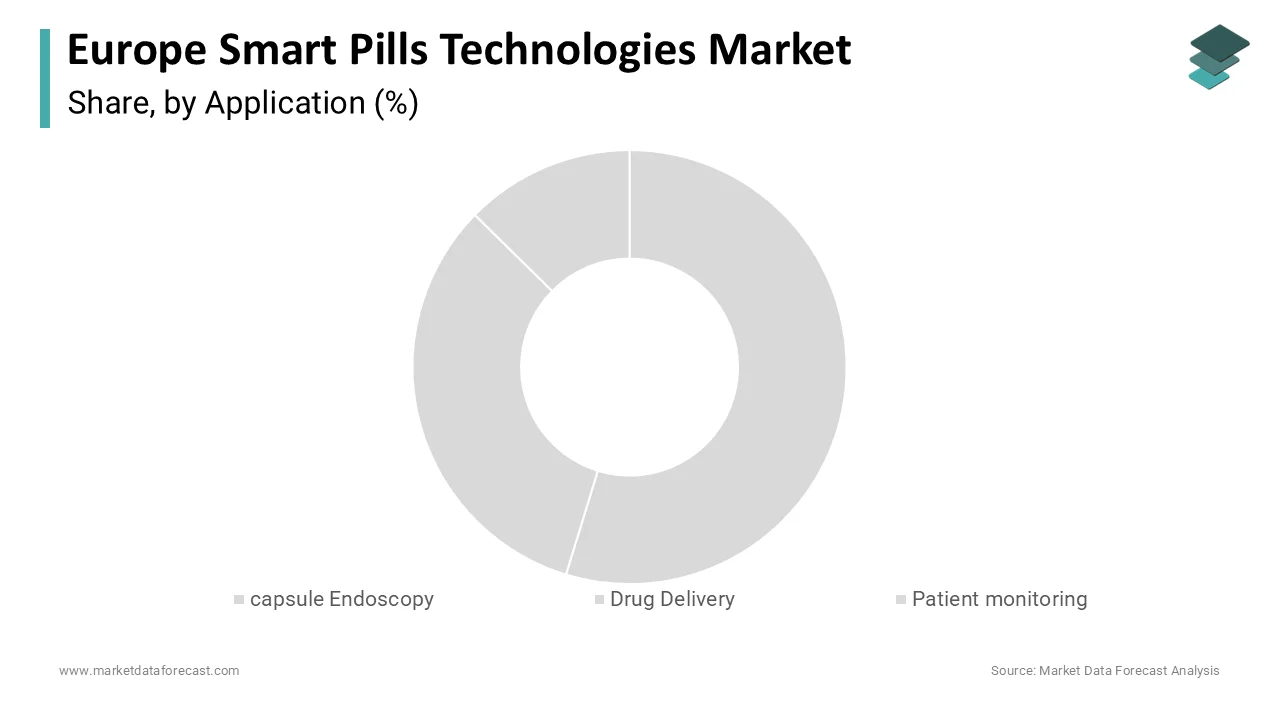
The patient monitoring segment is expected to exhibit a noteworthy CAGR of 12.4% from 2025 to 2033, owing to integration with digital health strategies and chronic disease management. European health systems are actively embedding ingestible sensor data into national telehealth infrastructures to enhance medication adherence and early intervention. These institutional endorsements convert isolated adherence data into actionable clinical intelligence, enabling automated alerts for clinicians and personalized feedback for patients. The alignment with EU digital health mandates ensures rapid adoption across public systems, propelling patient monitoring into the fastest-growing application segment. Robust evidence from real-world studies demonstrates that smart pill monitoring significantly improves outcomes in conditions where adherence is life-critical. These outcomes are compelling for payers. This clinical credibility transforms patient monitoring from a passive tracker into an active therapeutic enabler, accelerating its adoption across neurology, psychiatry, and transplant medicine.
COUNTRY LEVEL ANALYSIS
Germany Smart Pills Technologies Market Analysis
Germany dominated the European Smart Pills Technologies Market and accounted for a 21.3% share in 2025. The dominance of the German market is driven by its advanced healthcare infrastructure, strong regulatory science capacity, and early adoption of digital diagnostics. The country’s statutory health insurance system provides comprehensive reimbursement for capsule endoscopy in small bowel evaluation and has recently expanded coverage to includethe olon capsule for screening non-responders. Germany also leads in clinical validation with institutions like Charité Berlin and University Hospital Heidelberg conducting pivotal trials on upgraded MiroCam and OMOM platforms. Additionally, Germany’s National Decade Against Cancer initiative includes ingestible sensors for adherence monitoring in oncology regimens. These systemic strengths in regulation, reimbursement, and research cement Germany’s position as the continent’s smart pills innovation hub.
United Kingdom Smart Pills Technologies Market Analysis
The United Kingdom followed closely in the European smart pills technology market and captured a share of 16.8% in 2025, with its centralized National Health Service and proactive digital therapeutics strategy. NHS England’s Digital Therapeutics Pathway has fast-tracked the evaluation of ingestible sensor systems, with three smart pill platforms receiving interim funding real-world testing in 2023. The UK also maintains high procedural volumes in capsule endoscopy, with a large number of procedures performed annually. The Medicines and Healthcare products Regulatory Agency operates a streamlined innovation office that has reduced the average smart pill approval time. Furthermore, the National Institute for Health and Care Excellence updated its guidelines to recommend digital adherence tools for antipsychotic and immunosuppressant regimens. These coordinated efforts across regulation policy and clinical practice ensure the UK remains a high adoption, high-impact market.
France Smart Pills Technologies Market Analysis
France is another key player in the European smart pills technologies market due to its strong public health mandate for early diagnosis and digital health equity. Small bowel and colon capsule endoscopy have received coverage. This approach to covering both indications nationwide may be a first for a country in the region. Several capsule procedures have been funded, with a portion allocated to colon screening for those who do not respond to fecal tests. A health plan prioritizes ingestible sensors, and data from smart pills is being integrated for managing chronic conditions. An evaluation of sensor-enabled antiepileptic therapy is being conducted across a number of hospitals, with preliminary findings suggesting improved seizure control. Additionally, France’s regulatory agency ANSM operates a fast track for breakthrough digital devices, reducing review timelines. These initiatives reflect a holistic approach that combines access, innovation, and equity—solidifying France’s strategic relevance.
Italy Smart Pills Technologies Market Analysis
Italy is moderately growing in the European Smart Pills Technologies Market owing to high unmet need in gastrointestinal diagnostics and growing investment in digital adherence. Moreover, the country faces significant screening gaps. Participation in colorectal cancer screening is low among eligible individuals, increasing interest in non-invasive options such as colon capsule endoscopy. Funding has been allocated for digital health infrastructure, specifically supporting remote monitoring for chronic diseases. A pilot program is using smart pills to help patients adhere to anticoagulant regimens for a heart condition. These efforts address both diagnostic deficits and therapeutic challenges, positioning Italy as high-potential market.
Netherlands Smart Pills Technologies Market Analysis
The Netherlands is likely to expand in the European smart pills technologies market from 2025 to 2033, owing to its integrated digital health ecosystem and leadership real-world evidence generation. The country’s national electronic health record system enables seamless data flow from ingestible sensors to clinician dashboards, with most general practices connected. The Netherlands is also a pioneer in colon capsule screening. Through its national bowel cancer program, non-responders to fecal testing are offered the colon capsule as an alternative, achieving notable uptake in pilot provinces. Academic medical centers like Erasmus MC and Amsterdam UMC regularly publish outcome studies validating smart pill efficacy. The Dutch Medicines Evaluation Board maintains a pragmatic regulatory stance, facilitating rapid adoption. This combination of infrastructure evidence and policy makes the Netherlands a model for scalable smart pill integration.
TOP LEADING PLAYERS IN THE MARKET
- Medtronic plc is a leading force in the European Smart Pills Technologies Market through its PillCam platform, which offers a comprehensive portfolio of capsule endoscopy systems for small bowel, el co, and esophageal imaging. The company supplies advanced solutions to numerous hospitals across Europe, enabling non-invasive diagnostics for inflammatory bowel disease, obscure bleeding, and colorectal cancer screening. The company also collaborates with national health systems, including Germany’s statutory insurers and the UK’s NHS, to integrate capsule endoscopy into formal diagnostic pathways. Glob Medtronic’s smart pill technologies are used in more than 80 countries, reinforcing its role as a pioneer in gastrointestinal diagnostics and digital medicine.
- Olympus Corporation contributes significantly to the European smart pills landscape through its strategic focus on integrating capsule endoscopy with AI-enabled image analysis and endoscopic workflows. Although primarily known for traditional endoscopy, Olympus has expanded its portfolio to include smart diagnostic capsules compatible with its endoscopy data management platforms. Olympus also partners with academic centers such as Charité Berlin to refine motility assessment algorithms using ingestible sensor data. Its global service network supports rapid deployment and training across multiple countries, ensuring consistent clinical adoption. In Europe,O lympus emphasizes regulatory compliance and clinician education, aligning its smart pill solutions with the EU Medical Devices Regulation and digital health priorities.
- Proteus Digital Health, now operating under Otsuka Pharmaceutic a,drives innovation in the therapeutic monitoring segment of the European Smart Pills Technologies Market through its ingestible sensor platform that confirms medication ingestion in real time. The system pairs sensor-enabled tablets with a wearable patch and mobile application to transmit adherence data to clinicians and caregivers. In Europe, the technology is deployed in psychiatric transplant and oncology settings, with pilot programs in the NNeNetherlandsnm,k an the UK showing improved treatment outcomes. Globally ,the platform is approved in multiple countries and integrated value-based care models that tie reimbursement to adherence metrics. By transforming medication intake into measurable clinical data, Proteus Otsuka bridges digital health with therapeutic efficacy across international markets.
TOP STRATEGIES USED BY THE KEY MARKET PARTICIPANTS
Key players in the European Smart Pills Technologies Market pursue regulatory harmonization through early engagement with notified bodies, strategic partnerships with national health sservices, clinicalvalidatioe, worldd evidence generation, integration with national digital health infrastructure, and lifecycle innovation ththroughI-enhanceda analytics and next-generation sensor miniaturization. These strategies ensure compliance with the EU Medical Devices Regulation while demonstrating clinical and economic value to payers and providers across diverse healthcare systems.
COMPETITIVE LANDSCAPE
Competition in the European Smart Pills Technologies Market is defined by a blend of medical device giants, specialized digital health innovators,, andpharmaceutical companies converging around ingestible diagnostics and adherence solutions. The landscape is highly innovation-driven yet tightly constrained by the EU Medical Devices Regulation, which demands rigorous clinical evidence and post-market surveillance. Leading participants differentiate not through price but through diagnostic accuracy, data integration cacapabilitiess regulatory dossi ,ers, and alignment with national digital health strategies. Collaboration is as critical ascompetitiono with companies forming alliances with university hospitals,,public health agencies, and electronic health record vendors to embed smart pills into clinical workflows. Smaller firms often focus on niche applications such as motility sensing or psychiatric adherence while relying on larger partners for distribution and regulatory navigation. The market rewards those who can translate technological sophistication into reimbursable clinical outcomes within Europe’svalue-basedd care framework, making scientific validation and health system integration decisive competitive advantages.
KEY MARKET PLAYERS
Top Companies leading the europe smart pills technologies market profiled in the Report ,are
- Given Imaging, Inc.
- Medimetrics S.A. de C.V
- Philips Healthcare
- Smartpill, Inc.
- Medtronic, Inc.
- Proteus Digital Health Inc
- Olympus Corporation
- Bio-Images Research Limited
- Novartis
- Given Imaging Ltd
- Pentax Medical Company
- Boston Scientific Corporation
- IntroMedic Inc
- CapsoVision, Inc
- Chongqing Jinshan Science & Technology Group Co., Ltd
- GE Healthcare
- Siemens Healthcare
- Stryker Corporation
MARKET SEGMENTATION
This research report on the europe smart pills technologies market has been segmented and sub-segmented into the following categories.
By Application
-
Capsule Endoscopy
- Small Bowel Video Capsule Endoscopy
- Colon Capsule Endoscopy
- OMOM Capsule Endoscopy Platform
- MiroCam
- Upgraded MiroCam
- Advanced Capsule Endoscope
- Drug Delivery
- Patient monitoring
By Country
- UK
- France
- Spain
- Germany
- Italy
- Russia
- Sweden
- Denmark
- Switzerland
- Netherlands
- Turkey
- Czech Republic
- Rest of Europe