- Product Description Description
- Table of Contents TOC
- List of Table & Figure LOT
- Get Free Sample PDF Sample PDF
Market Size, 2025
$203 BnMarket Estimate, 2026
$211 BnMarket Forecast, 2034
$288 BnCAGR, 2026–2034
3.95%Europe Sodium Silicate Market Size
The Europe sodium silicate market size was valued at USD 203.78 billion in 2025 and is projected to reach USD 288.79 billion by 2034 from USD 211.83 billion in 2026, growing at a CAGR of 3.95%.
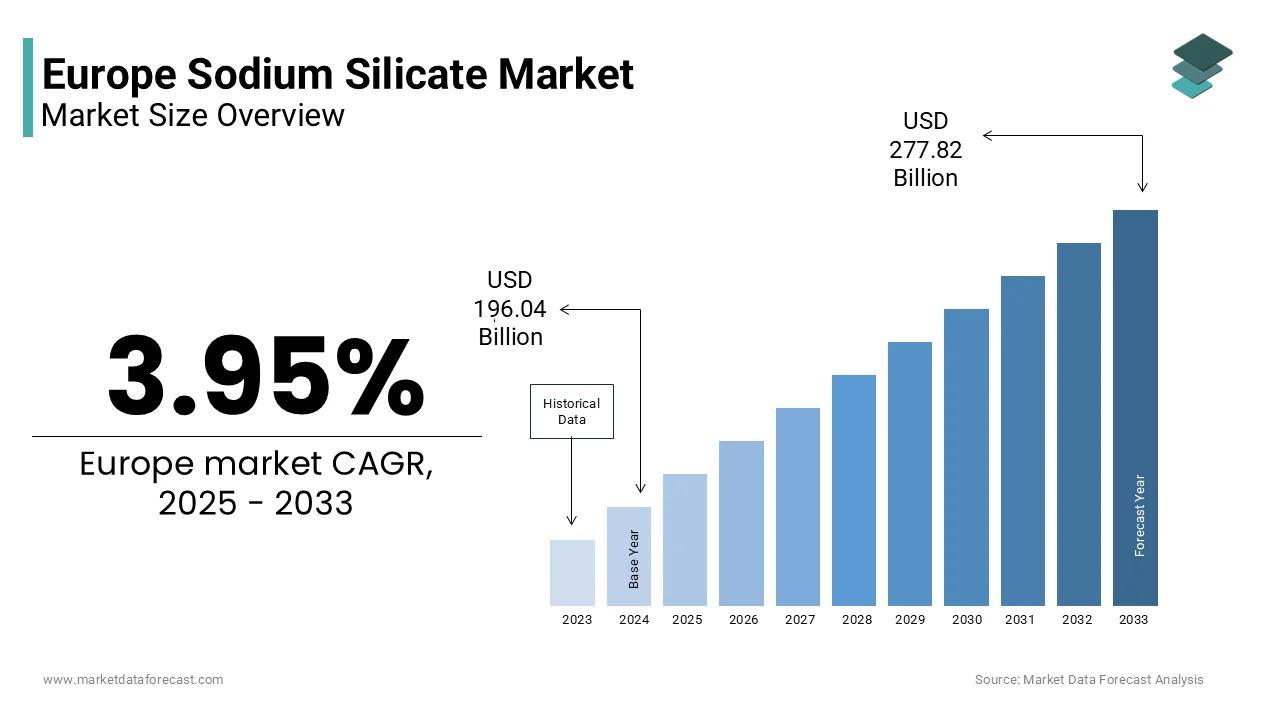
Sodium silicate, commonly known as water glass, is an inorganic compound composed of sodium oxide and silicon dioxide, widely used as a binder, adhesive, sealant, and precursor in industrial applications across detergents, construction, foundry, and water treatment sectors. In Europe, its production and utilization are deeply integrated into circular economy and decarbonization strategies due to its role in enabling sustainable material solutions. According sources, European glass manufacturing continues to stabilize its output, prioritizing specialized formulations that utilize stabilizing agents for high-performance applications. Following European regulatory shifts away from traditional cleaning agents, chemical agencies support the transition to sodium silicate as a compliant and efficient component in sustainable detergent systems. Additionally, modern European foundries are increasingly adopting mineral-based binders for sand molding to meet air quality standards and minimize the release of organic compounds during metal casting. Sodium silicate is strategically positioned to meet the demands of an evolving European chemical market that prioritizes the use of non-toxic, recyclable, and performance-enhancing additives.
MARKET DRIVERS
Expansion of Phosphate-Free Detergent Regulations Driving Industrial Demand
The European Union’s stringent restrictions on phosphates in consumer and industrial detergents have significantly elevated sodium silicate’s role as a builder and corrosion inhibitor. This drives the growth of the Europe sodium silicate market. Regulatory requirements have effectively led to the removal of phosphates from the majority of common detergent formulations. Detergent producers have largely adopted sodium silicate as a primary substitute ingredient to maintain the ability to soften water and protect metal components. Sodium silicate has become a widely used functional ingredient in the majority of heavy-duty laundry detergents available on the market. The compound’s alkalinity helps suspend soil particles while preventing corrosion in washing machine drums, a critical performance factor in hard water regions like Germany and Italy. Furthermore, sodium silicate is fully biodegradable and does not contribute to eutrophication, aligning with the EU Water Framework Directive’s nutrient pollution objectives. This regulatory tailwind ensures sustained industrial-scale demand from one of Europe’s most consistent chemical-consuming sectors.
Growth in Green Construction and Sustainable Cement Alternatives
The European construction industry’s pivot toward low-carbon binders has fuelled the expansion of the Europe sodium silicate market. This has intensified demand for sodium silicate as a key activator in alkali-activated materials and geopolymer cements. Climate objectives are influencing a move towards building materials with reduced emissions and less dependence on conventional binders. Alternative binders are being created by combining mineral byproducts with chemical activators, resulting in structural integrity comparable to traditional options. Infrastructure projects are beginning to utilize these alternative materials for large-scale uses such as transit routes and structural supports. The creation of standardized technical guidelines is establishing a framework for the wider adoption and use of these materials in construction. Hence, sodium silicate-enabled recycling of industrial residues into structural materials represents a scalable circular solution by reinforcing its strategic importance beyond traditional applications.
MARKET RESTRAINTS
Volatility in Raw Material Prices and Energy-Intensive Production
Persistent cost pressures due to the energy-intensive nature of its production and dependence on volatile raw material inputs, primarily soda ash and silica sand, restrain the growth of the Europe sodium silicate market. Sodium silicate manufacturing depends heavily on thermal energy, which is primarily obtained through the combustion of natural gas. Persistent elevations in regional natural gas prices compared to historical norms have contributed to higher operational expenses for manufacturers. Fluctuations in the availability of raw materials, such as soda ash, have influenced the overall cost structure of the production process. Geopolitical events and trade limitations in supplying regions have impacted the stability of the supply chain for essential chemical precursors. The combination of sustained high energy costs and restricted access to raw materials has placed upward pressure on the final market price of the chemical The European Commission’s Carbon Border Adjustment Mechanism further compounds cost uncertainty by imposing indirect carbon costs on energy-intensive chemical processes. Unlike commodity chemicals with diversified feedstocks, sodium silicate producers have limited substitution options, making them acutely exposed to upstream volatility. This economic fragility constrains investment in capacity expansion and innovation, particularly for small and medium-sized European manufacturers lacking vertical integration.
Stringent Classification as a Corrosive Substance Under CLP Regulation
Sodium silicate’s classification as a skin and eye corrosive under the EU’s Classification, Labelling and Packaging (CLP) Regulation (EC) No 1272/2008 imposes significant operational and logistical constraints across its value chain, which impedes the expansion of the Europe sodium silicate market. Sodium silicate solutions with high alkalinity require specific hazard labeling for skin and eye protection, which necessitates the use of specialized handling procedures during industrial use and transit. Downstream users across various sectors experience elevated operational expenses related to maintaining safety documentation, conducting personnel training, and implementing dedicated storage protocols. Regulatory requirements for the transportation of hazardous materials lead to increased logistical complexity, requiring specialized containment and labeling for bulk shipments. The necessity for compliance with safety standards contributes to higher overall costs within the supply chain, affecting both production and distribution phases. These regulatory burdens disproportionately affect small formulators and recyclers who lack resources for full hazard mitigation systems. The substance's benign environmental profile is overshadowed by its corrosive label, which discourages consumer-facing adoption and drives up expenses within industrial sectors.
MARKET OPPORTUNITIES
Development of Sodium Silicate-Based Carbon Capture and Storage (CCS) Binders
Emerging applications in carbon capture offer a major opportunity for sodium silicate through its use in mineralization-based CO2 sequestration technologies, which is likely to propel the growth of the Europe sodium silicate market. Sodium silicate solutions have been observed to hasten the natural carbonation process in certain industrial byproducts. This chemical interaction facilitates the transformation of gaseous emissions into solid mineral forms in a significantly shorter timeframe than natural occurrences. The process can be applied to various alkaline materials remaining from metal production and mining operations. Large-scale pilot programs have begun implementing this mineralization technique to capture emissions at industrial sites. The availability of compatible industrial waste provides a substantial foundation for the continued expansion of these carbon capture methods. Sodium silicate acts not only as a catalyst but also as a binder in precast carbonated building blocks, creating a dual revenue stream from waste valorization and construction material sales. This convergence of circular economy, industrial decarbonization, and regulatory carbon pricing positions sodium silicate as a critical enabler of Europe’s net zero industrial strategy.
Integration into Sustainable Foundry Practices Under EU Industrial Emissions Directive
The European foundry sector’s transition toward low-emission molding technologies offers a strategic opportunity for sodium silicate, particularly in CO2-hardened and inorganic binder systems replacing furan resins, which provides fresh prospects for the Europe sodium silicate market. Environmental regulations are influencing manufacturing choices, prompting a shift towards inorganic binding systems. This transition to sodium silicate-based processes aims to reduce the release of specific hazardous substances during casting. These inorganic systems emit components often excluded from emission reporting. Industry trends indicate increasing investment in specialized curing technology to enhance product precision. Adopting these alternative binders can also improve operational efficiency, especially concerning material recycling energy. Furthermore, the EU’s Eco-Management and Audit Scheme now recognizes sodium silicate molding as a best available technique, granting participating foundries streamlined permitting and public procurement advantages. European mandates for sustainable automotive and machinery parts mean that sodium silicate, key to clean metal casting, is becoming a strategic asset for competitive advantage.
MARKET CHALLENGES
Limited Domestic Production Capacity and Geopolitical Supply Dependencies
Declining domestic manufacturing capacity and growing reliance on imports of key precursors obstructs the growth of the Europe sodium silicate market. The regional landscape for sodium silicate production has experienced a contraction, with several manufacturing sites ceasing operations. Industrial closures have been more prevalent in specific geographical areas, often attributed to the challenges of maintaining older facilities and managing fluctuating utility expenses. The European market increasingly relies on external suppliers for the essential raw materials required for chemical manufacturing. Global political and economic shifts in exporting nations introduce potential vulnerabilities to the stability of the supply chain. Trade limitations and export policies in supplying regions can lead to reduced availability of necessary production components. Supply constraints often necessitate a shift toward alternative procurement methods, which can result in significantly higher acquisition costs compared to long-term agreements. Unlike sodium carbonate, which can be produced via the Solvay process, sodium silicate lacks scalable alternative synthesis routes, deepening dependency on external inputs. This structural fragility undermines supply security for downstream sectors like detergents and construction, particularly in a fragmented regulatory environment where national energy policies further destabilize production economics.
Technical Challenges in Standardizing Modulus Ratios for Advanced Applications
The lack of harmonized technical specifications for sodium silicate modulus, the molar ratio of SiO2 to Na2O, challenges the growth of the Europe sodium silicate market. This is a significant challenge in high-performance applications such as geopolymers and battery separators. Commercial material grades exhibit a broad range of modulus ratios, leading to a lack of standardized performance criteria for specialized applications. Specific modulus ranges are identified as ideal for balancing material flow and structural integrity, though achieving these targets remains challenging. Variations in manufacturing environments and the quality of primary inputs contribute to inconsistencies in the final product. Minor fluctuations in chemical composition can lead to a notable decrease in the mechanical performance of the resulting mixture. The absence of uniformity in batch production creates difficulties in meeting established quality requirements for construction materials. Similarly, in lithium-ion battery research, precise modulus control is required to form stable silica coatings on separators, but European labs struggle with batch reproducibility. The absence of standardized quality protocols and certified reference materials means that material unpredictability continues to limit innovation in advanced industries, preventing sodium silicate from becoming a precision industrial enabler.
REPORT COVERAGE
| REPORT METRIC | DETAILS |
| Market Size Available | 2025 to 2034 |
| Base Year | 2025 |
| Forecast Period | 2026 to 2034 |
| CAGR | 3.95% |
| Segments Covered | By Type, Form, Grade, End User, Application, and Region |
| Various Analyses Covered | Global, Regional, & Country Level Analysis; Segment-Level Analysis; DROC, PESTLE Analysis; Porter’s Five Forces Analysis; Competitive Landscape; Analyst Overview of Investment Opportunities |
| Regions Covered | UK, France, Spain, Germany, Italy, Russia, Sweden, Denmark, Switzerland, Netherlands, Turkey, and the Czech Republic |
| Market Leaders Profiled | Tokuyama Corporation, Sinchem Silica Gel Co. Ltd., AGSCO Corporation, Nippon Chemical Industrial Co., Ltd., Kiran Global Chem Limited, Occidental Petroleum Corporation, Great Lakes Calcium Corporation (GLC Minerals), Parchem-Fine & Specialty Chemicals, Evonik Industries AG (RAG-Stiftung), and Merck Millipore (Merck Group) |
SEGMENTAL ANALYSIS
By Type Insights
The liquid sodium silicate segment dominated the Europe sodium silicate market by accounting for a substantial share in 2025. The dominance of the liquid sodium silicate segment is driven by its immediate usability, ease of handling, and compatibility with continuous industrial processes that require precise dosing and rapid integration. In the detergent sector, which consumes a portion of Europe’s sodium silicate, liquid form is essential for automated blending in powder and liquid detergent production lines. According to sources, major EU detergent manufacturers use liquid sodium silicate due to its homogeneity and solubility, eliminating the need for dissolution steps that would slow production. Similarly, in foundries, liquid sodium silicate is injected directly into sand molds where it reacts instantly with CO2 to form rigid cores, a process requiring real-time fluid delivery that solid forms cannot support. Besides, transport in tankers reduces packaging waste aligning with the EU Packaging Directive, further reinforcing its industrial preference.
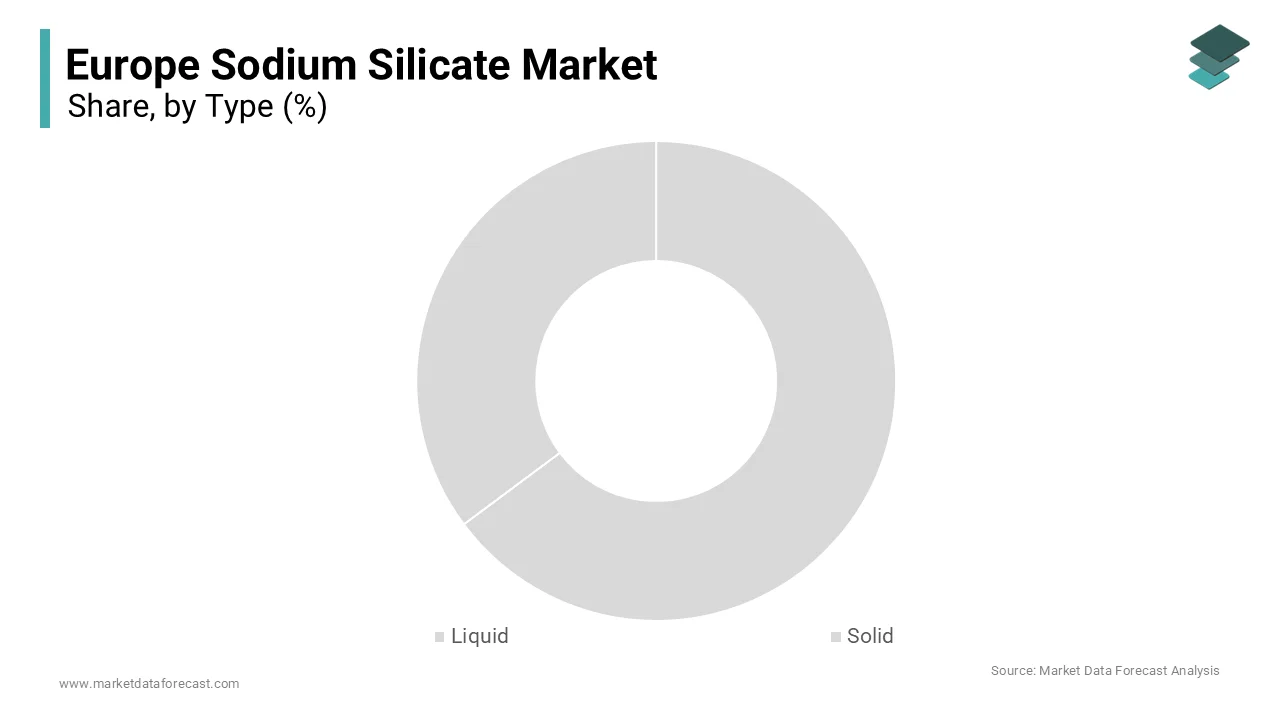
The solid sodium silicate segment is predicted to witness the highest CAGR of 6.8% between 2026 and 2034 due to rising demand in niche applications requiring long shelf life, precise dosing, and reduced transport costs, particularly in specialty detergents, catalyst supports, and laboratory reagents. Solid beads or granules eliminate water weight, cutting logistics emissions compared to liquid equivalents. In Eastern Europe, small-scale detergent blenders increasingly prefer solid sodium silicate due to limited storage infrastructure for bulk liquids and the ability to meter exact quantities without pumps or mixers. Companies have responded by expanding granulation capacity in the Netherlands and Poland to serve Central and Eastern markets. The shift towards circular economy principles is repositioning solid sodium silicate as a strategic and essential alternative for precision and distributed industrial use, moving it beyond its traditional marginal status.
By Form Insights
The crystalline sodium silicate segment held the largest share of the Europe sodium silicate market in 2025. The prominence of the crystalline sodium silicate segment is propelled by its thermodynamic stability, consistent reactivity, and suitability for high-temperature industrial processes. Crystalline forms, typically produced by fusing silica sand and soda ash in rotary kilns, are the standard input for liquid sodium silicate manufacturing, where they are dissolved under pressure to achieve precise modulus ratios. In construction, crystalline-derived liquid binders are critical for producing alkali-activated cements that meet EN 197 standards for structural use. Additionally, the European Pharmacopoeia recognizes crystalline sodium silicate as the reference material for pharmaceutical-grade desiccants due to its purity and non-hygroscopic handling properties. The crystalline form continues to be the industrial standard throughout the detergent, foundry, and construction value chains, largely because Europe's chemical industry emphasizes process reproducibility and regulatory compliance.
The anhydrous sodium silicate segment is estimated to register the fastest CAGR of 9.2% during the forecast period owing to its critical role in advanced material science applications where water content must be eliminated to prevent unwanted reactions. In lithium ion battery research, anhydrous sodium silicate serves as a precursor for silica-coated ceramic separators that enhance thermal stability. Similarly, in catalyst manufacturing, anhydrous grades enable controlled pore formation in zeolite supports without steam-induced sintering. Significant financial support is being directed toward the development of advanced material synthesis processes for next-generation energy storage components. Specific forms of silicate materials are recognized for their extremely low moisture content, meeting rigorous quality and purity criteria across various high-specification industries. Anhydrous sodium silicate is becoming a specialty enabler for Europe's high-tech sectors, where demand for ultrapure, water-free inorganic precursors is growing
By Grade Insights
The alkaline sodium silicate segment led the Europe sodium silicate market by capturing a significant share in 2025. The supremacy of the alkaline sodium silicate segment is credited to its high pH, typically between 11 and 12.5, which provides essential functions in detergency, corrosion inhibition, and binder activation. In heavy duty laundry detergents, alkaline sodium silicate saponifies fats, suspends particulate soil, and protects washing machine drums from acidic corrosion, a triple action unmatched by neutral alternatives. In foundries, the high alkalinity ensures rapid gelation when exposed to CO2, forming strong sand cores within seconds, a kinetic advantage critical for high throughput casting. Besides, in water treatment, alkaline grades adjust pH and coagulate impurities in municipal systems across Germany and the Netherlands. The grade’s functional versatility, regulatory acceptance, and cost efficiency make it the default choice across Europe’s core industrial sectors.
The neutral sodium silicate segment is anticipated to witness the fastest CAGR of 11.4% over the forecast period. The rapid growth of the neutral sodium silicate segment is fueled by demand from sensitive applications where high pH would damage substrates or interfere with chemical processes. In the electronics industry, neutral grades (pH 7 to 8) are used to clean silicon wafers without etching delicate circuits—a requirement under the International Electronics Manufacturing Initiative’s IPC-CH-65 standard. Several semiconductor manufacturing facilities in Europe have increased procurement of a specific silicate compound, potentially aligning with regional production incentives. The pharmaceutical sector shows a similar trend, increasingly using the same compound in tablet coatings. This suggests a growing and diversified application for the material across advanced manufacturing industries. Additionally, neutral grades enable novel biomedical applications such as bioactive glass scaffolds for bone regeneration. The expansion of high-value manufacturing and life sciences across Europe has made neutral sodium silicate essential for applications requiring precision and non-corrosive properties.
REGIONAL ANALYSIS
Germany Sodium Silicate Market Analysis
Germany was the top performer in the Europe sodium silicate market by accounting for a 26.6% share in 2025. The dominance of the German market is driven by its integrated chemical cluster, robust foundry sector, and leadership in green construction. BASF, Evonik, and PQ Corporation operate large sodium silicate production units in Ludwigshafen and Duisburg serving both domestic and export markets. Foundries in a prominent European Union member country consume a significant portion of a specific binder material for an established molding process. The same country is also exploring the material's application in low-carbon construction methods through federal infrastructure pilot projects. German companies, adhering to Europe's strictest chemical regulations (REACH/CLP), set high benchmarks that positively influence standards across the region. The combination of industrial scale, regulatory rigor, and innovation in sustainable materials ensures Germany remains the anchor of Europe’s sodium silicate ecosystem.
France Sodium Silicate Market Analysis
France was the second-largest country in the Europe sodium silicate market by capturing a 17.5% share in 2025. The growth of the French market is attributed to its detergent manufacturing base and growing adoption of alkali-activated cements in public works. Companies like Solvay and Imerys produce sodium silicate at sites in Grand Est and Auvergne Rhône Alpes primarily for use in phosphate free detergents mandated under EU law. The country also leads in circular economy innovation, with Veolia operating a pilot plant near Lyon that recovers sodium silicate from industrial wastewater for reuse in construction. France’s alignment of chemical policy with climate objectives—evident in its Low Carbon Strategy—creates sustained demand for functional, eco compatible additives like sodium silicate across multiple sectors.
Italy Sodium Silicate Market Analysis
Italy is moving ahead steadfastly in the Europe sodium silicate market due to its dense network of small and medium foundries, particularly in the Emilia Romagna and Lombardy regions, which rely on sodium silicate for sand core production in automotive and machinery components. Many Italian foundries have transitioned to sodium silicate binders to align with updated national environmental and energy frameworks. The domestic ceramic tile sector utilizes sodium silicate as a deflocculant within glaze slurries to support large-scale production. Government funding initiatives aimed at modernizing industrial infrastructure have contributed to a rising demand for high-purity chemical inputs. Sodium silicate has become a preferred alternative for industrial casting processes due to shifting regulatory requirements and sustainability goals. The widespread use of this material across both the metallurgical and ceramic sectors highlights its versatile role in the regional manufacturing landscape. Italy’s blend of artisanal manufacturing and regulatory modernization sustains its position as a key consumer of both liquid and solid grades.
United Kingdom Sodium Silicate Market Analysis
The United Kingdom is another key player in the Europe sodium silicate market. Despite Brexit, the UK remains a significant player due to its advanced water treatment infrastructure and specialty chemical sector. Across the United Kingdom, a vast network of municipal facilities continues to utilize specialized chemical aids and buffering agents to enhance the removal of impurities and maintain stable acidity during the treatment process. The UK also hosts R&D hubs for next generation applications, including battery materials at the Faraday Institution and geopolymer concrete at the University of Leeds. Environmental authorities have reinforced regulations surrounding the application of treated residuals to farmland, emphasizing advanced stabilization techniques to ensure that processed materials are safe for agricultural enrichment. The UK is pioneering new uses for sodium silicate, moving beyond traditional methods through robust academic-industry partnerships and a focus on circular resource recovery.
Netherlands Sodium Silicate Market Analysis
The Netherlands is predicted to grow in the Europe sodium silicate market from 2026 to 2034 owing to its role as a logistics and specialty chemicals hub, with the Port of Rotterdam serving as the primary entry point for raw materials like soda ash. Companies such as Tokuyama Europe and Nouryon operate advanced sodium silicate facilities in the Chemelot and Rotterdam ports producing high modulus grades for detergents and catalysts. The Netherlands is also a pioneer in sustainable foundry practices. A significant portion of metal casting activities has adopted a specific binder certified under a particular emissions trading scheme. There has been a recent focus on innovation in the development of construction materials, specifically through a national initiative to fund research and development for low-carbon silicate formulations. The Netherlands serves as both a gateway and an innovation catalyst for sodium silicate in Northwest Europe, thanks to its open economy, advanced infrastructure, and dedication to circular chemistry.
COMPETITIVE LANDSCAPE
Competition in the Europe sodium silicate market is characterized by a dual dynamic between large integrated chemical producers and niche specialty suppliers. Incumbents like PQ Corporation and Nouryon dominate volume driven segments such as detergents and foundry through scale operational efficiency and regulatory compliance. Meanwhile companies like Evonik compete on innovation by targeting advanced applications in batteries and biomedicine where performance and purity outweigh cost considerations. The market is highly regulated with REACH CLP and Industrial Emissions Directive compliance acting as key differentiators. Energy costs and raw material volatility further intensify pressure on smaller players lacking vertical integration. However sustainability mandates are creating new avenues for differentiation through eco designed products and circular solutions. Competition is thus not merely on price but on technical service regulatory alignment and the ability to enable downstream decarbonization making the European sodium silicate landscape a blend of commodity resilience and specialty agility.
KEY MARKET PLAYERS
Some of the notable key players in the Europe sodium silicate market are
- Tokuyama Corporation
- Sinchem Silica Gel Co. Ltd.
- Agsco Corporation
- Nippon Chemical Industrial Co., Ltd.
- Kiran Global Chem Limited
- Occidental Petroleum Corporation
- Great Lakes Calcium Corporation (Glc Minerals)
- Parchem-Fine & Speciality Chemicals
- Evonik Industries Ag (Rag-Stiftung)
- Merck Millipore (Merck Group)
Top Players in the Market
- PQ Corporation is a global leader in specialty inorganic chemicals with a significant footprint in the Europe sodium silicate market through its production facilities in the Netherlands and Germany. The company supplies high purity liquid and solid sodium silicate to detergent, construction, and foundry sectors across the continent. PQ contributes to the global market by pioneering sustainable formulations including low modulus grades for geopolymer cements and phosphate free detergents aligned with EU regulations. It also partnered with European foundry associations to develop VOC free molding solutions enhancing its reputation as a technically advanced and environmentally responsible supplier in both regional and global industrial supply chains.
- Nouryon is a Netherlands based specialty chemicals company with deep expertise in sodium silicate production for European industrial applications. The company operates integrated manufacturing units in Rotterdam and leverages its strong R and D capabilities to develop tailored silicate solutions for detergents water treatment and catalyst supports. Nouryon plays a critical role in the global market by exporting European compliant sodium silicate grades to emerging economies seeking to adopt EU environmental standards. The company also enhanced its digital ordering platform with real time logistics tracking to improve service reliability for industrial customers across Europe reinforcing its position as a solutions oriented chemical partner.
- Evonik Industries AG is a German multinational that produces high performance sodium silicate derivatives primarily for advanced applications in construction and specialty materials. While not a traditional bulk supplier Evonik focuses on value added silicate technologies including nano dispersed and anhydrous grades for battery separators and bioactive glasses. The company contributes to the global market by bridging inorganic chemistry with high tech innovation under its Smart Materials division. It also collaborated with research institutes to validate silicate based CO2 mineralization binders for carbon capture concrete. These initiatives position Evonik at the forefront of next generation sodium silicate applications beyond conventional industrial use.
Top Strategies Used by the Key Market Participants
Key players in the Europe sodium silicate market are investing in sustainable production technologies by integrating renewable energy and water recycling systems to reduce carbon and water footprints. Companies are developing specialized grades such as neutral pH anhydrous and low modulus formulations to serve high value sectors including electronics pharmaceuticals and green construction. Strategic partnerships with downstream industries like foundries detergent manufacturers and battery developers are being leveraged to co create application specific solutions. Firms are also enhancing digital supply chain capabilities through real time inventory and logistics platforms to improve delivery reliability. Additionally producers are aligning product portfolios with EU circular economy and decarbonization policies by supporting geopolymer concrete carbon capture and phosphate free detergent initiatives to ensure long term regulatory and market relevance.
MARKET SEGMENTATION
This research report on the European sodium silicate market has been segmented and sub-segmented based on categories.
By Type
- Liquid
- Solid
By Form
- Crystalline
- Anhydrous
By Grade
- Alkaline
- Neutral
By End User
- Construction
- Pulp & Paper
- Automotive
- Others
By Application
- Detergent
- Paints
- Refractories
- Adhesives
- Tube Winding
- Catalyst
- Others
By Country
- UK
- France
- Spain
- Germany
- Italy
- Russia
- Sweden
- Denmark
- Switzerland
- Netherlands
- Turkey
- Czech Republic
- Rest of Europe