- Product Description Description
- Table of Contents TOC
- List of Table & Figure LOT
- Get Free Sample PDF Sample PDF
Market Size, 2025
$3.62 BnMarket Estimate, 2026
$3.83 BnMarket Forecast, 2034
$6.01 BnCAGR, 2026–2034
5.80%Europe Spices and Seasonings Market Size, Share, Trends & Forecast (2026-2034)
- Market Scope: Comprehensive European food and ingredient intelligence tracking spices and seasonings across types, applications, and country frameworks.
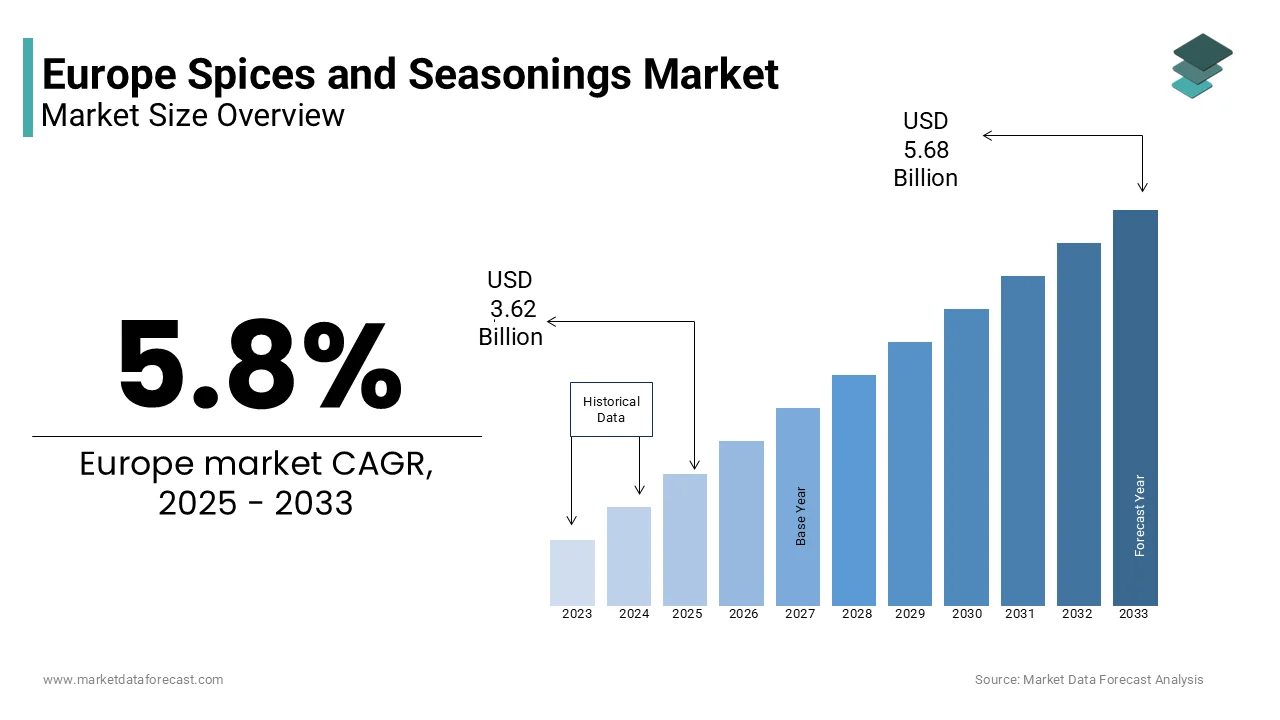
- Market Valuation: Valued at USD 3.62 billion in 2025, estimated at USD 3.83 billion in 2026, and projected to reach USD 6.01 billion by 2034, growing at a steady CAGR of 5.80% from 2026 to 2034.
- Primary Growth Drivers: Surging demand for clean label formulations, natural preservation methods, and culinary diversification driven by migration and global flavor adoption.
Key Europe Spices and Seasonings Segment Metrics (2026–2034)
| Category | Leading Segment (2025/2026 Position) | Fastest-Growing Segment |
|---|---|---|
| By Type | Pepper (holding highest share via universal savory application and foundational processing utility) | Turmeric (estimated at a CAGR of 12.2% driven by anti-inflammatory functional wellness applications) |
| By Application | Meat and Poultry Products (dominating through deep traditional charcuterie integration and industrial production volume) | Snacks and Convenience Foods (projected at a CAGR of 10.2% propelled by lifestyle shifts and bold global flavors) |
Major Industry Players & Market Structure
Market Structure: Highly consolidated and vertically integrated European landscape featuring global food conglomerates and flavor specialists competing on traceability, clean-label compliance, and functional flavor technologies.
Key Market Players: McCormick & Company, Associated British Foods, Kerry Group Plc., Olam International Limited, Ajinomoto Co., Inc., Ariake Japan Company, SHS Group, Dohler Group, Worlee Gruppe, Sensient Technologies, and Fuchs Gewürze GmbH.
Europe Spices and Seasonings Market Size
Europe spices and seasonings market size was valued at USD 3.62 billion in 2025, and the market size is expected to reach USD 6.01 billion by 2034 from USD 3.83 billion in 2026. The market is growing at a CAGR of 5.80% during the forecast period.
Spices and seasonings comprises a diverse ecosystem of dried seeds, fruits, roots, barks, and herbaceous plants utilized primarily for flavoring, colouring and preserving food alongside complex blended seasoning preparations. This sector extends beyond simple culinary enhancement to include functional applications in meat processing, bakery goods, and ready meals where spice extracts serve as natural preservatives and salt reduction agents. According to Eurostat, the European Union imported approximately 380000 tonnes of spices and herbs in 2023, which is reflecting a heavy reliance on external sourcing from tropical regions to satisfy domestic industrial and retail demand. As per the European Food Safety Authority, over 75% of processed food products manufactured within the region contain at least one spice derivative as a critical formulation component. Furthermore, according to data from the International Trade Centre, Germany and the Netherlands collectively handle nearly 60% of all extra EU spice imports, functioning as primary logistical and processing hubs before redistribution across the continent. This market is intrinsically linked to broader gastronomic shifts where traditional preservation methods intersect with modern clean label requirements, creating a unique regulatory and commercial environment distinct from other global regions. The definition encompasses both raw agricultural commodities and high value added proprietary blends that define contemporary European palates and industrial food manufacturing standards.
MARKET DRIVERS
Rising Demand for Clean Label and Natural Preservation
Consumer aversion to synthetic additives has fundamentally restructured ingredient procurement strategies across European food manufacturing sectors, which is a key factor propelling the European spices and seasonings market growth. According to the European Commission Joint Research Centre, 68% of European consumers actively check ingredient lists for artificial preservatives, compelling manufacturers to reformulate using antimicrobial spices like rosemary extract and oregano oil. As per the European Food Information Council, clean label product launches containing natural spice derivatives increased by 22% annually between 2021 and 2023 across major retail chains. Rosemary extract alone has seen industrial adoption rise by 35% in meat processing applications as it effectively extends shelf life while satisfying E number free labeling requirements preferred by health conscious demographics. Additionally, according to the World Health Organization European Regional Office, replacing sodium with potassium based seasoning blends fortified with umami rich spices can reduce population level salt intake by up to 15% without compromising sensory acceptance. This dual functionality of spices as both flavor enhancers and natural preservatives creates structural demand independent of culinary trends. Manufacturers now view specific spice extracts not merely as taste modifiers but as essential technological ingredients enabling compliance with increasingly stringent consumer expectations regarding ingredient transparency and nutritional profiles in packaged foods sold throughout the European single market.
Culinary Diversification through Migration and Global Palates
Demographic transformations and cultural exchange have permanently altered European flavor preferences, which is further driving sustained volume growth in non-traditional spice categories and contributing to the regional market expansion. According to Eurostat, foreign born residents constituted 13.7% of the total EU population in 2023, introducing authentic culinary traditions that require specific spice profiles previously considered niche. As per the United Nations Department of Economic and Social Affairs, international migration flows into Europe have diversified household consumption patterns, with cumin and coriander imports growing by 18% year on year since 2020 to satisfy demand from South Asian and Middle Eastern communities. Furthermore, according to the European Travel Commission, 45% of European tourists cite gastronomy as a primary travel motivation, leading to direct adoption of foreign flavors upon return home. Retail audit data from NielsenIQ reveals that ethnic sauce and seasoning sales in Western Europe outpaced traditional condiment growth by a factor of 3 to 1 during 2023. This demographic driven demand creates resilient volume baselines that persist despite economic volatility. Supermarkets have responded by expanding world food aisles by an average of 25% in floor space allocation since 2021, institutionalizing previously exotic spices as mainstream pantry staples and embedding diverse flavor profiles into the everyday European diet.
MARKET RESTRAINTS
Stringent Maximum Residue Levels and Compliance Costs
Regulatory fragmentation regarding pesticide residues imposes significant operational burdens and supply chain rigidity on European spice importers and processors, which is significantly hampering the European spices and seasonings market growth. According to the European Food Safety Authority, over 12% of spice samples tested at EU borders in 2023 exceeded maximum residue levels for pesticides, triggering mandatory destruction or re-export protocols that disrupt supply continuity. As per the Rapid Alert System for Food and Feed, 487 notifications related to spice contamination were recorded in 2023 alone, which is representing a 15% increase compared to previous years and highlighting persistent safety gaps in source countries. Compliance testing costs have escalated dramatically, with SGS reporting that comprehensive multi residue screening for a single spice lot now averages 350 euros and adding substantial overhead to low margin commodity trades. Furthermore, according to the European Spice Association, meeting evolving EU regulations requires suppliers to invest between 50000 and 100000 euros annually in upgraded laboratory infrastructure and third party certifications. These financial barriers disproportionately affect smallholder producers in developing nations who lack capital for compliance upgrades, thereby concentrating supply among fewer large scale operators. The resulting supply base contraction reduces competitive pricing pressure and creates vulnerability to single source disruptions when specific origins fail recurring safety audits mandated by European buyers seeking to avoid costly border rejections.
Climate Volatility Impacting Sourcing Stability and Pricing
Extreme weather events in primary spice producing regions create unpredictable supply shocks that destabilize European procurement planning and cost structures, which is further hindering the regional market expansion. According to the World Meteorological Organization, key sourcing countries like India and Vietnam experienced rainfall deviations exceeding 30% from historical averages in 2023, directly reducing black pepper and cardamom yields by 20% to 25%. As per the Intergovernmental Panel on Climate Change, suitable cultivation area for coffee and cocoa in tropical zones could decline by up to 50% by 2050 due to rising temperatures, signalling long term structural risks for spice agriculture dependent on specific microclimates. According to FAO data, European import prices for ground paprika surged by 42% in 2023 following drought conditions in Spain and Hungary, demonstrating how regional climate anomalies transmit immediately to end user costs. Unlike synthetic ingredients produced in controlled environments, spice cultivation remains entirely rainfed and temperature sensitive, making supply volumes inherently volatile. European buyers face difficult choices between absorbing price inflation or reformulating products, neither option being commercially attractive. Insurance premiums for spice crops have risen by 35% since 2021 according to Swiss Re, further embedding climate risk costs into final product pricing and eroding margins across the entire value chain serving European markets.
MARKET OPPORTUNITIES
Expansion of Plant Based Protein Flavor Solutions
The rapid proliferation of plant based meat and dairy alternatives creates specialized demand for masking agents and savory seasoning systems tailored to novel protein substrates, which is a prominent opportunity for the European spices and seasonings market. According to the Good Food Institute Europe, retail sales of plant based meat grew by 6% in volume during 2023 despite broader grocery stagnation, indicating resilient consumer interest requiring sophisticated flavor support. As per ProVeg International, 55% of European consumers identify off tastes as the primary barrier to repeat purchase of plant based products, creating urgent technical need for spice blends that neutralize beany or grassy notes inherent in pea and soy proteins. Givaudan and Kerry have documented that optimized yeast extract and smoked paprika combinations can improve sensory acceptance scores of plant based burgers by up to 40% in blind consumer tests. This segment represents high value opportunity because plant based formulators prioritize flavor performance over cost, accepting premium pricing for proprietary seasoning solutions that solve specific technical challenges. As the European plant based market matures beyond early adopters toward mainstream flexitarians, the sophistication of required seasoning systems increases proportionally. Companies developing dedicated plant protein flavor platforms position themselves to capture disproportionate value in this emerging category where traditional spice applications require significant adaptation to meet unique matrix interactions and consumer expectations.
Functional Seasonings Targeting Specific Health Outcomes
Integration of bioactive spice compounds into targeted nutrition products opens new revenue streams beyond conventional culinary applications, which is further providing lucrative possibilities for the regional market. According to the European Consumer Organisation, 62% of Europeans aged 50 and above actively seek foods with proven health benefits, creating addressable market for anti-inflammatory and metabolic support seasonings. As per clinical research published in the European Journal of Nutrition, daily consumption of 3 grams of cinnamon extract can reduce fasting blood glucose by 10% in pre diabetic populations, validating functional claims for specific spice dosages. The European Commission’s Horizon Europe program allocated 45 million euros in 2023 specifically for research into food bioactives and chronic disease prevention, signaling public funding support for evidence based functional ingredient development. Turmeric curcumin supplements already represent a 280 million euro market in Germany alone according to Statista, yet integration into everyday seasoning formats remains underexplored. Opportunity exists in bridging supplement efficacy with culinary convenience through standardized spice blends delivering therapeutic doses in familiar food formats. Regulatory approval pathways for health claims remain strict but navigable for well researched botanicals, allowing first movers to differentiate products in crowded seasoning aisles through scientifically substantiated wellness positioning that resonates with aging European demographics concerned about preventive health maintenance.
MARKET CHALLENGES
Adulteration and Authenticity Verification Complexities
Economically motivated adulteration persists as systemic challenge undermining trust and requiring expensive verification technologies throughout European supply chains, which is a major challenge to the European spices and seasonings market. According to the European Commission Food Fraud Network, saffron and vanilla rank among top five most frequently adulterated food products globally, with substitution rates estimated at 30% to 40% in some trade channels. As per the Joint Research Centre, undeclared peanut protein was detected in 18% of cumin samples analyzed in 2022, posing severe allergen risks and triggering widespread recalls across multiple EU member states. Isotope ratio mass spectrometry testing required verifying geographic origin costs between 400 and 600 euros per sample according to Eurofins Scientific, making routine authentication economically unfeasible for bulk commodity transactions. DNA barcoding methods face limitations in processed spice powders where thermal degradation fragments genetic material, reducing detection reliability below 85% for heavily roasted products. This technological gap allows sophisticated adulterators to evade standard quality controls while legitimate suppliers bear escalating verification costs. Consumer confidence erosion following high profile scandals creates lasting reputational damage affecting entire categories rather than individual brands. Addressing this challenge requires industry wide investment in blockchain traceability and rapid field testing devices, yet coordination among fragmented stakeholders remains difficult, perpetuating vulnerability to fraud that distorts fair competition and endangers public health across European markets.
Labor Shortages in Domestic Herb Cultivation
Structural workforce deficits in European aromatic herb production constrain local supply expansion despite strategic desires for regional sourcing resilience, which is further challenging the regional market expansion. According to Eurofound, the agricultural sector faces vacancy rates exceeding 15% across Southern and Eastern Europe, with seasonal harvesting positions for delicate herbs like basil and parsley particularly affected. As per FranceAgriMer, fresh herb production costs increased by 28% between 2021 and 2023 primarily due to wage inflation driven by labor scarcity, eroding competitiveness against imported dried alternatives. Mechanization remains technically challenging for leafy herbs where bruising during harvest degrades quality, maintaining dependence on manual picking that younger generations increasingly reject as career option. The European Agency for Safety and Health at Work documents that average age of agricultural workers exceeds 55 years in major herb producing regions, signaling impending capacity contraction as retrenchments accelerate without adequate replacement. Immigration policy restrictions further limit access to seasonal migrant labor traditionally filling these roles. Consequently, European retailers and processors face binary choice between accepting higher costs for local herbs or reverting to imported supplies that contradict sustainability narratives. This labor constraint fundamentally limits ability to capitalize on locavore trends and creates persistent supply vulnerability for fresh herb segments despite strong consumer preference for domestically grown produce.
REPORT COVERAGE
| REPORT METRIC | DETAILS |
| Market Size Available | 2025 to 2034 |
| Base Year | 2025 |
| Forecast Period | 2026 to 2034 |
| CAGR | 5.80% |
| Segments Covered | By Type, Application, and Region |
| Various Analyses Covered | Global, Regional, & Country Level Analysis; Segment-Level Analysis; DROC, PESTLE Analysis; Porter’s Five Forces Analysis; Competitive Landscape; Analyst Overview of Investment Opportunities |
| Regions Covered | UK, France, Spain, Germany, Italy, Russia, Sweden, Denmark, Switzerland, Netherlands, Turkey, and the Czech Republic |
| Market Leaders Profiled | McCormick & Company (U.S.), Associated British Foods (U.K.), Kerry Group Plc. (Ireland), Olam International Limited (Singapore), Ajinomoto Co., Inc. (Japan), Ariake Japan Company (Japan), SHS Group (U.K.), Dohler Group (Germany), Worlee Gruppe (Germany), and Sensient Technologies (U.S.) |
SEGMENTAL ANALYSIS
By Type Insights
The pepper segment dominated the market by holding the highest share of the European market in 2025 due to its universal application across virtually all savory food categories and established industrial usage patterns. According to the European Spice Association, black pepper accounts for approximately 25% of total spice import volume into the European Union, reflecting its foundational role in both household cooking and processed food manufacturing. As per the German Federal Statistical Office, domestic consumption of pepper reached 18500 tonnes in 2023, making it the single largest spice category by weight in Europe’s biggest food processing economy. Pepper’s dominance stems from its unique piperine compound which enhances bioavailability of other nutrients and provides heat sensation without overwhelming delicate flavors, making it irreplaceable in formulation chemistry. Furthermore, according to Eurostat trade data, Netherlands and Germany collectively import over 60% of Europe’s pepper supply, functioning as primary distribution hubs that ensure consistent availability across the continent. This logistical infrastructure creates self-reinforcing dominance where established supply chains reduce procurement risks for manufacturers compared to emerging spices with less reliable sourcing networks. The spice’s historical entrenchment in European culinary traditions combined with modern functional applications in meat preservation and flavor enhancement secures its continued market leadership despite premium pricing relative to alternative heat sources.
On the other side, the turmeric segment represents the fastest growing spice segment in the Europe spices and seasonings market and is estimated to register a CAGR of 12.2% over the forecast period owing to the fundamental shift from purely culinary use toward functional wellness applications driven by extensive scientific validation of curcumin’s anti-inflammatory properties. The European Food Safety Authority has received over 45 health claim submissions related to turmeric since 2020, indicating intense commercial interest in positioning the spice as nutraceutical ingredient rather than mere flavoring agent. Clinical trials published in the European Journal of Nutrition demonstrate that standardized turmeric extracts containing 95% curcuminoids reduce C reactive protein levels by 28% in subjects with metabolic syndrome, providing evidence base for premium positioning. Retail audit data from Circana reveals that turmeric supplement sales in major European pharmacies grew by 34% in 2023, significantly outpacing traditional grocery channel growth and signaling category migration toward health focused distribution. This dual presence in both culinary and therapeutic markets creates diversified demand streams that buffer against volatility in either segment alone. Consumer perception of turmeric as ancient remedy validated by modern science generates willingness to pay premiums exceeding conventional spice price benchmarks, supporting margin expansion alongside volume growth.
By Application Insights
The meat and poultry products segment held the largest share of the European market in 2025 due to deep integration of spices in traditional charcuterie preservation methods and modern processed meat manufacturing. According to Eurostat, European Union member states produced 23.4 million tonnes of pigmeat and 7.8 million tonnes of poultry meat in 2023, representing massive substrate requiring seasoning inputs throughout processing value chains. As per the European Meat Processors Association, average spice inclusion rates range from 1.5 to 3.5 kilograms per tonne of finished sausage products, translating to substantial volume demand anchored in staple protein consumption. Traditional protected designation of origin products like Parma ham and Nürnberger Rostbratwurst mandate specific spice formulations by law, creating non-discretionary demand insulated from cost cutting pressures during economic downturns. Furthermore, according to CLITRAVI data, 78% of European consumers consider spice profile as primary purchase driver when selecting prepared meat products, making seasoning investment essential for brand differentiation in crowded retail environments. This segment’s dominance reflects structural characteristics of European protein consumption where processed meats remain culturally embedded dietary components rather than optional convenience items. The technical necessity of spices for microbial safety in cured products further ensures baseline demand regardless of shifting health narratives surrounding red meat consumption.
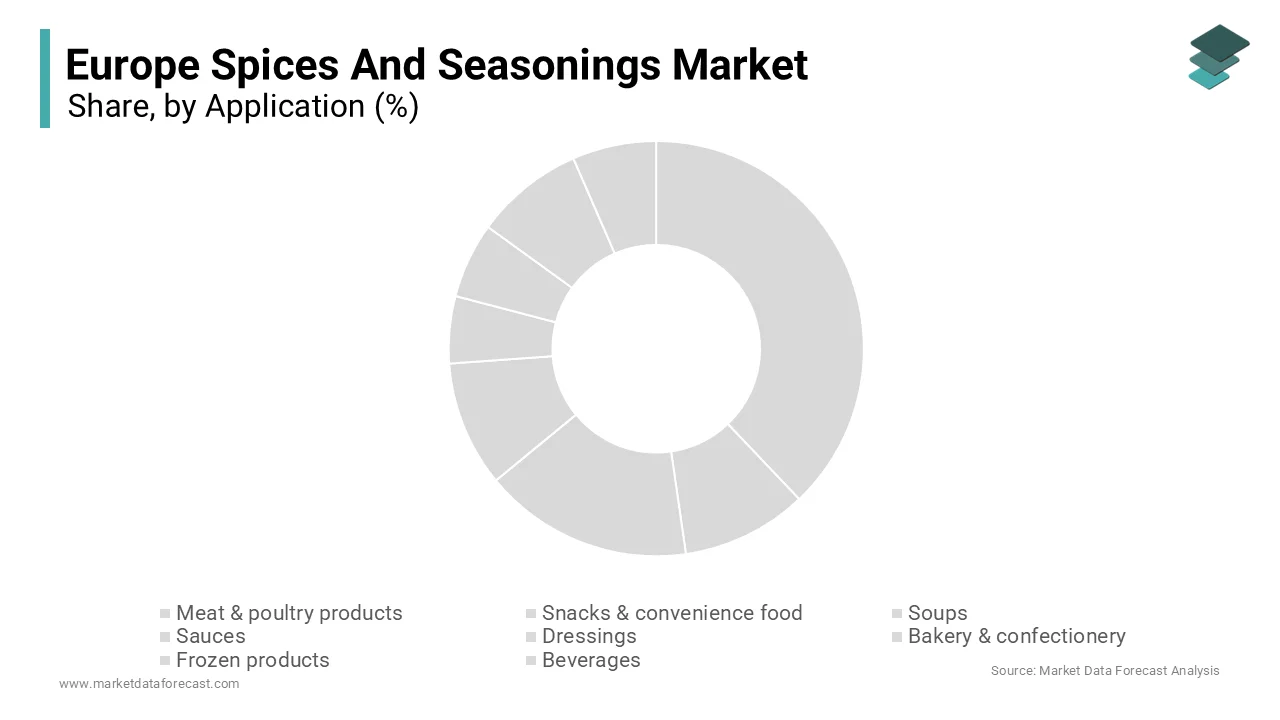
However, the snacks and convenience food segment is estimated to record the fastest CAGR of 10.2% over the forecast period owing to the profound lifestyle transformations where time scarcity drives substitution of home cooked meals with ready to eat formats requiring intensive seasoning to compensate for processing induced flavor loss. As per the European Snacks Association, savory snack consumption per capita increased by 12% between 2020 and 2023 across Western European markets, directly correlating with rising remote work patterns that blur meal occasion boundaries. Kantar Worldpanel data shows that households purchasing convenience foods spend 28% more on seasoned variants compared to plain options, indicating strong consumer willingness to pay premiums for flavor complexity in time saving formats. Manufacturers respond by launching bold global flavor profiles like Korean gochujang and Mexican tajín that require specialized spice blends unavailable in traditional European pantries. NielsenIQ retail audits reveal that ethnic flavored snack SKUs grew by 45% in 2023 versus 8% for conventional flavors, demonstrating innovation velocity concentrated in this segment. Unlike mature meat applications where spice usage follows stable traditional formulas, snacks serve as primary vehicle for flavor experimentation where new spice introductions achieve rapid scale through impulse purchase dynamics and social media amplification among younger demographics.
REGIONAL ANALYSIS
Germany Market Analysis
Germany held 19.4% of the European market share in 2025 and is likely to experience steady market expansion driven by rising health consciousness and robust food processing demands over the next few years. Germany stands as the undisputed leader in the European spices and seasonings market due to the country’s robust food processing industry, which includes significant sectors for processed meats, bakery products, and convenience foods that require consistent, high quality spice blends. German consumers are notably health conscious, driving a strong preference for organic certifications and functional ingredients known for their medicinal properties, such as turmeric for anti-inflammatory benefits and ginger for digestive health. The organic food market in Germany has experienced remarkable growth, with sales increasing by over 20% in recent years, reflecting a broader societal shift toward sustainable and pesticide free products. As one of Europe’s largest spice importing nations, Germany sources nearly 80% of its spices from developing countries, necessitating rigorous supply chain transparency and compliance with stringent EU regulations like the Deforestation Regulation. This regulatory environment favors larger industry players who can invest in sophisticated traceability systems, leading to market consolidation. Furthermore, the aging population and rising prevalence of lifestyle related health issues have intensified the demand for low sodium alternatives and natural flavor enhancers. Consequently, manufacturers are increasingly focusing on premium, single estate spices with verified potency levels, allowing them to command higher price points while meeting the discerning expectations of German retailers and end consumers who prioritize quality, sustainability, and health benefits in their culinary choices.
United Kingdom Market Analysis
The United Kingdom is poised to see continuous retail innovation and expanding adoption of global flavor profiles over the next few years due to its multicultural demographic landscape and deep rooted culinary traditions. The UK market is characterized by an exceptional adoption of international cuisines, particularly Indian, Thai, and Middle Eastern flavors, which has significantly influenced consumer purchasing habits. Brands like Bart Ingredients have successfully capitalized on this trend by offering authentic ethnic spice blends that cater to the growing home cooking segment seeking restaurant quality experiences. The rise of convenience foods and ready to cook meal kits has further accelerated demand for pre mixed seasoning packets, allowing busy consumers to easily replicate complex global dishes. Retail channels, including supermarkets and online platforms, dominate distribution, with private label brands gaining traction by offering competitive pricing and diverse flavor profiles. British consumers are increasingly prioritizing clean label products, seeking spices free from artificial additives, preservatives, and colorants. This shift has prompted manufacturers to innovate with natural preservation methods and transparent sourcing practices. Additionally, the post pandemic surge in home cooking has sustained high demand for bold, exotic flavors, as consumers attempt to recreate dining out experiences at home. The UK’s strategic position as a trade hub also facilitates the import of diverse spices, ensuring a wide variety of options for both retail and foodservice sectors, thereby maintaining its status as a key driver of innovation and diversity in the European spices market.
France Market Analysis
France and Italy are projected to maintain strong growth momentum propelled by gourmet culinary traditions and surging demand for functional organic extracts over the next few years. France and Italy represent two distinct yet vital pillars of the European spices market, each driven by unique culinary heritage and evolving consumer preferences. France, a top tier market, is defined by its sophisticated consumer base that prioritizes premium quality, authenticity, and gourmet cooking experiences. French consumers heavily favor traditional herbs like herbes de Provence, basil, and tarragon, but there is a growing interest in exotic spices influenced by Mediterranean and North African cuisines. The country’s robust organic sector supports demand for certified, sustainably sourced spices, with consumers willing to pay premiums for traceable and ethically produced ingredients. Meanwhile, Italy has emerged as the fastest growing market in Europe, with a projected CAGR of up to 10.2%, fueled by culinary innovation and the global popularity of Italian cuisine. While traditional staples like oregano, rosemary, and garlic remain essential, urban Italian consumers are increasingly experimenting with global flavors, leading to a surge in demand for fusion spice blends. The expansion of the foodservice industry and the export driven nature of Italian food products further amplify domestic demand for high quality seasonings. Both countries are witnessing a shift toward health conscious eating, with spices viewed as functional ingredients offering antioxidant and anti inflammatory benefits. This trend, combined with a strong emphasis on sustainable sourcing and clean label formulations, is reshaping product development strategies, encouraging manufacturers to introduce innovative, premium offerings that align with the refined palates and ethical values of French and Italian consumers.
Spain Market Analysis
Spain and the broader Southern European region are expected to experience resilient demand through adaptation to changing consumer lifestyles and sustainable sourcing mandates over the next few years. Spain and the broader Southern European region contribute significantly to the market’s diversity, driven by traditional culinary practices and increasing exposure to global flavors. Spain, a top five market, has a deep rooted reliance on specific spices such as paprika, saffron, cumin, and garlic, which are integral to iconic dishes like paella, tapas, and cured meats. The country’s strong processed meat and seafood industries utilize substantial volumes of these traditional seasonings, ensuring steady baseline demand. However, the Spanish market is also evolving, with tourism and migration broadening palate preferences and introducing consumers to North African, Latin American, and Asian spice profiles. This cultural exchange has spurred interest in harissa, za’atar, and various chili blends, particularly among younger, urban demographics. Across these regions, the trend toward organic and sustainable spices is gaining momentum, with consumers increasingly concerned about environmental impact and ethical sourcing. The implementation of EU regulations like the Corporate Sustainability Reporting Directive is pushing companies to adopt transparent supply chains, benefiting larger players with established compliance frameworks. Additionally, the rise of convenience foods and ready to eat meals is driving demand for innovative, easy to use seasoning solutions. As economic conditions fluctuate, the spices market remains relatively resilient, as consumers continue to prioritize flavorful, home cooked meals over expensive dining out, ensuring sustained growth and innovation in Spain and surrounding markets through diversified product offerings and strategic adaptations to changing consumer lifestyles.
KEY MARKET PLAYERS
Some of the key players in the Europe spices and seasonings market are
- McCormick & Company (U.S.)
- Associated British Foods (U.K.)
- Kerry Group Plc. (Ireland)
- Olam International Limited (Singapore)
- Ajinomoto Co., Inc. (Japan)
- Ariake Japan Company (Japan)
- SHS Group (U.K.)
- Dohler Group (Germany)
- Worlee Gruppe (Germany)
- Sensient Technologies (U.S.)
Top Players in the Market
- Fuchs Gewürze GmbH maintains significant influence in the European spices sector through extensive vertical integration spanning sourcing to retail distribution. The company recently expanded its sustainable sourcing programs in India and Vietnam to secure traceable pepper and turmeric supplies meeting stringent EU residue standards. Fuchs invested heavily in digital flavor profiling technologies enabling customized seasoning solutions for plant based protein manufacturers across Germany and France. Their commitment to regenerative agriculture partnerships strengthens supply chain resilience while addressing consumer demands for ethical transparency. These initiatives reinforce technical leadership in functional spice applications beyond traditional culinary uses throughout continental European markets.
- Kerry Group plc leverages deep food science expertise to develop advanced taste modulation systems using proprietary spice extracts for European processed food manufacturers. The company recently launched clean label preservation solutions combining rosemary and acerola cherry extracts targeting meat alternative producers seeking natural shelf life extension. Kerry established dedicated application centers in Netherlands and Spain supporting rapid prototyping of ethnic flavor profiles for snack innovation cycles. Their investment in bioconversion technologies enhances umami delivery while reducing sodium content in prepared meals. This technical differentiation positions Kerry as essential partner for reformulation challenges driven by regulatory and consumer health pressures across Western Europe.
- McCormick and Company Inc operates major European production facilities in Poland and UK serving both retail and industrial customers with localized flavor solutions. The company recently acquired regional specialty herb processors to strengthen fresh herb supply chains amid domestic labor shortages affecting Southern European cultivation. McCormick integrated AI driven demand forecasting systems optimizing inventory management for volatile spice commodities imported through Rotterdam and Hamburg ports. Their FlavorPrint predictive analytics platform enables proactive trend identification allowing faster response to emerging ethnic flavor preferences among younger European consumers. These operational enhancements improve service reliability while supporting premiumization strategies in value added seasoning categories across diverse national markets.
Major Strategies Used by Key Market Participants
Key players prioritize backward integration into origin countries to secure compliant raw materials meeting escalating EU pesticide residue standards while reducing supply volatility exposure. Companies increasingly invest in proprietary extraction and encapsulation technologies that enhance bioactive compound stability and bioavailability for functional food applications beyond traditional seasoning roles. Strategic acquisitions target specialized regional producers possessing unique ethnic flavor expertise or fresh herb cultivation capabilities difficult to replicate organically amid labor constraints. Digital transformation initiatives deploy artificial intelligence for demand forecasting and personalized B2B formulation services accelerating innovation cycles in fast moving snack and convenience segments. Sustainability certifications and regenerative agriculture partnerships serve dual purposes of risk mitigation and premium positioning as retailers mandate environmental compliance throughout supply chains. Collaborative R&D with academic institutions validates health claims for nutraceutical spice applications creating defensible intellectual property barriers against commoditized competition in emerging wellness categories.
MARKET SEGMENTATION
This research report on the Europe spices and seasonings market has been segmented and sub-segmented into the following categories.
By Type
- Pepper
- Capsicum
- Ginger
- Cinnamon
- Cumin
- Turmeric
- Nutmeg
- Mace
- Cardamom
- Coriander
- Cloves
By Application
- Meat & poultry products
- Snacks & convenience food
- Soups
- Sauces
- Dressings
- Bakery & confectionery
- Frozen products
- Beverages
By Country
- UK
- France
- Spain
- Germany
- Italy
- Russia
- Sweden
- Denmark
- Switzerland
- Netherlands
- Turkey
- Czech Republic
- Rest of Europe