Europe Sunflower Market Size, Share, Trends & Growth Forecast Report – Segmented By Type (Oilseed, Non- oilseed), and Country (UK, France, Spain, Germany, Italy, Russia, Sweden, Denmark, Switzerland, Netherlands, Turkey, Czech Republic & Rest of Europe), Industry Analysis From 2026 to 2034
Market Size, 2025
$9.03 BnMarket Estimate, 2026
$9.36 BnMarket Forecast, 2034
$12.58 BnCAGR, 2026–2034
3.76%Europe Sunflower Market Report Summary
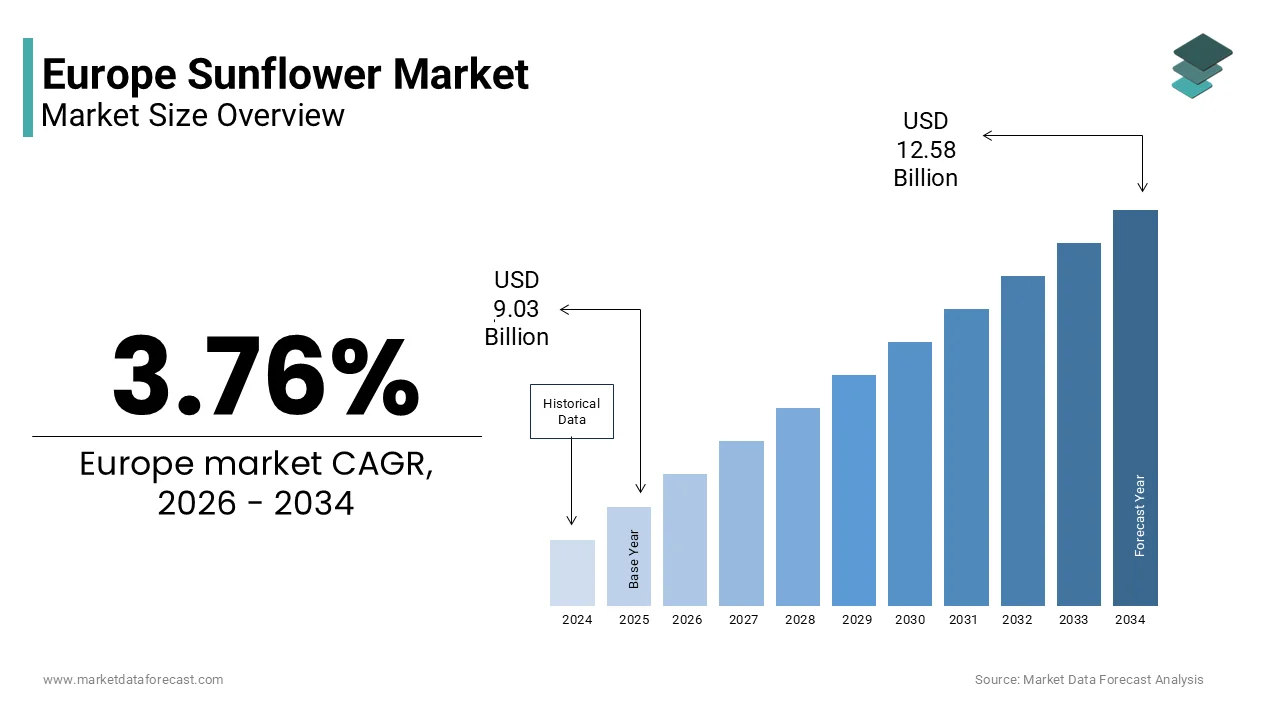
The Europe sunflower market size was valued at USD 9.03 billion in 2025 and is projected to reach USD 12.58 billion by 2034 from USD 9.36 billion in 2026, growing at a CAGR of 3.76% during the forecast period. The growth of the Europe sunflower market is driven by rising demand for sunflower oil in food processing, increasing consumption of plant based edible oils, and expanding use of sunflower derivatives in animal feed and biofuel production. Growing awareness regarding healthy cooking oils rich in unsaturated fats, along with strong export demand and supportive agricultural policies across the European Union, is further contributing to steady market expansion.
Key Market Trends
- Increasing demand for sunflower oil as a healthier alternative to other edible oils due to its favorable fatty acid profile.
- Rising cultivation of oilseed sunflower varieties supported by improved hybrid seeds and yield optimization practices.
- Growing application of sunflower by products in livestock feed and biodiesel production.
- Expansion of processing and crushing capacities across major producing countries in Europe.
- Strengthening trade flows and strategic grain storage initiatives to stabilize supply chains.
Segmental Insights
- Based on type, the oilseed sunflower segment dominated the Europe sunflower market in 2025. The segment’s leadership is attributed to its extensive use in edible oil extraction, food manufacturing, and industrial applications. High oil content, strong processing demand, and widespread cultivation across European agricultural regions support its dominant market position.
Regional Insights
- The Europe sunflower market demonstrates strong production and consumption patterns across key agricultural economies supported by favorable climatic conditions and established oilseed processing infrastructure.
- France led the Europe sunflower market by capturing a 22.1% share in 2025. The country’s dominance is driven by large scale cultivation, advanced agronomic practices, and strong domestic demand for sunflower oil and related products.
- Other European countries continue to expand sunflower production to strengthen food security, diversify crop rotation systems, and meet rising edible oil demand across retail and industrial sectors.
Competitive Landscape
The Europe sunflower market is characterized by the presence of major agribusiness corporations and integrated oilseed processing companies focusing on supply chain optimization, seed innovation, and export expansion. Leading players are investing in crushing capacity, sustainable farming initiatives, and strategic partnerships to enhance market competitiveness. Prominent companies in the Europe sunflower market include Cargill Incorporated, Bunge Limited, Archer Daniels Midland Company, Louis Dreyfus Company, Viterra, Bonafarm Holding B.V., Kernel Holding S.A., MHP SE, Avril Group, Euralis, and AgroGeneration.
Europe Sunflower Market Size
The Europe sunflower market size was valued at USD 9.03 billion in 2025 and is projected to reach USD 12.58 billion by 2034 from USD 9.36 billion in 2026, growing at a CAGR of 3.76%.
A sunflower is a tall, vibrant flowering plant known scientifically as Helianthus annuus. It is famous for its large, sun-like flower heads and its unique ability to track the sun's movement, a phenomenon called heliotropism. Unlike other oilseeds, sunflower thrives in Southern and Eastern Europe’s warm, dry climates, making it a strategic crop for regional food security and rural economies. According to research, in 2023, the European Union saw a strong recovery in sunflower cultivation, producing a high volume of seeds and cementing its position as the second-largest oilseed crop in the region after rapeseed. The crop’s deep root system and drought tolerance position it as a resilient rotational option in climate-vulnerable regions, particularly in the Black Sea belt. Critically, sunflower oil continues to be a staple in the European Union, with its consumption increasing as it finds high demand within the food processing and household cooking sectors. This combination of agronomic adaptability, nutritional value, and geopolitical relevance defines the European sunflower market as a linchpin of both agricultural stability and edible oil supply.
MARKET DRIVERS
Strategic Role in Edible Oil Security and Food Sovereignty
Sunflower’s dominance in the European edible oil landscape is a primary driver of sustained demand, rooted in consumer preference and policy-driven food sovereignty goals, which accelerates the growth of the Europe sunflower market. Driven by health consciousness and versatility, sunflower oil consumption in the European Union continues to rise, establishing it as a preferred cooking oil in many European households. The 2022 disruption of imports from the Black Sea region caused a significant shift in the EU’s sunflower oil supply chain, prompting a strategic focus on expanding domestic production under the updated Common Agricultural Policy. In response to the supply crisis, key EU agricultural nations including France and Romania increased their sunflower cultivation, leading to a substantial boost in total European Union sunflower production. National dietary guidelines in Spain and Italy explicitly recommend sunflower oil for cooking, reinforcing cultural acceptance. This dual reliance on nutritional merit and import substitution ensures robust, policy-backed demand that transcends commodity cycles.
Integration into Crop Rotation and Soil Health Management
Sunflower’s agronomic value as a rotational crop significantly fuels its adoption across European farming systems, particularly in cereal-dominated regions, which further contributes to the expansion of the Europe sunflower market. Its deep taproot structure breaks up soil compaction, improves water infiltration, and suppresses certain nematodes, enhancing yields in subsequent wheat and maize crops. According to researchers at the French National Institute for Agricultural Research (INRAE), transitioning from short-term monocultures to a more diverse three-year rotation that includes sunflowers enhances the sustainability of the farming system by increasing the productivity of subsequent wheat crops while significantly reducing dependence on synthetic nitrogen inputs. In drought-prone areas like southern Spain and Greece, sunflower’s water-use efficiency, requiring less irrigation than soybeans, makes it a climate-resilient alternative. Additionally, the EU’s Green Deal eco-schemes reward farmers for diversifying rotations to improve soil organic matter, with sunflower qualifying as a break crop under the Sustainable Use Regulation. This functional role in sustainable intensification cements sunflower as more than a cash crop but a cornerstone of regenerative arable systems.
MARKET RESTRAINTS
Climate Vulnerability and Yield Volatility
Its high susceptibility to extreme weather events causes significant yield fluctuations and economic instability for growers, and thereby inhibits the growth of the Europe sunflower market. Sunflower is particularly vulnerable to prolonged drought during flowering and heavy rains during harvest, both of which have intensified under climate change. In 2022, extreme heat and dry conditions significantly reduced sunflower yields in Southern Europe, particularly impacting Italy and Spain, while irregular rainfall patterns in key producing countries, such as Romania, created challenges for harvest timing and crop quality. The Joint Research Centre indicates that sunflower crops in Southern Europe experience higher yield instability compared to wheat due to weather variability, a factor that influences agricultural decisions regarding the expansion of cultivated area. The lack of drought-tolerant crops and irrigation infrastructure makes the sector fragile, hindering investment and complicating supply chain planning for manufacturers.
Dependence on Imported Genetic Material and Inputs
Its reliance on imported hybrid seeds and agrochemicals, primarily from non-EU countries, continues to be a major obstacle to the Europe sunflower market. The majority of sunflower seeds sown across the European Union are high-yield hybrids developed by multinational seed firms, primarily owned by United States and European companies, which dominate the market through proprietary agricultural technology. This dependency limits genetic diversity and exposes farmers to price volatility and intellectual property restrictions that prohibit seed saving. Similarly, key inputs like specialized fungicides for downy mildew are often sourced from outside the bloc, creating supply chain vulnerabilities. The EU’s stringent pesticide regulations have further narrowed the available chemical toolkit, reducing treatment options for diseases like Sclerotinia. This external reliance compromises strategic autonomy and increases production costs, hindering the sector’s resilience in an era of geopolitical and regulatory uncertainty.
MARKET OPPORTUNITIES
Expansion of High-Oleic Varieties for Premium Food and Industrial Uses
The rapid adoption of high-oleic sunflower varieties provides new opportunities for the growth of the Europe sunflower market. These contain a significant portion of oleic acid comparable to olive oil, and offer superior oxidative stability for frying and shelf life. High-oleic sunflower oil consumption has experienced significant growth in Europe, driven by the increasing adoption of trans-fat-free alternatives in the food service industry and the demand for stable, high-performance cooking oils by snack manufacturers. This surge in demand is largely fueled by the need for improved oxidative stability in frying and healthier ingredient profiles. France and Hungary lead production, with cooperatives like Avril and Cargill offering premium contracts for certified high-oleic seeds. Beyond food, these oils serve as renewable feedstocks for biolubricants and cosmetics, aligning with the EU Bioeconomy Strategy. The growing consumer preference for clean-label, heart-healthy fats creates a premium segment that drives higher profitability for farmers and provides processors with a competitive edge.
Development of Sunflower-Based Bioproducts and Circular Byproduct Use
The valorization of sunflower processing residues into high-value bioproducts supports the EU’s circular economy objectives, which offers fresh prospects for the Europe sunflower market. The meal left after oil extraction, rich in protein, is increasingly used in aquaculture and poultry feed as a soy alternative, reducing dependence on imported protein. Simultaneously, sunflower husks and stalks are being converted into biochar, particleboard, and even mycelium-based packaging materials. In Spain, startups like BioSun are producing biodegradable flower pots from pressed husks, while German research institutes have developed lignin-based adhesives from stalk biomass. According to the Bio-based Industries Consortium, implementing sustainable bio-based, circular, and residue-utilizing innovations offers agricultural producers opportunities to enhance their revenue and diversify income streams. The sunflower sector can boost profitability and support EU zero-waste goals by turning waste streams into functional materials.
MARKET CHALLENGES
Geopolitical Disruption of Black Sea Supply Chains
The ongoing instability in the Black Sea region limits the growth of the Europe sunflower market. This region historically supplied the majority of the EU’s raw material and oil. The war in Ukraine, the world’s largest sunflower oil exporter, disrupted logistics, spiked prices, and triggered export bans, exposing the EU’s vulnerability. Domestic production is up, but it still fails to cover the entire deficit. During 2023, the European Union continued to be a significant importer of sunflower oil, with Ukraine supplying the vast majority of the volume, followed by Moldova, Russia, and Argentina as key, but much smaller, origin points, as indicated by research. These alternative sources often lack traceability and sustainability certifications, raising concerns about deforestation and labor practices. Moreover, shipping through the Red Sea and Suez Canal has become riskier and costlier, inflating landed prices. This geopolitical fragility forces the EU to balance food security with ethical sourcing, creating persistent uncertainty in supply planning and pricing.
Regulatory Pressure on Neonicotinoid Seed Treatments
Mounting pressure from EU restrictions on neonicotinoid insecticides poses a serious barrier to the Europe sunflower market. These chemicals are critical for protecting young plants from wireworms and aphids that transmit viruses. The enforcement of European Union-wide restrictions on neonicotinoid seed treatments has resulted in greater challenges for farmers in managing early-season pests, leading to reported declines in crop productivity, with Eastern European nations facing particularly severe impacts. Various studies on farming organizations in Romania indicate that the lack of effective seed treatments has caused significant damage to major field crops due to uncontrolled soil pests, resulting in higher rates of crop failure. Despite the availability of alternatives to neonicotinoids, current options are less efficient, resulting in increased production costs for farmers. The absence of equally efficacious substitutes undermines the economic viability of sunflower cultivation, especially for smallholders, and risks a long-term decline in acreage unless integrated pest management solutions are scaled rapidly. This regulatory gap between environmental protection and crop protection creates a persistent tension in the sector’s sustainability narrative.
REPORT COVERAGE
| REPORT METRIC | DETAILS |
| Market Size Available | 2025 to 2034 |
| Base Year | 2025 |
| Forecast Period | 2026 to 2034 |
| CAGR | 3.76% |
| Segments Covered | By Type, and Region |
| Various Analyses Covered | Global, Regional, & Country Level Analysis; Segment-Level Analysis; DROC, PESTLE Analysis; Porter’s Five Forces Analysis; Competitive Landscape; Analyst Overview of Investment Opportunities |
| Regions Covered | UK, France, Spain, Germany, Italy, Russia, Sweden, Denmark, Switzerland, Netherlands, Turkey, and the Czech Republic |
| Market Leaders Profiled | Cargill Incorporated, Bunge Limited, Archer Daniels Midland Company, Louis Dreyfus Company, Viterra, Bonafarm Holding B.V., Kernel Holding S.A., MHP SE, Avril Group, Euralis, and AgroGeneration |
SEGMENTAL ANALYSIS
By Type Insights
The oilseed sunflower segment dominated the Europe sunflower market by accounting for a substantial share in 2025. The dominance of the oilseed sunflower segment is driven by its critical role in the continent’s edible oil supply chain and its integration into industrial food systems. The European Commission’s agricultural department monitors oilseed varieties that provide substantial oil returns, though they require more land to produce the same volume of oil as tropical alternatives. The crop’s neutral flavor profile and high smoke point have made sunflower oil a staple in households and food manufacturing across the EU, where it accounts for a notable share of total vegetable oil consumption. National policies further reinforce this dominance. France’s “Plan Protéines” and Romania’s agricultural subsidies prioritize oilseed sunflower as a strategic crop for import substitution following the Black Sea supply crisis. Additionally, the meal byproduct, rich in protein, is a key component in livestock feed, creating a dual-revenue stream that enhances farm economics. This combination of nutritional demand, policy support, and agro-industrial integration ensures oilseed sunflower remains the cornerstone of the European market.
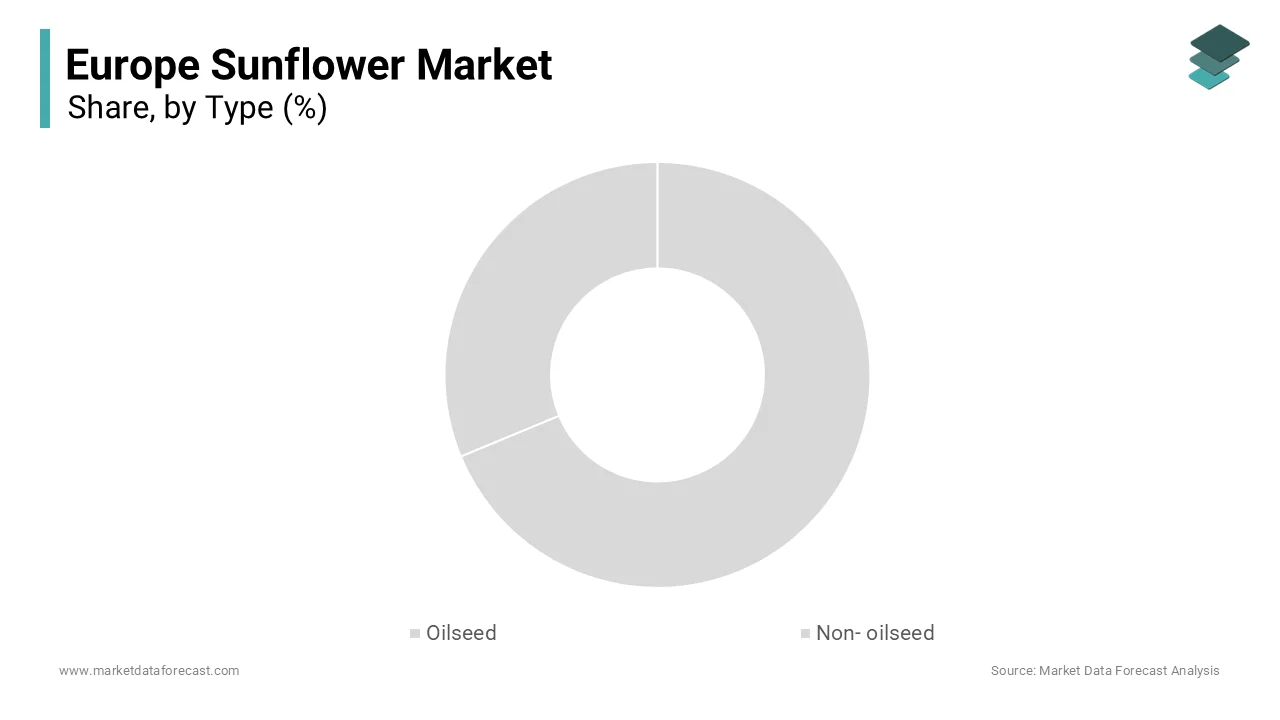
The non-oilseed sunflower segment is on the rise and is expected to be the fastest growing segment in the market by witnessing a CAGR of 6.3% from 2026 to 2034 due to rising consumer interest in plant-based snacks, artisanal foods, and backyard poultry keeping. Confectionery sunflower seeds, characterized by large striped hulls and high kernel yield, are increasingly used in health bars, bakery toppings, and ready-to-eat snack packs across Western Europe. According to studies, the European market for packaged roasted sunflower seeds has experienced significant growth, fueled by consumer preference for affordable, protein-dense, and allergen-friendly alternatives to traditional nut snacks. Simultaneously, the urban homesteading movement has boosted bird feed consumption. The UK alone imported thousands of metric tons of non-oilseed sunflower seeds for wild bird feed in 2023, as per sources. Premium pricing, confectionery seeds fetch more than oilseed, further incentivizes farmers in Hungary and Serbia to shift acreage. This niche yet resilient demand transforms non-oilseed sunflower from a marginal crop into a high-value specialty segment.
REGIONAL ANALYSIS
France Sunflower Market Analysis
France led the Europe sunflower market by capturing a 22.1% share in 2025. The supremacy of the French market is attributed to strong policy support under the Common Agricultural Policy and national protein strategies aimed at reducing soybean dependency. National agricultural monitors report that French sunflower cultivation remains exceptionally prominent, maintaining its status as the leading producer in its region of Europe. This sustained growth is largely attributed to European Union agricultural policies that reward farmers for adopting climate-resilient, drought-tolerant crops through direct financial incentives and environmental premium programs. French research institutes like INRAE have developed high-oleic and downy mildew-resistant hybrids that boost yields while complying with pesticide reduction targets. The sector is highly organized through cooperatives such as Avril, which processes significant metric tons of seeds annually into oil and meal. This blend of public investment, private R&D, and integrated processing solidifies France’s role as a model of resilient, innovation-led sunflower production in the EU.
Romania Sunflower Market Analysis
Romania followed closely in the Europe sunflower market by holding a 20.2% share in 2025 by serving as the EU’s largest sunflower producer by volume. Moreover, Romania continues to lead the European Union in sunflower cultivation, with its largest, most productive crops concentrated in the fertile southern plains, benefiting from favorable soil and climatic conditions. Its strategic position as a buffer against Black Sea supply shocks has elevated its importance; the European Commission designated it a priority zone for protein crop expansion under the Farm to Fork Strategy. Despite significant challenges from pest pressure, disease, and limited irrigation capabilities, Romanian agriculture maintains high competitiveness in sunflower production, ranking among the top yield producers within the European bloc. Major processors like Cargill and Bunge operate crushing facilities in Constanta, exporting oil to Italy and Germany while supplying meal to local livestock sectors. This scale, geographic advantage, and policy relevance make Romania indispensable to Europe’s sunflower security.
Spain Sunflower Market Analysis
Spain maintains a significant position in the European sunflower market due to its focus on high-oleic varieties and adaptation to arid conditions. A high proportion of Spain’s sunflower hectarage is dedicated to high-oleic hybrids, driven by demand from food manufacturers for stable frying oils. The crop’s deep root system and low water requirements make it ideal for Castilla-La Mancha and Andalusia, where it replaces more thirsty crops like maize under the National Drought Plan. Spanish sunflower yields remain challenging due to drought, though financial incentives for protein crops and sustainable farming practices (such as carbon farming) help mitigate production risks. Spanish oil mills, particularly in Córdoba, export high-oleic oil to Northern European snack producers, positioning Spain as a quality-focused, climate-smart player in the evolving sunflower landscape.
Hungary Sunflower Market Analysis
Hungary witnessed a consistent growth in the Europe sunflower market by functioning as a key processing and export hub for Central Europe. It experienced a significant, high-yielding sunflower harvest in 2023, driven by expanded cultivation area and improved agricultural practices, solidifying its position as a major producer in the European Union. Hungary’s strategic location enables efficient export of oil and meal to Austria, Slovakia, and Germany via the Danube River. Companies like Bonafarm and Cargill operate integrated crushing plants that supply both food and feed markets, while cooperatives promote confectionery seed production for the growing snack sector. The government’s “Green Hungary” program offers tax incentives for sustainable sunflower farming, including cover cropping and reduced tillage. This logistical advantage, combined with processing capacity and policy support, establishes Hungary as a dynamic nexus in the European sunflower value chain.
Bulgaria Sunflower Market Analysis
Bulgaria is experiencing rapid expansion in the Europe sunflower market owing to EU funding and agronomic modernization. Driven by CAP support and strong domestic demand, Bulgarian sunflower cultivation remains a high-priority crop, consistently covering a vast area of the country's arable land. Despite ongoing efforts to introduce certified seeds and advanced fertilization techniques, sunflower production in Bulgaria has been hampered by adverse summer weather, leading to reduced average yields in recent seasons. Bulgarian oil is primarily exported to Greece and Turkey, while meal supplies local pig and poultry farms. The country is also piloting high-oleic trials in the Thracian Plain, aiming to capture premium markets. Despite challenges from fragmented land ownership and limited storage infrastructure, Bulgaria’s cost competitiveness and alignment with EU protein autonomy goals position it as a rising force in the European sunflower economy.
COMPETITIVE LANDSCAPE
The Europe sunflower market features intense competition among large integrated processors, regional cooperatives, and international commodity traders. Companies like Avril and Cargill dominate through scale, brand recognition, and access to capital for technological upgrades, while smaller national players compete on local relationships and niche products like confectionery seeds. The market is highly sensitive to geopolitical disruptions, particularly from the Black Sea region, which drives consolidation and strategic stockpiling. Competition is increasingly defined by sustainability credentials, with traceability, carbon footprint, and pesticide use becoming key differentiators. Farmers face pressure from input costs and climate volatility, making long-term contracts with reliable processors essential. Success hinges on balancing cost efficiency with compliance in a fragmented yet policy-driven landscape where food sovereignty and environmental goals shape investment decisions.
KEY MARKET PLAYERS
Some of the notable key players in the Europe sunflower market are
- Cargill Incorporated
- Bunge Limited
- Archer Daniels Midland Company
- Louis Dreyfus Company
- Viterra
- Bonafarm Holding B.V.
- Kernel Holding S.A.
- MHP SE
- Avril Group
- Euralis
- AgroGeneration
Top Players in the Market
- Avril Group is a French agro-industrial cooperative and a leading European processor of sunflower seeds into oil and protein meal. The company plays a pivotal role in the continent’s edible oil supply chain through its Lesieur and Soléou brands, which dominate retail and food service markets. Avril has strengthened its position by investing in high-oleic sunflower crushing capacity and launching traceable oil lines certified under EU deforestation-free standards. It also partners with French farmers to promote integrated pest management and soil health practices. These initiatives reinforce Avril’s leadership in sustainable vegetable oil production and enhance its influence in global discussions on protein autonomy and food security.
- Cargill Europe is a major multinational operating extensive sunflower processing facilities across Romania, Hungary, and Bulgaria. The company contributes significantly to the European market by sourcing seeds from local farmers and supplying refined oil to food manufacturers and biodiesel producers. Cargill has reinforced its market presence by expanding its high-oleic sunflower oil production and implementing digital farm advisory tools that help growers optimize yields while reducing chemical inputs. It also participates in EU protein crop initiatives to diversify feed sources. These actions position Cargill as a key enabler of resilient and traceable sunflower value chains across Central and Eastern Europe.
- Bonafarm Holding B.V. is a Hungarian integrated agribusiness group with substantial operations in sunflower cultivation, crushing, and feed production. The company supports regional food security by processing significant metric tons of sunflower seeds annually into oil and high-protein meal for livestock. Bonafarm has strengthened its position by modernizing its Szolnok refinery to meet EU sustainability standards and by developing non-GMO confectionery seed lines for the growing snack market. It also invests in precision agriculture technologies to improve water efficiency in drought-prone regions. These strategies enhance Bonafarm’s role as a vertically integrated, sustainability-focused player in the European sunflower landscape.
Top Strategies Used by the Key Market Participants
Key players in the Europe sunflower market are primarily focused on vertical integration from farm to finished oil to ensure traceability and quality control. Companies are investing in high-oleic and non-GMO seed varieties to capture premium segments in food and feed. Strategic partnerships with farmers through cooperatives and digital advisory services enhance yield stability and sustainability compliance. Emphasis on deforestation-free and low-carbon certification aligns with EU Green Deal requirements and strengthens export potential. Additionally firms are diversifying into confectionery and bio-based applications to reduce reliance on volatile commodity markets and create new revenue streams from byproducts.
MARKET SEGMENTATION
This research report on the European sunflower market has been segmented and sub-segmented based on categories.
By Type
- Oilseed
- Non-oilseed
By Country
- UK
- France
- Spain
- Germany
- Italy
- Russia
- Sweden
- Denmark
- Switzerland
- Netherlands
- Turkey
- Czech Republic
- Rest of Europe
Frequently Asked Questions
1.What is the Europe sunflower market?
The Europe sunflower market refers to the cultivation, processing, distribution, and consumption of sunflower seeds and sunflower oil across European countries for food, feed, and industrial applications.
2.What factors are driving growth in the Europe sunflower market?
Growth is driven by rising demand for sunflower oil, increasing preference for healthy edible oils, expanding biofuel production, and strong export activities.
3.Which countries are major sunflower producers in Europe?
Ukraine, Russia, Romania, Bulgaria, Hungary, and France are among the leading sunflower producing countries supplying both domestic and export markets.
4.What are the main product segments in the Europe sunflower market?
Key segments include sunflower seeds, sunflower oil, sunflower meal, and value added processed products.
5.How is sunflower oil used in Europe?
Sunflower oil is widely used in cooking, food processing, margarine production, and snack manufacturing due to its light taste and high smoke point.
6.What role does sunflower meal play in the market?
Sunflower meal is a by product of oil extraction and is extensively used as a protein rich ingredient in animal feed.
7.How do health trends influence the sunflower market?
Increasing consumer awareness regarding heart health and low saturated fat oils has boosted demand for sunflower oil as a healthier alternative to other edible oils.
8.What challenges does the Europe sunflower market face?
Challenges include climate variability, geopolitical tensions affecting supply chains, price volatility, and competition from other vegetable oils.
9.What is the future outlook for the Europe sunflower market?
The market is expected to experience steady growth supported by rising edible oil consumption, expanding biofuel demand, and ongoing agricultural innovation.
10.What technological advancements are shaping the market?
Improved hybrid seed varieties, precision farming techniques, and advanced oil extraction technologies are enhancing yield and production efficiency.
Related Reports
Access the study in MULTIPLE FORMATS
Purchase options starting from
$ 2000
Didn’t find what you’re looking for?
TALK TO OUR ANALYST TEAM
Need something within your budget?
NO WORRIES! WE GOT YOU COVERED!
Call us on: +1 888 702 9696 (U.S Toll Free)
Write to us: sales@marketdataforecast.com