- Product Description Description
- Table of Contents TOC
- List of Table & Figure LOT
- Get Free Sample PDF Sample PDF
Market Size, 2025
$4.24 BnMarket Estimate, 2026
$4.52 BnMarket Forecast, 2034
$6.73 BnCAGR, 2026–2034
5.1%Executive Summary: Europe Sunscreen Market
- Market Scope: Regional European sunscreen market analysis covering product types, distribution channels, application segments, country leadership frameworks, and UV protection adoption metrics.
- Market Valuation: Valued at USD 4.24 billion in 2025, estimated at USD 4.52 billion in 2026, and projected to reach USD 6.73 billion by 2034, registering a CAGR of 5.10% from 2026 to 2034.
- Primary Growth Drivers: Rising incidence of skin cancer and coordinated public health interventions, integration of sunscreen into daily skincare and cosmetic routines, strong consumer awareness of UV protection and preventive dermatology, alongside growing demand for multifunctional SPF products.
Key Market Segment Metrics (2026–2034)
| Category | Leading Segment (Position) | Fastest-Growing / Key Growth Segment |
|---|---|---|
| By Product Type | Creams and Lotions (61.5% market share) | Sunscreen Sticks (projected at an 8.3% CAGR) |
| By Application Area | Body Sunscreens (59.6% market share) | Facial Sunscreens (projected at a 9.7% CAGR) |
| By Distribution Channel | Retail Stores (largest distribution channel) | Online Platforms (projected at an 11.2% CAGR) |
| By Region / Country | Germany (leading country) | Expanding skincare hubs across the rest of Europe |
Major Market Players & Market Structure
Market Structure: Highly competitive European UV protection and dermatological skincare landscape characterized by advanced broad-spectrum formulation development, multifunctional skincare integration, sensitive-skin product expansion, sustainable eco-friendly ingredients, and premium texture innovation.
Key Companies: L'Oréal S.A., Beiersdorf AG (Nivea, Eucerin), Unilever PLC, Johnson & Johnson Services, Inc., Shiseido Company, Limited, Procter & Gamble Co., Pierre Fabre, NAOS, ISDIN, and Cantabria Labs.
Europe Sunscreen Market Size
The Europe Sunscreen Market is projected to grow from USD 4.24 billion in 2025 to USD 4.52 billion in 2026 and reach USD 6.73 billion by 2034, registering a CAGR of 5.10% from 2026 to 2034.
Sunscreen is a cosmetic product intended to protect the skin from ultraviolet radiation primarily through organic filters, inorganic oxides, or hybrid formulations compliant with the EU Cosmetic Regulation 1223 2009. Unlike in other regions, sunscreens are not classified as drugs but as cosmetics subject to strict safety dossiers and pre-market notification via the Cosmetic Products Notification Portal. The European Commission maintains a positive list of 29 approved UV filters, including newer additions like bemotrizinol and bisoctrizole, which offer broad-spectrum protection with improved environmental profiles. According to sources, a notable trend indicates that a significant majority of individuals across European populations dedicate substantial time to outdoor activities during the summer season. This increased time spent in the open air directly correlates with higher levels of exposure to ultraviolet (UV) radiation. As per studies, the cumulative effects of this exposure are a primary contributor to the visible signs of skin aging over time. Furthermore, solar ultraviolet radiation is definitely recognized as a substance known to cause cancer in humans. These scientific affirmations underpin public health messaging across EU member states. National dermatology associations in Germany, France,ce and Italy run annual sun safety campaigns reinforced by school curricula and occupational health guidelines for outdoor workers. This regulatory,ory, scientific, and behavioral ecosystem shapes a distinctively cautious yet innovation-responsive European sunscreen market anchored in prevention rather than treatment.
MARKET DRIVERS
Rising Incidence of Skin Cancer and Public Health Interventions
The escalating burden of skin cancer across the region is a key driver of the European sunscreen market. The adoption of sunscreen is amplified by coordinated public health strategies that position topical photoprotection as a first-line defense. As per sources, melanoma diagnoses and non-melanoma skin cancers are common and increasing across the region, prompting national health systems to formalize prevention efforts. Non-melanoma skin cancers, including basal and squamous cell carcinoma, are even more prevalent. In response, several national health systems have institutionalized prevention. Specific countries have launched targeted awareness campaigns and mandated UV protection education, while a regional health plan designates sun safety as a key pillar of early prevention, supporting school-based education and practical initiatives like distributing sun protection products. These structured interventions convert epidemiological urgency into routine consumer behavior, or ensure consistent sunscreen demand beyond seasonal or aesthetic motivations.
Integration of Sun Protection into Daily Skincare Routines
It is increasingly embedded into everyday skincare and makeup regimens across the region, which accelerates the expansion of the European sunscreen market. This reflects a cultural shift toward preventive dermatology and multi-functional product expectations. Daily SPF application has become standard practice for a majority of younger adult women in Western Europe, signaling a significant shift in everyday skincare habits regardless of environmental conditions, according to studies. This normalization is driven by dermatological consensus that cumulative UV exposure, not just sunburn, triggers photoaging and DNA damage. Brands respond by formulating lightweight, non-greasy sunscreens compatible with serums and foundations. Major cosmetic companies are prioritizing sun protection, with most new facial care products now incorporating high-level SPF as a key feature. Hybrid products, moisturizers with SPF, antioxidants, and pollution defense, accounted for a notable share of new sunscreen launches in 2023. Daily UVA protection due to year-round penetration through clouds and glass, reinforcing habitual use. Retailers categorize SPF products under “daily essentials” rather than seasonal sun care. This functional integration transforms sunscreen from a beach accessory into a non-negotiable step in a personal care routine, sustaining year-round demand and premiumization.
MARKET RESTRAINTS
Restrictive Regulatory Approval Process for New UV Filters
The slow and complex regulatory pathway for approving new ultraviolet filters under the EU Cosmetic Regulation framework restrains the growth of the European sunscreen market. Compared to the U.S. and Asia, the EU's list of approved broad-spectrum filters has expanded minimally in the last 20 years, with only a small number of new filters added since 2010. According to sources, each new UV filter undergoes a review period of several months involving extensive toxicological, environmental, and photo stability data. As a result, European formulators lack access to photostable water water-resistant, and coral-safe filters, which are readily available elsewhere. This delay impedes innovation and environmental compliance. Consequently, brands must rely on older filters such as octocrylene, which faces growing scrutiny. This regulatory bottleneck limits product performance, sustainability claims, and global competitiveness of European sunscreen developers.
Environmental Concerns Over Certain Organic UV Filters
Growing scientific evidence linking specific organic UV filters to aquatic ecosystem harm is triggering consumer avoidance and regulatory scrutiny that restrains formulation choices in the region, and thereby inhibits the expansion of the European sunscreen market. According to the European Chemicals Agency, octocrylene and oxybenzone have been detected in coastal waters of the Mediterranean at concentrations exceeding environmental quality standards, with oxybenzone banned in sunscreen products in Palau and Hawaii due to coral bleaching risks. Although not yet prohibited in the EU, these findings influence market dynamics. Consumer backlash is evident. The European Union’s Zero Pollution Action Plan targets reducing chemical contamination in marine environments by 2030, which may accelerate restrictions. In response, brands reformulate toward mineral or newer approved filters but face challenges in maintaining aesthetic elegance. This environmental pressure creates a paradox where safety for human skin and marine life must be balanced within a narrow set of approved ingredients, restricting innovation and increasing formulation costs.
MARKET OPPORTUNITIES
Expansion of Blue Light and Pollution Defense Claims
The integration of protection against high-energy visible light and urban pollution creates fresh prospects for the expansion of the European sunscreen market. Visible light emitted from digital screens and sunlight is recognized as a factor that causes skin stress and can lead to increased dark spots, especially in those with richer complexions. A vast majority of people living in city areas are routinely exposed to levels of atmospheric impurities that exceed recommended health guidelines, prompting a need for protective skincare. In response, brands are enhancing sunscreens with iron oxides, antioxidants like vitamin E, and pollution-shielding polymers. Leading skincare brands are actively responding to these concerns by developing and launching new product variations specifically designed to offer protection against both air pollution and blue light. The EU Cosmetic Regulation permits such claims if substantiated by in vitro or clinical data offering a compliant innovation pathway. Europeans' significant daily screen time has shifted sunscreen use beyond the beach, creating a premium market for everyday urban protection.
Growth of Sensitive Skin and Dermatologically Tested Segments
The rising prevalence of sensitive skin conditions across the region is unlocking demand for hypoallergenic, fragrance-free, and dermatologically validated sunscreens, which in turn provides new opportunities for the European sunscreen market. This trend is exacerbated by climate change-induced ozone fluctuations and urban pollution, which heighten skin barrier vulnerability. In response, pharmaceutical and dermocosmetic brands are developing sunscreens tested under clinical supervision with minimal ingredient lists. The European Commission’s guidelines on cosmetic claims allow “dermatologically tested” labeling only with documented study protocols, further legitimizing this segment. This medically adjacent positioning offers a trusted and resilient avenue for market differentiation and value creation.
MARKET CHALLENGES
Consumer Misunderstanding of SPF Efficacy and Application Norms
Widespread consumer misconception regarding SPF ratings, reapplication frequency, and required application thickness affects real-world protection and impact the growth of the European sunscreen market. According to a study, a significant number of individuals apply far less than the quantity of sunscreen recommended for optimal protection, which drastically reduces the Sun Protection Factor (SPF) efficacy. Furthermore, there is a widespread but incorrect belief that the protective difference between incrementally higher SPF values is linear or exponential (e.g., SPF 30 offers double the protection of SPF 15). A majority of people apply sunscreen only once a day when visiting the beach, overlooking labeling instructions that require reapplication, especially after activities like swimming or sweating. These behavioral gaps persist despite clear labeling mandates under Regulation 1223 2009. Educational campaigns struggle with message fatigue. This knowledge deficit creates a disconnect between product innovation and actual photoprotection, compromising public health outcomes and brand trust.
Formulation Trade Offs Between Efficacy, Aesthetics, and Sustainability
Balancing high UV protection with skin feel, environmental safety,y, and regulatory compliance poses a formidable technical challenge for sunscreen developers. This obstructs the expansion of the European sunscreen market. The EU’s restricted filter list forces formulators to combine multiple approved filters to achieve broad spectrum coverage, yet these mixtures often result in whitening greasiness or instability. Moreover, the push for reef safety discourages use of older organic filters while mineral alternatives like nano zinc oxide face consumer skepticism over inhalation risks despite EFSA affirming their safety in leave-on products. Moreover, biodegradable packaging requirements under the EU Packaging and Packaging Waste Directive complicate preservation systems, as oxygen permeability can degrade UV filters. These intersecting demands for performance, elegance, safety, and sustainability stretch formulation science to its limits, increasing time to market and R&D costs while limiting accessible innovation for smaller brands.
REPORT COVERAGE
| REPORT METRIC | DETAILS |
| Market Size Available | 2025 to 2034 |
| Base Year | 2025 |
| Forecast Period | 2026 to 2034 |
| Segments Covered | By Product Type, Distribution Channel, Application Area, and Region. |
| Various Analyses Covered | Global, Regional, and Country-Level Analysis, Segment-Level Analysis, Drivers, Restraints, Opportunities, Challenges; PESTLE Analysis; Porter’s Five Forces Analysis, Competitive Landscape, Analyst Overview of Investment Opportunities |
| Countries Covered | UK, France, Spain, Germany, Italy, Russia, Sweden, Denmark, Switzerland, Netherlands, Turkey, Czech Republic, Rest of Europe |
| Market Leaders Profiled | L’Oréal S.A., Beiersdorf AG (Nivea, Eucerin), Unilever PLC, Johnson & Johnson Services, Inc., Shiseido Company, Limited, Procter & Gamble Co., Estée Lauder Companies Inc., Clarins Group, Edgewell Personal Care Company (Banana Boat, Hawaiian Tropic), Colgate-Palmolive Company, Laboratoires Vichy (a L’Oréal brand), La Roche-Posay (a L’Oréal brand), Bioderma Laboratoire Dermatologique, Avène (Pierre Fabre Group), ISDIN S.A., Mary Kay Inc., Garnier (a L’Oréal brand), Weleda AG, Natura &Co, Laboratoires SVR |
SEGMENTAL ANALYSIS
By Product Type Insights
The creams and lotions segment dominated the European sunscreen market by capturing a 61.5% share in 2025. The dominance of the creams and lotions segment is driven by its superior formulation stability, broad compatibility with skin types, and established consumer trust, and dermatological recommendations, which consistently favor emulsion-based formats for consistent UV filter dispersion and barrier support. According to research, many dermatologists in EU clinics prescribe or recommend cream or lotion sunscreens for daily use, particularly for individuals with dry or sensitive skin. The format also aligns with EU regulatory expectations. Cosmetic Regulation requires homogeneous filter distribution, which is more reliably achieved in viscous emulsions than in aerosols. Additionally, the integration of moisturizing actives such as hyaluronic acid and ceramides enhances daily wearability. This confluence of clinical endorsement, regulatory suitability, and consumer perception secures the format’s entrenched leadership.
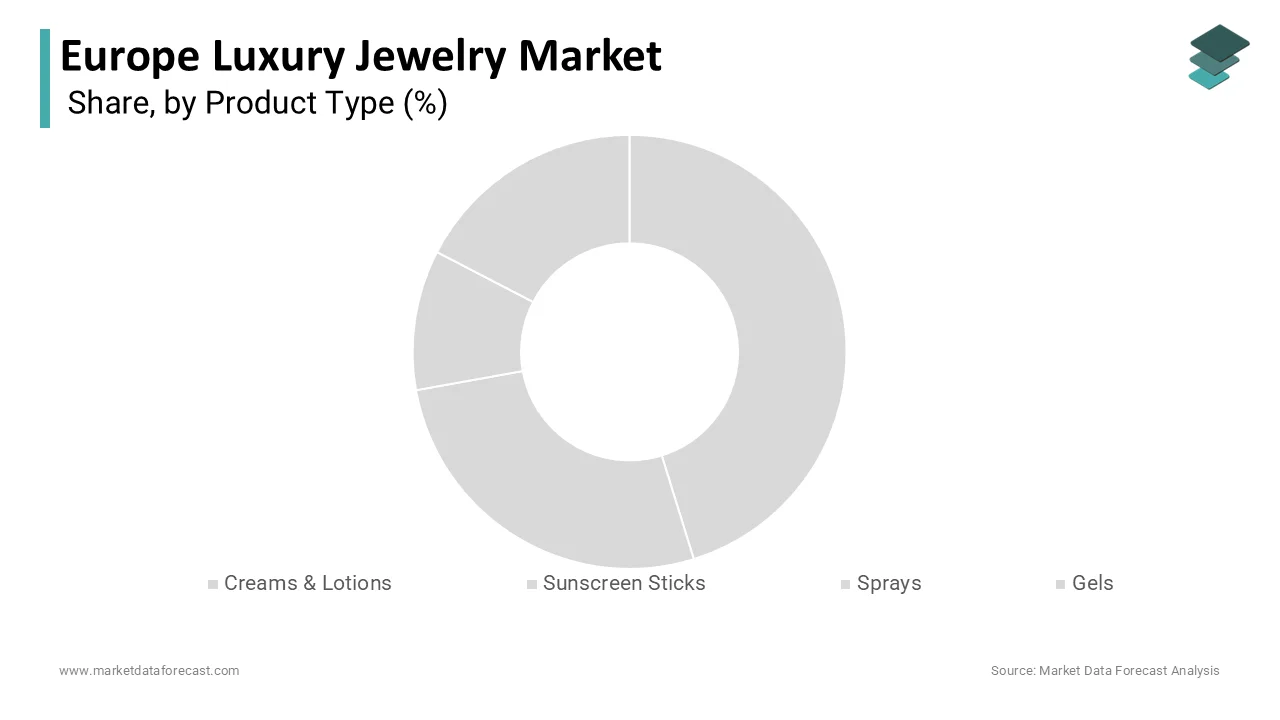
The sunscreen sticks segment is on the rise and is expected to be the fastest-growing segment in the market by witnessing a CAGR of 8.3% from 2025 and 2033. The rapid expansion of the sunscreen sticks segment is propelled by convenience, precision application, and travel-friendly packaging that aligns with urban lifestyles and regulatory shifts. Unlike sprays, which face aerosol restrictions under EU F Gas regulations, sticks offer mess-free targeted protection for high-risk zones such as lips, ears, and nose without inhalation concerns. New regulations encourage the use of solid formats over liquid products to minimize waste. This favors packaging solutions that reduce liquid volume and eliminate the need for secondary containers. Stick sunscreens frequently utilize single-material cardboard or aluminum casings that align with these updated criteria. Leading brands in the dermo-cosmetic sector are introducing sun protection products designed for the environmentally aware consumer. These new offerings include high SPF, mineral-filter stick sunscreens that are safe for marine ecosystems. This segment merges functionality, environmental compliance, and on-the-go usability to fuel accelerated adoption.
By Distribution Channel Insights
The retail stores segment remained the prominent segment in the European sunscreen market and captured a substantial share in 2025. The supremacy of the retail stores segment can be attributed to consumer preference for tactile evaluation, expert advice, and immediate availability during the peak season. Pharmacies especially dominate in Southern and Central Europe, where sunscreens are often positioned as dermocosmetic or medical skincare. According to sources, a significant portion of the market relies on healthcare professionals, specifically pharmacists, for personalized guidance when selecting sunscreen. Consumers value recommendations tailored to their individual skin type and specific medical history, fostering trust in the products purchased through these channels. The trust factor is critical. Apart from these, seasonal merchandising at beach resorts, supermarkets, and airports creates impulse purchase opportunities that digital channels cannot replicate. This blend of professional guidance, sensory engagement, and contextual availability ensures retail’s continued dominance despite digital growth.
The online platforms segment is expected to exhibit a noteworthy CAGR of 11.2% from 2025 to 2033, owing to e-commerce acceleration, personalized algorithms, and subscription models. Digital retailers leverage AI-powered skin diagnostics to recommend SPF products based on user input, including skin tone sensitivity and climate. The pandemic permanently shifted behavior. Subscription services ensure repeat purchases with auto-replenishment timed to seasonal needs. Besides, online exclusives such as limited-edition formulations or bundle deals drive engagement. The European Commission’s Digital Services Act has further standardized cross-border e-commerce, enabling seamless pan-European delivery. The digital channel is crucial for capturing forward-looking demand among highly active younger consumers, leveraging content commerce and data analytics for tailored experiences.
By Application Area Insights
The body sunscreens segment led the European sunscreen market and held a 59.6% share in 2025 because of higher per-application volume and seasonal tourism demand. Coastal tourism remains a powerful driver. Millions of overnight stays occurred at EU seaside destinations requiring large-format body protection. Spain, Italy, and Greece alone welcomed millions of sun-seeking tourists, which reinforces bulk purchase behaviour. Apart from these, occupational health regulations in agriculture, construction, and fisheries mandate UV protection for outdoor workers. Body formats are also less constrained by aesthetic expectations, allowing cost-effective formulations with higher filter loads. The EU Cosmetic Regulation permits larger packaging for body products, facilitating family-size sales. Body sunscreens inherently drive higher consumption volume, sustaining their market lead despite premiumization in facial care.
The facial sunscreens segment is predicted to witness the highest CAGR of 9.7% over the forecast period as photoprotection integrates into daily skincare routines and anti-aging regimens. Unlike body products, face sunscreens must meet stringent aesthetic criteria, non-greasy invisible finishes, and compatibility with makeup, driving innovation in fluid gels and hybrid moisturizers. Premiumization is evident. The rise of “skinimalism” further blurs lines between skincare and sunscreen with tinted SPF 50+ products replacing foundation. This fusion of dermatological necessity, cosmetic elegance, and preventive wellness positions facial sunscreens as the highest growth vector in the European market.
COUNTRY LEVEL ANALYSIS
France Sunscreen Market Analysis
France was the top performer in the European sunscreen market by accounting for a 21.7% share. The dominance of the French market is attributed to a deeply ingrained sun safety culture and a omnipresent dermocosmetic industry. The country is home to global leaders like La Roche Posay Vichy, and Bioderm, whose sunscreens are developed in collaboration with dermatologists and sold predominantly through pharmacies. The French High Authority for Health mandates UV protection education in schools and subsidizes sunscreen distribution in high-risk regions like Provence and Corsica. Apart from these, France enforces strict cosmetic claims regulations preventing exaggerated SPF messaging, which builds consumer trust. This ecosystem of scientific rigor, public health integration, and brand authority solidifies France’s leadership in both volume and innovation.
Germany Sunscreen Market Analysis
Germany was the second-largest in the European sunscreen market in 2025. The growth of the German market was driven by high health consciousness, robust pharmacy retail, and regulatory precision. The country’s statutory health insurance system indirectly promotes prevention, with dermatologists conducting millions of skin cancer screenings annually as reported by the German Dermatological Society. A share of sunscreen sales occurs through pharmacies and drugstores like D, where trained staff advise on phototype-appropriate products. Germany’s Federal Office of Consumer Protection maintains rigorous post-market surveillance. Environmental awareness also shapes demand. A robust German market thrives on a foundation of trust and efficacy, fueled by a consumer base with high purchasing power and a demand for science-based products.
Italy Sunscreen Market Analysis
Italy maintains a noteworthy position in the European sunscreen market with intense sun exposure, a high outdoor lifestyle, and growing medical aesthetics adoption. The country records a significant number of hours of sunshine annually in the southern regions. Coastal tourism amplifies seasonal demand. Italy welcomed millions of international tourists in 202,3, with beach destinations like Sardinia and Sicily driving bulk sunscreen sales. Simultaneously, our urban centers witness rising use of facial SPF as part of anti-aging routines. Italian dermatologists actively promote photoprotection with the Italian Society of Dermatology running annual “Skin Check” camps offering free screenings and SPF samples. Local brands leverage Mediterranean skin expertise to develop high-tolerance formulas. This blend of climatic necessity ,tourism volum,, and dermatological engagement ensures Italy’s strong and multifaceted market presence.
United Kingdom Sunscreen Market Analysis
The United Kingdom is moving ahead steadfastly in the European sunscreen market due to high consumer awareness despite moderate sunshine. The UK’s National Health Service runs one of Europe’s most visible skin cancer prevention campaigns, which expanded in 2023 to include daily sunscreen use messaging. British consumers exhibit strong brand loyalty with premium dermocosmetic lines from La Roche Posay and Avene dominating online and pharmacy channels. The UK’post-Brexitit regulatory independence allows faster adaptation. Its Medicines and Healthcare products Regulatory Agency now accepts SPF testing data from non-EU labs, accelerating product launches. Apart from these, the rise of “staycations” boosted domestic sunscreen sales. Though not sun-drenched, the UK's health-driven, proactive approach sustains consistent and sophisticated sunscreen demand.
Spain Sunscreen Market Analysis
Spain is predicted to grow in the European sunscreen market between 2025 and 2033, owing to extreme solar radiation, prolonged outdoor culture, and mass tourism. Spain generally experiences abundant sunshine throughout the year. This necessitates year-round photoprotection. A significant majority of people in Spain consistently apply sunscreen every day when the weather is warm. Spain’s tourism sector is pivotal. Spain is a highly popular destination, welcoming a very large number of visitors from other countries annually. Local pharmacies stock high SPF products tailored to Mediterranean skin while mass market brands dominate supermarket shelves. The government operates a public health program that provides complimentary sun protection to individuals visiting numerous beaches along the coast. "Spain’s real estate market demonstrates inherent resilience and a strong reliance on high volume, largely due to both its resident population and substantial visitor numbers being significantly exposed to market dynamics, underpinned by environmental factors and public health measures.
COMPETITIVE LANDSCAPE
The European sunscreen market features a highly competitive landscape dominated by multinational dermocosmetic corporations, regional specialists, and agile niche brands. Large players leverage clinical credibility, ppharmadominanceee and regulatory expertise to maintain leade,,rship while smaller brands gain traction through clean beauty, safety, ree,f safety and digital native marketing. Competition is not driven by price but by scientific substance, formulation, elegance, and environmental responsibility. The strict EU Cosmetic Regulation creates high-end barriers, trybarrierss,, favoring in-house toxicology and photobiology capabilities. However, consumer demand for transparency and sustainability has opened avenues for innovative startups focusing on bio-based filters, minimalist ingredients, and its plastic-free formats. Cross-border e-commerce further intensifies rivalry as brands compete for visibility across unified digital marketplaces. Ultimately, our success hinges on balancing regulatory compliance, current dermatological trends, and eco innovation in a market where safety, efficacy, and sustainabilitnon-negotiabletiable.
KEY MARKET PLAYERS
Some of the companies that are playing a dominating role in the europe sunscreen market include
- L’Oréal S.A.
- Beiersdorf AG (Nivea, Eucerin)
- Unilever PLC
- Johnson & Johnson Services, Inc.
- Shiseido Company, Limited
- Procter & Gamble Co.
- Estée Lauder Companies Inc.
- Clarins Group
- Edgewell Personal Care Company (Banana Boat, Hawaiian Tropic)
- Colgate-Palmolive Company
- Laboratoires Vichy (a L’Oréal brand)
- La Roche-Posay (a L’Oréal brand)
- Bioderma Laboratoire Dermatologique
- Avène (Pierre Fabre Group)
- ISDIN S.A.
- Mary Kay Inc.
- Garnier (a L’Oréal brand)
- Weleda AG
- Natura &Co
- Laboratoires SVR
TOP LEADING PLAYERS IN THE MARKET
- L’Oréal Group is a global leader in beauty with a commanding presence in the European sunscreen market through its dermocosmetic brands La Roche Pos Anthelios SL I, os, and Vichy Capital Soleil. The company leverages clinical research partnerships with dermatologists to develop photostablebroad-spectrumm formulations compliant with EU Cosmetic Regulation standards.It alsoo expands itreef-safetyye portfolio by replacing older UV filters with newer approved molecules like bisoctrizole across all EU markets. These innovations reinforce L’Oréal’s reputation for scientific rigor and regulatory foresight while strengthening consumer trust in daily photoprotection across pharmacae-commerce channels.
- Beiersdorf AG contributes significantly to the European sunscreen market through its NIVEA Sun and Eucerin Sun line,,s which combine mass market accessibility with dermatological credibility. The company operates dedicated photobiology labs inHamburgg where it conducts SPF and UVA testing in accordance with EU guidelines. It also enhanced its Eucerin Sun Allergy Protect range with DNA repair enzymes targeting photodermatoses, a condition affecting over 10 percent of Northern Europeans, according tothe Europeann Academy of Dermatology. These actions demonstrate Beiersdorf’s dual focus on sustainability and medical skincare meetingg both consumer and regulatory expectations.
- Pierre Fabre Dermo Cosmétique plays a pivotal role in the European sunscreen landscape through its Avène SunSimia and Cleanance Sun range,,s renowned for thermal spring water integration and high tolerance for sensitive skin. The company maintains a vertically integrated approach from formulation to pharmacy ddistribution ensuring product integrity and professional endorsement. It also launched a digital UV index advisor tool integrated into its mobile aapppp preal-timesun protection recommendations across European cities. These initiatives position Pierre Fabre at the intersection of dermatological science,e digital health, and eco-conscious beauty.
TOP STRATEGIES USED BY THE KEY MARKET PARTICIPANTS
Key players in the European sunscreen market prioritize dermatological validation by collaborating with clinical experts to substantiate efficacy and safety claims under EU regulatory frameworks. Companies invest heavily in sustainable formulations, replacing restricted UV filters with newer approved alternatives and adopting eeco-designedpackaging compliant with EU circular economy mandates. Product differentiation through multifunctional benefits such as anti-pollutio,,n blue light defe anti-agingaging actives extends usage beyond seasonal sun exposure. Strategic distribution through pharmacies and premium online platforms ensures credibility and accessibility. Additionally, our firms leverage digitalls, including skin diagnostic apps and UV tracking services, to enhance consumer engagement and promote consistent usage patterns in alignment with public health objectives.
MARKET SEGMENTATION
This research report europe sunscreen market is segmented and sub-segmented into the following categories.s
By Product Type
- Creams & Lotions
- Sunscreen Sticks
- Sprays
- Gels
- Others
By Distribution Channel
- Retail Stores
- Online Platforms
- Specialty Stores
- Supermarkets & Hypermarkets
- Pharmacies & Drugstores
By Application Area
- Body Sunscreens
- Facial Sunscreens
- Lip & Targeted Area Sunscreens
- Kids/Baby Sunscreens
- Sports/Outdoor Sunscreens
By Country
- France
- Germany
- Italy
- United Kingdom
- Spain
- Rest of Europe