- Product Description Description
- Table of Contents TOC
- List of Table & Figure LOT
- Get Free Sample PDF Sample PDF
Market Size, 2025
$192.98 BnMarket Estimate, 2026
$208.8 BnMarket Forecast, 2034
$392.5 BnCAGR, 2026–2034
8.21%Executive Summary: Global Skincare Market
- Market Scope: Comprehensive global industry analysis of the skincare sector evaluating product formulations, packaging formats, gender segments, distribution channels, and regional market dynamics.
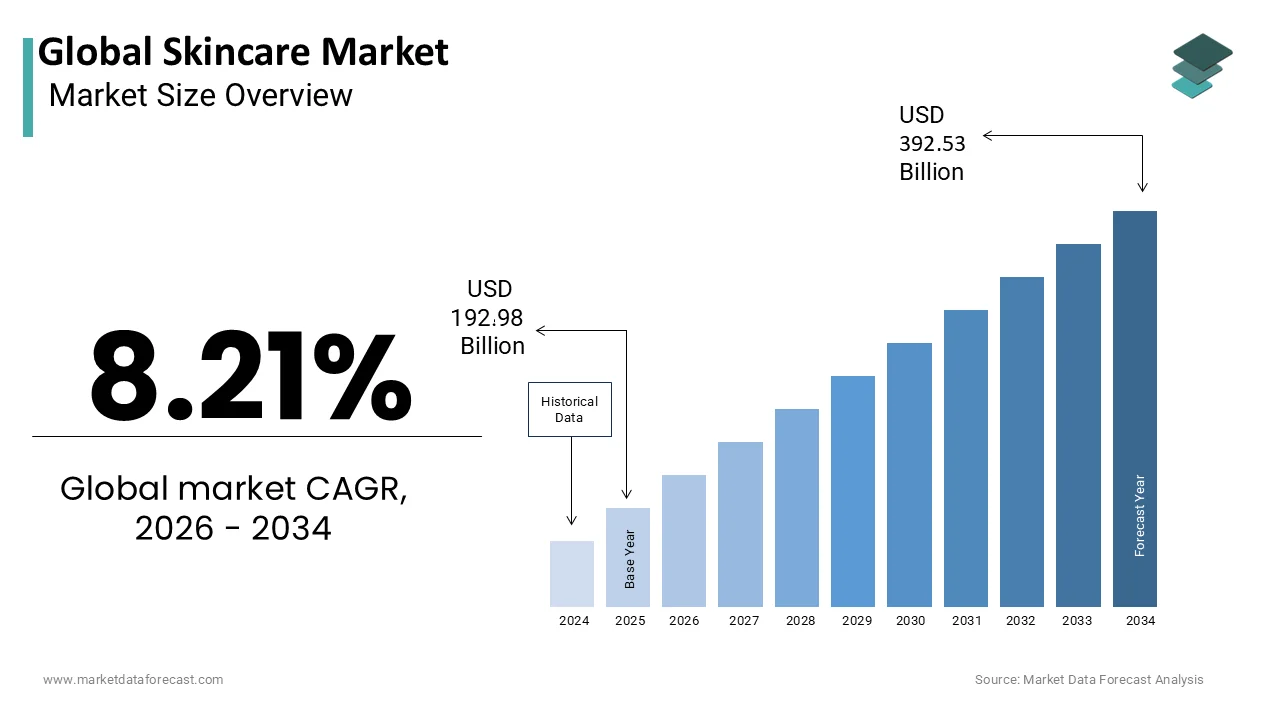
- Market Valuation: Valued at USD 192.98 billion in 2025, reaching USD 208.80 billion in 2026, and projected to expand to USD 392.53 billion by 2034, registering a strong CAGR of 8.21% from 2026 to 2034.
- Primary Growth Drivers: Escalating prevalence of skin disorders linked to environmental degradation and urban air pollution driving preventive regimens; and an intergenerational shift in male grooming behaviors towards comprehensive self-care.
Key Market Segment Metrics (2026–2034)
| Category | Leading Segment / Core Focus | Fastest-Growing / Key Segments |
|---|---|---|
| By Product | Creams (largest segment holding 39.3% market share in 2025 due to functional versatility and barrier repair efficacy) | Sprays (projected to grow at a CAGR of 12.8% driven by demand for non-contact, hygienic application and urban pollution defense) |
| By Packaging | Tube (accounted for 48.3% market share in 2025 due to superior hygiene, minimal bacterial exposure, and stability) | Bottle (expected to grow at a CAGR of 10.5% driven by precision droppers, pump dispensers, and high-end sensory appeal) |
| By Gender | Female (dominated market share in 2025 due to embedded cultural norms and higher time investment in multi-step regimens) | Male (likely to grow at a CAGR of 9.3% fueled by shifting social attitudes, remote work awareness, and grooming normalization) |
| By Distribution Channel | Cosmetic Stores (largest segment holding 37.4% share in 2025 serving as trusted destinations for expert advice and product trials) | Online Channels (expected to grow at a CAGR of 14.6% driven by AI diagnostics, AR try-ons, and direct-to-consumer models) |
| By Region | North America (top performer anchored in high consumer awareness, robust dermatology infrastructure, and FDA oversight) | Asia Pacific (projected to pose a significant CAGR led by K-beauty innovation, preventive routines, and hyper-localized care) |
Major Market Players & Market Structure
Market Structure: Highly competitive landscape characterized by legacy multinational conglomerates with extensive R&D scale, regional powerhouses specializing in K-beauty and localized formulations, and agile digital-first direct-to-consumer brands.
Key Companies: Unilever, Avon Products Inc., P&G, Estée Lauder Inc., Johnson & Johnson, Beiersdorf AG, Shiseido Co. Ltd., Natura & Co, Lakme, and VLCC.
Global Skincare Market Size
The Global Skincare market was valued at USD 192.98 billion in 2025. The global market size is expected to grow at a CAGR of 8.21% from 2026 to 2034 and be worth USD 392.53 billion by 2034 from USD 208.80 billion in 2026.
The Skincare products are to cleanse, protect, treat, and enhance the health and appearance of the skin, functioning at the intersection of dermatological science, personal wellness, and aesthetic culture. As environmental aggressors intensify, so does the imperative for proactive dermal defense; the World Health Organization reports that ambient air pollution contributes to 4.2 million premature deaths annually, with particulate matter directly linked to accelerated skin aging and inflammation.
MARKET DRIVERS
The escalating prevalence of skin disorders linked to environmental degradation and urban living conditions, which is compelling consumers to adopt medically informed, preventive regimens, is escalating the growth of the skincare market. According to the World Health Organization, 99% of the global population breathes air exceeding safe particulate matter (PM2.5) levels, with pollutants shown to penetrate the skin barrier and trigger oxidative stress, hyperpigmentation, and acne. A 2025 study published in the Journal of Investigative Dermatology found that individuals residing in high-pollution urban zones exhibited 20% more signs of premature aging than those in rural areas. Consumers are no longer seeking aesthetic enhancement alone but are prioritizing dermatological health, which is driving demand for products containing ceramides, antioxidants, and microbiome-supporting prebiotics in densely populated regions like East Asia and Western Europe.
The intergenerational shift in male grooming behaviors, with increasing numbers of men incorporating comprehensive skincare routines into daily self-care,e is enhancing the growth of the skincare market. According to the U.S. Census Bureau, sales of men’s skincare products in the United States grew by 55% between 2018 and 2025. This transformation is fueled by evolving social norms and the de-stigmatization of male aesthetic care, particularly among Millennials and Gen Z. Social media platforms like TikTok and Instagram have amplified visibility of male skincare influencers, normalizing routines once considered niche. Furthermore, occupational factors such as prolonged mask-wearing and screen exposure have heightened awareness of skin irritation and dehydration.
MARKET RESTRAINTS
The widespread proliferation of unverified claims and pseudoscientific marketing, which erodes consumer trust and regulatory coherence,ce is restraining the growth of the skincare market. According to the U.S. Federal Trade Commission, over 1,200 enforcement actions were taken in 2025 against brands making unsubstantiated claims about anti-aging, brightening, or "dermatologist-approved" benefits without clinical proof. This confusion is exacerbated by the lack of standardized definitions for terms such as “clean,” “natural,” or “clinical-strength,” allowing brands to exploit regulatory gray areas.
The environmental burden associated with skincare product packaging and ingredient sourcing, which conflicts with growing consumer demand for sustainability,ity is hampering the growth of the skincare market. As the per United Nations Environment Programme, the cosmetics industry generates over 120 billion units of packaging annually, much of which is non-recyclable due to mixed materials and small component sizes. The International Union for Conservation of Nature states that over 3,000 tons of shark liver oil are harvested annually for cosmetics, threatening deep-sea shark populations.
MARKET OPPORTUNITIES
The integration of artificial intelligence and digital skin diagnostics by enabling hyper-personalized product recommendations based on real-time epidermal analysis is creating new opportunities for the growth of the skincare market. According to a 2025 study by the Massachusetts Institute of Technology, AI-powered imaging tools can detect early signs of dehydration, UV damage, and pigmentation with 92% accuracy using smartphone cameras. Companies like L’Oréal (via its SkinScanner) and HiMirror have launched consumer-facing devices that analyze skin conditions and suggest tailored regimens, reducing trial-and-error purchasing.
The expansion of dermatological skincare into clinical and post-procedural care pathways, blurring the lines between aesthetic medicine and consumer wellness, is also expected to elevate the growth of the skincare market in the coming years. According to the American Society of Plastic Surgeons, over 17 million minimally invasive cosmetic procedures, such as laser resurfacing, chemical peels, and microneedling,g were performed in the U.S. in 2025, each requiring structured post-treatment skincare to ensure healing and optimize results. Brands like SkinCeuticals, Obagi, and Avene have embedded themselves in professional channels, creating a dual distribution model that combines retail and clinical trust.
MARKET CHALLENGES
The rising incidence of contact dermatitis and allergic reactions due to overuse of multi-step regimens and ingredient layering in the “10-step skincare” culture popularized by K-beauty is challenging the growth of the skincare market. According to the American Contact Dermatitis Society, patch testing in 2025 revealed that 44% of patients with facial dermatitis were reacting to preservatives like methylisothiazolinone or fragrance compounds found in multiple overlapping products. Social media-driven experimentation by encouraging daily use of actives like retinoids, acids, and vitamin C often exceeds dermatological recommendations, which is leading to “over-exfoliation syndrome” and increased transepidermal water loss.
The global inequity in access to dermatological care and culturally appropriate skincare formulation is limiting the growth of the skincare market. According to the World Health Organization, there is only one dermatologist per 170,000 people in sub-Saharan Africa, compared to one per 5,000 in North America, creating a diagnostic and treatment gap. Melanin-rich skin is disproportionately affected by post-inflammatory hyperpigmentation, and many brightening agents like hydroquinone remain restricted or unavailable in several countries.
REPORT COVERAGE
| REPORT METRIC | DETAILS |
| Market Size Available | 2025 to 2034 |
| Base Year | 2025 |
| Forecast Period | 2026 to 2034 |
| Segments Covered | By Product, Packaging, Gender, and Region |
| Various Analyses Covered | Global, Regional, and Country Level Analysis, Segment-Level Analysis, DROC, PESTLE Analysis, Porter’s Five Forces Analysis, Competitive Landscape, Analyst Overview of Investment Opportunities |
| Regions Covered | North America, Europe, Asia Pacific, Latin America,the Middle East, and Africa |
| Key Market Players | Unilever (England), Avon Products Inc (England), P&G (US), Estee Lauder Inc (US), Johnson & Johnson (US), Beiersdorf AG (Germany), Shiseido Co Ltd (Japan), Natura & Co (Brazil), Lakme (India), and VLCC (India) |
SEGMENTAL ANALYSIS
By Product Insights
The creams segment was the largest and held 39.3% of the global skincare market in 2025 due to their functional versatility and efficacy in delivering active ingredients through occlusive hydration, making them indispensable in both daily and clinical skincare regimens. Creams are particularly effective for barrier repair and moisture retention for aging, dry, or sensitized skin. Additionally, night creams containing retinoids and peptides are widely prescribed foranti-agingi, ng with clinical studies from the Journal of Cosmetic Dermatology showing a 27% improvement in wrinkle depth after 12 weeks of consistent use.
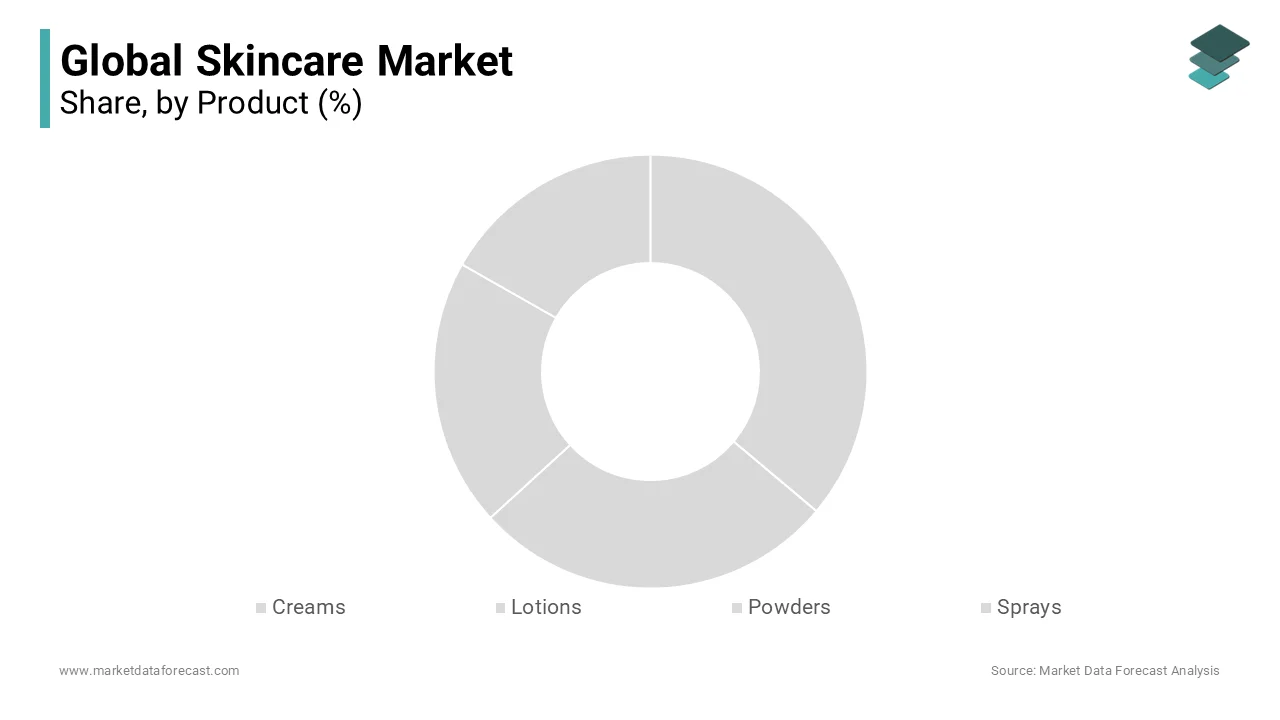
The sprays segment is likely to grow with an expected CAGR of 12.8% in the coming years, with the rising demand for convenient, non-contact, and hygienic application methods in post-procedure care and urban environments with high pollution exposure. Facial mists and setting sprays containing antioxidants, thermal water, or hyaluronic acid are increasingly used to refresh, hydrate, and lock in makeup without disturbing the skin barrier. Brands like Avene and La Roche-Posay have expanded their thermal water spray lines into dermatology clinics and travel retail, capitalizing on their soothing properties for sensitive and reactive skin.
By Packaging Insights
The tube packaging segment accounted in holding 48.3% of the skincare market in 2025, with its superior hygiene, product preservation, and user experience for creams, serums, and cleansers. Unlike jars, tubes minimize air and bacterial exposure by preventing repeated finger contact, reducing contamination risks. According to the U.S. Food and Drug Administration, skincare products stored in open jars show microbial growth within 28 days under normal use, whereas tube-packaged products remain stable for up to 90 days.
The bottle segment is expected to grow with a CAGR of 10.5% during the forecast period. Bottles, especially those with droppers or pump dispensers, offer controlled application and aesthetic appeal, enhancing the sensory experience of high-end regimens. In South Korea, over 65% of premium skincare launches in 2025 featured glass bottles with precision dispensers, as reported by the Korea Cosmetic Industry Association. The integration of UV-protective amber glass and airless pump systems has improved ingredient stability, particularly for vitamin C and retinol formulations.
By Gender Insights
The female segment dominated the skincare market share in 2025, with deeply embedded cultural norms, long-standing product development focus, and higher engagement in multi-step regimens. Women are more likely to adopt comprehensive routines involving cleansers, toners, serums, moisturizers, and sunscreens, often influenced by social media, dermatological advice, and generational skincare traditions. According to the World Health Organization, women spend an average of 42 minutes daily on personal care, nearly double that of men, reflecting greater time investment in skin health. Additionally, hormonal fluctuations related to menstruation, pregnancy, and menopause necessitate tailored skincare interventions.
The male segment is likely to grow with a CAGR of 9.3% during the forecast period, with the shifting social attitudes toward male self-care, increased visibility of male grooming influencers, and the normalization of skincare as part of holistic wellness. The rise of remote work and video conferencing has heightened awareness of facial appearance, prompting men to address concerns like razor burn, oiliness, and early aging. Brands like Bulldog, Lab Series, and Necessaire have responded with gender-neutral packaging and simplified routines, while luxury labels such as Tom Ford and Dior have launched premium men’s skincare lines.
By Distribution Channel Insights
The cosmetic stores segment was the largest and held 37.4% of the skincare market in 2025, with a role as trusted destinations for expert advice, product trials, and brand exclusivity. Retailers like Sephora, Ulta Beauty, and Space NK offer in-store consultations with trained aestheticians by enabling consumers to receive personalized recommendations based on skin type and concerns.
The online channel is expected to grow with a CAGR of 14.6% in the coming years with the integration of AI-powered skin diagnostics, subscription models, and direct-to-consumer (DTC) brand strategies that enhance personalization and convenience. Platforms like Curology and Proven Skincare use digital questionnaires and photo analysis to formulate custom regimens, shipped directly to consumers. Mobile shopping apps now feature augmented reality (AR) try-ons and ingredient transparency tools, reducing purchase hesitation. Additionally, global shipping and multilingual support have expanded access to niche and international brands, which is making online channels the preferred route for informed, tech-savvy consumers seeking innovation and value.
REGIONAL ANALYSIS
North America Skincare Market Insights
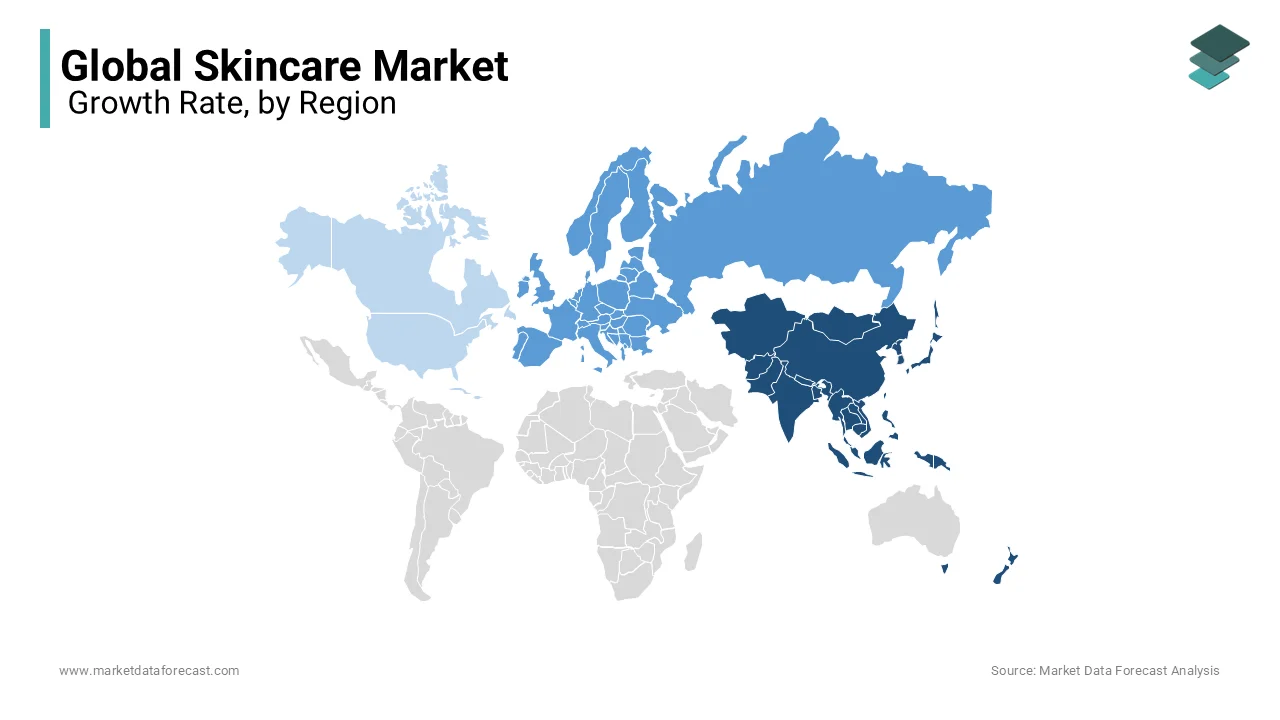
North America was the top performer of the global skincare market ,anchored in high consumer awareness, robust dermatological infrastructure, and strong regulatory oversight by the FDA. The United States alone accounts for over 80% of regional sales, driven by demand for anti-aging, acne treatment, and sun protection products. According to the American Academy of Dermatology, 74% of U.S. adults use sunscreen regularly, reflecting widespread photoprotection consciousness. Canada has seen rising adoption of medical-grade skincare, with provinces like Ontario and British Columbia integrating dermatologist-recommended products into public wellness programs.
Europe Skincare Market Insights
Europe skincare market was positioned second with a prominent share in 2024. Germany is the largest contributor to the growth of mthe arket in this region. France excels in luxury skincare, with Parisian dermatologists influencing global product development. According to the European Society for Dermatological Research, over 60% of Europeans consult a dermatologist before purchasing high-end skincare.
Asia Pacific Skincare Market Insights
The Asia Pacific skincare market growth is likely to pose a significant CAGR throughout the forecast period. South Korea is the epicenter of K-beauty, where 10-step routines and novel formats like sheet masks and essences have redefined global skincare behavior. The Korea International Trade Japan emphasizes minimalist, preventative regimens, with over 85% of women using daytime moisturizers with SPF, as per the Ministry of Health, Labour and Welfare.
Latin America Skincare Market Insights
Latin American skincare market is likely to grow steadily in the coming years. Brazil and Mexico arethe largest contributors to the growth of the market in Latin America. The National Institute of Public Health of Mexico notes that 48% of young adults use skincare products daily, up from 31% in 2018. Local brands like Natura and Boticário are competing with international players by emphasizing natural ingredients and cultural relevance.
Middle East and Africa Insights
The Middle East and Africa are expected to have significant growth opportunities in the coming years. The UAE, particularly Dubai and Abu Dhabi, serves as a luxury beauty hub, with high spending on anti-aging and brightening products due to harsh desert climates and cultural emphasis on luminous skin. The Dubai Health Authority reports that dermatology clinic visits for hyperpigmentation and dehydration have risen by 40% since 2020. South Africa is the primary market in sub-Saharan Africa, where brands like Enriching Touch cater to melanin-rich skin with targeted formulations. The United Nations Population Fund notes that 55% of urban women in Nigeria and Kenya use skincare products regularly, driven by social media influence.
KEY MARKET PLAYERS AND COMPETITIVE LANDSCAPE
Unilever (England), Avon Products Inc (England), P&G (US), Estee Lauder Inc (US), Johnson & Johnson (US), Beiersdorf AG (Germany), Shiseido Co Ltd (Japan), Natura & Co (Brazil), Lakme (India) and VLCC (India) are some of the major players in the global skincare market.
The competitive landscape of the skincare market is defined by a convergence of scientific credibility, cultural relevance, and technological innovation. While legacy multinationals leverage R&D scale and dermatological alliances, regional powerhouses like Amorepacific and Dr. Jart+ are challenging global dominance with localized formulations and K-beauty influence. Digital-native brands are disrupting through direct-to-consumer models, AI customization, and transparent sourcing, capturing younger, informed consumers. The rise of medical-grade skincare has blurred lines between OTC and professional channels, intensifying rivalry in clinical efficacy.
TOP PLAYERS IN THE MARKET
L’Oréal
L’Oréal has solidified its leadership in the Asia Pacific skincare market through its dermatologist-recommended brands, particularly La Roche-Posay, CeraVe, and Vichy, which are increasingly positioned as clinical solutions rather than cosmetic luxuries. In 2025, the company launched a region-specific adaptation of CeraVe’s Moisturizing Cream in China and India, reformulated to address high pollution exposure and humidity-related barrier stress. It established partnerships with dermatology clinics in Seoul, Tokyo, and Singapore to integrate its products into post-procedure care regimens. L’Oréal also introduced AI-powered skin diagnostic kiosks in select Sephora stores across Southeast Asia, enhancing consumer engagement and personalization.
Amorepacific
Amorepacific has emerged as a defining force in the Asia Pacific skincare landscape by championing K-beauty innovation with a strong emphasis on natural ingredients, advanced fermentation technology, and sustainable packaging. The company’s flagship brand, Sulwhasoo, integrates traditional Korean herbal medicine with modern dermatological research, resonating deeply with consumers seeking cultural authenticity and efficacy. In 2025, Amorepacific launched a biodegradable refill system for its IOPE line in South Korea and expanded its presence in China through Tmall’s Luxury Pavilion, targeting premium urban consumers. It also invested in AI-driven skin analysis tools to personalize regimens for aging and pollution-damaged skin. The company’s R&D center in Yongin continues to pioneer plant-based actives derived from Korean ginseng and green tea, reinforcing regional pride and scientific credibility.
Shiseido
Shiseido has reinforced its influence in the Asia Pacific skincare market by advancing science-led formulations and expanding its medical aesthetics footprint across urban centers. In 2025, the company launched a new generation of its Benefiance line in Japan, incorporating proprietary ReNeura Technology+ to enhance skin responsiveness in mature users, a demographic rapidly growing due to Japan’s aging population. Shiseido also partnered with dermatologists in Thailand and Indonesia to promote its Anessa sunscreen line as a daily essential, addressing rising UV exposure and pollution concerns. The company introduced a digital skin health platform in collaboration with a Tokyo-based AI firm, enabling real-time hydration and elasticity tracking via smartphone. Additionally, Shiseido strengthened its sustainability commitment by launching recyclable packaging for its Ultimune serum in Australia and New Zealand.
TOP STRATEGIES USED BY THE KEY MARKET PLAYERS
Key players in the skincare market are advancing through clinical validation, digital personalization, ingredient transparency, regional customization, and sustainability integration to consolidate their competitive advantage. Companies are investing in dermatological partnerships and clinical trials to substantiate product claims and build consumer trust. AI-powered diagnostics and mobile apps enable hyper-personalized regimens, enhancing engagement and efficacy. Brands are reformulating with clean, traceable ingredients to meet rising demand for safety and ethical sourcing. Expansion into emerging markets involves adapting textures, fragrances, and SPF levels to local climates and skin types. Simultaneously, refillable packaging, carbon-neutral production, and biodiversity initiatives are becoming central to brand identity.
RECENT HAPPENINGS IN THE MARKET
- In January 2025, L’Oréal launched a pollution-adapted version of CeraVe Moisturizing Cream in India and China, reformulated to strengthen skin barrier function in high-particulate environments by enhancing relevance in densely populated urban areas.
- In May 2025, Amorepacific introduced a biodegradable refill system for its IOPE skincare line in South Korea, reducing plastic waste by 60% per unit and reinforcing its commitment to sustainable luxury in the premium segment.
- In August 2025, Shiseido partnered with dermatologists in Thailand and Indonesia to promote Anessa sunscreen as a daily essential that is supported by clinical data on UV protection in tropical climates.
- In November 2025, L’Oréal deployed AI-powered skin diagnostic kiosks in Sephora stores across Southeast Asia, enabling real-time analysis and personalized product recommendations to boost consumer trust and conversion.
- In March 2024, Amorepacific expanded its Sulwhasoo brand into China’s Tmall Luxury Pavilion, targeting affluent urban consumers through digital exclusives and heritage-inspired marketing campaigns.
MARKET SEGMENTATION
This research report on the global skincare market has been segmented and sub-segmented based on product, packaging, gender, and region.
By Product
- Creams
- Lotions
- Powders
- Sprays
- Others
By Packaging
- Tube
- Bottle
- Jar
- Others
By Gender
- Female
- Male
By Distribution Channel
- Online Channels
- Cosmetic Stores
- Others
By Region
- North America
- Europe
- Asia Pacific
- Latin America
- The Middle East and Africa