Europe Surgical Instruments Market Size, Share, Trends & Growth Forecast Report Segmented By Surgery Type (Open Surgery, Minimally Invasive Surgery, Robotic Surgery, Non-Robotic (Endoscopic) Surgery), Product, Surgical Procedure, And Country (UK, France, Spain, Germany, Italy, Russia, Sweden, Denmark, Switzerland, Netherlands, Turkey, Czech Republic & Rest Of Europe), Industry Analysis From 2026 To 2034
Market Size, 2025
$6.77 BnMarket Estimate, 2026
$7.27 BnMarket Forecast, 2034
$12.87 BnCAGR, 2026–2034
7.40%Europe Surgical Instruments Market Report Summary
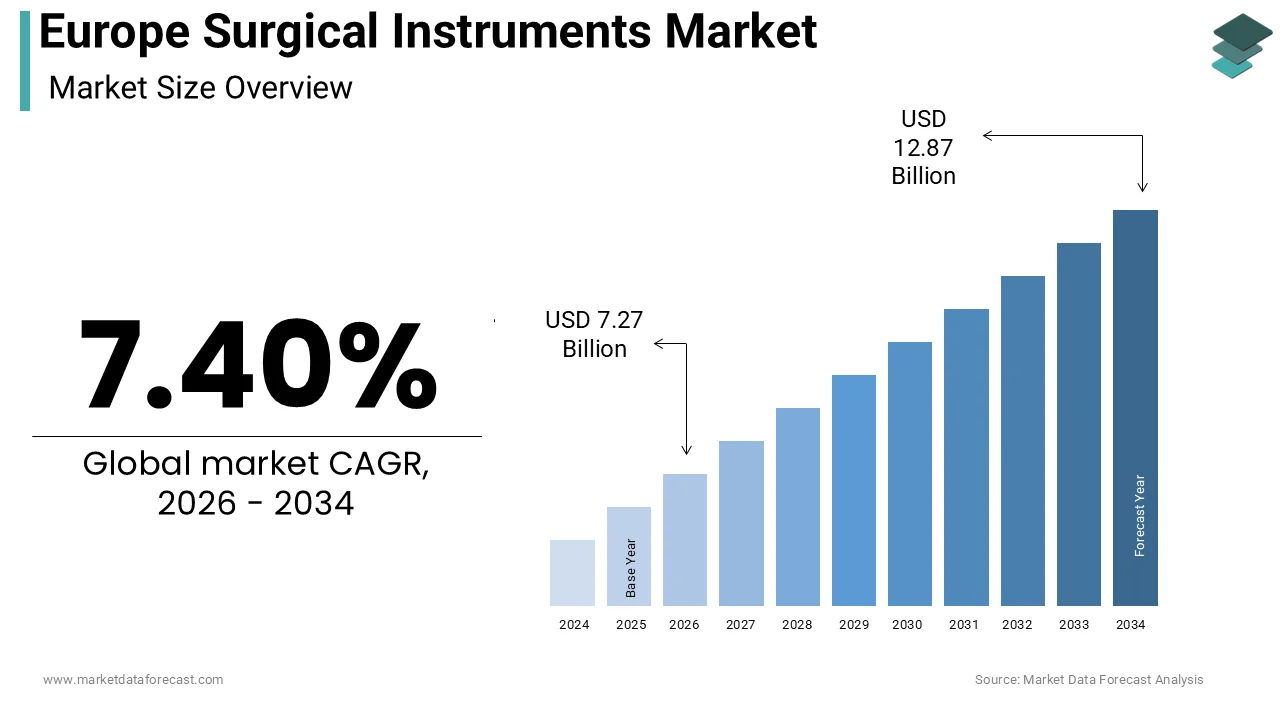
The Europe surgical instruments market was valued at USD 6.77 billion in 2025, is estimated to reach USD 7.27 billion in 2026, and is projected to reach USD 12.87 billion by 2034, growing at a CAGR of 7.40% during the forecast period. The growth of the Europe surgical instruments market is driven by increasing demand for advanced surgical procedures, rising prevalence of chronic diseases, and growing adoption of minimally invasive surgeries. Technological advancements in surgical tools, improved precision, and the integration of robotics and digital technologies are enhancing surgical outcomes and driving market expansion. Additionally, the rising number of surgeries, aging population, and increasing healthcare expenditure across Europe are further supporting market growth. The expansion of hospital infrastructure and focus on improving surgical efficiency are also contributing to the demand for advanced surgical instruments.
Key Market Trends
- Increasing adoption of minimally invasive surgical techniques improves patient outcomes and reduces recovery time.
- Rising integration of robotic-assisted surgery and advanced surgical technologies.
- Growing demand for precision and high-quality surgical instruments.
- Expansion of hospital infrastructure and surgical facilities across Europe.
- Increasing focus on patient safety, infection control, and surgical efficiency.
Segmental Insights
- Based on surgery type, the minimally invasive surgery segment dominated the Europe surgical instruments market by accounting for 52.6% of the market share in 2025, driven by reduced hospital stays, lower risk, and faster recovery.
- Based on product, the hand-held surgical devices segment held 45.6% of the Europe surgical instruments market share in 2025, supported by their widespread use across various surgical procedures.
- Based on surgical procedure, the caesarean section segment accounted for 28.3% of the Europe surgical instruments market share in 2025, driven by increasing birth rates in certain regions and rising surgical interventions in obstetrics.
Regional Insights
- Germany dominated the Europe surgical instruments market in 2025, accounting for 26.8% of the regional market share, driven by advanced healthcare infrastructure, high surgical volumes, and strong medical device industry presence.
- The United Kingdom held 19.4% of the Europe surgical instruments market share in 2025, supported by a well-established healthcare system and increasing adoption of advanced surgical technologies.
- France is expected to witness steady growth, fueled by improvements in healthcare services and rising surgical demand.
- Italy is projected to grow steadily, supported by increasing healthcare investments and the modernization of medical facilities.
- Spain is emerging as a key market, driven by universal healthcare coverage, hospital upgrades, and efforts to improve surgical efficiency.
Competitive Landscape
- The Europe surgical instruments market is highly competitive, with the presence of leading global medical device companies focusing on innovation, product development, and strategic partnerships. Market players are investing in advanced surgical technologies, robotic systems, and minimally invasive instruments to strengthen their market position.
- Prominent players in the Europe surgical instruments market include Medtronic, Johnson & Johnson (Ethicon), Stryker Corporation, B. Braun Melsungen AG, Zimmer Biomet Holdings Inc, Smith & Nephew plc, Becton Dickinson and Company (BD), Olympus Corporation, Boston Scientific Corporation, CONMED Corporation, Intuitive Surgical Inc, Karl Storz SE & Co. KG, Teleflex Incorporated, Alcon Laboratories Inc, and Aspen Surgical Products Inc.
Europe Surgical Instruments Market Size
The Europe surgical instruments market size was calculated to be USD 6.77 billion in 2025 and is anticipated to be worth USD 12.87 billion by 2034, from USD 7.27 billion in 2026, growing at a CAGR of 7.40% during the forecast period.
The surgical instruments are designed for invasive medical procedures ranging from general surgery to highly specialized neurosurgical and cardiovascular interventions. The operational sequence is uniquely defined by a rigorous adherence to quality standards under the European Union Medical Device Regulation and a strong tradition of engineering excellence in Germany. As per Eurostat, healthcare expenditure in the European Union reached 10.9% of gross domestic product in 2024, reflecting substantial public investment in maintaining high-quality surgical infrastructure. Furthermore, the European Centre for Disease Prevention and Control estimates that over 50 million surgical procedures are performed annually across the region, creating a consistent and high-volume demand for reliable instrumentation. According to the European Commission, the aging demographic shift is accelerating, with individuals aged 65 and over projected to comprise 29% of the population by 2030, directly correlating with an increased incidence of age-related conditions requiring surgical intervention. The region also hosts over 4,000 accredited hospitals equipped with modern operating theaters, as noted by the European Hospital and Healthcare Federation.
MARKET DRIVERS
Rising Prevalence of Chronic Diseases and Age-Related Surgical Conditions
The escalating burden of chronic diseases and degenerative conditions associated with an aging population, which necessitates a higher volume of surgical interventions, is propelling the growth of Europe surgical instruments market. As life expectancy increases across the continent, the incidence of orthopedic disorders such as osteoarthritis, cardiovascular diseases requiring bypass or valve replacement, and various forms of cancer has surged, driving the demand for specialized instruments tailored to these complex procedures. As per the World Health Organization Regional Office for Europe, non-communicable diseases account for over 86% of all deaths in the region, with many requiring surgical management to improve quality of life or ensure survival. The European Society of Cardiology reports that cardiovascular diseases affect approximately 60 million people in Europe, leading to hundreds of thousands of cardiac surgeries annually that rely on precise microsurgical tools. Furthermore, the International Osteoporosis Foundation indicates that one in three women and one in five men over the age of 50 will suffer from osteoporotic fractures, creating a massive and growing market for orthopedic instrumentation, including drills, saws, and fixation devices. The demographic inevitability of an older population ensures a sustained pipeline of patients requiring joint replacements, tumor resections, and vascular repairs, thereby securing long-term demand for both reusable and single-use surgical instruments across hospital networks.
Technological Advancements in Minimally Invasive and Robotic Surgery
The rapid adoption of minimally invasive surgery (MIS) and robotic-assisted systems has fundamentally transformed the types of instruments required in modern operating rooms and spurred innovation in device design. The technological advancements in minimally invasive and robotic surgery are accelerating the growth of Europe surgical instruments market. Unlike traditional open surgery, MIS demands highly specialized, slender, and articulated instruments capable of navigating small incisions while providing superior dexterity and visualization, leading to a replacement cycle of existing inventory with advanced counterparts. As per the European Association of Endoscopic Surgeons, over 75% of general surgical procedures in Europe are now performed using laparoscopic techniques, a figure that continues to rise as technology becomes more accessible. The proliferation of robotic platforms, such as the da Vinci system and emerging competitors, has further accelerated the need for proprietary wristed instruments that offer seven degrees of freedom, creating a lucrative recurring revenue stream for manufacturers. The European Society for Medical Oncology highlights that minimally invasive approaches result in shorter hospital stays and faster recovery times, making them the preferred choice for both clinicians and payers. Hospitals are aggressively upgrading their surgical suites with state-of-the-art instrumentation to remain competitive and meet patient expectations for less traumatic procedures. This technological shift not only drives volume but also increases the average selling price of instruments, fueling market growth through value expansion rather than just unit volume.
MARKET RESTRAINTS
Stringent Regulatory Compliance and Increased Burden of MDR Implementation
The rigorous implementation of the European Union Medical Device Regulation (MDR), which has introduced complex compliance requirements, extended certification timelines, and increased costs for manufacturers. This factor is limiting the growth of Europe surgical instruments market. The transition from the previous Medical Device Directive to the MDR has mandated more extensive clinical evidence, stricter post-market surveillance, and enhanced traceability for all surgical instruments, creating substantial administrative and financial barriers for small and medium-sized enterprises. As per the European Commission, the number of designated Notified Bodies capable of assessing high-risk devices remains limited, resulting in significant bottlenecks that delay product approvals and market entry by an average of 12 to 18 months. Many legacy instruments that were previously grandfathered in now require full re-evaluation, forcing some manufacturers to discontinue profitable product lines due to the prohibitive cost of generating new clinical data. The European MedTech Industry Association notes that compliance costs have increased by up to 50% for certain device categories, squeezing profit margins and diverting resources away from research and development. This regulatory friction slows the pace of innovation and limits the availability of diverse instrument options in the market, as companies struggle to navigate the heightened scrutiny and maintain their portfolios under the new legal framework.
High Costs of Advanced Instrumentation and Budgetary Constraints in Public Healthcare
The substantial capital expenditure required to acquire advanced surgical instruments, particularly robotic and powered systems, faces resistance amidst tightening budgetary constraints within publicly funded healthcare systems. The high costs of advanced instrumentation and budgetary constraints in public healthcare are additionally limiting the growth of Europe surgical instruments market. While the clinical benefits of high-tech instruments are clear, the initial acquisition costs and ongoing maintenance fees for robotic arms, ultrasonic dissectors, and specialized laparoscopic sets are exorbitant, posing a challenge for hospitals operating under fixed national health service budgets. As per Eurostat, several European nations faced elevated inflation rates and fiscal pressures in 2024, leading to frozen or reduced capital investment budgets in the healthcare sector. The European Observatory on Health Systems and Policies reports that public hospitals in Southern and Eastern Europe are particularly vulnerable to cost-containment measures, often delaying the procurement of new instrumentation or extending the lifecycle of older, less efficient tools. Additionally, the recurring cost of disposable components for robotic systems adds a significant operational expense that many institutions find difficult to sustain without specific reimbursement codes. This economic reality forces hospital administrators to prioritize essential spending over technological upgrades, thereby dampening the adoption rate of premium surgical instruments and slowing overall market expansion despite the clear clinical advantages.
MARKET OPPORTUNITIES
Expansion of Ambulatory Surgical Centers and Outpatient Procedures
The expansion of ambulatory surgical centers (ASCs) and the strategic shift towards performing complex procedures in outpatient settingsares setting up new opportunities for the growth of Europe surgical instruments market. Healthcare systems are increasingly prioritizing day-case surgeries to reduce hospital bed occupancy, lower infection risks, and minimize costs by creating a demand for portable, efficient, and cost-effective instrument sets tailored for these decentralized facilities. As per the European Association of Ambulatory Surgery, the volume of procedures performed in ASCs across the EU has grown by 15% annually over the last five years, driven by advancements in anesthesia and minimally invasive techniques that allow for same-day discharge. This trend necessitates the development of compact, sterilizable, and durable instrument trays that can withstand high turnover rates and frequent transport between locations. Manufacturers have the opportunity to design specialized kits for common outpatient procedures such as cataract surgery, hernia repair, and arthroscopy that optimize workflow efficiency in smaller operating rooms. Furthermore, the private sector investment in ASCs is rising, with investors recognizing the profitability of high-volume, low-complexity surgical models.
Integration of Smart Instruments and Internet of Things Connectivity
The integration of smart technologies and Internet of Things (IoT) connectivity into surgical instruments to enhance procedural safety, track instrument utilization, and optimize sterile processing workflows, which is also to elevate the growth of Europe surgical instruments market. Next-generation instruments embedded with radio frequency identification (RFID) tags and sensors can provide real-time data on usage cycles, sterilization status, and location, addressing critical issues related to retained surgical items and inventory loss. As per the European Hospital and Healthcare Federation, hospitals lose millions of euros annually due to misplaced instruments and inefficient tracking processes, creating a strong economic incentive for adopting smart solutions. Smart instruments can also record usage data to predict maintenance needs and ensure optimal performance, reducing the risk of intraoperative failure. The European Commission's Digital Europe Programme supports the development of connected health devices, fostering an ecosystem where data-driven insights improve surgical outcomes and operational efficiency. Additionally, connected instruments can interface with electronic health records to automatically document procedural details, reducing administrative burdens on surgical staff.
MARKET CHALLENGES
Critical Shortage of Skilled Surgeons and Specialized Training Requirements
The form of a growing shortage of skilled surgeons and the steep learning curve associated with operating advanced and robotic instrumentation limit the effective utilization of new technologies. This factor is certainly to act as a major challenge for the growth of Europe surgical instruments market. As the retirement rate of experienced surgeons outpaces the influx of new graduates, many healthcare systems are struggling to maintain adequate staffing levels, let alone provide the extensive training required to master complex new devices. As per the European Board of Surgery, there is a projected deficit of over 20,000 surgeons in the EU by 2030, exacerbating the pressure on existing workforce capacity. Advanced instruments, particularly those used in robotic and minimally invasive surgery, require specialized proctoring and simulation-based training to ensure patient safety, yet access to such training programs remains inconsistent across the region. This skills gap leads to underutilization of expensive equipment and hesitation among hospital administrators to invest in cutting-edge tools that require highly specialized operators. Addressing this human capital deficit requires significant investment in education and mentorship programs, a slow and resource-intensive process that acts as a bottleneck to market growth.
Complexities in Sterile Processing and Supply Chain Vulnerabilities
The increasing complexity of sterile processing for sophisticated surgical instruments and the vulnerability of global supply chains to disruptions, which threatens the availability and safety of tools, is also hampering the growth of Europe surgical instruments market. Modern instruments with intricate articulations, lumens, and electronic components are significantly more difficult to clean and sterilize than traditional tools, raising the risk of cross-contamination and surgical site infections if protocols are not meticulously followed. As per the European Centre for Disease Prevention and Control, surgical site infections remain a leading cause of healthcare-associated infections, prompting regulators to impose stricter guidelines on reprocessing that many hospital sterile supply departments struggle to meet without costly upgrades to equipment and staffing. Furthermore, the reliance on global supply chains for raw materials such as medical-grade stainless steel and titanium makes the market susceptible to geopolitical tensions, trade restrictions, and logistical bottlenecks. The European Commission's Critical Raw Materials Act highlights the dependency on non-EU sources for key metals, creating potential supply risks. Any disruption in the supply of high-quality materials or delays in logistics can lead to instrument shortages, forcing hospitals to postpone elective surgeries. Balancing the need for rigorous sterilization with operational efficiency while navigating a fragile supply chain remains a daunting task for stakeholders in the European market.
REPORT COVERAGE
| REPORT METRIC | DETAILS |
| Market Size Available | 2025 to 2034 |
| Base Year | 2025 |
| Forecast Period | 2026 to 2034 |
| CAGR | 7.40% |
| Segments Covered | By Surgery Type, Product, Surgical Procedure, And Region |
| Various Analyses Covered | Global, Regional & Country Level Analysis; Segment-Level Analysis; DROC, PESTLE Analysis; Porter’s Five Forces Analysis; Competitive Landscape; Analyst Overview of Investment Opportunities |
| Regions Covered | UK, France, Spain, Germany, Italy, Russia, Sweden, Denmark, Switzerland, Netherlands, Turkey, and the Czech Republic |
| Market Leaders Profiled | Medtronic, Johnson & Johnson (Ethicon), Stryker Corporation, B. Braun Melsungen AG, Zimmer Biomet Holdings Inc., Smith & Nephew plc, Becton Dickinson and Company (BD), Olympus Corporation, Boston Scientific Corporation, CONMED Corporation, Intuitive Surgical Inc., Karl Storz SE & Co. KG, Teleflex Incorporated, Alcon Laboratories Inc., Aspen Surgical Products Inc. |
SEGMENTAL ANALYSIS
By Surgery Type Insights
The minimally invasive surgery segment accounted in holding 52.6% of the Europe surgical instruments market share in 2025. The growth of the segment is driven by the overwhelming clinical evidence supporting minimally invasive techniques for reducing patient trauma, shortening hospital stays, and accelerating recovery times, which has led to their establishment as the first-line treatment for conditions ranging from cholecystectomy to hernia repair. As per the European Association of Endoscopic Surgeons, over 80% of eligible general surgical procedures in Western Europe are now performed using laparoscopic approaches, creating a massive and consistent demand for specialized endoscopic instruments such as trocars, graspers, and dissectors. The European Centre for Disease Prevention and Control highlights that minimally invasive procedures reduce the risk of surgical site infections by up to 40% compared to open surgery, a critical metric for hospital accreditation and patient safety initiatives. Furthermore, the ability to perform these surgeries under local or regional anesthesia in many cases expands the pool of eligible patients, including those with comorbidities who might be deemed too high-risk for open procedures.
The robotic surgery segment is anticipated to witness the fastest CAGR of 14.8% during the forecast period, owing to the aggressive deployment of new robotic platforms beyond the traditional urology domain into gynecology, colorectal, general, and thoracic surgeries, significantly broadening the addressable market for robotic instruments. As per the European Society of Robotic Gynaecological Surgery, the number of robotic-assisted hysterectomies in Europe increased in 2024, reflecting a shift in surgical preference for complex pelvic procedures where robotic dexterity offers distinct advantages. The introduction of competitive robotic systems from multiple manufacturers has lowered entry barriers for hospitals, fostering a multi-vendor environment that accelerates adoption rates. Furthermore, the European Medicines Agency has streamlined approval processes for new robotic indications, encouraging innovation and faster market entry for specialized instruments tailored to specific anatomical challenges. The ability of robotic systems to facilitate single-site surgery and complex reconstructive procedures that are difficult or impossible with standard laparoscopy creates a unique value proposition that drives procurement. As more hospitals install these systems, the recurring revenue from proprietary wristed instruments and accessories grows exponentially, propelling this segment to the fastest growth rate in the market.
By Product Insights
The Hand-held Surgical Devices segment accounted in holding 45.6% of the Europe surgical instruments market share in 2025 due to their indispensable role as the foundational tools in every operating room, required for tissue manipulation, exposure, and basic dissection in virtually all surgical interventions from minor outpatient procedures to complex transplants. Unlike specialized energy or robotic devices that are indication-specific, hand-held instruments are universal, meaning every surgeon, regardless of specialty, relies on a comprehensive set of manual tools for the majority of operative time. Even in robotic-assisted surgeries, manual instruments are essential for port placement, bedside assistance, and emergency conversion to open procedures, ensuring their continued relevance despite technological advancements. The durability and reusability of high-grade stainless steel hand-held devices also contribute to their sustained presence, as hospitals maintain large inventories to ensure availability and sterility.
The electrosurgical devices segment is likely to grow at the fastest CAGR of 9.2% from 2025 to 2034, owing to the need for effective hemostasis and precise tissue sealing in minimally invasive surgeries where access is limited and visual clarity is paramount. Traditional manual ligation is often impractical in laparoscopic and endoscopic procedures, making advanced electrosurgical generators and handheld pencils essential for controlling bleeding and dissecting tissue efficiently. As per the European Society of Endoscopic Surgeons, the use of advanced energy devices reduces operative time in complex laparoscopic cases, an efficiency gain that drives hospital adoption. The evolution from monopolar to bipolar and ultrasonic technologies allows for safer energy delivery with reduced lateral thermal damage, expanding the range of safe applications near vital structures like nerves and vessels. The increasing complexity of oncological resections and vascular surgeries in Europe further amplifies the demand for high-performance energy platforms capable of sealing larger vessel bundles.
By Surgical Procedure Insights
The caesarean section segment was the largest by occupying 28.3% of the Europe surgical instruments market share in 2025, with the persistently high rate of surgical births in Europe, which remains one of the most frequently performed surgical procedures in the region, ensuring a steady and predictable demand for obstetric instruments. As per Eurostat, the Caesarean section rate in the European Union averaged 28% of all live births in 2024, with some countries exceeding 35%, translating to millions of procedures annually that require dedicated instrument trays, including retractors, scissors, and forceps. The standardization of obstetric care protocols across European hospitals means that every delivery suite must be equipped with multiple sterile C-section sets to handle emergencies and scheduled cases, creating a massive baseline inventory requirement. The trend towards older maternal age, which is associated with higher risks and increased likelihood of surgical intervention, further reinforces this volume. According to the European Perinatal Health Report, the proportion of mothers over 35 has risen steadily, correlating with higher C-section rates. The repetitive nature of these procedures, combined with strict sterilization requirements that necessitate large par levels of instruments to ensure availability, solidifies the Caesarean section as the leading consumer of surgical instruments in terms of procedural volume.
The low back pain surgery segment is expected to grow at the fastest CAGR of 11.8% from 2026 to 2034, owing to the aging of the European population, which has led to a surge in the prevalence of degenerative disc disease, spinal stenosis, and spondylolisthesis, conditions that often require surgical decompression or fusion. As per the European Spine Society, the incidence of symptomatic lumbar spine disorders increases sharply after the age of 50, and with the number of Europeans over 65 projected to reach 130 million by 2050, the pool of potential surgical candidates is expanding rapidly. The sedentary lifestyle prevalent in modern European societies further exacerbates spinal issues among younger demographics, widening the patient base. Advances in diagnostic imaging have also improved the detection of specific pathologies amenable to surgical correction, converting previously conservative management cases into surgical ones. The economic burden of chronic back pain on productivity and disability benefits has prompted healthcare systems to consider earlier surgical intervention as a cost-effective long-term strategy.
REGIONAL ANALYSIS
Germany Surgical Instruments Market Analysis
Germany was the largest contributor in the Europe surgical instruments market by capturing 26.8% of the market share in 2025. Germany is home to hundreds of small and medium-sized enterprises as well as global giants that produce high-precision surgical instruments, exporting a significant portion of their output while supplying the dense network of over 1,900 hospitals domestically. The German healthcare system's emphasis on quality and precision aligns perfectly with the reputation of "Made in Germany" instruments, fostering strong loyalty among local surgeons. Furthermore, the presence of leading research institutions and university hospitals drives the early adoption of innovative surgical technologies, including robotic and minimally invasive systems. The stringent regulatory environment enforced by the Federal Institute for Drugs and Medical Devices ensures high standards, which benefits domestic manufacturers who are already compliant. According to the German Medical Technology Association, the sector invests heavily in research and development, maintaining a technological edge.
United Kingdom Surgical Instruments Market Analysis
The United Kingdom surgical instruments market was ranked second, holding 19.4% of the market share in 2025. The NHS acts as the single largest purchaser of surgical instruments in the country, utilizing framework agreements that standardize procurement across trusts, influencing market dynamics and vendor selection. As per the Office for National Statistics, the UK performs millions of elective and emergency surgeries annually, with a strategic push towards day-case procedures to improve efficiency, driving demand for laparoscopic and endoscopic sets. The country is also a hub for surgical innovation, with leading teaching hospitals pioneering new techniques that require specialized instrumentation. The private sector, catering to patients seeking faster access and advanced options, contributes significantly to the uptake of high-end robotic and energy devices. The Medicines and Healthcare products Regulatory Agency maintains rigorous post-Brexit standards, ensuring safety while adapting regulations to foster innovation.
France Surgical Instruments Market Analysis
The French surgical instruments market is likely to have a steady growth opportunity in the coming years with the extensive network of public and private clinics, strong government support for medical technology, and a high volume of surgical activities across diverse specialties. France boasts a dense network of over 3,000 healthcare establishments, including prestigious university hospitals and a thriving private clinic sector, all of which require comprehensive surgical instrument portfolios. The "Plan Hospital 2030" initiative aims to modernize hospital infrastructure and equipment, allocating significant funds for the renewal of surgical blocks and the adoption of new technologies. French surgeons are known for their technical skill and openness to adopting advanced minimally invasive and robotic techniques, fostering a market for high-precision instruments. The National Authority for Health plays a crucial role in evaluating and reimbursing new devices, guiding market access. According to the French National Institute of Statistics, the aging population is increasing the burden of chronic diseases requiring surgery, further fueling growth. The combination of government investment, high procedural volume, and a sophisticated clinical community maintains France's significant share of the European market.
Italy Surgical Instruments Market Analysis
Italy surgical instruments market is expected to witness a growth opportunity in the coming years. As per the Italian National Institute of Statistics, the country performs a high volume of surgical procedures, with a particular strength in complex oncological and gastrointestinal surgeries that require advanced instrumentation. The presence of world-class research hospitals and a strong tradition of surgical innovation drives the adoption of cutting-edge technologies. Medical tourism, attracting patients from neighboring countries for high-quality care, adds to the procedural volume and the need for state-of-the-art equipment. The Italian Medicines Agency regulates device safety, ensuring high standards. According to the Italian Society of Surgery, there is a growing trend towards minimally invasive approaches, prompting hospitals to upgrade their instrument sets.
Spain Surgical Instruments Market Analysis
Spain's surgical instruments market growth is driven by its universal healthcare coverage, increasing investment in hospital modernization, and a growing focus on reducing surgical waiting times through efficiency improvements. Spain's National Health System provides coverage to the entire population, ensuring a steady baseline demand for surgical instruments across its network of public hospitals and regional health services. As per the Spanish Ministry of Health, recent initiatives to modernize surgical infrastructure have led to increased procurement of advanced laparoscopic and robotic systems to enhance efficiency and patient throughput. The country has seen a rise in the number of ambulatory surgery centers, driving demand for portable and efficient instrument sets. Spanish surgeons are increasingly adopting minimally invasive techniques, supported by training programs and professional societies.
COMPETITION OVERVIEW
The competition in the Europe surgical instruments market is intense and characterized by a mix of established global giants and specialized regional manufacturers vying for dominance through technological superiority and product reliability. The landscape is moderately fragmented, with key players leveraging their extensive research and development capabilities to introduce innovative instruments that enhance surgical precision and patient outcomes. Rivalry centers heavily on the ability to provide comprehensive solutions that integrate hardware with digital services such as inventory management and data analytics. Companies differentiate themselves by offering robust training programs and exceptional after-sales support, which are critical for maintaining long term relationships with hospital procurement departments. The stringent regulatory environment under the European Union Medical Device Regulation creates high barriers to entry, favoring large corporations with the resources to navigate complex compliance requirements. Strategic partnerships with academic institutions and professional societies help firms influence clinical practices and secure preferential status in operating rooms across the continent.
KEY MARKET PLAYERS
A few major players of the Europe surgical instruments market include
- Medtronic
- Johnson & Johnson (Ethicon)
- Stryker Corporation
- B. Braun Melsungen AG
- Zimmer Biomet Holdings Inc
- Smith & Nephew plc
- Becton Dickinson and Company (BD)
- Olympus Corporation
- Boston Scientific Corporation
- CONMED Corporation
- Intuitive Surgical Inc
- Karl Storz SE & Co. KG
- Teleflex Incorporated
- Alcon Laboratories Inc
- Aspen Surgical Products Inc
Top Strategies Used by the Key Market Participants
Key players in the Europe surgical instruments market primarily focus on product innovation through the development of advanced minimally invasive and robotic compatible instruments to meet evolving surgical demands. Companies frequently invest in vertical integration to control raw material sourcing and manufacturing processes, ensuring consistent quality and supply chain stability. Strategic acquisitions of niche technology firms allow major corporations to expand their portfolios with specialized smart instruments and digital tracking solutions. Participants actively engage in extensive surgeon training programs and clinical collaborations to foster loyalty and demonstrate the efficacy of their devices. Sustainability initiatives such as reprocessing services for single-use items are increasingly adopted to align with European environmental regulations and cost containment goals. Additionally, firms emphasize compliance with stringent European Union Medical Device Regulation standards to maintain market access and build trust among healthcare providers.
Leading Players in the Europe Surgical Instruments Market
- B. Braun Melsungen AG stands as a global leader in healthcare solutions with a profound impact on the Europe surgical instruments market through its extensive portfolio of high-precision manual and powered devices. The company leverages its German engineering heritage to produce reliable instruments for general surgery, orthopedics, and neurosurgery that are used worldwide. Recently, B. Braun Melsungen AG has strengthened its market position by expanding its manufacturing capabilities in Europe to ensure supply chain resilience and reduce lead times for critical surgical tools. Their strategic focus on sustainability has led to the development of reprocessing services for single-use items, aligning with European environmental goals. This commitment to innovation, quality, and circular economy principles promotes their role as a pivotal partner for healthcare providers globally while addressing the evolving needs of the European surgical landscape.
- Karl Storz SE & Co. KG operates as a dominant force in the global endoscopy and minimally invasive surgery sector with a significant presence in the Europe surgical instruments market, driven by its cutting-edge visualization and instrumentation technologies. The company is renowned for providing comprehensive solutions that integrate high-definition imaging with specialized surgical tools for various medical specialties. Karl Storz SE & Co. KG recently invested heavily in research and development to launch next-generation robotic-assisted endoscopic systems that offer superior dexterity and precision. Their strategy involves forming strategic partnerships with leading European hospitals to co-develop innovative procedures and training programs. This dedication to technological excellence and customer collaboration enables Karl Storz to maintain its status as a preferred supplier for complex minimally invasive surgeries across the globe.
- Intuitive Surgical Inc. is a pioneering biotechnology company that has revolutionized the Europe surgical instruments market through its da Vinci robotic surgical systems and associated proprietary instruments. The company contributes significantly to the global market by setting the standard for robotic-assisted minimally invasive surgery across urology, gynecology, and general surgery. Intuitive Surgical Inc. has recently strengthened its European footprint by expanding its training centers and service networks to support the growing installed base of robotic systems. Their business model relies on a recurring revenue stream from the sale of specialized disposable instruments used in every robotic procedure. The company actively engages with regulatory bodies and healthcare providers to demonstrate the clinical benefits of robotic surgery, including reduced recovery times and improved outcomes.
MARKET SEGMENTATION
This research report on the Europe surgical instruments market has been segmented and sub-segmented based on surgery type, product, surgical procedure & region.
By Surgery Type
- Open Surgery
- Minimally Invasive Surgery
- Robotic Surgery
- Non-Robotic (Endoscopic) Surgery
By Product
- Surgical sutures and staples
- Hand-held surgical devices
- Electrosurgical devices
- Other Surgical Devices
By Surgical Procedure
- Cataract Surgery
- Heart Surgery
- Caesarean Section
- Low Back Pain Surgery
- Others
By Region
- UK
- France
- Spain
- Germany
- Italy
- Russia
- Sweden
- Denmark
- Switzerland
- Netherlands
- Turkey
- Czech Republic
- Rest of Europe
Frequently Asked Questions
1. What factors are driving the growth of the market?
Key drivers include a rising aging population, technological advancements, and increasing demand for minimally invasive surgeries.
2. Which types of surgical instruments are most commonly used?
Handheld instruments, electrosurgical devices, and minimally invasive surgical tools are widely used.
3. What is the role of minimally invasive surgery in this market?
It significantly boosts demand for advanced instruments due to reduced recovery time and lower risks.
4. Who are the key end-users of surgical instruments?
Hospitals, ambulatory surgical centers, and specialty clinics are the primary end-users.
5. How is technology influencing the market?
Innovations like robotic-assisted surgery and smart instruments are transforming surgical practices.
6. What are the major challenges in the market?
High costs of advanced instruments and strict regulatory requirements are key challenges.
7. What opportunities exist in this market?
Growing demand for disposable instruments and expansion in emerging European markets present opportunities.
8. What is the impact of healthcare spending on the market?
Higher healthcare expenditure leads to better adoption of advanced surgical technologies.
9. How competitive is the Europe surgical instruments market?
The market is highly competitive with several global and regional players.
10. What is the future outlook of the market?
The market is expected to grow steadily with advancements in surgical technology and increasing surgical volumes.
Related Reports
Access the study in MULTIPLE FORMATS
Purchase options starting from
$ 2000
Didn’t find what you’re looking for?
TALK TO OUR ANALYST TEAM
Need something within your budget?
NO WORRIES! WE GOT YOU COVERED!
Call us on: +1 888 702 9696 (U.S Toll Free)
Write to us: sales@marketdataforecast.com