Europe Toilet Paper Market Size, Share, Trends, and Growth Analysis Report, Segmented by Type, Ply Count, Application, and Country – Industry Forecast From 2026 to 2034
Market Size, 2025
$10.71 BnMarket Estimate, 2026
$11.17 BnMarket Forecast, 2034
$15.68 BnCAGR, 2026–2034
4.33%Europe Toilet Paper Market Report Summary
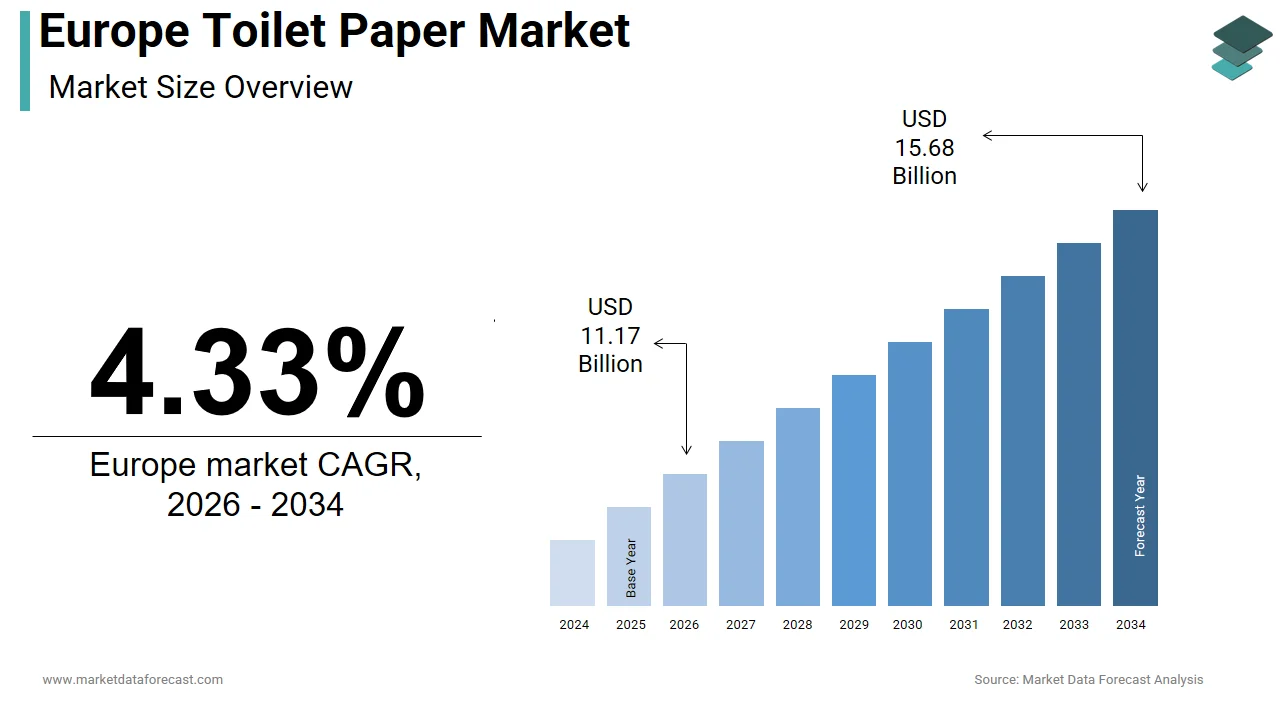
The Europe toilet paper market reached USD 10.71 billion in 2025, is expected to grow to USD 11.17 billion in 2026, and is anticipated to touch USD 15.68 billion by 2034, expanding at a CAGR of 4.33% from 2026 to 2034. Market growth is supported by rising hygiene awareness, consistent household demand, population growth in urban areas, and increasing preference for comfort-focused paper products. The expansion of private-label brands, improved product quality, and growing emphasis on sustainable and eco-friendly packaging are further shaping market dynamics across Europe.
Key Market Trends
- Rising consumer preference for soft, durable, and multi-ply toilet paper for enhanced comfort.
- Increasing demand for sustainable and recyclable packaging in response to environmental regulations.
- Growth of private-label toilet paper brands across supermarkets and discount retailers.
- Expansion of premium and value-added variants, including fragrance-infused and textured products.
- Stable household consumption supported by hygiene awareness and daily-use necessity.
Segmental Insights
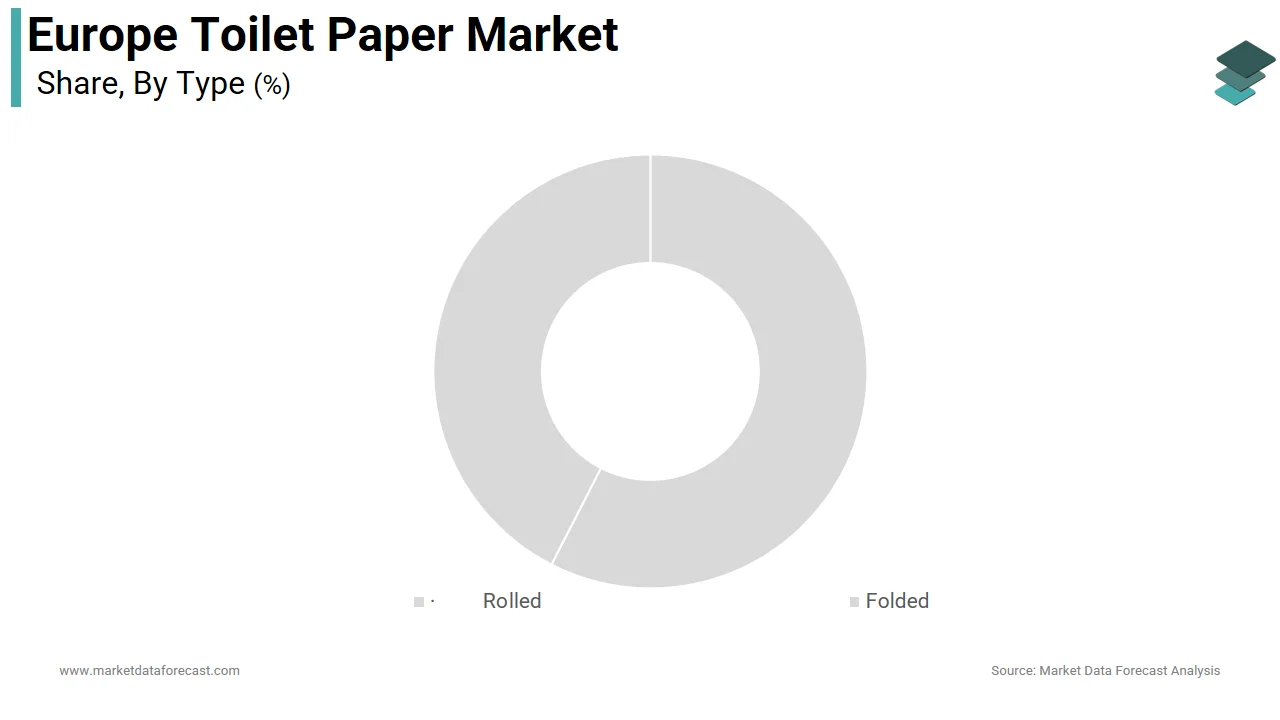
- Based on type, the rolled toilet paper segment continued to lead the Europe toilet paper market in 2025 due to its convenience, cost-effectiveness, and widespread household usage.
- Based on ply count, the two-ply toilet paper segment held the majority market share in 2025, driven by its optimal balance of softness, strength, and affordability.
- Based on application, the household use segment dominated the market in 2025, supported by consistent residential consumption and rising hygiene awareness among consumers.
Regional Insights
The Europe toilet paper market is experiencing steady growth across major economies, supported by strong household demand, established retail distribution networks, and increasing focus on sustainability.
- Germany was the top-performing country, accounting for 18.1% of the market share in 2025, driven by high per-capita consumption and strong private-label presence.
- The United Kingdom followed with a 14.5% share, supported by a mature retail sector and growing demand for eco-friendly paper products.
- France remains a key market due to its regulatory leadership in sustainable packaging and strong penetration of private-label toilet paper brands.
Competitive Landscape
The Europe toilet paper market is characterized by the presence of both global consumer goods companies and regional hygiene product manufacturers with strong brand recognition and extensive distribution networks. Leading players are focusing on product innovation, sustainable sourcing, and eco-friendly packaging to meet evolving consumer preferences. Strategic partnerships with retail chains and investments in private-label manufacturing are further strengthening their market position across Europe.
Prominent companies in the Europe toilet paper market include Procter & Gamble Co., Kimberly-Clark, Essity AB, Georgia-Pacific LLC, Hengan Group, Sofidel Group, Kruger Inc., Empresas CMPC S.A., WEPA Hygieneprodukte GmbH, and Unilever.
Europe Toilet Paper Market Size
The Europe toilet paper market reached USD 10.71 billion in 2025, is expected to grow to USD 11.17 billion in 2026, and is anticipated to touch USD 15.68 billion by 2034, at a CAGR of 4.33% from 2026 to 2034.
Toilet paper is a soft, absorbent paper product used for personal hygiene after urination or defecation. Unlike discretionary goods, toilet paper is a staple household necessity with consistent baseline demand, yet its composition, sourcing, and packaging are increasingly subject to environmental scrutiny and regulatory oversight. Household consumption in the European Union consistently includes tissue paper products, with toilet paper making up a significant portion of this usage. Paper and cardboard waste generated by households, including single-use hygiene products, contributes to overall waste volume. This waste volume is prompting manufacturers to explore incorporating circular design principles. Furthermore, Europe’s dense urban populations drive consistent retail and institutional demand through supermarkets, hotels, and public facilities. The market is experiencing a structural evolution, rather than high volatility, focused on eco-consciousness, resource optimization, and enhanced product functionality.
MARKET DRIVERS
Rising Urbanization and Institutional Demand Are Sustaining Baseline Consumption
The region’s high degree of urbanization creates stable and concentrated demand for toilet paper across residential, commercial, and public sectors, which is among the major drivers of the Europe toilet paper market. A significant majority of the population in the region lives in urban environments characterized by high-density housing, shared infrastructure, and service-based economies, which contribute to higher consumption patterns in commercial and public spaces. The tourism sector experiences high volumes of international visitors, with travel activity showing a strong recovery toward previous peak levels, thereby driving increased usage of hygiene products in transportation hubs and hospitality venues. Public sector entities, such as schools and government buildings, represent a substantial source of institutional demand for paper products. The combination of dense urban living, a robust tourism industry, and extensive public infrastructure drives high demand for institutional-grade sanitation products. Additionally, urban households exhibit higher replenishment frequency due to limited storage space and reliance on frequent retail visits. Unlike rural settings, where bulk purchasing is common, city dwellers favor convenience formats from mid-range supermarkets. This structural demand pattern ensures consistent volume absorption even during economic contractions, making toilet paper a defensive consumer segment anchored in demographic and spatial realities.
Growing Preference for Premium and Eco Certified Variants Is Reshaping Product Mix
European consumers are increasingly trading up to higher-ply-count, enhanced-softness, and sustainability-certified toilet paper, driven by hygiene awareness and environmental values, a trend that is accelerating the growth of the European toilet paper market. Consumers in several European nations are demonstrating a growing preference for goods that carry recognized environmental certifications. A significant portion of the population appears prepared to absorb higher costs for products that meet specific ecological standards. Demographic transitions are contributing to an increased societal focus on resource efficiency and sustainable consumption patterns. The market for household paper goods in Nordic regions has transitioned toward items that prioritize recycled materials and sustainable sourcing. Established labeling systems are becoming more influential in guiding purchasing decisions across various consumer markets. Major retailers like Carrefour and REWE have responded by expanding private label premium tiers that combine bamboo or eucalyptus fibers with plastic-free packaging. This product tier commands faster shelf turnover and higher margins, incentivizing manufacturers to reformulate away from conventional virgin pulp. Consequently, the market is stratifying into value mid tier and premium eco segments, with the latter gaining share despite cost sensitivity in other categories.
MARKET RESTRAINTS
Volatility in Pulp and Energy Input Costs Is Compressing Margins
Persistent margin pressure due to fluctuations in northern bleached softwood kraft pulp and natural gas prices restricts the growth of the European toilet paper market. These prices constitute a notable share of production costs. Energy costs have become a more prominent component of the overall expenditure required for tissue production. Operational budgets have been impacted by sustained shifts in the regional energy market following a period of significant volatility. Natural gas pricing remains elevated compared to historical norms, even after receding from recent extreme highs. The market for raw pulp has experienced notable price fluctuations driven by logistical and production challenges in major exporting regions. Manufacturers are navigating a landscape defined by higher baseline costs for both essential power and primary raw materials. Unlike branded consumer goods, toilet paper has limited pricing power due to high price elasticity among value shoppers. This cost pass-through constraint forces manufacturers to absorb input shock,s eroding profitability particularly for mid sized producers without vertical integration or scale advantages.
Stringent Environmental Regulations Are Increasing Compliance and Capital Expenditure
European toilet paper producers operate under intensifying regulatory scrutiny regarding water use fiber sourcing and plastic packaging which elevates operational complexity and investment requirements, and thereby limits the expansion of the Europe toilet paper market. Regulations are evolving to require that paper packaging can be reused or recycled, affecting how some products are wrapped. Paper production is focusing on minimizing water usage and using advanced treatment systems to meet environmental standards. Supply chain rules are changing to ensure that wood fibers used in production can be traced to their origin. Material sourcing is restricted from areas that have recently been deforested. Compliance demands blockchain or satellite-based verification infrastructure which the Confederation of European Paper Industries estimates will cost small and medium producers substantial amount per facility. These cumulative regulatory layers while environmentally justified raise barriers to entry and favor large integrated players thereby constraining innovation from niche sustainable brands that lack capital for compliance overhead.
MARKET OPPORTUNITIES
Expansion of Plastic Free and Compostable Packaging Is Unlocking Retail Partnerships
The elimination of plastic wrap in toilet paper packaging opens a significant opportunity for the Europe toilet paper market. This shift occurs as European retailers align with national anti-plastic laws and consumer expectations. Following the enactment of the Anti-Waste and Circular Economy (AGEC) law, France has driven a significant transition in the retail sector toward paper-based or naked packaging for consumer goods, particularly for fresh produce. This regulatory catalyst has enabled manufacturers using fully recyclable paper bands or adhesive labels to secure preferential shelf placement in major chains which have committed to recyclable packaging. In the Netherlands, Ahold Delhaize has significantly increased the allocation of shelf space for eco-friendly and plastic-free hygiene products as part of their broader sustainability initiatives. Moreover, the European Bioplastics Association reports that compostable bio based films derived from cellulose are gaining traction for multipack bundling with industrial compostability certification under EN 13432. Companies have launched fully paper wrapped product lines that reduce packaging weight while maintaining bundle integrity. These innovations not only meet regulatory mandates but also enhance brand image among eco conscious urban shoppers creating a dual commercial and sustainability advantage.
Growth in Private Label Premium Segments Is Enabling Value Chain Collaboration
Retailers across the region are developing high-quality private label toilet paper with premium attributes, such as 3-ply softness, aloe infusion, and FSC-certified fibers, which provide fresh expansion possibilities for the Europe toilet paper market. In doing so, they are creating new partnership models with tissue converters. Private label products constitute a substantial share of the toilet paper market in Western Europe, particularly in premium categories. Retailers are increasingly working directly with manufacturers to create products that rival branded quality at reduced costs. This integrated approach allows retailers to decrease marketing expenses and adapt quickly to sustainability shifts, including using less material or more recycled content. Retailers are also launching sustainable product lines that use significant amounts of recycled content, which are independently verified. These partnerships allow retailers to capture margin while offering consumers ethical alternatives without brand premiums. For converters this channel provides volume stability and long term contracts insulating them from branded competition volatility. The result is a symbiotic ecosystem where sustainability quality and affordability converge through retailer manufacturer alignment.
MARKET CHALLENGES
Consumer Skepticism Toward Greenwashing Is Undermining Eco Claims Credibility
European consumers are increasingly wary of unsubstantiated environmental claims on toilet paper packaging, despite strong sustainability sentiment, which erodes trust in eco labeled products, and negatively impacts the growth of the Europe toilet paper market. Many individuals across the European Union express skepticism regarding company claims about the environmental benefits of consumer goods [1].
Tissue products are frequently mentioned as a category where consumers often perceive vague environmental terminology to be used. Environmental marketing claims on packaging for products like toilet paper are sometimes viewed as lacking sufficient third-party verification. A notable portion of hygiene product labeling has been identified as potentially misleading in terms of biodegradability or forest impact. There is an identified trend regarding the use of environmental claims that are not backed by recognized, independent certification schemes. This skepticism leads to decision paralysis or reversion to conventional products particularly in price sensitive markets like Spain and Italy. As per a study, only a portion of Italian shoppers trust sustainability logos on toilet paper compared to that in Sweden where certification literacy is higher. A lack of harmonized EU standards and weak regulatory enforcement creates reputation risks for manufacturers, slowing the adoption of authentic, eco-friendly innovations.
Fragmented Collection and Recycling Infrastructure Limits Circular Fiber Supply
The region’s ambition to increase recycled content in toilet paper is hampered by inconsistent household waste sorting and limited capacity for deinking post consumer paper into hygiene grade pulp, which slows down the expansion of the Europe toilet paper market. Separate collection of paper and cardboard is widespread across European municipalities, though the presence of non-paper materials in waste streams remains a challenge for quality recycling. Even when collected the fiber quality degrades after multiple recycling cycles limiting its suitability for high softness tissue applications. While specialized, high-purity, recycled paper is needed for tissue products, the European industry successfully utilizes a high percentage of collected fibre to create diverse paper products, including hygiene paper. Consequently, manufacturers relying on recycled inputs face supply bottlenecks and price volatility. Stricter import policies on waste paper have caused significant price volatility in the global recycled fiber market, with high price fluctuations observed in recent years. Significant disparities persist in paper recycling performance across Europe, with Western and Northern member states generally achieving higher rates, while some Eastern European nations lag, emphasizing regional imbalances in infrastructure and collection. The shift to circular toilet paper is currently hindered by limited feedstock and inconsistent quality, challenges that won't resolve until the EU standardizes collection and upgrades deinking tech.
REPORT COVERAGE
| REPORT METRIC | DETAILS |
| Market Size Available | 2025 to 2034 |
| Base Year | 20255 |
| Forecast Period | 2026 to 2034 |
| Segments Covered | By Type, Ply Count, Application, and Country. |
| Various Analyses Covered | Global, Regional, and Country-Level Analysis, Segment-Level Analysis, Drivers, Restraints, Opportunities, Challenges; PESTLE Analysis; Porter’s Five Forces Analysis, Competitive Landscape, Analyst Overview of Investment Opportunities |
| Countries Covered | UK, France, Spain, Germany, Italy, Russia, Sweden, Denmark, Switzerland, Netherlands, Turkey, Czech Republic, and the Rest of Europe. |
| Market Leaders Profiled | Procter & Gamble Co., Kimberly-Clark, Essity AB, Georgia-Pacific LLC, Hengan Group, Sofidel Group, Kruger Inc., Empresas CMPC S.A., WEPA Hygieneprodukte GmbH, Unilever, and Others. |
SEGMENTAL ANALYSIS
By Type Insights
The rolled toilet paper segment continued to lead the Europe toilet paper market by capturing a substantial share in 2025. The leading position of the rolled toilet paper segment is attributed to deep rooted consumer habits, retail infrastructure alignment, and cost efficiency in manufacturing and logistics. Many households show a preference for rolled paper products, citing compatibility with standard dispensers and efficient storage in smaller spaces. Retailers often dedicate substantial, high-turnover shelf space to rolled products, frequently offering multi-packs to encourage higher volume purchases. The manufacturing process for rolled products can attain faster output speeds than folded alternatives, which is attributed to continuous winding methods and less material waste. Additionally institutional buyers including schools hospitals and offices rely on jumbo rolls that reduce replacement frequency and labor costs. This entrenched ecosystem of consumer preference, retail design, and operational efficiency ensures rolled remains the structural backbone of the market.
The folded toilet paper segment is predicted to witness the highest CAGR of 6.8% from 2025 to 2033 due to premium hospitality and healthcare settings that prioritize hygiene, controlled dispensing, and perceived sophistication. High-end lodging facilities in Europe are experiencing elevated occupancy rates, prompting shifts in in-room amenities to enhance guest comfort and hygiene standards. Properties in key European destinations are adopting folded, interfolded sheet technologies to create a more curated, sanitary environment. The transition to specialized dispensing systems is gaining traction as a method to limit direct contact with surfaces. Clinical settings, including outpatient offices and dental practices, are increasingly moving away from traditional roll systems in favor of methods that minimize cross-contamination. Moreover, Nordic countries are witnessing a niche but growing trend in eco conscious households using compact folded formats to minimize packaging and storage footprint. Growth in micro-apartments, a small but emerging market, is fueled by functional advantages in, and lifestyle experimentation within, high-density environments.
By Ply Count Insights
The two ply toilet paper segment held the majority share of the Europe toilet paper market in 2025 by striking an optimal balance between softness, strength, and affordability that aligns with mainstream consumer expectations. Consumers tend to view a multi-layered design as the standard for comfort and durability in household paper goods. Retailers often allocate more shelf space to multi-ply paper options across different price points, indicating a market preference for these products. While multi-ply paper typically uses more raw material per roll than single-ply, this contributes to better softness and absorption. A clear market inclination exists towards certified, multi-layered products in certain areas. Manufacturers also benefit from standardized machine settings and lower return rates as two ply minimizes complaints related to tearing or residue. This convergence of performance economics and social expectation solidifies two ply as the market’s core.
The others segment is estimated to register the fastest CAGR of 9.4% during the forecast period owing to rising disposable incomes and the normalization of luxury hygiene in urban households. Household income in certain European regions has shown growth, allowing consumers to reconsider their purchasing choices for daily essentials. Retailers specializing in higher-end products have observed increased demand for premium-tier paper goods, such as three-ply options. Consumers are expressing preference for premium paper products based on a desire for improved comfort and a perception of better, more efficient usage. The improved efficiency of higher-ply products suggests that reduced consumption rates may help to offset higher individual unit costs. Additionally, brands are infusing premium ply products with aloe vera or cotton linters, ingredients verified by the European Cosmetics Regulation, to blur the line between hygiene and skincare. This sensory enhancement strategy resonates particularly with younger demographics for whom self care rituals extend to basic bathroom routines, transforming toilet paper from a commodity into a personal wellness product.
By Application Insights
The household use segment dominated the Europe toilet paper market by accounting for a significant share in 2025. The dominance of the household use segment is driven by stable population demographics consistent replenishment cycles and the non discretionary nature of the product. The population in the European Union maintains a consistent household structure, which contributes to predictable consumer consumption habits. Toilet paper is consistently recognized as a high-frequency, fast-moving consumer good across major European markets, with regular, routine replenishment cycles. Retailers and online platforms encourage bulk purchasing and recurring orders for toilet paper, capitalizing on the habitual nature of this product. Consumer demand for toilet paper remains stable, displaying high resilience even during periods of broader economic contraction or energy challenges. This baseline stability insulated the market from macroeconomic volatility and ensures household remains the anchor segment.
The hospitality segment is anticipated to witness the fastest CAGR of 11.2% from 2026 to 2034, which is directly correlated with Europe’s tourism recovery and rising service quality standards. International tourist arrivals in Europe nearly returned to pre-pandemic levels during 2023, driven by a robust recovery in Southern and Western Europe. Hotels resorts and short term rentals are responding by upgrading in room amenities including shifting from standard rolls to premium two or three ply with embossing and eco certifications to enhance guest satisfaction scores. Guests at high-end European properties are highlighting the quality of bathroom amenities in their reviews more frequently than in previous years, indicating a rise in demand for premium in-room supplies. Additionally, stringent French anti-waste legislation banning single-use plastic packaging has forced major hospitality chains to transition to paper-wrapped or plastic-free toilet paper alternatives. European hotel operations have observed an increase in daily toilet paper consumption per occupied room compared to pre-pandemic times. This confluence of tourism volume and experiential expectations drives sustained growth in the segment.
COUNTRY-LEVEL ANALYSIS
Germany Toilet Paper Market Analysis
Germany was the top performer in the Europe toilet paper market by accounting for a 18.1% share in 2025. The supremacy of the German market is driven by its large population high household consumption and advanced domestic manufacturing base. Residents in Germany are among the highest consumers of sanitary tissue products in Europe, with toilet paper accounting for a significant portion of total annual household tissue usage. The country hosts major production facilities for global players like Essity and Sofidel as well as strong private label programs from retailers such as Aldi and Lidl which source from regional mills using German beech and spruce pulp. A high majority of tissue products sold in Germany are certified with eco-labels, such as Blue Angel or FSC, highlighting a strong consumer preference for recycled or sustainably sourced hygiene paper. Additionally Germany’s public procurement guidelines mandate recycled content or sustainably sourced virgin fiber for all institutional purchases including schools and government offices. This combination of scale sustainability consciousness and integrated supply chains ensures Germany remains the market’s production and consumption epicenter.
United Kingdom Toilet Paper Market Analysis
The United Kingdom was the next prominent country in the Europe toilet paper market by capturing a share of 14.5% in 2025. The growth of the Uk market is propelled by its brand dominated retail landscape and early adoption of premium and eco variants. Branded toilet paper products continue to hold a considerable portion of the market value. Manufacturers are focusing investment on improving product texture and developing sustainable packaging solutions. Major retailers have largely discontinued using conventional plastic wrapping for standard toilet paper items. Niche direct-to-consumer brands that prioritize environmental aspects are establishing a market share, particularly within certain consumer groups. Broader industry efforts are encouraging a transition towards packaging materials that can be entirely reused or recycled. Despite economic headwinds the UK’s strong brand equity and innovation culture sustain its high per capita spend and market influence.
France Toilet Paper Market Analysis
France is another key player in the Europe toilet paper market due to its regulatory leadership in sustainable packaging and strong private label penetration. Legislative action in France prohibited plastic packaging for certain household paper goods, positioning the country as an early adopter of this environmental policy within Europe. The ban prompted a rapid industry shift toward paper banding or, in some cases, entirely removing individual wrappings from multi-packs across retail channels. Major retailers have expanded their private-label offerings to include certified sustainable paper, which has captured a significant portion of the national market volume. Consumer demand in metropolitan areas shows a preference for multi-ply and scented options, while maintaining a substantial annual volume of consumption. Extended producer responsibility initiatives require manufacturers to bear full financial responsibility for packaging disposal, driving innovation in lightweight, mono-material packaging designs. This regulatory foresight combined with retailer driven affordability ensures France remains a pivotal market for sustainable innovation.
Italy Toilet Paper Market Analysis
Italy experienced a consistent growth in the Europe toilet paper market owing to regional brand loyalty high softness expectations and growing eco awareness. Average household usage of tissue products remains a significant component of domestic consumption, with a notable preference for multi-ply premium options emerging in various regions. Established market leaders continue to maintain a prominent presence in retail environments while navigating increased competition from value-oriented brands. Retailers are expanding their offerings to include products with recycled materials, reflecting a shift in consumer purchasing patterns. There is a growing prevalence of environmental certifications and sustainability labels on paper products available to the public. Packaging practices are evolving as manufacturers transition away from traditional plastic wrappings in favor of alternative materials. Italy’s dense network of small and medium tissue converters enables rapid adaptation to local preferences and sustainability mandates reinforcing its manufacturing relevance.
Sweden Toilet Paper Market Analysis
Sweden is anticipated to expand in the European toilet paper market over the forecast period due to its leadership in circular economy practices and consumer trust in environmental claims. A significant majority of toilet paper in the country is manufactured from either recycled fibers or certified virgin pulp. Plastic-free packaging is commonly used for these products. Most tissue items in the nation make environmental claims that are substantiated, indicating a low occurrence of unverified green marketing. Local tissue production relies on renewable energy, leading to a reduced carbon footprint compared to the broader region. The municipal waste system ensures a consistent, high-volume source of material for recycled tissue manufacturing. This ecosystem of policy integrity consumer literacy and clean manufacturing positions Sweden as a benchmark for sustainable tissue in Northern Europe.
COMPETITIVE LANDSCAPE
Competition in the Europe toilet paper market is characterized by a dual dynamic between global branded players and strong regional private label programs primarily driven by supermarkets. While branded companies compete on innovation premiumization and sustainability credentials discounters and retailers leverage scale cost efficiency and customer loyalty to dominate volume share. Regulatory pressures particularly around packaging and fiber sourcing have raised compliance thresholds favoring large integrated producers with capital for green upgrades. At the same time consumer skepticism toward greenwashing demands credible third party certifications narrowing the differentiation gap. The market is not price driven alone but increasingly value driven where eco transparency product performance and brand trust jointly determine shelf success. This environment fosters both collaboration through retailer manufacturer co development and intense rivalry in sustainability storytelling making Europe one of the world’s most regulated and sophisticated tissue markets.
KEY MARKET PLAYERS
The leading companies operating in the Europe toilet paper market include:
- Procter & Gamble Co.
- Kimberly-Clark
- Essity AB
- Georgia-Pacific LLC
- Hengan Group
- Sofidel Group
- Kruger Inc.
- Empresas CMPC S.A
- WEPA Hygieneprodukte GmbH
- Unilever
TOP PLAYERS IN THE MARKET
- Essity is a leading hygiene and health company with deep roots in Europe and a significant influence on global tissue innovation. Headquartered in Sweden the company operates numerous tissue mills across Germany France and the UK producing a wide portfolio of toilet paper under brands like Lotus Softex and Tempo. Essity has prioritized sustainability by converting its European production to renewable electricity and launching plastic free packaging across its consumer lines. These initiatives reinforce its leadership in responsible production while setting benchmarks for circularity in global tissue markets.
- Sofidel is a major European tissue producer known for its strong presence in Southern and Western Europe and its globally recognized Regina brand. The Italian headquartered company emphasizes vertical integration owning pulp preparation facilities and energy efficient paper machines that reduce water and carbon intensity. Recently the company invested in a new tissue line in Poland powered by biomass cogeneration to serve Central European demand while cutting scope one emissions. This strategic expansion underscores its commitment to regional responsiveness and environmental performance on a global scale.
- Kimberly Clark maintains a strong position in the Europe toilet paper market through its premium Andrex and Cottonelle brands which emphasize softness performance and consumer trust. The US based company leverages its European R and D centers in the UK and Germany to tailor products to regional preferences such as ply count absorbency and eco certification. These actions not only strengthen its regulatory alignment but also enhance brand credibility among environmentally conscious European consumers while influencing global supply chain standards.
TOP STRATEGIES USED BY THE KEY MARKET PARTICIPANTS
Key players in the Europe toilet paper market focus on sustainable fiber sourcing through FSC or recycled content adoption elimination of plastic packaging in line with national bans investment in energy and water efficient production technologies development of premium tier products with enhanced softness or skincare attributes and strategic partnerships with retailers for private label innovation and shelf space optimization.
MARKET SEGMENTATION
This research report on the Europe toilet paper market has been segmented and sub-segmented into the following categories.
By Type
- Rolled
- Folded
By Ply Count
- One
- Two
- Others (Three, Four, etc.)
By Application
- Household
- Healthcare
- Hospitality
- Others (Offices, Public Places, etc.)
By Country
- United Kingdom
- France
- Spain
- Germany
- Italy
- Russia
- Sweden
- Denmark
- Switzerland
- Netherlands
- Rest of Europe
Frequently Asked Questions
What is the Europe toilet paper market?
The Europe toilet paper market supplies absorbent hygiene products made from pulp for household and commercial use. It emphasizes quality, softness, and sustainability across diverse consumer needs.
What drives the Europe toilet paper market?
Hygiene awareness and rising demand for premium products drive the Europe toilet paper market. Consumer preference for soft, strong tissues supports steady growth in retail channels.
How is the Europe toilet paper market segmented?
The Europe toilet paper market segments by type like jumbo rolls and standard sheets, plus distribution via supermarkets and online platforms for varied end-users.
Who dominates the Europe toilet paper market?
Leading firms in the Europe toilet paper market produce innovative, eco-focused tissues. They serve households and institutions with reliable supply chains.
What trends shape the Europe toilet paper market?
Sustainability trends define the Europe toilet paper market through recycled content and biodegradable options. Premiumization boosts scented and textured varieties.
Why focus on sustainability in the Europe toilet paper market?
Sustainability leads the Europe toilet paper market with EU regulations favoring recycled fibers. Consumers prefer green products reducing environmental impact.
What applications feature in the Europe toilet paper market?
Applications in the Europe toilet paper market span residential bathrooms, hotels, and offices. Products cater to daily hygiene in public and private settings.
What challenges face the Europe toilet paper market?
Challenges in the Europe toilet paper market include raw material costs and plastic packaging bans. Balancing affordability with eco-standards remains key.
How does regulation impact the Europe toilet paper market?
Regulations in the Europe toilet paper market enforce deforestation rules and recyclability standards. Compliance drives innovation in fiber sourcing.
What role does e-commerce play in the Europe toilet paper market?
E-commerce expands the Europe toilet paper market via subscription models and bulk sales. It offers convenience for premium and sustainable options.
Related Reports
Access the study in MULTIPLE FORMATS
Purchase options starting from
$ 2000
Didn’t find what you’re looking for?
TALK TO OUR ANALYST TEAM
Need something within your budget?
NO WORRIES! WE GOT YOU COVERED!
Call us on: +1 888 702 9696 (U.S Toll Free)
Write to us: sales@marketdataforecast.com