- Product Description Description
- Table of Contents TOC
- List of Table & Figure LOT
- Get Free Sample PDF Sample PDF
Market Size, 2025
$6.40 BnMarket Estimate, 2026
$6.69 BnMarket Forecast, 2034
$9.58 BnCAGR, 2026–2034
4.59%Europe Trolley Bags Market Report Summary
The Europe trolley bags market was valued at USD 6.40 billion in 2025, is estimated to reach USD 6.69 billion in 2026, and is projected to reach USD 9.58 billion by 2034, growing at a CAGR of 4.59% from 2026 to 2034. Market growth is driven by increasing travel and tourism activities, rising disposable incomes, and growing consumer preference for durable and stylish luggage solutions. Trolley bags are widely preferred for their convenience, mobility, and storage capacity, making them essential for both business and leisure travel. The expansion of e-commerce platforms, innovation in lightweight materials, and increasing demand for premium luggage are further supporting market growth across Europe.
Key Market Trends
- Increasing demand for lightweight, durable, and stylish luggage.
- Growth in travel and tourism across Europe.
- Rising popularity of premium and branded trolley bags.
- Expansion of online retail and e-commerce channels.
- Advancements in material technology and smart luggage features.
Segmental Insights
- Based on material type, the hard-side segment dominated the Europe trolley bags market by capturing 57.5% share in 2025, driven by superior durability and protection.
- Based on price range, the medium-range segment led the market with 51.5% share in 2025, supported by its balance between affordability and quality.
- Based on distribution channel, the specialty stores segment held the largest share of 44.9% in 2025, driven by strong brand presence and customer experience.
Regional Insights
The Europe trolley bags market is witnessing steady growth across major countries due to increasing travel demand and evolving consumer preferences.
- Germany led the regional market in 2025 with 24.4% share, supported by high travel frequency and strong consumer purchasing power.
- France followed with 20.5% share in 2025, driven by its influence as a fashion hub and major tourist destination.
- The United Kingdom is expected to account for a prominent share during the forecast period due to strong retail infrastructure and travel demand.
Competitive Landscape
The Europe trolley bags market is competitive, with the presence of global luggage brands and regional manufacturers. Market players are focusing on product innovation, lightweight materials, premium designs, and expanding distribution channels. Branding, durability, and design differentiation are key factors shaping competition in the market.
Prominent companies operating in the Europe trolley bags market include Samsonite International S.A., VF Corporation, VIP Industries, Delsey, Briggs & Riley, Rimowa, Travelpro, Tommy Hilfiger, Victorinox, Olympia, Fox Luggage, Skyway, Traveler’s Choice, ACE, Diplomat, and EMINENT.
 Download Free Sample Report
Europe Trolley Bags Market Size
The Europe trolley bags market was valued at USD 6.40 billion in 2025, is estimated to reach USD 6.69 billion in 2026, and is projected to reach USD 9.58 billion by 2034, growing at a CAGR of 4.59% from 2026 to 2034.
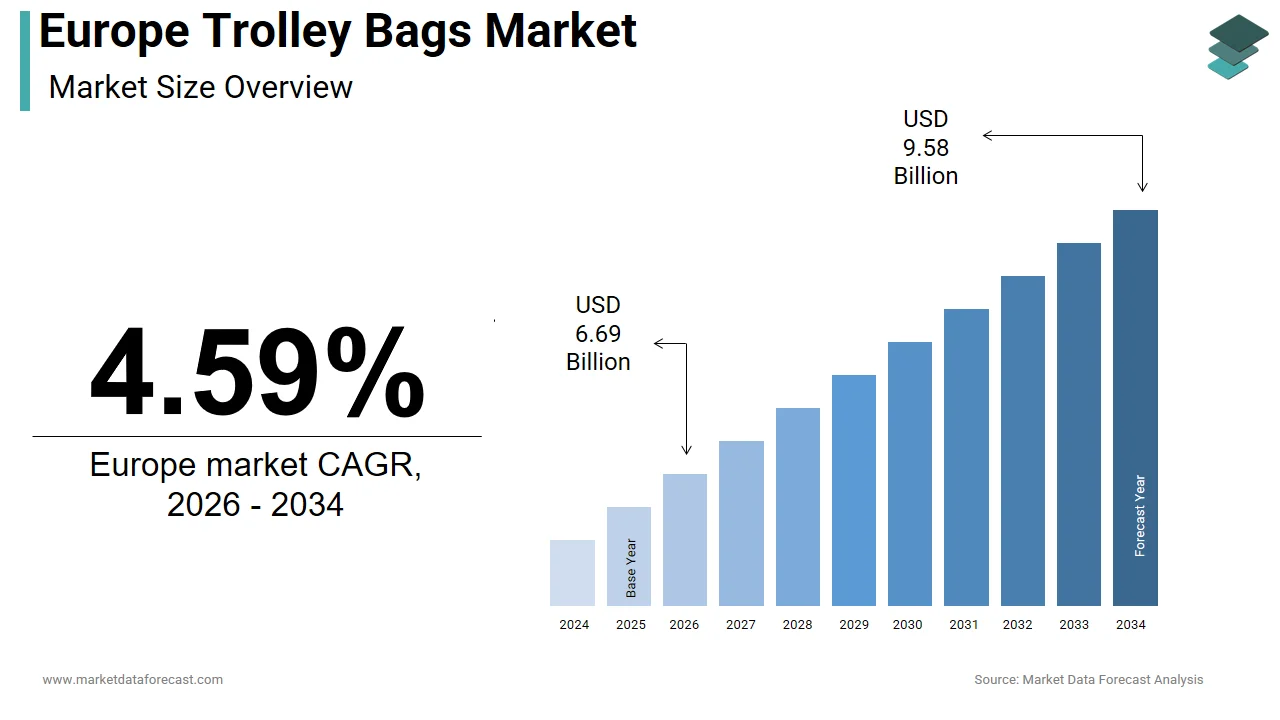
Trolley bags are wheeled luggage systems tailored for air travel, rail commuting, and urban mobility across the continent. This sector has evolved from producing simple canvas suitcases to engineering high-performance travel companions featuring lightweight polycarbonate shells, 360-degree spinner wheels, and integrated smart technologies. The definition now extends beyond mere storage to include ergonomic efficiency, security features, and sustainability credentials, reflecting the sophisticated demands of the modern European traveler. In 2024, the European Union recorded significant passenger movements through its airports, underscoring the immense scale of infrastructure required to support such mobility, as per Eurostat. This massive volume of transit necessitates a robust ecosystem of durable and compliant luggage capable of withstanding rigorous handling protocols. As per the European Union Aviation Safety Agency, strict regulations regarding cabin baggage dimensions and weight limits have fundamentally influenced product design, which is forcing manufacturers to optimize internal volume while adhering to external constraints. The market is characterized by a shift towards modular systems where trolley bags can be expanded or compressed to fit varying airline policies. Furthermore, the rise of intermodal travel, combining high-speed rail with short-haul flights, has driven demand for versatile bags that perform equally well on cobblestone streets and airport concourses. The current scenario reflects a convergence of functionality and aesthetics, where consumers prioritize brands that offer seamless integration with digital lifestyles and environmental responsibility.
MARKET DRIVERS
Recovery of Passenger Traffic Levels
The robust recovery of international travel and tourism volumes is fuelling the growth of the Europe trolley bags market, which is driving replacement cycles and new purchases across all demographic segments. Following the global disruptions of previous years, pent-up demand for leisure and business travel has resulted in strong passenger numbers at European hubs. As per the European Travel Commission, international tourist arrivals in Europe have approached pre-pandemic levels, with projections indicating full recovery and subsequent growth by 2025. This resurgence directly correlates with an increased need for reliable luggage, as many consumers replaced outdated or damaged bags lost during the hiatus. The shift towards "revenge travel," where tourists are opting for longer trips and multiple destinations per journey that demand larger and more durable trolley bags capable of holding extensive wardrobes, is also supporting the expansion of the European trolley bags market. As per airport authorities, average baggage weight per passenger has increased, and this reflects the trend towards extended stays. Furthermore, the revival of business travel, particularly for conferences and trade fairs in cities like Frankfurt, Paris, and Milan, has reinstated the demand for premium, professional-grade luggage that projects corporate image. As per the Global Business Travel Association, European business trip bookings have grown, which is fuelling sales of high-end hard-shell cases. This sustained momentum in travel activity ensures a continuous and expanding market for trolley bags.
Expansion of Low-Cost Carrier Networks
The aggressive expansion of low-cost carrier networks across Europe is further boosting the European trolley bags market expansion, which is fundamentally altering consumer purchasing behavior towards specialized carry-on trolley bags that comply with strict budget airline policies. Airlines such as Ryanair, EasyJet, and Wizz Air have continuously refined their baggage allowance rules, often charging significant fees for checked luggage while offering free or low-cost options for specific cabin bag sizes. As per the European Low Fares Airline Association, low-cost carriers now account for a substantial portion of intra-European seat capacity, compelling millions of travelers to purchase bags that precisely meet these restrictive dimensions. This regulatory pressure from airlines has created a distinct market segment for "cabin-ready" trolley bags designed to maximize volume within tight constraints. As per retail sales analysis, searches and purchases for "under-seat" and "strict cabin size" luggage have increased. The second significant driver is the frequency of travel enabled by low fares, which encourages consumers to own multiple bags for different trip types rather than a single large suitcase. As per consumer behavior studies, frequent flyers are more likely to own a dedicated set of carry-on trolleys to avoid check-in delays and fees. Additionally, the proliferation of point-to-point routes to secondary airports has increased the total number of trips taken by the average European, further amplifying the need for durable, compliant luggage. This symbiotic relationship between airline policy and consumer adaptation drives consistent innovation and sales volume.
MARKET RESTRAINTS
Fragmentation of Size and Weight Limits
The fragmented and increasingly stringent landscape of airline baggage regulations across Europe is a significant restraint on the trolley bags market, which is creating confusion and hesitation among consumers regarding product compatibility. With hundreds of airlines operating in the region, each enforcing unique and often changing dimensions and weight limits for both checked and carry-on luggage, travelers face a complex decision-making environment. As per the European Consumer Organisation, a majority of passengers express frustration with the lack of standardization in baggage policies, leading to delayed purchases or the avoidance of upgrading to new bags due to fear of non-compliance. This uncertainty stifles market growth as consumers opt to hold onto older, versatile bags rather than investing in new models that might not fit future airline rules. The aggressive monetization of baggage by low-cost carriers, where fees for checked bags often exceed the cost of the luggage itself, discourages the purchase of large trolley bags, which is also impeding the regional market expansion. As per airline financial reports, baggage fee revenue in Europe has grown, incentivizing airlines to further restrict free allowances. Consequently, many travelers are shifting towards backpacks or duffel bags that offer more flexibility, bypassing the rigid structure of trolley bags. As per retail trends, sales for large checked suitcases have declined in markets dominated by budget airlines. This regulatory fragmentation and punitive fee structure create a barrier to entry for new product categories and limit the overall volume of trolley bag sales.
Restrictions on Smart Bag Features
The imposition of strict restrictions on smart luggage features, particularly regarding non-removable lithium-ion batteries, is further hampering the expansion of the European trolley bags market. Following safety concerns related to battery fires, major airlines and the International Air Transport Association have mandated that any luggage with integrated power sources must have easily removable batteries, effectively banning many early generations of smart bags from cabins and cargo holds. As per the European Union Aviation Safety Agency, enforcement of these rules has led to the confiscation or grounding of non-compliant smart bags, which is creating a climate of risk aversion among consumers. This regulatory hurdle forces manufacturers to redesign products extensively, increasing development costs and time-to-market, while simultaneously confusing buyers who are unsure if a specific model is flight-safe. For instance, several prominent smart luggage brands had to issue voluntary recalls or retrofitting kits, damaging their brand reputation and consumer trust. The second significant factor is the logistical complexity for retailers who must verify and label every smart bag unit to ensure compliance, adding operational overhead. As per retail audits, shelf space allocated to smart luggage has contracted due to these compliance challenges. Until a harmonized and clear global standard for smart luggage batteries is established and widely communicated, this regulatory ambiguity will continue to suppress the growth potential of the technologically advanced segment of the market.
MARKET OPPORTUNITIES
Sustainability and Circular Economy Initiatives
The shifting consumer preference towards sustainability is a promising opportunity for the Europe trolley bags market to innovate through the adoption of recycled and bio-based materials. European travelers are increasingly scrutinizing the environmental footprint of their purchases, which is driving demand for luggage made from post-consumer recycled plastics, ocean-bound plastics, and plant-based polymers. As per the Ellen MacArthur Foundation, sales of luggage produced with recycled content have grown, and this is reflecting strong market appetite for eco-conscious products. This trend allows manufacturers to differentiate their brands and command premium prices by aligning with the values of environmentally aware consumers. The potential for circular business models, such as take-back programs where old bags are recycled into new ones, is fostering brand loyalty, reducing raw material dependency, and aiding the regional market expansion. For instance, a majority of Europeans are willing to pay more for products with verified sustainability credentials and transparent supply chains. Furthermore, the use of innovative bio-materials like flax fiber composites offers a unique selling proposition that combines lightness with ecological responsibility. As per green certification bodies, luggage products receiving eco-labels have increased significantly. By leading the charge in sustainable material innovation, companies can secure long-term relevance and appeal to the growing demographic of green travelers.
Implementation of Repair and Refurbishment Programs
The implementation of comprehensive repair and refurbishment programs offers a strategic opportunity for the Europe trolley bags market to embrace the circular economy and extend product lifecycles. As consumers become more resistant to throwaway culture, there is a burgeoning demand for services that can restore damaged luggage, replacing wheels, handles, or shells rather than discarding the entire bag. For instance, the market for refurbished premium luggage in Europe is projected to grow strongly, driven by the high quality and durability of modern frames that allow for multiple lifecycles. This approach not only generates additional revenue streams through service fees and resale of refurbished units but also builds strong customer relationships through ongoing engagement. As per major retailers, trade-in and repair programs have increased foot traffic and conversion rates for new purchases, as customers feel confident in the long-term value of their investment. The standardization of spare parts and the availability of repair manuals empower local workshops to offer comprehensive maintenance services, fostering a robust aftermarket ecosystem. As per industry bodies, extending the life of a trolley bag by several years can significantly reduce its overall carbon footprint. By promoting repairability and offering certified pre-owned options, the industry can address sustainability concerns while making premium travel gear more accessible to a wider audience.
MARKET CHALLENGES
Counterfeit Products and Intellectual Property Theft
The pervasive presence of counterfeit trolley bags, particularly those mimicking high-end luxury brands, poses a severe challenge to the Europe market, which is undermining brand equity and posing safety risks to consumers. Sophisticated counterfeiters are producing near-identical replicas using substandard materials that fail under stress, leading to breakages and lost belongings that damage the reputation of the original brands. As per the European Union Intellectual Property Office, seizures of fake luggage and leather goods at EU borders have increased, with online marketplaces being the primary distribution channel for these illicit goods. These counterfeit items often undercut legitimate products by significant margins, which is distorting market prices and eroding the perceived value of authentic brands. For instance, the luxury luggage sector loses billions of euros annually to counterfeiting in Europe alone. The difficulty in distinguishing high-quality fakes from genuine articles confuses consumers, leading to hesitation in purchasing premium products online. Furthermore, the lack of rigorous safety testing for counterfeit bags means they may pose hazards, such as collapsing handles or failing wheels, which can cause injuries. For instance, complaints regarding broken counterfeit luggage have risen, yet enforcement remains challenging due to the decentralized nature of online sales. Combating this issue requires substantial investment in authentication technologies and legal actions, which also diverts resources from innovation.
Design Piracy and Rapid Imitation
The rapid imitation of innovative designs and features by fast-fashion retailers and unbranded manufacturers is another significant challenge to the regional market expansion, which is also stifling innovation and reducing the return on investment for original creators. In the highly competitive Europe trolley bags market, new design elements such as unique wheel mechanisms, handle systems, or shell textures are often copied and brought to market within weeks of the original launch, at a fraction of the cost. For instance, the timeframe for registering and enforcing design patents in Europe can be lengthy, allowing copycats to capitalize on trends before legal remedies are effective. This "fast-follower" strategy dilutes the uniqueness of premium brands and forces them into price wars they cannot win against low-cost imitators. For instance, a significant portion of new luggage designs are replicated within months, discouraging companies from investing heavily in R&D. The ambiguity in defining the scope of design protection for functional elements further complicates enforcement, as competitors argue that certain features are utilitarian rather than ornamental. As per court cases, only a small percentage of design infringement lawsuits result in significant damages, making litigation costly and often unrewarding. This environment of intellectual property vulnerability threatens the long-term sustainability of design-led differentiation in the market.
REPORT COVERAGE
| REPORT METRIC | DETAILS |
| Market Size Available | 2025 to 2034 |
| Base Year | 2025 |
| Forecast Period | 2026 to 2034 |
| Segments Covered | By Material Type, Price Range, Distribution Channel, and Country. |
| Various Analyses Covered | Global, Regional, and Country-Level Analysis, Segment-Level Analysis, Drivers, Restraints, Opportunities, Challenges; PESTLE Analysis; Porter’s Five Forces Analysis, Competitive Landscape, Analyst Overview of Investment Opportunities |
| Countries Covered | UK, France, Spain, Germany, Italy, Russia, Sweden, Denmark, Switzerland, Netherlands, Turkey, Czech Republic, and the Rest of Europe. |
| Market Leaders Profiled | Samsonite International S.A., VF Corporation, VIP Industries, Delsey, Briggs & Riley, Rimowa, Travelpro, Tommy Hilfiger, Victorinox, Olympia, Fox Luggage, Skyway, Traveler’s Choice, ACE, Diplomat, EMINENT. |
SEGMENTAL ANALYSIS
By Material Type Insights
The hard-side segment dominated the market by holding 57.5% of the European market share in 2025 due to the superior protection offered by rigid shells against the rigorous handling processes inherent in modern air travel and the aesthetic appeal of sleek, modern designs. The widespread adoption of advanced polycarbonate and ABS materials that provide exceptional impact resistance while remaining lightweight, which is a critical feature given strict airline weight limits. This is further contributing to the dominance of the hard-side segment in the European trolley bags market. As per the European Union Aviation Safety Agency, baggage handling systems at major hubs subject luggage to significant drops and impacts, leading many travelers to prefer hard-shell cases for their ability to protect fragile contents. The enhanced security and weather resistance provided by hard-side luggage that features integrated TSA locks and water-resistant seals that soft bags often lack are also aiding the dominance of the hard-side segment in the European market. For instance, theft attempts involving zipper slashing are less successful on hard-shell suitcases, which makes them the preferred choice for security-conscious Europeans. Furthermore, the ease of cleaning and maintenance of hard surfaces appeals to hygiene-focused consumers, with retail surveys showing durability and cleanliness as top reasons for choosing hard-sided options. The combination of robust protection, security features, and modern aesthetics ensures this segment remains the market leader.
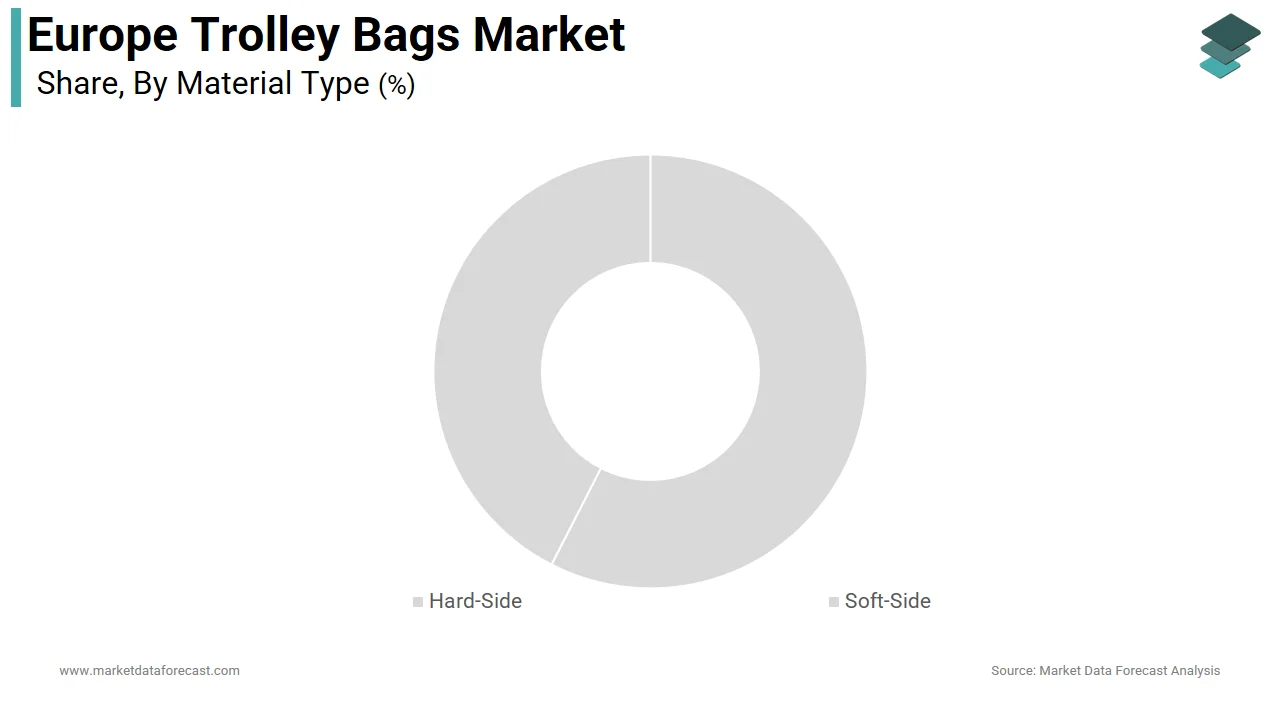
However, the soft-side segment is projected to be the fastest-growing category and register a CAGR of 8.1% over the forecast period, owing to the resurgence in demand for flexibility, expandability, and external storage options that rigid cases cannot offer. The increasing popularity of multi-modal travel involving trains and buses across Europe is further boosting the expansion of the soft-side segment in the European market. As per the European Railway Agency, utilization of high-speed rail has increased, driving demand for flexible luggage that can adapt to irregular storage spaces in train compartments. The growing need for extra packing capacity, as soft-side bags often feature expansion zippers that increase volume, is further propelling the expansion of the soft-side segment in the European market. For instance, expandable soft-sided luggage has seen strong growth, reflecting consumer desire for versatility. Additionally, the presence of external pockets for quick access to documents, laptops, and liquids aligns with stringent airport security protocols, reducing screening time. As per traveller satisfaction surveys, frequent flyers prefer soft bags for their organizational features and ease of access. This functional adaptability positions the soft-side segment for robust growth.
By Price Range Insights
The medium range segment led the market by holding 51.5% of the European market share in 2025. The growth of medium range segment in the European market can be credited to the sweet spot it occupies between affordability and quality, appealing to the broad mass market of leisure travelers and occasional business trippers who seek durability without the premium price tag. The intense competition among mid-tier brands and private labels offered by major retailers is further boosting the expansion of the medium range segment in the European market. As per Eurostat, a majority of European households prioritize value for money when purchasing non-essential goods, making the medium range the default choice for family vacations and weekend getaways. The perception of diminishing returns in the premium segment, where consumers feel that mid-priced bags offer nearly the same functionality and durability as luxury brands at a lower cost, is further supporting the expansion of the medium range segment in the European market. As per consumer behavior studies, many shoppers actively compare specifications and choose medium-range options that offer similar warranty terms and feature sets to high-end models. Furthermore, the availability of these products across diverse channels, from department stores to online marketplaces, ensures high visibility and accessibility. As per distribution networks, medium-range SKUs occupy the largest shelf space in physical retail outlets, reinforcing their market leadership through sheer availability and competitive pricing strategies.
However, the premium segment is emerging as the fastest-growing category and is expected to exhibit a CAGR of 9.1% over the forecast period, owing to the rising disposable incomes of affluent Europeans and a shifting consumer mindset that views high-quality luggage as a long-term investment rather than a disposable commodity. The "buy less, buy better" trend, where consumers are willing to pay a significant premium for bags made from aerospace-grade aluminum, carbon fiber, or high-end polycarbonate, is also fuelling the expansion of the premium segment in the European market. As per Bain & Company, sales of premium travel goods in Europe have grown, driven by wealthy travelers seeking status symbols and guaranteed performance. The second significant driver is the integration of advanced smart technologies and bespoke customization options that are exclusively available in the premium tier, such as built-in GPS tracking, biometric locks, and monogramming services. As per brand performance metrics, premium brands offering personalized experiences have seen strong increases in customer loyalty and repeat purchases. Additionally, the growing corporate sector's demand for high-end luggage as executive gifts or company standards further fuels this segment. As per corporate procurement records, bulk orders of premium luggage for senior management have risen. This convergence of wealth accumulation, desire for exclusivity, and technological innovation positions the premium segment for exceptional growth.
By Distribution Channel Insights
The specialty stores segment held the dominant position in the European trolley bags market in 2025 with 44.9% of the regional market share. The growth of the specialty stores segment in the European market is attributed to the tactile nature of the product, where consumers strongly prefer to physically inspect build quality, test wheel maneuverability, and assess interior layout before making a purchase. The expert advice and personalized service provided by knowledgeable staff who can guide customers toward the right size and type of bag based on specific travel needs and airline restrictions is further boosting the growth of the specialty stores segment in the European market. As per the European Retail Association, a majority of luggage buyers state that the ability to touch and try out the product is the most important factor in their decision-making process. The second critical driver is the trust associated with authorized dealers who offer genuine products, valid warranties, and after-sales support such as repairs and part replacements, which are crucial for high-involvement purchases. As per warranty claim data, bags purchased from specialty stores have a higher rate of successful repair claims compared to other channels, enhancing consumer confidence. Furthermore, these stores often host exclusive launches and demonstrations of new technologies, creating an immersive brand experience that online channels struggle to replicate. As per foot traffic analysis, conversion rates in specialty luggage stores are significantly higher than in general merchandise outlets, which is solidifying their position as the preferred channel for serious travelers.
On the other hand, the online stores segment is experiencing the most rapid expansion and is estimated to witness a CAGR of 11.5% over the forecast period, owing to the aggressive use of digital marketing, user reviews, and comparison tools that empower consumers to make informed decisions from the comfort of their homes, often at lower prices due to reduced overheads. As per Eurostat, online sales of travel accessories in Europe have grown, with trolley bags being a top category due to the ease of shipping and generous return policies offered by major platforms. The rise of direct-to-consumer (DTC) brands that bypass traditional intermediaries to offer high-quality, stylish luggage at competitive prices is also contributing to the expansion of the online stores segment in the European market. For instance, dozens of new DTC luggage brands have launched in Europe in recent years, capturing significant market share through social media engagement and influencer partnerships. Additionally, the integration of augmented reality tools that allow users to visualize bag sizes in their own spaces helps mitigate the inability to physically touch the product. As per technology adoption studies, a notable portion of online shoppers utilize AR features, reducing return rates and boosting confidence. These factors collectively make online stores the most dynamic and fast-scaling channel in the European trolley bags market.
COUNTRY-LEVEL ANALYSIS
Germany Trolley Bags Market Analysis
Germany stood as the largest market for trolley bags in Europe with 24.4% of the regional market share in 2025. This dominance is driven by its robust economy, high propensity to travel, and strong manufacturing base. A key driving factor is the country’s position as a global export hub and a center for international trade fairs, which generates consistent demand for high-quality business travel luggage from professionals who frequently traverse the globe. As per the German Travel Association, business travel expenditure in Germany reached record levels in 2024, directly correlating with increased sales of premium and medium-range trolley bags. The second critical driver is the dense network of efficient airports and railway stations, which facilitates both domestic and international mobility, encouraging frequent trips and subsequent luggage replacement cycles. As per retail analysts, German consumers spend more per luggage item than the European average, reflecting their willingness to invest in long-lasting products. Furthermore, the strong environmental consciousness in Germany has accelerated the demand for sustainable luggage made from recycled materials, pushing manufacturers to innovate. The combination of economic strength, travel culture, and quality expectations cements Germany’s position as the dominant force in the European trolley bags landscape.
France Trolley Bags Market Analysis
France held a promising position in the European market in 2025 with 20.5% of the regional market share due to its status as a global fashion capital and premier tourist destination that influences style trends across the continent. The immense volume of inbound tourism, with France welcoming millions of visitors annually, is further boosting the French market expansion. As per the French Ministry of Tourism, international arrivals in 2024 surpassed pre-pandemic levels, driving a surge in luggage purchases for both visitors and locals. The second significant driver is the presence of numerous luxury heritage brands headquartered in France, which dominate the premium segment and set global standards for elegance and craftsmanship. As per luxury goods reports, French consumers account for a notable portion of premium luggage sales in Europe, driven by cultural appreciation for high-end accessories. Additionally, the extensive high-speed rail network fosters a culture of weekend getaways, requiring versatile and stylish carry-on solutions. As per transport authorities, rail passenger numbers have increased, supporting steady demand. This blend of fashion influence, tourism magnitude, and luxury heritage ensures France remains a pivotal pillar of the market.
United Kingdom Trolley Bags Market Analysis
The United Kingdom is anticipated to account for a prominent share of the European trolley bags market during the forecast period, owing to a highly connected aviation sector, a strong tradition of overseas holidays, and a resilient retail environment despite economic fluctuations. The prevalence of low-cost carriers based in the UK, such as EasyJet and Ryanair, has shaped consumer behavior towards purchasing specific cabin-sized trolley bags that comply with strict budget airline policies and further propelled the UK market growth. As per the Civil Aviation Authority, UK airports handled hundreds of millions of passengers in 2024, with a significant portion traveling on budget airlines, driving high volumes of carry-on luggage sales. The second critical driver is the rapid adoption of e-commerce, with UK consumers being among the most active online shoppers in Europe, facilitating the growth of direct-to-consumer luggage brands and easy access to global varieties. As per retail analytics, online channels account for a large share of luggage sales in the UK, outpacing many other European nations. Furthermore, the strong pound sterling historically allows UK travelers to purchase imported premium brands competitively, although currency volatility remains a factor. As per consumer spending reports, travel accessory spending has increased year-on-year. This combination of aviation dynamics, digital maturity, and travel enthusiasm keeps the UK at the forefront of the European market.
Italy Trolley Bags Market Analysis
Italy is predicted to account for a notable share of the European trolley bags market during the forecast period due to its rich heritage in leather goods and manufacturing, a vibrant tourism industry, and a culture that values style and quality. The country’s status as a top global tourist destination, attracting millions of visitors who contribute to retail sales, alongside a local population that travels frequently for both leisure and business within the Mediterranean region are contributing to the expansion of the Italian market. As per the Italian National Institute of Statistics, domestic and outbound travel figures rebounded strongly in 2024, with Italians taking multiple trips annually, sustaining consistent demand for reliable luggage. The second significant driver is the export-oriented nature of the Italian luggage industry, which keeps domestic supply chains robust and innovative, ensuring that local consumers have access to the latest designs and materials. As per industry associations, Italian luggage manufacturers export a majority of their production, but the remaining high-quality stock drives a sophisticated domestic market. Furthermore, the importance of *la bella figura* or making a good impression drives Italians to invest in stylish, well-maintained travel gear. As per fashion retail reports, Italy has the highest per capita spending on designer luggage in Southern Europe. This synergy of manufacturing excellence, tourism, and cultural style ensures Italy’s strong standing.
Spain Trolley Bags Market Analysis
Spain is anticipated to record a healthy CAGR in the European trolley bags market during the forecast period, owing to its massive tourism sector, favorable climate encouraging year-round travel, and a growing middle class with increasing disposable income. The growth of Spain in the European market is further attributed to the hospitality and tourism industry, which not only drives retail sales but also necessitates large fleets of luggage for tour operators and hotel services, creating a steady B2B demand stream. As per the Spanish Confederation of Hotels and Tourist Accommodations, the sector recorded millions of international arrivals in 2024, generating significant revenue for travel-related retail, including trolley bags. The second critical driver is the expansion of low-cost air connectivity within Spain and to the rest of Europe, making short-break travel accessible to a broader demographic and increasing the frequency of trips that require personal luggage. As per the Spanish Aviation Safety and Security Agency, domestic flight passengers have increased, correlating with higher ownership of personal travel bags. Additionally, the rising awareness of smart travel solutions among younger Spanish consumers is driving interest in tech-enabled and lightweight luggage options. As per consumer trends, searches for smart luggage features have grown significantly in Spain. This unique blend of tourism dependency, connectivity, and evolving consumer preferences ensures Spain remains a vital component of the European market.
COMPETITIVE LANDSCAPE
The competition in the Europe trolley bags market is intensely fierce, characterized by a mix of established legacy manufacturers and agile new entrants vying for dominance through innovation and brand loyalty. Major players leverage their extensive distribution networks and deep engineering expertise to offer comprehensive product ranges that cater to every skill level and budget. The landscape sees frequent product launches featuring advanced smart technologies and eco-friendly materials as companies race to capture the growing segment of conscious travelers. Competitive pressure is heightened by the need to balance premium pricing with affordability while navigating complex supply chain constraints and raw material volatility. Sustainability has emerged as a critical differentiator where brands compete to prove their environmental credentials through green manufacturing and recycling initiatives. This dynamic environment forces continuous investment in design technology and customer experience as participants strive to capture market share in a sector driven by passion and performance.
KEY MARKET PLAYERS
The leading companies operating in the Europe trolley bags market include:
- Samsonite International S.A.
- VF Corporation
- VIP Industries
- Delsey
- Briggs & Riley
- Rimowa
- Travelpro
- Tommy Hilfiger
- Victorinox
- Olympia
- Fox Luggage
- Skyway
- Traveler’s Choice
- ACE
- Diplomat
- EMINENT
TOP PLAYERS IN THE MARKET
- Samsonite International S.A. stands as a preeminent force in the Europe trolley bags market with a diverse portfolio including brands like American Tourister and Lipault that cater to various traveler segments globally. The company contributes significantly to the international scene by driving innovation in lightweight materials and smart luggage technologies. Recently, Samsonite has strengthened its position by expanding its direct-to-consumer channels and launching sustainable product lines made from recycled plastics. They have also invested heavily in digital marketing campaigns targeting frequent flyers across major European hubs. These strategic moves ensure they remain competitive against emerging digital native brands while maintaining strong relationships with traditional retail partners. Their focus on integrating durability with modern aesthetics further solidifies their reputation as a forward-thinking leader in the global travel gear industry.
- Delsey Paris operates as a leading French manufacturer renowned for producing high-performance trolley bags that blend cutting-edge engineering with distinctive design aesthetics. Their global contribution involves setting benchmarks in security features and expandable storage solutions, which influence industry standards worldwide. To fortify their market stance, the company recently expanded its production capacity in Europe to mitigate supply chain disruptions and ensure faster delivery times. They have also partnered with top travel influencers to showcase the versatility of their collections under real-world conditions. Furthermore, Delsey has enhanced its digital presence by launching an immersive online configuration tool that allows customers to customize their bags extensively. These initiatives demonstrate their commitment to quality and customer satisfaction, ensuring they maintain a loyal following among serious travelers and style-conscious consumers alike.
- VIP Industries Limited maintains a formidable presence in the Europe trolley bags market through its acquisition of iconic European brands and an extensive distribution network that spans the continent. The company contributes to the global market by pioneering advancements in polymer technology and proprietary wheel systems that redefine ride quality and durability. Recent actions to strengthen their position include the integration of advanced manufacturing techniques to produce ultra-lightweight hard shell cases that meet strict airline weight limits. They have also introduced comprehensive warranty programs and repair services to enhance customer trust and loyalty. Additionally, VIP has invested in expanding its retail experience centers to offer test drives and expert fitting services that improve the buying journey. This holistic approach to product development and customer engagement solidifies their status as a top-tier player capable of adapting to evolving market dynamics and consumer preferences effectively.
TOP STRATEGIES USED BY KEY MARKET PARTICIPANTS
Key players in the Europe trolley bags market primarily employ strategies focused on product innovation and sustainability to differentiate their offerings and meet evolving consumer demands. Companies are heavily investing in research and development to create lightweight yet durable materials such as recycled polycarbonate and bio-based composites. Another major strategy involves expanding direct-to-consumer sales channels alongside traditional retail networks to capture higher margins and gather valuable customer data. Brands are also prioritizing smart technology integration by embedding GPS trackers and USB charging ports to enhance user convenience. Additionally, participants engage in strategic collaborations with airlines and travel agencies to bundle luggage with tickets and promote brand visibility. These approaches collectively aim to foster loyalty, improve operational resilience, and capture market share in a highly competitive landscape.
MARKET SEGMENTATION
This research report on the Europe trolley bags market has been segmented and sub-segmented into the following categories.
By Material Type
- Hard-Side
- Soft-Side
By Price Range
- Premium
- Medium Range
- Low Range
By Distribution Channel
- Supermarkets/Hypermarkets
- Specialty Stores
- Factory Outlets
- Online Stores
- Others
By Country
- United Kingdom
- France
- Spain
- Germany
- Italy
- Russia
- Sweden
- Denmark
- Switzerland
- Netherlands
- Rest of Europe