- Product Description Description
- Table of Contents TOC
- List of Table & Figure LOT
- Get Free Sample PDF Sample PDF
Market Size, 2025
$0.22 BnMarket Estimate, 2026
$0.25 BnMarket Forecast, 2034
$0.6 BnCAGR, 2026–2034
11.6%Europe Tumor Ablation Market Summary
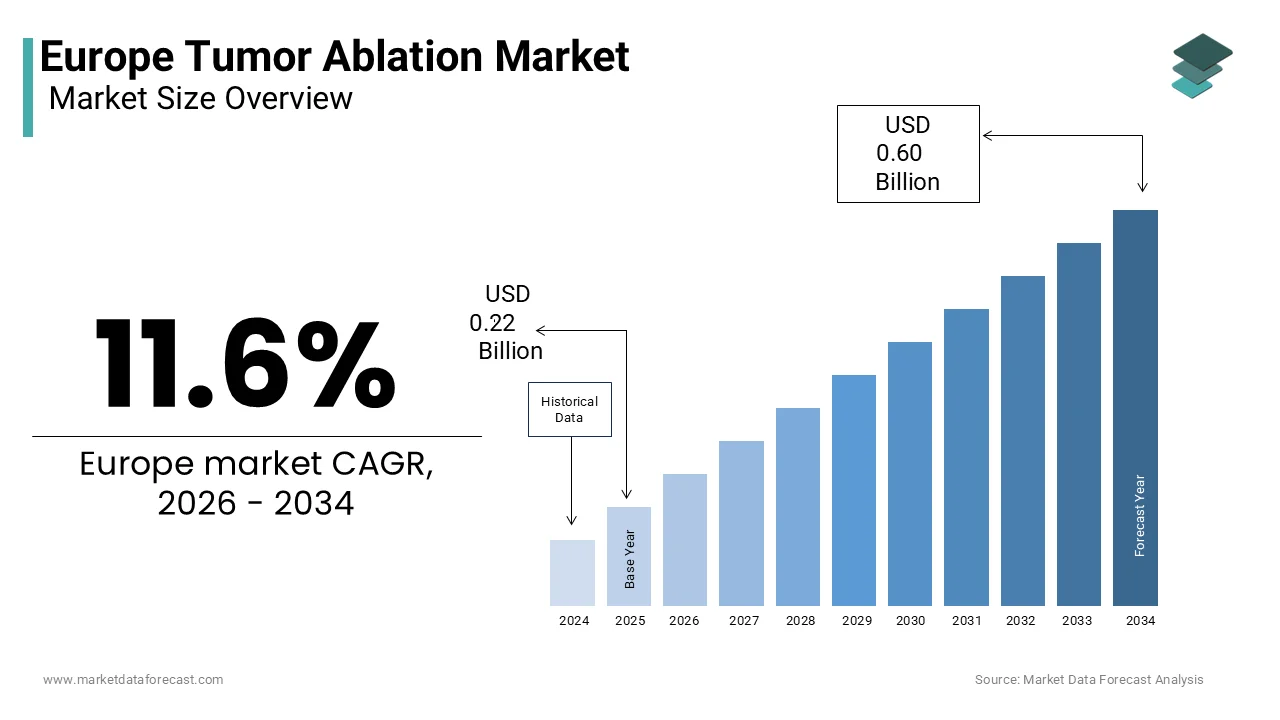
The Europe tumor ablation market, valued at USD 0.22 billion in 2025, is projected to reach USD 0.60 billion by 2034, expanding at a CAGR of 11.6% driven by rising cancer incidence, aging populations, and rapid integration of minimally invasive ablation techniques into multidisciplinary oncology care.
Market Snapshot
- 2025 Market Size: USD 0.22 billion
- 2026 Estimate: USD 0.25 billion
- 2034 Forecast: USD 0.60 billion
- CAGR (2026–2034): 11.6%
- Base Year: 2025
- Forecast Period: 2026–2034
Quick Growth Drivers
- Rising incidence of inoperable and early-stage solid tumors
- Aging European population with higher surgical risk profiles
- Increasing adoption of minimally invasive oncology procedures
- Integration of tumor ablation into national and pan-European guidelines
- Advances in real-time imaging, probe precision, and temperature control
Principal Restraints
- Stringent EU Medical Device Regulation (MDR) slowing device approvals
- Lengthy CE certification timelines for novel ablation technologies
- Limited and inconsistent reimbursement for emerging ablation modalities
- Budget constraints within public healthcare systems
High-Value Opportunities
- Combination of ablation with immunotherapy regimens
- Expansion of ablation beyond curative to immunomodulatory applications
- Growth of outpatient and ambulatory oncology care centers
- Rising adoption in oligometastatic and bridging-to-transplant settings
Key Market Challenges
- Shortage of trained interventional radiologists across Europe
- Lack of standardized certification pathways for ablation procedures
- Absence of harmonized clinical endpoints and outcome metrics
- Workflow fragmentation due to non-interoperable imaging systems
Fastest-Growing Segments
- Percutaneous Ablation: 61.6% market share — outpatient compatibility
- Liver Cancer Applications: 39.3% share — strong guideline endorsement
- Immunotherapy-Combination Protocols: emerging high-growth niche
Regional Leadership & Dynamics
- Germany (25.5%) — advanced interventional oncology infrastructure
- France — centralized cancer networks and full reimbursement coverage
- United Kingdom — NICE-backed adoption and interventional hubs
- Italy — strong CAGR driven by regional oncology networks
- Spain — emphasis on same-day ablation and metastatic disease
What Wins Commercially
- Strong regulatory compliance under EU MDR
- Demonstrated clinical outcomes and cost-effectiveness data
- Seamless integration with hospital imaging and EHR workflows
- Robust physician training and certification programs
- Alignment with outpatient and value-based oncology models
Top Strategic Ask for Executives
Invest in clinical evidence generation, workforce training, and immunotherapy-aligned ablation technologies while accelerating regulatory and reimbursement readiness to scale adoption across Europe’s value-based oncology systems.
Leading Players
Some of the companies that are playing a dominating role in the Europe tumor ablation market include:
- Medtronic Plc.
- Boston Scientific Corporation
- AngioDynamics
- Mermaid Medical
- HealthTronics
- Galil Medical Inc.
- EDAP TMS S.A.
- SonaCare Medical
- Misonix, Inc.
- Neuwave Medical, Inc.
Europe Tumor Ablation Market Size
The Europe Tumor Ablation Market was valued at USD 0.22 billion in 2025, is expected to have 11.6% CAGR from 2026 to 2034, and be worth USD 0.60 billion by 2034 from USD 0.25 billion in 2026.
Tumor ablation refers to a group of minimally invasive image-guided procedures that destroy cancerous tissue using thermal energy without surgical resection. In Europe, these techniques are increasingly integrated into oncology pathways for patients with inoperable or early-stage tumors, particularly in the liver, kidney, lung, and bone. According to the European Society of Medical Oncology, tumor ablation is increasingly being integrated into multidisciplinary cancer treatment strategies across Europe. The approach is especially valued for elderly or comorbid patients who cannot tolerate major surgery. As per Eurostat, cancer incidence in the European Union continues to rise, with the median age of diagnosis generally falling in the late sixties, which indicates the relevance of ablation for older populations. As per the International Agency for Research on Cancer, Europe recorded approximately 4.4 million new cancer cases in 2022, which indicates the growing pool of candidates suitable for ablation.iarc.who.int. National health technology assessment bodies in countries like Germany and the Netherlands have issued positive appraisals for ablation in specific indications, facilitating reimbursement. Furthermore, advances in real-time imaging and probe design have enhanced precision and reduced complication rates. Within Europe’s value-based healthcare framework, tumor ablation represents a clinically effective and cost-conscious alternative that aligns with the goals of reduced hospital stays and faster recovery.
MARKET DRIVERS
Rising Incidence of Inoperable Solid Tumors Fuels Demand for Minimally Invasive Alternatives
The growing prevalence of localized solid malignancies in elderly or high-risk patients who are unsuitable for surgical resection has significantly amplified demand for tumor ablation across Europe, which is primarily driving the European tumor ablation market expansion. As per the International Agency for Research on Cancer, liver cancer accounted for over 60,000 new cases in the European Union in 2022, while kidney cancer contributed more than 130,000 new cases, with a substantial proportion presenting at stages where surgery is contraindicated due to comorbidities or poor functional status. As per the European Cancer Registry, many patients diagnosed with hepatocellular carcinoma are deemed unresectable at diagnosis, creating a critical therapeutic gap. Tumor ablation offers a viable solution, and as per the European Association for the Study of the Liver, radiofrequency and microwave ablation achieve high local tumor control rates in tumors under 3 centimeters. National guidelines in France and Italy now recommend ablation as first-line therapy for early-stage liver cancer in non-surgical candidates. This clinical validation, coupled with Europe’s aging population, where 21.6% of citizens were aged 65 or older in 2024 as per Eurostat, ensures sustained and growing utilization of ablation technologies in routine oncology practice.
Integration into Multidisciplinary Oncology Care Pathways Enhances Clinical Adoption
Tumor ablation has transitioned from an experimental intervention to a standard component of oncology care protocols across leading European cancer centers due to the formal inclusion in national and pan-European treatment guidelines, which is further boosting the growth of the European tumor ablation market. According to the European Society for Medical Oncology, ablation is now a recommended modality for oligometastatic disease in the liver and lung, with strong evidence supporting its use in combination with systemic therapies. In Germany, certified oncology centers operate dedicated interventional oncology units where radiologists and surgeons jointly determine ablation eligibility as part of tumor board reviews. Similarly, the United Kingdom’s National Institute for Health and Care Excellence issued updated guidance in 2023 endorsing microwave ablation for renal tumors in patients with hereditary syndromes or solitary kidneys. As per the European Observatory on Health Systems and Policies, reimbursement codes for ablation procedures exist in most EU member states, enabling consistent access. This institutional embedding, supported by cross-specialty collaboration, standardized training, and outcome tracking, has normalized ablation as a core therapeutic option rather than a niche alternative, thereby driving procedural volume and technology uptake across the region.
MARKET RESTRAINTS
Stringent Regulatory Hurdles Delay Market Access for Novel Ablation Devices
The European Union’s Medical Device Regulation 2017/745 has introduced more rigorous clinical evidence and post-market surveillance requirements that significantly slow the approval timeline for new tumor ablation systems, which is a major restraint to the European tumor ablation market growth. As per the European Commission, the average time to obtain CE certification for high-risk Class III devices often extends beyond 18 months due to heightened scrutiny of clinical performance data and risk management documentation. Notified bodies now require comparative studies demonstrating non-inferiority to existing standards, which is particularly challenging for emerging modalities like irreversible electroporation or laser interstitial thermal therapy. As per the European Coordination Committee of the Radiological Industry, a notable share of ablation device submissions has been delayed due to insufficient long-term oncologic outcome data. Furthermore, the regulation mandates unique device identification and implant registries, adding operational complexity. These barriers disproportionately affect small and medium innovators who lack resources for extensive clinical trials, thereby limiting therapeutic diversity and slowing the diffusion of next-generation technologies into European clinical practice.
Limited Reimbursement Coverage for Emerging Ablation Modalities Constrains Adoption
Despite clinical efficacy, newer tumor ablation techniques often face restricted or inconsistent reimbursement across European healthcare systems, which is hindering the European tumor ablation market expansion. As per the European Observatory on Health Systems and Policies, only a limited number of EU member states provided specific reimbursement codes for irreversible electroporation in 2023, while cryoablation for bone metastases remained non-reimbursed in many Eastern European countries. In Italy and Spain, hospital budgets must absorb the full cost of novel ablation probes if no national tariff exists, discouraging procurement. As per the German Institute for the Hospital Remuneration System, new ablation technologies can take several years to receive a dedicated diagnosis-related procedure code, during which time use is limited to research protocols or self-funded patients. Even in countries with advanced health technology assessment frameworks like Sweden, cost per quality-adjusted life year thresholds often exclude ablation devices priced above conventional alternatives unless survival benefits are unequivocally proven. Such financial disincentives delay clinical integration despite therapeutic promise.
MARKET OPPORTUNITIES
Expansion of Ablation into Immunotherapy Combination Regimens Opens New Indications
As per the European Society for Medical Oncology, preclinical and early clinical studies demonstrate that thermal ablation can induce immunogenic cell death, which releases tumor antigens that enhance the efficacy of checkpoint inhibitors in metastatic settings and is a notable opportunity in the European tumor ablation market. In 2023, the European Organisation for Research and Treatment of Cancer launched the ABLATE-IMMUNE trial across centers in Germany, France, and the Netherlands to evaluate microwave ablation combined with pembrolizumab in patients with oligoprogressive non-small cell lung cancer. Similarly, the UK’s National Cancer Research Institute is funding studies on cryoablation plus nivolumab for renal cell carcinoma. These protocols are reshaping ablation from a palliative measure to an integral component of immuno-oncology strategies. As per the EU Clinical Trials Register, multiple combination trials are ongoing in Europe, highlighting the expanding rationale for ablation beyond local control to systemic disease modulation, thereby increasing procedural relevance and device utilization across a broader oncology landscape.
Growth of Outpatient and Ambulatory Cancer Care Centers Favors Minimally Invasive Procedures
According to the European Health Management Association, many new oncology service models launched in Western Europe since 2022 prioritize day case or same day discharge procedures to reduce hospital burden and improve patient experience. Tumor ablation aligns perfectly with this paradigm, and as per the French National Cancer Institute, a majority of liver and kidney ablations are now performed in ambulatory interventional radiology suites with short hospital stays. Countries like Denmark and the Netherlands have established dedicated outpatient ablation clinics integrated into regional cancer networks, supported by national policies that reimburse day case oncology interventions at parity with inpatient care. Furthermore, the European Society of Radiology’s 2023 workforce report noted growth in the number of interventional radiologists trained in ablation techniques, expanding procedural capacity outside major hospitals. This infrastructure realignment improves access and enhances the economic attractiveness of ablation technologies for healthcare providers operating under fixed budget constraints.
MARKET CHALLENGES
Shortage of Trained Interventional Specialists Limits Procedural Scalability
According to the European Society of Radiology, interventional radiologists remain limited in number across the European Union, with fewer than half certified in advanced tumor ablation procedures. Training programs remain inconsistent, and as per the Cardiovascular and Interventional Radiological Society of Europe, many EU countries lack standardized certification pathways for ablation competency, leading to wide variations in skill levels. In Southern and Eastern Europe, access to trained ablation specialists is particularly restricted. Even in Germany and France, wait times for ablation can extend due to workforce constraints. This gap is exacerbated by the multidisciplinary nature of the procedure, which requires coordination between radiologists, oncologists, and surgeons. Without coordinated investment in structured education and simulation-based training, the full potential of ablation technologies cannot be realized across the European patient population.
Technological Fragmentation and Lack of Standardized Outcome Metrics Impede Comparative Evaluation
According to a 2023 review published in European Radiology, less than one-third of clinical studies on ablation reported standardized endpoints such as local tumor progression rate at one year or time to repeat intervention, as recommended by the Quality Improvement Committee of the Cardiovascular and Interventional Radiological Society of Europe. This variability complicates health technology assessments, and as per the National Institute for Health and Care Excellence in the UK, inconsistent efficacy data has delayed coverage decisions on several novel ablation systems. Furthermore, manufacturers often use proprietary imaging integration protocols that are incompatible with hospital PACS or vendor-neutral archives, creating workflow friction. Without pan European consensus on technical performance benchmarks and clinical outcome definitions, clinicians face difficulty comparing devices, payers struggle with value assessment, and innovation risks being driven by marketing rather than demonstrable patient benefit, ultimately slowing optimal adoption across diverse healthcare settings.
REPORT COVERAGE
| REPORT METRIC | DETAILS |
| Market Size Available | 2025 to 2034 |
| Base Year | 2025 |
| Forecast Period | 2026 to 2034 |
| Segments Covered | By Technology, Application, and Region. |
| Various Analyses Covered | Global, Regional, and Country-Level Analysis, Segment-Level Analysis, Drivers, Restraints, Opportunities, Challenges; PESTLE Analysis; Porter’s Five Forces Analysis, Competitive Landscape, Analyst Overview of Investment Opportunities |
| Countries Covered | UK, France, Spain, Germany, Italy, Russia, Sweden, Denmark, Switzerland, Netherlands, Turkey, Czech Republic, Rest of Europe |
| Market Leaders Profiled | Medtronic Plc., Boston Scientific Corporation, Angiodynamics, Mermaid Medical, HealthTronics, Galil Medical Inc., EDAP TMS S.A., SonaCare Medical, Misonix, Inc., and Neuwave Medical, Inc. |
SEGMENTAL ANALYSIS
By Treatment Insights
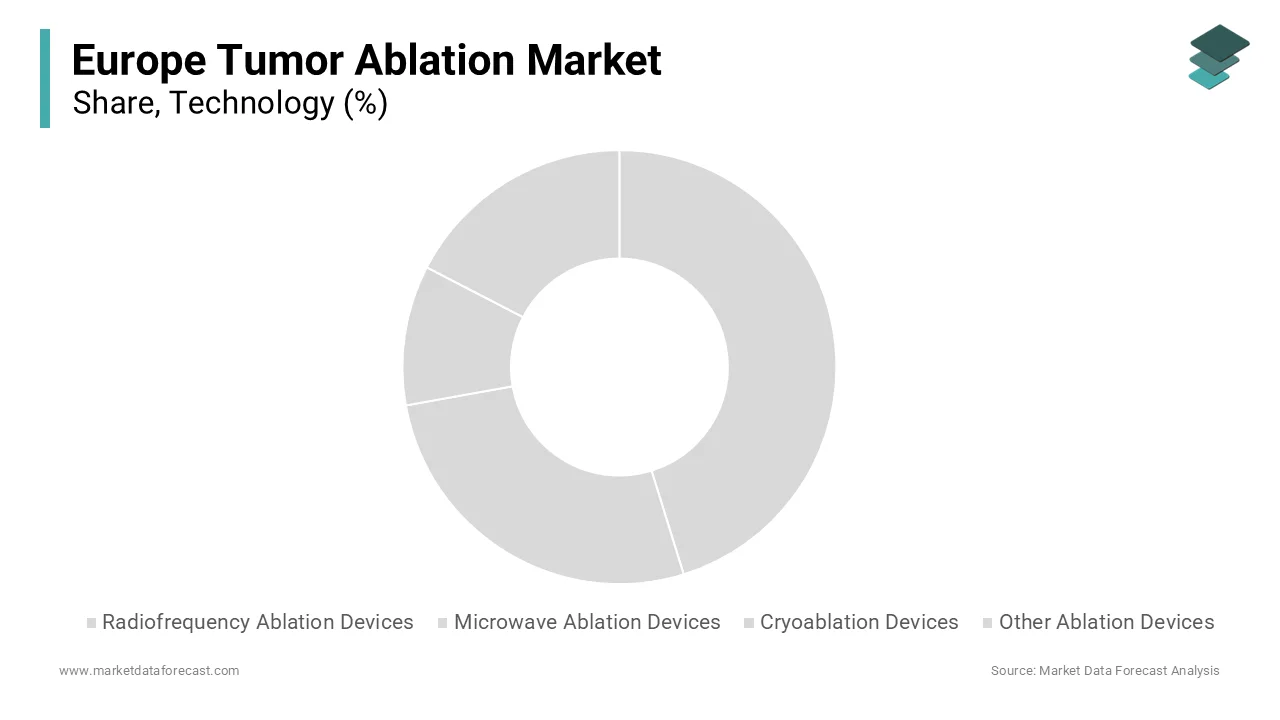
The percutaneous ablation segment dominated the European tumor ablation market by holding 61.6% of the European market share in 2025. The dominance ofthe percutaneous ablation segment in the European market is driven by its minimally invasive nature, compatibility with image guidance, and suitability for outpatient settings. This approach involves inserting ablation probes through the skin under real-time ultrasound, CT, or MRI guidance, avoiding surgical incisions. As per the European Society of Radiology, most liver and renal tumor ablations performed in the EU are conducted percutaneously due to shorter recovery times and lower complication rates compared to open methods. National health systems increasingly favor this route for cost containment, and as per the Organisation for Economic Cooperation and Development, percutaneous ablation reduces average hospital stays compared to surgical resection, translating to significant savings in publicly funded systems like those in Sweden and Italy. Furthermore, advances in probe design and real-time temperature monitoring have improved precision, enabling treatment of tumors near critical structures. The European Association for the Study of the Liver recommends percutaneous radiofrequency or microwave ablation as first-line therapy for early hepatocellular carcinoma in non-surgical candidates, reinforcing its clinical and institutional adoption across the continent.
By Application Insights
The liver cancer segment occupied 39.3% of the European market share in 2025. The growth of the liver cancer segment in the European market is attributed to the high burden of hepatocellular carcinoma and metastatic colorectal cancer to the liver, coupled with strong clinical evidence supporting ablation as a curative or bridging therapy. As per the International Agency for Research on Cancer, liver cancer remains a major burden in Europe, with tens of thousands of new primary cases annually, alongside a significant number of patients developing liver metastases from colorectal primaries. The European Association for the Study of the Liver guidelines designate radiofrequency and microwave ablation as standard of care for single tumors under 3 centimetres in non-surgical candidates, a recommendation adopted by national health authorities in Germany, France, and Spain. Furthermore, ablation is frequently used as a bridge to transplantation to prevent disease progression while patients await donor organs, and as per Eurotransplant, a notable proportion of liver transplant recipients undergo prior ablation. The liver’s accessibility via ultrasound and its tolerance to thermal injury make it anatomically ideal for percutaneous techniques, which ensures sustained procedural volume and technological refinement in this segment.
COUNTRY LEVEL ANALYSIS
Germany Tumor Ablation Market Analysis
Germany had 25.5% of the European tumor ablation market share in 2025. The dominating position of Germany in the European market can be credited to its advanced interventional radiology infrastructure and high procedural volume in oncology. The country operates numerous certified interventional oncology centers, many integrated within university hospitals that serve as referral hubs for complex ablation cases. As per the German Radiological Society, thousands of tumor ablation procedures are performed annually, with liver and renal applications accounting for the majority. Germany’s early adoption of microwave and irreversible electroporation technologies, supported by favorable reimbursement under the German Diagnosis-Related Groups system, has fostered innovation and clinical expertise. Furthermore, the national oncology plan prioritizes minimally invasive therapies for elderly patients, aligning with demographic trends, as 22% of the population is aged 65 or older. Continuous investment in hybrid operating rooms and real-time imaging integration ensures Germany remains at the forefront of ablation technology deployment and clinical outcomes research in Europe.
France Tumor Ablation Market Analysis
France held the second-largest share of the European tumor ablation market in 2025. The growth of France in the European market is attributed to the centralized cancer care networks and strong national guidelines supporting ablation for early-stage tumors. As per the French National Cancer Institute, a large number of ablation procedures are conducted annually, primarily for hepatocellular carcinoma and oligometastatic disease. The country’s designated Comprehensive Cancer Centers follow standardized protocols that include tumor ablation as a core modality, ensuring consistent access across regions. France was among the first EU nations to establish a national registry for ablation outcomes under the French Society of Digestive Imaging, which reported favorable one-year local tumor control rates for liver ablations. Additionally, the national health insurance system provides full reimbursement for CE-marked ablation devices when used in approved indications, removing financial barriers. The integration of ablation into multidisciplinary tumor boards, mandatory for all cancer cases since 2020, further institutionalizes its role in personalized treatment planning, solidifying France’s position as a high-adoption market.
United Kingdom Tumor Ablation Market Analysis
The United Kingdom is estimated to hold a promising share of the European tumor ablation market over the forecast period, owing to the evidence-based adoption through the National Institute for Health and Care Excellence framework. In recent years, the UK has performed thousands of tumor ablation procedures, with rapid growth in lung and renal applications following updated NICE guidance that endorsed ablation for inoperable early-stage cancers. The National Health Service has invested in interventional oncology hubs, such as those in Manchester and Edinburgh, which serve as training centers and drive standardization. As per NHS England’s Cancer Waiting Times Statistics, the median time from diagnosis to ablation for liver tumors has decreased, reflecting system prioritization. The UK also leads in research, with University College London hosting the European Reference Network on abdominal wall and peritoneal tumors, which includes ablation in its consensus protocols. Despite post Brexit regulatory adjustments, the Medicines and Healthcare products Regulatory Agency maintains alignment withthe EU Medical Device Regulation, ensuring timely access to novel ablation platforms.
Italy Tumor Ablation Market Analysis
Italy is expected to exhibit a prominent CAGR in the European tumor ablation market during the forecast period due to the strong regional variation in ablation adoption, with northern regions like Lombardy and Emilia Romagna leading in procedural volume. As per the Italian Association of Medical Oncology, thousands of ablation procedures are performed annually, primarily for hepatocellular carcinoma in patients with underlying cirrhosis. The Italian National Health Service reimburses ablation under Diagnosis-Related Group tariffs that cover both device and procedural costs, facilitating hospital uptake. Italy also hosts key manufacturer training academies, including those run by European ablation device firms, which certify hundreds of interventional radiologists annually. The 2023 National Oncology Plan emphasized minimally invasive therapies for an aging population, with 23% of Italians aged 65 or older, and mandated ablation availability in all regional oncology networks by 2025. These policies and educational initiatives are closing gaps between north and south, positioning Italy as a steadily expanding market with strong clinical foundations.
Spain Tumor Ablation Market Analysis
Spain is projected to account for a notable share of the European tumor ablation market over the forecast period, owing to its focus on ablation for metastatic disease and public health integration. As per the Spanish Society of Medical Oncology, thousands of ablation procedures are performed annually, with a notable emphasis on colorectal liver metastases and oligoprogressive lung lesions. Spain’s universal healthcare system ensures equitable access, and the Ministry of Health includes ablation in its National Strategy for Cancer Control as a cost-effective alternative to surgery. In Catalonia and Madrid, hospital networks have implemented same-day ablation pathways, reducing bed occupancy for eligible patients as documented by the Carlos III Health Institute. Spain also participates actively in European clinical trials, with the Spanish Lung Cancer Group leading a multicenter study on cryoablation combined with immunotherapy for non-small cell lung cancer. With rising cancer incidence and a robust interventional radiology workforce, Spain continues to expand its ablation capacity in alignment with national and EU oncology priorities.
COMPETITIVE LANDSCAPE
The Europe tumor ablation market features a concentrated yet dynamic competitive landscape dominated by multinational MedTech firms with strong regulatory and clinical infrastructures. Competition centers on technological precision, clinical validation,n and seamless integration into hospital imaging and electronic health record systems rather than price. Regulatory barriers under the EU Medical Device Regulation favor established players capable of navigating complex conformity assessments and long-term performance studies. Emerging technologies like irreversible electroporation face slower adoption due to limited reimbursement and training gaps despite clinical promise. National variation in cancer care pathways creates fragmented demand requiring localized market strategies. Academic medical centers in Germany, the United Kingdom, and the Netherlands serve as innovation hubs influencing regional adoption patterns. The market rewards companies that combine device excellence with robust education programs and real-world evidence generation supporting cost-effectiveness. As ablation expands into immunotherapy combination regimens, competition is increasingly defined by scientific collaboration and multidisciplinary integration rather than hardware alone.
KEY MARKET PLAYERS
Some of the dominating companies in the European tumor ablation market are profiled in this report.
- Medtronic Plc.
- Boston Scientific Corporation
- AngioDynamics
- Mermaid Medical
- HealthTronics
- Galil Medical Inc.
- EDAP TMS S.A.
- SonaCare Medical
- Misonix, Inc.
- Neuwave Medical, Inc
TOP LEADING PLAYERS IN THE MARKET
- Boston Scientific Corporation is a global medical technology leader with a robust portfolio in tumor ablation, particularly in radiofrequency and microwave systems used across European oncology centers. The company supplies its RFA and MWA platforms to hospitals in Germany, France, and the United Kingdom under stringent compliance with the EU Medical Device Regulation. In 2024, Boston Scientific expanded its European training academy in Dublin to certify interventional radiologists on real-time imaging integration and probe navigation techniques. The company also collaborates with European clinical trial networks to generate health technology assessment-ready evidence for ablation in emerging indications such as oligometastatic lung cancer. Through scientific engagement, regulatory diligence, and education, Boston Scientific reinforces its role as a trusted partner in advancing minimally invasive oncology care across the region.
- Medtronic plc maintains a significant presence in the European tumor ablation market through its Oncology Therapies division, offering cryoablation and microwave platforms tailored for liver, kidney, and bone tumors. The company leverages its global scale to ensure rapid CE certification and post-market surveillance compliance under the EU MDR framework. In 2023, Medtronic launched an integrated ablation workflow system in partnership with European imaging vendors that synchronizes probe placement with real-time MRI and CT guidance, enhancing procedural accuracy. The company also supports national ablation registries in Sweden and the Netherlands to collect long-term oncologic outcomes data. These initiatives demonstrate Medtronic’s commitment to clinical evidence generation and seamless integration into European interventional oncology pathways.
- Angiodynamics Inc specializes in precision tumor ablation technologies, with a strong focus on microwave and radiofrequency systems used in European ambulatory and hospital settings. The company’s NanoKnife platform for irreversible electroporation has gained clinical traction in Germany and Italy for tumors near critical structures where thermal ablation is contraindicated. In early 2024, Angiodynamics completed validation of a new European distribution hub in the Netherlands to accelerate device delivery and service support across the region. The firm also partners with academic centers in Spain and the UK to train physicians on ablation within immunotherapy combination protocols. By emphasizing niche applications, workflow efficiency, and physician education, Angiodynamics sustains its relevance in Europe’s evolving interventional oncology landscape.
TOP STRATEGIES USED BY THE KEY MARKET PARTICIPANTS
Key players in theEuropeane tumor ablation market prioritize regulatory compliance, clinical evidence generation,n and physician training to strengthen market position. Companies invest in CE certification under the stringent EU Medical Device Regulation and maintainrobust post-markett surveillance systems. They collaborate with leading cancer centers to conduct real-world studies that support health technology assessment submissions and national reimbursement approvals. Strategic partnerships with imaging equipment manufacturers enable seamless integration of ablation devices into radiology workflows. Additionally, firms establish regional training academies to certify interventional radiologists on device handling and procedural protocols. Innovation focuses on enhancing precision through real-time temperature monitoring, electromagnetic tracking, and compatibility with MRI or cone beam CT. These strategies collectively address Europe’s demand for clinically validated minimally invasive oncology solutions within value-based healthcare frameworks.
MARKET SEGMENTATION
This research report on the europe tumor ablation market has been segmented and sub-segmented into the following categories.
By Technology
- Radiofrequency Ablation Devices
- Microwave Ablation Devices
- Cryoablation Devices
- Other Ablation Devices
By Application
- Liver Cancer
- Breast Cancer
- Lung Cancer
- Prostrate Metastasis
- Other Cancer
By Country
- UK
- France
- Spain
- Germany
- Italy
- Russia
- Sweden
- Denmark
- Switzerland
- Netherlands
- Turkey
- Czech Republic
- Rest of Europe