- Product Description Description
- Table of Contents TOC
- List of Table & Figure LOT
- Get Free Sample PDF Sample PDF
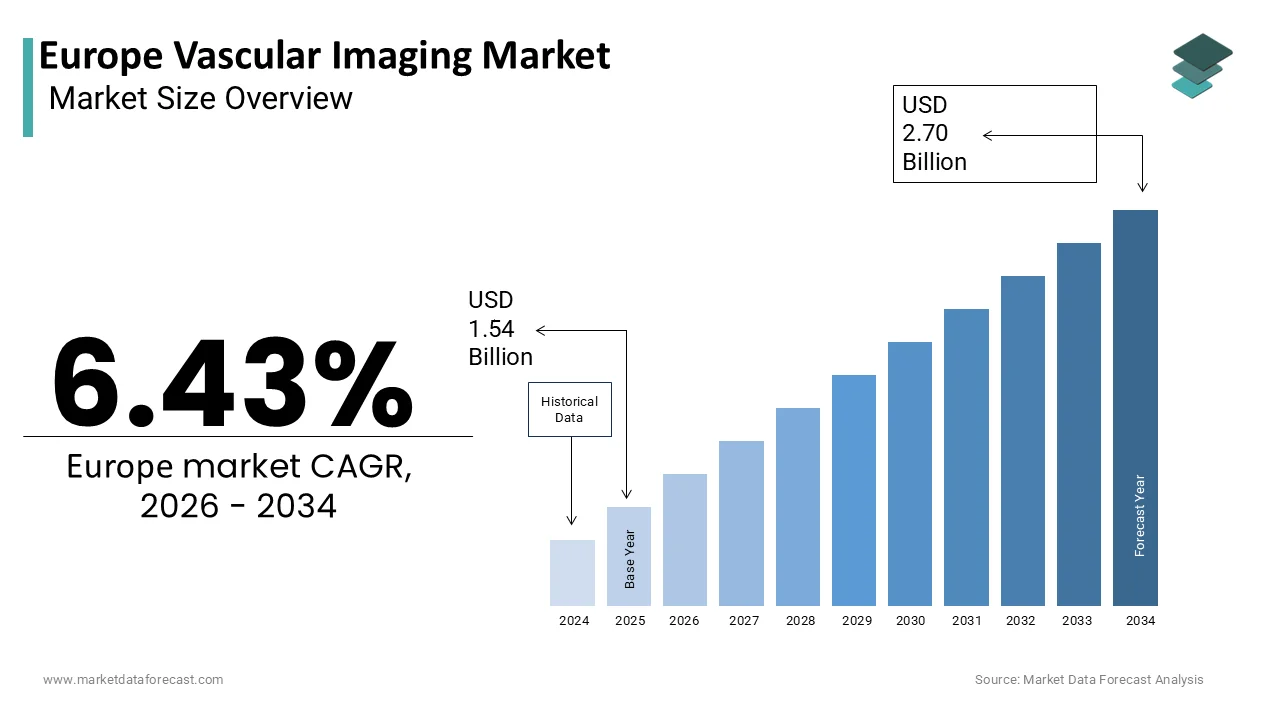
Market Size, 2025
$1.54 BnMarket Estimate, 2026
$1.64 BnMarket Forecast, 2034
$2.7 BnCAGR, 2026–2034
6.43%Europe Vascular Imaging Market Summary
The Europe Vascular Imaging Market size was valued at USD 1.45 billion in 2024 and is anticipated to reach USD 2.54 billion by 2033, growing at a CAGR of 6.43% from 2024 to 2033. The market is gaining momentum due to the rising demand for remote cardiac care, the growing burden of cardiovascular diseases, and technological advancements in AI-powered diagnostics and wearable cardiac monitoring devices.
Key Market Trends & Insights
- Europe dominated the global market with a share of 1.45% in 2024.
- Europe is projected to grow at the fastest rate between 2024 and 2033.
- Based on technology, the IT services segment is the fastest-growing with a projected CAGR of 6.43%.
- AI and wearable tech adoption are key trends driving innovation in the market.
Market Size & Forecast
- 2024 Market Size: USD 1.45 Billion
- 2025 Market Size: USD 1.54Billion
- 2033 Projected Market Size: USD 2.54 Billion
- CAGR (2024–2033): 6.43%
- Europe: Largest market in 2024
- Europe: Fastest-growing region
Europe Vascular Imaging Market Size
The Europe Vascular Imaging Market Size was valued at USD 1.54 billion in 2025, is expected to have 6.43% CAGR from 2026 to 2034 and be worth USD 2.7 billion by 2034 from USD 1.64 billion in 2026.
Vascular imaging refers to a set of diagnostic techniques used to visualize the structure and function of blood vessels, aiding in the detection and management of cardiovascular diseases. In Europe, vascular imaging plays a crucial role in clinical settings due to the high prevalence of circulatory disorders, including peripheral artery disease, stroke, and coronary artery conditions. The market covers various imaging modalities such as ultrasound, computed tomography angiography (CTA), magnetic resonance angiography (MRA), and invasive angiography, all of which contribute to early diagnosis and improved patient outcomes.
According to the European Society of Cardiology (ESC), cardiovascular diseases account for nearly 45% of all deaths in Europe, making them the leading cause of mortality across the region. This alarming statistic has intensified the demand for advanced vascular imaging technologies that enable precise and timely diagnosis.
Moreover, the integration of artificial intelligence and machine learning into imaging systems is enhancing diagnostic accuracy and reducing human error. As reported by the European Commission’s Directorate-General for Health and Food Safety, healthcare expenditures in several EU countries have increased steadily, supporting the adoption of technologically advanced imaging equipment. These factors collectively underline the growing significance of vascular imaging in modern healthcare delivery across Europe.
MARKET DRIVERS
Rising Incidence of Cardiovascular Diseases Across Europe
A primary driver of the Europe vascular imaging market is the escalating burden of cardiovascular diseases (CVDs) among the population. According to the European Society of Cardiology (ESC), CVDs are responsible for more than 4 million deaths annually in Europe, accounting for nearly half of all fatalities in the region. Conditions such as coronary artery disease, cerebrovascular accidents, and peripheral arterial disease necessitate accurate and timely diagnosis, which heavily relies on vascular imaging techniques.
As per the European Heart Network (EHN), hospitalization rates for CVDs have increased over the past decade, directly influencing the demand for vascular imaging services.
Furthermore, national health programs in countries like Germany, France, and the United Kingdom emphasize early screening and preventive cardiology, promoting widespread use of non-invasive imaging tools. With the growing emphasis on precision medicine and risk stratification, vascular imaging remains an indispensable tool in managing cardiovascular conditions, thereby driving sustained market growth.
Technological Advancements in Diagnostic Imaging Equipment
Another significant driver of the Europe vascular imaging market is the continuous advancement in imaging technologies, which enhances diagnostic accuracy, reduces procedural time, and improves patient safety. Innovations such as high-resolution ultrasound, AI-integrated CT and MRI scanners, and portable Doppler devices are transforming vascular diagnostics across the continent.
Moreover, the Fraunhofer Institute for Medical Image Computing notes that AI-assisted image analysis can improve diagnostic efficiency, enabling faster identification of vascular anomalies.
Germany leads in the deployment of advanced imaging systems, with institutions like Charité – Universitätsmedizin Berlin investing heavily in next-generation MRI and CT angiography units. These technological breakthroughs are not only improving patient outcomes but also encouraging broader adoption of vascular imaging across both public and private healthcare sectors in Europe.
MARKET RESTRAINTS
High Cost of Advanced Vascular Imaging Equipment
A major restraint affecting the Europe vascular imaging market is the high cost associated with acquiring and maintaining advanced imaging equipment. Modalities such as magnetic resonance angiography (MRA), computed tomography angiography (CTA), and hybrid imaging systems require significant capital investment, limiting their accessibility, particularly in smaller healthcare facilities and rural clinics.
Moreover, maintenance, software upgrades, and technician training add to the financial burden, discouraging widespread adoption. Like, despite universal healthcare coverage in most European countries, disparities exist in medical device procurement, especially in Eastern Europe. Countries such as Bulgaria and Romania face budgetary constraints that hinder investment in cutting-edge vascular imaging technology.
Also, reimbursement policies vary significantly across the EU, with some nations imposing strict criteria for covering advanced imaging procedures. These financial barriers continue to pose challenges for equitable access to high-quality vascular imaging across the region.
Regulatory Complexity and Lengthy Approval Processes
Another critical constraint in the Europe vascular imaging market is the stringent regulatory environment governing medical imaging devices and software. Compliance with the European Union’s Medical Device Regulation (MDR), implemented in 2021, has introduced more rigorous documentation, clinical evidence requirements, and post-market surveillance obligations.
The European Medicines Agency (EMA) emphasizes that manufacturers must now provide extensive clinical data demonstrating safety and performance, even for software-based imaging solutions.
As per the Association for Diagnostics and Imaging, small and medium-sized enterprises (SMEs) struggle disproportionately under these regulations, as they lack the resources to navigate complex compliance frameworks. This has led to reduced innovation and slower market entry of novel vascular imaging technologies.
Additionally, variability in national regulatory practices within the EU complicates pan-European commercialization strategies. These regulatory hurdles, while ensuring high standards of patient safety, inadvertently slow down the pace of technological adoption in the vascular imaging sector.
MARKET OPPORTUNITIES
Expansion of Telemedicine and Remote Vascular Diagnostics
A significant opportunity emerging in the Europe vascular imaging market is the expansion of telemedicine and remote diagnostic services, particularly in response to the rising demand for decentralized healthcare. The integration of cloud-based imaging platforms and AI-driven interpretation tools is enabling physicians to assess vascular conditions without requiring patients to visit specialized centers.
According to the European Commission’s eHealth Action Plan, telemedicine adoption in the EU has accelerated, with over 20 member states implementing nationwide digital health strategies by 2023. Also, remote vascular monitoring solutions have gained traction, especially in rural areas where access to traditional imaging facilities is limited.
In the UK, the National Health Service (NHS) has launched pilot programs using mobile vascular ultrasound units equipped with real-time data transmission capabilities. With increasing investments in digital infrastructure and supportive policy frameworks, telemedicine is poised to transform vascular diagnostics across Europe.
Integration of Artificial Intelligence in Vascular Imaging Analytics
Another transformative opportunity in the Europe vascular imaging market is the integration of artificial intelligence (AI) into image analysis and diagnostic workflows. AI algorithms enhance the speed and accuracy of vascular assessments by automating lesion detection, vessel segmentation, and pathology classification, reducing reliance on manual interpretation.
As per the European Laboratory for Learning and Intelligent Systems (ELLIS), AI-assisted imaging tools have demonstrated improvement in early detection of vascular abnormalities such as aneurysms and stenosis. Several academic and research institutions, including Germany’s Max Planck Institute, are actively developing deep learning models tailored for vascular diagnostics.
AI-enhanced MRI and CT angiography systems are already being tested in major hospitals, offering real-time decision support to radiologists.
As AI becomes increasingly embedded in clinical practice, it will play a pivotal role in shaping the future of vascular imaging in Europe.
MARKET CHALLENGES
Shortage of Skilled Radiologists and Technicians
A major challenge facing the Europe vascular imaging market is the shortage of trained radiologists and imaging technicians, which limits the efficient utilization of advanced diagnostic equipment. Despite the availability of sophisticated imaging technologies, many healthcare facilities struggle to find professionals capable of operating and interpreting vascular imaging results accurately.
According to the European Society of Radiology (ESR), there is a significant disparity in radiologist density across European countries.
As per the Royal College of Radiologists (UK), the demand for vascular imaging specialists has grown annually, outpacing the rate at which new professionals enter the workforce. This gap is further exacerbated by an aging workforce, with a notable share of radiologists in Western Europe nearing retirement age.
Moreover, according to the European Federation of Societies for Ultrasound in Medicine and Biology (EFSUMB), training programs for vascular sonographers remain inconsistent across the EU, leading to variations in skill levels and diagnostic reliability.
Data Privacy and Cybersecurity Concerns in Digital Imaging Systems
Another pressing challenge in the Europe vascular imaging market is the growing concern around data privacy and cybersecurity threats associated with digital imaging systems. As healthcare institutions increasingly rely on electronic health records (EHRs) and cloud-based imaging repositories, the risk of unauthorized access and data breaches has escalated.
According to ENISA (European Union Agency for Cybersecurity), healthcare organizations across Europe experienced a significant increase in cyberattacks in 2023 compared to the previous year. Vulnerabilities in Picture Archiving and Communication Systems (PACS), which store and transmit medical images, have been identified as prime targets for malicious actors.
The European Data Protection Board (EDPB) underscores that compliance with the General Data Protection Regulation (GDPR) is essential when handling sensitive patient imaging data.
Apart from these, the integration of AI and IoT-enabled imaging devices introduces new security complexities, requiring enhanced encryption and authentication measures. As per the European Commission’s Joint Research Centre (JRC), healthcare providers must invest in secure infrastructure and staff training to mitigate cyber risks effectively. Ensuring data integrity and patient confidentiality remains a formidable challenge as the vascular imaging landscape continues to evolve toward digitization and interconnected systems.
REPORT COVERAGE
| REPORT METRIC | DETAILS |
| Market Size Available | 2025 to 2034 |
| Base Year | 2025 |
| Forecast Period | 2026 to 2034 |
| Segments Covered | By Technology ,Procedure , Application , End User and Country. |
| Various Analyses Covered | Global, Regional, & Country Level Analysis; Segment-Level Analysis, DROC, PESTLE Analysis, Porter’s Five Forces Analysis, Competitive Landscape, Analyst Overview of Investment Opportunities |
| Country Covered | UK, Germany, Italy, France, Spain, Sweden, Denmark, Poland, Switzerland, Netherlands, Rest of Europe. |
| Market Leaders Profiled | Siemens Healthineers (Germany), GE Healthcare (U.K.), Xograph Healthcare (U.K.) |
SEGMENT ANALYSIS
By Technology Insights
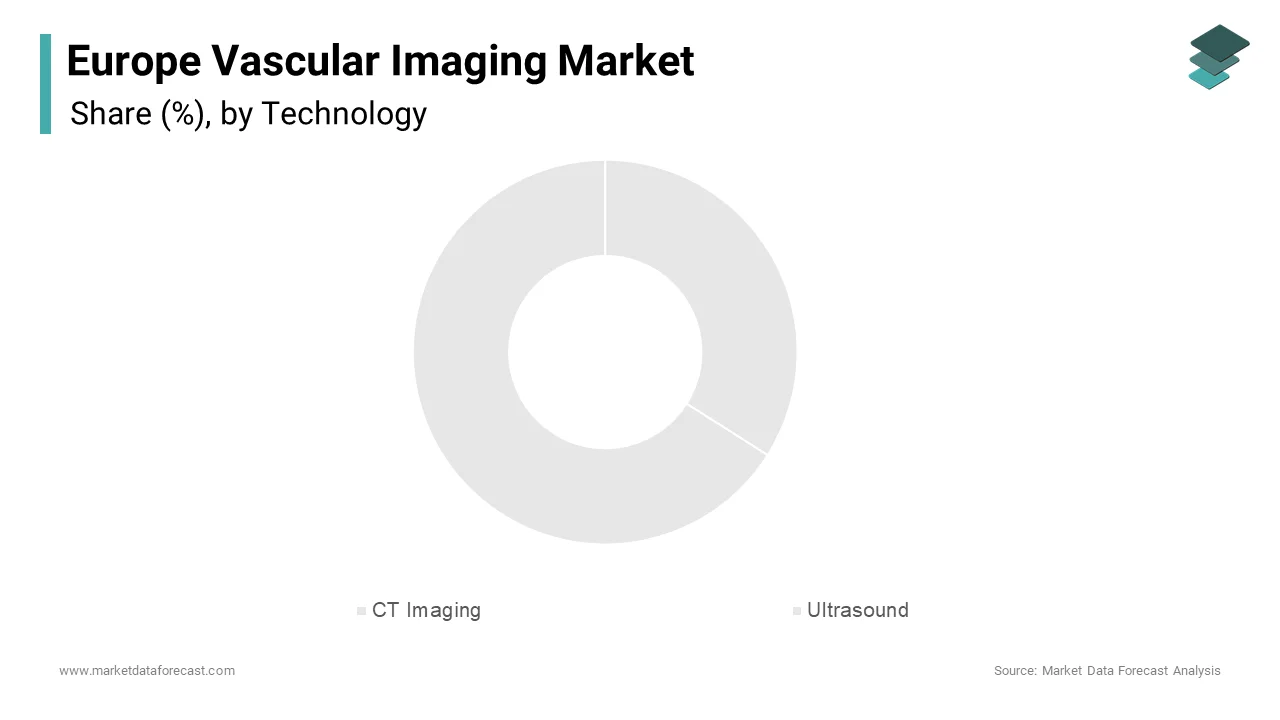
Ultrasound technology dominated the Europe vascular imaging market, accounting for 34.9% of total revenue in 2025. This lead position is primarily attributed to its widespread adoption across hospitals and diagnostic centers due to advantages such as non-invasiveness, absence of ionizing radiation, and cost-effectiveness compared to other imaging modalities.
According to the European Federation of Societies for Ultrasound in Medicine and Biology (EFSUMB), over 60 million vascular ultrasound procedures were performed annually in Europe as of 2023, making it a cornerstone in diagnosing peripheral artery disease, carotid stenosis, and deep vein thrombosis. The modality’s portability and real-time imaging capabilities further enhance its utility in emergency and ambulatory care settings.
Doppler ultrasound remains the first-line diagnostic tool for lower limb ischemia and varicose veins, with adoption rates increasing steadily in primary healthcare systems. In Germany, where early detection programs for vascular diseases are well-established, ultrasound-based screening initiatives have contributed significantly to preventive cardiology efforts.
Moreover, technological advancements such as contrast-enhanced ultrasound and AI-assisted image interpretation are improving diagnostic accuracy, reinforcing the segment's dominant position. So, these innovations are expected to sustain ultrasound’s growth trajectory across both public and private healthcare sectors in Europe.
Computed Tomography (CT) imaging is projected to be the fastest-growing technology segment in the Europe vascular imaging market, registering a CAGR of 7.8%. This rapid expansion is driven by the increasing use of CT angiography (CTA) in acute cardiovascular diagnostics, particularly for detecting coronary artery disease, pulmonary embolism, and aortic aneurysms.
As reported by the European Society of Cardiology (ESC), CT-based imaging has become integral to chest pain protocols in emergency departments, enabling faster rule-out of life-threatening conditions without invasive procedures.
Also, the integration of dual-energy CT and spectral imaging technologies has enhanced plaque characterization and vessel visualization, allowing more precise treatment planning.
Furthermore, reimbursement policies in countries like the UK and Sweden now favor CT angiography for selected patient populations, reducing wait times and procedural risks.
By Procedure Insights
Coronary angiography commanded the Europe vascular imaging market, capturing 28.7% of total volume in 2025. This procedure is widely used to assess coronary artery blockages and guide interventional treatments such as stenting and bypass surgery, making it essential in managing ischemic heart disease.
According to the European Society of Cardiology (ESC), more than 2.5 million coronary angiograms are performed annually across Europe, with Germany and France leading in procedural volumes due to high prevalence of coronary artery disease and advanced interventional cardiology infrastructure. The ESC also reports that hospitalization rates for acute coronary syndromes have remained stable, sustaining demand for diagnostic imaging.
In the UK, the National Institute for Health and Care Excellence (NICE) recommends coronary angiography as part of standard care pathways for patients presenting with unstable angina or suspected myocardial infarction.
Technological advancements such as fractional flow reserve computed tomography (FFR-CT) and intravascular ultrasound (IVUS) are enhancing the diagnostic precision of coronary angiography, driving its continued dominance.
Cerebral angiography is anticipated to rise at the highest CAGR of 8.2% during the forecast period, fueled by rising stroke incidence and expanding applications in neurovascular diagnostics. This procedure enables detailed visualization of cerebral arteries, aiding in the diagnosis of aneurysms, arteriovenous malformations, and ischemic strokes.
Digital subtraction angiography (DSA) and CT angiography (CTA) are increasingly employed in hyperacute stroke units to determine eligibility for thrombectomy or clot-busting therapies.
Sweden and Denmark have been pioneers in integrating cerebral angiography into national stroke response frameworks. According to the Karolinska Institute, implementation of mobile stroke units equipped with on-site CT angiography has reduced treatment delays, significantly improving outcomes.
Moreover, investment in hybrid operating rooms capable of intraoperative angiography is gaining traction, particularly in Germany and Switzerland. With aging populations and growing awareness of stroke symptoms, the demand for rapid neuroimaging continues to rise, positioning cerebral angiography as a high-growth segment within the vascular imaging market.
By Application Insights
Diagnostic applications spearheaded in the Europe vascular imaging market, representing substantial share of total revenue in 2025. This superiority is because of the critical role vascular imaging plays in identifying cardiovascular and cerebrovascular pathologies before initiating therapeutic interventions.
According to the World Health Organization (WHO), cardiovascular diseases remain the leading cause of death in Europe, responsible for over 42.5% of all fatalities. Early and accurate diagnosis through imaging modalities such as ultrasound, CT angiography, and MRI is essential in risk stratification and treatment planning.
Also, population-based screening programs for conditions like abdominal aortic aneurysm and peripheral arterial disease have expanded across several EU nations, including the UK and Sweden. These initiatives rely heavily on non-invasive vascular imaging techniques to detect asymptomatic cases and prevent complications.
Additionally, the integration of artificial intelligence into diagnostic workflows is improving lesion detection and reducing variability among radiologists. With increasing emphasis on preventive medicine and early disease detection, diagnostic vascular imaging remains a cornerstone of modern healthcare delivery across Europe.
Therapeutic applications in the Europe vascular imaging market are projected to grow at a compound annual growth rate (CAGR) of around 9.1%. This surge is primarily driven by the rising adoption of image-guided interventions such as angioplasty, stenting, thrombectomy, and endovascular aneurysm repair (EVAR).
Germany leads in therapeutic vascular imaging utilization, with university hospitals such as Charité – Universitätsmedizin Berlin adopting hybrid operating suites that combine imaging and interventional capabilities. These setups enable clinicians to perform complex procedures with greater precision and safety.
Moreover, the expansion of mobile stroke units equipped with portable CT scanners has enabled immediate thrombectomy decisions based on cerebral angiographic findings. With ongoing advancements in minimally invasive therapies and supportive regulatory frameworks, the therapeutic segment is poised for sustained high growth across Europe.
By End User Insights
Hospitals led the Europe vascular imaging market, accounting for 68.7% of total usage in 2025. This overwhelming share is attributable to the centralized nature of vascular diagnostics and interventions within hospital settings, which house specialized cardiology, radiology, and neurology departments.
The presence of multidisciplinary teams and integrated imaging suites allows for seamless coordination between diagnosis and treatment.
Large academic medical centers in Germany, such as University Hospital Heidelberg, have invested heavily in advanced imaging infrastructure, including hybrid operating rooms and AI-integrated PACS systems. These developments support high-volume, complex vascular imaging requirements.
Given their role in emergency care, chronic disease management, and interventional procedures, hospitals will continue to drive the majority of vascular imaging activity across Europe.
Diagnostic imaging centers are rising as the booming end-user segment in the Europe vascular imaging market, projected to expand at a CAGR of 8.5% through 2033. This growth is fueled by increasing demand for outpatient imaging services, shorter waiting times, and cost-efficient alternatives to hospital-based diagnostics.
In France, the Haute Autorité de Santé (HAS) has encouraged the decentralization of vascular diagnostics to reduce hospital overcrowding and improve patient access.
Besides, advancements in portable imaging systems and teleradiology platforms are enabling diagnostic centers to offer remote consultations and second opinions, further expanding their reach. These trends indicate a structural shift toward decentralized, efficient vascular diagnostics, positioning diagnostic centers as a key growth engine in the market.
COUNTRY LEVEL ANALYSIS
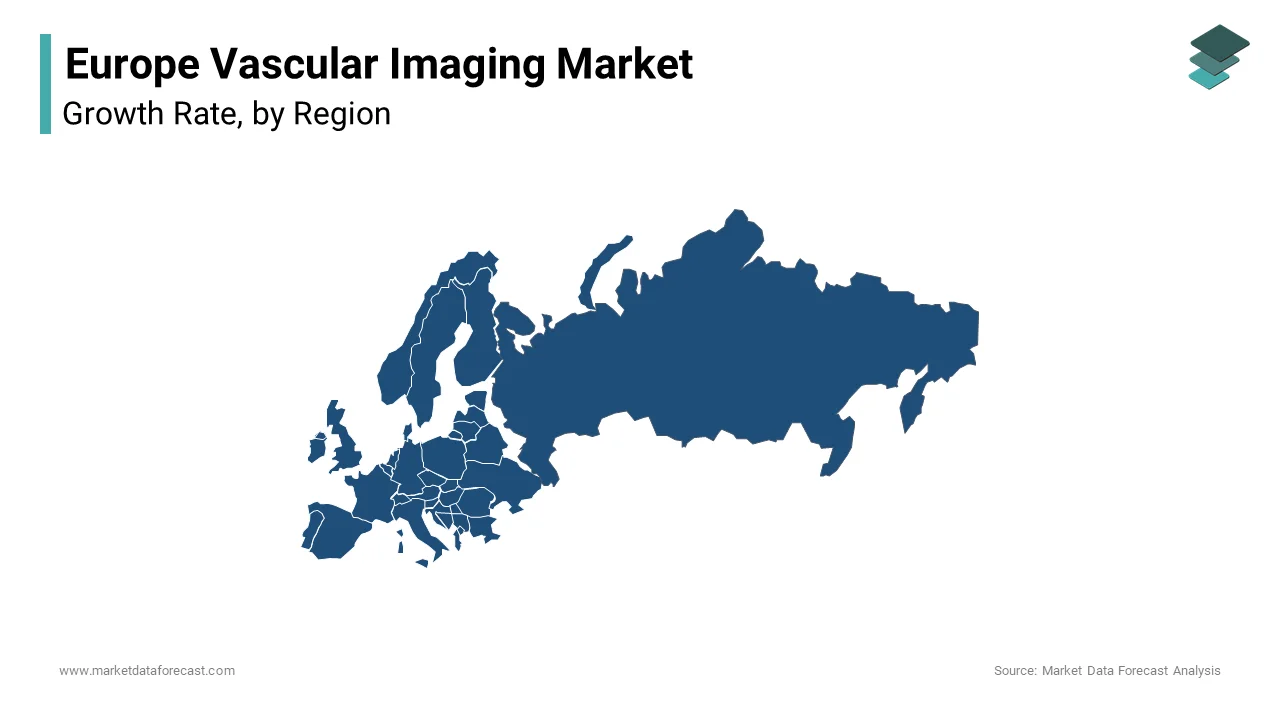
Germany held the largest share of the Europe vascular imaging market, accounting for 22.7% of regional revenue in 2025. As a healthcare leader in Europe, Germany benefits from a robust clinical infrastructure, high healthcare expenditure, and early adoption of advanced imaging technologies.
Germany’s commitment to research and development is evident through institutions like Charité – Universitätsmedizin Berlin and the University Hospital Heidelberg, which lead in integrating AI-driven imaging analytics and hybrid operating room technologies. The German Society of Radiology (Deutsche Röntgengesellschaft) emphasizes that continuous innovation and physician training programs ensure high standards in vascular imaging practices.
With favorable reimbursement policies, a growing aging population, and a proactive regulatory environment, Germany remains the dominant force in shaping the future of vascular imaging in Europe.
France is strengthening its position as the second-largest contributor. The country's emphasis on preventive healthcare, coupled with a well-developed network of public and private diagnostic centers, drives steady demand for vascular imaging services.
According to the French Ministry of Health and Prevention, over 1.2 million vascular imaging procedures were conducted in 2023, with Doppler ultrasound and CT angiography forming the bulk of diagnostic evaluations.
As per the French Society of Radiology (SFR), the adoption of digital imaging networks and cloud-based PACS systems has streamlined workflow efficiency across hospitals and outpatient clinics. With strategic investments in AI-powered diagnostics and tele-radiology, France continues to strengthen its vascular imaging capabilities, ensuring timely and accurate assessments for a growing patient base.
The United Kingdom saw a strong adoption in the Europe vascular imaging market in 2025, driven by comprehensive healthcare coverage through the National Health Service (NHS) and a strong focus on cardiovascular disease prevention. The NHS Long Term Plan has emphasized early diagnosis and digital transformation, leading to increased deployment of vascular imaging technologies across the country.
The UK has also pioneered mobile stroke units equipped with onboard CT scanners, enabling pre-hospital diagnosis and immediate triage to thrombectomy centers. As per the Stroke Association, these units have improved treatment initiation times, significantly enhancing patient outcomes.
Besides, the Royal College of Radiologists notes that workforce shortages in radiology are being mitigated through AI-assisted reporting systems and expanded training programs. With continued government support and technological advancements, the UK remains a key player in the European vascular imaging landscape.
Italy contributed significant share of the Europe vascular imaging market in 2025, with growth supported by recent healthcare reforms and increased investments in diagnostic infrastructure.
Also, Italy has launched nationwide screening initiatives for atrial fibrillation and carotid artery disease, increasing the demand for Doppler and CT-based vascular assessments.
These initiatives aim to reduce disparities in vascular imaging access between Northern and Southern Italy.
Despite challenges related to regional healthcare fragmentation, Italy is strengthening its vascular imaging ecosystem through policy alignment, technology adoption, and cross-sector collaborations.
Spain represented notable share of the Europe vascular imaging market in 2025, with growth propelled by rising outpatient imaging utilization and expanding private healthcare networks. Vascular imaging adoption has increased annually since 2020, driven by rising prevalence of diabetes-related vascular complications and hypertension.
Age-related vascular disorders necessitate frequent diagnostic evaluations, contributing to higher imaging volumes.
The Spanish healthcare system has embraced digital health strategies, with the Ministry of Health implementing nationwide teleradiology platforms that allow for centralized interpretation of vascular images. With a growing emphasis on preventive cardiology and efficient resource allocation, Spain is emerging as a key growth market in the European vascular imaging sector.
KEY MARKET PLAYERS AND COMPETITIVE LANDSCAPE
Key players dominating in the Europe Vascular Imaging Market profiled in this report are Siemens Healthineers (Germany), GE Healthcare (U.K.), Xograph Healthcare (U.K.), and Piur imaging GmbH (Austria), N.V. (Netherlands), Pie Medical Imaging (Netherlands), Esaote SpA (Italy)
The competition in the Europe vascular imaging market is intense and characterized by the presence of global medical technology giants alongside specialized regional players. The demand for high-quality, efficient, and minimally invasive diagnostic tools has intensified rivalry, pushing companies to continuously innovate and refine their imaging solutions. Strategic moves such as product launches, technological integrations, and collaborative ventures are common tactics used to gain an edge in this highly regulated yet rapidly evolving sector.
Market leaders are leveraging their established distribution networks and deep-rooted relationships with healthcare institutions to maintain dominance, while emerging players are focusing on niche innovations and cost-effective imaging alternatives. The growing emphasis on AI-assisted diagnostics, interventional imaging, and mobile imaging units has further diversified the competitive landscape, encouraging both incumbents and startups to explore new avenues for growth. Additionally, the increasing adoption of value-based healthcare models across Europe is compelling vendors to offer not only superior imaging performance but also enhanced cost-efficiency and workflow optimization.
Regulatory pressures, coupled with varying reimbursement landscapes across European countries, add another layer of complexity to market dynamics. As a result, companies must navigate a delicate balance between innovation, compliance, and affordability to sustain long-term competitiveness in the vascular imaging space.
Top Players in the Market
One of the leading players in the Europe vascular imaging market is Siemens Healthineers . The company offers a comprehensive portfolio of advanced imaging systems, including MRI, CT, and ultrasound technologies tailored for vascular diagnostics. With a strong focus on innovation, Siemens has been instrumental in integrating artificial intelligence into imaging workflows, enhancing diagnostic accuracy and efficiency across European healthcare institutions.
Another key player is GE Healthcare , which plays a vital role in shaping the vascular imaging landscape through its cutting-edge CT and ultrasound solutions. The company’s emphasis on digital health platforms and AI-driven analytics supports clinicians in making faster, more precise vascular assessments. GE Healthcare collaborates closely with academic and clinical partners across Europe to drive adoption of next-generation imaging technologies.
Philips Healthcare is also a dominant force in the market, offering integrated vascular imaging systems that combine hardware, software, and telehealth capabilities. Philips emphasizes patient-centric imaging solutions, particularly in cardiology and neurology, where early diagnosis is critical. Their commitment to connected care and data interoperability positions them as a strategic partner for European hospitals aiming to modernize vascular diagnostics.
Top Strategies Used by Key Market Participants
Key players in the Europe vascular imaging market are increasingly focused on technological innovation and product development to maintain competitive differentiation. Companies are investing heavily in AI-integrated imaging platforms, hybrid operating suites, and portable vascular imaging devices that enhance diagnostic precision and streamline clinical workflows.
Another major strategy involves strategic partnerships and collaborations with research institutions, healthcare providers, and regulatory bodies. These alliances help manufacturers align their offerings with evolving clinical needs, accelerate regulatory approvals, and expand access to regional markets across Europe.
Additionally, leading firms are prioritizing digital transformation and teleimaging integration to support remote diagnostics and real-time decision-making. By embedding cloud-based imaging repositories and AI-assisted interpretation tools into their portfolios, companies aim to improve efficiency, reduce diagnostic delays, and enhance overall patient outcomes across the region.
RECENT HAPPENINGS IN THE MARKET
In February 2025, Siemens Healthineers launched a new AI-powered vascular imaging suite at the European Congress of Radiology in Vienna. This platform enhances image analysis speed and accuracy, positioning Siemens as a leader in intelligent diagnostic imaging solutions across the region.
In May 2025, Philips Healthcare announced a strategic collaboration with a major German university hospital to co-develop AI-enhanced vascular imaging protocols. The initiative aims to improve early detection of cardiovascular diseases and support personalized treatment planning in clinical settings.
In August 2023, GE Healthcare introduced a compact, mobile CT system designed specifically for stroke diagnostics in rural and underserved areas across Europe. This innovation supports rapid deployment in emergency situations, reinforcing GE’s commitment to expanding access to advanced vascular imaging.
In January 2025, Canon Medical Systems expanded its manufacturing facility in Italy to increase production capacity for MRI and CT scanners used in vascular applications. This move strengthens Canon's supply chain and responsiveness to European healthcare providers.
In October 2023, Esaote , an Italian medical imaging company, unveiled a next-generation Doppler ultrasound system optimized for peripheral vascular diagnostics. Designed for outpatient use, the system targets rising demand for non-invasive vascular assessments in private clinics and diagnostic centers across Europe.
MARKET SEGMENTATION
This research report on the Europe Vascular Imaging Market has been segmented and sub-segmented into the following categories.
By Technology
- CT Imaging
- Ultrasound
By Procedure
- Coronary Angiography
- Cerebral Angiography
By Application
- Diagnostic Applications
- Therapeutic Applications
By End User
- Hospital
- Diagnostic Center
By Country
- UK
- France
- Spain
- Germany
- Italy
- Russia
- Sweden
- Denmark
- Switzerland
- Netherlands
- Turkey
- Czech Republic
- Rest of Europe