- Product Description Description
- Table of Contents TOC
- List of Table & Figure LOT
- Get Free Sample PDF Sample PDF
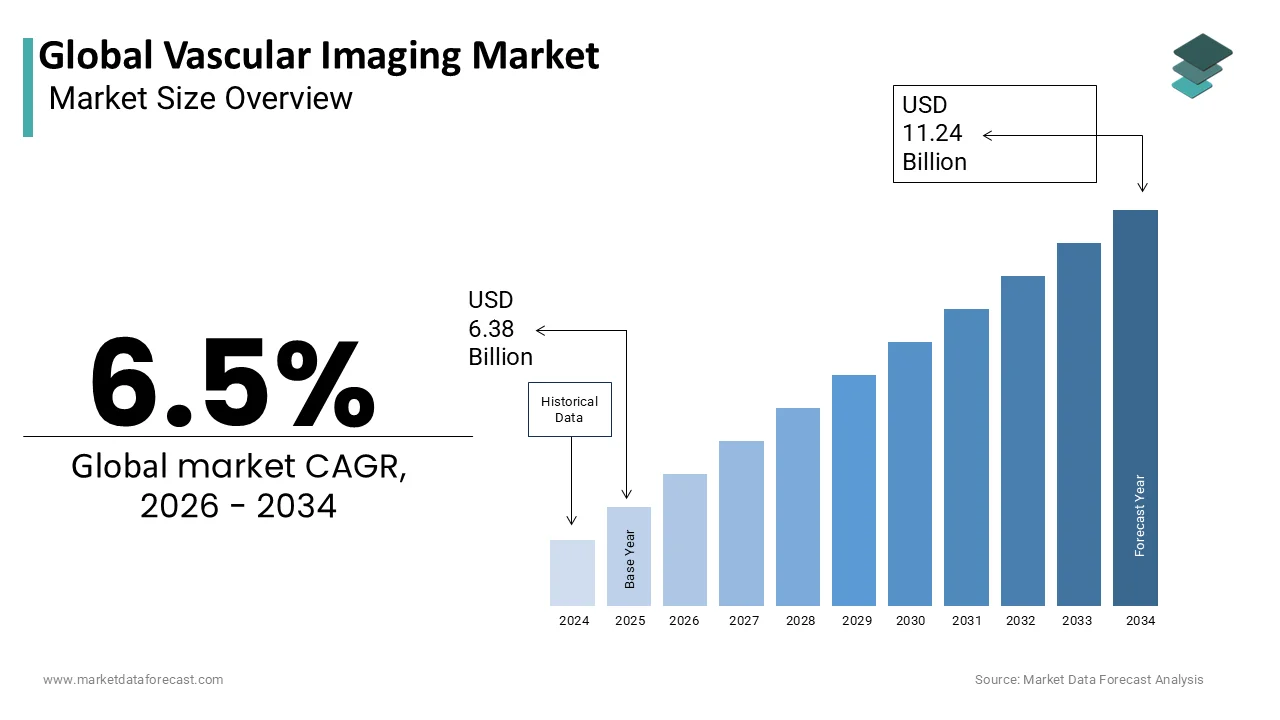
Market Size, 2025
$6.38 BnMarket Estimate, 2026
$6.79 BnMarket Forecast, 2034
$11.24 BnCAGR, 2026–2034
6.5%Global Vascular Imaging Market Size
The Global Vascular Imaging Market is projected to grow from USD 6.38 billion in 2025 to USD 6.79 billion in 2026 and reach USD 11.24 billion by 2034, registering a CAGR of 6.5% during the forecast period from 2026 to 2034.
Vascular imaging is used for evaluating blood vessels, except the coronary arteries, for diagnosing conditions associated with abnormal blood flow. Vascular imaging aids in evaluating the success of procedures that graft or bypass blood vessels, monitoring the blood flow to organs and tissues throughout the body, detecting blood clots (deep vein thrombosis (DVT) in the prominent veins of the legs or arms, determining whether a patient is a good candidate for angioplasty, locating and identifying blockages (stenosis) and abnormalities like plaque or emboli and aiding in planning for their effective treatment. Technologies used to generate images of the blood vessels include vascular ultrasound, computed tomography (CT), and magnetic resonance imaging (MRI).
MARKET DRIVERS
The growing number of vascular disorders, rising incidence of cardiovascular diseases, and technological developments in vascular imaging are majorly propelling the global vascular imaging market growth.
The number of patients suffering from vascular-related diseases is increasing due to a rise in incidences of hypertension and diabetes. Hence, rise in awareness of the early diagnosis of vascular diseases as it could lead to death. The technique is used to study the blood flow in the body and also helps detect blockage in the blood vessel that could lead to organ failure. It is one of the factors propelling the global vascular imaging market growth. The introduction of Image-guided therapy, facilitating real-time visualization of normal tissue and pathological entities, with a combination of modern intraoperative imaging modalities and 3D imaging over 2D imaging, is expected to boost the adoption rate of vascular imaging systems. Vascular imaging is used for surgical planning and long-term disease management. Many surgical specialties use vascular imaging to diagnose diseases, which is estimated to support the global vascular imaging market growth. The fact that vascular imaging is a noninvasive procedure also boosts the market growth for vascular imaging. Vascular imaging is also used to determine the clinical outcome of stem cells and engineered tissue in regenerative medicine. A steady shift observed in preference from conventional invasive surgery to minimally invasive diagnostic procedures to treat various cardiovascular conditions like valvular diseases, and coronary and aortic diseases, using modalities like Doppler ultrasound, computed tomography, magnetic resonance imaging, and nuclear imaging is expected to continue to drive revenue growth of the market. Adopting the latest technology is also one factor for the global vascular imaging market to grow tremendously.
In recent years, there have been significant advances in noninvasive imaging modalities in vascular pathologies. Easy availability of each imaging modality allows thorough understanding and better selection of the optimum imaging strategies, enabling the safe performance of interventions and facilitating the interpretation of imaging studies. Some of these are Doppler ultrasound, an initial imaging modality that is safe, inexpensive, and provides temporal resolution of vascular pathologies, which is used most frequently in vascular surgeries; Digital Subtraction Angiography or DSE, the imaging modality for endovascular intervention, which has a paramount radiation safety, and is operator-dependent; Computed tomography angiography and magnetic resonance angiography, the highly advanced modalities, have replaced DSA for diagnostic arterial imaging.
MARKET RESTRAINTS
The cost of the machinery and equipment for vascular imaging is more. In addition, it requires skilled and trained operators as these machines are difficult to operate, which is some of the challenges for the growth of the vascular imaging market. Furthermore, pricing pressure on the manufacturers because of the fierce competition among market participants and a large number of hospital networks operating under one organization, leveraging the price of the medical devices, which reduces the profitability margins, may hamper the revenue growth of the vascular imaging systems market.
REPORT COVERAGE
| REPORT METRIC | DETAILS |
| Market Size Available | 2024 to 2034 |
| Base Year | 2025 |
| Forecast Period | 2026 to 2034 |
| Segments Analysed | By Procedure, Technology, Application, End-User, and Region |
| Various Analyses Covered | Global, Regional & Country Level Analysis, Segment-Level Analysis, Drivers, Restraints, Opportunities, Challenges; PESTLE Analysis; Porter's Five Forces Analysis, Competitive Landscape, Analyst Overview of Investment Opportunities |
| Regions Analysed | North America, Europe, Asia Pacific, Latin America, Middle East, and Africa |
| Market Leaders Profiled | Siemens Healthineers, GE Healthcare, Toshiba Medical Systems Corporation |
SEGMENTAL ANALYSIS
Global Vascular Imaging Market Analysis By Technology
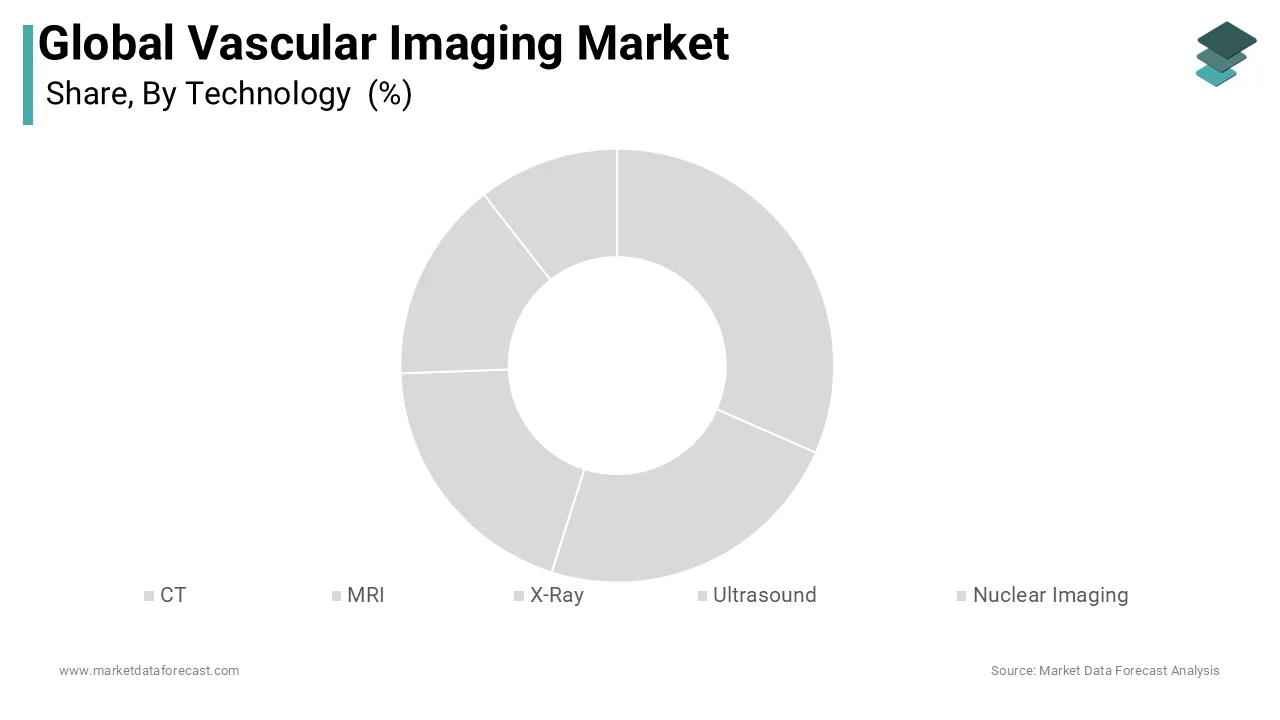
The MRI segment is expected to dominate this market based on technology. The increase in the use of MRI in vascular imaging is mainly due to its minimally invasive nature and high efficacy. MRI is a noninvasive multiplanar imaging, with the benefits of no contrast material requirements or ionizing radiation, used as an alternative to technically limited ultrasonography or computed tomography. It defines anatomy, serial examinations, measures blood flow, and early diagnosis of atherosclerotic plaque along with tissue perfusion in the heart and other solid viscera. The increasing prevalence of cardiovascular diseases is the key factor driving the growth of this segment.Computed Tomography (CT) is also estimated to hold a significant market share over the forecast period due to its application in the evaluation of coronary arteries, which any other vascular imaging modality cannot evaluate, and the most commonly diagnosed disorder, Tumors, used for fluid biopsy to help diagnose investigate internal bleeding. In addition, it is also used for planning surgical treatment by viewing almost every part of the body and disease or injury diagnosis.
Global Vascular Imaging Market Analysis By Procedure
Based on the procedure, the Coronary angiography segment is anticipated to account for the largest share of the market. Coronary Angiography is performed using Computed Tomography by noninvasive means for the detection of CAD by assessing the hemodynamic consequences of CAD, which shows blood flow to and around the heart. An increase in the prevalence of CVDs and an increase in the senior population are major factors driving the growth of this market segment.Cerebral Angiography is also expected to hold a significant market share since it is used to identify or confirm the brain's blood vessel-related problems, like Bulging blood vessels (aneurysms) or abnormal blood vessels (vascular malformation). They produce very detailed and accurate pictures of brain blood vessels, which might eliminate the need for surgery. In addition, these uses imaging guidance catheter to improve the blocked blood flow in the brain's arteries and veins and deliver focused radiation therapy.
Global Vascular Imaging Market Analysis By Application
The diagnostic segment is foreseen to be the largest in terms of application because vascular imaging mainly involves diagnosing the disease from different body tests.The therapeutic segment is awaited to be the fastest-growing segment due to the clinical demonstration of therapeutic effects through the intensity spectrum. Both thermal and non-thermal interaction methods provide a therapeutic effect. Acoustic streaming is expected to be prominent at low intensities, but as the intensity increases, heating and acoustic cavitation will take over.
Global Vascular Imaging Market Analysis By End User
Based on end-user, Hospitals are the largest end-users of vascular imaging systems. It is also projected to register the highest growth. The hospital segment is attributable to increasing support for the installation of technologically advanced diagnostic equipment by government and global healthcare organizations to improve patient satisfaction, simplify workflow, and availability of numerous diagnostic imaging equipment like ultrasound, magnetic resonance imaging (MRI), and computed tomography, with reduced costs. In addition, it can be credited to technological development, an increase in healthcare expenditure, and the use of imaging systems in hospitals and hybrid ORs.Global Vascular Imaging, used in Diagnostic Imaging Centers for arterial and venous imaging, is also anticipated to show a high growth rate due to its service as an essential tool to diagnose vascular diseases like carotid artery disease, atherosclerosis, pulmonary embolism (PE), and deep vein thrombosis (DVT) with noninvasive techniques for checking the blood flow in arteries and veins using high-frequency sound waves.
REGIONAL ANALYSIS
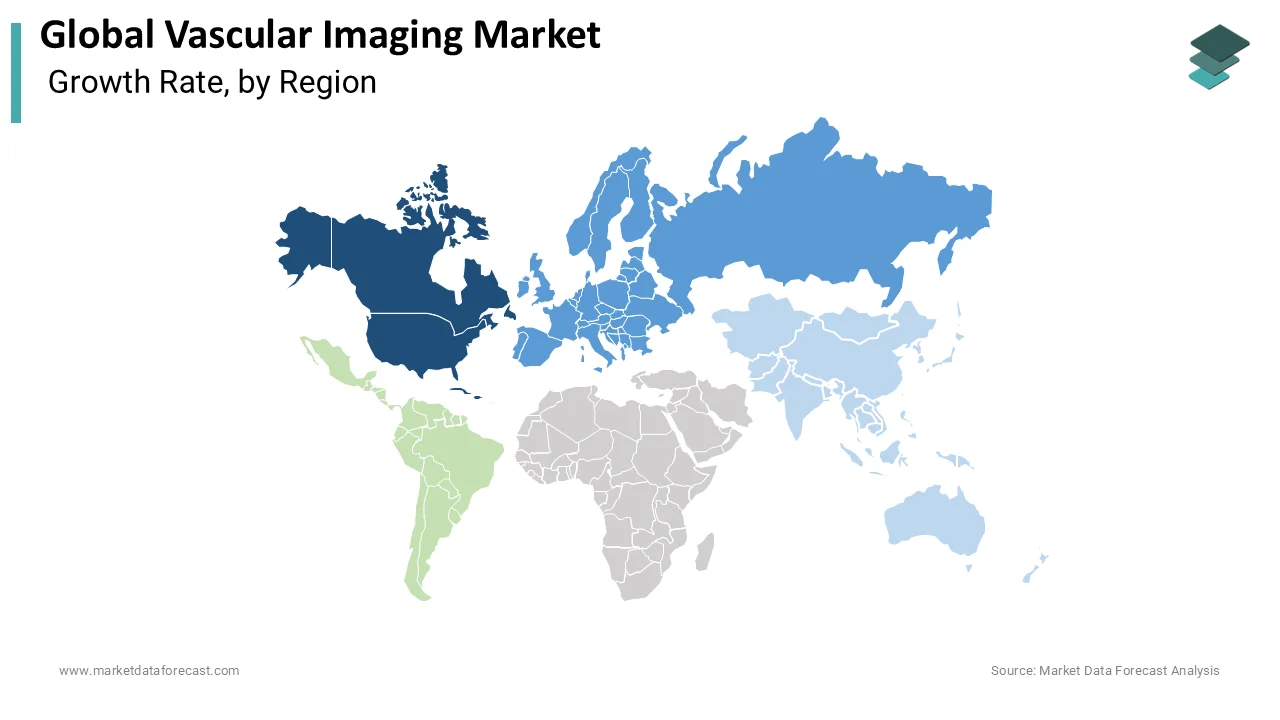
Regionally, the North American region is expected to hold a significant share of the global vascular imaging market throughout the forecast period. MRIs are highly advanced in this region with multiplane capabilities with higher resolution images. High capital investment among end-users like multi-specialty hospitals in the U.S. is expected to boost demand for vascular imaging systems in the North American region. Europe is expected to be the second most lucrative vascular imaging systems market due to high investment in the healthcare industry. Asia – Pacific, excluding the Japan market, is expected to witness high revenue growth over the forecast period due to the growing geriatric population and increasing awareness about the new technologies in vascular imaging systems. CT is expected to be the most dominant type of vascular imaging in hospitals and diagnostic centers in the Latin American region because of its low cost compared with MRI or nuclear imaging. The Middle East and African regions are projected to have moderate growth, majorly due to gulf nations like Saudi Arabia and the UAE due to fast growing healthcare sector and rise in healthcare development.
COMPETITIVE LANDSCAPE
KEY PLAYERS MARKET
Some of the companies that are playing a leading role in the global vascular imaging market profiled in the report are
- Siemens Healthineers,
- GE Healthcare,
- Toshiba Medical Systems Corporation,
- Hitachi Medical Corporation,
- Samsung Medison,
- Shimadzu Corp.,
- St. Jude Medical Inc.,
- TERUMO Corporation,
- Koninklijke Philips N.V.,
- Fujifilm SonoSite.
GLOBAL VASCULAR IMAGING MARKET NEWS
-
In Oct 2022, DirectMed Parts & Service, LLC, leading medical imaging parts, systems, and service company, announced the acquisition of ScanMed LLC, the most comprehensive OEM-certified MRI coil company, both of which are certified and compliant with ISO.
- In Oct 2022, a company of Canadian Hospital Specialties Limited, CHS USA Inc., completed the acquisition of Medical Imaging Solutions International, known for high-quality and reliable products in the healthcare industry, which would further increase CHS' presence in the diagnostic imaging market of the United States, to provide a positive contribution to health care.
MARKET SEGMENTATION
This research report on the global vascular imaging market has been segmented based on technology, application, end-user, and region.
By Technology
- CT
- MRI
- X-Ray
- Ultrasound
- Nuclear Imaging
By Procedure
- Coronary Angiography
- Peripheral Angiography
- Cerebral Angiography
- Neurovascular Angiography
- Microangiography
- Vascular Ultrasound Procedures
By Application
- Diagnostic
- Therapeutic
By End User
- Hospital
- Diagnostic Center
- Other End Users
By Region
- North America
- Europe
- Asia Pacific
- Latin America
- Middle East and Africa