- Product Description Description
- Table of Contents TOC
- List of Table & Figure LOT
- Get Free Sample PDF Sample PDF
Market Size, 2025
$2.71 BnMarket Estimate, 2026
$2.84 BnMarket Forecast, 2034
$4.19 BnCAGR, 2026–2034
4.97%Europe Veterinary Vaccines Market Summary
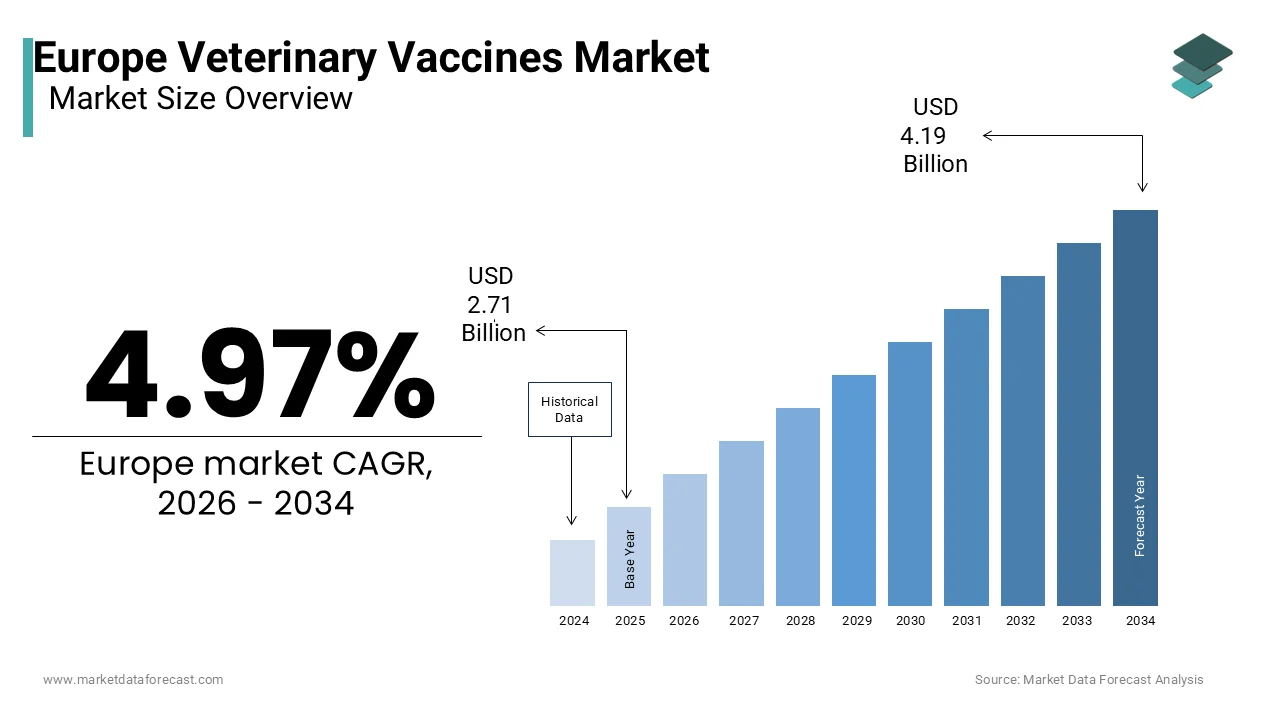
The Europe veterinary vaccines market, valued at USD 2.71 billion in 2025, is projected to reach USD 4.19 billion by 2034 at a CAGR of 4.97%, driven by mandatory vaccination policies, rising pet humanization, and EU-led antimicrobial stewardship initiatives.
Key Market Insights
- 2025 Market Size: USD 2.71 billion
- 2026 Estimate: USD 2.84 billion
- 2034 Forecast: USD 4.19 billion
- CAGR (2026–2034): 4.97%
- Base Year: 2025
- Forecast Period: 2026–2034
Quick Growth Drivers
- Mandatory vaccination programs for rabies, bluetongue, and avian influenza
- Expansion of companion animal ownership and preventive pet healthcare
- EU One Health and antimicrobial resistance (AMR) reduction policies
- Recurring transboundary animal disease outbreaks
- Rising pet insurance penetration is enabling routine vaccination
Principal Restraints
- Stringent approval requirements under EU Regulation 2019/6
- High development costs and long timelines for vaccine authorization
- Limited innovation incentives for minor species and niche diseases
- Growing vaccine hesitancy among pet owners in select EU countries
High-Value Opportunities
- Expansion of DIVA (marker) vaccines for disease eradication programs
- Integration of vaccines into national antimicrobial stewardship plans
- Growth of recombinant and vector-based vaccine platforms
- Emergency and preventive vaccination for avian influenza and ASF risk zones
- Development of thermostable and cold-chain–resilient formulations
Key Market Challenges
- Cold-chain dependency of live and attenuated vaccines
- Limited commercial viability for minor-use/minor-species vaccines
- Fragmented vaccination guidelines across EU member states
- Infrastructure gaps in rural and backyard livestock systems
Fastest-Growing Segments
- Poultry Vaccines: 10.4% CAGR avian influenza outbreaks
- Recombinant Vector Vaccines: 13.3% CAGR safety & DIVA compatibility
- Livestock Respiratory Vaccines: High uptake under AMR reduction programs
- Lifestyle Companion Animal Vaccines: Expanding preventive scope
Regional Leadership & Dynamics
- Germany (23.5%) is the largest market, with a strong livestock base and high pet ownership
- France's proactive disease control and ruminant vaccination programs
- United Kingdom companion animal dominance, post-Brexit regulatory agility
- Italy's poultry density and endemic vector-borne diseases
- Spain's outdoor livestock systems and climate-driven disease pressure
What Wins Commercially
- Compliance with EU Regulation 2019/6 and centralized EMA approvals
- DIVA-compatible vaccines aligned with trade and surveillance needs
- Strong cold-chain logistics and digital batch traceability
- Broad portfolios covering both livestock and companion animals
- Close collaboration with national veterinary authorities
Top Strategic Ask for Executives
Invest in recombinant and marker vaccine platforms, localize EU manufacturing capacity, and align vaccine portfolios with antimicrobial reduction and disease surveillance mandates to secure long-term institutional demand.
Leading Players
Some of the companies that are playing a dominating role in the Europe veterinary vaccines market include:
- Boehringer Ingelheim GmbH
- Zoetis
- Ceva Santé Animale
- Merck & Co., Inc.
- Bayer HealthCare AG
- Novartis Animal Health, Inc.
- Indian Immunologicals Ltd.
- Biogenesis Bagó SA
Europe Veterinary Vaccines Market Size
The europe veterinary vaccines market was valued at USD 2.71 billion in 2025, is expected to have 4.97% CAGR from 2026 to 2034, and be worth USD 4.19 billion by 2034 from USD 2.84 billion in 2026.
Veterinary vaccines are biological preparations designed to induce active immunity in livestock, companion animals,s and aquaculture species against bacterial, viral, and parasitic diseases. These products include live, attenuated, inactivated, subunit, recombinant, and vector-based formulations administered via injection, oral, or intranasal routes. As per the European Medicines Agency, veterinary medicines are subject to centralized marketing authorizations across the EU, with vaccines forming a significant portion of approvals, and mandatory vaccination programs for rabies in dogs and bluetongue in ruminants are enforced in multiple member states. The regulatory framework is governed by Regulation (EU) 2019/6 which mandates rigorous demonstration of safety, efficacy, and batch consistency. According to Eurostat, the EU livestock population in 2024 included around 132 million pigs, 72 million bovine animals, and 57 million sheep. Pet ownership across Europe remains high, with tens of millions of dogs and cats. This vast animal health infrastructure underpins sustained demand for prophylactic solutions that safeguard animal welfare, public health, and agricultural productivity.
MARKET DRIVERS
Mandatory Vaccination Policies for Zoonotic and Transboundary Diseases
The European Union enforces compulsory vaccination against several high-consequence diseases to protect both animal and human populations, which is one of the major factors driving the growth of the European veterinary vaccines market. According to the World Organisation for Animal Health, rabies remains a notifiable disease in all EU member states, with national laws requiring dogs to be vaccinated before international travel or participation in public events. As per the French Agency for Food,d Environment, Agriculture, and Occupational Health and Safety, millions of canine rabies vaccinations are administered annually in France. Similarly, bluetongue virus reemerged in 2023 across Italy, Spain, and Greece,e prompting the European Commission to activate emergency vaccination protocols covering large populations of sheep and cattle. These regulatory mandates create non-discretionary demand insulated from price sensitivity or market fluctuations. Furthermore, the EU’s One Health Action Plan explicitly links veterinary vaccine coverage to antimicrobial resistance reduction targets, recognizing immunization as a primary alternative to therapeutic antibiotic use in food-producing animals.
Rising Pet Ownership and Humanization of Companion Animals
The deepening emotional and economic bond between Europeans and their pets has transformed veterinary care into a premium wellness sector where preventive health, including vaccination, is prioritized, which is further boosting the European veterinary vaccines market expansion. According to the European Pet Food Industry Federation, more than 85 million households in the EU own at least one pet, with annual spending on veterinary services exceeding 22 billion euros in 2024. As per the German Veterinary Medical Association, most dog owners in Germany report vaccinating their pets annually against core diseases such as distemper, enteric parvovirus, and leptospirosis. This trend is amplified by urbanization, with smaller living spaces increasing exposure to infectious agents in parks and boarding facilities. Moreover, pet insurance penetration has increased significantly since 2018, reaching around one third of households in the UK andthe Netherlands, according to Swiss Re, enabling routine access to comprehensive vaccine protocols. The emergence of lifestyle vaccines,s for example, for kennel cough or feline leukemia, may further expand the addressable market as owners seek holistic protection mirroring human pediatric schedules.
MARKET RESTRAINTS
Stringent Regulatory Requirements Under EU Regulation 2019/6
The approval process for veterinary vaccines in Europe is among the most rigorous globally, governed by Regulation (EU) 2019/6 which mandates extensive preclinical and clinical data on safety, efficacy, duration of immunity,y and environmental risk; this factor is hindering the growth of the European veterinary vaccines market. According to the European Medicines Agency, the average time to obtain a centralized marketing authorization exceeds 24 months, with development costs often surpassing 20 million euros per product. Small and medium enterprises frequently lack the resources to navigate this complex pathway, which is leading to market concentration among large players. In 2024, only a limited number of new veterinary vaccine dossiers were submitted to the EMA compared to higher levels in earlier years,s reflecting heightened barriers. Additionally, the regulation prohibits the use of certain adjuvants and preservatives deemed incompatible with animal welfare or environmentally safe, ty further limiting formulation options. These constraints delay innovation, particularly for minor species- or region-specific diseases, where return on investment is uncertain, thereby restricting portfolio diversity despite clear epidemiological need.
Vaccine Hesitancy and Misinformation in Companion Animal Care
Despite scientific consensus, growing segments of pet owners in Europe are questioning the necessity and safety of routine vaccination,s influenced by online misinformation and anti-vaccine narratives originally targeting human medicine, which is further hampering the European veterinary vaccines market expansion. According to a 2024 survey by the Federation of European Companion Animal Veterinary Associations, nearly one-third of dog owners in Sweden and the Netherlands reported skipping or delaying core vaccines due to concerns about adverse reactions or over-vaccination. In France, a social media-driven movement against leptospirosis vaccines led to a decline in uptake between 2021 and 2023, as recorded by the National Veterinary School of Alfort. This hesitancy is exacerbated by inconsistent communication from veterinary practices and the absence of standardized vaccination guidelines across member states. While rabies remains a legally mandated optional vaccine for dogs, diseases like bordetella or Lyme face declining compliance,e undermining herd immunity and increasing outbreak risks in densely populated urban pet communities.
MARKET OPPORTUNITIES
Expansion of Marker Vaccines for Differentiation of Infected from Vaccinated Animals
The adoption oDIVA-compatiblele marker vaccines presents a significant opportunity for the European veterinary vaccines market. According to the European Commission’s Animal Health Law, such vaccines are now required for official control programs targeting diseases like classical swine fever and avian influenza. As per national veterinary authorities, Germany has deployed marker vaccines for pseudorabies in pig farms, enabling serological distinction between infected and vaccinated herds, which is a critical step toward regional disease freedom certification. Similarly, the Netherlands uses marker vaccines for avian influenza in layer hens, allowing rapid identification of field virus circulation without culling entire flocks. The European Food Safety Authority endorses these tools as essential for precision outbreak management, reducing economic losses from trade restrictions. As the EU strengthens its animal disease resilience strategy, investment in next-generation DIVA platforms, including subunit and viral vector designs, will accelerate, creating new avenues for diagnostic vaccine co-development.
Integration of Veterinary Vaccines into Antimicrobial Stewardship Programs
With the EU aiming to reduce antimicrobial sales for food-producing animals by 50% by 2030, as per the Farm to Fork Strategy, veterinary vaccines are increasingly positioned as frontline alternatives to antibiotic use, which is another potential opportunity for the European veterinary vaccines market. According to the European Surveillance of Veterinary Antimicrobial Consumption, sales of antibiotics for livestock declined by more than 20% between 2020 and 2024, yet respiratory and enteric diseases remain the leading indications for treatment. Vaccines against pathogens like Mycoplasma bovis, porcine circovirus, and E coli offer proven reductions in therapeutic interventions. As per the Swedish Board of Agriculture, field studies have shown that routine vaccination of calves against bovine respiratory syncytial virus reduces antibiotic treatments, without compromising weight gain. National action plans in Denmark and the Netherlands now include vaccine adoption metrics in farm-level antimicrobial reduction targets. This policy alignment transforms vaccines from passive preventives into active components of sustainable livestock production systems, incentivizing farmer uptake through subsidies and certification schemes.
MARKET CHALLENGES
Cold Chain Logistics and Temperature Sensitivity of Live Vaccines
Many veterinary vaccines, particularly live attenuated formulations, require strict maintenance of the cold chain between 2 and 8 degrees Celsius from manufacture to administration, which is challenging the expansion of the European veterinary vaccines market. According to the World Organisation for Animal Health, vaccine potency can be lost if exposed to temperatures outside this range, even briefly. In Southern and Eastern Europe, where summer ambient temperatures regularly exceed 35 degrees Celsius, maintaining cold integrity during rural delivery remains a persistent challenge. As per the Italian Ministry of Health, audits have found that some veterinary clinics in Sicily lacked calibrated refrigerated transport for mobile vaccination campaigns. Similarly, small animal practices in Romania often store vaccines in domestic refrigerators, not validated for pharmaceutical use, increasing spoilage risk. These infrastructural gaps compromise immunization efficacy and contribute to disease resurgence, particularly in backyard poultry and swine sectors, where biosecurity is limited. Until affordable temperature monitoring and thermostable formulations become widespread, cold chain vulnerability will constrain vaccine impact in vulnerable regions.
Limited Commercial Viability for Vaccines Targeting Minor Species or Rare Diseases
The economic model for veterinary vaccine development heavily favours major species such as cattle, pigs, poultry, and dogs, which ileavesdiseases affecting rabbits, goats, fish, or wildlife commercially unattractive and challenging the regional market expansion further. According to the European Medicines Agency, only a small proportion of authorized veterinary vaccines target minor species, despite their cultural and economic importance in specific regions. For instance, caprine arthritis encephalitis affects goat herds in parts of Spain and Greece, yet no licensed vaccine exists due to fragmented markets and low pricing expectations. Similarly, aquaculture vaccines for emerging pathogens like viral hemorrhagic septicemia in trout face high development costs, but limited reimbursement mechanisms. The EU’s Minor Use Minor Species initiative provides fee reductions for regulatory submissions, but does not offset clinical trial expenses, which can reach several million euros. Without public-private partnerships or pull incentives such as advance market commitments, these critical gaps will persist, undermining overall animal health resilience and rural livelihoods dependent on niche livestock systems.
REPORT COVERAGE
| REPORT METRIC | DETAILS |
| Market Size Available | 2025 to 2034 |
| Base Year | 2025 |
| Forecast Period | 2026 to 2034 |
| Segments Covered | By Type, Application, and Region. |
| Various Analyses Covered | Global, Regional, and Country-Level Analysis, Segment-Level Analysis, Drivers, Restraints, Opportunities, Challenges; PESTLE Analysis; Porter’s Five Forces Analysis, Competitive Landscape, Analyst Overview of Investment Opportunities |
| Countries Covered | UK, France, Spain, Germany, Italy, Russia, Sweden, Denmark, Switzerland, Netherlands, Turkey, Czech Republic, Rest of Europe |
| Market Leaders Profiled | Bayer HealthCare AG, Bioniche Animal Health Canada, Sanofi Animal Health. Inc., Biogenesis Bago SA, Heska Corporation, Indian Immunologicals Ltd., Boehringer Ingelheim GmbH, Zoetis, Novartis Animal Health. Inc., Merck & Co. Inc., and Protein Sciences. |
SEGMENTAL ANALYSIS
By Animal Type Insights
The companion animal vaccines segment dominated the market by capturing 40.8% of the regional market share in 2025. The dominance of the companion animal vaccines segment in this regional market is primarily driven by high pet ownership rates and the humanization trend that prioritizes preventive healthcare for dogs and cats. In Germany, over 87% of dog owners adhere to annual vaccination protocols against core diseases such as distemper, adenovirus, and parvovirus, as documented by the German Small Animal Veterinary Association. The legal requirement for rabies vaccination before travel within the EU further ensures consistent demand, with over 15 million canine rabies doses administered annually across Western Europe, per the European Centre for Disease Prevention and Control. Additionally, rising pet insurance penetration, now exceeding 40% in the UK and Netherlands according to Swiss Re, enables routine access to comprehensive vaccine schedules, including non-core options like leptospirosis and feline leukemia. Urbanization intensifies exposure risks in parks, boarding facilities, and multi-pet households, reinforcing the perceived necessity of regular immunization.
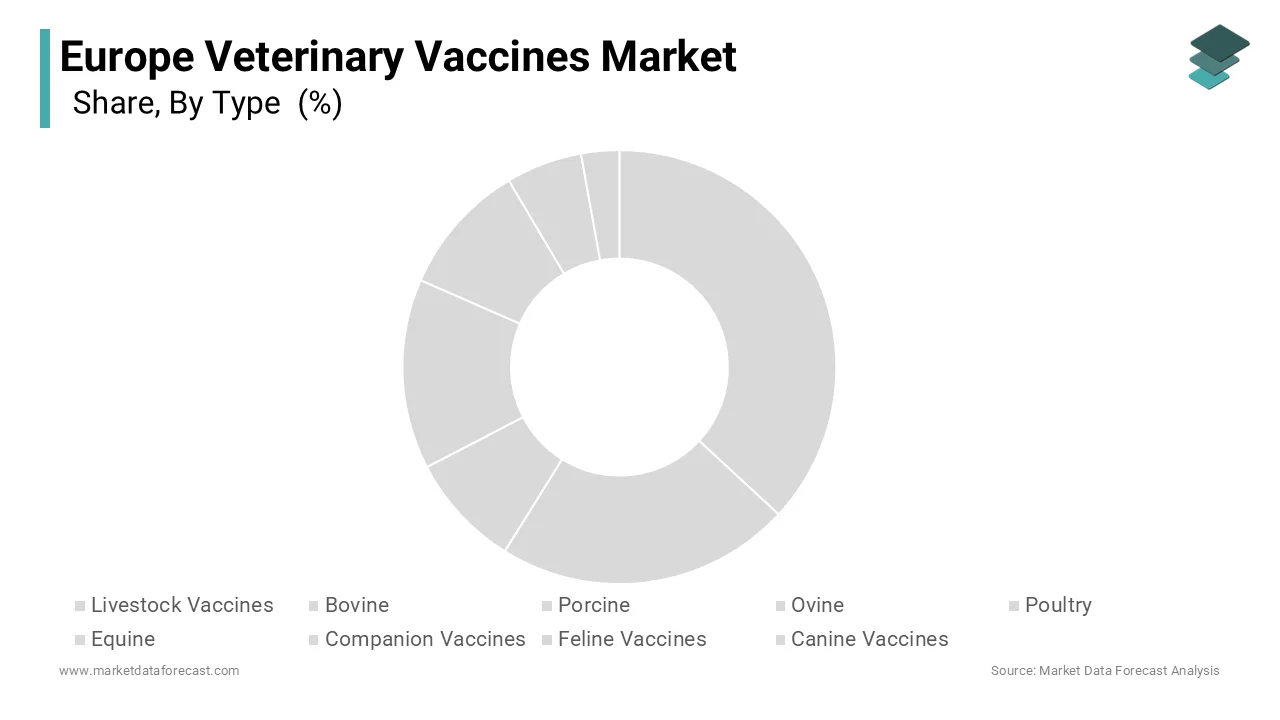
The fastest growing segment is poultry vaccines, and this segment is estimated to record a CAGR of 10.4% over the forecast period, owing to the recurrent outbreaks of highly pathogenic avian influenza, which led to the culling of over 55 million birds across the EU in 2023 alone, as reported by the European Commission’s Directorate General for Health and Food Safety. In response, countries like France, Italy, and the Netherlands have intensified vaccination programs using inactivated H5 and H7 subtype vaccines under emergency use provisions. The shift toward indoor housing systems following outbreak containment measures has increased bird density, heightening transmission risk, and making prophylactic vaccination economically imperative. Furthermore, the EU’s Farm to Fork Strategy promotes reduced antibiotic use in poultry, creating demand for vaccines against bacterial pathogens like E coli and Ornithobacterium rhinotracheale. With over 2.3 billion broilers produced annually in the EU, as per Eurostat, the scale of production magnifies even marginal improvements in flock immunity, yielding substantial economic and welfare benefits.
By Technology Inisghts
The inactivated vaccines segment led the market and held 37.5% of the regional market share in 2025. The leading position of inactivated vaccines in this regional market can be credited to their favorable safety profile, stability, and regulatory acceptance across diverse species. Unlike live attenuated products, inactivated vaccines cannot revert to virulence, making them suitable for use in pregnant animals and immunocompromised populations. They form the backbone of mandatory programs such as rabies vaccination in dogs, and bluetongue control in ruminants, where batch consistency and long shelf life are critical. In 2024, over 90% of avian influenza vaccines deployed during outbreaks in France and Spain were oil-adjuvanted inactivated formulations, as confirmed by national veterinary authorities. The technology also aligns with DIVA strategies when combined with specific antigen deletion, enabling serological differentiation between infected and vaccinated animals, a requirement under EU Regulation 2020/689. Established manufacturing infrastructure and predictable immune responses further cement inactivated vaccines as the workhorse of European veterinary prophylaxis, despite higher antigen requirements and the need for adjuvants.
The recombinant vector vaccines segment is the fastest-growing technology segment and is estimated to witness a CAGR of 13.3% over the forecast period, owing to their ability to deliver strong cellular and humoral immunity without using whole pathogens, enhancing both safety and efficacy. The recombinant canarypox vector vaccine against feline leukemia, launched by Boehringer Ingelheim, has demonstrated over 80% protection in field trials conducted across Sweden and Denmark, as published in the Journal of Feline Medicine and Surgery. Similarly, recombinant herpesvirus-based vaccines for bovine respiratory disease enable simultaneous expression of multiple antigens from Mannheimia haemolytica and Pasteurella multocida, streamlining complex vaccination protocols. The European Medicines Agency’s streamlined pathway for genetically engineered vaccines under Regulation (EU) 2019/6 has accelerated approvals, with three new recombinant products authorized in 2024 alone. As precision vaccinology advances, these platforms offer modular design flexibility, ideal for rapidly responding to emerging strains, while minimizing production biosafety constraints.
COUNTRY LEVEL ANALYSIS
Germany Veterinary Vaccines Market Analysis
Germany held the leading position in the European veterinary vaccines market and accounted for 23.5% of the regional market share in 2025. The country’s dominance reflects its large livestock population, including over 12 million pigs and 13 million cattle, alongside the highest pet ownership rate in the EU, with more than 35 million companion animals. Germany enforces strict compliance with EU vaccination mandates and maintains a robust network of over 25,000 veterinary practices delivering routine immunization services. The Federal Office of Consumer Protection and Food Safety actively mmonitorsvaccine efficacy and adverse events, ensuring high public trust. Major vaccine manufacturers, including IDT Biologika and Ceva Santé Animale, operate R and D and production facilities within the country, supporting both domestic needs and export. This combination of regulatory rigor, agricultural scale, and veterinary infrastructure establishes Germany as the central hub of veterinary vaccine innovation and distribution in Europe.
France Veterinary Vaccines Market Analysis
France captured a significant share of the European veterinary vaccines market in 2025. The growth of France in the European market is driven by its extensive livestock sector and proactive disease control policies. According to FranceAgriMer, the country manages over 19 million cattle and 14 million pigs, making it Europe’s largest beef and dairy producer. Recurrent bluetongue and African swine fever threats have prompted nationwide vaccination campaigns, with over 8 million ruminants vaccinated in 2023 alone, as documented by the French Agency for Food, Environmental, and Occupational Health and Safety. France also leads in equine health, with over 600,000 sport and leisure horses requiring annual influenza and tetanus immunization. The National Research Institute for Agriculture, Food, and Environment conducts cutting-edge vaccine research, particularly in vector-borne diseases. Strong government support through the National Strategy for Animal Health ensures consistent procurement and deployment of veterinary biologicals, reinforcing France’s pivotal role in continental disease resilience.
United Kingdom Veterinary Vaccines Market Analysis
The United Kingdom is a promising regional segment in the European veterinary vaccines market, and the UK is shaped by its dense pet population and post Brexit regulatory autonomy. According to the UK Department for Environment, Food, and Rural Affairs, the nation is home to over 12 million dogs and 11 million cats, with 94% of owners reporting annual veterinary visits that include core vaccinations. The Animal and Plant Health Agency mandates rabies vaccination for all pets entering or re-entering the country, sustaining steady demand. Post Brexit, the Veterinary Medicines Directorate has fast-tracked approvals for novel vaccines not yet authorized in the EU, including a new recombinant feline leukemia product in 2024. The UK also maintains a strategic stockpile of foot and mouth disease vaccines as part of its contingency planning. Leading academic institutions, like the Pirbright Institute, continue to pioneer next-generation platforms, ensuring scientific leadership. This blend of companion animal focus, regulatory agility, and biosecurity preparedness sustains the UK’s influential yet distinct market position.
Italy Veterinary Vaccines Market Analysis
Italy occupied a notable share of the European veterinary vaccines market in 2025 due to the high poultry density and endemic vector-borne diseases. As per ISTAT, the Italian National Institute of Statistics, the country produces over 600 million broilers annually, making it Europe’s second-largest poultry producer. Recurrent outbreaks of avian influenza have led to compulsory vaccination in high-risk zones, with over 120 million doses administered in 2023, according to the Italian Ministry of Health. Southern regions also face persistent bluetongue virus circulation, due to favorable conditions for Culicoides midges, necessitating annual ruminant vaccination. Italy’s large equine sector, with over 300,000 registered sport horses, drives demand for influenza and herpesvirus vaccines. The Istituto Zooprofilattico Sperimentale network operates 12 diagnostic and production centers, ensuring rapid response and local vaccine supply. This unique epidemiological and production profile makes Italy a high-intensity user of both emergency and routine veterinary vaccines.
Spain Veterinary Vaccines Market Analysis
Spain is estimated to secure a noteworthy share of the European veterinary vaccines market during the forecast period, owing to its extensive outdoor livestock systems and climate-driven disease pressures. According to the Spanish Ministry of Agriculture, Fisheries, and Food, the country maintains over 25 million sheep and goats, the largest ovine population in the EU, many raised in extensive pastoral systems vulnerable to peste des petits ruminants and bluetongue. High summer temperatures and proximity to North Africa facilitate vector incursions, with 14 bluetongue serotypes detected since 2022, as reported by the European Food Safety Authority. Spain also leads in rabbit farming, with over 50 million animals producing meat and fur, creating niche demand for myxomatosis and rabbit hemorrhagic disease vaccines. The decentralized veterinary authority structure allows autonomous communities, like Andalusia and Catalonia, to implement tailored vaccination programs. This combination of ecological vulnerability, production diversity, and regional autonomy positions Spain as a dynamic and responsive market within the European veterinary vaccine landscape.
TOP LEADING PLAYERS IN THE MARKET
- Boehringer Ingelheim Animal Health is a leading force in the European veterinary vaccines market, offering a comprehensive portfolio for livestock and companion animals,s including flagship products against bovine respiratory disease, swine porcine circovirus, and feline leukemia. The company operates major R and D and manufacturing facilities in Germany, France, and Spain, ensuring a reliable supply across the continent. Globally,y it contributes to disease control programs in over 150 countries with its recombinant and modified live vaccines, es setting benchmarks for efficacy and safety. Recently,tly the company launched a next-generation recombinant canarypox vector vaccine for feline leukemia in Western Europe, featuring enhanced duration of immunity and DIVA compatibility. This innovation reinforces its leadership in precision vaccinology while supporting antimicrobial reduction goals across European farming systems.
- Zoetis plays a pivotal role in the European veterinary vaccines market through its extensive range of biologicals for cattle, swine, poultry,y and pets,ets including autogenous and commercial vaccines tailored to regional disease pressures. The company supplies core canine and feline combination vaccines widely used in veterinary clinics across th, Germany, and the Nordics. Zoetis contributes significantly to the global market by leveraging its One Health approach, integrating animal and public health solutions, particularly in zoonotic disease prevention. In recent years, the company expanded its poultry vaccine portfolio in Southern Europe with an inactivated H5N1 avian influenza vaccine approved under emergency provisions. It also enhanced digital support tools for veterinarians, enabling real-time batch tracking and vaccination scheduling, thereby strengthening customer engagement and compliance in diverse European markets.
- Ceva Santé Animale is a major European player headquartered in France with deep expertise in poultry, swine,e and companion animal vaccines. The company is renowned for its innovative delivery technologies, such as freeze-dried formulations and in ovo vaccination systems, that improve field usability and flock coverage. Ceva supplies vaccines to more than 110 countries and maintains strategic production sites in Europe, including a high containment facility in Spain dedicated to avian influenza and Newcastle disease vaccines. To strengthen its position, the company recently introduced a new subunit vaccine for bovine viral diarrhea featuring a novel adjuvant system that enhances mucosal immunity without systemic side effects. This product aligns with EU antimicrobial stewardship policies and supports sustainable dairy and beef production across temperate and Mediterranean regions.
TOP STRATEGIES USED BY THE KEY MARKET PARTICIPANTS
Key players in the European veterinary vaccines market focus on developing DIVA-compatible and recombinant platform technologies to meet stringent regulatory and disease surveillance requirements. They invest heavily in localized production to ensure supply chain resilience and rapid response during outbreaks. Strategic expansion of companion animal portfolios addresses rising pet humanization and insurance-driven demand for premium preventive care. Companies also enhance digital services, including vaccine management apps and cold chain monitoring,g to improve administration accuracy and compliance. Additionally, they collaborate with national veterinary authorities and research institutes to co-develop vaccines targeting region-specific pathogens such as bluetongue or African swine fever variants circulating in Southern and Eastern Europe.
COMPETITIVE LANDSCAPE
The European veterinary vaccines market features intense competition among multinational animal health companies, specialized biologics manufacturers,s and public sector laboratories. While large firms like Boehringer Ingelheim, Tis and Ceva dominate through integrated R a, nd D globadistributionon and regulatory eexpertiseertise regional players differentiate via niche species coverage or autogenous vaccine services. Competition centers on technological superiority,r priority after profiles and alignment with EU policies on antimicrobial reduction and animal welfare. Regulatory complexity under Regulation (EU) 2019/6 creates high barriers favoring established players yet also incentivizes innovation inthe market and recombinant vaccines. Companion animal segments are increasingly influenced by veterinary practice preferences and pet owner education, whereas livestock markets respond to outbreak dynamics and trade requirements. This dual structure fosters a dynamic ecosystem where scientific credibility, speed to market, and policy alignment determine competitive advantage.
KEY MARKET PLAYERS
Prominent companies playing an active role in the europe veterinary vaccines Market are
- Bayer HealthCare AG
- Bioniche Animal Health Canada
- Sanofi Animal Health, Inc.
- Biogenesis Bagó SA
- Heska Corporation
- Indian Immunologicals Ltd.
- Boehringer Ingelheim GmbH
- Zoetis
- Novartis Animal Health, Inc.
- Merck & Co. Inc.
- Protein Sciences
MARKET SEGMENTATION
This research report on the European Veterinary Vaccines Market has been segmented and sub-segmented into the following categories.
By Type
- Livestock Vaccines
- Bovine
- Porcine
- Ovine
- Poultry
- Equine
- Companion Vaccines
- Feline Vaccines
- Canine Vaccines
By Technology
- Live Attenuated Vaccines
- Inactivated Vaccines
- Recombinant Vaccines
- Toxoid Vaccines
- Subunit Vaccines
- DNA Vaccines
- Conjugate Vaccines
By Country
- UK
- France
- Spain
- Germany
- Italy
- Russia
- Sweden
- Denmark
- Switzerland
- Netherlands
- Turkey
- Czech Republic
- Rest of Europe