- Product Description Description
- Table of Contents TOC
- List of Table & Figure LOT
- Get Free Sample PDF Sample PDF
Market Size, 2025
$452.41 MnMarket Estimate, 2026
$568.54 MnMarket Forecast, 2034
$3,537 MnCAGR, 2026–2034
25.67%Europe Viral Vectors and Plasmid DNA Manufacturing Market Summary
The Europe viral vectors and plasmid DNA manufacturing market is projected to grow from USD 568.54 million in 2026 to USD 3,537 million by 2034, at a compound annual growth rate (CAGR) of 25.67%. The rapid expansion of gene therapies, cell therapies, and genetic vaccines across Europe is driving substantial demand for scalable and compliant manufacturing of viral vectors and plasmid DNA. Increasing regulatory approvals for advanced therapy medicinal products, coupled with public and private investment in specialized biomanufacturing infrastructure, are positioning viral vector and plasmid DNA production as a strategic pillar of Europe’s biopharmaceutical ecosystem.
Market Dynamics
The market’s growth is primarily influenced by the accelerating clinical pipeline of gene and cell therapies, strong public funding support for advanced therapy manufacturing, and increasing regulatory clarity around genetic medicines. Europe’s focus on strengthening domestic production capacity for critical biologics has intensified since recent global supply chain disruptions, leading to sustained investment in GMP-compliant facilities. However, complex regulatory requirements, high production costs, and workforce constraints continue to shape manufacturing strategies across the region.
Key Drivers:
- Expansion of gene and cell therapy clinical pipelines: The rising number of clinical trials and regulatory submissions for viral vector-based therapies is generating sustained demand for high-quality plasmid DNA and viral vectors required for clinical and commercial production.
- Strategic public investment in manufacturing infrastructure: Government-backed initiatives are funding the development of advanced therapy manufacturing hubs and open-access facilities to address capacity shortages and accelerate therapy commercialization.
- Growing regulatory approvals for advanced therapies: Increasing authorization of gene and cell therapies across Europe reinforces long-term demand for reliable and scalable vector manufacturing platforms.
- Rising need for supply chain security: Biopharmaceutical developers are prioritizing regional manufacturing capabilities to reduce reliance on external suppliers and ensure continuity of critical genetic materials.
Trends & Opportunities:
- Rise of in-house plasmid DNA manufacturing: Therapy developers are increasingly internalizing plasmid production to enhance supply chain control, protect intellectual property, and accelerate process development.
- Adoption of suspension-based and continuous manufacturing technologies: Transition from adherent to suspension cell culture systems and the integration of continuous processing are improving scalability, yield, and cost efficiency.
- Advancements in single-use and digital manufacturing systems: The use of single-use bioreactors, automated purification, and real-time process analytics is streamlining production and reducing operational risk.
- Expansion of collaborative manufacturing networks: Partnerships between academic centers, contract manufacturers, and public institutions are strengthening Europe’s advanced therapy manufacturing capabilities.
Challenges:
- Stringent regulatory and quality control requirements: Extensive characterization and validation requirements for viral vectors and plasmid DNA increase development timelines, costs, and technical complexity.
- Limited scalability and high production costs: Current viral vector platforms face yield limitations and expensive downstream processing, restricting commercial scalability and affordability.
- Shortage of skilled GMP workforce: Insufficient availability of trained professionals in viral vector manufacturing constrains capacity expansion despite infrastructure investment.
- Fragmented intellectual property landscape: Complex licensing arrangements and patent disputes complicate vector platform selection and commercialization strategies.
Market Segmentation
The market is segmented based on product, application, and country.
- By Product: Viral vectors represent the dominant segment due to their essential role in clinically approved gene and cell therapies, while plasmid DNA is the fastest-growing segment owing to its expanding use in vector production, DNA vaccines, and gene editing applications.
- By Application: Cancer therapies constitute the largest application segment, driven by CAR-T and oncolytic virus programs, while inherited disorders represent a rapidly growing segment supported by the success of AAV-based treatments for rare genetic diseases.
- By Country: The United Kingdom leads the European market, followed by Germany, France, Switzerland, and the Netherlands, supported by strong academic research, regulatory frameworks, and advanced manufacturing infrastructure.
Key Market Players
- Lonza Group AG, Cobra Biologics Ltd, Oxford BioMedica plc, Novasep Holding SAS, Catalent Cell & Gene Therapy, Brammer Bio (Thermo Fisher Scientific Inc. ), and Others.
Europe Viral Vectors and Plasmid DNA Manufacturing Market Size
The Europe viral vectors and plasmid DNA manufacturing market was valued at USD 452.41 million in 2025, is estimated to reach USD 568.54 million in 2026, and is projected to reach USD 3,537 million by 2034, growing at a CAGR of 25.67% from 2026 to 2034.
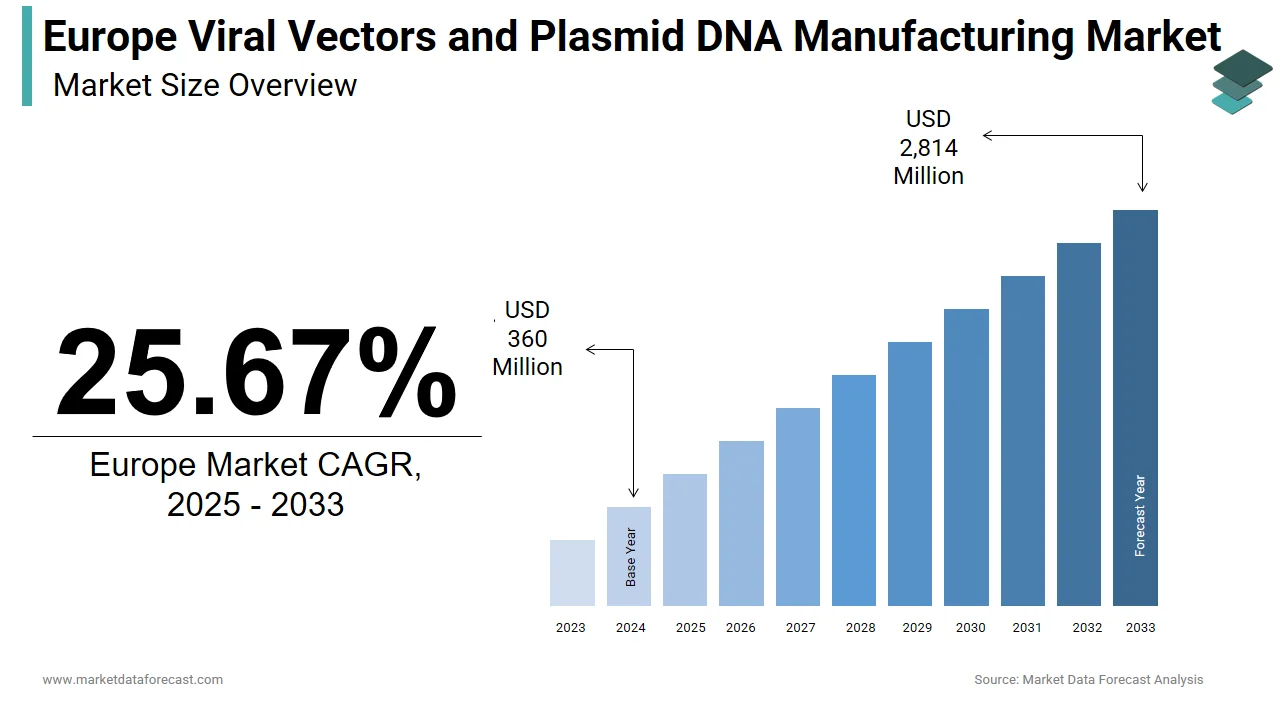
Viral vectors and plasmid DNA (pDNA) manufacturing are the specialized industrial processes used to create the biological "delivery vehicles" for modern gene therapies, cell therapies (like CAR-T), and vaccines. Viral vectors, primarily adeno-associated viruses, lentiviruses, and adenoviruses, serve as engineered carriers to deliver therapeutic genes into human cells, while plasmid DNA acts as the foundational template for vector production and mRNA vaccine synthesis. Numerous advanced medicinal products incorporating viral vectors or genetic materials have successfully secured regulatory clearance or conditional market access within the European region. A notable portion of these authorized therapies is specifically designed to address rare conditions through specialized designations. Significant cross-sector funding has been directed toward developing specialized manufacturing infrastructure to support the production of these complex biological materials. The establishment of high-standard manufacturing facilities is increasingly concentrated in several key northern and central European nations. The high volume of ongoing clinical research involving gene-based therapies has led to a substantial increase in the need for sophisticated production capabilities. Securing scalable and compliant manufacturing processes has emerged as a primary operational challenge and a focal point for the regional biopharmaceutical sector.
MARKET DRIVERS
Expansion of Gene and Cell Therapy Clinical Pipelines Across Europe
The robust growth in clinical-stage gene and cell therapies is a primary driver of the Europe viral vectors and plasmid DNA manufacturing market. A notable volume of clinical research is focused on viral vector-based interventions for various serious conditions. There has been a significant rise in gene therapy applications submitted for centralized evaluation, indicating an acceleration in the regulatory review process for these novel treatments. Additionally, national health systems are actively creating frameworks to fund and provide patient access to specific approved therapies, with reimbursement decisions sometimes based on early clinical data. Academic medical centers in the UK, France, and the Netherlands operate phase I/II manufacturing units that rely on external plasmid DNA suppliers for vector production. This expanding pipeline creates sustained demand for clinical-grade plasmids and vectors with rigorous quality control and regulatory documentation essential for Investigational Medicinal Product Dossier submissions.
Strategic Public Investment in Advanced Therapy Manufacturing Infrastructure
Public funding initiatives are causing the expansion of pDNA manufacturing capacity across the region to address critical supply gaps, which further propels the Europe viral vectors and plasmid DNA manufacturing market forward. Substantial financial commitments have been directed towards establishing a network of open-access manufacturing facilities for advanced therapies. Regional initiatives have allocated funding to increase production capacity for critical components and create specialized manufacturing hubs for key ingredients. An initiative has networked academic and commercial manufacturers to standardize quality control for materials used in advanced therapy production. These investments directly respond to the warning that manufacturing barriers delay market access for seventy percent of advanced therapy products. Public policy in Europe is fostering self-reliance in genetic medicine by reducing investment risks in infrastructure, turning the continent into a key production hub.
MARKET RESTRAINTS
Stringent Regulatory Requirements and Complex Quality Control Standards
Significant constraints from the European Medicines Agency’s rigorous regulatory framework for advanced therapy medicinal products demand exhaustive characterization of starting materials and final products, which hampers the growth of the Europe viral vectors and plasmid DNA manufacturing market. The production of plasmid DNA for vector use necessitates evaluation against a broad set of quality criteria, including checks on purity, structure, and integrity. Viral vectors require additional, specialized assessments for safety and structural traits, contributing to an extended quality control timeline for each batch. This extensive regulatory structure may contribute to the observation that a restricted number of manufacturing organizations in a key area have attained full certification for generating complex vectors. The lack of harmonized standards for novel modalities such as sself-amplifyingRNA further complicates regulatory submissions. These requirements increase development timelines, cost, and technical risk, particularly for small biotechs lacking in-house analytical capabilities.
Limited Scalability and High Cost of Viral Vector Production Platforms
Current viral vector manufacturing technologies in the region struggle with scalability and cost efficiency, which restrict commercial viability of gene therapies. This, in turn, hinders the expansion of the Europe viral vectors and plasmid DNA manufacturing market. According to a study, producing a commercial batch of adeno-associated virus for a rare disease therapy requires a significant investment, with yields currently not high enough to treat a large number of patients. The reliance on adherent cell culture systems such as HEK293 in cell factories or fixed-bed bioreactors limits volumetric productivity compared to suspension platforms used in monoclonal antibody manufacturing. Large-scale manufacturing of adeno-associated virus (AAV) through suspension-based stirred tank bioreactors is currently limited to a small number of validated facilities within the European region. The transition from traditional production methods to scalable suspension processes remains an ongoing development within the biopharmaceutical infrastructure. Downstream processing continues to present significant operational challenges, particularly regarding the efficiency of purifying viral vectors. The specialized materials required for the separation of empty capsids represent a substantial portion of the overall production expenditure. High consumable costs associated with advanced chromatography techniques contribute to the complexities of achieving cost-effective commercial scale-up. These technical and economic barriers prevent economies of scale and contribute to the exorbitant pricing of gene therapies, which hampers reimbursement and patient access across national health systems.
MARKET OPPORTUNITIES
Rise of In-House Plasmid DNA Manufacturing for Supply Chain Resilience
The trend toward decentralized plasmid production by therapy developers seeking supply chain control and intellectual property protection is a significant opportunity in the Europe viral vectors and plasmid DNA manufacturing market. Many regional gene therapy developers are moving towards internalizing their plasmid manufacturing capabilities to reduce reliance on external suppliers. These organizations are increasingly adopting specialized modular clean room environments that meet regulatory standards for advanced therapy production. Public-sector initiatives are offering financial support for this infrastructure growth, reflecting a broader industry effort to stabilize the availability of critical materials for biopharmaceutical development. Additionally, advances in closed system bioreactors and automated purification have reduced facility footprint and personnel requirements, making small-scale plasmid production economically feasible. This shift not only mitigates geopolitical and logistics risks but also accelerates process development by enabling rapid plasmid iteration for vector optimization.
Adoption of Suspension-Based and Continuous Manufacturing Technologies
The transition from adherent to suspension-based viral vector production and the integration of continuous processing exhibit potential opportunities for the Europe viral vectors and plasmid DNA manufacturing market. Collaborative efforts involving research consortia and industrial centers have demonstrated improvements in viral vector production across multiple cellular platforms. There has been a shift toward serum-free suspension methods in large-scale bioreactors, enhancing the efficiency of manufacturing processes. Regulatory bodies have indicated support for technological advancements by providing pathways for faster review of manufacturing systems that prioritize consistency and resource optimization. The adoption of integrated, single-use technologies and filtration systems has streamlined the production of viral delivery vehicles. Industry leaders are increasingly implementing validated, end-to-end solutions to meet the demands of therapeutic manufacturing. Furthermore, digital process analytics using machine learning enable real time monitoring of critical quality attributes, reducing batch failure rates. These technological leaps promise to lower costs, enhance scalability, and position Europe at the forefront of next-generation advanced therapy manufacturing.
MARKET CHALLENGES
Persistent Shortage of Skilled Workforce in Viral Vector GMP Manufacturing
The acute shortage of professionals trained in advanced therapy good manufacturing practice operations poses a major challenge constraining the Europe viral vectors and plasmid DNA manufacturing market. There is a substantial discrepancy between the anticipated demand for specialized personnel at new vector production sites and the current output of relevant educational initiatives. The expansion of manufacturing infrastructure appears to be outstripping the development of a qualified workforce capable of managing advanced biological processes. Operational timelines for technology transfers are frequently impacted by difficulties in securing staff with expertise in sterile handling and upstream processing. Analytical validation and specialized biomanufacturing oversight represent specific areas where recruitment challenges are becoming more pronounced. The alignment between institutional training capacity and industry requirements remains a primary factor influencing the scaling of therapeutic production. Unlike monoclonal antibody manufacturing, which benefits from standardized curricula, advanced therapy production requires interdisciplinary knowledge in virology, molecular biology, and regulatory science rarely covered in traditional bioprocessing degrees. Europe’s manufacturing goals will be bottlenecked by a skills gap without swift workforce development, even with infrastructure funding.
Fragmented Intellectual Property Landscape and Vector Platform Licensing Complexities
There exists a highly fragmented intellectual property environment that complicates vector platform selection and commercialization, and thereby impedes the expansion of the Europe viral vectors and plasmid DNA manufacturing market. Companies developing therapies must navigate complex licensing agreements, often involving royalty stacking that increases the cost of goods. Disputes over foundational patents have led to litigation that delays manufacturing scale-up. Furthermore, national variations in patent enforcement create uncertainty for multi-country clinical trials and commercial launches. This IP thicket discourages small and medium enterprises from entering the field and forces reliance on proprietary platforms offered by contract manufacturers, which may limit process customization and data ownership, key concerns for innovative therapy developers in Europe’s competitive advanced therapy landscape.
REPORT COVERAGE
| REPORT METRIC | DETAILS |
| Market Size Available | 2025 to 2034 |
| Base Year | 2025 |
| Forecast Period | 2026 to 2034 |
| Segments Covered | By Product, Application, and Country. |
| Various Analyses Covered | Global, Regional and Country-Level Analysis, Segment-Level Analysis, Drivers, Restraints, Opportunities, Challenges; PESTLE Analysis; Porter’s Five Forces Analysis, Competitive Landscape, Analyst Overview of Investment Opportunities |
| Countries Covered | UK, France, Spain, Germany, Italy, Russia, Sweden, Denmark, Switzerland, Netherlands, Turkey, Czech Republic, and the Rest of Europe. |
| Market Leaders Profiled | Lonza Group AG, Cobra Biologics Ltd, Oxford BioMedica plc, Novasep Holding SAS, Catalent Cell & Gene Therapy, Brammer Bio (Thermo Fisher Scientific Inc. ), and Others. |
SEGMENTAL ANALYSIS
By Product Insights
The viral vectors segment dominated the Europe viral vectors and plasmid DNA manufacturing market in 2024. The dominance of the viral vectors segment is attributed to its irreplaceable role as a delivery system in clinically approved gene and cell therapies. A substantial majority of the advanced therapy medicinal products authorized in the EU rely on viral vectors for gene transfer. The clinical success of therapies such as Zolgensma for spinal muscular atrophy and Kymriah for leukemia has cemented viral vectors as the gold standard despite manufacturing complexity. National reimbursement decisions further reinforce demand. Germany's Federal Joint Committee has been actively evaluating and granting health insurance coverage for several viral vector-based therapies. Additionally, a significant number of active clinical trials utilizing viral vectors are ongoing in Europe, particularly focusing on treatments for cancers, inherited retinal diseases, and hemophilia. The high therapeutic efficacy and established regulatory pathways make viral vectors the cornerstone of Europe’s advanced therapy ecosystem despite their cost and scalability challenges.
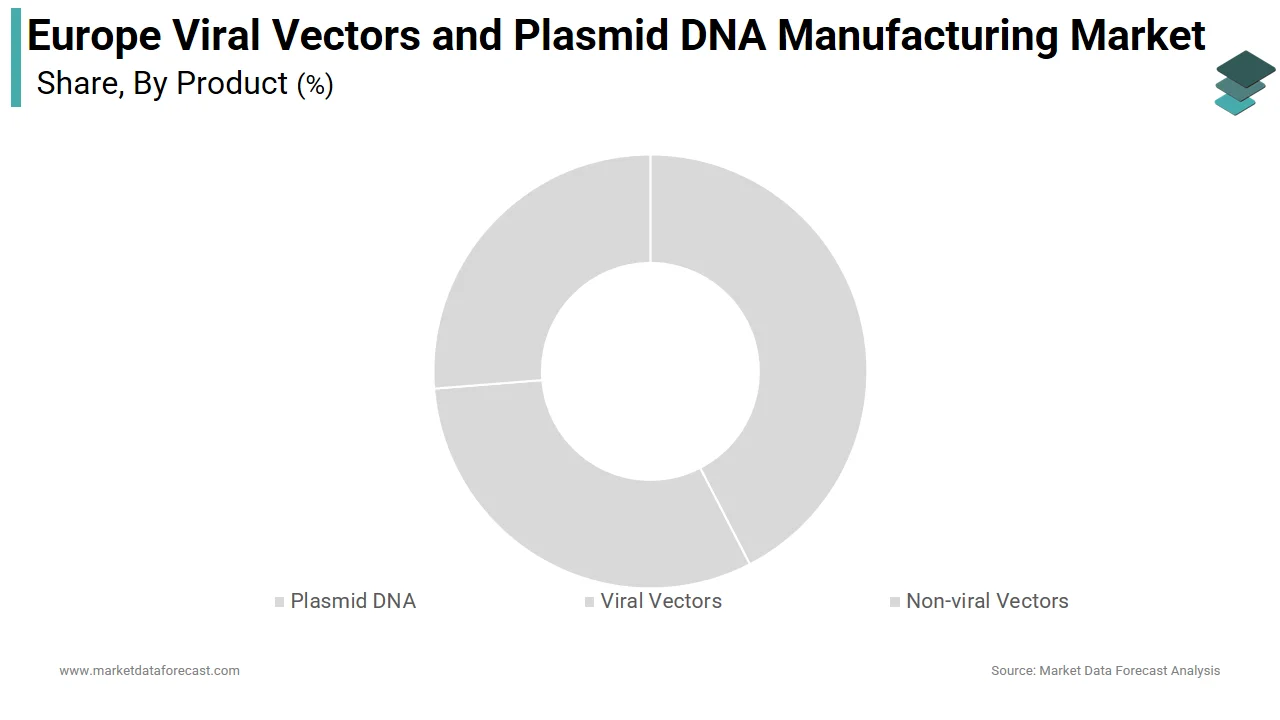
The plasmid DNA segment is on the rise and is expected to be the fastest growing segment in the market by witnessing a CAGR of 21.4% from 2025 to 2033 due to its dual role as the essential template for viral vector production and as a direct therapeutic in DNA vaccines and gene editing applications. The majority of emerging gene therapy programs in the region now utilize complex vector configurations involving multiple genetic components, which increases the total requirement for supporting materials per therapeutic candidate. In addition, the expansion of genome-editing technologies has further heightened the demand for specialized genetic templates used in cellular modification processes. Updated regulatory frameworks regarding quality attributes have clarified expectations for developers, potentially facilitating more efficient technical transitions. Increased manufacturing capacity through modular facilities is enabling the support of diverse product portfolios. The role of plasmid DNA is evolving from a foundational input into a critical factor that influences both production scalability and overall sector development.
By Application Insights
The cancers segment was the largest in the Europe viral vectors and plasmid DNA manufacturing market in 2024 because of the rapid expansion of chimeric antigen receptor T cell and oncolytic virus therapies. A significant number of ongoing clinical studies are evaluating the use of viral vector-based immunotherapies for a range of blood cancers, solid tumors, and brain tumors. A substantial amount of funding has been dedicated through a specific program to support the advancement of cancer gene therapies, highlighting their recognized potential. The commercial approval of certain therapies for specific types of lymphoma and melanoma has led to established frameworks for financial reimbursement. Coverage models for these approved therapies have been implemented within certain countries through specific exemption programs within hospital settings. Additionally, academic centers in the UK andthe Netherlands operate CAR T manufacturing units that consume significant quantities of lentiviral vectors and plasmid DNA for transgene delivery. The high unmet need in oncology and robust clinical pipeline ensure cancer remains the dominant therapeutic application for genetic medicines in Europe.
The inherited disorders segment is expected to exhibit a noteworthy CAGR of 23.7% during the forecast period, owing to the success of adeno-associated virus-based therapies for monogenic conditions such as spinal muscular atrophy, metachromatic leukodystrophy, and inherited retinal dystrophies. The volume of advanced therapeutic programs transitioning into late-stage clinical evaluation indicates a maturing landscape for genetic medicine within the region. Regulatory frameworks are evolving to provide specialized designations that support the development of treatments for rare conditions. National health authorities are implementing preliminary access structures to facilitate the introduction of therapies for highly specific patient populations. Regional genomic data integration efforts are enhancing the efficiency of patient identification and clinical trial enrollment processes. The high prevalence of genetically linked conditions establishes a consistent demand for specialized manufacturing capabilities, particularly in the production of viral vectors and genetic templates.s
COUNTRY-LEVEL ANALYSIS
United Kingdom Viral Vectors and Plasmid DNA Manufacturing Market Analysis
The United Kingdom led the Europe viral vectors and plasmid DNA manufacturing market and accounted for a share of 23.2% in 2024. The supremacy of the UK market is credited to its world-class academic medical centers and supportive regulatory environment. Regulatory frameworks have transitioned to provide expedited pathways for innovative therapeutic designations, effectively streamlining the transition from clinical trials to market readiness. Domestic infrastructure has expanded to include high-capacity production suites capable of supporting large-scale viral vector manufacturing. The growing concentration of specialized biotechnology firms has fostered an ecosystem increasingly reliant on a localized supply chain for essential genetic materials and delivery components. Strategic autonomy in oversight processes has allowed for a divergence from regional standards, resulting in accelerated review timelines for emerging medical treatments. Increased manufacturing capabilities within specialized hubs have enhanced the region’s ability to host and support complex advanced therapy clinical investigations. Additionally, the National Institute for Health and Care Research funds GMP manufacturing training programs addressing workforce gaps. These scientific policy and infrastructure advantages position the UK as Europe’s most agile and innovation-driven advanced therapy manufacturing hub.
Germany Viral Vectors and Plasmid DNA Manufacturing Market Analysis
Germany was the second-largest player in the Europe viral vector and plasmid DNA manufacturing market by capturing a 20.5% share in 2024. The growth of the German market is driven by its strong industrial biotech base, robust reimbursement system, and centralized manufacturing networks. The national infrastructure for biotechnology includes multiple large-scale facilities dedicated to the specialized manufacturing of viral vectors. Operational capabilities for therapeutic production are distributed across various regions, supporting different viral delivery systems. The regulatory framework has established pathways for the systematic evaluation and approval of advanced medicinal products. Public health coverage has expanded to include a diverse range of gene-based treatments for various clinical indications. National health authorities maintain a consistent pattern of integrating innovative therapies into the standard reimbursement landscape. The national ATMP Production Network links academic hospitals with contract manufacturers to standardize plasmid quality and vector analytics. Furthermore, Germany enforces strict GMP compliance under the Paul Ehrlich Institute, ensuring product safety. These industrial regulatory and access mechanisms create a high-throughput and quality-focused manufacturing ecosystem that sustains Germany’s leadership role.
France Viral Vectors and Plasmid DNA Manufacturing Market Analysis
France is another key player in the Europe viral vector and plasmid DNA manufacturing market due to its concentration of public research institutes and strategic national investments in gene therapy infrastructure. Multiple trials involving gene therapy received authorization within the observed period. Specific facilities have been identified as key locations for producing specialized materials used in these advanced therapies. Efforts have been directed toward scaling up the manufacture of necessary components, such as lentiviral vectors, used in gene editing and chimeric antigen receptor T-cell (CAR-T) therapies. Funding initiatives have supported the expansion of manufacturing capabilities for advanced therapies. The establishment of centralized production hubs for foundational materials suggests a strategic push to support a large number of clinical programs annually. Companies operate integrated R and D and GMP facilities compliant with EMA standards. Additionally, France participates in the EU’s Cross-Border ATMP Access initiative, enabling patient referrals across borders. These coordinated public-private efforts position France as a high-impact and socially oriented center for genetic medicine development and production.
Switzerland Viral Vectors and Plasmid DNA Manufacturing Market Analysis
Switzerland expanded steadily in the Europe viral vector and plasmid DNA manufacturing market owing to its cluster of global pharmaceutical innovators and high precision biomanufacturing standards. The country hosts GMP facilities for viral vector production operated by major companies supporting commercial therapies like Kymriah and investigational programs in ophthalmology and neurology. Switzerland’s regulatory alignment with EMA through mutual recognition agreements facilitates seamless market access despite non-EU membership. The Swiss National Science Foundation funds academic vector development at ETH Zurich and the University of Basel with a focus on AAV capsid engineering. Additionally, Switzerland’s stable energy grid and stringent clean room standards make it a preferred location for high-yield plasmid DNA production. Switzerland acts as a key, quality-focused manufacturing hub within Europe, exporting a significant portion of its advanced therapy products to EU markets.
Netherlands Viral Vectors and Plasmid DNA Manufacturing Market Analysis
The Netherlands is anticipated to grow in the Europe viral vector and plasmid DNA manufacturing market from 2025 to 2033 due to its strategic life sciences infrastructure and collaborative academic industry networks. The country is facilitating a number of advanced therapy trials. Key manufacturing activities are occurring in two distinct locations. The nation serves as a central hub for viral assets and contributes to European-wide vaccine vector development efforts. A significant financial commitment has been made to increase the manufacturing capacity for specific types of viral vectors utilized in these therapies. Additionally, Dutch facilities specialize in plasmid DNA for mRNA vaccine templates supporting both therapeutic and pandemic preparedness applications. Proximity to major ports and harmonized regulatory oversight position the Netherlands as a logistics and innovation gateway for advanced therapy manufacturing in Northwest Europe.
COMPETITIVE LANDSCAPE
Competition in the Europe viral vectors and plasmid DNA manufacturing market is defined by a strategic race among global contract developers and specialized biotechs to secure scalable, compliant, and technologically advanced GMP capacity. The market is highly concentrated, with only a handful of facilities capable of commercial-scale lentiviral or adeno-associated virus production due to the complexity of upstream and downstream processes. Differentiation centers on platform maturity, regulatory track record, and ability to integrate plasmid DNA through fill finish under one roof. Large players like Catalent and Thermo Fisher leverage global scale and capital to expand European footprint, while European specialists such as Oxford Biomedica compete through proprietary vector platforms and deep regional partnerships. Public investment through the Innovative Health Initiative has lowered entry barriers, but workforce shortages and intellectual property complexities remain significant constraints. National regulatory nuances and reimbursement timelines further fragment the landscape. Ultimately, success depends on balancing technical excellence, regulatory agility, and strategic alignment with both public health goals and global biopharma demand across Europe’s high-stakes advanced therapy manufacturing environment.
KEY MARKET PLAYERS
The leading companies operating in the Europe viral vectors and plasmid DNA manufacturing market include:
- Lonza Group AG
- Cobra Biologics Ltd
- Oxford BioMedica plc
- Novasep Holding SAS
- Catalent Cell & Gene Therapy
- Brammer Bio (Thermo Fisher Scientific Inc. )
TOP PLAYERS IN THE MARKET
- Oxford Biomedica plc is a leading European developer and manufacturer of lentiviral vectors headquartered in the United Kingdom with a strong footprint in gene and cell therapy supply chains. The company provides clinical and commercial scale vector manufacturing services to global innovators, including Novartis and AstraZeneca, under long-term supply agreements. Oxford Biomedica has strengthened its position by investing in its LentiVector platform and expanding its Oxbox GMP facility with segregated clean rooms for multi-product campaigns. These initiatives reinforce Oxford Biomedica’s role as a strategic European partner in the global advanced therapy ecosystem, supporting both academic and commercial development programs.
- Brammer Bio, a Thermo Fisher Scientific company, operates a key viral vector manufacturing network in Europe with large-scale GMP facilities in France and the Netherlands, specializing in adeno-associated virus and lentivirus production. The company supports over sixty clinical and commercial programs across oncology and rare diseases by offering integrated process development, analytical testing, and regulatory support. Brammer Bio has enhanced its European capabilities by deploying single-use bioreactor platforms up to 2000 liters and implementing real-time analytics for vector quality control. These investments position Brammer Bio as a global contract development and manufacturing organization with deep European regulatory expertise and scalable infrastructure for advanced therapies.
- Catalent Cell & Gene Therapy maintains a significant presence in the Europe viral vectors and plasmid DNA manufacturing market through its GMP facility in Belgium, one of the largest dedicated lentiviral and AAV production sites on the continent. The company supports commercial launches and late-stage clinical trials for global biopharmaceutical clients with end-to-end services from plasmid DNA to fill finish. Catalent has strengthened its European footprint by implementing suspension-based AAV platforms and automated purification systems to improve yield and consistency. These capabilities enable Catalent to serve as a critical manufacturing backbone for Europe’s growing advanced therapy pipeline while contributing to global supply chain resilience.
TOP STRATEGIES USED BY THE KEY MARKET PARTICIPANTS
Key players in the Europe viral vectors and plasmid DNA manufacturing market focus on vertical integration by expanding in-house plasmid DNA production to secure supply and ensure quality control for vector manufacturing. They invest in suspension-based and single-use bioreactor platforms to enhance scalability and reduce cross-contamination risks in multi-product facilities. Companies establish dedicated innovation centers for next-generation vector engineering, including capsid optimization and process analytics. Strategic long-term supply agreements with global biopharmaceutical firms provide revenue stability and facilitate technology transfer. Additionally, they collaborate with academic medical centers and public funding initiatives to align manufacturing capacity with Europe’s advanced therapy clinical pipeline and regulatory requirements.
MARKET SEGMENTATION
This research report on the Europe viral vectors and plasmid DNA manufacturing market has been segmented and sub-segmented into the following categories.
By Product
- Plasmid DNA
- Viral Vectors
- Non-viral Vectors
By Application
- Cancers
- Inherited Disorders
- Viral Infections
- Others
By Country
- UK
- France
- Spain
- Germany
- Italy
- Russia
- Sweden
- Denmark
- Switzerland
- Netherlands
- Turkey
- Czech Republic
- Rest of Europe