- Product Description Description
- Table of Contents TOC
- List of Table & Figure LOT
- Get Free Sample PDF Sample PDF
Market Size, 2025
$18.01 BnMarket Estimate, 2026
$19.19 BnMarket Forecast, 2034
$31.85 BnCAGR, 2026–2034
6.54%Europe Vitamin Supplements Market Report Summary
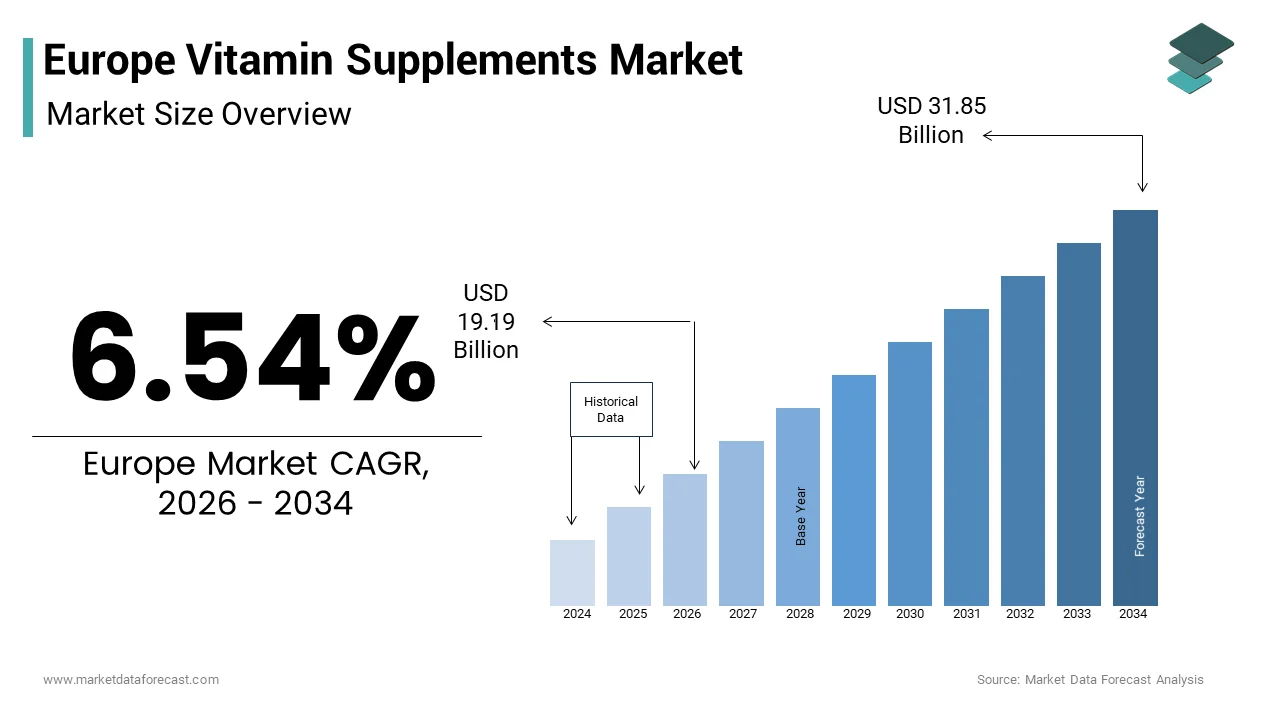
The Europe vitamin supplements market was valued at USD 18.01 billion in 2025, is estimated to reach USD 19.19 billion in 2026, and is projected to expand to USD 31.85 billion by 2034, growing at a CAGR of 6.54% during the forecast period from 2026 to 2034. The growth of the European vitamin supplements market is driven by rising health awareness, increasing focus on preventive healthcare, and a growing aging population across the region. Higher incidence of lifestyle-related deficiencies, post-pandemic emphasis on immunity support, and expanding availability of dietary supplements through retail and pharmacy channels are further fueling market growth. Moreover, increasing consumer preference for daily wellness products and scientifically backed formulations is strengthening demand across Europe.
Key Market Trends
Rising demand for multivitamin supplements to address multiple nutritional deficiencies through a single product. Growing preference for vitamin D, C, and B-complex supplements due to immunity, bone health, and energy-related benefits. Increasing adoption of preventive healthcare and self-care routines among working professionals and elderly consumers. Expansion of offline retail channels, including pharmacies and health stores, alongside steady growth in e-commerce platforms. Strong focus on clean-label, plant-based, and clinically supported vitamin formulations to meet evolving consumer expectations.
Segmental Insights
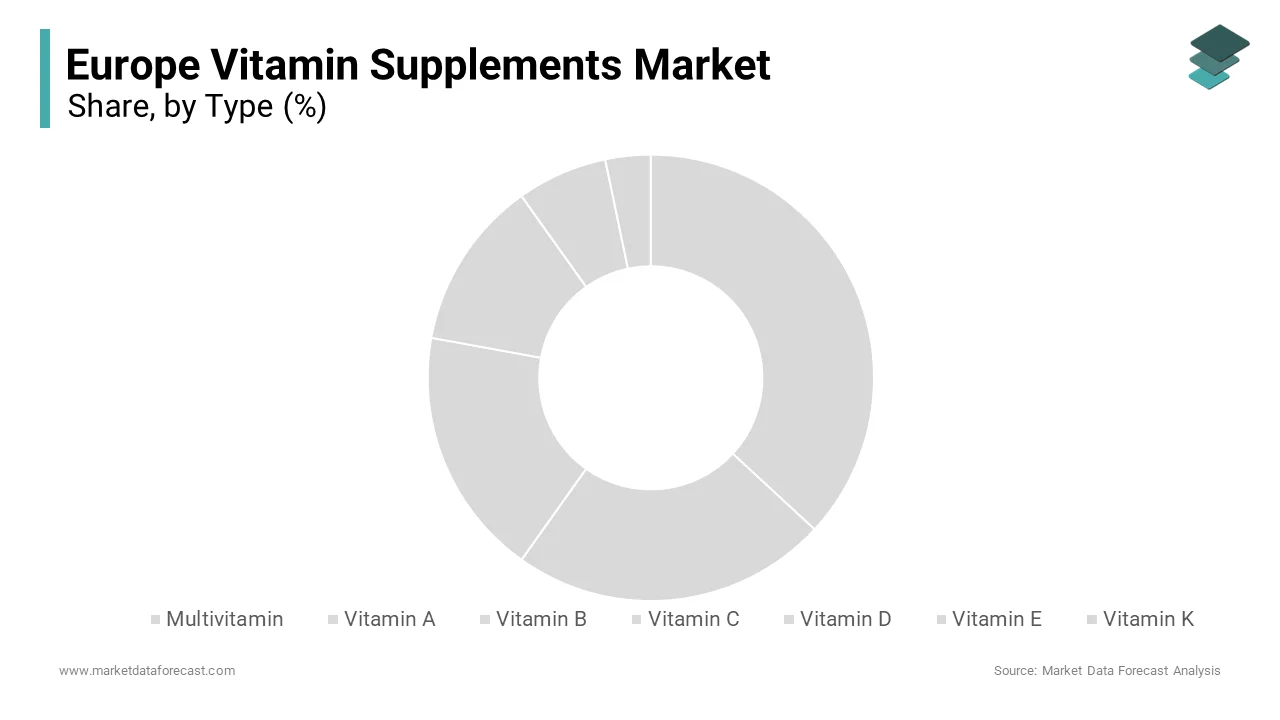
- Based on type, the multivitamins segment dominated the Europe vitamin supplements market in 2025, accounting for 41.2% of the regional market share. The segment’s dominance is attributed to the convenience of comprehensive nutrient coverage, broad consumer acceptance, and growing use among diverse age groups.
- Based on form, the tablets segment led the market in 2025 by occupying 51.9% of the Europe vitamin supplements market share. Tablets remain the preferred format due to their affordability, longer shelf life, dosage accuracy, and widespread availability.
- Based on distribution channel, the offline segment held the largest share of the market, capturing 66.9% of the regional share in 2025. The dominance of offline sales is driven by strong consumer trust in pharmacies, drugstores, and healthcare professionals, as well as regulatory compliance and product authenticity assurance.
Regional Insights
The Europe vitamin supplements market is witnessing consistent growth across major economies.
- Germany led the market in 2025, supported by high health awareness, strong pharmaceutical infrastructure, and widespread adoption of dietary supplements.
- The United Kingdom held a promising share, driven by growing preventive healthcare adoption and expanding wellness trends.
- France is anticipated to account for a prominent share over the forecast period due to increasing focus on nutrition-led health management.
- Italy represents a noteworthy market, with supplement consumption influenced by Mediterranean diet principles and rising demand for immunity and vitality-enhancing products.
Competitive Landscape
The Europe vitamin supplements market is competitive, with the presence of multinational pharmaceutical companies and specialized nutraceutical brands. Leading players are focusing on product innovation, clinical validation, and brand trust to strengthen their market positions. Prominent companies operating in the market include Glanbia plc, Pfizer Inc., Bayer AG, Amway Corp., GlaxoSmithKline plc, Good Health New Zealand, The Nature's Bounty Co., NOW Foods, Abbott, Herbalife Nutrition, Nature's Sunshine Products, Inc., NU SKIN, RBK Nutraceuticals Pty Ltd., American Health, Inc., and Pharmavite.
Europe Vitamin Supplements Market Size
The Europe vitamin supplements market size was valued at USD 18.01 billion in 2025 and is anticipated to reach a valuation of USD 19.19 billion in 2026 to USD 31.85 billion by 2034, growing at a CAGR of 6.54% from 2026 to 2034.
Vitamin supplements are a diverse array of orally consumed formulations that are designed to address micronutrient gaps arising from dietary insufficiencies, physiological demand, or health conditions. Unlike pharmaceuticals, these products are regulated as food supplements under Directive 2002/46/EC, which mandates strict compositional labeling and safety requirements but prohibits therapeutic claims. The market operates within a complex interplay of public health priorities, consumer wellness trends, and evolving scientific consensus on nutrient adequacy. According to the European Food Safety Authority (EFSA), a substantial proportion of adults in Northern and Western Europe exhibit suboptimal vitamin D status during winter months, largely due to limited UVB exposure. Similarly, as per the European Health Examination Survey (EHES), a notable share of women of childbearing age across the EU have serum folate levels below thresholds recommended for neural tube defect prevention. These nutritional gaps coexist with rising consumer agency, as the 2023 Eurobarometer survey on food and health revealed that two‑thirds of Europeans actively seek products labeled as natural or plant‑based. This duality defines the contemporary trajectory of the Europe vitamin supplements market, where public health imperatives, consumer preferences, and regulatory frameworks converge to drive innovation in fortified foods, nutraceuticals, and clean‑label supplement formulations.
MARKET DRIVERS
Widespread micronutrient deficiencies across key demographics
Vitamin D deficiency remains a pervasive public health concern across Europe, which is one of the key factors driving the vitamin supplements market growth in Europe. According to the European Food Safety Authority, serum seru25-hydroxyvitaminin D concentrations below 30 nanomoles per liter are prevalent in over 50% of the adult population during winter months, particularly above the 45th parallel. In Germany and the United Kingdom, national health surveys from 2023 confirm that 62% of adults aged 50 and older have insufficient vitamin D levels, increasing fracture and immune dysfunction risks. Similarly, folate insufficiency affects reproductive-age women,n with data from the European Nutrition and Health Survey indicating that 31% of women aged 18 to 44 in France, Italy, and Spain have red blood cell folate below 906 nanomoles per liter, the threshold for optimal neural tube development. These clinically validated gaps are reinforced by national health bodies such as Public Health England, which recommends daily vitamin D supplementation from October to March. The Nordic countries have gone further in implementing mandatory vitamin D fortification in dairy and spreads, yet supplement use remains high due to seasonal intensity. This evidence-based need sustains consistent consumer reliance on vitamin supplements across diverse European populations. The sustained seasonality of UV exposure, dietary patterns that underdeliver key micronutrients, and life‑stage requirements continue to justify targeted supplementation as a mainstream, population‑level tool for risk reduction.
Rising preventive health consciousness among aging populations
Europe’s rapidly aging society is driving proactive adoption of vitamin supplements as a pillar of preventive health maintenance, which is another promising factor boosting the regional market expansion. As per the European Commission, nearly 25% of the EU population will be aged 65 or older by 2030, which is creating sustained demand for nutrients that support cognitive,e bo, and immune function. As per a longitudinal study by the Karolinska Institute in Sweden, consistent intake of B complex vitamins reduced cognitive decline by 23% over five years in adults over 60. In parallel, data from Italy’s National Institute of Health shows that 58% of seniors regularly consume multivitamins, with vitamin B12 and D3 being the most frequently reported due to age-related malabsorption. Germany’s Federal Centre for Health Education reported in 2023 that 71% of adults over 65 view supplements as essential for maintaining independence and reducing healthcare utilization. This shift reflects a broader cultural transformation where aging is increasingly managed through self-directed wellness rather than reactive treatment. National health campaigns in the Netherlands and Denmark now incorporate supplement guidance into healthy aging protocols, further legitimizing their role. This demographic and behavioral synergy establishes older adults as a cornerstone of sustained vitamin supplement demand across Europe. As longevity rises and multimorbidity becomes more common, older consumers gravitate to predictable routines and evidence‑based micronutrient support, reinforcing long‑term category resilience.
MARKET RESTRAINTS
Stringent regulatory restrictions on health claims
The European Union’s prohibition on disease risk reduction claims for food supplements under Regulation EC 1924/2006 significantly constrains marketing and consumer education efforts and hampers the vitamin supplements market in Europe. Unlike in the United States, where wherestructure-functionn claims are permitted, the European Food Safety Authority has approved only a narrow set of generic claims, such as vitamin C contributing to normal immune function. As per the European Commission, only 249 out of over 4000 submitted health claims related to vitamins have received positive evaluations since 2012. This regulatory bottleneck prevents manufacturers from communicating scientifically substantiated benefits, such as folate’s role in reducing homocysteine or vitamin D’s impact on muscle strength. As per a 2023 survey by the European Specialist Supplements Association, 68% of consumers are unaware of the specific physiological roles of vitamins they consume due to restricted labeling. Consequently, brands resort to vague terms like “wellness support” or “daily balance,” which dilute product differentiation and reduce informed choice. The absence of harmonized national interpretations further complicates cross-border marketing, with Germany’s Federal Office of Consumer Protection applying stricter interpretations than Spain’s Agency for Medicines. These constraints stifle innovation in product positioning and limit consumer trust in supplement efficacy. In practice, conservative claim frameworks raise legal risk, slow copy development, and force generic messaging that struggles to convey nuanced clinical benefits.
Inconsistent national implementation of EU supplement legislation
Despite a common EU framework, national authorities enforce divergent interpretations of Directive 2002/46/E,, leading to market fragmentation and compliance uncertainty, which is further hindering the market growth in Europe. For instance, while the Netherlands permits vitamin D3 doses up to 100 micrograms per day in supplements, Germany restricts the same to 20 micrograms, and France to 25 micrograms, as documented by national food safety agencies in 2023. Similarly, maximum permitted levels for vitamin B6 range from 5 milligrams in Sweden to 21 milligrams in Poland, which is creating formulation challenges for pan-European brands. According to the European Court of Auditors’ 2023 performance review, such inconsistencies result in 30% higher regulatory compliance costs for multinational supplement companies. Furthermore, classification discrepancies exist with Ireland categorizing certain high-dose vitamin products as medicinal requiring full pharmaceutical authorization,n whereas Portugal treats them as food supplements. This patchwork undermines the single market principle and delays product launches as companies navigate country-specific dossiers. Without binding EU-wide upper limits or harmonized safety assessment, the vitamin supplements market remains burdened by legal unpredictability that discourages investment and innovation. As companies rework labels, dossiers, and strengths per country, portfolio complexity rises, and pan‑EU scale efficiencies erode and dampening innovation velocity.
MARKET OPPORTUNITIES
Personalized nutrition through at‑home diagnostic integration
The convergence of at-home blood testing and algorithm-driven supplement personalization is a high-growth opportunity for the European vitamin supplements market. Companies like Neutrogena’s NutriPrint and Swiss startup myLAB now offer finger-prick kits that measure vitamin D, B12, folate, nd iron status with results interpreted by AI to generate custom vitamin regimens. As per a 2024 study by the University of Copenhagen, consumers who received personalized supplement recommendations based on biomarker data exhibited 3.2 times higher adherence over 6 months compared to generic users. The European Commission’s Digital Europe Programme allocated 18 million euros in 2023 to pilot projects integrating diagnostic data with nutritional advice under the European Health Data Space initiative. In Germany, the statutory health insurer TK partnered with a digital health platform to reimburse personalized vitamin plans for seniors with documented deficiencies. Regulatory pathways are also evolving, with France’s National Agency for Food Safety issuing new guidance in early 2024 for diagnostic supplement bundles under medical supervision. As consumer demand for data-driven health solutions rises, this integration of diagnostics, cs personalization, and supplementation is poised to redefine product delivery and clinical relevance across the European vitamin supplements market. As platforms embed dosing safeguards, longitudinal tracking, and clinician oversight, adherence and outcomes improve and raising payer and regulator interest.
Expansion of sustainable and traceable ingredient sourcing
European consumers are increasingly demanding transparency in vitamin origin and environmental footprint, creating opportunities for brands that prioritize traceability and eco-conscious sourcing, which is another promising opportunity for the European vitamin supplements market. According to a 2023 Eurobarometer survey, 74% of EU citizens prefer supplements made from ingredients with verifiable sustainable credentials. In response, companies like Pharma Nord and Solgar have launched vitamin D3 derived from lichen rather than lanolin and vitamin E from non-GMO sunflower oil with full blockchain-enabled traceability. The European Green Deal’s Farm to Fork Strategy further incentivizes this shift by promoting circular bioeconomy principles in ingredient supply chains. In Sweden, the Swedish Food Agency certified the first carbon-neutral multivitamin in 202,4, produced using renewable energy and locally sourced botanicals. Additionally, the EU Deforestation Regulation set to take effect in 2025 will require due diligence on palm oil and soy derivatives, potentially affecting vitamin E and K supply unless sustainably certified. Brands that proactively adopt regenerative agriculture partnerships and third-party verified sustainability standards, such as Ecocert or Fair for Life, are gaining premium positioning and consumer loyalty in the value-driven market segment. This trajectory also aligns with retailer ESG scorecards and procurement policies, opening premium listings and long‑term contracts for verifiably sustainable portfolios.
MARKET CHALLENGES
Scientific controversy surrounding high-dose supplementation
Ongoing scientific debate about the efficacy and safety of high-dose vitamin regimens undermines consumer confidence and regulatory acceptance, which is a key challenge to the European vitamin supplements market growth. Large-scale studies such as the VITAL trial published in the New England Journal of Medicine found no cardiovascular or cancer prevention benefit from daily 2000 IU vitamin D supplementation in generally healthy adults. Similarly, the European Prospective Investigation into Cancer and Nutrition cohort involving over 500000 participants concluded that antioxidant vitamin supplements showed no mortality benefit and potential harm in smokers. These findings have influenced public health messaging, with Germany’s Robert Koch Institute cautioning against megadose B6 due to neuropathy risks and the UK’s Scientific Advisory Committee on Nutrition advising against routine multivitamin use in well-nourished populations. As a result, 52% of European consumers express skepticism about supplement necessity according to a 2024 Ipsos survey. This scientific ambiguity creates a credibility gap that hampers market expansion,n particularly among educated urban demographics who prioritize evidence-based health decisions. Until consensus emerges on optimal dosing and target population,,s the vitamin supplements market will face persistent headwinds from academic and policy skepticism. Clearer risk‑benefit stratification by age, baseline status, and comorbidities will be essential to rebuild confidence.
Proliferation of unverified e‑commerce brands and quality risks
The surge of direct-to-consumer vitamin brands on digital platforms has introduced significant quality and safety concerns across Europe, which is another potential opportunity for the European vitamin supplements market. According to a 2024 market surveillance report by the European Commission’s Directorate General for Health and Food Safety, 28% of online vitamin supplements failed to meet declared label content, with some containing undeclared pharmaceuticals or heavy metals. In France, the General Directorate for Competition Policy, Consumer Affairsand Fraud Control recalled 17 vitamin products in 2023 due to excessive selenium and vitamin A levels exceeding legal limits. The anonymity and low entry barriers of e-commerce enable non-compliant operators to bypass national food safety control,,s particularly from non-EU jurisdictions. As per a study by the University of Ghent, 41% Amazon-listed vitamin brands in Germany lacked the proper EU responsible person designation required under Regulation EU 2019/1020. This erosion of product integrity damages category trust, with 63% of consumers reporting hesitation to purchase supplements only according to a YouGov Europe poll. Without stricter digital marketplace enforcement and mandatory third-party certification, the risk of adulteration and misinformation will continue to challenge market credibility and consumer safety. Strengthening seller verification, randomized lab testing, and rapid takedown protocols can materially improve trust and protect consumers.
REPORT COVERAGE
| REPORT METRIC | DETAILS |
| Market Size Available | 2025 to 2034 |
| Base Year | 2025 |
| Forecast Period | 2026 to 2034 |
| CAGR | 6.54% |
| Segments Covered | By Type, Form, Distribution Channel, By Country |
| Various Analyses Covered | Global, Regional & Country Level Analysis; Segment-Level Analysis, DROC, PESTLE Analysis, Porter’s Five Forces Analysis, Competitive Landscape, Analyst Overview of Investment Opportunities |
| Regions Covered | UK, France, Spain, Germany, Italy, Russia, Sweden, Denmark, Switzerland, Netherlands, Turkey, Czech Republic & Rest of Europe |
| Market Leaders Profiled | Glanbia plc, Pfizer Inc., Bayer AG, Amway Corp., GlaxoSmithKline plc. Good Health New Zealand, The Nature's Bounty Co., NOW Foods, Abbott, Herbalife Nutrition, Nature's Sunshine Products, Inc., NU SKIN, RBK Nutraceuticals Pty Ltd., American Health, Inc., Pharmavite |
SEGMENTAL ANALYSIS
By Type Insights
The multivitamins segment dominated the market and held 41.2% of the European market share in 2025. The dominance of the multivitamins segment is attributed to their perceived convenience as a one‑stop solution for daily micronutrient needs amid increasingly irregular dietary patterns. Urbanization and time poverty have reduced consumption of balanced meals, with Eurostat noting that more than one‑third of working adults in Western Europe skip lunch or rely on ultra‑processed foods lacking essential vitamins. Multivitamins mitigate this gap by delivering a broad spectrum of nutrients in a single dose, aligning with public health guidance such as Germany’s Nutrition Society, which recommends supplementation for populations at risk of multiple deficiencies. National health campaigns in countries like the Netherlands and Sweden actively promote daily multivitamin intake for seniors and pregnant women, further embedding these products in routine wellness behaviour. The psychological appeal of “nutritional insurance” also drives consistent repurchase behaviour across socioeconomic groups, which is making multivitamins the cornerstone of European supplement consumption.
The Vitamin D segment is the fastest growing segment within the Europe vitamin supplements market and is estimated to register a CAGR of 9.04% over the forecast period, owing to the robust scientific consensus on widespread insufficiency and evolving public health policy. According to the European Food Safety Authority, a significant share of the adult population exhibits serum 25‑hydroxyvitamin D levels below recommended thresholds during autumn and winter months, particularly in regions above the 45th latitude. In response, national bodies have intensified recommendations, with Public Health England advising daily supplementation from October to March and Finland mandating year‑round fortification in milk and spreads. Clinical evidence further fuels demand, with meta‑analyses linking adequate vitamin D status to reduced risk of respiratory infections. Moreover, the aging population’s vulnerability to osteoporosis has led statutory health insurers in Germany and Switzerland to partially reimburse high‑dose D3 prescriptions for seniors. The convergence of biomarker‑validated deficiency, seasonal policy mandates, and immune health awareness positions vitamin D as the most dynamically expanding single vitamin segment in Europe.
By Form Insights
The tablets segment led the market by occupying 51.9%of the regional market share in 2025. The leading position of the tablets segment in the European market is driven by decades of consumer familiarity, precise dosing, stability, and cost‑effective mass production. Tablets offer superior shelf life with minimal degradation of sensitive vitamins compared to liquid or gummy formats, as confirmed by pharmaceutical stability testing in European universities. In Germany and Italy, more than 65% of pharmacy‑dispensed supplements are in tablet form, reflecting pharmacist and physician preference for standardized delivery. The format also accommodates high‑potency formulations required for therapeutic nutrient repletion, such as B12 tablets for pernicious anemia patients. Furthermore, EU regulations on maximum daily doses are more easily controlled in solid dosage forms, which reduces overdose risks. Consumer trust in tablets remains high, with Eurobarometer surveys showing that nearly 60% of supplement users perceive tablets as more “medically credible” than alternatives.
The capsules segment is the fastest growing form in the Europe vitamin supplements market and is predicted to witness a CAGR of 9.12% over the forecast period. The superior bioavailability and clean‑label appeal, particularly for fat‑soluble vitamins and plant‑based extracts, are fuelling the expansion of the capsule segment in the European market. Softgels and hard capsules protect oxygen‑sensitive nutrients like vitamin E and omega‑3s from oxidation, which extends potency without synthetic preservatives. Clinical studies in Northern Europe have demonstrated that vitamin D3 in softgel form achieves significantly higher serum concentration compared to compressed tablets due to enhanced lipid solubilization. Additionally, capsules align with clean‑label trends as they avoid binders, fillers, and artificial colors often required in tablet manufacturing. Brands like Solgar and Pharma Nord have reformulated premium lines into vegetable‑based capsules to meet demand for non‑gelatin and allergen‑free options. The European Vegetarian Union reported that nearly half of new supplement launches in 2023 featured plant‑derived capsules, responding to ethical and dietary preferences.
By Distribution Channel Insights
The offline segment had 66.9% of the European market share in 2025 and stood as the most dominating segment in this regional market. The enduring role of pharmacies as trusted health advisors, particularly in Southern and Central Europeewhere a majority of supplement sales occur through licensed pharmacists has primarily contributed to the dominance of the offline segment in the recent past. Pharmacists provide personalized recommendations based on health conditions, medication interactions, and life‑stage needs, enhancing product appropriateness and safety. In Germany, the Apothekenpflicht regulation restricts certain high‑dose vitamins to pharmacy‑only sale, reinforcing professional gatekeeping. Supermarkets contribute volume through private‑label multivitamins targeting price‑conscious households with consistent quality assurance under EU food safety frameworks. Moreover, tactile product evaluation and immediate availability remain key offline advantages, especially among seniors who constitute a major consumer base. Surveys across Europe confirm that more than 70% of consumers aged 55 and older prefer purchasing supplements in person to consult staff and verify authenticity.
However, the online segment is growing exponentially and is likely to grow at a CAGR of 15.12% over the forecast period, owing to the digital health integration, personalized subscription models, and cross‑border accessibility. Platforms like Holland & Barrett and Apotal now offer AI‑powered nutrient assessments that recommend bespoke vitamin regimens based on lifestyle, diet, and health goals. Subscription services ensure consistent adherence with auto‑replenishment and loyalty discounts, as highlighted in European consumer health reports. The pandemic accelerated e‑commerce adoption, with online supplement sales in the UK and Netherlands doubling between 2020 and 2024 according to NielsenIQ. Moreover, cross‑border platforms enable access to niche products such as vegan D3 or methylated B vitamins unavailable locally. Regulatory harmonization under the EU Digital Services Act has also improved consumer confidence by mandating transparency on seller identity and product origin. These digital conveniences, personalized engagement, and expanded choice position online channels as the primary engine of future market democratization and innovation.
COUNTRY ANALYSIS
Germany Vitamin Supplements Market Analysis
Germany led the Europe vitamin supplements market in 2025. The dominance of Germany in the European market is driven by its highly regulated pharmacy system, where supplements are dispensed by licensed pharmacists who provide evidence‑based advice. The Apothekenpflicht law restricts high‑potency vitamins to pharmacy sale to ensure quality control and professional oversight. Preventive health culture is strong, with the Robert Koch Institute reporting that a majority of adults regularly use vitamin D and multivitamins as part of wellness strategies. Additionally, Germany hosts Europe’s largest natural products trade fair, Vitafoods Europe, which drives innovation in plant‑based and bioavailable formulations. Public health campaigns on vitamin D deficiency and B12 malabsorption in seniors further stimulate demand. This unique ecosystem of regulatory rigor, professional guidance, and health literacy positions Germany as both the largest and most sophisticated market in Europe.
United Kingdom Vitamin Supplements Market Analysis
The United Kingdom held a promising share of the European vitamin supplements market in 2025, owing to the high digital adoption and strong consumer awareness of micronutrient needs. The rise of direct‑to‑consumer brands like Huel and Vivo Life has democratized access through subscription models and transparent sourcing. Although Brexit introduced new import controls, the UK retained EU‑style supplement regulations under the Food Supplements Regulations 2003 to ensure product safety. The National Health Service does not routinely recommend supplements, but public health bodies such as Public Health England issue seasonal guidance on vitamin D. The National Diet and Nutrition Survey confirms regular supplement use across adults, with vitamin D and B‑complex among the most common categories. London serves as a hub for functional nutrition startups integrating supplements with personalized health apps. This blend of digital innovation, regulatory continuity, and proactive consumer behavior sustains the UK’s position as a high‑growth premium market.
France Vitamin Supplements Market Analysis
France is anticipated to account for a prominent share of the European market over the forecast period due to the pharmacy exclusivity and scientific skepticism toward unproven claims. By law, vitamin supplements must be sold through pharmacies or parapharmacies, where pharmacists assess suitability based on health status and medication use. This gatekeeping model ensures high trust, with surveys showing pharmacists are regarded as the primary source of supplement advice. National health authorities emphasize food‑first approaches yet recognize supplementation for at‑risk groups such as pregnant women requiring folate and elderly populations needing vitamin D. French consumers also favor locally produced supplements, with most bestsellers manufactured domestically using traceable European raw materials. The emphasis on scientific validation, regulatory control, and national preference for quality over convenience makes France a resilient and high‑value market segment.
Italy Vitamin Supplements Market Analysis
Italy accounts for a noteworthy share of the European market, with consumption heavily influenced by Mediterranean diet ideals. Urbanization has eroded traditional eating patterns, prompting compensatory supplementation. Pharmacies remain the dominant retail channel, but herbal vitamin blends featuring local botanicals like olive leaf and myrtle are increasingly popular in health food stores. The Italian National Institute of Health has issued guidance on vitamin D for seniors and folate for women of childbearing age, reinforcing evidence‑based use. Additionally, Italy is a leader in clean‑label innovation, with brands like Aboca pioneering organic and allergen‑free formulations certified by ICEA. This fusion of dietary tradition, scientific guidance, and natural product innovation shapes Italy’s distinct market identity.
The Netherlands is projected to showcase a healthy CAGR in the European vitamin supplements market over the forecast period, owing to its progressive public health approach that integrates supplementation into national dietary guidelines. The Dutch government recommends daily vitamin D for broad population groups and B12 for vegans, a policy that has normalized supplement use across age groups. The Netherlands also serves as a logistics and innovation hub, with companies such as DSM and Nutricia developing advanced delivery systems like microencapsulated vitamins for enhanced stability. E‑commerce penetration is among Europe’s highest, with Statistics Netherlands reporting a large share of supplement purchases occurring online. This combination of policy endorsement, digital fluency, and nutritional science leadership positions the Netherlands as a forward‑looking and highly engaged market.
COMPETITIVE LANDSCAPE
Competition in the Europe vitamin supplements market is characterized by a dynamic interplay between multinational pharmaceutical-backed brands, national pharmacy exclusives, and agile digital native startups. Established players like Bayer and Haleon leverage scientific credibility, regulatory compliance, and pan-European distribution to maintain leadership, while Scandinavian and Benelux specialty manufacturers emphasize bioavailability, clinical documentation clean formulations. The market is further fragmented by thousands of private-label products sold through supermarkets and online retailers, creating price pressure in the mass segment. Regulatory complexity under Directive 2002 46 EC and divergent national interpretations of permissible doses restrict innovation and favor incumbents with robust regulatory affairs capabilities. At the same time, direct-to-consumer brands are disrupting traditional channels by offering personalized regimens, subscription convenience, and transparent sourcing, albeit facing scrutiny over product quality and unsubstantiated claims. This multidimensional rivalry spans science and engineering, sustainable channel strategy and trust, driving rapid evolution in development marketing, consumer engagement across the region.
KEY MARKET PLAYERS
A few of the market players in the Europe vitamin supplements market are
- Glanbia plc
- Pfizer Inc.
- Bayer AG
- Pharma Nord ApS
- Amway Corp.
- GlaxoSmithKline plc.
- Good Health New Zealand
- The Nature's Bounty Co.
- NOW Foods
- Abbott
- Herbalife Nutrition
- Nature's Sunshine Products, Inc.
- NU SKIN
- RBK Nutraceuticals Pty Ltd.
- American Health, Inc.
- Pharmavite
Top Players In The Market
- Bayer AG is a German multinational pharmaceutical and life sciences company with a prominent footprint in the Europe vitamin supplements market through its One A Day and Berocca brands. The company leverages its deep scientific heritage and regulatory expertise to develop evidence-based formulations aligned with European nutritional guidelines. In 2024, Bayer launched a new line of oclean-labelel multivitamins in Germany and France featuring vegan capsules and traceable European-sourced raw materials. It also partnered with the University of Bonn to conduct clinical studies on cognitive support blends containing B vitamins and choline. Bayer’s global supply chain and R&D infrastructure enable it to rapidly adapt products to regional micronutrient gaps while maintaining compliance with EU food supplement directives across all member states.
- Haleon, formerly GSK Consumer Healthcare and headquartered in the United Kingdom, is a global leader in self-care products, including vitamin supplements under brands such as Centrum and Caltrate. The company plays a pivotal role in shaping consumer expectations for scientific rigor and transparency in Europe. In early 2024, Haleon introduced AI-driven personalized vitamin subscription services across the Netherlands and Sweden, integrating dietary intake data with biomarker insights. It also achieved full carbon-neutral certification for its Centrum production facility in Spain through renewable energy adoption and sustainable packaging. Haleon actively collaborates with European public health bodies to align product formulations with national dietary recommendations, particularly for vitamin D and folate.
- Pharma Nord ApS is a Danish pharmaceutical company renowned for high-quality vitamin and mineral supplements based on documented bioavailability and pharmaceutical manufacturing standards. The company is aa pioneer of lipid-based ddeliveryystems notably its Bio D and Bio Melatonin ranges, which enhance absorption through olive oil encapsulation. In 20,24, Pharma Nord expanded its clinical research program with the University of Copenhagen to validate immune support claims for selenium and zinc combinations. It also upgraded its production facility in Vejle to meet EU Good Manufacturing Practice certification for both food supplements and medicinal products. Pharma Nord exports to over 30 countries and is recognized globally for its scientific approach to micronutrient efficacy and safety.
Top Strategies Used By The Key Market Participants
Key players in the Europe vitamin supplements market are intensifying investments in scientific validation through clinical trials,biomarker-based efficacy studies, etc., to differentiate products amid regulatory restrictions on health claims. Companies are reformulating offerings with clean label attributes such as vegan capsule, allergen-free excipient,,s and traceable European-sourced raw materials to meet consumer demand for transparency. Personalization is emerging as a core strategy with AI-powered nutrient assessment tools and subscription models enhancing adherence and loyalty. Strategic partnerships with universities,pu public health agenciessanpharmaciesestrengthen strengthen n credibility and ensure alignment with national dietary guidance. Additionally, many firms are pursuing carbon-neutral manufacturing and sustainable packaging to comply with the European Green Deal and appeal to environmentally conscious consumers.
MARKET SEGMENTATION
This research report on the Europe vitamin supplements market is segmented and sub-segmented into the following categories.
By Type
- Multivitamin
- Vitamin A
- Vitamin B
- Vitamin C
- Vitamin D
- Vitamin E
- Vitamin K
By Form
- Powder
- Tablets
- Capsules
- Softgels
- Gummies
- Others
By Distribution Channel
- Offline
- Pharmacies & Drugstores
- Hypermarkets/Supermarkets
- Others
- Online
By Country
- UK
- France
- Spain
- Germany
- Italy
- Russia
- Sweden
- Denmark
- Switzerland
- Netherlands
- Turkey
- Czech Republic
- Rest of Europe