- Product Description Description
- Table of Contents TOC
- List of Table & Figure LOT
- Get Free Sample PDF Sample PDF
Market Size, 2025
$0.92 BnMarket Estimate, 2026
$0.98 BnMarket Forecast, 2034
$1.51 BnCAGR, 2026–2034
5.62%Europe Walnut Market Size, Growth, Trends & Forecast (2026–2034)
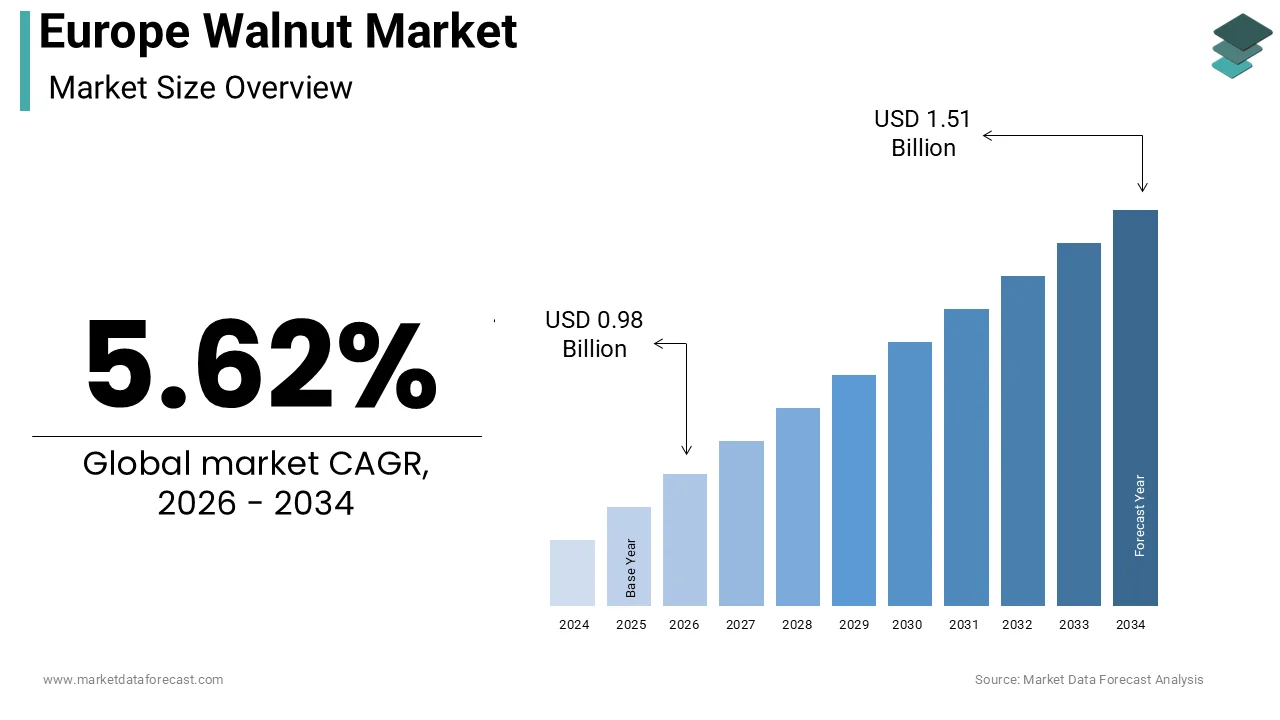
The Europe walnut market size was calculated to be USD 0.92 billion in 2025, is anticipated to be worth USD 0.98 billion in 2026, and is projected to reach USD 1.51 billion by 2034, growing at a compound annual growth rate (CAGR) of 5.62% during the forecast period from 2026 to 2034. Driven by rising consumer awareness of cardiovascular and cognitive health benefits, surging demand for plant-based proteins, and expanding applications across retail and value-added formats, the regional market continues to grow steadily.
Key Executive Metrics (At-a-Glance)
- 2025 Base Valuation: USD 0.92 Billion
- 2026 Current Valuation: USD 0.98 Billion
- 2034 Forecast Valuation: USD 1.51 Billion
- Compound Annual Growth Rate (CAGR): 5.62% (2026–2034)
- Dominant Distribution Channel Segment: Offline Retail (capturing a significant share due to physical sensory evaluation, trust, and impulse checkout placements)
- Fastest-Growing Distribution Channel Segment: Online Retail (projected to witness a rapid 11.4% CAGR driven by digital grocery shopping and specialized organic/gourmet variety access)
- Dominant Type Segment: Conventional Walnuts (holding a dominant share in 2025 due to cost efficiency and massive industrial bakery/confectionery reliance)
- Fastest-Growing Type Segment: Organic Walnuts (anticipated to grow at a 9.6% CAGR propelled by clean-label chemical-free demand and sustainability trends)
- Dominant Country Market: France (leading with 24.3% market share in 2025 as the EU's top producer with deep gastronomic appreciation and "Noix du Perigord" designation)
Core Market Drivers
- Health & Nutritional Awareness: High alpha-linolenic acid (omega-3) content linked to improved cardiovascular and cognitive health among an aging European demographic.
- Plant-Based Revolution: Surging demand for vegan cheeses, meat alternatives, and protein sources using walnut bases.
Primary Market Restraints & Challenges
- Allergies & Labeling: High prevalence of tree nut allergies under EU law mandating strict allergen declarations and cross-contamination containment.
- Climate & Supply Vulnerability: Agricultural yield volatility from late spring frosts, droughts, and heavy reliance on US and Chilean import channels.
Europe Walnut Market Segmentation Breakdown
| Segment Category | Leading Sub-Segment (Base/Current) | Fastest-Growing Sub-Segment |
|---|---|---|
| By Distribution Channel | Offline Retail (major share in 2025) | Online Retail (11.4% CAGR) |
| By Type | Conventional Walnuts (dominant share) | Organic Walnuts (9.6% CAGR) |
| By Region / Country | France (24.3% share) & Germany | Spain & United Kingdom (plant-based and export growth) |
Major Industry Players Profiled
Key enterprises shaping the Europe walnut market include Olam International, Agromillora Group, Empire Nut Company LLC, Poindexter Nut Company, Morada Nut Company, Diamond Foods LLC, Hammons Products Company, Anderson International Corp., Juglans Regia Group, D.A.R. S.R.L., Prioritet Group, ADM, Grower Direct Nut Company, GoldRiver Orchards Inc., and Crain Walnut Shelling Inc.
Europe Walnut Market Size
The Europe walnut market size was calculated to be USD 0.92 billion in 2025 and is anticipated to be worth USD 1.51 billion by 2034, from USD 0.98 billion in 2026, growing at a CAGR of 5.62% during the forecast period.
The walnut is a nutrient-dense tree nut valued for its culinary versatility and significant health benefits. This sector operates within a complex framework where domestic production in countries like France and Romania intersects with massive import volumes primarily from the United States and Chile to satisfy regional demand. According to the Food and Agriculture Organization of the United Nations, global walnut production has seen a steady upward trajectory, with Europe accounting for a substantial portion of global consumption despite limited domestic yield growth. The European Union imported over 150000 tonnes of walnuts in shell and kernel form in recent years to bridge the gap between local supply and consumer appetite. As per Eurostat, the average per capita consumption of nuts in the European Union has risen to approximately 4.5 kilograms annually, driven by increasing health awareness. The regulatory environment is stringent, with the European Food Safety Authority enforcing strict limits on aflatoxin levels and pesticide residues, which dictate the quality standards for all incoming shipments.
MARKET DRIVERS
Rising Consumer Awareness of Cardiovascular and Cognitive Health Benefits
The escalating consumer understanding of the specific health advantages associated with walnut consumption is prompting the growth of Europe walnut market. Walnuts are uniquely rich in alpha-linolenic acid, a plant-based omega-3 fatty acid, which is extensively linked to improved heart health and cognitive function, resonating deeply with an aging European population concerned about chronic diseases. According to the European Food Safety Authority, official health claims approved for walnuts state that consuming 30 grams daily contributes to the improvement of blood vessel elasticity, a message that has been widely disseminated through public health campaigns and medical advisories. Data from the European Heart Network indicates that cardiovascular diseases remain the leading cause of death in Europe, prompting millions of individuals to adopt dietary changes that include regular nut consumption as a preventive measure. Furthermore, emerging research highlighted by the Alzheimer's Europe organization suggests a correlation between polyphenol-rich diets and reduced cognitive decline, driving demand among older demographics. As per the European Food Information Council, over 60% of consumers now actively seek foods with proven functional benefits, placing walnuts at the forefront of the superfood category.
Surging Demand for Plant-Based Proteins and Vegan Alternatives
The rapid transition towards plant-based diets by leveraging the nut's high protein content and versatile texture as a key ingredient in meat and dairy alternatives is additionally levelling up the growth of Europe walnut market. As Europeans increasingly reduce their animal protein intake due to ethical, environmental, and health reasons, walnuts have emerged as a preferred base for vegan cheeses, meat patties, and creamy sauces due to their ability to mimic fat content and provide a rich mouthfeel. According to the Good Food Institute Europe, the plant-based food market in the EU has grown by 21% in recent years, creating a massive downstream demand for high-quality nut ingredients. The product launches featuring walnuts as a primary protein source in vegan formulations have increased in the alternative protein revolution. The culinary adaptability of walnuts allows them to be used in everything from dairy-free yogurts to plant-based burger binders, diversifying their application beyond traditional snacking. This integration into the core infrastructure of the plant-based food industry ensures robust growth driven by structural dietary shifts rather than fleeting trends.
MARKET RESTRAINTS
High Prevalence of Allergies and Strict Labeling Regulations
The significant prevalence of tree nut allergies, with limiting consumption opportunities and imposing rigorous labeling requirements that complicate product formulation and marketing, is degrading the growth of Europe walnut market. Walnuts are classified as one of the 14 major allergens under European Union law, mandating explicit and prominent declaration on all pre-packaged foods, which can deter manufacturers from using them as a hidden ingredient or in shared facilities. According to the European Academy of Allergy and Clinical Immunology, tree nut allergies affect approximately 1 to 2% of the European population, with walnut allergy being among the most common and severe, often leading to life-threatening anaphylactic reactions. Data from the European Consumer Organisation highlights that fear of cross-contamination leads many allergic individuals and their families to avoid products carrying "may contain" warnings, effectively shrinking the potential consumer base for many processed walnut goods. As per the European Food Safety Authority, the strict enforcement of allergen labeling has forced many small and medium-sized enterprises to invest heavily in dedicated production lines to prevent cross-contact, increasing operational costs significantly. This regulatory and safety barrier restricts the inclusion of walnuts in mass-market convenience foods and school meals, where risk aversion is high.
Vulnerability to Climate Change and Agricultural Yield Volatility
The inherent susceptibility of walnut orchards to climate change impacts, including late spring frosts, droughts, and pest infestations, on consistent supply and price stability is additionally degrading the growth of Europe walnut market. Walnut trees require specific chilling hours and are highly sensitive to temperature fluctuations during the flowering period, making European production, particularly in France and Romania, increasingly unpredictable. According to the Joint Research Centre of the European Commission, extreme weather events have caused yield reductions in key European growing regions over the last decade, forcing reliance on volatile international imports. Data from the World Meteorological Organization indicates that rising average temperatures and shifting precipitation patterns are altering the suitability of traditional growing zones, threatening long-term domestic production capacity. As per the International Nut and Dried Fruit Council, global supply shocks driven by climate issues in major exporting countries like the United States and Chile frequently lead to sharp price spikes by making walnuts less affordable for price-sensitive European consumers. The biological lag time of 9 to 12 years for new trees to reach full production further exacerbates the inability to quickly recover from crop failures. This agricultural fragility creates a supply-demand imbalance that hampers market growth, as manufacturers hesitate to commit to large-scale product lines dependent on a raw material with such uncertain availability and cost structures.
MARKET OPPORTUNITIES
Expansion into Premium Walnut-Based Cosmetic and Personal Care Products
The burgeoning demand for natural and organic ingredients in the cosmetics industry to diversify beyond food applications is creating new opportunities for the growth of Europe walnut market. Walnut oil and shell powder are increasingly valued for their moisturizing, anti-aging, and exfoliating properties, aligning perfectly with the clean beauty movement that dominates the European personal care sector. According to Cosmetics Europe, the market for natural and organic personal care products has expanded, with formulators actively seeking botanical oils rich in antioxidants and essential fatty acids. Data from the European Chemicals Agency shows a declining trend in the approval of synthetic microbeads and harsh exfoliants, creating a vacuum that natural walnut shell powders are uniquely positioned to fill in scrubs and cleansers. As per the European Organic Farming statistics, the certification of organic walnut oil has surged, allowing brands to command premium price points for luxury skincare lines targeting eco-conscious consumers. The high linoleic acid content of walnut oil makes it an ideal emollient for repairing skin barriers, a feature heavily marketed in anti-aging serums and body lotions.
Development of Value-Added Snacks and Functional Food Formats
The strategic development of value-added walnut products, such as roasted, seasoned, and fortified snacks, by catering to the modern consumer's desire for convenient yet healthy eating options, is likely to enhance new opportunities for the growth of Europe walnut market. Europeans are increasingly moving away from bulk raw nuts toward ready-to-eat formats that offer specific flavor profiles and functional benefits, such as added vitamins or probiotics. The product launches featuring walnuts with exotic spices, honey glazes, or dark chocolate coatings have seen an increase, appealing to consumers seeking indulgence without guilt. As per the study, the ability to make specific health claims on packaging for walnuts enhances their appeal in the functional food space by allowing manufacturers to position them as brain food or heart health solutions in portable packs. The rise of single-serve packaging for on-the-go consumption further drives this opportunity, making walnuts accessible to busy professionals and students.
MARKET CHALLENGES
Fluctuating Global Supply Chains and Geopolitical Instability
The heavy reliance on global supply chains and the geopolitical instability that frequently disrupts international trade flows is one of the challenges for the growth of Europe walnut market. With domestic European production unable to meet total demand, the region depends heavily on imports from the United States, Chile, and potentially Ukraine, making it vulnerable to trade disputes, tariffs, and logistical bottlenecks. According to the survey, disruptions in maritime logistics and port congestion have increased freight costs by over 50% in recent years, directly impacting the landed cost of walnuts in European markets. The geopolitical tensions, such as conflicts in Eastern Europe, have not only affected local production but also complicated transit routes for goods moving across the continent. As per the European Commission's Directorate-General for Agriculture, the imposition of retaliatory tariffs in the past has periodically shut off key supply sources by forcing buyers to scramble for alternative suppliers at premium prices. The lack of diversified sourcing options leaves the market exposed to single-point failures, where a poor harvest in California or a strike at a major port can cause immediate shortages and price volatility. This supply chain fragility complicates long-term planning for retailers and food manufacturers, who struggle to maintain consistent pricing and availability for consumers in an increasingly unpredictable global trade environment.
Intense Price Sensitivity and Competition from Substitute Nuts
The intense price sensitivity among European consumers and fierce competition from other tree nuts that often offer lower price points or perceived better value is additionally degrading the growth of Europe walnut market. Walnuts are frequently priced higher than almonds, peanuts, or sunflower seeds due to their labor-intensive harvesting and processing requirements, making them susceptible to substitution when household budgets tighten. According to the European Consumer Organisation, during periods of high inflation, over 45% of shoppers switch to more affordable protein sources or cheaper nut varieties, viewing walnuts as a discretionary luxury rather than a staple. As per the International Nut and Dried Fruit Council, the perception of almonds as a more versatile milk alternative has further eroded walnut market share in the plant-based dairy sector, where cost and flavor neutrality are paramount. The economic pressure on consumers forces retailers to prioritize promotional activities on lower-cost items, reducing shelf visibility and marketing support for walnuts.
REPORT COVERAGE
| REPORT METRIC | DETAILS |
| Market Size Available | 2025 to 2034 |
| Base Year | 2025 |
| Forecast Period | 2026 to 2034 |
| CAGR | 5.62% |
| Segments Covered | By Distribution Channel, Type, And Region |
| Various Analyses Covered | Global, Regional & Country Level Analysis; Segment-Level Analysis; DROC, PESTLE Analysis; Porter’s Five Forces Analysis; Competitive Landscape; Analyst Overview of Investment Opportunities |
| Regions Covered | UK, France, Spain, Germany, Italy, Russia, Sweden, Denmark, Switzerland, Netherlands, Turkey, and the Czech Republic |
| Market Leaders Profiled | Olam International, Agromillora Group, Empire Nut Company LLC, Poindexter Nut Company, Morada Nut Company, Diamond Foods LLC, Hammons Products Company, Anderson International Corp., Juglans Regia Group, D.A.R. S.R.L., Prioritet Group, ADM, Grower Direct Nut Company, GoldRiver Orchards Inc., Crain Walnut Shelling Inc. |
SEGMENTAL ANALYSIS
By Distribution Channel Insights
The offline retail segment accounted for a significant share of the Europe walnut market in 2025, with the entrenched consumer habit of purchasing fresh produce and bulk nuts through physical supermarkets, hypermarkets, and local greengrocers, where sensory evaluation is possible. The ability of consumers to physically inspect the quality, freshness, and integrity of walnut kernels or shells before purchase is a requirement for a perishable commodity prone to rancidity. Data from the European Retail Federation indicates that impulse purchases of snack nuts are significantly higher in offline environments due to strategic placement near checkout counters and promotional displays that digital platforms cannot replicate. Furthermore, the immediate availability of products without delivery wait times reinforces the preference for offline shopping for daily dietary needs. As per the European Consumer Organisation, trust in food safety and the ability to verify expiration dates personally remains higher for physical retail, particularly for organic and bulk items where packaging may vary.
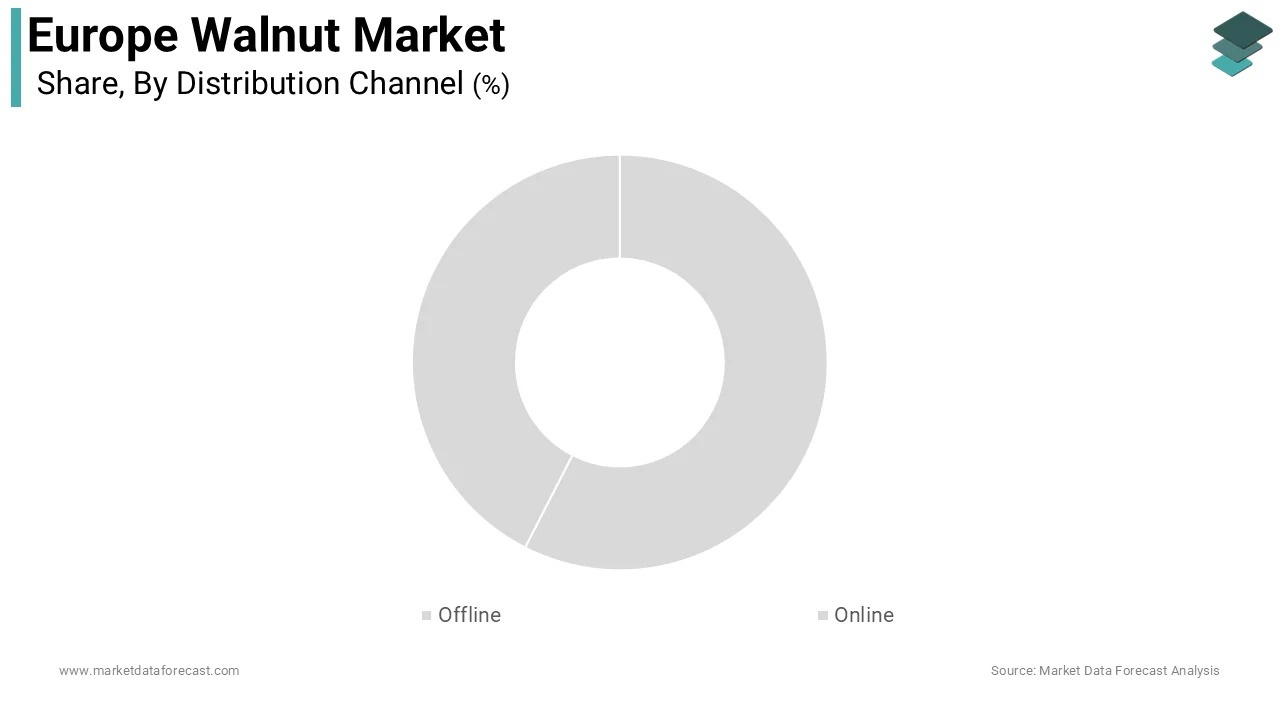
The online retail segment is expected to witness the fastest CAGR of 11.4% over the forecast period, with the shifting consumer behavior towards digital grocery shopping and the increasing availability of specialized organic and gourmet nut products that are often unavailable in local physical stores. As per the study, particularly millennials and Gen Z prefer buying snacks online, where they can access detailed product information, customer reviews, and sustainability certifications before making a purchase. As per the Digital Food Services Initiative, the rise of direct-to-consumer brands selling roasted and flavored walnut varieties has capitalized on the digital channel to reach customers with targeted marketing campaigns. The ability of online retailers to offer a wider variety of specific types, such as raw, activated, or single-origin walnuts, caters to the growing demand for specialization and transparency, positioning the online channel as the most dynamic growth vector in the market.
By Type Insights
The conventional walnuts segment was the largest by holding a dominant share of the Europe walnut market in 2025, with the lower price point of conventionally grown walnuts compared to organic alternatives, making them accessible to the mass market and essential for use in industrial food processing and baking. The extensive use of conventional walnuts as ingredients in confectionery, bakery products, and dairy alternatives, where cost efficiency is paramount for manufacturers operating on thin margins. According to the International Nut and Dried Fruit Council, global walnut production is conventional by ensuring a stable and abundant supply chain that meets the high volume demands of European food industries. Data from the European Bakery Association shows that large-scale bakeries and snack manufacturers predominantly source conventional walnuts to keep final product prices competitive for consumers, especially during periods of high inflation. As per the European Retail Federation, private label ranges in discount supermarkets heavily rely on conventional sourcing to offer affordable nut options that drive foot traffic and basket size.
The organic walnuts segment is anticipated to grow at a CAGR of 9.6% during the foreseen years, with the escalating consumer demand for chemical-free foods and the strong alignment of organic walnuts with the broader sustainability and health trends sweeping across Europe. The increasing awareness among European shoppers regarding the potential health risks of pesticide residues and the environmental benefits of organic farming practices, which prohibit synthetic fertilizers and pesticides. As per the European Consumer Organisation, trust in organic certification labels has reached an all-time high, with over 60% of consumers willing to pay a premium for products guaranteed to be free from synthetic chemicals. The integration of organic walnuts into premium private label ranges and specialty health food stores has further amplified their visibility and accessibility. This convergence of health consciousness, environmental stewardship, and retailer support ensures that the organic segment will continue to outpace traditional farming methods in growth velocity.
REGIONAL ANALYSIS
France Walnuts Market Analysis
France was the top performer in the Europe walnuts market by holding 24.3% of the market share in 2025, with its status as the largest producer within the European Union and a deep cultural appreciation for high-quality nuts. The prestigious "Noix du Perigord" designation, which protects the origin and quality of walnuts grown in the southwest, drives both domestic consumption and export value. A key driving factor is the strong integration of walnuts into French gastronomy, where they are essential ingredients in traditional dishes, salads, and desserts, ensuring consistent year-round demand. According to the French Ministry of Agriculture, France produces over 35000 tonnes of walnuts annually, yet still imports significant volumes to meet internal demand, highlighting the robustness of local consumption. Data from the National Interprofessional Committee for Fruits and Vegetables indicates that per capita consumption of walnuts in France is among the highest in Europe, driven by health campaigns promoting the Mediterranean diet. As per the French Agency for Ecological Transition, there is a growing shift towards organic walnut farming in the region, with producers increasingly adopting sustainable practices to meet consumer expectations.
Germany Walnuts Market Analysis
Germany's walnut market was positioned second by holding 17.5% of the share in 2025, with its massive import volume and a highly health-conscious consumer base that prioritizes nutritional value. The evolution from viewing walnuts as a seasonal Christmas treat to a year-round staple for healthy snacking and baking is driven by rigorous public health messaging. According to the Federal Office for Agriculture and Food in Germany, nut consumption has risen by 15% over the last five years, with walnuts being a top choice due to their recognized omega-3 content. Data from the German Nutrition Society shows that official dietary recommendations explicitly encourage daily nut consumption, influencing millions of households to incorporate walnuts into their daily routines. As per the German Frozen Food Institute, the use of walnuts in frozen desserts and ready meals has also increased, diversifying the application beyond raw snacking. The German market's sensitivity to quality and sustainability has also spurred demand for certified organic and fair-trade walnuts, pushing suppliers to adhere to strict standards.
Italy Walnuts Market Analysis
Italy's walnut market is expected to grow in the coming years, with a rich culinary heritage that extensively utilizes nuts in both savory and sweet preparations. The strong preference for high-quality, locally sourced walnuts from regions like Sorrento and Campania which are renowned for their superior flavor profiles. According to the Italian National Institute of Statistics, household expenditure on dried fruit and nuts remains resilient even during economic downturns, with walnuts accounting for a significant portion of this spending. Data from the Italian Association of Confectionery Industries indicates that the industrial demand for walnuts in the production of nougat, chocolates, and baked goods is substantial, driving bulk procurement from both domestic and international sources. As per the Italian Ministry of Agricultural Policies, there is a renewed focus on revitalizing older walnut orchards to boost domestic production and reduce reliance on imports.
Spain Walnuts Market Analysis
Spain's walnut market growth is driven by the significant domestic production capacity and a growing export-oriented industry. The increasing adoption of the Mediterranean diet principles within the country, which emphasizes the consumption of nuts as a primary source of healthy fats and protein. According to the Spanish Ministry of Agriculture, Fisheries and Food, Spain has become one of the top walnut producers in Europe, with yields increasing by 10% annually due to improved irrigation and farming techniques. Data from the Spanish Association of Fruit and Vegetable Exporters shows that while exports are strong, domestic consumption is also rising, driven by health campaigns and the popularity of nut-based snacks. As per the Spanish Nutrition Foundation, the promotion of walnuts as a heart-healthy food has resonated well with the aging population, boosting retail sales. The strategic investment in modern processing facilities has also enhanced the quality of Spanish walnuts, making them competitive against imports.
United Kingdom Walnuts Market Analysis
The United Kingdom walnut market growth is likely to be propelled by the diverse multicultural population and a booming plant-based food sector. The strong presence of major retail chains that have committed to expanding their healthy snacking ranges, often featuring walnuts prominently in meal deal options and wellness aisles. According to the Department for Environment, Food and Rural Affairs, the UK imports of walnuts make it highly sensitive to global supply chains but also open to diverse sourcing options, including organic and fair-trade varieties. Data from the British Retail Consortium shows that sales of nuts labeled as "high in omega-3" or "brain food" have grown by 20%, indicating a sophisticated consumer base that values functional benefits. As per the Vegan Society, the surge in plant-based diets has directly correlated with increased walnut usage in home cooking and industrial food formulation. The post-Brexit trade environment has introduced some logistical challenges, yet the fundamental demand remains robust due to the lack of close substitutes in the premium nut category.
COMPETITION OVERVIEW
The competition in the Europe walnut market is characterized by intense rivalry among global nut processors, regional traders, and private label manufacturers who vie for dominance in retail and industrial channels. The market landscape features a mix of large multinational corporations and smaller specialized importers who compete primarily on price, consistency, quality standards, and sustainability credentials. Since walnuts are often perceived as a commodity, differentiation frequently hinges on certification status, brand reputation, and the ability to provide a consistent supply in a volatile agricultural environment. Pressure from substitute nuts like almonds and cashews further complicates the competitive landscape, forcing companies to constantly innovate their product portfolios. Firms are engaging in aggressive marketing campaigns to highlight the specific health benefits and ethical sourcing of their walnuts to sway consumer preference. Supply chain resilience has emerged as a key battleground with participants striving to minimize disruptions from geopolitical tensions and climate change impacts. The entry of premium organic brands adds a new dimension to competition by offering high-quality alternatives that challenge traditional suppliers.
KEY MARKET PLAYERS
A few major players of the Europe walnut market include
- Olam International
- Agromillora Group
- Empire Nut Company LLC
- Poindexter Nut Company
- Morada Nut Company
- Diamond Foods LLC
- Hammons Products Company
- Anderson International Corp
- Juglans Regia Group
- D.A.R. S.R.L
- Prioritet Group
- ADM
- Grower Direct Nut Company
- GoldRiver Orchards Inc
- Crain Walnut Shelling Inc
Top Strategies Used by Key Market Participants
Key players in the Europe walnut market primarily employ strategies focused on vertical integration and sustainability certification to secure a competitive advantage. Companies are increasingly investing in direct partnerships with growers to control raw material quality and ensure a stable supply chain amidst global volatility. Obtaining recognized eco labels such as Organic or Fair Trade has become a standard practice to meet the stringent demands of European retailers and consumers. Another major strategy involves product innovation, where manufacturers develop value-added items like roasted, seasoned, or fortified walnut snacks to differentiate their offerings from commodity competitors. Expansion of processing infrastructure within Europe is also critical as firms establish local facilities to reduce lead times and improve service levels. Furthermore, participants are leveraging digital traceability tools to build consumer trust and transparency regarding the origin and farming practices of their walnut products.
Leading Players in the Europe Walnut Market
- Diamond Foods operates as a global leader in the snack nut industry with a substantial presence in the Europe walnut market through its extensive distribution networks and premium brand portfolio. The company sources high-quality walnuts from major growing regions, including California and Chile, to supply European retailers and food service providers with consistent volumes. Their contribution to the global market involves setting rigorous standards for food safety, sorting technology, and sustainable farming practices that influence supply chains worldwide. Recently, the company has focused on expanding its range of value-added walnut products, such as roasted and seasoned kernels tailored to European taste preferences. They have also invested in advanced processing facilities to improve efficiency and reduce waste while enhancing product shelf life.
- John B Sanfilippo and Son stands as a prominent processor and distributor of tree nuts with a significant influence on the Europe walnut market through its diverse portfolio of branded and private label offerings. The company leverages its vertical integration capabilities to control the supply chain from orchard to shelf, ensuring high quality and traceability for European customers. Their global involvement includes pioneering initiatives in sustainable agriculture and community support programs that enhance the resilience of walnut farming communities. In recent actions to strengthen their position, the group has launched new organic walnut lines and eco-friendly packaging solutions to cater to the growing demand for environmentally responsible products in Europe. They have also formed strategic partnerships with European distributors to expand their reach into key markets like Germany and France. These efforts demonstrate their commitment to innovation and responsiveness to local market trends while maintaining their status as a leading global supplier of tree nuts.
- Ferrero Group is a renowned confectionery giant that plays a critical role in the Europe walnut market as one of the largest industrial buyers of walnuts for its premium chocolate and dessert products. The company sources vast quantities of high-grade walnuts globally to ensure the consistent quality and flavor profile required for its iconic brands. Their global market contribution is marked by long-term contracts with growers and investments in agricultural research to improve yield and sustainability. To bolster their market presence, the corporation has recently increased its direct engagement with European suppliers to secure stable raw material flows amidst global volatility. They have also enhanced their sustainability reporting and certification efforts to align with European consumer expectations for ethical sourcing. These actions ensure a reliable supply of premium walnuts for their manufacturing operations and help them maintain their competitive edge in the high-end confectionery sector across the continent.
MARKET SEGMENTATION
This research report on the Europe walnut market has been segmented and sub-segmented based on distribution channel, type & region.
By Distribution Channel
- Offline
- Online
By Type
- Organic
- Conventional
By Region
- UK
- France
- Spain
- Germany
- Italy
- Russia
- Sweden
- Denmark
- Switzerland
- Netherlands
- Turkey
- Czech Republic
- Rest of Europe