- Product Description Description
- Table of Contents TOC
- List of Table & Figure LOT
- Get Free Sample PDF Sample PDF
Market Size, 2025
$51.33 BnMarket Estimate, 2026
$56.55 BnMarket Forecast, 2034
$122.72 BnCAGR, 2026–2034
10.17%Europe Web Hosting Market Report Summary
The Europe web hosting market was valued at USD 51.33 billion in 2025, is estimated to reach USD 56.55 billion in 2026, and is projected to reach USD 122.72 billion by 2034, growing at a CAGR of 10.17% during the forecast period. The growth of the Europe web hosting market is driven by the rapid expansion of digital businesses, increasing demand for cloud based infrastructure, and rising adoption of e commerce and online services. Web hosting services enable businesses to deploy websites, applications, and digital platforms with reliable storage, security, and connectivity. The growing number of startups, digital transformation initiatives among enterprises, and increasing demand for scalable hosting solutions are further supporting the growth of the web hosting market across Europe.
Key Market Trends
- Increasing adoption of cloud hosting solutions due to their scalability, flexibility, and cost efficiency.
- Rising demand for secure and high performance hosting services to support e commerce platforms and online applications.
- Growing popularity of managed hosting and hybrid infrastructure solutions among businesses seeking operational efficiency.
- Expansion of data center infrastructure across Europe to support increasing digital traffic and cloud services.
- Increasing integration of cybersecurity features and automated server management tools in hosting platforms.
Segmental Insights
- Based on hosting type, the cloud hosting segment held the largest share of the Europe web hosting market in 2025. Cloud hosting is widely adopted due to its scalability, high availability, and ability to efficiently manage fluctuating web traffic for digital platforms and enterprise applications.
- Based on end user vertical, the large enterprises segment accounted for the major share of the Europe web hosting market in 2025. Large organizations require robust hosting infrastructure to manage complex digital operations, enterprise applications, and large scale online platforms.
- Based on deployment mode, the public cloud deployment segment dominated the Europe web hosting market in 2025. Public cloud infrastructure provides cost effective and scalable hosting solutions that allow organizations to deploy applications and digital services without maintaining extensive on premises infrastructure.
Regional Insights
- The Europe web hosting market is witnessing strong growth across several countries due to the increasing adoption of digital platforms and cloud computing technologies.
- Germany accounted for the largest share of the Europe web hosting market in 2025. The country’s strong digital economy, well established data center infrastructure, and growing number of technology companies are key factors supporting market expansion.
- Other European countries are also experiencing increasing demand for web hosting services driven by expanding online businesses, rising internet penetration, and growing investments in cloud infrastructure.
Competitive Landscape
The Europe web hosting market is highly competitive with the presence of global cloud service providers, specialized hosting companies, and data center operators. Companies are focusing on expanding cloud hosting capabilities, improving server performance, and integrating advanced cybersecurity features to meet the evolving needs of businesses. Strategic investments in data centers, partnerships with technology providers, and expansion of managed hosting services are helping companies strengthen their presence across the European web hosting ecosystem. Prominent players in the Europe web hosting market include IONOS Inc. (United Internet AG), Amazon Web Services, Inc. (Amazon.com, Inc.), AT&T, Inc., BLUEHOST INC. (Newfold Digital, Inc.), DREAMHOST INC., EASYHOST (team.blue), OVHcloud, GoDaddy Inc., Hetzner Online, Google LLC (Alphabet Inc.), InMotion Hosting, Inc., and Liquid Web, LLC.
Europe Web Hosting Market Size
The Europe web hosting market size was valued at USD 51.33 billion in 2025 and is projected to reach USD 122.72 billion by 2034 from USD 56.55 billion in 2026, growing at a CAGR of 10.17%.
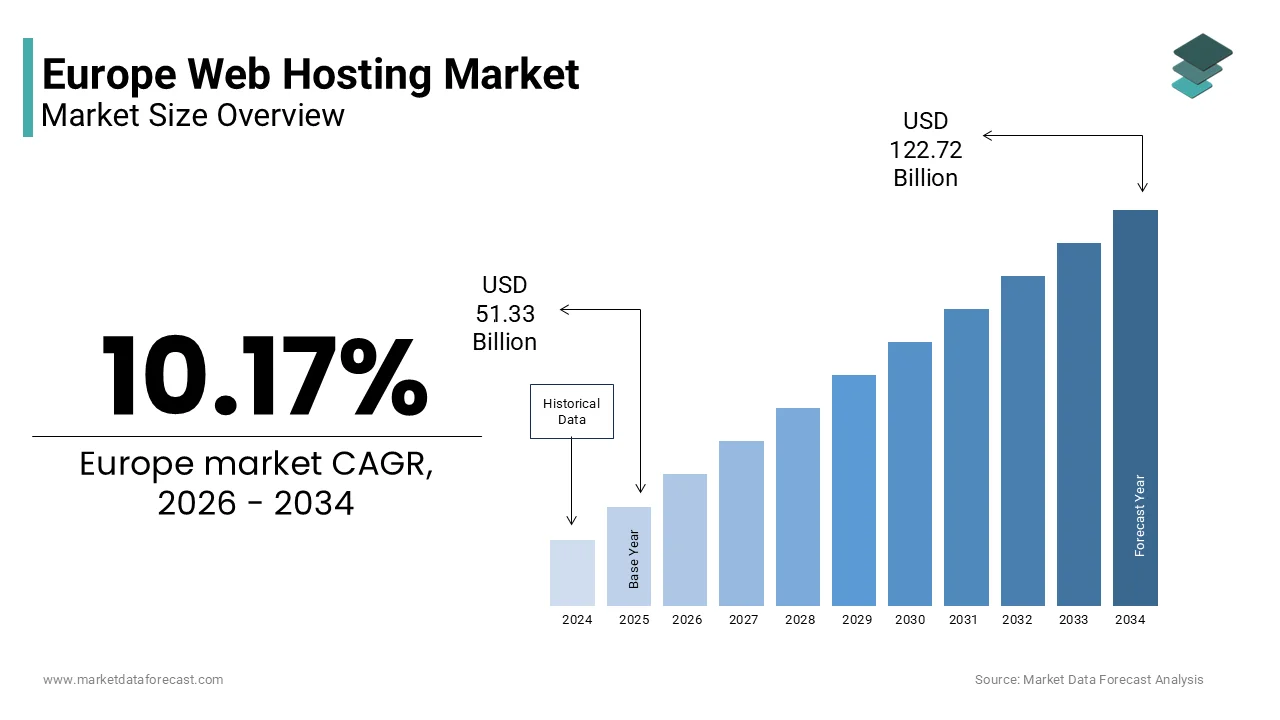
Hosting comprises the infrastructure and services that enable individuals and organizations to store, manage and deliver digital content via the internet including shared servers, virtual private servers, dedicated hardware and cloud-based environments. This sector functions as the foundational backbone of the continental digital economy supporting everything from personal blogs to critical enterprise applications. The operational landscape is defined by stringent regulatory frameworks and a highly connected populace. As per Eurostat, households across the European Union have widespread internet access, which is creating a massive baseline demand for reliable web presence. Furthermore, according to the European Commission, enterprises with ten or more employees widely utilize cloud computing services, which directly fuels the need for robust hosting solutions. Data sovereignty remains a paramount concern with the General Data Protection Regulation enforcing strict rules on where citizen data can reside. As per Statista, the number of internet users in Europe is very high, ensuring continuous traffic growth that requires scalable infrastructure. The market also benefits from advanced telecommunications networks with fifth generation mobile coverage expanding rapidly across major urban centers. This environment necessitates hosting providers to offer low latency, high security, and compliant storage options tailored to diverse national languages and legal requirements within the region.
MARKET DRIVERS
Accelerated Digital Transformation Across European SMEs
The rapid digitization of small and medium enterprises serves is propelling the growth of the European web hosting market. As per Eurofound, a majority of European small businesses have integrated advanced digital technologies into their operations, which is creating an urgent need for reliable web hosting and cloud infrastructure. These entities are shifting from physical storefronts to hybrid or fully online models requiring robust platforms to host e-commerce sites, customer relationship management systems, and internal collaboration tools. The European Commission’s digital decade targets aim for widespread SME digital adoption by 2030, which will further amplify this demand. Hosting providers benefit from this trend as businesses require scalable solutions that can grow with their online traffic and transaction volumes. The necessity for 24*7 availability drives companies toward managed hosting services that offer guaranteed uptime and technical support. Additionally, the rise of remote work has forced many traditional firms to migrate legacy applications to cloud hosted environments to ensure employee access from any location. This structural shift ensures that hosting is no longer a discretionary expense but a critical operational utility.
Proliferation of Data Intensive Applications and Streaming Services
The exponential growth in consumption of data heavy content such as high-definition video streaming, online gaming, and real time analytics drives substantial demand for high performance hosting infrastructure, which is further fuelling the growth of the European hosting market. As per GSMA Intelligence, mobile data traffic in Europe is expected to increase significantly, necessitating powerful backend servers capable of handling massive throughput. Streaming platforms and media companies require content delivery networks and edge computing capabilities to minimize latency and ensure smooth playback for users across diverse geographic locations. The popularity of live streaming events and video on demand services places immense pressure on hosting providers to deliver elastic scalability during peak usage periods. Furthermore, the integration of artificial intelligence and machine learning into business applications requires hosting environments with specialized graphics processing unit acceleration and high-speed storage arrays. Gaming studios launching multiplayer titles rely on dedicated servers to maintain low ping rates and prevent lag which is critical for user retention. The shift toward higher resolution video further multiplies bandwidth requirements forcing infrastructure upgrades.
MARKET RESTRAINTS
Stringent Data Sovereignty and Regulatory Compliance Burdens
The complex web of data protection regulations across European nations is hampering the web hosting market expansion in Europe. As per the European Data Protection Board, the enforcement of the General Data Protection Regulation has led to varied interpretations by national authorities requiring hosting firms to implement distinct data handling protocols for each jurisdiction. Companies must ensure that customer data remains within specific geographic boundaries which limits the ability to utilize global cloud efficiencies and forces the construction of localized data centers. This fragmentation complicates service delivery for providers aiming to offer pan European solutions and increases the administrative burden of maintaining compliance documentation. The risk of substantial fines for data breaches or non-compliance discourages smaller hosting firms from expanding their service portfolios or entering new markets. Additionally, the upcoming European Cloud Services Certification scheme introduces another layer of scrutiny requiring rigorous audits of security practices and supply chain transparency.
Escalating Energy Costs and Sustainability Mandates
Rising electricity prices and strict environmental regulations pose severe financial and operational challenges to the Europe web hosting market which relies heavily on energy intensive data centers. As per Eurostat, energy prices for industrial consumers in the European Union have reached record highs in recent years, significantly impacting the operating margins of hosting providers who run servers continuously. The European Green Deal mandates that the continent achieve climate neutrality by 2050, forcing data center operators to transition rapidly to renewable energy sources and improve power usage efficiency. Achieving these sustainability targets requires substantial capital investment in cooling technologies, solar installations, and carbon offset programs which strains cash flow especially for smaller operators. The Climate Neutral Data Centre Pact commits signatories to specific efficiency metrics that may be difficult to meet without expensive infrastructure overhauls. Furthermore, local zoning laws and community opposition often delay the construction of new facilities needed to meet growing demand. Providers unable to demonstrate credible green credentials risk losing contracts with environmentally conscious corporate clients. This dual pressure of cost and compliance restricts market expansion and forces a re-evaluation of traditional data center models.
MARKET OPPORTUNITIES
Expansion of Edge Computing Infrastructure
The emergence of edge computing presents a promising opportunity for hosting providers to decentralize infrastructure and bring processing power closer to end-users. As per ABI Research, the European edge computing market is expected to grow significantly as industries like autonomous driving, smart manufacturing, and telemedicine require ultra-low latency connections that centralized clouds cannot provide. Hosting firms can capitalize on this by deploying micro data centers in metropolitan areas and industrial hubs to process data locally rather than sending it to distant regions. This approach reduces network congestion and improves response times for critical applications, enabling new use cases in real time analytics and augmented reality. The rollout of fifth generation networks acts as a catalyst by generating massive amounts of data at the network edge that needs immediate processing. Providers who establish a distributed network of edge nodes can offer premium services to sectors demanding instant decision-making capabilities. Furthermore, edge hosting supports data sovereignty goals by keeping sensitive information within local boundaries while still leveraging cloud capabilities.
Adoption of Sovereign Cloud Solutions
The growing demand for sovereign cloud offerings creates a lucrative niche for hosting -providers who can guarantee complete data control and compliance with European laws. As per the International Data Corporation, many European governments and regulated industries are seeking cloud environments that are legally and technically insulated from non-European jurisdictional influence. Hosting firms can develop specialized sovereign cloud platforms that ensure all data storage, processing, and management occur strictly within European borders under local legal oversight. This opportunity is particularly strong in the public sector, healthcare, and financial services where data sensitivity is paramount. Providers who obtain relevant certifications and demonstrate unwavering commitment to data independence can command premium pricing for these secure environments. The European Alliance for Industrial Data and Clouds supports initiatives to build a competitive and trustworthy cloud ecosystem, reducing reliance on hyperscalers from other continents.
MARKET CHALLENGES
Intensifying Cybersecurity Threats and Ransomware Attacks
The hosting sector faces an escalating barrage of sophisticated cyberattacks that threaten service integrity and customer trust across Europe, which is challenging the expansion of the European web hosting market. As per ENISA, ransomware incidents have increased significantly in recent years with hosting providers often serving as primary targets due to their concentration of valuable data. A successful breach can lead to widespread downtime for thousands of hosted websites causing reputational damage and legal liabilities for the provider. The complexity of modern attack vectors including distributed denial of service attacks and supply chain compromises requires continuous investment in advanced threat detection and response systems. Hosting firms must balance the need for open accessibility with rigorous security protocols which can be technically challenging and costly to maintain. The shortage of skilled cybersecurity professionals in Europe exacerbates this issue, leaving many providers vulnerable.
Scarcity of Skilled Technical Workforce
A critical shortage of qualified IT professionals poses a significant challenge to the growth and operational efficiency of the Europe web hosting market . As per Eurostat, there is a persistent gap between the demand for ICT specialists and the available supply, with many vacancies remaining unfilled across the European Union. Hosting providers require expertise in cloud architecture, network engineering, cybersecurity, and automation to manage increasingly complex infrastructures. The lack of skilled personnel leads to slower deployment times, increased operational errors, and higher labor costs as companies compete for limited talent. This scarcity hampers the ability of firms to scale their operations or adopt new technologies such as artificial intelligence driven operations. The situation is particularly acute in Eastern and Southern European regions where brain drain to Western Europe or other continents depletes the local talent pool. Training programs often lag behind the rapid pace of technological change, leaving graduates ill prepared for specific hosting industry requirements. Companies are forced to invest heavily in upskilling existing staff or relocating teams which impacts profitability.
REPORT COVERAGE
| REPORT METRIC | DETAILS |
| Market Size Available | 2025 to 2034 |
| Base Year | 2025 |
| Forecast Period | 2026 to 2034 |
| CAGR | 10.17% |
| Segments Covered | By Hosting Type, Deployment Mode, End User Vertical, End User Vertical, Pricing Model, and Region |
| Various Analyses Covered | Global, Regional, & Country Level Analysis; Segment-Level Analysis; DROC, PESTLE Analysis; Porter’s Five Forces Analysis; Competitive Landscape; Analyst Overview of Investment Opportunities |
| Regions Covered | UK, France, Spain, Germany, Italy, Russia, Sweden, Denmark, Switzerland, Netherlands, Turkey, and the Czech Republic |
| Market Leaders Profiled | IONOS Inc. (United Internet AG), Amazon Web Services, Inc. (Amazon.com, Inc.), AT and T, Inc., Bluehost Inc. (Newfold Digital, Inc.), DreamHost Inc., EasyHost (team.blue), OVHcloud, GoDaddy Inc., Hetzner Online, Google LLC (Alphabet Inc.), InMotion Hosting, Inc., and Liquid Web, LLC. |
SEGMENTAL ANALYSIS
By Hosting Type Insights
The cloud hosting segment led the market by holding the largest share of the European hosting market in 2025. The growth of the cloud hosting segment in the European market is driven by its inherent flexibility, scalability, and cost efficiency which align perfectly with the dynamic needs of modern digital businesses. The ability of cloud hosting to provide instant scalability that allows businesses to adjust resources based on real time demand without significant capital expenditure is further contributing to the expansion of the cloud hosting segment in the European market. As per Eurostat, enterprises in the European Union with ten or more employees widely utilize cloud computing services, with scalability cited as a top benefit. This capability is crucial for European retailers who experience seasonal traffic spikes during events like Black Friday or summer sales and need to expand server capacity instantly to prevent downtime. Traditional fixed infrastructure models cannot match this agility, forcing companies to migrate to cloud environments where they pay only for what they use. The rise of microservices architecture further necessitates this flexibility as applications are broken down into smaller independent components that require dynamic resource allocation. Startups and scale ups across Berlin, London, and Paris rely on this model to launch products rapidly without the burden of managing physical hardware. The ability to deploy services across multiple geographic zones within Europe also ensures low latency and high availability which are critical for user experience.
The virtual private server hosting segment is anticipated to witness a CAGR of 13.3% over the forecast period in the European market owing to the specific needs of businesses that require more control than shared hosting offers but find dedicated servers too costly. The unique position of virtual private server as a middle ground solution offering dedicated resources at a fraction of the cost of a full dedicated server is further aiding the expansion of the VPS segment in the European market. These businesses require guaranteed CPU and RAM allocation to ensure consistent performance which shared hosting cannot provide. Virtual Private Servers offer this isolation while maintaining affordability necessary for budget conscious organizations. This segment is particularly popular among e-commerce stores, SaaS providers, and gaming servers that need root access to install custom software and configure security settings. The ability to scale resources vertically by adding more power to an existing instance allows businesses to grow incrementally without disruptive migrations.
By End User Vertical Insights
The large enterprises segment held the major share of the European hosting market in 2025. The leading position of large enterprises segment in the European market is attributed to their massive scale, complex requirements and substantial IT budgets and the sheer volume of data they process and the critical nature of their digital operations. As per McKinsey & Company, a majority of European CEOs consider digital transformation a top priority, which is leading to massive migrations of legacy systems to advanced hosting environments. These initiatives involve moving vast amounts of data and mission critical applications to secure, scalable platforms capable of supporting global workforces and diverse customer bases. Large firms in sectors like banking, automotive, and telecommunications require hybrid and multi-cloud architectures that integrate seamlessly with existing on premises infrastructure. The complexity of these projects demands high end hosting services including dedicated support, advanced security features, and guaranteed service level agreements.
The small and medium-sized enterprises segment is predicted to witness a promising CAGR of 13.3% over the forecast period in the regional market. Factors such as the rapid digitization of the European SME sector, the lowering of barriers to entry for cloud technologies, extensive government initiatives across Europe aimed at boosting the digital capabilities of small businesses are contributing to the growth of the small and medium-sized enterprises segment in the European market. As per the European Commission, the Digital Europe Programme allocates substantial funding to support SMEs in adopting cloud technologies and improving their online presence. These programs often include subsidies, vouchers, and training that reduce the financial burden of migrating to professional hosting services. National governments in countries like Germany, France, and Spain have launched specific campaigns to help traditional brick and mortar businesses establish e-commerce platforms and digital workflows. This policy support has democratized access to high quality hosting, which is allowing even micro enterprises to leverage enterprise grade infrastructure. As these businesses grow, their hosting needs evolve from basic shared plans to more sophisticated virtual private or cloud solutions, driving volume and value growth.
By Deployment Mode Insights
The public cloud deployment segment occupied the highest share of the European web hosting market in 2025. The dominance of public segment in the European market can be credited to its accessibility, cost effectiveness, and ease of use which appeals to a broad spectrum of users from startups to large divisions within corporations. As per Flexera, a majority of European organizations utilize public cloud services to access these advanced capabilities without needing to build proprietary infrastructure. This accessibility allows small teams to innovate rapidly by leveraging pre built APIs and managed services provided by major hyperscalers. The speed of deployment is unparalleled, enabling developers to spin up environments in minutes rather than weeks. This agility is crucial in the fast-paced European tech scene where time to market is a key competitive advantage. The continuous innovation by public cloud providers ensures that users always have access to the latest hardware and software improvements without additional investment. The global reach of public cloud networks also facilitates easy expansion into new European markets with local data centers ensuring low latency.
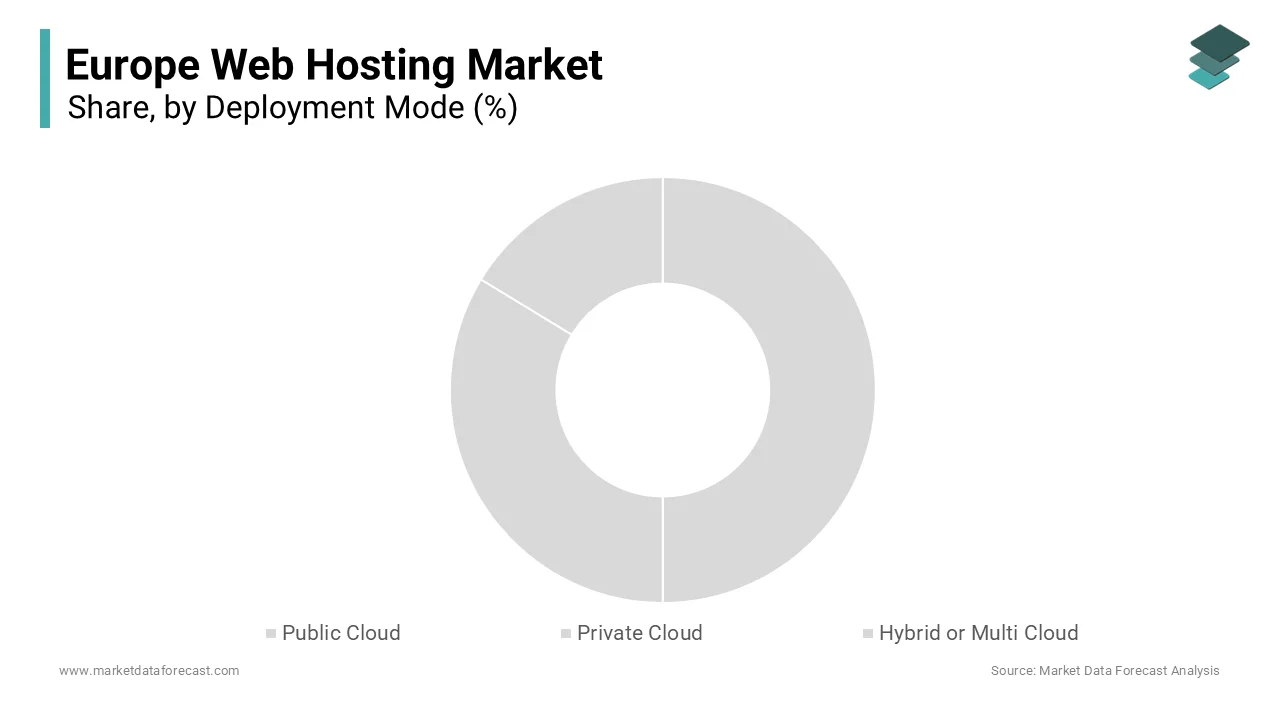
The private cloud segment is another major segment and is estimated to register a CAGR of 15.5% over the forecast period owing to the increasing demand for data sovereignty, enhanced security, and customized control among regulated industries and large organizations. The stringent data sovereignty requirements imposed by European regulations and the specific needs of highly regulated sectors are further propelling the expansion of private segment in the European market. As per Forrester, many European financial institutions, healthcare providers, and government agencies are mandating private cloud deployments to ensure that sensitive data never leaves their controlled environment or national borders. The General Data Protection Regulation and sector specific laws require absolute control over data location and access which public shared environments cannot always guarantee to the satisfaction of compliance officers. Private cloud offers the isolation necessary to meet these strict legal obligations while still providing the benefits of cloud computing such as automation and self-service. The rise of sovereign cloud initiatives further accelerates this trend as nations seek to protect critical infrastructure from foreign jurisdiction. Organizations are willing to invest in private infrastructure to mitigate legal risks and maintain public trust. This regulatory pressure creates a robust and growing market for private cloud solutions tailored to European compliance standards.
REGIONAL ANALYSIS
Germany Web Hosting Market Analysis
Germany accounted for the largest share of the European web hosting market in 2025. The dominance of Germany in the European market is attributed to its status as the economic engine of the continent and its robust industrial base. The country hosts a dense concentration of data centers particularly in Frankfurt which serves as a major internet exchange point for Europe. As per Statista, Germany contributes significantly to European web hosting market revenue, driven by the strong presence of manufacturing, automotive, and financial sectors. These industries are undergoing massive Industry 4.0 transformations requiring high performance, low latency hosting for IoT applications and real time data processing. The German Mittelstand comprising thousands of small and medium enterprises is rapidly digitizing, creating a steady demand for reliable cloud and hosting services. Strict adherence to data privacy laws has fostered a local ecosystem of trusted hosting providers who specialize in compliant solutions. The government commitment to digital sovereignty further boosts the adoption of local hosting infrastructure over foreign alternatives.
United Kingdom Web Hosting Market Analysis
The United Kingdom held a promising share of the European hosting market in 2025. The growth of the UK in the European market is attributed to its mature digital economy, vibrant startup ecosystem, and London’s status as a global fintech hub. The nation benefits from a high level of cloud adoption across its service-oriented economy. As per the Department for Science, Innovation and Technology, the UK’s creative and digital sectors contribute significantly to GDP, driving demand for flexible and scalable hosting solutions. The concentration of financial services in London creates a massive requirement for secure, low latency hosting to support high frequency trading and banking operations. Post Brexit dynamics have encouraged many firms to establish dual infrastructure strategies maintaining UK based data centers for domestic compliance while connecting to European nodes. The UK is also a leader in artificial intelligence research fostering demand for GPU accelerated hosting environments. A strong culture of entrepreneurship results in a high density of startups that rely on public cloud services for rapid scaling.
France Web Hosting Market Analysis
France is expected to account for a notable share of the European hosting market during the forecast period owing to the strong government support for digital sovereignty and a thriving ecosystem of cloud providers known as the Tricolore Cloud. The country has made strategic investments to reduce reliance on non European hyperscalers and promote local hosting capabilities. As per the French Ministry of Economy and Finance, the France 2030 investment plan allocates substantial funds to develop secure and sustainable data center infrastructure. This state led initiative has spurred the growth of domestic hosting firms that cater to public sector and defense requirements with guaranteed data residency. The French luxury fashion and aerospace industries also drive demand for high end hosting solutions that support complex supply chain management and global e-commerce platforms. Paris has emerged as a key hub for data centers benefiting from favorable climate conditions for cooling and access to renewable energy sources.
Netherlands Web Hosting Market Analysis
The Netherlands is predicted to showcase a prominent CAGR in the European hosting market over the forecast period due to its strategic geographic location as the digital gateway to Europe and its world class connectivity infrastructure. The country hosts the Amsterdam Internet Exchange, one of the largest in the world, making it a preferred location for content delivery networks and international hosting providers. As per the Netherlands Enterprise Agency, the logistics and trade sectors leverage this connectivity to drive demand for robust hosting services that support global operations. The Dutch progressive approach to sustainability has led to the development of some of the most energy efficient data centers in Europe utilizing innovative cooling techniques and renewable power. This green credential attracts multinational corporations seeking to meet their carbon reduction targets. The high English proficiency and business friendly environment facilitate the establishment of regional headquarters by global tech firms which in turn boosts local hosting consumption.
Sweden Web Hosting Market Analysis
Sweden is anticipated to record a steady CAGR in the European web hosting market over the forecast period. Sweden is popular for its advanced digital infrastructure, high internet penetration, and commitment to sustainability which makes it an ideal location for green data centers. The country is home to several major global technology companies and has a culture that embraces digital innovation. As per Statistics Sweden, internet usage is nearly universal, creating a massive domestic demand for high quality hosting and streaming services. The cold climate provides natural cooling opportunities reducing energy costs for data centers and aligning with corporate sustainability goals. Swedish enterprises in the gaming, telecommunications, and clean tech sectors are heavy consumers of cloud and hosting services to support their global operations. The government’s proactive digitalization policies encourage the adoption of cloud first strategies across the public and private sectors. Stockholm has become a hotspot for unicorn startups driving demand for scalable and developer friendly hosting environments.
COMPETITIVE LANDSCAPE
The competition within the Europe web hosting market is intense and characterized by a diverse mix of global hyperscalers strong regional champions and numerous niche providers. Large international corporations compete on the breadth of their service portfolios and global network reach while European native firms differentiate themselves through strict adherence to data privacy regulations and sovereign cloud capabilities. Price competition remains fierce particularly in the shared and virtual private server segments where margins are thin and customer churn can be high. Providers are increasingly competing on sustainability credentials as enterprises prioritize green hosting solutions to meet their own environmental goals. The rise of edge computing has sparked a new battleground where companies race to deploy infrastructure closer to end users for ultra-low latency applications. Talent acquisition is another critical area of rivalry as skilled engineers are scarce and essential for managing complex cloud environments. Innovation in automation and artificial intelligence driven operations is becoming a key differentiator for retaining enterprise clients who demand efficiency and reliability. This dynamic landscape forces continuous adaptation and investment from all market participants to maintain relevance.
KEY MARKET PLAYERS
Some of the notable key players in the Europe web hosting market are
- IONOS Inc. (United Internet AG)
- Amazon Web Services, Inc. (Amazon.com, Inc.)
- AT&T, Inc.
- BLUEHOST INC. (Newfold Digital, Inc.)
- DREAMHOST INC.
- EASYHOST (team.blue)
- OVHcloud
- GoDaddy Inc.
- Hetzner Online
- Google LLC (Alphabet Inc.)
- InMotion Hosting, Inc.
- Liquid Web, LLC
Top Players in the Market
- OVHcloud stands as a leading European cloud and hosting provider with headquarters in France and a massive footprint across the continent. The company contributes significantly to the global market by offering sovereign cloud solutions that prioritize data privacy and compliance with European regulations. OVHcloud recently strengthened its position by launching new high performance bare metal servers designed for artificial intelligence workloads and expanding its network of data centers in Germany and Poland. Their commitment to designing their own hardware allows them to offer competitive pricing while maintaining full control over the supply chain. The firm actively promotes an open cloud ecosystem free from vendor lock in which appeals to enterprises seeking flexibility. By investing heavily in renewable energy sources for their facilities OVHcloud also addresses the growing demand for sustainable hosting options. These strategic moves reinforce their status as a key alternative to American hyperscalers for businesses operating within Europe.
- Hetzner Online is a prominent German hosting provider known for delivering high performance dedicated servers and cloud instances at highly competitive price points. Globally the company serves a diverse customer base ranging from developers to large enterprises who value reliability and cost efficiency. Hetzner has recently expanded its infrastructure by opening new data center campuses in Finland and the United States to increase capacity and reduce latency for international clients. Their strategy focuses on vertical integration by manufacturing their own server hardware and managing their own power supplies which ensures quality control and lower operational costs. The company continues to innovate its cloud platform by adding managed Kubernetes services and object storage solutions to meet modern application needs. Hetzner maintains a strong reputation for transparency and technical excellence which drives organic growth through word of mouth. These efforts solidify their role as a critical infrastructure partner for the European digital economy.
- IONOS SE operates as one of the largest web hosting companies in Europe and a key subsidiary of United Internet based in Germany. The group plays a vital role in the global market by providing comprehensive digital presence solutions including domains hosting email and cloud services to millions of customers. IONOS recently enhanced its market position by integrating advanced artificial intelligence tools into its website builder and cloud management console to simplify operations for small business owners. The company has aggressively expanded its cloud infrastructure with new regions in Spain and Italy to support local data sovereignty requirements. Their focus on serving small and medium enterprises includes tailored packages that combine marketing tools with robust hosting capabilities. IONOS also invests heavily in security features such as automated backups and DDoS protection to build trust among users. These initiatives ensure IONOS remains a preferred partner for businesses seeking all in one digital solutions across Europe.
Top Strategies Used by Key Market Participants
Key players in the Europe web hosting market primarily focus on expanding their data center footprints to ensure low latency and strict compliance with local data sovereignty laws. Companies are heavily investing in renewable energy sources to power their facilities and meet stringent European sustainability targets. Another major strategy involves developing sovereign cloud offerings that guarantee data stays within European borders to address regulatory concerns. Providers are also integrating artificial intelligence and machine learning capabilities into their platforms to offer managed services and automate routine tasks. Strategic partnerships with telecommunications firms help enhance network connectivity and reach remote areas effectively. Acquisitions of specialized niche providers allow larger entities to quickly gain expertise in emerging technologies like edge computing. Finally, companies are simplifying user interfaces and pricing models to attract small and medium enterprises who seek easy to deploy and cost-effective solutions.
MARKET SEGMENTATION
This research report on the European web hosting market has been segmented and sub-segmented based on categories.
By Hosting Type
- Shared Hosting
- Virtual Private Server VPS Hosting
- Dedicated Hosting
- Cloud Hosting
- Colocation Hosting
- Managed WordPress Hosting
- Reseller Hosting
- Other Hosting Types
By Deployment Mode
- Public Cloud
- Private Cloud
- Hybrid or Multi Cloud
By End User Vertical
- Large Enterprises
- Small and Medium sized Enterprises SMEs
- Individual Bloggers or Creators
- Software Developers and SaaS Start ups
By Application
- Public Websites
- E commerce Stores
- Web Applications
- Mobile Applications and APIs
- SaaS or PaaS Platforms
- Other Applications
By Pricing Model
- Subscription Fixed Term
- Metered or Pay as you go
- Tiered Usage Bracket
- Freemium and Ad Supported
By Country
- UK
- France
- Spain
- Germany
- Italy
- Russia
- Sweden
- Denmark
- Switzerland
- Netherlands
- Turkey
- Czech Republic
- Rest of Europe