Europe Wild Pollock Market Size, Share, Trends & Growth Forecast Report By Product Type, By Distribution Channel, By End Use, and By Country (Germany, France, United Kingdom, Italy, Spain & Rest of Europe) – Industry Analysis and Forecast, 2026 to 2034
Market Size, 2025
$0.66 BnMarket Estimate, 2026
$0.69 BnMarket Forecast, 2034
$0.92 BnCAGR, 2026–2034
3.7%Europe Wild Pollock Market Report Summary
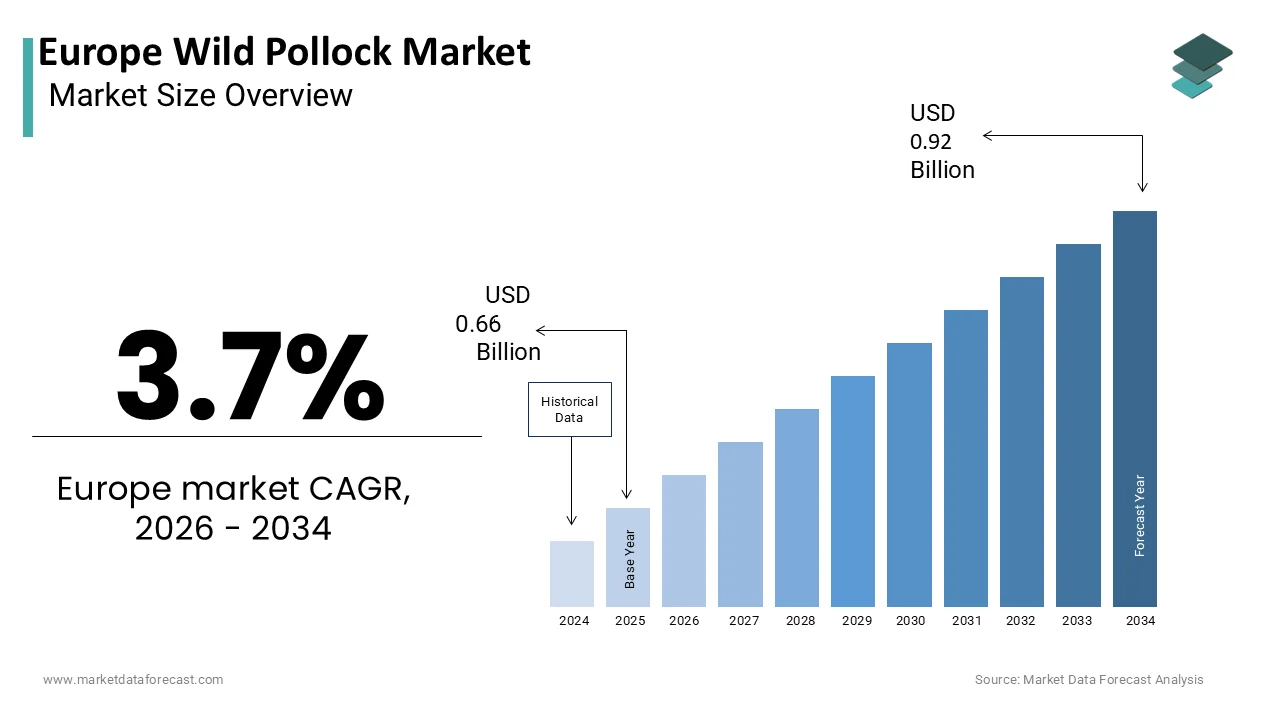
The Europe Wild Pollock Market was valued at USD 0.66 billion in 2025 and is projected to reach USD 0.92 billion by 2034, growing from USD 0.69 billion in 2026 at a CAGR of 3.7% during the forecast period. Growth is driven by increasing demand for lean protein, expanding consumption of processed seafood and ready-to-eat meals, and rising consumer preference for sustainably sourced seafood. However, stringent fishing regulations, quota limitations, and fluctuating fuel and operational costs continue to challenge market growth.
Key Market Trends
- Rising consumer preference for healthy, low-fat, high-protein seafood products.
- Growing demand for processed seafood, including fish sticks, breaded fillets, and surimi-based products.
- Increasing adoption of Marine Stewardship Council (MSC)-certified sustainable seafood.
- Expansion of value-added surimi products and specialty seafood offerings.
- Growing integration of wild pollock into institutional catering, public food programs, and ready-to-eat meal solutions.
Segmental Insights
- Based on product type, frozen fillets held the largest market share in 2025, driven by longer shelf life, superior logistics, reduced food waste, and strong demand from retailers and food processors.
- Based on distribution channel, Business-to-Business (B2B) dominated the market with a 58.9% market share in 2025, supported by high demand from food processors, restaurants, and institutional catering services.
- Fresh fillets are the fastest-growing product segment, projected to register a CAGR of 5.05%, driven by premium seafood consumption, improved cold-chain logistics, and increasing demand for fresh, sustainably sourced products.
Regional Insights
- Germany led the market in 2025, supported by high consumption of processed seafood, strong retail penetration, advanced seafood processing infrastructure, and widespread demand for MSC-certified products.
- France holds a significant share, driven by increasing health awareness, growing demand for traceable seafood, and expanding use of pollock in gourmet and food service applications.
- The United Kingdom, Italy, and Spain remain important markets, supported by growing seafood consumption, convenience food demand, and expanding retail availability.
- Business-to-Consumer (B2C) is the fastest-growing distribution channel, projected to register a CAGR of 8.4%, driven by online grocery shopping, direct-to-consumer seafood platforms, and increasing home delivery services.
Competitive Landscape
The market is moderately consolidated, with global seafood companies and regional distributors competing through sustainability certifications, product innovation, supply chain optimization, and advanced cold-chain logistics. Companies are investing in value-added seafood products, blockchain-enabled traceability, strategic partnerships, and digital consumer engagement to strengthen their competitive position across the European seafood market.Prominent players in the market include Trident Seafoods Corporation, Pacific Andes International Holdings Limited, Maruha Nichiro Corporation, Nippon Suisan Kaisha Ltd. (Nissui), Russian Fishery Company, Gidrostroy Group, American Seafoods Group, High Liner Foods Incorporated, Icelandic Group, Marine Stewardship Council (MSC), Laco AS, and Alaska Seafood Marketing Institute (ASMI).
Europe Wild Pollock Market Size
The Europe Wild Pollock Market is projected to grow from USD 0.66 billion in 2025 to USD 0.69 billion in 2026 and reach USD 0.92 billion by 2034, registering a CAGR of 3.7% during the forecast period from 2026 to 2034.
Wild pollock is sourced primarily from sustainable fisheries in the North Pacific and Atlantic Oceans. This whitefish variety serves as a critical protein source across the continent due to its mild flavor, firm texture, and versatility in culinary applications ranging from breaded fillets to surimi-based products. Consumer preference for lean, low mercury seafood has elevated wild pollock as a preferred alternative to overfished species like cod. The European Union maintains strict regulatory frameworks under the Common Fisheries Policy to ensure traceability and sustainability, which significantly influences supply chain dynamics. As per the Food and Agriculture Organization of the United Nations, global per capita fish availability reached 21.1 kilograms in recent years, with Europe accounting for a substantial share of this demand. The region imports significant volumes of wild-caught pollock to meet domestic requirements, particularly in Germany, France, and the United Kingdom, om where processed seafood products enjoy high penetration. Environmental certifications such as the Marine Stewardship Council label have become essential for market access, reflecting growing consumer awareness regarding ocean health. The integration of wild pollock ready-to-eat meals and institutional catering further solidifies its position within the European food security architecture. This market operates at the intersection of ecological conservation and nutritional demand, requiring balanced management of harvest quotas and processing efficiencies to sustain long-term viability.
MARKET DRIVERS
Rising Health Consciousness and Demand for Lean Protein Sources
Consumer shift toward healthier dietary patterns is one of the significant factors propelling the growth of the European wild pollock market. Modern nutritional science emphasizes the importance of lean protein sources that provide essential amino acids without excessive saturated fats. Wild pollock contains approximately 18 grams of protein per 100-gram serving while maintaining less than 1 gram of fat, making it an ideal choice for health-conscious individuals. According to the World Health Organization, cardiovascular diseases remain the leading cause of death globally, which drives public health campaigns promoting heart-healthy diets. The Mediterranean diet model, widely endorsed by health professionals, increasingly incorporates whitefish varieties as sustainable alternatives to red meat. Retail data indicates that sales of frozen whitefish products grew by 12 % year on year in major European markets as consumers sought convenient yet nutritious meal solutions. Fitness trends and weight management programs further amplify demand, with gym goers and athletes prioritizing high-protein, low-calorie options. Supermarkets across Germany and France have expanded their frozen seafood aisles to include premium wild pollock fillets, responding to shopper preferences for clean-label products. The absence of artificial additives in wild-caught pollock aligns with the clean-eating movement that dominates contemporary food culture. Nutritional labeling regulations require transparent disclosure of content, allowing consumers to make informed choices. This health-driven demand creates a stable consumption base that withstands economic fluctuations, ensuring consistent market growth for wild pollock suppliers who can verify purity and origin through robust certification systems.
Expansion of Processed Seafood and Ready-to-Eat Meal Segments
The proliferation of convenience foods and ready-to-eat meals is further contributing to the expansion of the European wild pollock market. Modern urban lifestyles characterized by time scarcity drive demand for quick preparation options that do not compromise on nutritional value. Wild pollock serves as the primary raw material for fish sticks, breaded fillets, and surimi-based products that dominate the frozen food sector. As per Eurostat, household final consumption expenditure on food and non alcoholic beverages in the European Union reflects a persistent demand where processed foods constitute a significant share of this spending. Major food manufacturers leverage the neutral taste and firm texture of pollock to create diverse product formulations appealing to varied palates. The quick service restaurant industry relies heavily on pollock for fish sandwiches and tacos, with multinational chains sourcing millions of tons annually to maintain menu consistency. Innovation in batter technologies and freezing methods has enhanced product quality, reducing moisture loss and improving crispiness upon reheating. Retailers report that frozen seafood categories outperform fresh counterparts in terms of volume growth due to extended shelf life and reduced waste. The rise of single-serve packaging caters to smaller households and individual consumers, driving incremental sales. Food service providers appreciate the cost efficiency and standardized portioning that pollock offers, enabling precise inventory management. Technological advancements in blast freezing preserve cellular structure, ensuring that thawed products retain sensory attributes comparable to fresh catches. This processing advantage positions wild pollock as the backbone of the industrial seafood sector, facilitating scalable production models that meet the relentless pace of modern consumption patterns.
MARKET RESTRAINTS
Stringent Sustainability Regulations and Quota Limitations
Regulatory constraints imposed by international fisheries management bodies are a major impediment to the growth of the European wild pollock market. The Marine Stewardship Council and regional fisheries organizations enforce strict catch limits to prevent overexploitation and ensure stock regeneration. As per the International Council for the Exploration of the Sea, annual total allowable catches for key gadoid species undergo rigorous scientific assessment, often resulting in adjusted quotas to ensure long-term sustainability. European importers must comply with these fluctuating limits, which create uncertainty in long-term supply planning. The European Union Illegal Unreported and Unregulated Fishing Regulation mandates comprehensive documentation for all seafood imports, increasing administrative burdens and compliance costs for traders. Non-compliant shipments face rejection at ports, leading to financial losses and reputational damage. Climate change impacts further complicate quota allocations, as shifting ocean temperatures alter migration patterns and spawning grounds. Scientific studies indicate that warming waters have affected pollock distribution, forcing vessels to travel greater distances and incur higher fuel expenses. Certification requirements demand continuous monitoring and auditing, imposing additional operational costs on fishing fleets and processors. Small-scale operators struggle to meet these stringent standards, leading to market consolidation favoring large integrated companies. The complexity of verifying the chain of custody from vessel to retail shelf requires sophisticated tracking systems that many suppliers lack. These regulatory hurdles limit market entry for new players and constrain supply elasticity, making the market vulnerable to sudden shortages when quotas are unexpectedly reduced. Compliance becomes a competitive barrier rather than a mere operational requirement, reshaping industry structure.
Volatility in Fuel Costs and Operational Expenses
Fluctuating energy prices directly impact the profitability of wild pollock harvesting and processing operations, which is further hindering the expansion of the European wild pollock market. Fishing vessels consume substantial quantities of diesel fuel during expeditions to remote fishing grounds in the North Pacific and Atlantic Oceans. As per the International Energy Agency, global oil prices have experienced significant fluctuations in recent years due to geopolitical tensions and supply shifts, impacting global maritime logistics. Higher fuel costs increase operational expenditures for fishing fleets, forcing them to either reduce trip frequency or pass costs onto buyers through price hikes. Processing facilities also face rising electricity costs for freezing, cold storage, and transportation logistics. The carbon intensity of long-distance shipping from Alaska or Russia to European ports adds another layer of expense, particularly as environmental taxes on maritime emissions increase. European Union Emissions Trading System reforms have raised compliance costs for shipping companies, contributing to higher freight rates. Smaller processors lack the economies of scale to absorb these cost increases, leading to margin compression and potential exit from the market. Labor costs in European processing plants continue to rise due to minimum wage adjustments and workforce shortages, further straining operational budgets. The cumulative effect of these expense pressures reduces competitiveness against alternative protein sources that require less energy-intensive production methods. Price-sensitive consumers may switch to cheaper farmed fish varieties when pollock prices escalate, dampening demand. This cost volatility undermines pricing stability and complicates contract negotiations between suppliers and retailers, creating friction throughout the value chain.
MARKET OPPORTUNITIES
Development of Value-Added Surimi and Specialty Products
Innovation in surimi-based products presents substantial growth opportunities for the wild pollock market in Europe. Surimi, a minced fish paste derived primarily from pollock, serves as the foundation for imitation crab, shrimp, and other seafood analogs that enjoy widespread popularity. As per global market research, the surimi market continues to expand at a steady pace, driven by Asian cuisine adoption and creative culinary applications in Western markets. European chefs increasingly incorporate surimi into fusion dishes, appetizers, and salads, elevating its status from a budget ingredient to a gourmet component. Product developers leverage the binding properties and neutral flavor of pollock surimi to create novel textures and forms, including flakes, chunks, and shredded varieties. Health-oriented formulations replace traditional starches with vegetable fibers or protein isolates, appealing to fitness enthusiasts and diabetic consumers. The plant-based food trend intersects with surimi innovation, as manufacturers experiment with hybrid products combining fish protein with legume extracts to enhance nutritional profiles. Retailers dedicate shelf space to premium surimi lines featuring natural colorants and reduced sodium content, responding to clean label demands. Food service operators utilize surimi for cost-effective menu items that mimic expensive shellfish, maintaining profit margins while offering perceived value. Export opportunities to Middle Eastern and Asian markets provide additional revenue streams for European processors who master advanced surimi technologies. Investment in research and development enables differentiation through unique flavors, such as smoked or herb-infused variants, commanding higher price points. This value addition transforms commodity pollock into specialized ingredients, diversifying income sources and reducing dependence on bulk frozen fillet sales.
Integration into Institutional Catering and Public Food Programs
Public sector procurement and institutional catering represent untapped potential for wild pollock expansion across Europe, which is another promising opportunity for the regional market. Schools, hospitals, prisons, and military facilities require large volumes of affordable, nutritious protein sources that meet dietary guidelines and budget constraints. As per the European Commission, public procurement accounts for approximately 15 % of the European Union's gross domestic product, offering a massive channel for seafood distribution. Government nutrition programs increasingly emphasize omega-3 fatty acids and lean proteins to combat obesity and malnutrition among vulnerable populations. Wild pollock fits these criteria perfectly due to its low mercury content, high protein density, and cost efficiency compared to salmon or tuna. Bulk purchasing agreements enable processors to secure long-term contracts with predictable volumes, stabilizing revenue streams. Menu planners appreciate the versatility of pollock, which can be prepared as baked fillets, chowders, or mixed into casseroles without triggering common allergens associated with shellfish. Digital procurement platforms streamline bidding processes, allowing smaller suppliers to compete for institutional contracts. Sustainability criteria embedded in public tender documents favor certified wild-caught pollock, aligning with governmental environmental commitments. The standardization of portion sizes and cooking instructions simplifies kitchen operations in large-scale facilities, reducing training requirements and waste. Partnerships with nutritionists help design appealing recipes that overcome student or patient resistance to fish consumption. This institutional channel provides volume stability that buffers against retail fluctuations, creating a resilient demand base. Expansion into corporate cafeterias and university dining halls further amplifies reach, which is positioning wild pollock as a staple protein in collective feeding systems.
MARKET CHALLENGES
Climate Change Impacts on Fish Stock Distribution and Abundance
Environmental shifts pose severe challenges to the European wild pollock market expansion. Rising ocean temperatures alter the metabolic rates, migration routes, and spawning success of gadoid species, disrupting established fishing patterns. As per the Intergovernmental Panel on Climate Change, global average surface temperatures have increased significantly over the past century, affecting marine ecosystems profoundly. Warmer waters reduce oxygen solubility, stressing fish populations and limiting their geographic range. Pollock stocks may shift northward or into deeper waters, requiring vessels to adjust fishing grounds and incur higher operational costs. Acidification of oceans due to carbon dioxide absorption weakens the food web by impacting plankton populations that serve as primary prey for juvenile pollock. These ecological changes complicate stock assessments, leading to inaccurate quota settings that either overestimate or underestimate available biomass. Overestimation risks overfishing and long-term depletion, while underestimation unnecessarily restricts harvest opportunities. Extreme weather events such as storms and hurricanes disrupt fishing schedules, causing delays and safety hazards for crews. The unpredictability of catch volumes undermines supply chain reliability, forcing processors to maintain larger inventories or seek alternative sources. Insurance premiums for fishing vessels rise as climate-related risks intensify, adding financial pressure. Long-term investment in fleet modernization becomes risky when future stock locations remain uncertain. Scientists struggle to model complex interactions between temperature, prey availability, and predator dynamics, limiting the precision of management advice. This environmental volatility threatens the foundational assumption of stable yields that underpins commercial planning.
Competition from Aquaculture and Alternative Whitefish Species
Intense competition from farmed fish and other wild-caught whitefish varieties challenges the market position of wild pollock. Aquaculture production of species such as tilapia, pangasius, and farmed cod has expanded rapidly, offering consistent supply and lower prices due to controlled breeding environments. As per the Food and Agriculture Organization of the United Nations, global aquaculture production has surpassed wild capture fisheries for aquatic animal output in recent years, reflecting the scalability of farming operations. Farmed tilapia from Asia enters European markets at competitive price points, attracting budget-conscious consumers and food service operators who prioritize cost over origin. Pangasius, despite controversy regarding farming practices, maintains significant market share due to its affordability and mild flavor profile similar to pollock. Within the wild catch segment, hake, haddock, and whiting compete directly for consumer attention and retail shelf space. These species benefit from regional proximity, as European fleets harvest them locally, reducing transportation costs and carbon footprints. Marketing campaigns promoting local seafood resonate with environmentally conscious shoppers who prefer shorter supply chains. Retailers often substitute pollock with these alternatives when prices fluctuate or availability declines, eroding brand loyalty. Consumer confusion regarding fish names and origins further complicates differentiation, as many shoppers cannot distinguish between similar whitefish varieties. Labeling regulations allow certain substitutions under generic terms, enabling retailers to switch sources without explicit notification. The perception of wild pollock as a commodity rather than a premium product limits pricing power. Competitors invest heavily in branding and storytelling, highlighting artisanal qualities or regional heritage that pollock lacks due to its distant sourcing. This competitive landscape forces pollock suppliers to continuously justify their value proposition against cheaper or more locally sourced alternatives.
REPORT COVERAGE
| REPORT METRIC | DETAILS |
| Market Size Available | 2025 to 2034 |
| Base Year | 2025 |
| Forecast Period | 2026 to 2034 |
| Segments Covered | By Product Type, Distribution Channel, End Use and Region. |
| Various Analyses Covered | Global, Regional and Country-Level Analysis, Segment-Level Analysis, Drivers, Restraints, Opportunities, Challenges; PESTLE Analysis; Porter’s Five Forces Analysis, Competitive Landscape, Analyst Overview of Investment Opportunities |
| Countries Covered | Spain, Italy, France, Germany, United Kingdom, Rest of Europe |
| Market Leaders Profiled | Trident Seafoods Corporation, Pacific Andes International Holdings Limited, Maruha Nichiro Corporation, Nippon Suisan Kaisha Ltd. (Nissui), Russian Fishery Company, Gidrostroy Group, American Seafoods Group, High Liner Foods Incorporated, Icelandic Group, Marine Stewardship Council (MSC), Laco AS, Alaska Seafood Marketing Institute (ASMI). |
SEGMENTAL ANALYSIS
By Product Type Insights
The frozen fillets segment led the market by commanding the highest share of the European market in 2025. The dominance of the frozen fillets segment in the European market is attributed to its superior preservation capabilities and logistical advantages. The freezing process halts enzymatic activity and bacterial growth, allowing products to maintain quality for up to 24 months when stored at minus 18 degrees Celsius. As per the European Frozen Food Federation, the European frozen food market is estimated to grow with a steady CAGR of 4.9% during the forecast period, driven by consumer demand for convenience and reduced food waste. Wild pollock fillets are particularly suited for freezing because their low fat content prevents oxidative rancidity, a common issue in oily fish. This characteristic ensures that the texture and flavor remain intact after thawing, meeting the high expectations of European consumers. Retailers prefer frozen inventory as it reduces spoilage rates, which are maintained at low levels through efficient cold chain management. The ability to transport frozen goods over long distances from North Pacific fishing grounds to European ports without compromising quality enables consistent supply regardless of seasonal fluctuations. Industrial processors rely on frozen raw materials to maintain year-round production schedules for breaded products and surimi. The standardization of block freezing allows for efficient portioning and packaging, reducing labor costs in processing facilities. Consumer perception of frozen seafood has shifted positively, with many European shoppers now viewing frozen fish as equally nutritious as fresh options. This acceptance, combined with the economic benefits of reduced waste and stable pricing, which solidifies the dominance of frozen fillets in the market landscape.
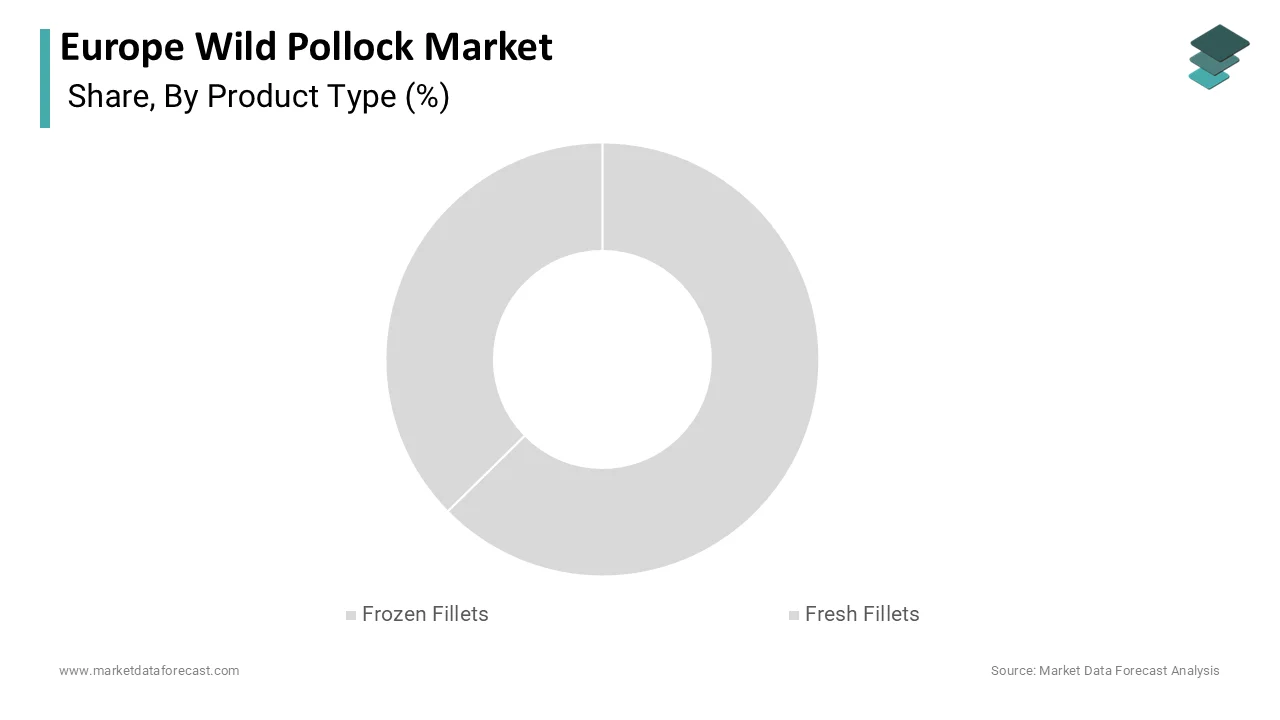
On the other side, the fresh fillets segment is predicted to record a CAGR of 5.05% over the forecast period in the European market owing to the premiumization of seafood consumption in Europe. High-income consumers in countries like France and Italy increasingly prefer fresh, never-frozen products for their perceived superior texture and culinary versatility. As per the European Market Monitor on Seafood, sales of fresh whitefish fillets have risen in upscale retail channels, reflecting a shift toward gourmet home cooking. The influence of television cooking shows and social media food influencers has elevated the status of fresh pollock as a viable alternative to expensive cod or halibut. Chefs emphasize the delicate flake and mild sweetness of fresh pollock, encouraging home cooks to experiment with new recipes. Retailers respond by investing in improved cold chain logistics, ensuring that fresh fillets reach shelves within 48 hours of processing. Advanced packaging technologies, such as modified atmosphere packaging, extend the shelf life of fresh fillets by 3 to 5 days, which is reducing retailer risk and consumer hesitation. The demand for traceability is higher in the fresh segment, with consumers willing to pay a premium for products with verified origin and sustainability certifications. Direct-to-consumer models, including online seafood delivery services, have expanded access to fresh pollock in urban areas, bypassing traditional wholesale constraints. This direct connection allows suppliers to highlight the freshness and quality of their offerings, fostering brand loyalty. The growth of fresh fillets is not just about volume but about value addition, as consumers associate freshness with health and luxury. This segment benefits from the overall trend of trading up in food purchases, where quality outweighs price sensitivity for a significant demographic.
By Distribution Channel Insights
The Business to Business channel segment dominated the market by accounting for 58.9% of the regional market share in 2025. This dominance is primarily driven by the extensive use of pollock in industrial processing for value-added products such as fish sticks, surimi, and ready meals. Large food manufacturers require consistent, bulk supplies of raw material to maintain production efficiency and meet contractual obligations with retailers. For instance, the processed seafood industry utilizes a vast majority of all whitefish imports, with pollock being the preferred species due to its cost-effectiveness and functional properties. The food service sector, including quick service restaurants, hotels, and institutional caterers, also contributes significantly to B2B demand. These establishments prioritize standardized portion sizes and predictable pricing, which bulk B2B contracts provide. The economies of scale in B2B transactions allow for lower unit costs, making pollock an attractive option for menu planning in budget-conscious segments. Distributors play a crucial role in this channel, managing complex logistics and ensuring timely delivery to processing plants and commercial kitchens. The integration of vertical supply chains, where processors own fishing rights or have long-term agreements with fleets, further stabilizes B2B flows. Regulatory compliance is easier to manage in B2B transactions, as professional buyers are well-versed in documentation requirements for sustainability and safety. The reliance on B2B channels reflects the industrial nature of pollock consumption, where it serves as a foundational ingredient rather than a final retail product. This structural dependency ensures that B2B remains the backbone of the market, driving volume and sustaining infrastructure investments.
However, the Business to Consumer (B2C) segment is the fastest-growing segment and is estimated to register a CAGR of 8.4% over the forecast period owing to direct-to-consumer commerce and direct-to-consumer seafood platforms. Online grocery shopping has become mainstream in Europe, with seafood being one of the fastest-growing categories in digital retail. As per Eurostat, online sales of food and beverages in the European Union have seen consistent growth in recent years, with fresh and frozen fish benefiting from last-mile logistics for delivery. Consumers appreciate the convenience of home delivery, especially for bulky frozen items like pollock blocks or family packs of fillets. Direct-to-consumer brands leverage social media marketing to educate customers about the benefits of wild pollock, offering subscription boxes and recipe kits that simplify meal planning. These platforms often provide greater transparency regarding sourcing and sustainability, appealing to ethically conscious shoppers. The ability to purchase niche products, such as skin-on fillets or specific cuts, which are rarely available in standard supermarkets, drives trial and repeat purchases. Digital payment systems and user-friendly interfaces reduce friction in the buying process, encouraging impulse buys. The pandemic accelerated this shift, with many consumers discovering the ease of online seafood shopping and continuing the habit post-lockdown. Retailers are investing in dark stores and micro fulfillment centers to speed up delivery times, making online purchases competitive with physical store visits. The B2C channel allows for higher margins as intermediaries are bypassed, enabling brands to reinvest in customer experience and product quality. This direct engagement fosters loyalty and provides valuable data on consumer preferences, guiding future product development.
By End Use Insights
The commercial segment led the market with the highest share of the European market in 2025. The growth of the commercial segment in the European market is attributed to the massive consumption in quick service restaurants, institutional catering, and industrial processing. Quick service restaurant chains across Europe rely heavily on pollock for fish sandwiches and tacos due to its consistent quality and affordable price point. For instance, the demand for fast food in Europe is growing significantly, with seafood items comprising a growing portion of menus to meet health trends. Institutional caterers in schools, hospitals, and corporate cafeterias utilize pollock for its nutritional profile and ease of preparation in large batches. The ability to source standardized frozen portions simplifies kitchen operations and reduces high-volume production, making it ideal for high-volume settings. Industrial processors convert significant volumes of pollock into surimi and minced products for further distribution, embedding it deeply in the food supply chain. The commercial segment benefits from centralized procurement processes that negotiate favorable prices and ensure supply continuity. Contractual agreements with major suppliers provide stability, allowing commercial operators to plan menus and budgets with confidence. The scalability of pollock production matches the high volume demands of commercial clients, preventing stockouts during peak periods. Regulatory compliance is streamlined in commercial settings, where professional staff is trained in food safety standards. The reputation of pollock as a sustainable and healthy option aligns with corporate social responsibility goals of large food service providers. This alignment enhances brand image and customer satisfaction, reinforcing the preference for pollock in commercial menus. The sheer volume of meals served in commercial settings dwarfs residential consumption, securing end-use position as the leading end-use segment.
On the other end, the residential segment is predicted to grow at a CAGR of 6.5% over the forecast period owing to the rising home cooking trends and increased health awareness among European households. The pandemic instilled a lasting habit of preparing meals at home, with coeasy-to-prepare nutritious and easy to prepare protein sources. Wild pollock fits this high-protein profile, offering a lean, high-protein option that is simple to cook. The frequency of home-cooked meals has increased significantly since 2020, with whitefish being a popular choice. Health-conscious families appreciate its mild flavor. Health-conscious families are replacing red meat with fish to reduce saturated fat intake, driven by public health campaigns and medical advice. The availability of convenient residential formats, such as individually wrapped fillets and seasoned portions, lowers the barrier to step-by-step cooks. Recipe step-by-step tutorials provide guidance, which is boosting confidence in preparing pollock. The affordability of pollock compared to salmon or tuna makes it accessible to a broader demographic, reinforcing and promoting consumption. Reinforce and promote pollock through in-store demonstrations and sampling events, educating consumers on its versatility. The twiwild-caughtean eating favors wild caught pollock for its natural composition and lack of additives. Parents are increasingly introducing pollock to children due to its low mercury content and soft texture, establishing early dietary habits. This generational shift ensureslong-termm demand growth in the residential segment. The emotional satisfaction of cooking healthy meals for family members reinforces the habit, making residential consumption a dynamic and expanding pillar of the market.
COUNTRY LEVEL ANALYSIS
Germany Wild Pollock Market Analysis
Germany dominated the market by capturing the highest share of the European market in 2025 and is likely to maintain its strong consumption patterns for the next few years as demand for sustainable seafood continues to rise. Germany holds a prominent position in the Europe wild pollock market, characterized by high per capita consumption of processed seafood products. The country is a major importer of frozen pollock fillets, which are widely used in the production of fish sticks and breaded items. As per the German Federal Ministry of Food and Agriculture, Germany has seen steady demand for fish, with whitefish accounting for a significant portion of total intake. The strong presence of discount supermarket chains drives volume sales, as these retailers offerprice-sensitivelock products to price-sensitive consumers. German consumers are increasingly aware of sustainability issues, preferring products with Marine Stewardship Council certification. The industrial processing sector in Germany is state-of-the-art, utilizing state-of-the-art technology to produce value-added pollock products for domestic and export markets. The demand for convenience foods remains robust, supporting the continued import of raw pollock materials. Government initiatives promoting healthy eating habits have indirectly boosted fish consumption, with pollock being recommended as a lean protein source. The logistical infrastructure in Germany facilitates efficient distribution across the country and to neighboring nations. The cultural acceptance of frozen seafood is high, reducing barriers to market entry for new products. German retailers actively promote pollock through seasonal campaigns and recipe suggestions, enhancing consumer engagement. The stability of the German economy ensures consistent demand, making it a key pillar of the European pollock market.
France Wild Pollock Market Analysis
France is expected to witness increased adoption of wild pollock as a versatile protein option in the gourmet and casual dining segments over the coming years. While traditional preferences lean toward local species, it is gaining traction as a cost-effective alternative in both retail and food service sectors. As per industry reports, the consumption of whitefish has seen a steady trajectory, driven by health consciousness and price considerations. French chefs are incorporating pollock into modern interpretations of classic dishes, elevating its status beyond a budget option. The retail market in France values traceability and origin, with consumers willing to pay a premium for verified sustainable sources. The presence of numerous small independent fishmongers allows for personalized service and education about pollock benefits. The food service industry in France, known for its diversity, uses pollock in casual dining establishments and institutional catering. The French government supports seafood consumption through nutritional guidelines that emphasize the importance of lean protein for a balanced diet.
COMPETITIVE LANDSCAPE
The competition in the Europe wild pollock market is characterized by a mix of global integrated seafood corporations and regional specialized distributors who vie for dominance through quality differentiation and supply chain efficiency. Major international players leverage their scale to offer consistent volumes and competitive pricing while emphasizing sustainability credentials to appeal to environmentally conscious European consumers. Regional firms compete by offering localized service and niche products that cater to specific culinary traditions and preferences within various European countries. The market exhibits moderate consolidation as larger entities acquire smaller processors to enhance their production capabilities and distribution networks. Price competition remains intense due to the commodity nature of basic frozen fillets, promptingvalue-added players to shift focus towardvalue-addedd products with higher margins. Innovation in packaging and preparation methods serves as a key differentiator, allowing brands to stand out in crowded retail environments. Regulatory compliance acts as a barrier to entry, ensuring that only established players with robust quality control systems can effectively operate. The interplay between cost efficiency and brand reputation defines the competitive landscape, requiring continuous adaptation to changing consumer trends and regulatory frameworks.
KEY MARKET PLAYERS
Some of the companies that are playing a dominant role in the Europe Wild Pollock Market include
- Trident Seafoods Corporation
- Pacific Andes International Holdings Limited
- Maruha Nichiro Corporation
- Nippon Suisan Kaisha Ltd. (Nissui)
- Russian Fishery Company
- Gidrostroy Group
- American Seafoods Group
- High Liner Foods Incorporated
- Icelandic Group
- Marine Stewardship Council (MSC)
- Laco AS
- Alaska Seafood Marketing Institute (ASMI)
TOP LEADING PLAYERS IN THE MARKET
- Tri Marine International operates as a significant global supplier of sustainable seafood with a strong footprint in the European wild pollock sector. The company focuses on delivering high-quality value-added frozen fillets and value-added products to major retailers and food service providers across the continent. Their commitment to environmental stewardship is evident through extensive Marine Stewardship Council certifications that assure buyers of responsible sourcing practices. Recently, the company has invested in advanced processing technologies to enhance product yield and maintain superior texture during freezing. They have strengthened their logistics network to ensure timely delivery of fresh and frozen pollock to key European distribution partners. Partnering with local distributors,s they have expanded their reach into niche markets while maintaining consistent supply for large industrial clients. Their strategic emphasis on transparency and traceability allows them to meet the rigorous demands of European consumers who prioritize sustainability. This approach has solidified their reputation as a reliable partner for brands seeking premium whitefish ingredients.
- High Liner Foods stands as a prominent player in the North American and European seafood markets with a robust portfolio of wild pollock products. The corporation-controlled fillets and portion-controlled items cater to the growing demand for convenience foods in Europe. Their operastate-of-the-arte is drivenstate-of-the-art art manufacturing facilities adhere to strict safety and quality standards. Recent initiatives include the launch of innovative packaging solutions that extend shelf life and reduce environmental impact. High Liner Foods has actively engaged in collaborative projects with European retailers to develop private-label budget-conscious products that appeal to budget-conscious shoppers. They have also enhanced their digital presence to provide customers with detailed nutritional information and cooking inspiration. By focusing on product innovation and customer engagement, they have maintained a competitive edge in the crowded whitefish segment. Their ability to adapt to changing consumer preferences ensures continued relevance in the dynamic European marketplace.
- Nordic Seafood Group leverages its regional expertise to distribute wild pollock and other whitefish species throughout Northern and Central Europe. The company specializes in providing customized solutions for industrial processors and retail chains requiring consistent quality and volume. Their supply chain efficiency is supported by strategic partnerships with fishing fleets and processing plants in the North Pacific. Recently,tly the group has implemented blockchain technology to improve traceability and build consumer trust in product origins. They have expanded the ready-to-cook range to include readyto -cook meals featuring pollock,k which aligns with the trend toward home cooking convenience. Nordic Seafood Group actively participates in industry forums to advocate for sustainable fisheries management and best practices. Their focus on building long-term relationships with suppliers and customers has created a stable and resilient business model. This dedication to quality and sustainability positions them as a preferred choice for European buyers seeking reliable seafood sources.
TOP STRATEGIES USED BY KEY MARKET PARTICIPANTS
Key players in the Europe wild pollock market employ several strategic approaches to maintain competitiveness and drive growth. Sustainability certification remains a primary strategy as companies secure Marine Stewardship Council labels to meet regulatory requirements and consumer expectations for ethical sourcing. Product innovation is another critical value-added strategy, with firms developing value-added items such as surimi-based seasoned fillets and surimi-based snacks to differentiate their offerings. Supply chain optimization is essential for managing costs and ensuring reliability, ty leading to investments in advanced logistics and cold storage infrastructure. Strategic partnerships with retailers and food service providers to secure long-term contracts and expand market reach. Digital transformation is increasingly utilized to enhance traceability and engage consumers through transparent sourcing information. Companies also focus on branding efforts that highlight the health benefits and versatility to attract health-conscious shoppers. These combined strategies allow participants to navigate market challenges while capitalizing on emerging opportunities in the European seafood sector.
MARKET SEGMENTATION
This research report on the europe wild pollock market is segmented and sub-segmented into the following categories.
By Product Type
- Frozen Fillets
- Fresh Fillets
By Distribution Channel
- Business to Business (B2B)
- Business to Consumer (B2C)
By End Use
- Commercial
- Residential
By Country
- Germany
- France
- United Kingdom
- Italy
- Spain
- Rest of Europe
Frequently Asked Questions
1. What is driving growth in the Europe wild pollock market?
Rising demand for lean, high-protein seafood, growing consumption of processed and ready-to-eat seafood, and increasing consumer preference for sustainably sourced products.
2. Why is wild pollock popular with consumers and food manufacturers?
Pollock is a low-fat, high-protein whitefish that is affordable, versatile, and well-suited for fish sticks, breaded fillets, surimi, and other processed formats.
3. Which product formats lead the market?
Frozen fillets lead because they offer longer shelf life, better logistics, reduced waste, and strong demand from retailers and processors.
4. Which distribution channel is largest?
Business-to-business (B2B) is the dominant channel, supported by demand from food processors, restaurants, and institutional catering services.
5. What is the fastest-growing product segment?
Fresh fillets are growing fastest, driven by premium seafood demand, better cold-chain logistics, and interest in fresh, traceable, sustainable products.
Related Reports
Access the study in MULTIPLE FORMATS
Purchase options starting from
$ 2000
Didn’t find what you’re looking for?
TALK TO OUR ANALYST TEAM
Need something within your budget?
NO WORRIES! WE GOT YOU COVERED!
Call us on: +1 888 702 9696 (U.S Toll Free)
Write to us: sales@marketdataforecast.com