- Product Description Description
- Table of Contents TOC
- List of Table & Figure LOT
- Get Free Sample PDF Sample PDF
Market Size, 2025
$109.03 BnMarket Estimate, 2026
$116.88 BnMarket Forecast, 2034
$203.85 BnCAGR, 2026–2034
7.2%Global Fabric Wash and Care Market Size, Share, Trends & Forecast (2026–2034)
- Market Scope: Comprehensive global analysis covering product types, end-users, forms, applications, distribution channels, and regional market dynamics across residential and commercial sectors.
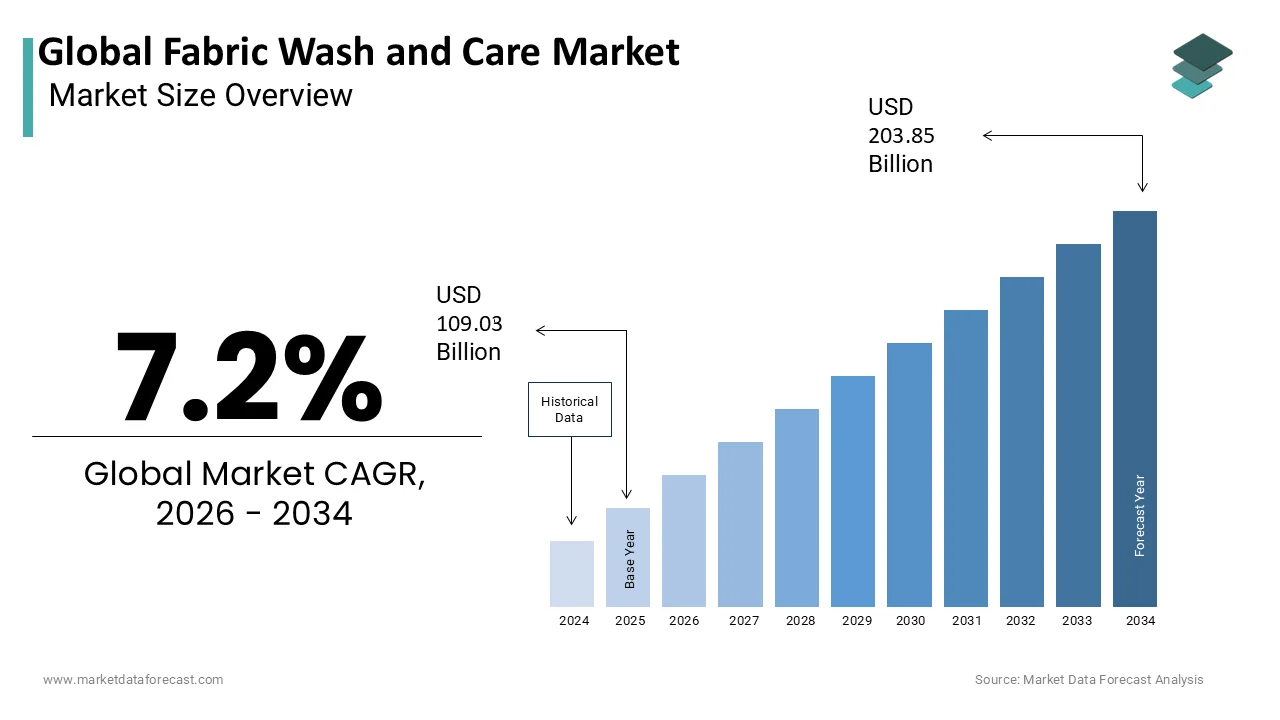
- Market Valuation: Valued at USD 109.03 billion in 2025, estimated at USD 116.88 billion in 2026, and projected to reach USD 203.85 billion by 2034, registering a robust CAGR of 7.2% from 2026 to 2034.
- Primary Growth Drivers: Rising disposable incomes and middle-class purchasing power, growing consumer preference for advanced liquid detergents and eco-friendly formulas, and expanding textile production across emerging Asian economies.
Key Fabric Wash and Care Market Segment Metrics (2026–2034)
| Category | Leading Segment (2025 Position) | Fastest-Growing / Key Growth Segment |
|---|---|---|
| By Product Type | Fabric detergents segment (accounted for the largest market share, historically capturing around 59% of the sector) | Fabric softeners / conditioners segment (experiencing the highest growth CAGR, driven by demand for garment life extension and luxury fragrances) |
| By End-User | Residential sector (occupies the largest market share with over 43%, fueled by household preference for convenient liquid formats) | Residential sector & Commercial applications (hospitality, healthcare, and industrial laundry services) |
| By Region | Asia-Pacific (led the market and serves as the largest consumer base, driven by population expansion in India and China) | Asia-Pacific region (propelled by rising living standards and water-conscious product innovations) |
Major Global Market Players & Competitive Structure
Market Structure: Highly competitive landscape featuring well-established global multi-industry corporations and regional players focusing on affordability, eco-friendly natural ingredients, and targeted germ-protection formulations.
Key Market Leaders: Colgate-Palmolive, Church & Dwight Co., Inc., Unilever Group, Procter & Gamble, Henkel AG & Company, Reckitt Benckiser Group Plc, The National Detergent Company S.A.O.G., and Nice Group.
 Download Free Sample Report
Global Fabric Wash and Care Market Size
The global fabric wash and care market size was valued at USD 109.03 billion in 2025, and the market size is expected to be worth USD 203.85 billion by 2034 from USD 116.88 billion by 2026, at a CAGR of 7.2%. From 2026 to 2034.
The fabric wash and care market encompasses a comprehensive range of detergents, softeners, stain removers, and specialized treatments designed to maintain textile integrity and hygiene throughout the garment lifecycle. According to the United Nations Environment Programme, the textile industry is responsible for approximately 20% of global industrial water pollution, highlighting the critical need for eco-friendly washing solutions that minimize environmental impact. This ecological imperative drives innovation in biodegradable formulations and water-efficient technologies across the sector. According to the European Chemicals Agency, over 15,000 tons of microplastics are released into oceans annually from synthetic textiles during washing cycles, necessitating advanced filtration and care products. These statistics underscore the growing consumer demand for sustainable laundry practices that protect both fabrics and ecosystems. As per the International Labour Organization, the rise in dual-income households has increased reliance on professional laundry services and convenient home care products. Regulatory frameworks such as the EU Detergent Regulation enforce strict limits on phosphates and surfactants, shaping product development. The convergence of health consciousness, environmental stewardship, and fabric preservation defines the current landscape. Manufacturers are responding with concentrated formulas and cold-water-compatible agents. This dynamic environment ensures sustained relevance beyond basic cleaning functions.
MARKET DRIVERS
Increasing Consumer Awareness of Hygiene and Health
Increasing consumer awareness of hygiene and health majorly fuels the fabric wash and care market expansion by driving demand for antimicrobial and hypoallergenic laundry solutions. According to the World Health Organization, proper laundering is essential for removing pathogens and preventing the spread of infectious diseases, particularly in post-pandemic contexts where sanitization remains a priority. This heightened focus on cleanliness translates into higher consumption of disinfectant additives and high-temperature wash enhancers. According to the Journal of Hospital Infection, standard washing at 40 degrees Celsius may not eliminate all bacteria, whereas specialized care products can achieve significant microbial reduction even at lower temperatures. This scientific validation encourages consumers to invest in premium hygiene-focused laundry aids. Allergy sufferers increasingly seek fragrance-free and dye-free options to prevent skin irritation, expanding the niche market for sensitive care products. Retailers respond by labeling products with dermatological approvals, enhancing consumer trust. The rise in pet ownership also drives demand for enzyme-based cleaners that remove organic stains and odors effectively. Healthcare institutions set standards that influence household practices. This driver ensures consistent demand for functional and protective care items. It shifts the perception of laundry from a chore to a health practice.
Rising Demand for Sustainable and Eco-Friendly Products
Rising demand for sustainable and eco-friendly products further contributes to the fabric wash and care market growth as consumers prioritize environmental responsibility in their purchasing decisions. According to the European Commission, the Circular Economy Action Plan mandates reduced chemical usage and improved recyclability in consumer goods, prompting manufacturers to reformulate detergents with plant-based ingredients. This regulatory push aligns with consumer preferences for biodegradable packaging and phosphate-free formulas. According to the Ellen MacArthur Foundation, 73% of consumers are willing to change their consumption habits to reduce environmental impact, including choosing concentrated detergents that reduce plastic waste and transportation emissions. Concentrated products require less water and energy for production and shipping, appealing to eco-conscious buyers. Brands leveraging certifications such as EcoLabel gain a competitive advantage in green retail segments. The shift toward cold-water washing saves energy and preserves fabric quality, which is further driving sales of cold-water-optimized enzymes. Social media campaigns amplify awareness of microplastic pollution, encouraging the use of filtering bags and gentle care methods. This trend fosters brand loyalty among values-driven shoppers. It stimulates innovation in green chemistry. The market benefits from long-term structural shifts toward sustainability.
MARKET RESTRAINTS
Stringent Regulatory Compliance and Chemical Restrictions
Stringent regulatory compliance and chemical restrictions hamper the fabric wash and care market growth by increasing formulation costs and limiting ingredient options for manufacturers. According to the European Chemicals Agency, the Registration, Evaluation, Authorisation and Restriction of Chemicals regulation imposes rigorous testing and approval processes for new surfactants and preservatives, delaying product launches. This bureaucratic burden requires significant investment in safety data and alternative ingredient research, which smaller companies may struggle to afford. According to the Organisation for Economic Co-operation and Development, bans on certain phosphates and optical brighteners force reformulation efforts that can compromise cleaning efficacy or increase production expenses. Manufacturers must constantly adapt to varying national standards within regions, creating complexity in supply chain management. Non-compliance risks heavy fines and product recalls, damaging brand reputation. The transition to greener alternatives often involves higher raw material costs, which may be passed on to consumers, potentially reducing demand. Regulatory uncertainty hinders long-term planning and innovation pipelines. Companies must balance performance with compliance, navigating a complex legal landscape. This restraint slows down the introduction of novel cleaning technologies. It increases operational overheads for all market participants.
Volatility in Raw Material Prices
Volatility in raw material prices is another significant restraint on the fabric wash and care market expansion by disrupting cost structures and profit margins for producers. According to the International Energy Agency, fluctuations in crude oil prices directly affect the cost of petroleum-derived surfactants and polymers, which are key components in many laundry detergents. This instability makes pricing strategies difficult as manufacturers face unpredictable input costs that cannot always be immediately passed to consumers. According to the Food and Agriculture Organization, climate change impacts on crop yields affect the availability and price of plant-based ingredients, such as palm oil and coconut derivatives, used in bio-detergents. Supply chain disruptions further exacerbate these price swings, leading to shortages and increased procurement costs. Small and medium enterprises lack the bargaining power to secure favorable contracts, leaving them vulnerable to market shocks. Consumers may switch to cheaper private-label alternatives when branded products raise prices due to inflation. This price sensitivity limits revenue growth for premium brands. Manufacturers struggle to maintain consistent quality while managing cost pressures. The unpredictability of raw material markets hampers strategic investment. It forces continuous adjustment of production budgets.
MARKET OPPORTUNITIES
Expansion of Concentrated and Ultra-Efficient Formulas
The expansion of concentrated and ultra-efficient formulas is a substantial opportunity for the fabric wash and care market by addressing consumer demand for convenience and sustainability. According to the American Cleaning Institute, concentrated detergents use up to 50% less water and plastic packaging compared to traditional liquids, reducing carbon footprint and shipping costs. This efficiency appeals to eco-conscious consumers and retailers seeking to optimize shelf space and logistics. According to the Journal of Cleaner Production, ultra-efficient pods and sheets have gained popularity due to precise dosing, which prevents waste and ensures optimal cleaning performance. These formats eliminate measuring errors and spillage, enhancing the user experience. Manufacturers can differentiate their portfolios with innovative delivery systems, such as dissolvable strips or refillable containers. Subscription models for concentrated refills foster recurring revenue and customer loyalty. Retailers benefit from higher margin potential per unit volume. The compact nature of these products facilitates e-commerce distribution, reducing breakage risks. This trend aligns with zero-waste initiatives gaining traction globally. It opens new avenues for product design and marketing. The market benefits from technological advancements in solubility and stability.
Integration of Smart Laundry Technologies
The integration of smart laundry technologies offers a promising opportunity for the fabric wash and care market by enabling personalized and optimized washing experiences. According to the Consumer Technology Association, the adoption of Internet of Things-enabled washing machines has grown by 20% annually, allowing devices to communicate with care products for automatic dosing and cycle selection. This connectivity ensures precise usage of detergents and softeners, reducing waste and improving fabric care outcomes. According to the IEEE Internet of Things Journal, smart sensors can detect fabric type and soil level, adjusting chemical release accordingly, which enhances cleaning efficiency and prolongs garment life. Brands partnering with appliance manufacturers can embed proprietary formulas into smart dispensers, creating locked-in ecosystems. Data analytics from connected devices provide insights into consumer habits, enabling targeted marketing and product development. Mobile apps offer maintenance tips and reorder reminders, enhancing engagement. This synergy between hardware and consumables drives premium product sales. It creates a seamless user experience that justifies higher price points. The market evolves from selling products to providing solutions. It fosters innovation in digital service models.
MARKET CHALLENGES
Presence of Counterfeit and Substandard Products
The presence of counterfeit and substandard products poses a major challenge to the fabric washes and care market by undermining brand integrity and consumer safety. According to Interpol, seizures of fake household care products have increased by 15% in recent years, with counterfeit detergents often containing harmful chemicals or ineffective ingredients. These illicit goods damage consumer trust in legitimate brands and pose health risks, such as skin irritation or respiratory issues. According to the European Intellectual Property Office, counterfeiters exploit online marketplaces where verification is difficult, making it hard for consumers to distinguish authentic products. Victims of fake products may blame the original brand for poor performance, leading to reputational damage. Legal enforcement against online sellers is complex and resource-intensive, requiring constant vigilance. Manufacturers must invest in anti-counterfeit technologies, such as holographic labels and blockchain tracking, which increase operational costs. Price competition from fakes forces legitimate brands to lower margins or lose market share. Consumer education is necessary but challenging to scale effectively. This illicit trade distorts market dynamics and harms public health. Ensuring supply chain security remains a costly endeavour.
Shift toward Minimalist Laundry Practices
The shift toward minimalist laundry practices is another major challenge to the fabric wash and care market by reducing the frequency of washing and product usage among environmentally conscious consumers. According to the Jeans Redesign Project initiated by the Ellen MacArthur Foundation, consumers are encouraged to wash denim less frequently to save water and extend garment life, reflecting a broader trend toward reduced laundry cycles. This behavioural change decreases overall consumption of detergents and softeners, impacting volume sales. The Zero Waste Home movement promotes alternative cleaning methods, such as vinegar and baking soda, which bypass commercial products entirely. Social media influencers advocate for air-drying and spot-cleaning, reducing reliance on machine washes and associated care items. Manufacturers struggle to maintain growth when core usage habits decline. Marketing messages emphasizing freshness must compete with sustainability narratives advocating for less washing. Product innovation focuses on longevity rather than frequency, which may limit repeat purchases. Brands must adapt by offering multi-purpose concentrates or fabric refreshers instead of full wash solutions. This cultural shift requires strategic pivots in value proposition. It threatens traditional volume-based business models. Adapting to reduced usage is a complex strategic challenge.
REPORT COVERAGE
| REPORT METRIC | DETAILS |
| Market Size Available | 2025 to 2034 |
| Base Year | 2025 |
| Forecast Period | 2026 to 2034 |
| Segments Covered | By Product Type, End-user, Form, Application, Distribution Channel, and Region |
| Various Analyses Covered | Global, Regional and Country Level Analysis; Segment-Level Analysis; DROC; PESTLE Analysis; Porter’s Five Forces Analysis; Competitive Landscape; Analyst Overview of Investment Opportunities |
| Regions Covered | North America, Europe, APAC, Latin America, Middle East & Africa |
| Market Leaders Profiled | Colgate-Palmolive, Church & Dwight Co., Inc., Unilever Group, Procter & Gamble, Henkel AG & Company, Reckitt Benckiser Group Plc, The National Detergent Company, S.A.O.G. and Nice Group |
SEGMENTAL ANALYSIS
By Product Type Insights
The detergent and bleach segment dominated the market by capturing 56.7% of the global market share in 2025. The dominance of the detergent and bleach segment in the global market is attributed to their fundamental role in removing dirt, stains, and pathogens from textiles, which is essential for hygiene and garment maintenance. According to the American Cleaning Institute, detergents are used in over 90% of household laundry loads globally because they provide the primary cleaning action required for daily wear and tear. This ubiquity ensures consistent high-volume demand regardless of economic fluctuations, as cleanliness is a non-negotiable basic need. The World Health Organization emphasizes that effective laundering with detergent is critical for breaking the chain of infection transmission, particularly in households with children or elderly members. This health imperative drives regular replenishment cycles for these products. Bleach additives are increasingly integrated into detergent formulations to provide disinfection and whitening benefits in a single step, appealing to time-constrained consumers. Regulatory standards for cleaning efficacy ensure that only proven formulations reach the market, building consumer trust. Manufacturers innovate with enzyme technologies that work at lower temperatures, aligning with energy-saving goals. The segment benefits from established brand loyalty and widespread distribution networks. It serves as the anchor product category for the entire market. Revenue stability is maintained through essential usage patterns.
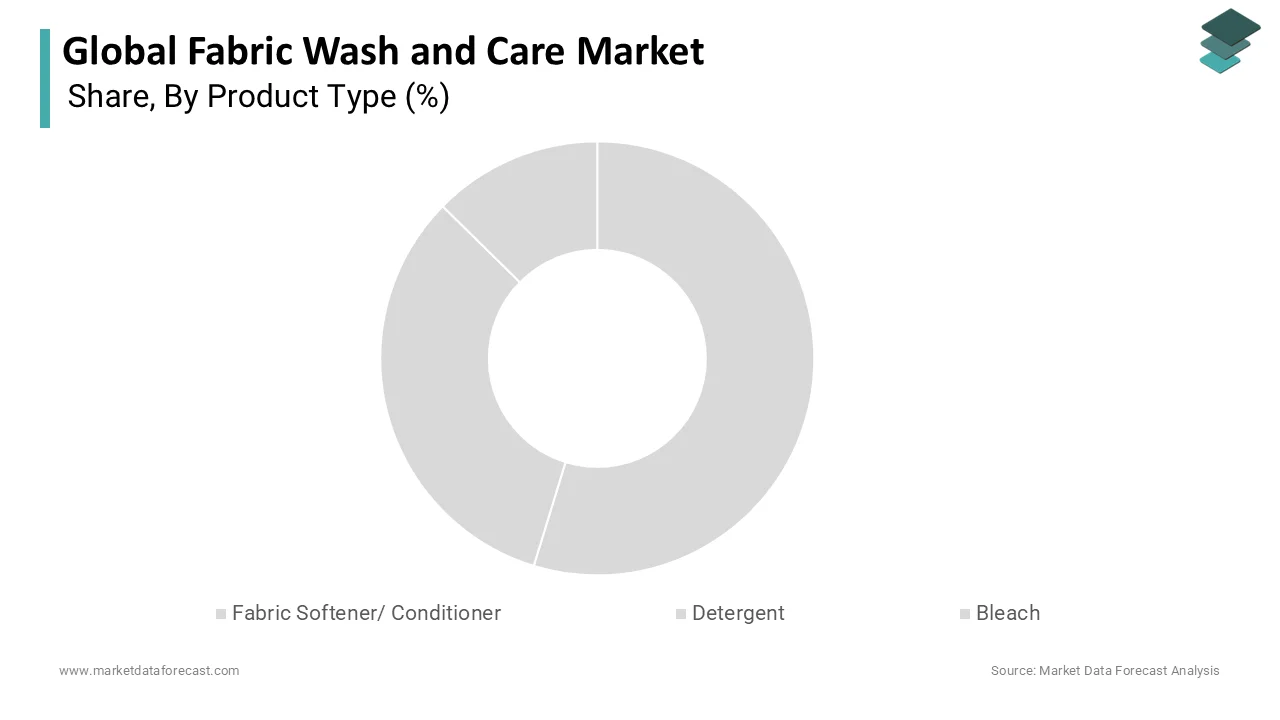
However, the fabric softener and conditioner segment is expected to exhibit a CAGR of 6.04% over the forecast period owing to the rising consumer expectations for sensory experience and fabric longevity. According to the Textile Research Journal, the use of conditioners reduces fiber friction by up to 40%, which significantly extends the lifespan of garments and maintains their aesthetic appeal over multiple washes. This functional benefit appeals to consumers investing in higher-quality clothing who seek to preserve value. The European Consumer Organisation reports that 60% of users cite scent and softness as key factors in purchasing decisions, indicating a shift toward hedonic consumption in laundry care. Premium fragrances and skin-friendly formulations drive uptake in developed markets where personal care intersects with home care. Innovations in plant-based softeners address environmental concerns while delivering performance. Marketing campaigns emphasize the emotional comfort of soft towels and clothes, enhancing perceived value. The segment grows faster than detergents as it transitions from a luxury to a standard part of the routine. It offers higher margin opportunities for manufacturers. Brand differentiation is achieved through unique scent profiles.
By End User Insights
The residential segment led the market by holding 60.6% of the global market share in 2025. The growth of the residential segment in the global market can be credited to the sheer volume of household laundry generated daily by individuals and families. According to the United States Census Bureau, there are over 120 million households in the United States alone, each generating multiple loads of laundry per week, creating a massive baseline demand for consumer-grade products. This domestic volume dwarfs commercial usage, ensuring that residential sales drive the majority of market revenue. The International Labour Organization notes that despite the rise of dual-income households, the majority of laundry tasks remain performed at home rather than outsourced to services. This cultural habit sustains direct-to-consumer sales channels. Home washing machines have become more efficient, prompting demand for compatible high-efficiency detergents and conditioners. Consumers prioritize safety and ease of use for family members, including pets and children. Retailers allocate prime shelf space to residential brands due to high turnover. The segment is resilient to economic downturns as hygiene is essential. Innovation focuses on convenience formats like pods and sheets. It remains the core engine of market growth.
On the other end, the healthcare segment is the fastest-growing end-user category in the fabric wash and care market and is predicted to witness a CAGR of 8.1% over the forecast period owing to the stringent infection control protocols and aging populations requiring specialized care. According to the Centers for Disease Control and Prevention, healthcare-associated infections affect millions of patients annually, necessitating rigorous laundering standards for linens, uniforms, and patient gowns to prevent cross-contamination. This regulatory pressure drives demand for industrial-strength disinfectants and antimicrobial laundry additives. The World Health Organization guidelines for hygiene in healthcare settings mandate specific thermal and chemical disinfection processes, which require specialized professional care products. Hospitals and nursing homes are increasing budgets for laundry services to meet these compliance standards. The rise in home healthcare services also boosts demand for medical-grade laundry solutions for private use. Aging demographics in developed nations increase the volume of soiled linens requiring frequent washing. Manufacturers develop hypoallergenic and high-efficacy formulas tailored for sensitive skin and tough stains. This segment values performance and safety over cost. It offers stable, long-term contracts for suppliers. Regulatory compliance ensures consistent demand.
By Form Insights
The liquid form segment led the market by holding the highest share of the global market in 2025. The growth of the liquid form segment in the global market is attributed to its versatility, ease of dosing, and superior performance in cold-water washing conditions. According to the Soap and Detergent Association, liquid detergents account for over 60% of sales in North America and Europe because they dissolve quickly and leave no residue on clothes or in machines. This convenience appeals to modern consumers who prioritize speed and efficiency in their daily routines. According to the Journal of Surfactants and Detergents, liquid formulations allow for better integration of enzymes and delicate fragrances, which degrade in high-heat powder manufacturing processes. This technological advantage enables premium product differentiation. Liquids are perceived as gentler on fabrics and colors, reducing the risk of damage during wash cycles. Pre-treatment capabilities make them ideal for stain removal before machine washing. Packaging innovations, such as pump bottles and measuring caps, enhance the user experience. The form is compatible with high-efficiency front-loading machines, which are prevalent in many regions. It supports diverse marketing claims regarding softness and scent. Consumer preference for liquids continues to grow.
On the other hand, the powder form segment is estimated to record a CAGR of 5.2% over the forecast period owing to the sustainability trends and cost-effectiveness. According to the Ellen MacArthur Foundation, powder detergents have a significantly lower carbon footprint than liquids because they do not require water for transport, reducing shipping weight and packaging volume. This environmental benefit resonates with eco-conscious consumers seeking to minimize plastic waste and emissions. The European Commission reports that powder formats often use cardboard packaging, which is more easily recycled than plastic jugs, aligning with circular economy goals. Powders are also more stable, allowing for higher concentrations of active ingredients like bleach and enzymes without degradation. In emerging markets, powders remain preferred due to lower price points and familiarity. Innovations in compact powders improve solubility and performance, addressing historical drawbacks. Manufacturers promote powders as the green choice in marketing campaigns. The format appeals to bulk buyers and large families. It offers economic advantages for both producers and consumers. Growth is driven by regulatory and consumer pressure for sustainability.
COUNTRY LEVEL ANALYSIS
North America Fabric Wash and Care Market Analysis
North America held 36.3% of the global market share in 2025 and is expected to experience steady economic expansion and continued product innovation over the next few years, holding a mature and highly competitive position in the global Fabric Wash and Care Market due to the high penetration of washing machines and strong brand loyalty. According to the United States Census Bureau, nearly 95% of households own a washing machine, ensuring consistent demand for laundry products across the region. Consumers prioritize convenience and efficacy, driving sales of liquid detergents and single-use pods. The Environmental Protection Agency promotes Energy Star-certified appliances, which influence demand for cold-water-compatible formulas. High disposable income supports premium product segments, including organic and hypoallergenic options. Retail giants like Walmart and Amazon dominate distribution channels, offering extensive choices. Sustainability initiatives by major brands focus on plastic reduction and concentrated formulas. The market sees steady growth driven by population increases and housing starts. Innovation centers on scent technology and stain removal performance. Regulatory standards for chemical safety are strictly enforced. North America sets trends in packaging and digital engagement. It remains a key revenue generator for global players.
Europe Fabric Wash and Care Market Analysis
Europe is anticipated to achieve stringent chemical compliance standards and circular economy upgrades over the next few years, representing a sophisticated and regulated market in the Fabric Wash and Care market due to the strong environmental consciousness and strict chemical laws. According to the European Chemicals Agency, the EU Detergent Regulation mandates transparency in ingredient labeling and limits on phosphates, pushing manufacturers toward greener formulations. Consumers in countries like Germany and Sweden prefer eco-friendly powders and concentrates to reduce plastic waste and carbon emissions. The European Environment Agency reports that microplastic filtration is becoming a priority, influencing product design and washing machine compatibility. High energy costs encourage cold-water washing, boosting demand for effective low-temperature enzymes. Retailers emphasize sustainable private labels alongside premium international brands. The market values quality and scientific validation over aggressive marketing. Regulatory harmonization facilitates cross-border trade, but compliance costs are high. Innovation focuses on biodegradability and renewable sourcing. Europe leads in circular economy practices for packaging. It influences global standards for sustainability.
Asia Pacific Fabric Wash and Care Market Analysis
The Asia Pacific region is projected to witness massive urbanization and surging household appliance adoption over the next few years owing to urbanization, rising incomes, and expanding middle-class populations. According to the Asian Development Bank, rapid urbanization has increased access to running water and washing machines in countries like India and China, creating new demand for automated laundry solutions. Traditional hand-washing methods are gradually being replaced by machine-compatible detergents and softeners. The World Bank notes that rising female workforce participation reduces time available for manual laundry, driving demand for convenient and efficient products. Local manufacturers compete on price while multinational brands focus on premium segments. E-commerce platforms facilitate access to diverse products in rural areas. Cultural preferences for bright whites and strong fragrances shape product formulations. Government initiatives to improve sanitation support hygiene awareness. The market is fragmented but consolidating as brands expand reach. Innovation adapts to hard water conditions and diverse fabrics. Asia Pacific offers immense volume potential.
Latin America Fabric Wash and Care Market Analysis
Latin America is likely to experience progressive modernization in retail channels and rising adoption of automatic washing machines over the next few years, holding a vibrant and price-sensitive position in the global Fabric Wash and Care Market characterized by a mix of traditional and modern laundry practices. According to the Economic Commission for Latin America and the Caribbean, economic volatility influences purchasing power, leading consumers to favor value-oriented products and smaller pack sizes. Hand-washing remains common in rural areas, driving demand for bar soaps and powdered detergents that are easy to rinse. Urban centers see growing adoption of washing machines, increasing demand for liquid formats. Local brands dominate due to affordability and distribution depth. Multinational companies focus on premium niches in affluent segments. Social media influences beauty and care standards, including fabric appearance. Regulatory frameworks vary by country, affecting import dynamics. Sustainability awareness is growing among younger demographics. The market relies heavily on traditional retail channels. Innovation focuses on cost-effective cleaning power. Latin America balances tradition with modernization.
Middle East and Africa Fabric Wash and Care Market Analysis
The Middle East and Africa are expected to witness sustained infrastructure development and increasing access to improved water systems over the next few years, representing a diverse and emerging market in the global Fabric Wash and Care Industry driven by varying levels of infrastructure and economic development. According to the World Bank, access to improved water sources varies significantly, affecting laundry practices, with many communities relying on manual washing methods. This context favors powdered detergents and bar soaps, which are affordable and effective without machinery. In Gulf Cooperation Council countries, high disposable income supports demand for premium imported brands and specialized care for luxury fabrics. Heat and dust conditions necessitate frequent washing, driving high-volume consumption. Distribution challenges in remote areas limit reach for some brands. Local manufacturing is growing to reduce import dependencies. Cultural preferences for strong scents and whitening agents shape product offerings. Regulatory standards are evolving to ensure quality. The market offers long-term growth potential as infrastructure improves. Affordability remains a key driver. It requires tailored strategies for different sub-regions.
COMPETITIVE LANDSCAPE
The competition in the Fabric Wash and Care Market is characterized by intense rivalry among multinational conglomerates and agile local brands striving for dominance through innovation and branding. Multinational players leverage their extensive distribution networks, strong brand recognitio,n and research capabilities to maintain leadership positions in developed markets. They focus on sustainability and premiumizati,on such as eco-friendly pods and specialized fabric c,are to differentiate their products. Local competitors compete aggressively on price and cultural relevance, particularly in emerging economies where affordability is paramount. These domestic firms benefit froma deep understanding of local washing habits and water conditions, which allow them to offer tailored solutions. The market sees frequent product launches featuring new enzymes and fragrances to capture consumer interest. Regulatory compliance with environmental standards is a key barrier to entry, ensuring high quality but limiting rapid expansion for smaller players. Private label offerings from retailers intensify price pressure on branded goods. Brand loyalty is strong but susceptible to shifts in values regarding sustainability and health. Companies must continuously invest in green chemistry and digital marketing to sustain relevance. The dynamic interplay between cost innovation and ethics defines the competitive landscape in this essential consumer goods sector.
KEY MARKET PLAYERS
Some of the companies that are playing a dominant role in the Global Fabric Wash and Care Market include:
- Colgate-Palmolive
- Church & Dwight Co., Inc.
- Unilever Group
- Procter & Gamble
- Henkel AG & Company
- Reckitt Benckiser Group plc
- The National Detergent Company S.A.O.G.
- Nice Group
TOP LEADING PLAYERS IN THE MARKET
- Procter and Gamble maintains a dominant presence in the Fabric Wash and Care Market through its iconic Tide and Ariel brands, which are synonymous with cleaning efficacy and innovation. The company focuses on developing concentrated formulas and sustainable packaging to meet evolving consumer demands for environmental responsibility. Procter&d Gamble recently expanded its manufacturing capabilities in emerging markets to enhance local supply chain resilience and reduce its carbon footprint. This strategic move allows for faster distribution and better pricing competitiveness in price-sensitive regions. The company actively invests in research and development to create cold-water-compatible enzymes that save energy. Collaborations with appliance manufacturers ensure optimal performance of their detergents in modern washing machines. Their commitment to quality and brand trust strengthens loyalty among global consumers. These efforts solidify their position as a leader in household care solutions.
- Unilever plays a pivotal role in the Fabric Wash and Care Market by offering a diverse portfolio including Persil and Surf brands that cater to various consumer segments. The company emphasizes sustainability through its Clean Future initiative, which aims to replace fossilfuel-basedd chemicals with renewable or recycled alternatives. Unilever recently launched refillable detergent systems in key European markets to reduce plastic waste and promote circular economy practices. This initiative supports the shift towards eco-conscious consumption and enhances brand reputation. The company leverages digital platforms to engage consumers with personalized laundry tips and product recommendations. Strategic partnerships with retailers improve shelf visibility and accessibility. Unilever focuses on inclusive marketing that resonates with diverse cultural values. These actions reinforce their competitive edge in the dynamic global landscape.
- Henkel AG and Co. KGaA contributes significantly to the Fabric Wash and Care Market through its Persil and Purex brand,s known for advanced stain removal technologies. The company prioritizes innovation in biodegradable ingredients and water-efficient formulations to address environmental concerns. Henkel recently invested in expanding its production facilities in Asia to meet growing demand in emerging economies. This expansion supports quicker response to market trends and regulatory requirements. The company actively participates in industry forums to promote sustainable laundry practices and chemical safety standards. Henkel collaborates with scientific institutions to develop next-generation enzymes that work effectively at low temperatures. Their focus on technical excellence and sustainability strengthens market position. These initiatives ensure sustained growth and influence in the evolving home care sector.
TOP STRATEGIES USED BY KEY MARKET PARTICIPANTS
Key players in the Fabric Wash and Care Market primarily focus on sustainability innovation and digital engagement to strengthen their competitive position. Companies increasingly adopt plant-based ingredients and recyclable packaging to meet environmental regulations and consumer expectations. This approach allows them to differentiate their brands and appeal to eco-conscious shoppers. Investment in e-commerce platforms and subscription models remains a critical strategy as firms strive to offer convenience and loyalty rewards. Launching concentrated formulas reduces shipping costs and plastic usage, enhancing operational efficiency. Additionall,y manufacturers prioritize partnerships with appliance makers to optimize product performance in smart washing machines. Expanding presence in emerging markets through local production reduces costs and improves accessibility. Pricing strategies are adapted to balance affordability with premium positioning. Educational campaigns promote proper usage and hygiene benefits. These multifaceted strategies enable participants to sustain growth and adapt to the dynamic consumer environment across diverse global regions effectively.
GLOBAL FABRIC WASH AND CARE MARKET NEWS
-
In November 2020, P&G expanded its fabric care product portfolio and launched "Ariel Laundry PODs" in India. Ariel, one of P&G's leading detergent brands, is driving innovation in the country.
- In June 2020, Wipro Consumer launched an anti-germ liquid detergent, a fabric conditioner. With the coronavirus crisis reminding customers to focus more on health and hygiene, Wipro Consumer Care and Lighting has released a liquid fabric wash and conditioner with a germ protection formula that helps sanitize clothing.
- In September 2020, SCHUTZEN Chemical Group launched the SCHUTZEN WEAR SAFE fabric softener and disinfectant. To create a healthy and germ-free environment, SCHUTZEN Chemical Group, the leading manufacturer of diversified specialty chemicals, has launched SCHUTZEN WEAR SAFE Garment Softener and Sanitizer to help people navigate the new normal.
MARKET SEGMENTATION
This research report on the global fabric wash and care market has been segmented and sub-segmented based on product type, end-user, form, application, distribution channel, and region.
By Product Type
- Fabric Softener/ Conditioner
- Detergent
- Bleach
By End-User
- Residential
- Healthcare
- Aviation
- Hospitality
- Automotive
By Form
- Liquid
- Powder
By Application
- Stain Removal
- Odor Removal
- Freshness
- Others
By Distribution Channel
- Convenience Stores
- Pharmacies and Drugstores
- Hypermarkets
- Supermarkets
- Online
By Region
- North America
- Europe
- Asia Pacific
- Latin America
- Middle East and Africa