- Product Description Description
- Table of Contents TOC
- List of Table & Figure LOT
- Get Free Sample PDF Sample PDF
Market Size, 2025
$38.49 BnMarket Estimate, 2026
$42.42 BnMarket Forecast, 2034
$92.26 BnCAGR, 2026–2034
10.2%Executive Summary: Flexible Electronics Market
- Market Scope: Comprehensive global flexible electronics market analysis covering foldable display technologies, stretchable substrates, wearable medical sensors, thin-film photovoltaics, and consumer electronics integration.
- Market Valuation: Valued at USD 38.49 billion (2025), estimated at USD 42.42 billion (2026), and projected to reach USD 92.26 billion by 2034, registering a steady CAGR of 10.2% (2026–2034).
- Primary Growth Drivers: Portable consumer electronics demand, material science advancements in stretchable conductive substrates, flexible display integration (smartphones, wearables, automotive), IoT/AI convergence, and strong R&D investments. Key challenges include high manufacturing costs and mechanical stress durability.
Key Market Segment Metrics (2026–2034)
| Category | Leading Segment (Position) | Fastest-Growing Segment |
|---|---|---|
| By Structure, Component & Application | Multilayer structure segment (accounted for highest share across aerospace, military, defense, and automotive) & Flexible displays (dominant component share) & Consumer electronics (largest application area) | Foldable devices, flexible medical remote monitoring sensors, and thin-film photovoltaics in renewable energy applications |
| By Region / Country | North America (leads the global market, particularly the United States, owing to early adoption and key manufacturers) | Asia Pacific (witnessing highest growth rate supported by expanding populations, industrialization, and tech advancements in China, India, and Japan) |
Major Market Players & Market Structure
Market Structure: Highly competitive global technology and advanced electronics landscape featuring major multinational corporations, display manufacturers, and semiconductor innovators driving foldable form factors, OLED innovations, and smart flexible interconnect systems.
Key Companies: General Electric, 3M Company, Samsung Group, Panasonic Corporation, LG Electronics, First Solar, ITN Energy System, Palo Alto Research Center, E Ink Holdings, Blue Spark Technologies, Konica Minolta Inc., Solar Frontier, Cymbet Corporation, Imprint Technologies, AU Optronics, OLED Works LLC, Pragmatic Semiconductor, and BrightVolt Technologies.
Global Flexible Electronics Market Size
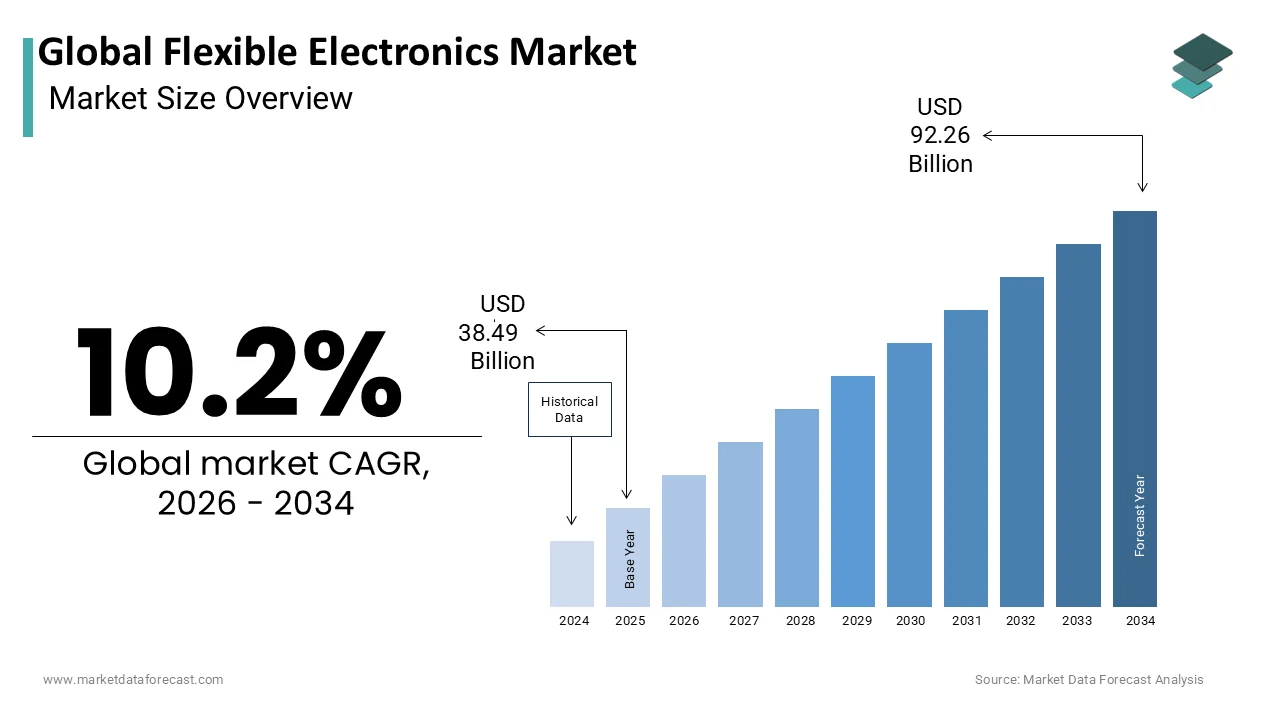
The global flexible electronics market was valued at USD 38.49 billion in 2025, is estimated to reach USD 42.42 billion in 2026, and is projected to reach USD 92.26 billion by 2034, growing at a CAGR of 10.2% from 2026 to 2034.
MARKET DRIVERS
Flexible electronics are new-age electronic devices that are typically mounted on stretchable materials like plastic, polyimide, flex glass, and PEEK.
The primary factor contributing to the growth of the global flexible electronics market is the increased demand for consumer electronics that are portable and lightweight. In particular, the surge in the sales of smartphones, laptops, tablets, and wearable devices is driving business growth. The growing trend of smartwatches and fitness trackers to monitor health parameters is providing huge demand for flexible electronics. Besides, the expansion of developments in material science to produce conductive and stretchable materials is supposed to boost sales in the global flexible electronics market. Other than consumer electronics, flexible electronics are finding huge requirements in industries like automotive and healthcare.
In the automotive sector, there is an expanding use of flexible displays and sensors due to the consumer demand for convenient driving, which is supporting the flexible electronics market. Also, the spike in the usage of smart devices, wearable monitors, sensors, and patches in the healthcare sector is contributing to the developments in the market. In addition, the ongoing research and development activities to create more portable and wearable electronics are likely to bolster the flexible electronics market. Moreover, the continuous integration of new electronic circuits, the use of 3D printing, and the adoption of the Internet of Things (IoT) in various industries are predicted to offer huge efficiencies for businesses in the coming years.
MARKET RESTRAINTS
The major challenge in the flexible electronics market is the cost of wearable devices that are comparatively higher than conventional products.
Also, the concerns related to the durability of these components in different temperatures and pressures can be a downside for the business. In addition, the constraints related to the integration of these flexible electronics with the existing components and complexities surrounding the production of these electronics limit the rapid development worldwide. Besides, the lack of proper standards in terms of operations and integration with traditional systems can affect the overall sales in the flexible electronics market. Further, the restricted applications in certain industries and the lack of interest among consumers in adapting to new technologies also challenge the flexible electronics market. Moreover, the intense competition among the market players, regulatory compliances according to geography, production scalability, fluctuations in the economic conditions of several nations, and concerns related to ecological impact are posing a threat to the flexible electronics market.
REPORT COVERAGE
| REPORT METRIC | DETAILS |
| Market Size Available | 2025 to 2034 |
| Base Year | 2025 |
| Forecast Period | 2026 to 2034 |
| Segments Covered | By Structure Type, Component, Application, and Region. |
| Various Analyses Covered | Global, Regional & Country Level Analysis, Segment-Level Analysis, DROC, PESTLE Analysis, Porter’s Five Forces Analysis, Competitive Landscape, Analyst Overview of Investment Opportunities |
| Regions Covered | North America, Europe, APAC, Latin America, Middle East & Africa |
| Market Leaders Profiled | General Electric, 3M Company, Samsung Group, Panasonic Corporation, LG Electronics, First Solar, ITN Energy System, Palo Alto Research Center, E Ink Holdings, Blue Spark Technologies, Konica Minolta Inc., Solar Frontier, Cymbet Corporation, Imprint Technologies, AU Optronics, OLED Works LLC, Pragmatic Semiconductor, BrightVolt Technologies, and Others. |
SEGMENTAL ANALYSIS
Global Flexible Electronics Market Analysis By Structure Type
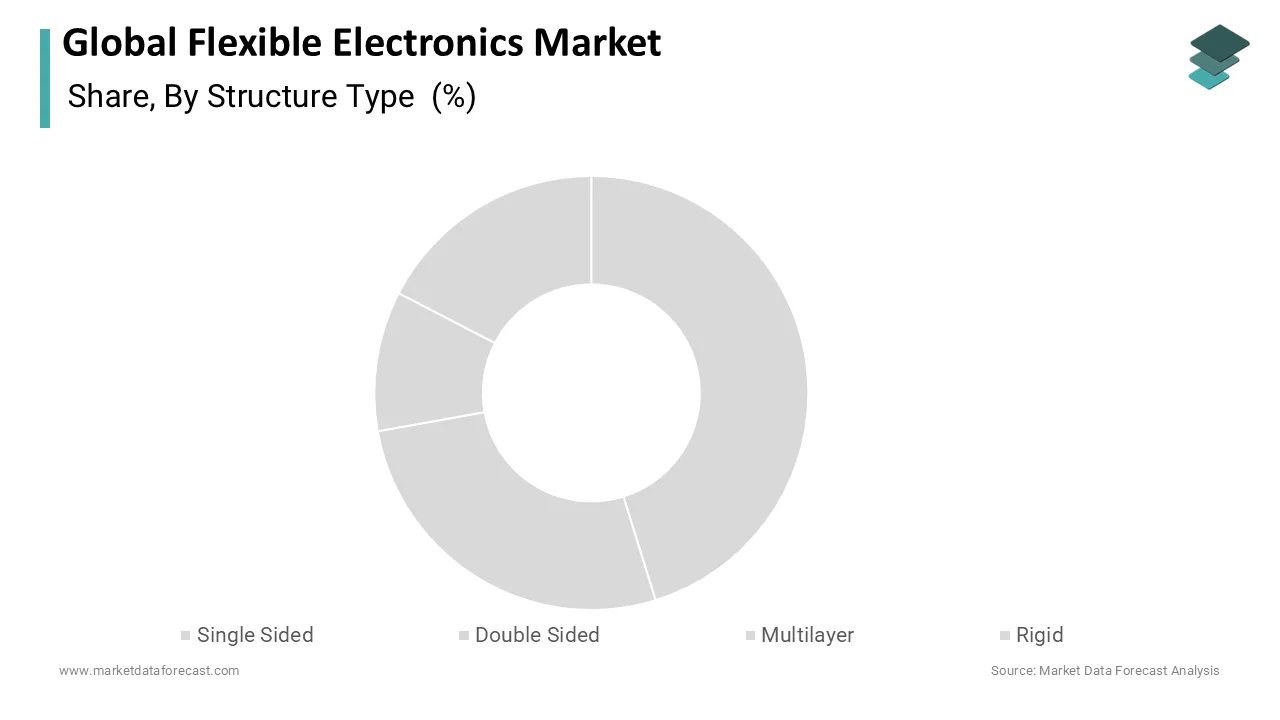
The multilayer structure accounted for the highest share in the global flexible electronics market. The applications of these circuits in industries like aerospace, military and defense, automobiles, and consumer electronics to reduce costs, weight, and time are promoting their adoption in the worldwide marketplace.
Global Flexible Electronics Market Analysis By Component
The flexible displays segment holds the dominant share of this market and is estimated to expand at a significant growth rate in the coming years. The surge in the purchase of smartphones, tablets, laptops, and smart televisions is boosting the sales of flexible displays. In addition, the latest developments in medical wearables, the use of OLED displays, and power efficiency are augmenting the sales in the display segment.
The batteries segment is predicted to witness a considerable growth rate in the forecast period because of easy integration ability and a surge in the adoption of electric vehicles. The applications in wearable devices and enhanced performance are promoting the use of batteries in the global market.
Global Flexible Electronics Market Analysis By Application
Consumer electronics dominated the global flexible electronics market due to the high volume of purchases of smart televisions, smartphones, computers, and laptops. Also, the easily available brands with the advent of e-commerce have boosted the demand for smartwatches, smart glasses, and other wearable devices, benefiting the consumer electronics segment of the business.
The automotive sector is expected to witness a significant growth rate in the following years because of the use of flexible electronics in displays and flexible batteries in vehicles. Similarly, healthcare applications are touted to excel with the changes in consumer preference for health and the use of patient monitoring, wearable medical appliances, and fitness tracking tools. The emphasis created by the COVID-19 pandemic on health and the spike in healthcare investments from public and private organizations are likely to fuel this segment in the forecast period.
REGIONAL ANALYSIS
North America recorded the lion’s share of the global flexible electronics market. The USA is the leading market in this region, with a high adoption rate of consumer electronics and wearables among the people. The flourishing demand for flexible electronics in industries like military and defense, healthcare, and automobiles is creating a positive outlook for the market in North America.
The Asia Pacific region is estimated to witness the highest growth rate in the foreseen period due to the expanding population and their demand for consumer electronics. The increasing industrialization with foreign investments, setup of manufacturing plants, and technological advancements in nations like India, China, and Japan are supporting the market boom in this locale. The rising investments in the automotive industry for electric vehicles and research and development activities are further predicted to fuel the flexible electronics business in the APAC countries.
Europe is also a notable market that will grow at a significant rate in the future, with the latest innovations in the automobile industry and investments in emerging technologies like IoT and 3D printing. Also, the integration of advanced technologies and consumer demand for attractive, portable, and lightweight products are supposed to drive the flexible electronics market in Europe.
Latin America is an emerging region in the global flexible electronics market owing to the recent changes in the local economy and improved government investments in research activities. Brazil and Mexico are the leading nations in this market with the increasing prevalence of flexible displays, flexible batteries, and electric heavy vehicles.
The Middle East and Africa region has a comparatively smaller presence in the global flexible electronics market. However, the latest technological developments and funding for advanced research activities will create business opportunities in this area in the future.
KEY PLAYERS IN THE GLOBAL FLEXIBLE ELECTRONICS MARKET
Companies playing a prominent role in the global flexible electronics market include General Electric, 3M Company, Samsung Group, Panasonic Corporation, LG Electronics, First Solar, ITN Energy System, Palo Alto Research Center, E Ink Holdings, Blue Spark Technologies, Konica Minolta Inc., Solar Frontier, Cymbet Corporation, Imprint Technologies, AU Optronics, OLED Works LLC, Pragmatic Semiconductor and BrightVolt Technologies.
RECENT HAPPENINGS IN THE GLOBAL FLEXIBLE ELECTRONICS MARKET
- In 2023, Samsung Group announced its Galaxy Z Flip4 and Fold4 foldable smartphones. The Fold4 offers the feature to fold the mobile phone and extend the screen to make it a small tablet.
- In 2023, LG Electronics introduced its OLED Flex, a 42-inch display screen for personal computers. The new product allows consumers to choose between flat and curved screens without affecting picture quality.
- In November 2023, Germany-based Würth Elektronik introduced its HyPerStripes project to combat the issues related to the creation and production of smart, long, and flexible electronic systems in place of traditional cables. HyPerStripes offers applications in consumer electronics and the medical sector to replace catheters and implants.
MARKET SEGMENTATION
This research report on the global flexible electronics market has been segmented and sub-segmented into the following categories.
By Structure Type
- Single Sided
- Double Sided
- Multilayer
- Rigid
- Others
By Component
- Displays
- Sensors
- Batteries
- Thin-Film Photovoltaic
- OLED Lighting
- Others
By Application
- Automotive
- Healthcare
- Consumer Electronics
- Military and Defence
- Industrial
- Aerospace
- Others
By Region
- North America
- Europe
- Asia Pacific
- Latin America
- Middle East and Africa