- Product Description Description
- Table of Contents TOC
- List of Table & Figure LOT
- Get Free Sample PDF Sample PDF
Global Flexible Substrates Market Report Summary
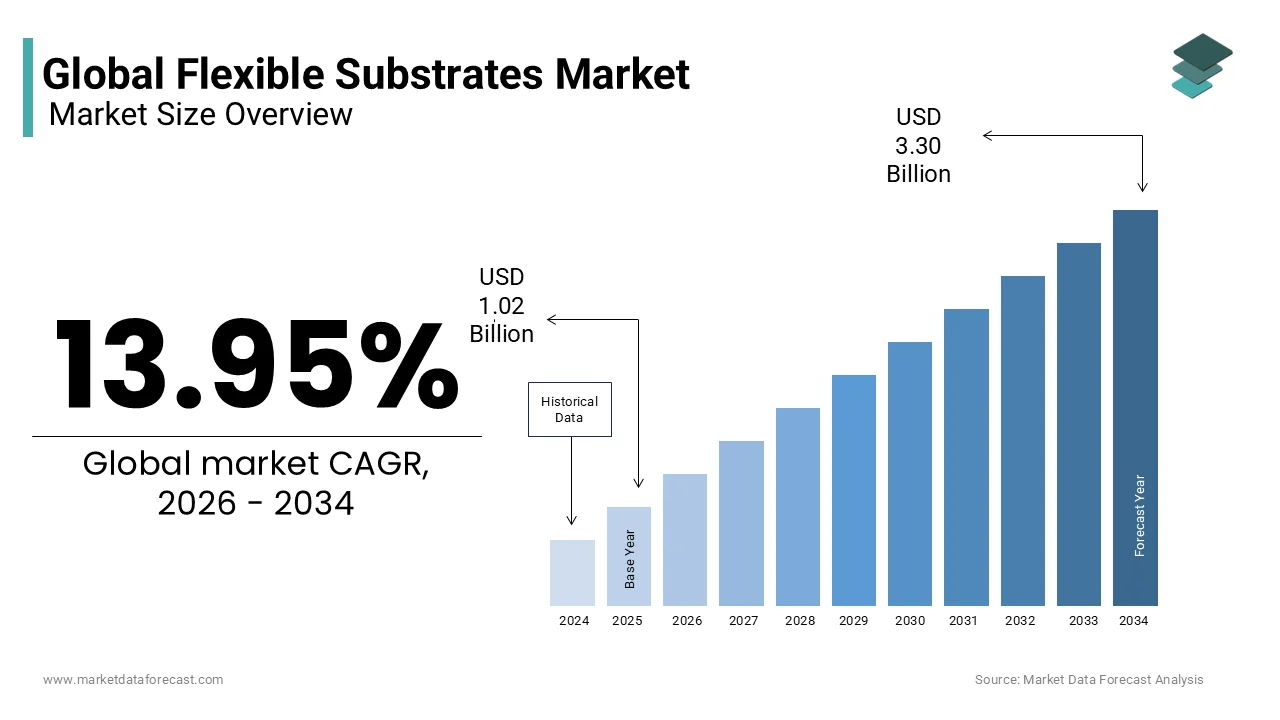
The global flexible substrates market was valued at USD 1.02 billion in 2025, is estimated to reach USD 1.16 billion in 2026, and is projected to reach USD 3.30 billion by 2034, growing at a CAGR of 13.95% during the forecast period from 2026 to 2034. The growth of the global flexible substrates market is driven by increasing demand for flexible electronics, rapid advancements in wearable devices, and expanding adoption of foldable displays and printed electronic technologies. Flexible substrates are gaining widespread application across consumer electronics, healthcare, automotive, and industrial sectors due to their lightweight, durable, and bendable properties. Additionally, continuous innovation in advanced materials, growing investments in next-generation electronic devices, and rising demand for compact and energy-efficient components are supporting market expansion.
Key Market Trends
-
Rising adoption of flexible and foldable electronic devices is driving demand for advanced flexible substrate materials.
-
Growing investments in printed electronics, wearable devices, and flexible sensors are expanding market opportunities.
-
Increasing demand for lightweight, durable, and high-performance electronic components is accelerating product innovation.
-
Advancements in polymer materials and manufacturing technologies are improving substrate flexibility, thermal stability, and electrical performance.
-
Expanding applications in automotive electronics, healthcare devices, and IoT-enabled products are supporting long-term market growth.
Segmental Insights
-
Based on type, the plastic substrates segment dominated the global flexible substrates market by accounting for 48.2% of the market share in 2025. The segment's leadership is attributed to its lightweight nature, flexibility, cost-effectiveness, and excellent compatibility with printed and flexible electronic applications.
-
Based on application, the consumer electronics segment held the largest share of the global flexible substrates market in 2025. The segment's dominance is driven by increasing demand for smartphones, tablets, wearable devices, foldable displays, and other compact electronic products incorporating flexible components.
Regional Insights
-
The global flexible substrates market is witnessing rapid growth due to increasing adoption of flexible electronics, expanding investments in advanced material technologies, and rising demand for innovative electronic devices.
-
North America dominated the global flexible substrates market by accounting for 43.2% of the market share in 2025. The region's leadership is supported by strong investments in research and development, the presence of leading electronics and material manufacturers, and increasing adoption of advanced flexible electronic technologies.
-
Asia Pacific is expected to witness the fastest growth, driven by large-scale electronics manufacturing, increasing demand for consumer electronics, and expanding production of flexible displays and printed electronic devices.
Competitive Landscape
The global flexible substrates market is highly competitive, with manufacturers focusing on advanced material innovation, product development, and strategic collaborations to strengthen their market positions. Companies are investing in research and development, high-performance polymer technologies, and scalable manufacturing processes to address the growing demand for flexible electronics across consumer, automotive, healthcare, and industrial applications. Key players operating in the global flexible substrates market include Griff Paper and Film, Polyonics, Inc., Porex Corporation, Rogers Corporation, Corning, Inc., AzCoat, Inc., BenQ Materials Corporation, Arlon Graphics LLC, 3M Company, American Semiconductor, Inc., SCHOTT North America, Inc., and Heraeus Materials Technology GmbH & Co. KG.
Global Flexible Substrates Market Size
The global flexible substrates market size was valued at USD 1.02 billion in 2025 and is projected to reach USD 3.30 billion by 2034 from USD 1.16 billion in 2026, growing at a CAGR of 13.95%.
The flexible substrates are thin, pliable materials, such as polyimide, polyester, and ultra thin glass that serve as the foundational layer for flexible electronic devices. These substrates enable the creation of bendable, foldable, and stretchable circuits essential for next generation consumer electronics, wearable health monitors, and automotive displays. The transition from rigid printed circuit boards to flexible alternatives is driven by the demand for miniaturization and ergonomic design in modern technology. According to the International Data Corporation, global shipments of wearable devices exceeded 500 million units in recent years, creating a substantial baseline demand for lightweight and durable substrate materials. The automotive industry is also undergoing a significant transformation, with the average vehicle now containing over 100 electronic control units, many of which require flexible interconnects to fit within constrained spaces. Furthermore, the rise of the Internet of Things has expanded the application scope to include smart packaging and industrial sensors. Regulatory bodies are increasingly focusing on the recyclability of electronic components, prompting manufacturers to develop bio based and eco-friendly substrate options.
MARKET DRIVERS
Surging Demand for Wearable Electronics and Smart Devices
The surging demand for wearable electronics and smart devices is propelling the growth of the flexible substrates market. Consumers are increasingly adopting smartwatches, fitness trackers, and hearables that require components to conform to the human body’s contours. According to the study, the wearable technology sector has experienced double digit growth annually, driven by health consciousness and connectivity trends. Flexible substrates, such as polyimide films offer the necessary mechanical flexibility and thermal stability to support these applications without compromising performance. The ability to create thin, lightweight circuits allows manufacturers to design devices that are comfortable for all day wear. Additionally, the development of skin like sensors for medical monitoring relies heavily on biocompatible flexible substrates that can adhere to the skin. The miniaturization trend in consumer electronics further amplifies this demand, as devices become smaller and more complex. Manufacturers are investing in advanced coating technologies to enhance the conductivity and adhesion properties of these substrates.
Expansion of Foldable and Curved Display Technologies
The expansion of foldable and curved display technologies, particularly in the smartphone and television sectors is promoting the growth of the flexible substrates market. Major technology companies are launching flagship devices with foldable screens that require substrates capable of withstanding repeated bending without cracking or delaminating. According to Counterpoint Research, shipments of foldable smartphones have grown exponentially, reaching millions of units globally as production costs decrease and consumer acceptance rises. Polyimide and ultra-thin glass are the preferred materials for these applications due to their high transparency and mechanical strength. As per data, the adoption of organic light emitting diode panels on flexible substrates has revolutionized screen design, allowing for bezel less and edge to edge displays. The automotive sector is also embracing curved displays for dashboard interfaces, requiring substrates that can maintain optical clarity under varying temperature conditions. Manufacturers are developing new grades of flexible materials with improved scratch resistance and hinge durability to meet these rigorous standards. The competitive landscape among display makers drives continuous improvement in substrate quality and cost efficiency.
MARKET RESTRAINTS
High Manufacturing Costs and Complex Processing Requirements
The high manufacturing costs and complex processing requirements is impeding the growth of the flexible substrates market. Producing high quality flexible materials, such as polyimide involves intricate chemical processes and precise temperature controls, which are capital intensive. According to study, the raw material costs for specialized polymers remain elevated due to limited suppliers and proprietary production methods. The fabrication of flexible printed circuits requires specialized equipment for lamination, drilling, and etching that differs significantly from traditional rigid board manufacturing. Small and medium sized enterprises often struggle to afford the necessary infrastructure upgrades to handle flexible materials effectively. Additionally, the need for clean room environments and skilled labor further adds to operational expenses. The complexity of integrating flexible substrates with other components also increases assembly time and potential failure points. These economic barriers limit the widespread adoption of flexible substrates in cost sensitive applications, such as low end consumer electronics.
Technical Limitations in Durability and Environmental Stability
The technical limitations in durability and environmental stability is inhibiting the growth of the flexible substrates market. While flexible materials offer mechanical advantages, they often exhibit lower resistance to moisture, oxygen, and extreme temperatures compared to rigid glass or ceramic substrates. According to study, prolonged exposure to humidity can cause delamination and corrosion in flexible circuits by leading to device failure. Polyimide, although widely used, can absorb moisture which affects its electrical properties and dimensional stability. Components used in vehicles must withstand harsh environmental conditions including wide temperature fluctuations and chemical exposure, which poses challenges for some flexible substrate variants. The repeated bending and folding in dynamic applications can lead to fatigue and micro cracks in the conductive layers over time. Manufacturers are still working to improve the barrier properties of flexible films to protect sensitive electronic components. The lack of standardized testing protocols for long term reliability in flexible electronics creates uncertainty for end users. These technical hurdles require ongoing research and development investments to enhance material performance.
MARKET OPPORTUNITIES
Integration with Emerging Internet of Things Applications
The integration with emerging Internet of Things applications is likely to pose as a major opportunity for the growth of the flexible substrates market. The IoT ecosystem encompasses billions of connected devices ranging from smart home sensors to industrial monitoring tags, many of which require compact and flexible form factors. According to the study, the number of active IoT connections is projected to reach tens of billions globally, creating a vast addressable market for flexible electronics. Flexible substrates enable the creation of conformal sensors that can be attached to irregular surfaces such as pipes, machinery, and packaging materials. As per data from logistics and supply chain organizations, smart packaging using flexible printed circuits is gaining traction for tracking freshness and location of goods. The ability to print electronics directly onto flexible substrates using roll to roll manufacturing techniques offers a cost effective solution for mass producing IoT devices. This scalability allows for the deployment of disposable or semi disposable sensors in various industries. Manufacturers can leverage this trend by developing low cost, high volume substrate solutions tailored for specific IoT use cases.
Development of Bio Based and Recyclable Substrate Materials
The development of bio-based and recyclable substrate materials, amid growing environmental concerns is additional factor to leverage the growth of the flexible substrate market. Regulatory pressures and consumer preference for sustainable products are driving the search for eco-friendly alternatives to traditional petroleum based polymers. New regulations on waste electrical and electronic equipment mandate higher recycling rates and reduced hazardous substances, encouraging the use of green materials. Researchers are developing flexible substrates derived from cellulose, chitosan, and other natural sources that offer comparable performance to synthetic films. The carbon footprint of bio based substrates is significantly lower, appealing to brands committed to corporate social responsibility. The recyclability of these materials simplifies end of life disposal and reduces electronic waste accumulation. Companies investing in green chemistry can differentiate their products and access premium market segments willing to pay for sustainable solutions. Partnerships with recycling firms can create closed loop systems for substrate recovery. This shift toward circular economy principles not only mitigates regulatory risks but also enhances brand reputation.
MARKET CHALLENGES
Supply Chain Volatility for Raw Materials
The supply chain volatility for raw materials is likely to pose as a major challenge for the growth of the flexible substrates market. The production of key substrate materials, such as polyimide relies on specific precursors and chemicals that are subject to global supply disruptions. According to the research, geopolitical tensions and trade restrictions can lead to shortages and price spikes for essential raw materials. The concentration of production facilities in certain regions increases vulnerability to local disruptions, such as natural disasters or political instability. The procurement managers in the electronics sector, lead times for specialized polymer films have extended significantly in recent years, affecting production schedules. The lack of alternative suppliers for high grade flexible substrates limits bargaining power and increases dependency on single sources. Fluctuating energy costs also impact the manufacturing expenses of these materials, squeezing profit margins. Companies must invest in strategic stockpiling and diversified sourcing strategies to mitigate these risks. However, these measures increase inventory holding costs and operational complexity. The unpredictability of the supply chain hinders long term planning and investment in capacity expansion.
Standardization and Interoperability Issues
Standardization and interoperability issues, as the industry lacks unified guidelines for material specifications and testing is also a challenge for the growth of the flexible substrates market. The diverse range of applications from consumer electronics to automotive requires different performance criteria, leading to fragmentation in product offerings. The absence of common standards for flexible circuit design and manufacturing complicates integration with other components. This lack of uniformity increases development time and costs for manufacturers who must customize solutions for each client. Compatibility issues between flexible substrates and adhesives or encapsulants from different vendors often result in reliability problems. The rapid pace of technological change outpaces the development of formal standards, creating uncertainty for investors and buyers. Without clear benchmarks for quality and performance, it is difficult for customers to compare products from different suppliers. Efforts by industry consortia to establish standards are ongoing but progress is slow due to competing interests.
REPORT COVERAGE
| REPORT METRIC | DETAILS |
| Market Size Available | 2025 to 2034 |
| Base Year | 2025 |
| Forecast Period | 2026 to 2034 |
| CAGR | 13.95% |
| Segments Covered | By Type, Application, and Region. |
| Various Analyses Covered | Global, Regional and Country Level Analysis; Segment-Level Analysis; DROC; PESTLE Analysis; Porter’s Five Forces Analysis; Competitive Landscape; Analyst Overview of Investment Opportunities |
| Regions Covered | North America, Europe, APAC, Latin America, Middle East & Africa |
| Market Leaders Profiled | Griff Paper and Film (U.S), Polyonics, Inc. (the U.S), Porex Corporation (U.S), Rogers Corporation (U.S), Corning, Inc. (the U.S), AzCoat, Inc. (the U.S), BenQ Materials Corporation (Taiwan), Arlon, Graphics LLC (U.S), 3M Company (U.S), American Semiconductor, Inc. (the U.S), SCHOTT North America, Inc.(the U.S), Heraeus Materials Technology GmbH & Co. KG (Germany) |
SEGMENTAL ANALYSIS
By Type Insights
The plastic substrates segment was the largest by accounting for 48.2% of the flexible substrates market share in 2025 due to their inherent flexibility, lightweight nature, and cost effectiveness compared to glass or metal alternatives. Materials such as polyimide, polyethylene terephthalate, and polycarbonate are widely used because they can withstand repeated bending without fracturing, making them ideal for wearable devices and foldable displays. The global production of engineering plastics has increased significantly to meet the demands of the electronics sector, with polyimide films accounting for a substantial portion of high performance applications. The ability to manufacture plastic substrates using roll to roll processing techniques allows for high volume production at lower costs, which is crucial for consumer electronics manufacturers operating on thin margins. As per data, over 80% of flexible organic light emitting diode panels utilize plastic substrates due to their superior impact resistance and ease of integration. Furthermore, advancements in barrier coatings have improved the moisture and oxygen resistance of plastic films by addressing previous reliability concerns. The versatility of plastic materials enables their use in a wide range of applications from simple circuit boards to complex sensor arrays.
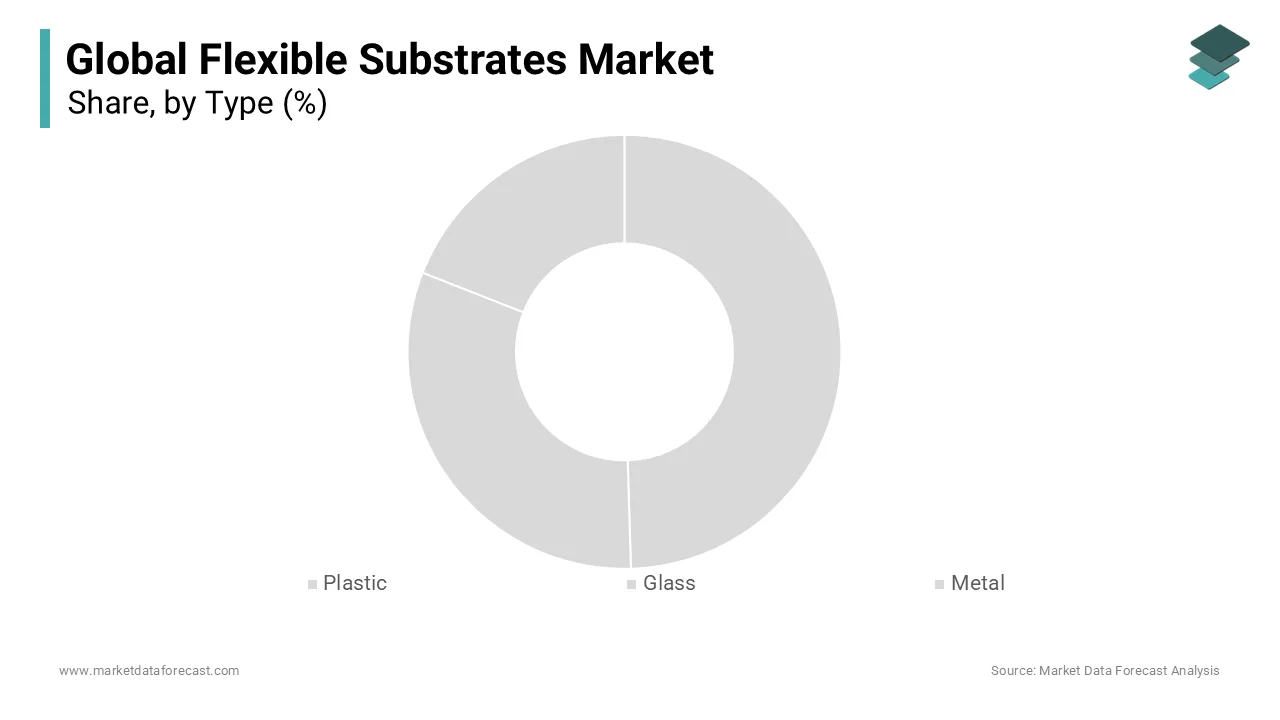
The glass segment is projected to expand at a CAGR of 9.5% during the forecast period owing to the demand for ultra-thin glass that offers superior optical clarity, thermal stability, and barrier properties compared to plastic. Ultra-thin glass provides a smoother surface for thin film transistor deposition, resulting in higher pixel density and better image quality. The adoption of flexible glass in premium foldable devices is increasing as manufacturers seek to overcome the durability limitations of plastic substrates. Glass is also impermeable to moisture and oxygen, eliminating the need for expensive barrier layers required by plastic films. The automotive industry is increasingly adopting curved glass displays for dashboards, further driving demand. Advances in strengthening technologies have improved the bendability and fracture resistance of glass, making it viable for dynamic applications.
By Application Insights
The consumer electronics segment held a dominant share of the flexible substrates market in 2025 with the ubiquitous adoption of smartphones, tablets, wearables, and laptops that increasingly incorporate flexible components. The demand for sleeker, lighter, and more durable devices has compelled manufacturers to replace rigid printed circuit boards with flexible alternatives. Wearable devices such as smartwatches and fitness trackers require substrates that can conform to the wrist, further boosting demand. The trend toward bezel less designs and edge to edge displays necessitates the use of flexible interconnects to route signals around corners and through tight spaces. Additionally, the integration of flexible sensors in gaming controllers and virtual reality headsets expands the application scope. Manufacturers are continuously innovating to reduce the thickness and weight of these components while maintaining electrical performance.
The medical and healthcare segment is expected to grow at a fastest CAGR of 11.2% during the forecast period owing to the rise of digital health and personalized medicine. Flexible substrates enable the creation of conformal biosensors, electronic skin patches, and implantable devices that monitor vital signs continuously and non-invasively. The prevalence of chronic diseases is rising globally, increasing the need for remote patient monitoring solutions that utilize flexible electronics. These devices can adhere comfortably to the skin, providing accurate data on heart rate, glucose levels, and hydration without restricting movement. The approval rate for wearable health monitors has increased significantly, encouraging investment in flexible substrate technologies. The aging population in developed countries drives demand for home healthcare devices that are easy to use and comfortable to wear. Flexible substrates also facilitate the development of smart bandages that monitor wound healing and deliver drugs electronically. The biocompatibility and flexibility of these materials make them ideal for long term wear.
REGIONAL ANALYSIS
North America Flexible Substrates Market Analysis
North America was the top performer in the flexible substrates market by holding 43.2% of share in 2025 with the strong research and development capabilities and early adoption of advanced technologies. The region is home to major technology companies and healthcare providers that drive innovation in flexible electronics. The electronics manufacturing sector in the United States continues to invest heavily in next generation materials and processes. The presence of leading universities and research institutions fosters collaboration between academia and industry, accelerating the commercialization of new substrate materials. Funding for materials science research remains robust, supporting the development of bio based and high-performance flexible substrates. The demand for wearable health devices is particularly strong in North America due to high healthcare spending and consumer awareness. Th region benefits from a well-established supply chain and skilled workforce.
Europe Flexible Substrates Market Analysis
Europe flexible substrates market was ranked second by holding 22.1% of share in 2025 with the stringent environmental regulations and a strong focus on sustainable manufacturing practices. The European Union’s Green Deal and Circular Economy Action Plan encourage the development of recyclable and bio based flexible substrates. The region has seen increased investment in green technologies and sustainable electronics. Countries like Germany and France are leaders in automotive and industrial applications of flexible circuits, particularly for electric vehicles and smart factories. There is a growing emphasis on reducing the environmental footprint of electronic materials, driving innovation in eco-friendly substrates. Regulatory support for renewable energy integrates flexible substrates in solar applications. Collaboration among European research centers facilitates knowledge sharing and standardization.
Asia Pacific Flexible Substrates Market Analysis
Asia Pacific flexible substrates market is esteemed to grow at a fastest CAGR in coming years with the massive electronics manufacturing bases and rising consumer demand. Countries such as China, South Korea, Japan, and Taiwan are global leaders in the production of smartphones, displays, and semiconductors. China’s Made in China 2025 initiative prioritizes the development of advanced materials, including flexible substrates for next generation devices. The growing middle class in India and Southeast Asia is driving consumption of wearable devices and smart electronics. Government incentives for local manufacturing and foreign direct investment further boost market growth.
Latin America Flexible Substrates Market Analysis
Latin America flexible substrates market growth is driven by increasing urbanization and the gradual adoption of consumer electronics. While the region does not have a large manufacturing base for advanced electronics, demand for finished goods such as smartphones and wearables is rising. The healthcare sector is beginning to adopt remote monitoring devices, creating niche opportunities for flexible substrates. The imports of electronic components are increasing as local assembly operations expand. Economic challenges and currency fluctuations remain barriers, but the growing middle class presents long term potential. Regional governments are exploring policies to attract electronics manufacturing investments.
Middle East and Africa Flexible Substrates Market Analysis
The Middle East and Africa flexible substrates market growth is propelling with the varying levels of technological adoption and infrastructure development. Gulf Cooperation Council countries are investing in smart city projects and digital infrastructure, which may eventually drive demand for flexible electronics in building automation and transportation. In Africa, the rapid expansion of mobile phone usage creates a baseline demand for electronic devices, although most are imported. As per data from regional telecommunications unions, the adoption of mobile health solutions is growing, potentially opening avenues for flexible wearable sensors. Limited local manufacturing capacity means the region relies heavily on imports. However, initiatives to improve education and technical skills are laying the groundwork for future industrial development.
COMPETITIVE LANDSCAPE
The competition in the flexible substrates market is characterized by a mix of specialized chemical manufacturers and integrated electronics material suppliers vying for dominance through technological innovation and quality assurance. Large multinational corporations leverage their extensive research capabilities and global distribution networks to offer comprehensive material solutions. These companies often compete on material performance metrics, such as thermal stability, flexibility, and transparency. Regional players counter with cost effective alternatives and localized customer support services. The market sees intense rivalry in developing ultra thin and barrier enhanced substrates for premium foldable displays. Regulatory compliance regarding environmental sustainability serves as a significant differentiator favoring incumbents with green manufacturing practices. Competitive dynamics are further influenced by the rapid pace of technological change prompting firms to invest heavily in intellectual property protection.
KEY MARKET PLAYERS
The key players in the global flexible substrates market include
- Griff Paper and Film (U.S)
- Polyonics, Inc. (U.S)
- Porex Corporation (U.S)
- Rogers Corporation (U.S)
- Corning, Inc. (U.S)
- AzCoat, Inc. (U.S)
- BenQ Materials Corporation (Taiwan)
- Arlon Graphics LLC (U.S)
- 3M Company (U.S)
- American Semiconductor, Inc. (U.S)
- SCHOTT North America, Inc.(U.S)
- Heraeus Materials Technology GmbH & Co. KG (Germany)
Top Players in the Market
- DuPont de Nemours Inc maintains a leading position in the global flexible substrates market through its extensive portfolio of high performance polymers and electronic materials. The company specializes in polyimide films and advanced dielectric materials that are essential for flexible printed circuits and display applications. DuPont recently expanded its manufacturing capacity in Asia to meet the growing demand from consumer electronics manufacturers. They have introduced new grades of Kapton film with enhanced thermal stability and mechanical strength for next generation foldable devices. The company actively invests in research and development to create sustainable and recyclable substrate options. These strategic initiatives reinforce their reputation as a trusted supplier of materials for the evolving flexible electronics industry worldwide.
- Sumitomo Electric Industries Ltd contributes significantly to the global flexible substrates market by providing high quality copper clad laminates and flexible printed circuit boards. The company leverages its expertise in metallurgy and material science to produce substrates with superior conductivity and flexibility. Sumitomo Electric recently launched new ultra-thin copper foils designed for high frequency applications in 5G devices and automotive sensors. They have strengthened their supply chain partnerships to ensure consistent raw material availability and cost efficiency. The company focuses on developing eco-friendly production processes that reduce environmental impact.
- Toray Industries Inc plays a pivotal role in the global flexible substrates market with its advanced carbon fiber and polymer film technologies. The company produces high performance polyimide and polyester films that serve as base materials for flexible displays and solar cells. Toray recently introduced new barrier films with improved moisture resistance for organic light emitting diode applications. They have expanded their research facilities to accelerate the development of bio-based substrates aligned with sustainability goals. The company collaborates with display manufacturers to optimize material properties for foldable and rollable screens. By integrating vertical production capabilities, Toray ensures high quality control and rapid response to market changes.
Top Strategies Used by Key Market Participants
Key players in the flexible substrates market primarily employ vertical integration and strategic partnerships to maintain competitive advantage. Companies invest heavily in research and development to create novel materials with enhanced mechanical and electrical properties. Strategic collaborations with device manufacturers facilitate early adoption of new substrate technologies in product designs. Manufacturers also focus on expanding production capacities in key regions to reduce logistics costs and improve supply chain resilience. Emphasis on sustainability drives the development of recyclable and bio based substrate options. Additionally, firms pursue acquisitions to broaden their product portfolios and access new customer segments. These strategies collectively drive innovation and strengthen market positions in the rapidly evolving global landscape.
MARKET SEGMENTATION
This research report on the global flexible substrates market has been segmented and sub-segmented based on categories.
By Type
- Plastic
- Glass
- Metal
By Application
- Consumer Electronics
- Solar Energy
- Medical & Healthcare
- Aerospace & Defense
By Region
- North America
- Latin America
- Europe
- Asia Pacific
- Middle East & Africa