Global Crude Sulfate Turpentine Market Size, Share, Trends & Growth Forecast Report - Segmented By Type (Alpha Pinene, Beta Pinene, Delta 3 Carene, Camphene, Limonene), Application (Aromatic Chemicals, Adhesives, Paints And Printing Inks, Camphor), And Region(North America, Europe, Asia-Pacific, Latin America, Middle East And Africa) - Global Industry Analysis, Size, Share, Growth, Trends And Forecast 2026 To 2034
Market Size, 2025
$701.8 MnMarket Estimate, 2026
$726.3 MnMarket Forecast, 2034
$956.5 MnCAGR, 2026–2034
3.5%Global Crude Sulfate Turpentine Market Size
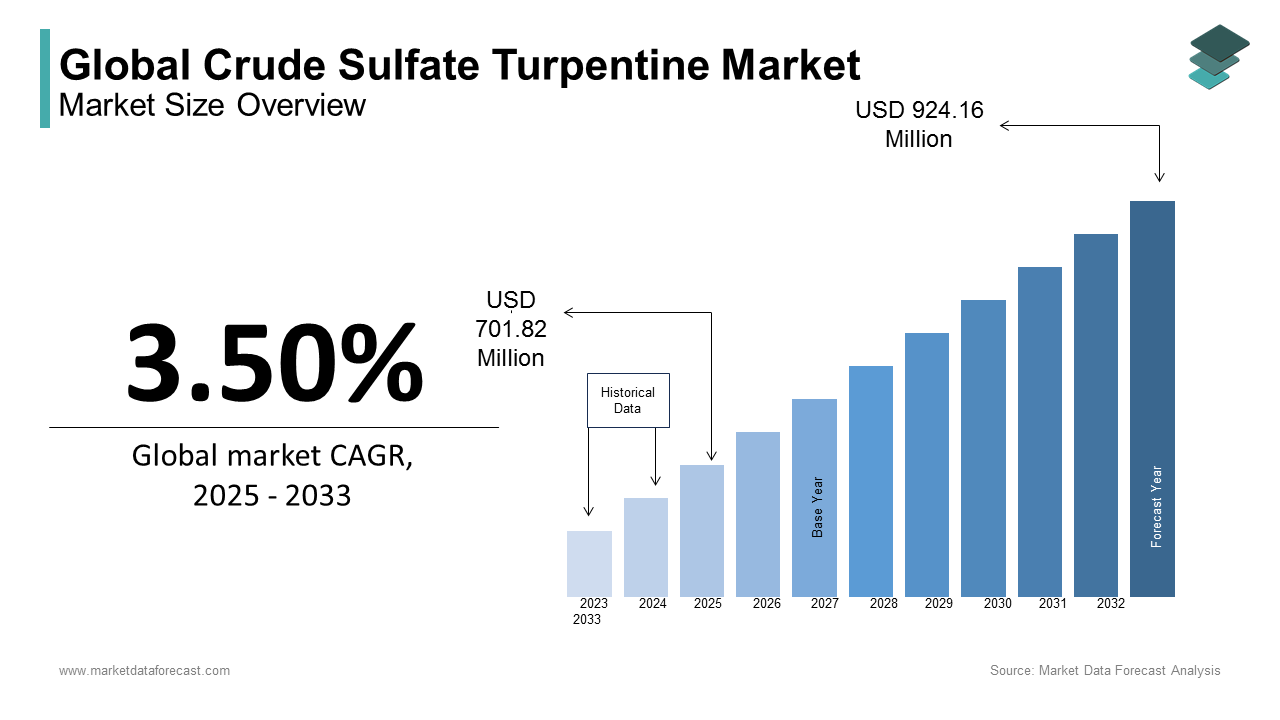
The global crude sulfate turpentine market size was calculated to be USD 701.82 million in 2025 and is anticipated to be worth USD 956.50 million by 2034 from USD 726.38 million in 2026, growing at a CAGR of 3.5% during the forecast period.
Crude sulfate turpentine (CST) is a vital natural resinous byproduct generated during the kraft pulping process of pine wood. This complex mixture primarily consists of terpene hydrocarbons such as alpha pinene and beta pinene, which serve as foundational raw materials for a vast array of industrial and consumer applications. The extraction of this valuable resource transforms what was once considered a mere waste stream of the paper industry into a highly sought-after biochemical feedstock. The global reliance on sustainable and renewable chemical sources has significantly elevated the importance of this pine-derived extract. According to the Food and Agriculture Organization (FAO), global industrial roundwood production reached approximately 1.96 billion cubic meters out of roughly 4 billion cubic meters of total global wood removals. As per the World Bank PROGREEN program publications, the global forestry sector provides more than 86 million green jobs, while broader forest ecosystems support the livelihoods of over 1.6 billion people globally. Furthermore, the transition toward green chemistry has amplified the utilization of these natural terpenes in manufacturing synthetic fragrances, pharmaceuticals, and agricultural chemicals. Research published in Oxford Open Climate Change indicates that integrating biotechnology like enzymes into consumer products can reduce global carbon emissions by 1 to 2.5 billion tons annually. This profound integration of crude sulfate turpentine into sustainable industrial ecosystems underscores its critical role in modern biochemical manufacturing and environmental conservation efforts.
MARKET DRIVERS
The escalating global preference for renewable and biobased chemical feedstocks drives the growth of the crude sulfate turpentine market. Modern manufacturing sectors are actively transitioning away from petroleum-derived solvents due to stringent environmental mandates and corporate sustainability goals. Crude sulfate turpentine provides an exceptionally effective and naturally occurring alternative for industrial cleaning agents, paint thinners, and chemical synthesis processes. EvitaChem reference literature reveals that select biobased solvents like ethyl lactate reduce total volatile compound footprints by up to 40% when compared directly against traditional petroleum-derived dichloromethane. Research points out that global demand for crude sulfate turpentine and derivative bio-feedstocks is expanding rapidly as consumer sectors integrate renewable chemical alternatives. In addition, the fragrance and flavor industries heavily rely on the refined terpenes extracted from this raw material to create authentic pine and citrus scent profiles. This profound shift toward ecological responsibility and natural ingredient sourcing guarantees a robust and continuously expanding demand for this valuable pine-derived byproduct across diverse global supply chains and international consumer markets.
The rapid expansion of the global pharmaceutical sector and the massive production of synthetic vitamins further propel the expansion of the crude sulfate turpentine market. This significantly boosts the commercial demand for refined sulfate turpentine derivatives. The alpha pinene extracted from this crude mixture is an indispensable precursor in the industrial synthesis of critical pharmaceutical compounds and essential nutrients. International Federation of Essential Oils and Aroma Trades (IFEAT) networks demonstrate that the commercial synthesis of camphor and menthol for therapeutic applications relies heavily on pine-derived terpene molecules. Apart from these, the chemical conversion of these terpenes into linalool and geraniol provides essential building blocks for numerous active pharmaceutical ingredients. Studies show that renewable terpene-based intermediates are gaining consistent ground in pharmaceutical synthesis, reflecting a broader macro shift toward bio-based drug development building blocks. This critical reliance on pine-derived terpenes for life-saving medications and essential nutritional supplements ensures a highly stable and lucrative demand trajectory for crude sulfate turpentine processors worldwide.
MARKET RESTRAINTS
The implementation of increasingly stringent environmental regulations governing the kraft pulping industry severely restricts the growth of the crude sulfate turpentine market. Moreover, the production of this valuable byproduct is entirely dependent on the chemical digestion of pine wood, a process that historically generates significant air and water pollution. Environmental data monitored under European Union industrial frameworks reveals that regulatory updates have consistently pushed pulp and paper operations to lower total sulfur and volatile organic emissions over the last ten years. Furthermore, the transition toward closed-loop recovery systems in modern pulp mills drastically minimizes the release of raw turpentine into the atmosphere. Sources reveal that configuring closed-loop mill recovery systems to meet strict environmental metrics can modify localized crude turpentine condensation yields. This profound regulatory pressure to eliminate atmospheric emissions directly conflicts with the traditional collection methods of sulfate turpentine, thereby constraining the overall availability of this critical biochemical feedstock.
The inherent toxicity and severe health hazards associated with the handling and processing of CST impose massive operational burdens and restrict its widespread application, which hinders the expansion of the crude sulfate turpentine market. This highly volatile organic compound contains potent terpenes that can cause severe respiratory irritation, neurological damage, and dermatological conditions upon prolonged human exposure. According to the Occupational Safety and Health Administration, the permissible exposure limit for turpentine vapors in industrial environments is strictly capped at 100 parts per million to prevent acute health complications. As per the National Institute for Occupational Safety and Health (NIOSH), prolonged or acute occupational inhalation of turpentine vapor concentrations can cause immediate central nervous system depression, kidney irritation, and severe respiratory tract inflammation. In addition, the highly flammable nature of this raw material requires specialized storage infrastructure and rigorous fire prevention protocols. These significant health and safety liabilities force downstream manufacturers to seek safer synthetic alternatives, thereby limiting the overall market penetration and commercial expansion of crude sulfate turpentine in sensitive consumer applications.
MARKET OPPORTUNITIES
The innovative development of advanced biobased polymers and sustainable packaging materials offers a massive commercial opportunity for the crude sulfate turpentine market. As global brands aggressively phase out single-use petroleum plastics, they are actively seeking renewable monomers to manufacture high-performance biodegradable alternatives. The refined terpenes derived from this crude extract can be chemically modified to create robust bio-resins and adhesives that rival the mechanical properties of traditional synthetic plastics. European Bioplastics indicates that global bioplastics production capacity is expanding rapidly, driven by intense corporate sustainability commitments and evolving regulatory mandates. Peer-reviewed research published across Wiley material science frameworks demonstrates that incorporating pine-derived terpene structures into bio-based monomer loops substantially elevates the physical properties and functional thermal stability of biodegradable films. Apart from these, the utilization of these natural resins in three-dimensional printing filaments opens highly lucrative new avenues in additive manufacturing. Crude sulfate turpentine producers can capitalize on the green materials revolution. By doing so, they transform traditional chemical outputs into high-value, sustainable engineering solutions.
The strategic conversion of pine-derived terpenes into advanced biofuels and sustainable aviation fuels paves the way to capture the rapidly expanding renewable energy sector, which is likely to accelerate the expansion of the crude sulfate turpentine market. In addition, the high energy density and favorable chemical structure of alpha pinene and beta pinene make them ideal candidates for blending with conventional jet fuels to reduce the carbon footprint of global aviation. Regulatory mandates enacted under the EU's ReFuelEU Aviation initiative require aviation fuel suppliers to ensure that at least 2% of aviation fuel at EU airports is sustainable aviation fuel, pushing industrial development forward. Furthermore, the catalytic upgrading of crude sulfate turpentine into high-performance diesel additives significantly improves engine efficiency and reduces particulate emissions. The International Energy Agency (IEA) indicates that utilizing highly optimized bio-based and drop-in biofuels can lower total greenhouse gas emissions by up to 80% compared to conventional fossil fuels. Crude sulfate turpentine manufacturers can secure long-term revenue streams by pivoting toward the massive energy transition market. This strategic move allows them to establish themselves as critical suppliers in the future renewable fuel landscape.
MARKET CHALLENGES
The pervasive availability and low cost of synthetic petrochemical alternatives are a formidable challenge to the crude sulfate turpentine market. Also, the global petrochemical industry produces massive volumes of synthetic turpentine and artificial terpene compounds at a fraction of the cost of naturally derived extracts. Research shows that biobased producers face ongoing competition from petroleum-derived synthetic alternatives due to structural price variations. As per the International Energy Agency, the price volatility of crude oil frequently allows synthetic alternatives to undercut the market price of natural turpentine, making it exceedingly difficult for biobased producers to maintain competitive profit margins. In addition, synthetic variants offer highly consistent chemical compositions, which are preferred by large-scale industrial manufacturers requiring strict batch uniformity. This relentless price competition and the superior consistency of petrochemical derivatives severely restrict the ability of crude sulfate turpentine to capture mainstream industrial applications.
The extreme vulnerability of the supply chain to fluctuations in pine wood availability and the shifting economics of the pulp and paper industry severely destabilize the crude sulfate turpentine market. In addition, the production of this byproduct is entirely tethered to the operational output of kraft pulp mills, which are themselves subject to the volatile demands of the global paper and packaging sectors. The Food and Agriculture Organization (FAO) reveals that shifting consumer trends away from graphic papers toward packaging grades continue to alter the operational landscape for global chemical pulp mills. Studies indicate that rising operational and logistics costs present challenges for localized pulp mills, directly impacting the availability of derivative crude sulfate chemical streams. Furthermore, when the profitability of paper manufacturing drops, mill operators often reduce their production runs, which directly proportionally decreases the generation of crude sulfate turpentine. This profound dependence on the unpredictable economic health of the paper industry prevents turpentine processors from guaranteeing consistent supply volumes to their downstream chemical clients.
REPORT COVERAGE
| REPORT METRIC | DETAILS |
| Market Size Available | 2025 to 2034 |
| Base Year | 2025 |
| Forecast Period | 2026 to 2034 |
| CAGR | 3.50% |
| Segments Covered | By Type, Application, And Region |
| Various Analyses Covered | Global, Regional & Country Level Analysis, Segment-Level Analysis, DROC; PESTLE Analysis. Porter’s Five Forces Analysis, Competitive Landscape, Analyst Overview of Investment Opportunities |
| Regions Covered | North America, Europe, APAC, Latin America, Middle East & Africa |
| Market Leaders Profiled | Renessenz LLC, Dujodwala Paper Chemicals Ltd, Arizona Chemical Company LLC, International Flavors & Fragrances Inc, Pine Chemical Group, Lawter Inc, Privi Organics Limited, HARTING Technology Group, Derives Resiniques et Terpeniques, Privi Organics Limited, and Others. |
SEGMENTAL ANALYSIS
By Type Insights
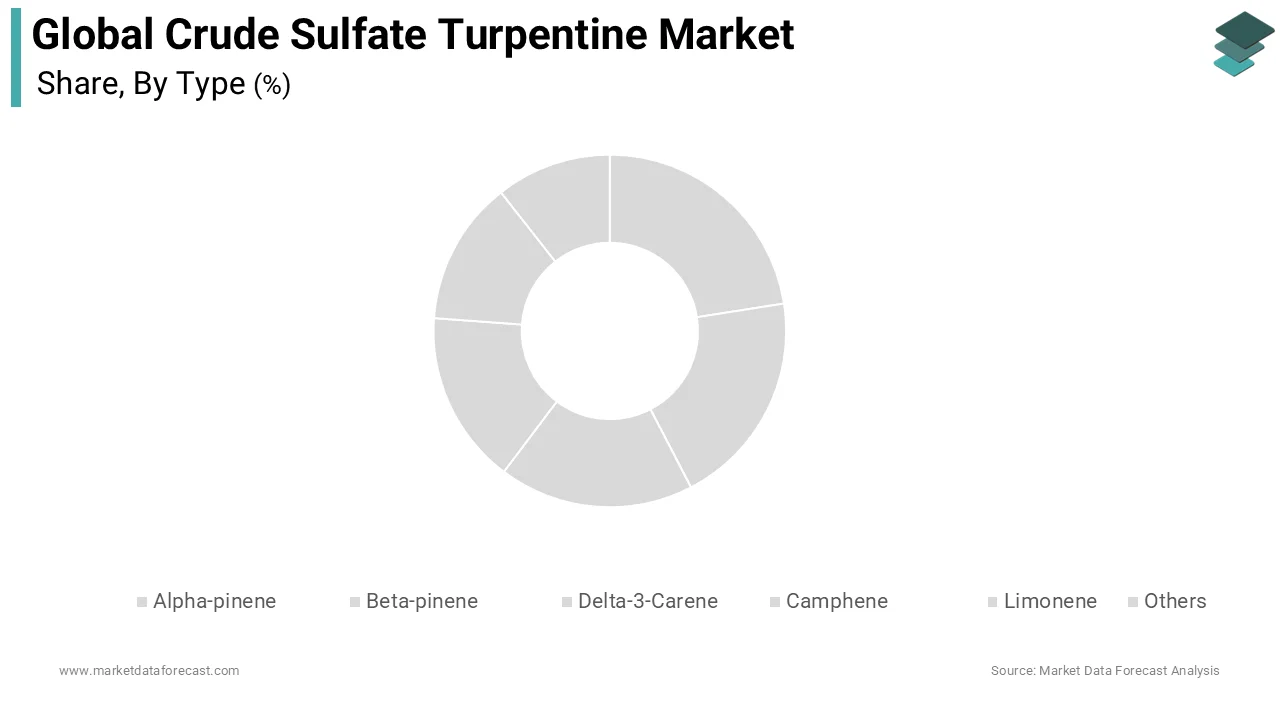
The Alpha pinene segment dominated the Crude Sulfate Turpentine Market and accounted for a 45.6% share in 2025. Moreover, the massive utilization of alpha pinene as a foundational precursor for synthetic pine oil and essential vitamins drives its absolute market dominance. The chemical structure of this specific terpene allows for efficient oxidation and conversion into highly valuable downstream products. Also, the global landscape for synthetic and natural Vitamin E supplements is expanding at a steady annual growth rate, driven by broader wellness trends and fortified food manufacturing requirements. Furthermore, the conversion of this terpene into camphor and borneol provides critical intermediates for the pharmaceutical sector. The World Health Organization (WHO) emphasizes the global necessity of essential topical treatments and respiratory medicines, the active ingredients of which are produced via precise chemical synthesis networks. This profound integration into essential pharmaceutical and nutritional supply chains guarantees a massive and continuous baseline demand for this specific chemical variant across global manufacturing networks.
The escalating consumer preference for natural and botanically sourced fragrances significantly reinforces the leading position of this chemical variant. Modern cosmetic and household care manufacturers are actively replacing synthetic aromatic compounds with naturally derived terpenes to meet clean label demands. Furthermore, this specific terpene serves as an excellent natural solvent and fixative in complex scent formulations. This enduring shift toward natural aromatic ingredients ensures the sustained commercial supremacy of this segment in the global market.
The Delta 3 carene segment is the fastest-growing type category, expanding at a CAGR of 7.8%. In addition, the rapid expansion of the biobased adhesives and synthetic resins sector propels the accelerated growth of this segment. Delta 3 carene possesses a unique cyclic chemical structure that provides exceptional thermal stability and strong tackifying properties when polymerized. Sources confirm that integrating specialized terpene-derived tackifier resins into hot melt adhesives modifies the structural glass transition temperature and optimizes localized bonding performance. Moreover, the low volatility and high flash point of this terpene make it highly desirable for industrial applications requiring strict safety standards. Fire safety and compliance protocols enforced under OSHA chemical safety frameworks require industrial facilities to strictly regulate workplace flashpoints and vapor mitigation parameters to minimize processing hazards. This superior performance profile in industrial bonding applications propels the rapid commercial expansion of this segment.
The growing utilization of this terpene in the development of environmentally friendly insecticides and agricultural cleaning agents significantly accelerates its market trajectory. Modern agricultural practices are increasingly shifting away from toxic synthetic pesticides toward naturally derived botanical alternatives that minimize environmental impact. Furthermore, this specific chemical variant exhibits powerful degreasing and sanitizing capabilities, making it ideal for industrial agricultural equipment cleaning. Research confirms that replacing petroleum-based degreasers with biodegradable terpene solvents lowers the structural concentration of regulated synthetic hydrocarbons in facility wastewater streams. This versatile application in sustainable agriculture and equipment maintenance fuels the rapid growth of this segment.
By Application Insights
The Aromatic chemicals segment led the Crude Sulfate Turpentine Market and captured a 38.3% share in 2025. Factors such as the massive global expansion of the fine fragrance and luxury cosmetics industry have contributed to the leading position of this segment. High-end perfumery relies heavily on the complex and authentic scent profiles provided by refined pine terpenes to create sophisticated olfactory compositions. Studies indicate that a growing demographic of perfume buyers is willing to pay a premium for formulations containing verified natural botanical extracts, encouraging manufacturers to source renewable ingredients. Apart from this, the trend of aromatherapy and wellness-infused personal care products has significantly boosted the demand for these natural aromatic compounds. The Global Wellness Institute (GWI) demonstrates that the global personal care and wellness economy is seeing robust growth as consumers prioritize natural health and stress-relief products. This relentless pursuit of authentic and wellness-oriented scents guarantees the continuous market leadership of this application.
The stringent regulatory bans on synthetic musk and phthalate-based fixatives in household care products heavily reinforce the leading position of this application segment. Governments and environmental agencies worldwide are aggressively phasing out hazardous synthetic fragrance ingredients due to their potential endocrine-disrupting properties and environmental persistence. Chemical evaluations managed under the European Chemicals Agency (ECHA) REACH framework routinely review the safety profiles of synthetic cosmetic ingredients, prompting consumer product manufacturers to reformulate using compliant bio-based ingredients. Furthermore, natural aromatic chemicals provide excellent antimicrobial properties that enhance the functional performance of cleaning products. Sources emphasize rigorous sanitization practices, while regulatory registers document the proven antimicrobial and solvent properties of pine oil in traditional disinfectant products. This regulatory-driven shift toward safe and functional natural aromatics solidifies the dominant market share of this segment.
The Adhesives segment is predicted to witness the highest CAGR of 8.5% during the forecast period, owing to the profound global shift toward sustainable packaging and the phase out of petroleum-based tackifying resins. Also, the packaging industry is under immense pressure to reduce its carbon footprint and eliminate fossil fuel-derived components from its supply chains. Moreover, these natural resins offer excellent compatibility with polylactic acid and other bioplastics, ensuring strong bonding without compromising the compostability of the final product. This critical role in enabling the circular economy propels the rapid expansion of the adhesives segment.
The rapid expansion of the global woodworking and furniture manufacturing sectors in emerging economies significantly accelerates the utilization of natural adhesive formulations. As urbanization and middle-class populations expand in regions like Asia and Latin America, the demand for residential and commercial wood furniture has surged dramatically. The Centre for Industrial Studies (CSIL) confirms that the global furniture market value exceeds 500 billion dollars, driving a massive downstream demand for industrial wood bonding agents and manufacturing adhesives. Compliance metrics governed by indoor air quality regulations have accelerated the commercial shift toward low-VOC adhesives in interior woodwork, boosting the market for natural, bio-based tackifying options. Furthermore, the exceptional water resistance and thermal stability of modified sulfate turpentine resins make them ideal for exterior wood applications and marine plywood. This booming construction and furniture sector ensures the rapid commercial growth of this application.
REGIONAL ANALYSIS
North America Crude Sulfate Turpentine Market Analysis
North America was the top performer in the global crude sulfate turpentine market and held a 32.6% share in 2025. The regional market growth was propelled by its massive and highly efficient kraft pulping infrastructure, particularly in the southern United States, which generates substantial volumes of high-quality pine-derived byproducts. According to the USDA Forest Service, the southern pine forests produce over 150 million cubic meters of industrial roundwood annually, providing a robust and consistent supply of raw material for timber products and byproduct chemical extractions. As per the American Forest & Paper Association (AF&PA), chemical kraft mills account for roughly 75% to 80% of all pulp production in the United States, utilizing chemical recovery loops to process organic byproducts. Furthermore, the strong domestic demand for natural aromatic chemicals and biobased adhesives ensures that the extracted material is rapidly consumed by local manufacturing sectors. Through federal procurement initiatives driven by the USDA BioPreferred Program, aggressive promotion of biobased goods has steadily scaled up the domestic preference for renewable, plant-derived solvents. This powerful combination of abundant raw material supply and strong regulatory support for green chemicals solidifies North America as a foundational pillar of the global market.
Europe Crude Sulfate Turpentine Market Analysis
Europe was positioned closely in the global market and occupied a 28.3% share in 2025. This growth of the European market was fueled by its aggressive transition toward circular economy principles and the stringent environmental mandates governing chemical manufacturing. Under the European Union's Industrial Emissions Directive, the region mandates strict volatile organic compound emission limits, legally requiring pulp and paper mills to adopt closed-loop recovery systems to control chemical releases. As outlined by the European Chemical Industry Council (Cefic), EU REACH compliance structures require rigorous safety registration for synthetic compounds, encouraging chemical manufacturers to evaluate bio-based alternatives for volatile components. Apart from this, the European consumer market exhibits the highest global willingness to pay premiums for certified natural and organic household products. The European Consumer Organisation (BEUC) emphasizes that European households increasingly demand transparent labeling on consumer products to avoid greenwashing and verify raw material sustainability claims. This profound alignment of strict environmental policies advanced chemical processing capabilities, and highly eco-conscious consumer behavior ensures that Europe remains a critical and highly lucrative hub for the global industry.
Asia Pacific Crude Sulfate Turpentine Market Analysis
The Asia Pacific is a rapidly expanding region in the global crude sulfate turpentine market due to the unprecedented expansion of the pulp and paper industry in emerging economies like China and India, coupled with a surging domestic manufacturing base. A study indicates that total chemical wood pulp capacity in developing Asian economies has grown significantly, lifting the concurrent yield of organic manufacturing byproducts. Global forest product networks like the International Council of Forest and Paper Associations (ICFPA) indicate that modernizing industrial mill infrastructure through chemical recovery updates substantially advances global resource efficiency and waste minimization. In addition, the rapid urbanization and booming construction sectors across the region have created massive demand for natural adhesives and wood coatings. The Asian Development Bank (ADB) highlights that infrastructure and real estate expansion in Southeast Asia is driving robust demand for industrial building materials, accelerating the market for commercial paints and finishes. This explosive growth in both raw material generation and downstream industrial consumption positions the Asia Pacific as the most critical growth engine for the global market.
COMPETITION OVERVIEW
The competitive landscape of the crude sulfate turpentine market is defined by intense rivalry among specialized pine chemical processors and massive multinational performance material conglomerates. Major global players dominate the sector through extensive fractionation infrastructure, leveraging advanced distillation capabilities to produce highly purified isomers for premium applications. These corporations continuously invest heavily in green chemistry research to develop novel biobased alternatives that can replace hazardous petrochemical solvents and synthetic resins. Conversely, independent regional processors compete aggressively by emphasizing cost-effective bulk production and strong local supply chain relationships with nearby pulp mills. The market is currently witnessing a fierce strategic battle for raw material security, with companies aggressively locking in long-term supply contracts to mitigate the risks associated with fluctuating pulp production volumes. Furthermore, the integration of advanced sustainability certifications has become a critical battleground as operators strive to prove the ecological integrity of their sourcing and manufacturing processes to discerning global buyers. Intense regulatory scrutiny regarding volatile organic compound emissions forces competitors to differentiate themselves through rigorous environmental compliance and closed-loop recovery technologies. Ultimately, success requires a delicate balance of secure raw material access, relentless chemical innovation, and deep respect for the environmental complexities forming the foundation of this highly specialized modern industry landscape.
KEY PLAYERS IN THE GLOBAL CRUDE SULFATE TURPENTINE MARKET
Major Key Players in the global Crude Sulfate Turpentine Market include
- Renessenz LLC
- Dujodwala Paper Chemicals Ltd
- Arizona Chemical Company LLC
- International Flavors & Fragrances Inc
- Pine Chemical Group
- Lawter Inc
- Privi Organics Limited
- HARTING Technology Group
- Dérives Résiniques et Terpéniques
- Others.
Top strategies used by the key market participants
Key participants in the pine chemicals market predominantly utilize aggressive supply chain integration and advanced fractionation technologies to secure their competitive positions. Major players heavily invest in long-term procurement agreements with Kraft pulp mills to guarantee a consistent and high-quality supply of crude raw materials. Simultaneously, companies are deploying sophisticated distillation and purification systems to isolate specific high-value terpenes for premium pharmaceutical and fragrance applications. Strategic acquisitions of specialized resin manufacturers allow corporations to quickly expand their footprint in the biobased adhesives and coatings sectors. Furthermore, industry leaders are actively pursuing green chemistry certifications and sustainable forestry partnerships to appeal to environmentally conscious downstream buyers. Finally, comprehensive research and development initiatives are being implemented to discover novel applications for pine-derived terpenes in emerging sectors like sustainable aviation fuels and advanced bioplastics.
Leading Players in the Market
- Kraton Corporation operates as a foundational powerhouse in the global performance chemicals sector, leveraging an extensive portfolio of high-performance polymers and pine chemical derivatives. The company deeply integrates advanced fractionation technologies to purify crude sulfate turpentine into premium-grade aromatic and adhesive components. Recently, Kraton Corporation has aggressively expanded its sustainable product line,s developing biobased tackifying resins that cater to the booming environmentally friendly packaging industry. The corporation also prioritizes strategic partnerships with global pulp manufacturers to secure long-term raw material supply agreements. These focused actions continuously enhance product innovation and solidify the company's reputation as a premier global pine chemicals leader.
- Les Dérivés Résiniques et Terpéniques maintains a highly formidable presence in the international market through its highly specialized extraction facilities and deep expertise in terpene chemistry. The company leverages advanced distillation processes to isolate specific isomers from crude mixtures for use in premium fragrances and pharmaceutical synthesis. Recently, Les Dérivés Résiniques et Terpéniques has accelerated its investments in green chemistry research, creating novel biobased solvents that replace hazardous petrochemical alternatives in industrial cleaning applications. The corporation also places a strong emphasis on sustainable forestry certifications, ensuring that all raw material sourcing meets the highest environmental standards. These strategic initiatives significantly improve commercial reach and reinforce the company's status as a trusted industry leader.
- Forchem operates as a dynamic and highly influential player in the pine chemicals landscape, renowned for its comprehensive range of tall oil and sulfate turpentine derivatives. The company aggressively drives market expansion by continuously refining its polymerization techniques to produce superior quality adhesives and printing ink resins. Recently, Forchem has invested heavily in state-of-the-art manufacturing facilities in Europe to increase the production capacity of its high-performance biobased coatings. Additionally, the corporation is deeply committed to the circular economy initiative,s developing processes to recycle and repurpose chemical byproducts within its own manufacturing ecosystem. These focused actions continuously drive commercial expansion and reinforce the company's reputation as an innovative industry leader.
MARKET SEGMENTATION
This research report on the global crude sulfate turpentine market has been segmented and sub-segmented based on type, application, and region.
By Type
- Alpha-pinene
- Beta-pinene
- Delta-3-Carene
- Camphene
- Limonene
- Others
By Application
- Aromatic Chemicals
- Adhesives
- Paints and printing inks
- Camphor
- Others
By Region
- North America
- Europe
- The Asia Pacific
- Latin America
- The Middle East and Africa
Frequently Asked Questions
1. What factors are driving the growth of the Crude Sulfate Turpentine Market?
The market is driven by increasing demand for bio-based chemicals, growing use in fragrances and flavors, rising adoption of sustainable raw materials, and expanding applications in the chemical industry.
2. What are the major applications of crude sulfate turpentine?
Crude sulfate turpentine is used to produce fragrances, flavors, adhesives, resins, solvents, cleaning products, inks, coatings, and pharmaceutical intermediates.
3. Which region dominates the Crude Sulfate Turpentine Market?
North America holds a significant market share due to its well-established pulp and paper industry and strong demand for renewable chemical feedstocks.
4. Which region is expected to witness the fastest growth?
The Asia-Pacific region is expected to register the fastest growth due to expanding pulp production, increasing industrialization, and rising demand for bio-based chemicals.
5. What are the key products derived from crude sulfate turpentine?
Major derivatives include alpha-pinene, beta-pinene, camphene, limonene, pine oil, terpene resins, and aroma chemicals used across multiple industries.
6. What challenges does the Crude Sulfate Turpentine Market face?
Challenges include fluctuations in raw material availability, dependence on kraft pulp production, volatile pricing, and competition from synthetic alternatives.
7. Why is crude sulfate turpentine considered a sustainable raw material?
It is a renewable by-product of the kraft pulping process that adds value to forest resources and supports the production of bio-based chemicals with a lower environmental impact.
8. How is innovation influencing the Crude Sulfate Turpentine Market?
Advancements in refining technologies, bio-based chemical production, and sustainable processing methods are improving product quality, increasing yields, and expanding commercial applications.
9. What opportunities exist in the Crude Sulfate Turpentine Market?
Growing demand for renewable chemicals, increasing use of natural ingredients in consumer products, expansion of green chemistry initiatives, and rising investments in bio-refineries offer significant growth opportunities.
10. What is the future outlook for the Crude Sulfate Turpentine Market?
The market is expected to grow steadily over the forecast period, supported by rising demand for sustainable chemical feedstocks, increasing utilization of terpene derivatives, and continued innovation in bio-based product development.
Related Reports
Access the study in MULTIPLE FORMATS
Purchase options starting from
$ 2500
Didn’t find what you’re looking for?
TALK TO OUR ANALYST TEAM
Need something within your budget?
NO WORRIES! WE GOT YOU COVERED!
Call us on: +1 888 702 9696 (U.S Toll Free)
Write to us: sales@marketdataforecast.com