- Product Description Description
- Table of Contents TOC
- List of Table & Figure LOT
- Get Free Sample PDF Sample PDF
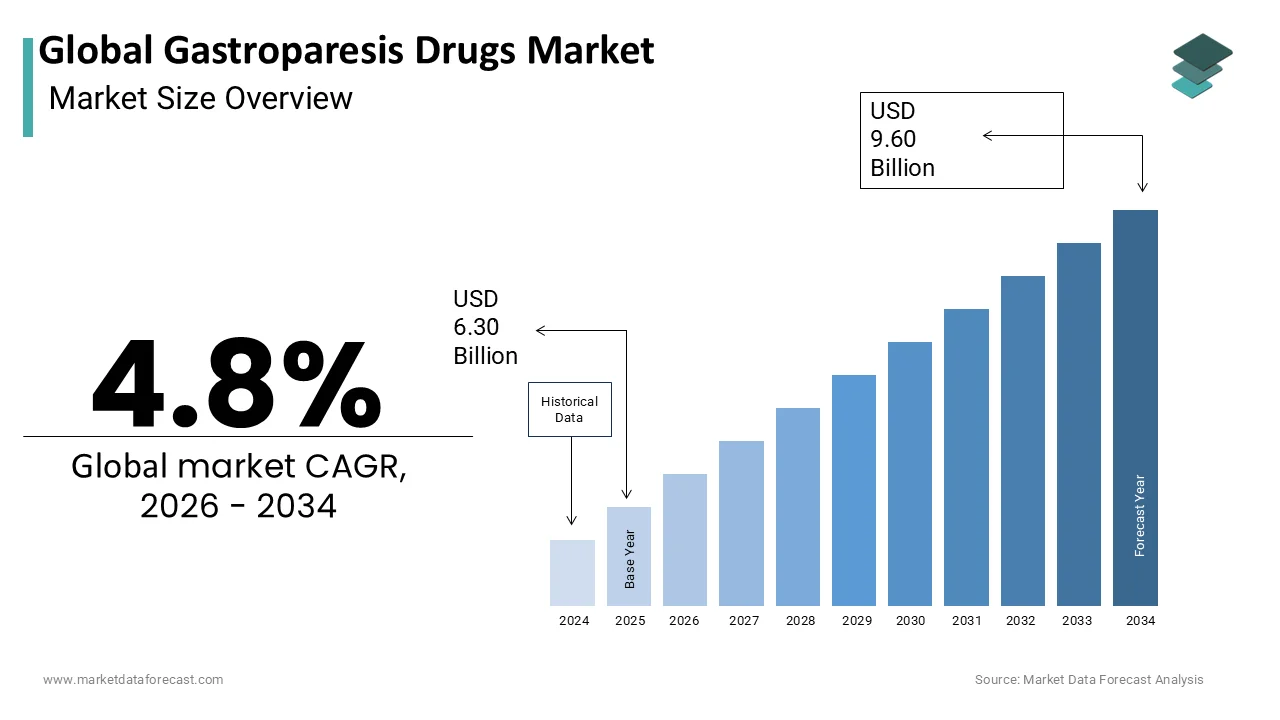
Market Size, 2025
$6.3 BnMarket Estimate, 2026
$6.6 BnMarket Forecast, 2034
$9.6 BnCAGR, 2026–2034
4.8%Global Gastroparesis Drugs Market Size
The Global Gastroparesis Drugs Market is projected to grow from USD 6.30 billion in 2025 to USD 6.60 billion in 2026 and reach USD 9.60 billion by 2034, registering a CAGR of 4.8% during the forecast period from 2026 to 2034.
Gastroparesis drugs are medications used to treat gastroparesis, a neuromuscular disorder that prevents your stomach from emptying food normally. This disorder significantly impairs quality of life, causing symptoms such as nausea, vomiting,g early satiety and abdominal pain. The therapeutic landscape primarily includes prokinetic agents that enhance gastric motility and antiemetics that alleviate nausea. According to epidemiological studies supported by the National Institute of Diabetes and Digestive and Kidney Diseases (NIDDK), gastroparesis affects roughly 0.1% to 0.2% of the United States population, exhibiting a significantly higher prevalence among women and individuals living with long-standing diabetes. According to the American College of Gastroenterology (ACG), while idiopathic cases remain the most common overall cause of gastroparesis, diabetic gastroparesis is the most prominent known secondary medical condition, accounting for roughly one-third of all cases. The condition places a substantial burden on healthcare systems due to frequent hospitalizations and emergency department visits for severe dehydration and malnutrition. Current treatment options are limited by safety concerns and variable efficacy, leading to significant unmet medical needs. Regulatory agencies are increasingly scrutinizing new drug applications for rigorous clinical endpoints i,, including symptom relief and objective measures of gastric emptying. The integration of patient-reported outcomes into clinical trials has become essential for demonstrating meaningful therapeutic benefits. This market is evolving with the emergence of novel mechanisms targeting serotonin receptors and ghrelin agonists aiming to provide safer and more effective alternatives to traditional therapies.
MARKET DRIVERS
Rising Prevalence of Diabetes Mellitus Driving Demand for Prokinetic Therapies
The escalating global burden of diabetes mellitus fuels the growth of the gastroparesis drugs market. There is a strong pathophysiological link between hyperglycemia and gastric nerve damage. According to the International Diabetes Federation, approximately 537 million adults worldwide were living with diabetes in 2021, a figure projected to rise to 643 million by 2030. Chronic exposure to high blood glucose levels leads to autonomic neuropathy, which disrupts vagus nerve control of the stomach muscle, resulting in delayed gastric emptying. As per the Centers for Disease Control and Prevention, nearly 1 in 10 Americans has diabetes, creating a vast potential patient pool for gastrointestinal complications. Diabetic gastroparesis is particularly challenging to manage because fluctuating blood sugar levels further exacerbate gastric stasis, creating a vicious cycle of poor glycemic control and worsening symptoms. This demographic reality drives consistent demand for prokinetic agents that can restore motility without interfering with insulin therapy or other diabetes medications. Healthcare providers are increasingly screening diabetic patients for gastrointestinal symptoms, leading to earlier diagnosis and intervention. The growing awareness among endocrinologists about the prevalence of gastroparesis in their patient populations ensures steady prescription volumes. Furthermore, the aging population, which is disproportionately affected by type 2 diabetes, contributes to the expanding addressable market. This sustained epidemiological trend guarantees a robust baseline demand for effective pharmacological management strategies tailored to diabetic comorbidities.
Increasing Awareness and Diagnostic Capabilities: Enhancing Case Identification
Enhanced clinical awareness and modern diagnostic technologies have significantly improved the identification of gastroparesis cases, which boosts the expansion of the gastroparesis drugs market. Consequently, this improved detection drives the market growth for targeted pharmaceutical interventions. Historically,y many patients suffered from undiagnosed functional dyspepsia or were misdiagnosed with irritable bowel syndrome, delaying appropriate treatment. According to the American Neurogastroenterology and Motility Society, the adoption of standardized diagnostic criteria such as the gastric emptying scintigraphy has improved diagnostic accuracy and reduced variability in clinical practice. As per the Society of Nuclear Medicine and Molecular Imaging (SNMMI), roughly 200,000 gastric emptying studies are performed annually across the United States to capture and precisely measure delayed gastrointestinal transit times. The introduction of wireless motility capsules and breath tests offers less invasive alternatives, encouraging more patients to undergo testing. Increased education campaigns by gastroenterology associations have empowered primary care physicians to recognize red flag symptoms and refer patients for specialized evaluation. This shift from empirical treatment to evidence-based diagnosis ensures that patients receive appropriate prokinetic or antiemetic therapies rather than ineffective general digestive aids. The reduction in diagnostic latency allows for earlier initiation of drug therapy, preventing severe complications such as bezoar formation and severe malnutrition. Hence, the expanding pool of confirmed diagnoses directly translates into increased prescription rates for approved gastroparesis medications.
MARKET RESTRAINTS
Safety Concerns and Black Box Warnings Limiting Drug Availability
Stringent safety profiles and regulatory warnings associated with existing prokinetic agents obstruct the growth of the gastroparesis drugs market. This limits physician confidence and prescription rates. Many traditional prokinetics,s such as ametoclopramide, carry black box warnings from the United States Food and Drug Administration due to the risk of tardive dyskinesia, a potentially irreversible movement disorder. According to the FD, the risk of developing tardive dyskinesia increases with duration of use and total cumulative dose,e leading clinicians to restrict treatment to short-term courses of no more than 12 weeks. As per the American Journal of Gastroenterology, this limitation forces many chronic patients to cycle through ineffective therapies or remain untreated due to fear of adverse events. Other agents like domperidone are not approved in the United States due to cardiac safety concerns regarding QT interval prolongation and sudden cardiac death. These safety barriers create a therapeutic vacuum where few safe and effective long-term options exist. Physicians often hesitate to prescribe available drugs due to liability concerns and the need for rigorous monitoring. The lack of a widely accepted safe first-line therapy results in fragmented care and reliance on off-label use of medications with limited efficacy data. This regulatory and safety landscape stifles market expansion and underscores the urgent need for novel agents with improved safety profiles.
High Rate of Treatment Failure and Lack of Efficacy Data
The high rate of treatment failure and insufficient robust clinical efficacy data for current pharmacological options severely restrict growth and patient adherence in the gastroparesis drugs market. Many patients do not experience significant symptom relief with standard prokinetics, leading to discontinuation and dissatisfaction with medical management. According to a study published in Clinical Gastroenterology and Hepatology,gy up to 50 percent of patients with gastroparesis report inadequate response to first-line therapies such as metoclopramide and erythromycin. As per the National Institutes of Health, the subjective nature of symptom reporting and the placebo effect in clinical trials have historically made it difficult to demonstrate statistically significant benefits for new drug candidates. This lack of clear efficacy data discourages pharmaceutical companies from investing heavily in late-stage development due to the high risk of regulatory rejection. Furthermore, the heterogeneity of gastroparesis symptoms means that a drug effective for nausea may not improve gastric emptying or vice versa, complicating trial design and endpoint selection. Patients often resort to dietary modifications or surgical interventions when drugs fail, thereby reducing the overall volume of pharmaceutical consumption. The absence of predictive biomarkers to identify responders further limits the ability to personalize treatment. Until more reliable and potent therapies are developed, the market will remain constrained. This stagnation stems from a widespread perception of limited therapeutic value.
MARKET OPPORTUNITIES
Development of Novel Mechanisms Targeting Serotonin and Ghrelin Receptors
The exploration of novel pharmacological mechanisms targeting specific receptors, such as serotonin 5-HT4 agonists and ghrelin mimetics, opens the door for the expansion of the gastroparesis drugs market. This approach holds strong potential for improved patient outcomes. Unlike traditional dopamine antagonists, sts these new classes of drugs aim to enhance gastric motility through different pathways with potentially fewer side effects. According to recent clinical trial data presented at the Digestive Disease Week conference, prucalopride, a selective 5-HT4T44 agonist, has shown promise in improving gastric emptying and reducing symptoms in patients with idiopathic gastroparesis. As per the European Medicines Agency, the approval of such agents for chronic constipation has paved the way for investigating their efficacy in upper gastrointestinal disorders. Ghrelin agonists like relamorelin stimulate appetite and accelerate gastric emptying, offering a dual benefit for patients suffering from early satiety and weight loss. The successful completion of phase 3 trials for these novel agents could introduce the first new class of prokinetics in decades. Pharmaceutical companies are increasingly focusing on these targeted approaches to differentiate their pipelines and address the unmet needs of patients who have failed standard therapy. The potential for regulatory approval of these innovative mechanisms creates a lucrative opportunity for market leaders to capture a significant share in a largely underserved therapeutic area.
Integration of Digital Health Tools for Personalized Medicine and Monitoring
The integration of digital health technologies and remote monitoring tools is a key growth area to optimize drug therapy and enhance clinical trial efficiency in the gastroparesis drugs market. Wearable devices and smartphone applications can track symptom patterns, meal intake, and medication adherence, providing real-world data that complements clinical assessments. According to the Journal of Medical Internet Research, digital phenotyping allows researchers to identify subgroups of patients who respond better to specific therapies, thus facilitating personalized medicine approaches. As per the Food and Drug Administration, the use ofreal-worldd evidence from digital tools is increasingly accepted to support post-marketing surveillance and label expansions. These technologies enable continuous monitoring of gastric motility and symptom severity, allowing physicians to adjust dosages dynamically rather than relying on intermittent clinic visits. Pharmaceutical companies can leverage these platforms to conduct decentralized clinical trials,s reducing recruitment costs and improving patient retention. The ability to demonstrate consistent symptom improvement through objective digital metrics strengthens the value proposition of new drugs to payers and regulators. Furthermore, digital therapeutics can be bundled with pharmacological treatments to offer comprehensive care packages,s enhancing patient engagement and outcomes. This convergence of pharmacology and digital health creates new revenue streams and improves the overall effectiveness of gastroparesis management.
MARKET CHALLENGES
Complexity of Clinical Trial Design and Endpoint Selection
The inherent complexity of designing clinical trials for gastroparesis due to the subjective nature of symptoms and variability in disease presentation is a major challenge to drug development in the global market. Regulatory agencies require both objective measures of gastric emptying and subjective patient-reported outcomes for symptom relief, creating a high bar for statistical significance. According to the Food and Drug Administration guidance documents, the correlation between gastric emptying rates and symptom improvement is weak,ak meaning a drug can accelerate emptying without relieving nausea or pain. As per the American College of Gastroenterology,og,y this disconnect often leads to trial failures where drugs meet primary endpoints for motility but fail to demonstrate clinical benefit for patients. The high placebo response rate in gastrointestinal trials further complicates data interpretation, requiring larger sample sizes and longer durations to achieve statistical power. These methodological challenges increase the cost and time required for drug development,t discouraging investment from smaller biotechnology firms. Additionally, the lack of standardized definitions for gastroparesis severity across different study sites introduces variability that can obscure true treatment effects. Overcoming these design hurdles requires innovative trial methodologies and consensus on meaningful clinical endpoints, which remain a significant barrier to bringing new therapies to market.
Reimbursement Hurdles and High Out-of-Pocket Costs for Patients
Significant reimbursement hurdles and high out-of-pocket costs for newer or off-label medications create financial barriers that limit patient access and the penetration of the Gastroparesis Drugs Market. Many insurance plans classify prokinetics as non-formulary or require prior authorization due to their off-label status for certain indications, leading to delays and denials in coverage. According to the Kaiser Family Foundation, high-deductible health plans have increased the financial burden on patients, requiring them to pay full price for expensive specialty medications until deductibles are met. The lack of specific coding for gastroparesis in some reimbursement systems further complicates billing and coverage decisions. Pharmaceutical manufacturers face pressure to demonstrate cost-effectiveness compared to older generic alternatives, which are often ineffective but cheap. This economic constraint limits the adoption of novel therapies even when they offer superior efficacy and safety profiles. A large portion of the patient population currently struggles to access advanced gastroparesis therapies. This will continue until payers recognize how effective disease management reduces hospitalizations and drives long-term cost savings.
REPORT COVERAGE
| REPORT METRIC | DETAILS |
| Market Size Available | 2025 to 2034 |
| Base Year | 2025 |
| Forecast Period | 2026 to 2034 |
| Segments Covered | By Type, Production Technologies, and Region |
| Various Analyses Covered | Global, Regional & Country Level Analysis, Segment-Level Analysis, Drivers, Restraints, Opportunities, Challenges; PESTLE Analysis; Porter’s Five Forces Analysis, Competitive Landscape, Analyst Overview of Investment Opportunities |
| Regions Covered | North America, Europe, Asia Pacific, Latin America, the Middle East, and Africa |
| Market Leaders Profiled | Bayer HealthCare AG, Bioniche Animal Health Canada, Sanofi Animal Health, Inc. |
SEGMENTAL ANALYSIS
By Drug Class Insights
In 2025, the prokinetic agents segment held the majority share of the gastroparesis drugs market because they directly address the underlying pathophysiology of delayed gastric emptying. According to the American College of Gastroenterology,g,y these medications stimulate gastrointestinal motility by enhancing the strength and frequency of stomach contractions, which is the primary defect in gastroparesis. Clinical guidelines universally recommend prokinetics as the foundational therapy for patients exhibiting significant delays in gastric emptying. The physiological mechanism of these drugs ensures that food moves through the digestive tract more efficiently, ly thereby reducing the severe symptoms of early satiety and bloating. As per the American Neurogastroenterology and Motility Society, the continuous development of newer prokinetic formulations with targeted receptor affinities has improved their efficacy while minimizing systemic side effects. This direct correlation between drug mechanism and disease pathology guarantees their dominant market position. Physicians inherently prefer treatments that resolve the root mechanical issue rather than merely masking symptoms,s ensuring sustained prescription volumes for this drug class across global healthcare systems.
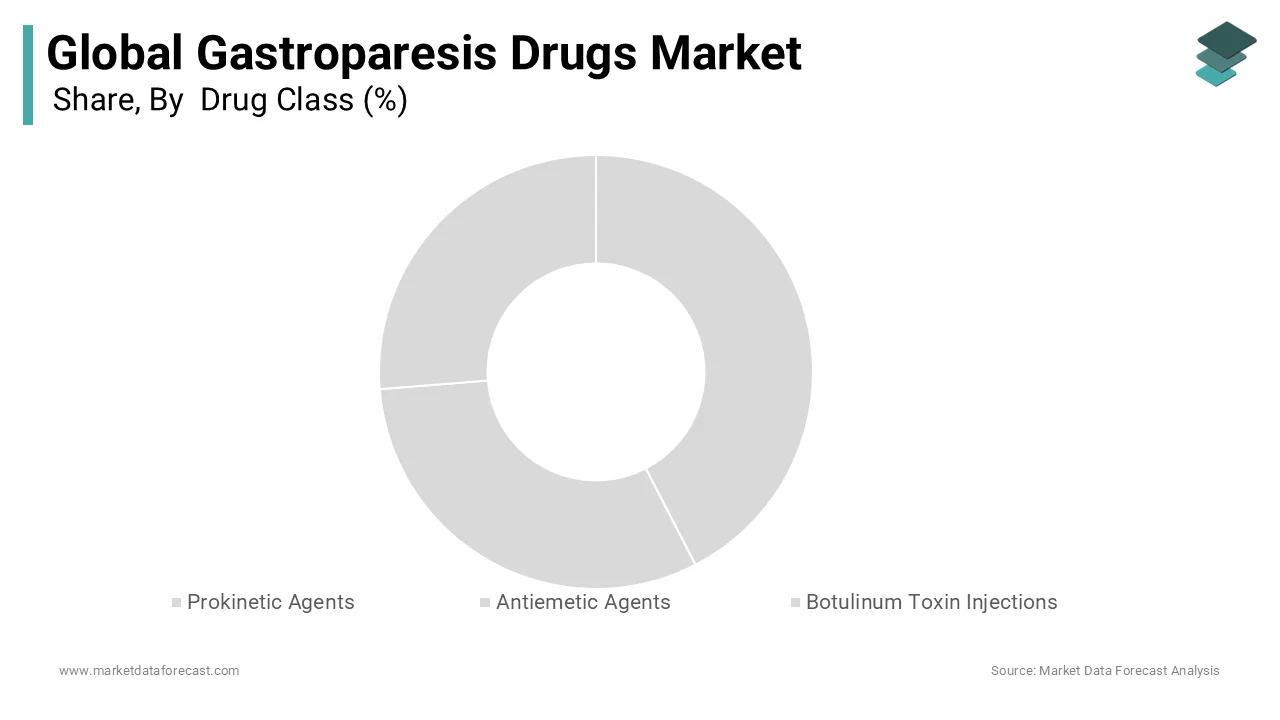
The extensive clinical validation and strong endorsement in international medical guidelines firmly establish prokinetic agents as the leading drug class. Regulatory bodies and medical societies have historically evaluated these medications through rigorous clinical trials demonstrating measurable improvements in gastric emptying times. The regulatory backing translates into widespread formulary inclusion and favorable insurance coverage,ge which significantly boosts patient access. As per the National Institute of Diabetes and Digestive and Kidney Diseases, the established clinical evidence base allows gastroenterologists to confidently prescribe these agents, knowing their pharmacokinetic profiles are well documented. The decades of accumulated real-world data regarding dosing schedules and adverse event management further solidify their position as the standard of care. This deep institutional trust and comprehensive clinical documentation create a formidable barrier to entry for alternative therapies, ensuring prokinetics maintain their overwhelming market dominance in the current therapeutic landscape.
The antiemetic agents segment is likely to experience the fastest CAGR of 7.8% between 2026 and 2034, mainly due to their superior safety profiles compared to traditional prokinetics. Many established prokinetic medications carry significant risks of severe neurological side effects such as tardive dyskinesia, which heavily restricts their long-term use. According to the United States Food and Drug Administration, the strict black box warnings associated with older motility agents have prompted a massive clinical shift toward safer alternatives for symptom management. Antiemetics effectively control nausea and vomiting without crossing the blood-brain barrier to the same extent, thereby minimizing extrapyramidal symptoms. As per the American Gastroenterological Association, this improved safety margin allows physicians to prescribe these medications for extended periods without the need for rigorous neurological monitoring. The growing elderly population is particularly vulnerable to neurological adverse events,s making the safety profile of antiemetics highly attractive for this demographic. This critical shift in prescribing behavior driven by patient safety concerns is rapidly accelerating the market expansion of the antiemetic segment globally.
The rapid expansion of antiemetic agents is further fueled by their targeted efficacy in managing the most debilitating and distressing symptoms of gastroparesis, namely severe nausea and vomiting. While prokinetics address motility, they often fail to provide immediate relief from acute emesis, which is the primary reason patients seek emergency medical care. According to the National Institute of Diabetes and Digestive and Kidney Diseases, nausea and vomiting account for the majority of emergency department visits and hospitalizations among gastroparesis patients, highlighting the urgent need for effective antiemetics. Modern antiemetic formulations utilize advanced receptor antagonism to rapidly halt the emetic reflex, ex providing profound symptomatic relief within minutes. As per the Centers for Disease Control and Prevention, the ability to quickly control vomiting prevents severe dehydration and electrolyte imbalances, which are life-threatening complications in this patient population. The immediate and noticeable improvement in patient quality of life drives high medication adherence and positive word of mouth among patient advocacy groups. This direct impact on the most acute and distressing clinical manifestations ensures that antiemetics will continue to grow at the fastest pace in the therapeutic market.
By Disease Type Insights
The diabetic gastroparesis segment was the largest in the global market and occupied a significant share in 2025. This supremacy of the segment was supported by the escalating global prevalence of diabetes mellitus, which serves as the most significant risk factor for this condition. Chronic hyperglycemia leads to autonomic neuropathy, which damages the vagus nerve and impairs stomach muscle function. According to the International Diabetes Federation, approximately 537 million adults worldwide were living with diabetes in recent assessments, ts and this number is projected to surge significantly over the next decade. This massive and expanding patient pool inherently drives a proportional increase in the incidence of gastrointestinal complications. As per the Centers for Disease Control and Prevention, nearly one-third of patients with long-standing diabetes develop some form of gastrointestinal motility disorder requiring pharmacological intervention. The direct pathophysiological link between poor glycemic control and gastric nerve damage ensures a continuous stream of new diagnoses. Healthcare systems are increasingly implementing routine screening protocols for gastrointestinal symptoms in diabetic patients, leading to earlier detection and treatment. This relentless epidemiological expansion of the diabetic population guarantees that diabetic gastroparesis will remain the dominant disease segment in the global market.
The complex nature of diabetic gastroparesis management necessitates continuous and often multi-drug pharmacotherapy, further solidifying its dominance in the market. Patients with this condition face a vicious cycle where delayed gastric emptying causeserratic glucosee absorption w, which in turn worsens neuropathy and further impairs motility. According to the American Diabetes Association, re-eating this cycle requires strict coordination between endocrinologists and gastroenterologists utilizing specialized prokinetic and antiemetic regimens. The unpredictable absorption of oral medications and food in these patients often necessitates adjustments in insulin delivery methods and the addition of specific gastrointestinal drugs. As per the Endocrine Society, the high rate of comorbidities in diabetic patients, including cardiovascular and renal diseases, complicates treatment and requires frequent medication adjustments. This complexity translates into higher prescription volumes and longer treatment durations compared to other forms of gastroparesis. The chronic and refractory nature of diabetic gastroparesis means that patients remain on pharmacological therapy for life, ensuring sustained and recurring revenue for pharmaceutical manufacturers. This ongoing need for intensive medical management cements the leading market position of the diabetic disease segment.
The idiopathic gastroparesis segment is on the rise and is expected to be the fastest-growing segment in the market, with a CAGR of 8.5% during the forecast period, owing to advancements in diagnostic technologies and standardized clinical criteria. Historically, many patients with unexplained nausea and bloating were misdiagnosed with functional dyspepsia or irritable bowel syndrome, leading to underreporting of idiopathic cases. According to the American Neurogastroenterology and Motility Society, ety the widespread adoption of standardized gastric emptying scintigraphy and the introduction of wireless motility capsules have dramatically improved diagnostic accuracy. These advanced tools allow clinicians to definitively rule out mechanical obstructions and confirm delayed emptying in patients without a known underlying cause. The enhanced diagnostic precision is reclassifying a massive cohort of previously undiagnosed or misdiagnosed patients into the idiopathic gastroparesis category. The continuous refinement of diagnostic protocols ensures that more patients receive the correct diagnosis and appropriate pharmacological treatment, driving the rapid expansion of this specific disease segment.
The rapid growth of idiopathic gastroparesis is further accelerated by the rising recognition ofpost-virall and autoimmune triggers that damage the enteric nervous system without causing systemic diabetes. Many cases of idiopathic gastroparesis are now understood to be the result of previous viral infections or localized autoimmune responses that specifically target gastric pacemaker cells. As per the American College of Gastroenterology, the identification of specific autoantibodies in idiopathic patients is shifting the understanding of the disease from a diagnosis of exclusion to a distinct pathophysiological entity. This evolving medical understanding is prompting physicians to investigate viral and autoimmune histories more thoroughly in patients presenting with unexplained gastric symptoms. The growing awareness of these specific etiological factors is leading to a surge in new diagnoses of idiopathic gastroparesis. This increased case identification directly translates into higher demand for targeted pharmacological interventions, ns propelling this segment to the fastest growth rate in the market.
COUNTRY LEVEL ANALYSIS
North America Gastroparesis Drugs Market Analysis
North America outperformed other regions in the global gastroparesis drugs market and secured a 42.5% share in 2025. Factors such as advanced healthcare infrastructure and high diagnostic rates have contributed to the dominance of the regional market. The market status in this region is characterized by the widespread availability of cutting-edge diagnostic tools and a strong emphasis on specialized gastroenterology care. According to the Centers for Disease Control and Prevention, the high prevalence of diabetes and obesity in the United States creates a massive patient population susceptible to gastrointestinal motility disorders. The region benefits from robust healthcare spending and favorable reimbursement policies for advanced pharmacological treatments. As per the American College of Gastroenterology, the continuous update of clinical guidelines and the rapid adoption of newly approved therapies ensure that patients have access to the latest medications. Furthermore, the presence of major pharmaceutical research hubs facilitates the early launch of novel prokinetic and antiemetic agents. The strong influence of patient advocacy groups also drives awareness and encourages early medical intervention. These combined factors of high disease burden, technological superiority, ty and strong financial backing ensure that North America remains the most lucrative and dominant market for gastroparesis drugs globally.
Europe Gastroparesis Drugs Market Analysis
Europe followed closely behind in the global market and occupied a 28.1% share in 2025. This position of the European market was driven by comprehensive healthcare systems that prioritize evidence-based medicine and rigorous pharmacovigilance. The regional market is known for stringent regulatory frameworks and an aging demographic profile. According to the European Federation of Pharmaceutical Industries and Associations, the aging population across countries like Germany, Italy, and the United Kingdom significantly increases the prevalence of chronic conditions, including diabetes and subsequent gastroparesis. The European Medicines Agency enforces strict safety and efficacy standards, which, while ensuring high-quality treatment,t s can sometimes delay the market entry of novel therapeutics. As per the World Health Organization (WHO) Regional Office for Europe, a growing elderly demographic requiring systemic management for multi-morbidities supports steady clinical demand for targeted gastrointestinal and prokinetic medications. National health services in the region increasingly focus on reducing hospital readmissions by optimizing outpatient pharmacological management for chronic gastrointestinal disorders. The strong emphasis on generic drug utilization also shapes the market dynamics, encouraging cost-effective treatment strategies. This mature regulatory environment and demographic reality ensure that Europe remains a stable and highly critical market for gastroparesis pharmacotherapy.
Asia Pacific Gastroparesis Drugs Market Analysis
Asia Pacific is a rapidly expanding region in the global market due to unprecedented increases in metabolic diseases and improving healthcare access. The APAC region is highly dynamic, with emerging economies like China and India leading the charge in both patient volume and infrastructure development. Research highlights that the combined Western Pacific and South-East Asia regions house roughly 55% of the world's diabetic population, offering a massive addressable baseline for managing diabetic gastroparesis. As per the World Bank, rapid urbanization and shifting dietary patterns are leading to a surge in lifestyle-related metabolic disorders, which directly correlate with increased gastrointestinal complications. Governments in the region are heavily investing in modernizing healthcare facilities and expanding insurance coverage to include essential gastrointestinal medications. Furthermore, the growing presence of multinational pharmaceutical companies establishing local manufacturing and research facilities is accelerating the availability of advanced therapies. The increasing awareness among primary care physicians regarding the gastrointestinal complications of diabetes is leading to higher diagnostic rates. This massive epidemiological shift, combined with improving healthcare infrastructure,e guarantees that Asia Pacific will experience the most robust and accelerated growth in the global gastroparesis drugs market.
South America Gastroparesis Drugs Market Analysis
South America is steadily growing in the global market owing to increasing public health awareness and expanding access to essential medications. The market position in this region is showing a strong reliance on public healthcare systems and a gradual shift toward better management of chronic diseases. According to the Pan American Health Organization,o,n the rising prevalence of type 2 diabetes and metabolic syndrome in countries like Brazil and Argentina is creating a growing need for specialized gastrointestinal care. The expansion of private healthcare networks in major urban centers is also driving the adoption of advanced diagnostic procedures and premium pharmacological treatments. Furthermore, the availability of affordable generic versions of established gastroparesis medications ensures that a broader segment of the population can access necessary therapies. Although economic fluctuations occasionally impact healthcare budgets,ets the fundamental shift toward chronic disease management and the expanding diabetic patient pool ensure a progressive and sustained growth trajectory for the market in South America.
Middle East and Africa Gastroparesis Drugs Market Analysis
The Middle East and Africa region is predicted to expand notably in the global market over the forecast period due to rapid lifestyle changes and targeted healthcare modernization initiatives. The market status in this region is heavily influenced by the stark contrast between the highly developed healthcare infrastructure in the Gulf Cooperation Council countries and the developing systems in other areas. According to the World Health Organization, the Middle East has some of the highest rates of obesity and type 2 diabetes globally, which directly fuel the incidence of diabetic gastroparesis. As per the Gulf Cooperation Council health ministries,s massive investments are being made to build specialized gastroenterology centers and import advanced diagnostic and pharmacological technologies to manage this growing burden. In contrast, st many African nations are focusing on improving basic access to essential antiemetic and prokinetic medications through international health partnerships and subsidized drug programs. The increasing awareness of gastrointestinal health among the affluent population in the Middle East is driving demand for premium and newly approved therapies. This dual market dynamic of high-end specialized care in the Gulf and essential medicine access in developing areas ensures steady and diversified growth for gastroparesis drugs in the region.
COMPETITIVE LANDSCAPE
The competition in the Gastroparesis Drugs Market is characterized by a mix of established pharmaceutical giants and emerging biotechnology firms striving to address significant unmet medical needs. Leading players differentiate themselves through innovative drug mechanisms, superior safety profile sand comprehensive patient support services. The market faces intense rivalry as companies race to develop the first truly effective and safe long-term prokinetic agent free from severe side effects. Intellectual property protection is crucial as patents on novel compounds provide temporary monopolies that drive revenue and recoup research investments. Regulatory hurdles remain high due to the complexity of demonstrating both objective gastric emptying improvements and subjective symptom relief in clinical trials. Price competition is moderate but influenced by reimbursement policies and the availability of generic alternatives for older therapies. Collaborations between industry stakeholders and healthcare providers are essential to establish standardized treatment guidelines and improve diagnostic rates. Customer loyalty is driven by clinical efficacy, ease of use, and minimal adverse events. The dynamic landscape encourages continuous innovation and strategic alliances to overcome historical challenges in drug development.
KEY MARKET PLAYERS
Some of the most prominent companies dominating the Global Gastroparesis Drugs Market profiled in this report are
- Bayer HealthCare AG
- Bioniche Animal Health Canada
- Sanofi Animal Health, Inc.
- Biogenesis Bago SA
- Heska Corporation
- Indian Immunologicals Ltd.
- Boehringer Ingelheim GmbH
- Zoetis
- Novartis Animal Health, Inc.
- Merck & Co. Inc.
- Protein Sciences.
TOP LEADING PLAYERS IN THE MARKET
- AbbVie Inc plays a pivotal role in the gastroparesis drugs market through its robust portfolio of gastrointestinal therapeutics and advanced research capabilities. The company focuses on developing novel prokinetic agents that target specific serotonin receptors to enhance gastric motility with improved safety profiles. Recent actions include advancing clinical trials for next-generation treatments designed to address the unmet needs of patients with diabetic gastroparesis. AbbVie actively collaborates with leading gastroenterology associations to promote awareness and early diagnosis of the condition. Their investment in digital health tools supports patient monitoring and adherence to treatment regimens. By leveraging their extensive global distribution network and regulatory expertise,se AbbVie ensures broad access to their innovative therapies. These strategic initiatives reinforce their position as a key contributor to improving outcomes for individuals suffering from chronic gastric motility disorders worldwide.
- Pfizer Inc contributes significantly to the gastroparesis market by offering a diverse range of antiemetic and supportive care medications widely used in clinical practice. The company utilizes its vast manufacturing infrastructure to ensure consistent supply and high quality of essential gastrointestinal drugs. Recent actions involve expanding indications for existing formulations and investing in research to identify new molecular targets for gastric emptying enhancement. Pfizer partners with healthcare providers to educate them on the complex management of gastroparesis symptoms and comorbidities. They also focus on patient support programs that help manage the financial burden of chronic therapy. Through continuous innovation and strategic partnerships,s Pfizer aims to deliver comprehensive solutions that alleviate the debilitating symptoms of gastroparesis. Their commitment to scientific excellence and patient-centric care strengthens their influence in this specialized therapeutic area.
- Takeda Pharmaceutical Company Limited is a major player in the gastroparesis drugs market, known for its strong presence in gastrointestinal health and metabolic disorders. The company develops and markets effective prokinetic and antiemetic therapies that are integral to standard treatment protocols. Recent actions include the acquisition of specialized biotechnology firms to accelerate the development of novel mechanisms for treating delayed gastric emptying. Takeda invests heavily in real-world evidence studies to demonstrate the long-term efficacy and safety of their products. They collaborate with global health organizations to improve diagnostic standards and treatment guidelines for gastroparesis. By focusing on personalized medicine approaches, Takeda tailors therapies to meet the specific needs of diverse patient populations. These efforts enhance their reputation as a leader in providing innovative and reliable solutions for complex gastrointestinal conditions.
TOP STRATEGIES USED BY KEY MARKET PARTICIPANTS
Key players in the Gastroparesis Drugs Market primarily focus on rigorous clinical development to validate the efficacy and safety of novel prokinetic and antiemetic agents. Companies invest heavily in research and development to identify new molecular targets such as ghrelin agonists and serotonin receptor modulators that offer better symptom control. Strategic partnerships with academic institutions and patient advocacy groups help raise disease awareness and facilitate patient recruitment for clinical trials. Market participants prioritize regulatory engagement to navigate complex approval pathways and secure favorable labeling for their products. Expansion into emerging markets through local manufacturing and distribution agreements ensures broader access to essential medications. Digital health integration via mobile apps for symptom tracking enhances patient engagement and provides valuable real-world data. Pricing strategies balance affordability with the high costs of innovation to maintain accessibility while ensuring profitability. These multifaceted approaches drive sustainable growth and improve therapeutic options for patients globally.
GLOBAL GASTROPARESIS DRUGS MARKET NEWS
- In January 2017, Soliqua 100/33 (insulin glargine 100 Units/ml& lixisenatide 33mcg/mL injection) by Sanofi, available in U.S pharmacies the treatment of adults with type 2 diabetes.
- In December 2018, Vanda Pharmaceuticals, Inc. declared that tradipitant met the primary endpoint in VLY686-2301, a phase II clinical study among patients with idiopathic and diabetic gastroparesis.
MARKET SEGMENTATION
This research report on the global gastroparesis drugs market has been segmented and sub-segmented based on the type, production technologies, and region.
By Drug Class
- Prokinetic Agents
- Antiemetic Agents
- Botulinum Toxin Injections
By Disease Class
- Diabetic Gastroparesis
- Idiopathic Gastroparesis
- Post-surgical Gastroparesis
- Others
By End User
- Hospitals
- Pharmacies
- Clinics
- E-commerce
By Region
- North America
- Europe
- Asia Pacific
- Latin America
- Middle East and Africa