- Product Description Description
- Table of Contents TOC
- List of Table & Figure LOT
- Get Free Sample PDF Sample PDF
Market Size, 2025
$9.61 BnMarket Estimate, 2026
$10.1 BnMarket Forecast, 2034
$15.05 BnCAGR, 2026–2034
5.11%Global Humira Market Report Summary
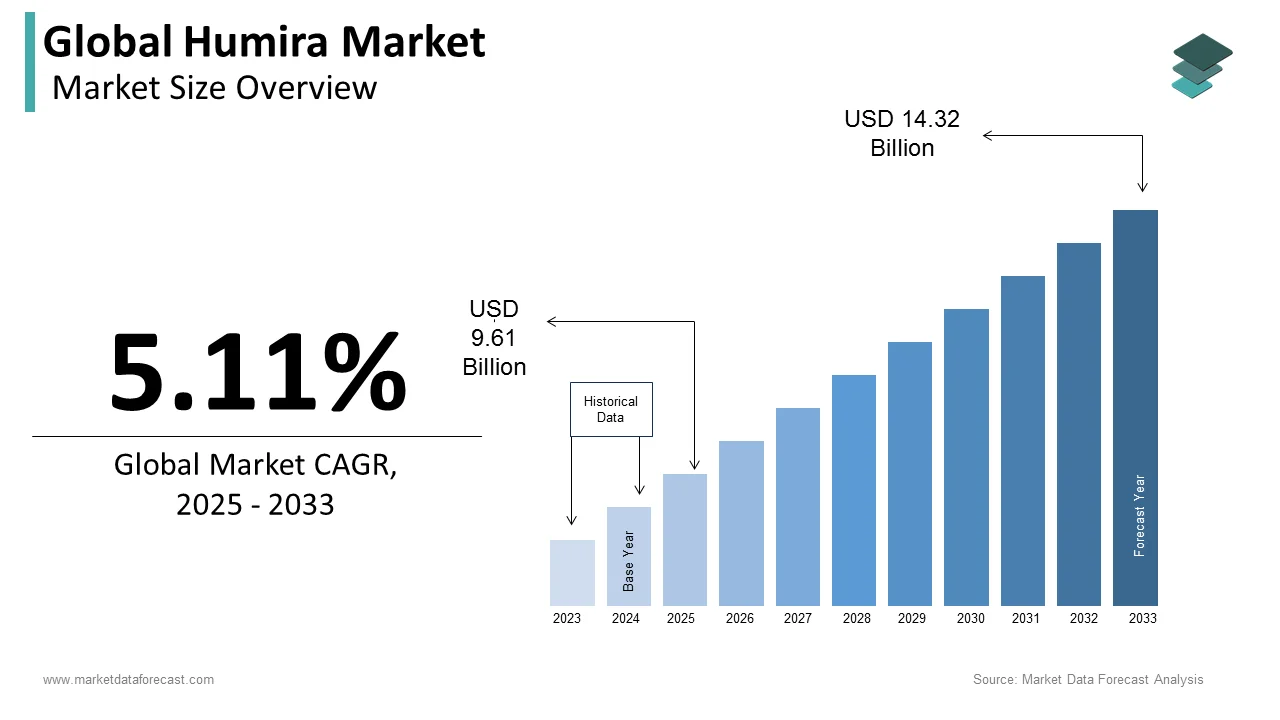
The global Humira market was valued at USD 9.61 billion in 2025, is estimated to reach USD 10.10 billion in 2026, and is projected to reach USD 15.05 billion by 2034, growing at a CAGR of 5.11% from 2026 to 2034. Market growth is driven by the continued demand for biologic therapies in treating autoimmune diseases such as rheumatoid arthritis, psoriasis, and inflammatory bowel disease. Humira (adalimumab) remains one of the most widely prescribed biologics globally due to its proven efficacy and broad range of indications. However, the increasing entry of biosimilars and patent expirations in key markets are reshaping competitive dynamics. Despite this, expanding patient access and growing awareness of biologic treatments are supporting sustained market growth.
Key Market Trends
- Continued demand for biologic therapies in autoimmune diseases.
- Increasing adoption of biosimilars impacting pricing dynamics.
- Expansion of treatment indications for adalimumab.
- Growing focus on patient accessibility and affordability.
- Advancements in self-administration devices such as injection pens.
Segmental Insights
- Based on type, the Humira pen segment dominated the global market by capturing 71.7% share in 2025, driven by ease of use and patient preference for self-administration.
- Based on application, the rheumatoid arthritis segment led the market with 46.4% share in 2025, supported by high disease prevalence and strong clinical adoption.
Regional Insights
The global Humira market is witnessing steady demand across major regions despite increasing competition from biosimilars.
- North America led the market in 2025 with 49.4% share, supported by high biologics adoption and strong healthcare infrastructure.
- Europe holds a significant share, driven by widespread access to biologic therapies and regulatory support for biosimilars.
- Asia-Pacific is expected to grow at a notable rate due to improving healthcare access, rising awareness, and increasing adoption of advanced therapies.
Competitive Landscape
The global Humira market is highly competitive, particularly with the growing presence of biosimilar manufacturers. Market players are focusing on expanding biosimilar portfolios, improving affordability, and enhancing distribution networks to capture market share. Strategic partnerships and regulatory approvals are key factors shaping competition.
Prominent companies operating in the global Humira market include Pfizer, Amgen, Samsung Bioepis, Novartis AG, Boehringer Ingelheim GmbH, Mylan N.V., and AbbVie.
 Download Free Sample Report
Global Humira Market Size
The size of the global Humira market was worth USD 9.61 billion in 2025. The global market is anticipated to grow at a CAGR of 5.11% from 2026 to 2034 and be worth USD 15.05 billion by 2034 from USD 10.10 billion in 2026.
Humira centers on adalimumab, a recombinant human monoclonal antibody that functions as a tumor necrosis factor alpha inhibitor to treat a spectrum of chronic autoimmune conditions. This therapeutic agent has established itself as a cornerstone in managing rheumatoid arthritis, psoriasis, Crohn's disease, and ulcerative colitis by blocking specific inflammatory pathways. The clinical landscape surrounding this medication is defined by its extensive approval history and widespread adoption across global healthcare systems. According to the World Health Organization, autoimmune diseases affect a considerable portion of the population in developed nations, which is creating a baseline demand for effective biologic therapies. As per the Centers for Disease Control and Prevention, arthritis impacts a large number of adults in the United States, with many requiring advanced biological intervention when conventional treatments fail. According to the European Medicines Agency, inflammatory bowel disease prevalence has been rising steadily, with millions of individuals diagnosed across Europe, which is expanding the potential patient pool. Healthcare providers increasingly rely on this molecule due to its proven long term safety profile and versatility in treating multiple indications through a single mechanism of action. The transition from originator dominance to a competitive biosimilar environment marks a pivotal shift, influencing prescribing patterns and accessibility while maintaining the drug's central role in modern immunology.
MARKET DRIVERS
Expanding Indications and Broadening Therapeutic Applications
The continuous expansion of approved clinical indications is primarily driving the Humira market expansion by allowing physicians to utilize a single agent for diverse pathological conditions. Regulatory bodies have progressively authorized its use for additional disorders such as hidradenitis suppurativa, uveitis, and juvenile idiopathic arthritis, thereby capturing patient populations that previously lacked targeted biologic options. According to the American Academy of Dermatology, hidradenitis suppurativa affects a notable portion of the global population, and the approval of adalimumab for this condition opened a new avenue for sufferers seeking relief from chronic skin inflammation. Furthermore, the extension of approvals into pediatric demographics has widened the addressable market, as early intervention becomes critical for preventing long term joint damage in young patients. As per the Arthritis Foundation, children in the United States suffer from different forms of arthritis, and the availability of age-appropriate dosing formulations has facilitated earlier treatment initiation. According to the European Society of Gastrointestinal Endoscopy, the use of anti-TNF agents in moderate to severe ulcerative colitis has become a standard of care, with clinical guidelines recommending their use after corticosteroid failure. This versatility reduces the need for patients to switch between different mechanisms of action, fostering loyalty to the molecule among clinicians who value its comprehensive efficacy profile across multiple organ systems.
Increasing Prevalence of Chronic Autoimmune Disorders Globally
The rising global incidence of chronic autoimmune and inflammatory diseases is further contributing to the Humira market growth worldwide. Environmental factors, genetic predispositions, and improved diagnostic capabilities have collectively contributed to a surge in identified cases requiring advanced immunomodulation. According to the Global Burden of Disease Study, the prevalence of inflammatory bowel disease has increased significantly in Westernized countries since 1990, creating an urgent need for effective maintenance therapies to prevent surgical interventions. As per the National Psoriasis Foundation, millions of Americans live with psoriasis, and a portion of these individuals develop psoriatic arthritis, necessitating systemic treatment to halt disease progression. The aging population in developed regions further exacerbates this trend, as immune system dysregulation often manifests or worsens with age. Data from the Organisation for Economic Co-operation and Development shows that the proportion of citizens aged 65 and older in member countries has been rising, correlating with higher rates of rheumatoid arthritis diagnosis. Additionally, greater awareness among primary care physicians has led to earlier referrals to specialists, ensuring that patients access biologic treatments sooner in their disease course. This demographic and epidemiological shift ensures a steady and growing pipeline of patients eligible for adalimumab therapy.
MARKET RESTRAINTS
Intense Competition from Biosimilars and Patent Expirations
The aggressive entry of biosimilar competitors following the expiration of key patents has eroded the exclusivity and pricing power of the originator product, impeding the growth of the Humira market. Regulatory pathways in the United States and Europe have facilitated the approval of numerous adalimumab biosimilars, leading to immediate price wars and formulary displacements that reduce revenue for the original manufacturer. According to the Food and Drug Administration, multiple adalimumab biosimilars received approval in the United States by early 2024, with many launching at prices lower than the reference product. As per the European Medicines Agency, biosimilars have captured more than 70% of the adalimumab volume in several European markets since their introduction, forcing the originator to offer substantial rebates to retain market share. According to the data from the IQVIA Institute, the shift to biosimilars saved the US healthcare system billions of dollars in 2023, which indicates the economic pressure driving this transition. Consequently, the originator faces diminishing returns on its legacy product and is compelling a strategic pivot toward newer molecules while managing the decline of its flagship asset in an increasingly commoditized landscape.
High Treatment Costs and Reimbursement Barriers
Despite the advent of biosimilars, the overall cost burden associated with biologic therapy remains a substantial restraint for the Humira market expansion, limiting access for uninsured or underinsured patients and triggering stringent reimbursement protocols. Payers frequently implement step therapy requirements, which mandate that patients fail multiple cheaper conventional synthetic disease-modifying antirheumatic drugs before approving coverage for expensive biologics like adalimumab. According to the Kaiser Family Foundation, the average annual cost of biologic drugs in the United States has remained high, creating a financial barrier for individuals with high deductibles or co-payment structures. As per the Commonwealth Fund, a significant portion of Americans reported skipping doses or not filling prescriptions due to cost concerns, which directly impacts adherence rates and clinical outcomes in chronic autoimmune management. In emerging markets, the lack of robust public health funding further restricts availability, confining these treatments to affluent urban populations. According to the data from the World Bank, out-of-pocket health expenditure accounts for a large share of total health spending in many low-income nations, which is making long-term biologic therapy unattainable for the majority of patients. These economic hurdles force clinicians to delay optimal treatment initiation, potentially allowing irreversible disease progression and reducing the total addressable market volume despite clear medical necessity.
MARKET OPPORTUNITIES
Penetration into Emerging Markets with Untapped Patient Pools
Significant growth opportunities exist in expanding access to adalimumab therapies within emerging economies where the prevalence of autoimmune diseases is rising but treatment penetration remains critically low. As healthcare infrastructure improves and government initiatives prioritize non-communicable diseases, millions of previously undiagnosed or untreated patients in regions like the Asia Pacific, Latin America, and Eastern Europe become viable candidates for biologic intervention. According to the International League of Associations for Rheumatology, only a small fraction of rheumatoid arthritis patients in low-income countries currently receive disease-modifying antirheumatic drugs, indicating a vast reservoir of unmet need. As per the World Gastroenterology Organisation, the incidence of inflammatory bowel disease is accelerating in newly industrialized nations, yet access to biologics remains limited by cost and availability constraints. Data from the Global Health Observatory suggests that increasing biologic coverage in these regions could prevent a significant number of disability-adjusted life years annually, providing a strong humanitarian and economic case for expansion. Pharmaceutical companies can leverage partnerships with local distributors and governments to establish supply chains and educational programs that enhance diagnostic rates and treatment adoption, which is unlocking substantial volume growth beyond saturated Western markets.
Development of Advanced Delivery Systems and Patient Support Programs
Innovations in drug delivery mechanisms and comprehensive patient support ecosystems present a lucrative opportunity for the global Humira market. The development of needle-free injection devices, smaller volume formulations, and temperature-stable variants can significantly improve the patient experience, particularly for those with needle phobia or dexterity issues common in elderly arthritis populations. According to the Patient Centered Outcomes Research Institute, simplifying administration methods can increase medication adherence, directly correlating with better clinical outcomes and sustained therapy duration. As per the Biotechnology Innovation Organization, digital health tools such as smart injectors and mobile apps that track dosing schedules and side effects are becoming integral to modern chronic disease management strategies. Data from the Adherence Research Network indicates that patients enrolled in structured support programs demonstrate higher persistence rates compared to those receiving standard care. By focusing on the holistic journey of the patient rather than just the molecule, manufacturers can build brand loyalty and justify premium positioning even amidst price competition.
MARKET CHALLENGES
Complexity of Immunogenicity and Variable Patient Response
The growth of the Humira market is primarily being challenged by the phenomenon of immunogenicity, where patients develop anti-drug antibodies that neutralize the therapeutic effect of adalimumab, which is leading to primary or secondary treatment failure. This biological variability necessitates complex monitoring protocols and often forces clinicians to switch patients to alternative mechanisms of action, disrupting continuity of care and complicating long-term management strategies. According to the American College of Rheumatology, a considerable portion of patients treated with anti-TNF agents develop detectable anti-drug antibodies within the first year of therapy, resulting in diminished efficacy and potential hypersensitivity reactions. As per the European Crohn's and Colitis Organisation, therapeutic drug monitoring has become essential to optimize dosing, yet the lack of standardized assays and high costs associated with regular blood testing limit its widespread implementation in routine practice. Data from the Journal of Allergy and Clinical Immunology highlights that genetic polymorphisms influence drug metabolism and antibody formation, making personalized medicine approaches difficult to scale without advanced biomarker diagnostics. This biological uncertainty challenges the perception of adalimumab as a universal solution and drives the search for more predictable next-generation therapies.
Regulatory Hurdles and Interchangeability Designations
Navigating the complex regulatory landscape regarding biosimilar interchangeability is further challenging the global market expansion. While regulatory agencies approve biosimilars based on similarity, the designation of interchangeable status, which allows pharmacists to substitute without prescriber consent, varies widely across jurisdictions and requires additional clinical data. According to the Food and Drug Administration, only a limited number of adalimumab biosimilars have achieved interchangeable status in the United States as of 2024, which is restricting the automatic substitution potential that drives generic uptake in small molecule markets. As per the European Medicines Agency, decisions on interchangeability are largely delegated to individual member states, resulting in a fragmented European market where substitution policies differ between countries. According to the data from the Generic Pharmaceutical Association, confusion among physicians and pharmacists regarding substitution rules has slowed the adoption rate of biosimilars in certain regions, preserving originator market share longer than anticipated but creating legal risks. The evolving nature of these regulations demands constant vigilance and adaptation, adding layers of administrative burden and strategic complexity to market participation.
REPORT COVERAGE
| REPORT METRIC | DETAILS |
| Market Size Available | 2025 to 2034 |
| Base Year | 2025 |
| Forecast Period | 2026 to 2034 |
| Segments Analysed | By Type, Application, and Region |
| Various Analyses Covered | Global, Regional & Country Level Analysis, Segment-Level Analysis; DROC, PESTLE Analysis; Porter's Five Forces Analysis, Competitive Landscape, Analyst Overview of Investment Opportunities |
| Regions Analysed | North America, Europe, Asia Pacific, Latin America, the Middle East, and Africa |
| Market Leader Profiled | Pfizer, Amgen, Novartis AG, Boehringer Ingelheim GmbH, Mylan N.V., and AbbVie, among others. |
SEGMENTAL ANALYSIS
By Type Insights
The Humira pen segment dominated the market by holding 71.7% of the global market share in 2025. The dominance of Humira pen segment in the global market is driven by the superior patient experience offered by auto-injector devices, which reduce psychological and physical barriers associated with self-administration. The enhanced adherence rates observed when patients utilize hidden-needle technology that minimizes injection anxiety and pain perception further support the dominance of the Humira pen segment in the global market. According to the National Psoriasis Foundation, patients using auto-injectors report reduced injection site pain compared to those using manual syringes, leading to higher persistence in long-term therapy regimens. Furthermore, the ergonomic design of the pen allows for one-handed operation and portability, which is enabling patients to maintain their treatment schedules while traveling or at work without clinical supervision. As per the Arthritis Foundation, a majority of working-age patients prefer the discretion and speed of the pen device, which integrates seamlessly into active lifestyles. The second critical driver is the reduction in administration errors, as the automated mechanism ensures the full dose is delivered consistently. According to the Patient Centered Outcomes Research Institute, medication errors related to incomplete dosing are lower with auto-injectors to ensure optimal therapeutic levels and reduce the risk of disease flare-ups.
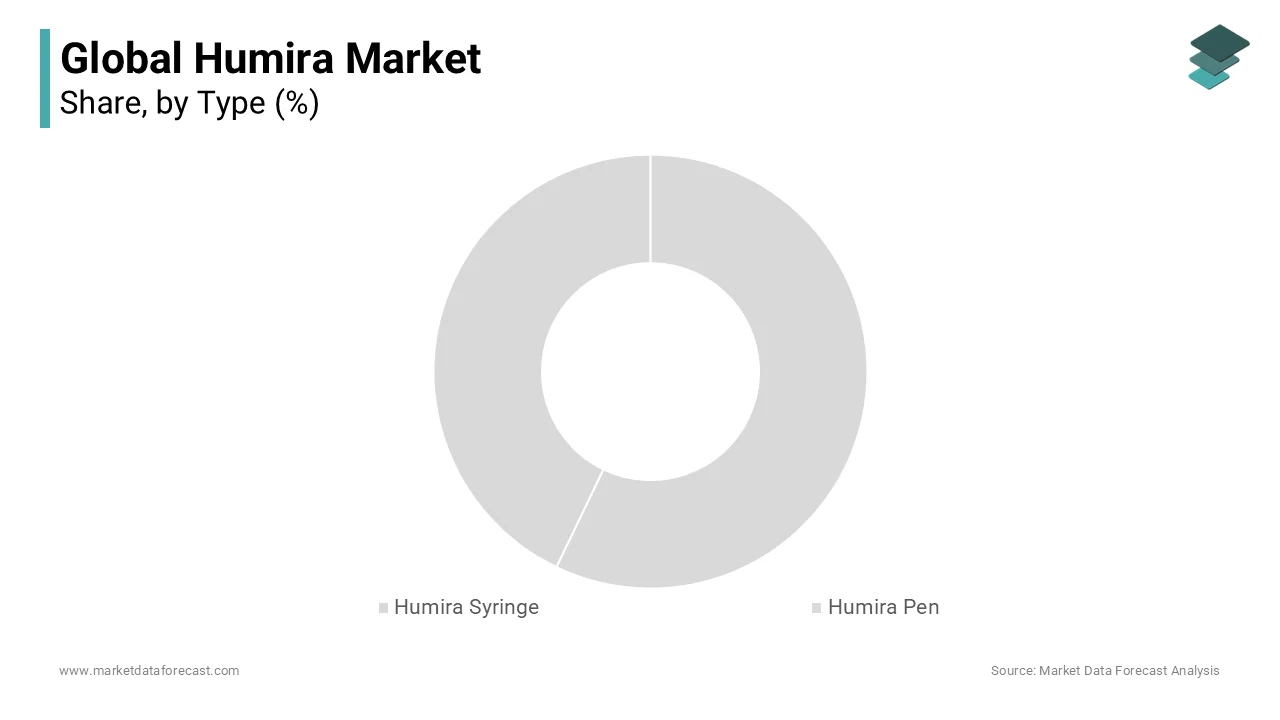
However, the Humira syringe segment is projected to register the highest CAGR of 7.4% over the forecast period owing to the economic pressures and clinical requirements in pediatric and resource-constrained settings. The strategic shift by government health systems and insurance payers in emerging markets toward cost-effective delivery methods to maximize the number of treated patients within fixed budgets is further boosting the growth of the Humira syringe segment in the global market. According to the World Health Organization, public health tenders in developing nations often prioritize syringe-based biologics due to lower unit costs, facilitating broader access for low-income populations. Additionally, the syringe format offers dosing flexibility, which is essential for pediatric populations where weight-based titration is critical for safety and efficacy. As per the European Society for Paediatric Gastroenterology, Hepatology and Nutrition, pediatric rheumatologists prefer syringes for initiating therapy in children under specific weight thresholds, as it allows for precise volume adjustments. The second driving factor is the familiarity and control preferred by hospital nursing staff during induction phases or inpatient care. According to the American Society of Health-System Pharmacists, hospital formularies have seen increased syringe utilization for initial loading doses, as medical professionals value the ability to visually verify the exact volume administered and manage immediate adverse reactions more effectively.
By Application Insights
The rheumatoid arthritis segment led the market by capturing 46.4% of the global market share in 2025 due to the high prevalence of the disease worldwide and the entrenched position of adalimumab as a standard-of-care biologic following the failure of conventional synthetic disease-modifying antirheumatic drugs. The extensive body of clinical evidence confirming the ability of adalimumab to halt radiographic progression and preserve physical function that has solidified its recommendation in major international treatment guidelines further favours the dominance of the rheumatoid arthritis segment in the global market. According to the Global Burden of Disease Study, rheumatoid arthritis affects millions globally, which is creating a vast and stable patient pool that requires lifelong management. Furthermore, the chronic nature of the condition ensures continuous demand, as patients rarely discontinue therapy once a successful response is achieved. As per the American College of Rheumatology, a significant portion of patients treated with anti-TNF agents achieve low disease activity or remission within the first year, reinforcing physician confidence in prescribing adalimumab. The second critical factor is the strong advocacy from patient organizations that have successfully reduced diagnostic delays and increased awareness of early intervention benefits. According to the European League Against Rheumatism, early initiation of biologic therapy reduces the risk of permanent joint damage, prompting healthcare systems to prioritize funding for this indication and ensuring that rheumatoid arthritis remains the cornerstone of the adalimumab market volume.
On the other side, the Crohn's disease segment is anticipated to grow at the fastest CAGR of 10.5% over the forecast period, owing to the rising incidence rates in newly industrialized regions and a paradigm shift toward early aggressive treatment to prevent surgical interventions. The increasing recognition of inflammatory bowel disease as a global health challenge is further boosting the expansion of the Crohn’s disease segment in the global market. According to the World Gastroenterology Organisation, the incidence of Crohn's disease has increased in developing countries, expanding the addressable patient population. The second major driver is the economic and clinical rationale for using adalimumab to induce mucosal healing and avoid costly bowel resection surgeries. As per the Crohn's and Colitis Foundation, patients treated with anti-TNF therapy have a lower risk of requiring surgery compared to those on conventional therapy, resulting in long-term savings for healthcare payers. Furthermore, the approval of adalimumab for maintaining remission in patients who have lost response to other biologics has widened the treatable cohort. According to the European Crohn's and Colitis Organisation, the adoption of top-down treatment strategies where biologics are introduced earlier in the disease course has increased in recent years, driving higher uptake of adalimumab among newly diagnosed patients.
REGIONAL ANALYSIS
North America Humira Market Analysis
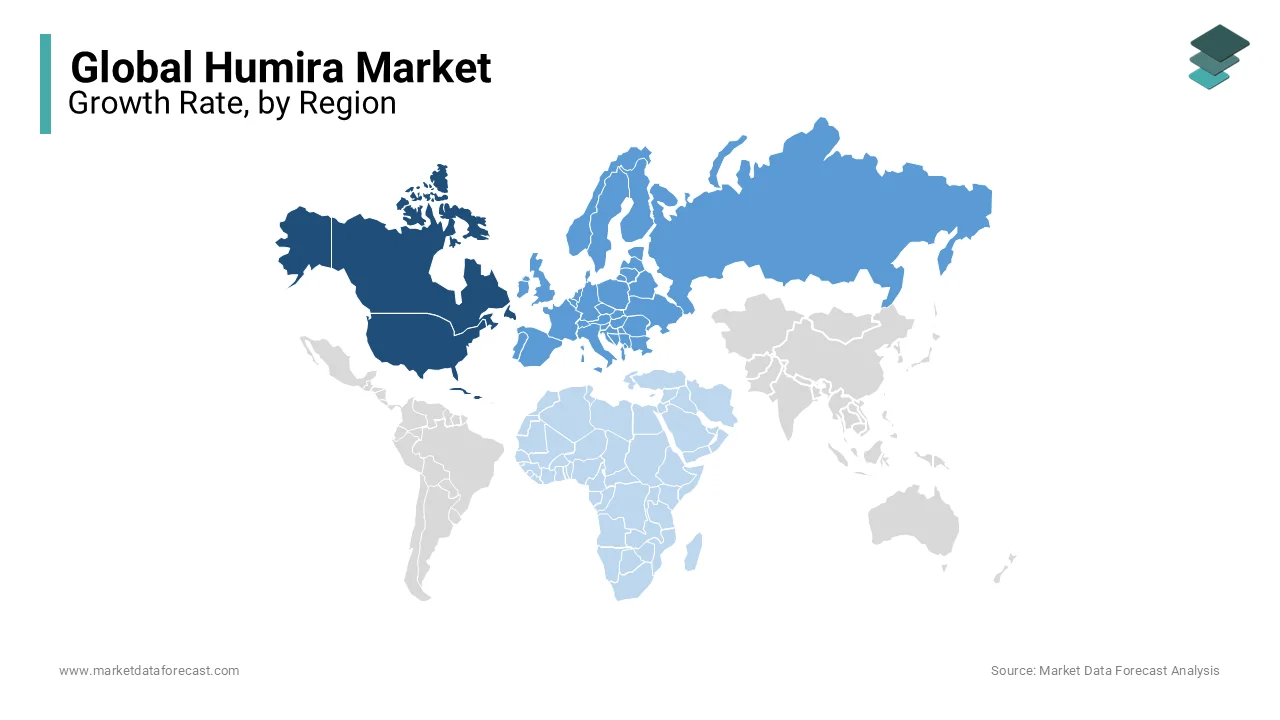
North America held the dominant position in the global Humira market in 2025 with 49.4% of the global market share in 2025. The dominance of North America in the global market is attributed to its advanced healthcare infrastructure and high per capita spending on biologic therapies. The global market is characterized by a mature ecosystem where adalimumab has been the gold standard for two decades, supported by robust reimbursement mechanisms despite recent biosimilar competition. The high prevalence of autoimmune disorders, combined with a healthcare culture that favors early and aggressive intervention with biologics to maintain productivity and quality of life in North America is also driving the dominance of North America in the global market. According to the Centers for Disease Control and Prevention, arthritis impacts a large number of adults in the United States, with many eligible for biologic treatment, creating a massive baseline demand. The second critical driver is the comprehensive insurance coverage provided by both private payers and government programs like Medicare, which historically covered a significant portion of biologic costs, although this is shifting with biosimilar mandates. According to the data from the IQVIA Institute, the US accounted for a substantial share of global biologic sales in 2023, which is driven by high list prices and widespread adoption across multiple indications. Furthermore, the presence of major pharmaceutical headquarters and aggressive marketing campaigns by the originator company has sustained brand loyalty even as biosimilars enter the fray. As per the Food and Drug Administration, the delayed launch of interchangeable biosimilars in the US compared to Europe allowed the originator to maintain dominance longer, cementing North America's position as the volume and value leader.
Europe Humira Market Analysis
Europe had a promising share of the global Humira market in 2025. The growth of Europe in the worldwide market is attributed to its role as the pioneer in biosimilar adoption, which has reshaped the competitive landscape and pricing dynamics. The European market is defined by a fragmented regulatory environment where individual countries have implemented varying degrees of mandatory switching and tendering processes to control healthcare expenditures. The universal healthcare systems prevalent across the continent that prioritize cost-effectiveness and have rapidly integrated biosimilars to treat larger patient populations within fixed budgets is also contributing to the European market expansion. According to the European Medicines Agency, Europe approved the first adalimumab biosimilar in 2018, which is leading to significant price erosion in some markets by 2024, which has stimulated volume growth even as value growth slows. The high prevalence of inflammatory bowel disease and rheumatoid arthritis in Northern and Western European populations, coupled with strict clinical guidelines that mandate biologic use for moderate to severe cases are further propelling the European market expansion. As per the data from the European League Against Rheumatism, treatment rates for rheumatoid arthritis in countries like Germany and Sweden are high, driven by national health policies that view biologics as essential for preventing disability. Furthermore, the cross-border collaboration in health technology assessment through initiatives like EUnetHTA has harmonized evidence requirements, facilitating faster access to new indications. As per the European Commission, the strategic push towards biosimilar usage has saved billions of euros, allowing reinvestment into expanding treatment criteria for earlier disease stages and maintaining Europe's status as a high-volume market.
Asia-Pacific Humira Market Analysis
The Asia-Pacific region is anticipated to account for a prominent share of the global Humira market over the forecast period, owing to the rapid economic growth, improving healthcare access, and a burgeoning middle class increasingly able to afford advanced biologic therapies. The escalating incidence of chronic inflammatory conditions in rapidly urbanizing nations such as China, India, and South Korea, where lifestyle changes and environmental factors are contributing to disease onset, is further propelling the Humira market expansion in this region. According to the Asia Pacific League of Associations for Rheumatology, the prevalence of rheumatoid arthritis in Asia is comparable to Western nations, yet treatment rates have historically been low, presenting a vast untapped potential that is now being realized. The entry of local biosimilar manufacturers who are producing cost-effective versions of adalimumab, which is making treatment accessible to millions who were previously priced out of the market, is further contributing to the Asia-Pacific Humira market expansion. As per the data from the Chinese National Medical Products Administration, the approval of domestic biosimilars has reduced treatment costs significantly, leading to higher patient enrollment in biologic therapy programs since 2022. Furthermore, government health reforms in countries like Japan and Australia have expanded coverage for orphan indications and pediatric uses. As per the World Bank, rising healthcare expenditure in the region is projected to grow steadily, fueling the adoption of premium therapies and positioning Asia-Pacific as the fastest-growing engine for future market expansion.
Latin America Humira Market Analysis
Latin America represents a notable regional segment in the global market and is defined by a dichotomy between sophisticated private healthcare sectors in major urban centers and limited public access in rural areas. A major driving factor is the growing implementation of judicial mandates and regulatory rulings in countries like Brazil and Mexico that compel public health systems to provide high-cost biologic medications to patients who meet clinical criteria. According to the Pan American Health Organization, legal precedents in Brazil have resulted in the state supplying adalimumab to patients who previously lacked access, significantly boosting market volume. The second pivotal factor is the rising prevalence of inflammatory bowel disease and psoriasis in the region, coupled with increasing diagnosis rates due to better medical education and specialist availability. Data from the Brazilian Society of Rheumatology indicates that biologic prescription rates have increased in recent years as more physicians become comfortable managing these therapies. Additionally, the entry of regional biosimilar producers is beginning to lower prices and expand the addressable market beyond the affluent minority. As per the Inter-American Development Bank, healthcare investment in the region is focusing on non-communicable diseases, creating a favorable policy environment for the sustained growth of biologic treatments despite economic volatility.
Middle East and Africa Humira Market Analysis
The Middle East and Africa region is expected to exhibit a steady CAGR in the global Humira market over the forecast period due to the concentrated demand in Gulf Cooperation Council countries and South Africa, while the rest of the continent remains largely underserved. The key driving factor is the high prevalence of consanguinity in certain Middle Eastern populations, which contributes to a higher incidence of genetic and autoimmune disorders, creating a critical need for effective biologic interventions. According to the Arab League for Human Rights and Health, countries like Saudi Arabia and the UAE have invested heavily in specialized rheumatology and gastroenterology centers that offer world-class care, including access to originator biologics. The second major driver is the gradual expansion of government-funded health insurance schemes in nations like Egypt and Nigeria, which are beginning to cover high-cost medications for chronic conditions. Data from the World Health Organization Regional Office for Africa shows that pilot programs in South Africa have successfully integrated biologic therapy into public hospitals, demonstrating feasibility and improving patient outcomes. Furthermore, the arrival of affordable biosimilars from Indian and European manufacturers is starting to penetrate price-sensitive markets. As per the African Union, regional health strategies are increasingly prioritizing non-communicable diseases, laying the groundwork for future growth as economic stability improves and diagnostic capabilities expand across the continent.
COMPETITIVE LANDSCAPE
The competition within the Humira market has shifted dramatically from a monopolistic environment to a highly fragmented landscape characterized by intense price wars and legal battles. The originator faces relentless pressure from a growing cohort of biosimilar manufacturers who offer clinically equivalent products at significantly reduced prices to capture market share. This influx of competitors has eroded profit margins and forced all participants to innovate rapidly in terms of commercial models and patient engagement strategies. Large pharmaceutical corporations leverage their established sales forces and deep payer relationships to defend their positions, while newer entrants compete primarily on cost and interchangeability designations. The regulatory environment plays a pivotal role as varying policies on substitution and tendering across different countries create a complex operational theatre for global players. Legal disputes regarding patent validity and settlement agreements frequently dictate the timing of market entry for biosimilars, leading to uncertainty and strategic manoeuvring. Differentiation now relies heavily on value-added services such as digital health tools and comprehensive care coordination rather than just molecular efficacy. The market sees continuous consolidation as smaller biotech firms partner with industry giants to navigate the high barriers of commercialization and distribution effectively.
KEY MARKET PLAYERS
A few promising companies operating in the global Humira market profiled in this report are
- Pfizer
- Amgen
- Samsung Bioepis
- Novartis AG
- Boehringer Ingelheim GmbH
- Mylan N.V.
- AbbVie
TOP PLAYERS IN THE MARKET
- AbbVie Inc. remains the central figure in the Humira market as the original developer and global marketer of adalimumab. The company has maintained its leadership by continuously expanding the approved indications for the drug to cover a wide array of autoimmune conditions, ranging from rheumatoid arthritis to uveitis. Recently, AbbVie has focused on transitioning patients to its newer biologic agents while simultaneously defending the Humira franchise through complex patent litigation and strategic settlements. The firm actively engages in patient support programs that provide financial assistance and nursing education to ensure high adherence rates globally. Its contribution to the global market includes setting the clinical standard for tumor necrosis factor inhibitors and establishing robust supply chains that deliver the medication to over one hundred countries. By investing heavily in real-world evidence studies, AbbVie continues to demonstrate the long-term safety and efficacy of its flagship product to healthcare providers and payers worldwide.
- Boehringer Ingelheim has emerged as a formidable competitor in the Humira market through the development and commercialization of Cyltezo, a leading biosimilar version of adalimumab. The company leveraged its extensive experience in biologics manufacturing to create a product that demonstrated equivalent efficacy and safety to the originator in rigorous clinical trials. Recent actions include securing interchangeable status in key markets like the United States, which allows pharmacists to substitute the product without prescriber intervention. Boehringer Ingelheim has formed strategic partnerships with major distributors and pharmacy benefit managers to ensure broad formulary access and competitive pricing. Their global contribution involves increasing the overall availability of affordable biologic therapies, thereby reducing the financial burden on healthcare systems and patients. The firm continues to expand its geographic footprint by launching the biosimilar in emerging markets where cost sensitivity drives demand for high-quality, lower-priced alternatives to the original molecule.
- Samsung Bioepis has established a significant presence in the Humira market with its biosimilar candidate, known as SB5 or Imraldi, in various regions. The company utilizes advanced bioprocessing technologies to produce a highly similar version of adalimumab that meets stringent regulatory standards set by agencies such as the European Medicines Agency and the Food and Drug Administration. Recent strategic moves involve collaborating with global pharmaceutical partners like Biogen to leverage established commercial networks for rapid market penetration across Europe and North America. Samsung Bioepis focuses on demonstrating the economic value of its product to payers while maintaining high-quality standards that reassure clinicians and patients. Its contribution to the global market includes fostering competition that drives down prices and increases access to life-changing treatments for patients with chronic inflammatory diseases. The company continues to invest in capacity expansion to meet the growing global demand for biosimilars as more patents expire and healthcare systems seek cost-effective solutions.
TOP STRATEGIES USED BY KEY MARKET PARTICIPANTS
Key players in the Humira market primarily focus on aggressive litigation strategies to protect intellectual property rights and delay the entry of competing biosimilar products for as long as possible. Companies invest heavily in developing next-generation biologic therapies with novel mechanisms of action to migrate existing patients away from adalimumab before patents fully expire. Strategic partnerships with pharmacy benefit managers and insurance providers are essential to secure favorable formulary placements and maintain reimbursement levels amidst rising competition. Manufacturers also deploy extensive patient support programs that offer copay assistance and nurse navigation services to enhance brand loyalty and improve medication adherence rates. Expanding into emerging markets where biosimilar penetration is still low represents a crucial growth avenue for sustaining revenue streams. Firms increasingly utilize real-world data to prove the superior long-term outcomes of their specific formulations compared to newer biosimilars. Additionally, companies explore licensing agreements and co-promotion deals to share commercial risks and maximize geographic coverage without incurring prohibitive infrastructure costs.
MARKET SEGMENTATION
This research report on the global Humira market has been segmented and sub-segmented based on type, application, and region.
By Type
- Humira Syringe
- Humira Pen
By Application
- Ankylosing Spondylitis
- Rheumatoid Arthritis
- Crohn's Disease
- Others
By Region
- North America
- Europe
- Asia Pacific
- Latin America
- Middle East
- Africa