- Product Description Description
- Table of Contents TOC
- List of Table & Figure LOT
- Get Free Sample PDF Sample PDF
Market Size, 2025
$11.96 BnMarket Estimate, 2026
$12.85 BnMarket Forecast, 2034
$22.83 BnCAGR, 2026–2034
7.45%Global Laparoscopy Devices Market Report Summary
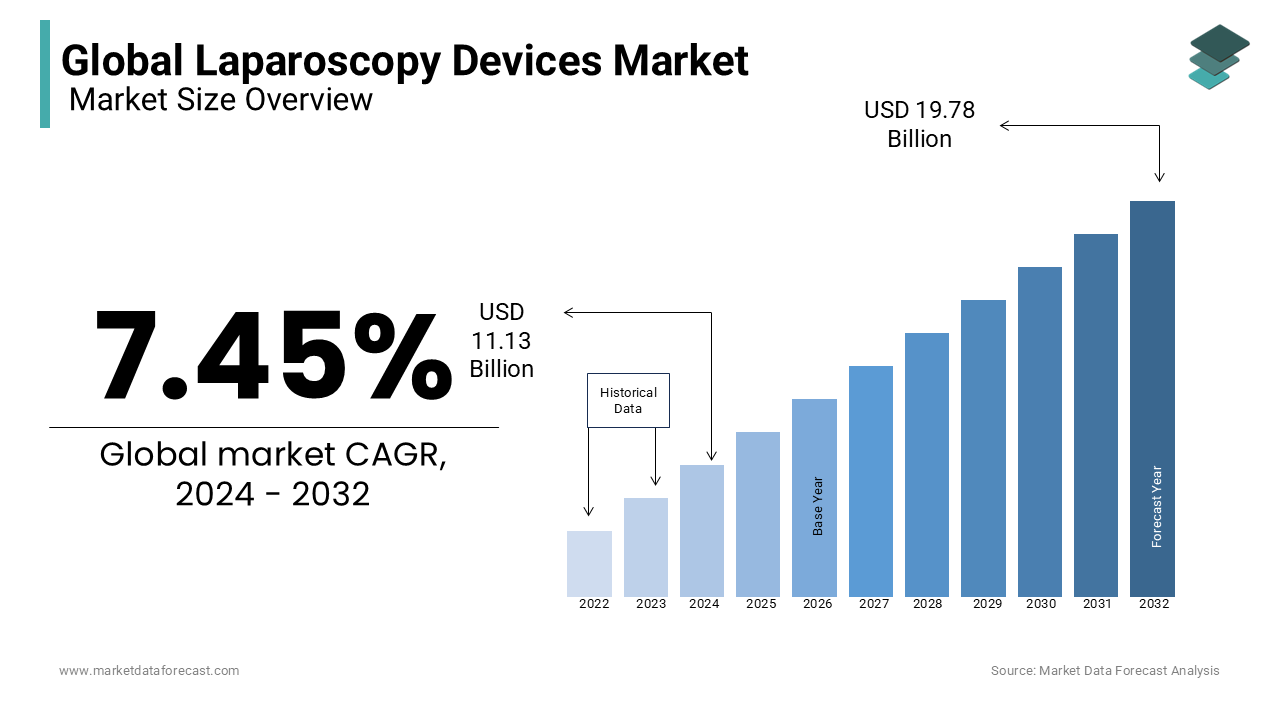
The Global Laparoscopy Devices Market was valued at USD 11.96 Bn in 2025, is estimated to reach USD 12.85 Bn in 2026, and is projected to reach USD 22.83 Bn by 2034, growing at a CAGR of 7.45% during the forecast period from 2026 to 2034. The growth of the global laparoscopy devices market is driven by the increasing prevalence of chronic diseases requiring surgical intervention, growing preference for minimally invasive procedures, and continuous advancements in imaging and robotic-assisted surgical technologies. Rising healthcare investments, expanding access to advanced surgical care, and increasing adoption of AI-enabled visualization systems are further accelerating market expansion. Additionally, the growing demand for faster recovery, reduced hospital stays, and improved surgical outcomes continues to strengthen the global laparoscopy devices market.
Key Market Trends
- Increasing adoption of robotic-assisted laparoscopic surgery across multiple specialties.
- Growing integration of artificial intelligence and augmented reality into surgical workflows.
- Rising preference for minimally invasive procedures with shorter recovery times.
- Expansion of single-use and flexible laparoscopic instruments to improve infection control.
- Increasing investments in healthcare infrastructure across emerging economies.
Segmental Insights
- Based on product type, the laparoscopes segment accounted for 32.4% of the global laparoscopy devices market share in 2025. The segment’s dominance is attributed to the essential role of laparoscopes in minimally invasive procedures, increasing demand for high-definition imaging systems, and widespread adoption across multiple surgical specialties.
- The robotic-assisted surgical systems segment is projected to witness the fastest growth during the forecast period, registering a CAGR of 12.5%. The growth is driven by expanding applications in general, thoracic, bariatric, and urological surgeries, along with increasing demand for enhanced surgical precision and improved patient outcomes.
- Based on therapeutic application, the general surgery segment held the largest share of the global laparoscopy devices market in 2025, owing to the high volume of laparoscopic procedures such as cholecystectomy and hernia repair. The bariatric surgery segment is expected to witness the fastest growth, registering a CAGR of 9.8%, supported by the rising global prevalence of obesity and increasing demand for minimally invasive weight-loss surgeries.
- Based on end users, the hospitals segment accounted for 42.1% of the global laparoscopy devices market share in 2025 due to advanced surgical infrastructure, high procedural volumes, and greater investment in robotic surgical systems. Meanwhile, the ambulatory surgical centers (ASCs) segment is projected to witness the fastest growth, registering a CAGR of 8.5%, driven by the growing shift toward outpatient surgical procedures and cost-effective healthcare delivery.
Regional Insights
The global laparoscopy devices market is witnessing significant growth across all major regions, driven by increasing demand for minimally invasive surgery, healthcare modernization, and technological advancements.
- North America dominated the global laparoscopy devices market by accounting for 40.3% of the global market share in 2025. The region's leadership is supported by advanced healthcare infrastructure, widespread adoption of robotic-assisted surgery, favorable reimbursement policies, and strong investments in innovative surgical technologies.
- Europe accounted for 32.1% of the market share in 2025, driven by universal healthcare systems, stringent medical device regulations, growing bariatric procedures, and increasing adoption of minimally invasive surgical techniques.
- Asia-Pacific is projected to witness the fastest growth during the forecast period, supported by rapid healthcare infrastructure development, expanding medical tourism, increasing healthcare expenditure, and rising adoption of laparoscopic surgery across China, India, Japan, and South Korea.
- Latin America continues to experience steady market growth owing to expanding private healthcare facilities, increasing bariatric surgeries, growing medical tourism, and improving access to minimally invasive surgical procedures.
- The Middle East & Africa is also witnessing increasing adoption, supported by government investments in healthcare modernization, medical tourism initiatives, expanding surgical infrastructure, and growing awareness of minimally invasive surgical benefits.
Competitive Landscape
The global laparoscopy devices market is highly competitive, with multinational medical device manufacturers focusing on robotic-assisted surgery, AI-powered visualization systems, advanced imaging technologies, disposable surgical instruments, and digital surgical platforms. Companies are strengthening their market positions through continuous product innovation, strategic partnerships, surgeon training programs, acquisitions, and expansion into emerging healthcare markets. Growing investments in precision surgery and minimally invasive technologies continue to intensify competition across the global laparoscopy devices market. Prominent players in the global laparoscopy devices market include Boston Scientific Corporation, Karl Storz, ConMed, Aesculap, Covidien, Olympus, Intuitive Surgical, Stryker, Medtronic, B. Braun Melsungen AG, Ethicon US LLC, and Smith & Nephew.
Global Laparoscopy Devices Market Size
The global laparoscopy devices market size was valued at USD 11.96 billion in 2025. The global laparoscopy devices market is forecasted to be worth USD 22.83 billion by 2034 from USD 12.85 billion in 2025, witnessing a CAGR of 7.45% from 2026 to 2034.
The laparoscopy devices are medical instruments and imaging systems designed to facilitate minimally invasive surgical procedures within the abdominal and pelvic cavities. These devices include trocars insufflators cameras light sources and energy-based instruments that allow surgeons to perform complex operations through small incisions, thereby reducing patient trauma and recovery time. The technology has evolved from simple diagnostic tools to advanced robotic assisted platforms enabling precision in oncology gynecology and general surgery. According to the World Health Organization, approximately 234 million major surgical procedures are performed globally each year with a significant proportion shifting toward minimally invasive techniques due to improved clinical outcomes. As per the Centers for Disease Control and Prevention, the average hospital stay for laparoscopic cholecystectomy is less than 2 days compared to 5 to 7 days for open surgery highlighting the efficiency gains driving adoption. Regulatory bodies such as the Food and Drug Administration enforce strict standards for device sterilization and safety ensuring high quality care. The integration of high-definition visualization and artificial intelligence is transforming surgical workflows by enhancing depth perception and decision making. Healthcare systems worldwide are prioritizing these technologies to reduce bed occupancy rates and lower overall treatment costs.
MARKET DRIVERS
Rising Prevalence Of Chronic Diseases Requiring Surgical Intervention Drives Demand
The escalating global burden of chronic conditions, such as obesity gallstones and gastrointestinal disorders, where laparoscopy is the preferred approach due to its minimally invasive nature. Obesity rates have reached epidemic proportions creating a surge in bariatric surgeries, which are predominantly performed using laparoscopic techniques to ensure patient safety and faster recovery. According to the study, global obesity has nearly tripled since 1975 with over 650 million adults classified as obese in recent years leading to increased demand for weight loss surgeries. Similarly, the high incidence of cholelithiasis affects approximately 10 to 15% of the adult population in developed nations requiring cholecystectomy, which is now standardly performed via laparoscopy. The aging population further contributes to this demand, as older adults are more susceptible to hernias and colorectal cancers that require surgical correction. Laparoscopic methods reduce the risk of postoperative complications such as infections and adhesions, which are concerns for elderly patients with comorbidities. Hospitals are investing in advanced laparoscopic towers and instruments to handle this growing volume efficiently.
Technological Advancements In Imaging And Robotic Integration Enhance Surgical Precision
The continuous innovation in visualization technologies and the integration of robotic assistance are significantly propelling the growth of the laparoscopy devices market. High definition and three dimensional imaging systems provide surgeons with enhanced depth perception and clarity allowing for precise dissection in confined anatomical spaces. The installation base of robotic surgical systems continues to grow with thousands of procedures performed annually demonstrating the seamless integration of robotics with laparoscopic principles. These advancements enable surgeons to perform intricate tasks, such as nerve sparing prostatectomies and complex reconstructive surgeries with greater confidence and reduced error rates. The development of flexible endoscopes and single port access devices further minimizes scarring and pain appealing to cosmetically conscious patients. Artificial intelligence algorithms are being incorporated to provide real time tissue recognition and navigation assistance enhancing safety. Medical training programs are increasingly focusing on these advanced technologies ensuring that the next generation of surgeons is proficient in their use.
MARKET RESTRAINTS
High Capital Investment And Maintenance Costs Restrict Adoption In Resource Limited Settings
The substantial financial outlay required for acquiring advanced laparoscopic systems and the ongoing costs associated with maintenance and disposable instruments is degrading the growth of the laparoscopy devices market. A complete laparoscopic tower including camera processor light source and monitor can cost between 50000 and 150000 United States dollars which is prohibitive for many small hospitals and clinics. The healthcare expenditure in low income countries averages less than 50 United States dollars per capita limiting the ability of public health facilities to invest in expensive surgical equipment, as per the recent study. Additionally, the reliance on proprietary disposable instruments such as staplers and energy devices increases the cost per procedure making it less affordable for patients without comprehensive insurance coverage. Budget constraints force healthcare administrators to prioritize essential services over advanced surgical technologies resulting in uneven access to care. The lack of reimbursement policies for certain laparoscopic procedures in some jurisdictions further discourages investment. These economic factors restrict the widespread adoption of laparoscopy devices creating a disparity in surgical care quality between wealthy and resource constrained healthcare systems.
Steep Learning Curve And Need For Specialized Training Impede Widespread Utilization
The complexity of laparoscopic surgery requires a distinct set of psychomotor skills that differ significantly from open surgery leading to a steep learning curve that is limiting the growth of the laparoscopy devices market. Mastery of hand eye coordination depth perception and instrument manipulation in a two-dimensional visual field takes considerable time and practice. The shortage of structured simulation training programs in many medical schools results in inadequate preparation for trainees increasing the risk of intraoperative errors. The transition to robotic laparoscopy adds another layer of complexity requiring additional certification and proctoring. Hospitals face challenges in providing consistent training opportunities due to limited operating room availability and high costs of simulation equipment. This skills gap leads to variability in surgical outcomes and prolongs operative times during the initial learning phase. Surgeons who are experienced in open techniques may be reluctant to switch due to the perceived difficulty and potential for complications.
MARKET OPPORTUNITIES
Expansion Into Emerging Markets With Improving Healthcare Infrastructure Presents Growth Potential
The rapid development of healthcare infrastructure in emerging economies is ascribed to create new opportunities for the growth of the laparoscopy devices market. Governments in these regions are investing heavily in modernizing hospitals and establishing specialty surgical centers to meet the growing demand for quality healthcare. The initiatives, such as the Ayushman Bharat scheme aim to provide universal health coverage, including surgical services driving the adoption of cost effective laparoscopic solutions. Local manufacturing hubs are emerging to produce affordable laparoscopic instruments reducing dependency on imports and lowering costs for domestic providers. International device manufacturers are forming partnerships with local distributors to navigate regulatory landscapes and tailor products to regional needs. The rising middle class in these countries has greater access to private insurance enabling them to afford minimally invasive surgeries. Medical tourism is also booming in destinations like Thailand and Mexico, attracting patients seeking high quality laparoscopic care at competitive prices.
Integration Of Artificial Intelligence And Augmented Reality Enhances Diagnostic And Therapeutic Capabilities
The incorporation of artificial intelligence and augmented reality improve surgical planning execution and postoperative analysis that is also to promote new opportunities for the growth of the laparoscopy devices market. AI algorithms can analyze preoperative imaging data to create detailed three-dimensional maps of patient anatomy aiding in precise instrument navigation and risk assessment. The augmented reality overlays can project vital signs and anatomical landmarks directly onto the surgeon’s visual field enhancing situational awareness during complex procedures. These technologies facilitate telesurgery allowing experts to guide less experienced surgeons remotely thereby democratizing access to specialized care. Data collected from AI enabled devices can be used to develop predictive models for patient outcomes optimizing resource allocation and personalized care plans. Regulatory agencies are beginning to establish frameworks for approving AI based medical devices encouraging innovation. Companies that integrate these digital tools into their laparoscopic platforms can differentiate themselves in a competitive market.
MARKET CHALLENGES
Risk Of Cross Contamination And Strict Sterilization Requirements Pose Operational Challenges
The intricate design of laparoscopic instruments with narrow lumens and moving parts makes them difficult to clean and sterilize thoroughly posing a significant risk of cross contamination and surgical site infections. The risk of cross contamination and strict sterilization requirements is a big challenge for the growth of the laparoscopy devices market. Residual biological material can harbor pathogens leading to outbreaks that compromise patient safety and hospital reputation. According to the Centers for Disease Control and Prevention, surgical site infections affect approximately 2 to 5% of patients undergoing inpatient surgery resulting in extended hospital stays and increased healthcare costs. The reusable laparoscopic devices require rigorous validation of cleaning protocols, which is often challenging in high volume settings with limited staffing. The transition to single use devices mitigates this risk but generates substantial medical waste and increases procedural costs raising environmental and economic concerns. Regulatory bodies, such as the Food and Drug Administration have issued warnings regarding the reprocessing of certain laparoscopic instruments emphasizing the need for strict adherence to manufacturer guidelines. Hospitals must invest in advanced sterilization equipment and trained personnel to ensure compliance, which adds to operational complexity.
Reimbursement Policies And Regulatory Hurdles Limit Market Accessibility
The inconsistent reimbursement policies and stringent regulatory approval processes across different jurisdictions is also to hinder the growth of the laparoscopy devices market. Payers often hesitate to cover the higher costs associated with advanced laparoscopic procedures compared to traditional open surgeries unless clear clinical benefits are demonstrated. The variations in Medicare reimbursement rates for laparoscopic versus open procedures influence hospital decisions on technology adoption leading to unequal access for patients. Small and medium sized enterprises may struggle to meet these regulatory demands limiting innovation and competition. In developing countries, the lack of standardized coding for laparoscopic procedures complicates billing and reimbursement discouraging providers from offering these services. The uncertainty surrounding coverage for robotic assisted laparoscopy further restricts its utilization despite proven benefits. Manufacturers must navigate a complex web of local and international regulations which requires substantial legal and regulatory expertise.
REPORT COVERAGE
| REPORT METRIC | DETAILS |
| Market Size Available | 2025 to 2034 |
| Base Year | 2025 |
| Forecast Period | 2026 to 2034 |
| Segments Covered | By Product Type, Therapeutic Application, End Users, and Region |
| Various Analyses Covered | Global, Regional & Country Level Analysis, Segment-Level Analysis; DROC; PESTLE Analysis; Porter’s Five Forces Analysis, Competitive Landscape; Analyst Overview of Investment Opportunities |
| Regions Covered | North America, Europe, APAC, Latin America, Middle East & Africa |
| Market Leaders Profiled | Boston Scientific Corporation, Karl Storz, ConMed, Aesculap, Covidien, Olympus, Intuitive Surgical, Stryker, Medtronic, B. Braun Melsungen AG, Ethicon US LLC, and Smith & Nephew. |
SEGMENTAL ANALYSIS
By Product Type Insights
The laparoscopes segment was the largest by holding 32.4% of the laparoscopy devices market share in 2025 by enabling surgeons to navigate internal anatomy with precision. The universal requirement for visualization in all laparoscopic surgeries ensures that laparoscopes remain the most frequently utilized and replaced product type. Every minimally invasive procedure regardless of specialty requires a high-quality camera system to guide surgical instruments. The durability of these devices is limited by repeated sterilization cycles necessitating regular replacement, which drives consistent recurring revenue. Hospitals maintain large inventories of laparoscopes to ensure availability for emergency and elective cases. The transition from rigid to flexible and single use laparoscopes further expands the product variety and volume.
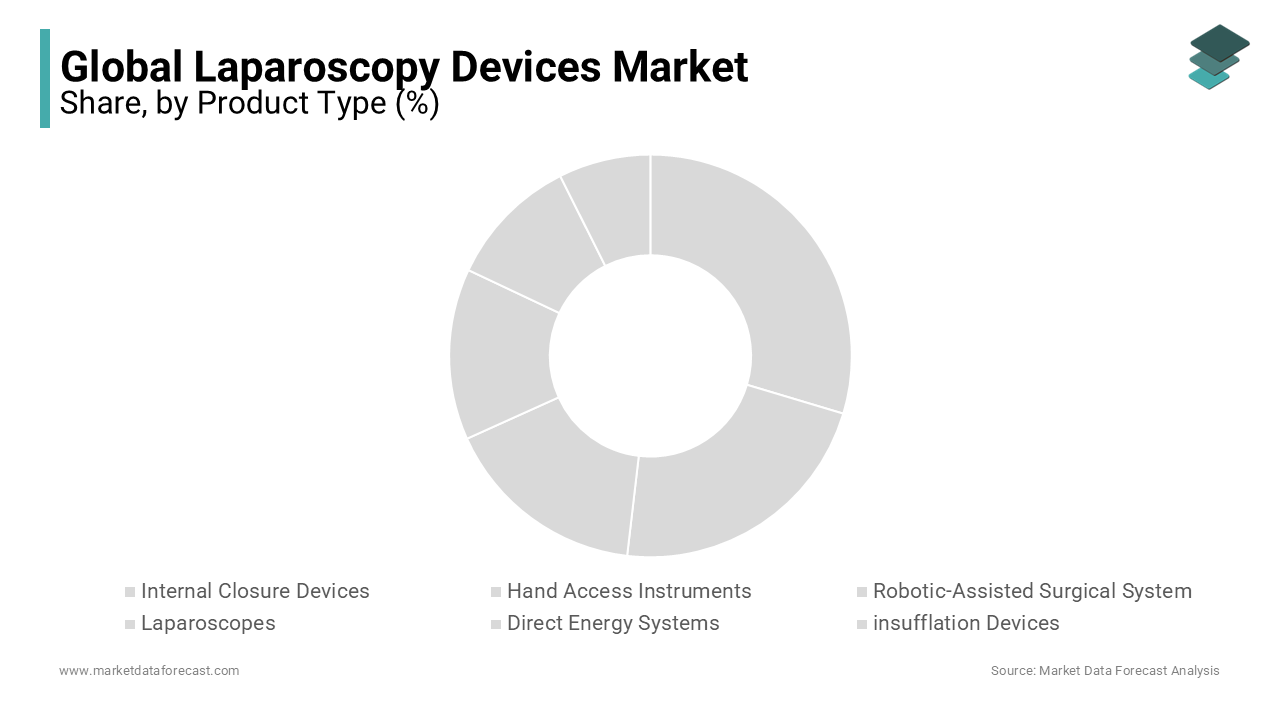
The robotic assisted surgical systems segment is likely to grow at a fastest CAGR of 12.5% from 2026 to 2034. The broadening scope of robotic assisted surgery into general thoracic and head and neck procedures is accelerating the growth of this segment as surgeons recognize the benefits of enhanced dexterity and precision. Initially confined to prostatectomies and hysterectomies robotic systems are now routinely used for lung resections esophagectomies and complex hernia repairs. The robotic assisted lobectomies have shown lower conversion rates to open surgery and shorter hospital stays compared to video assisted thoracic surgery. This clinical evidence encourages hospitals to invest in robotic platforms to attract top surgical talent and offer advanced care options. The ability of robotic arms to mimic human wrist movements with greater range of motion allows for intricate maneuvers in confined spaces. Training programs are expanding to certify more surgeons in robotic techniques further driving adoption. The versatility of these systems across multiple specialties maximizes their utilization rate and return on investment for healthcare facilities.
By Therapeutic Application Insights
The general surgery segment held a prominent share of the laparoscopy devices market in 2025 due to the high volume of common procedures. The sheer frequency of general surgical procedures, such as gallbladder removal and hernia repair, ensures that general surgery remains the largest application segment for laparoscopy devices. Cholecystectomy is one of the most common abdominal surgeries worldwide with millions performed annually. Cholecystectomies are performed in the United States each year with the vast majority utilizing laparoscopic methods. The standardization of laparoscopic techniques for these procedures has made them the gold standard of care. Hospitals require robust supplies of trocars graspers and energy devices to support this high throughput. The routine nature of these surgeries ensures consistent device usage and replacement.
The bariatric surgery segment is expected to grow at a fastest CAGR of 9.8% from 2026 to 2034 owing to the rising prevalence of obesity worldwide has created an urgent need for effective interventions leading to a surge in bariatric surgeries, which are predominantly performed laparoscopically. Obesity is a major risk factor for diabetes heart disease and cancer prompting patients to seek surgical solutions. Laparoscopic sleeve gastrectomy and gastric bypass are the most common procedures offering significant weight loss and resolution of comorbidities. The minimally invasive approach reduces the risk of wound complications, which is for obese patients. Insurance coverage for bariatric surgery is expanding recognizing its long-term cost effectiveness in managing chronic diseases. This growing patient pool drives rapid adoption of specialized bariatric laparoscopic instruments such as long trocars and staplers.
By End Users Insights
The hospitals segment was the largest by occupying 42.1% of the laparoscopy devices market share in 2025. Hospitals are equipped with state of the art operating rooms intensive care units and multidisciplinary teams necessary for handling complex laparoscopic procedures and potential complications. This comprehensive setup allows them to perform high risk surgeries, such as cancer resections and organ transplants that require extensive support. According to the American Hospital Association there are over 5000 community hospitals in the United States each performing thousands of surgical procedures annually. The accreditation standards require hospitals to maintain rigorous safety and quality protocols, which build patient trust and drive volume. The presence of specialized surgeons anesthesiologists and nursing staff ensures optimal outcomes for laparoscopic patients. Hospitals can absorb the high capital costs of robotic systems and advanced imaging towers due to their larger budgets and reimbursement rates. They serve as referral centers for complex cases consolidating demand for high end laparoscopy devices.
The ambulatory surgical centers segment is projected to grow at a fastest CAGR of 8.5% during the forecast period. The healthcare industry is increasingly shifting procedures from inpatient hospitals to ambulatory surgical centers to reduce costs and improve efficiency. Payers and governments incentivize this shift by offering higher reimbursement rates or lower copays for outpatient procedures. Laparoscopic procedures such as cholecystectomy and hernia repair are ideal for ASCs due to short recovery times and low complication rates. Patients prefer ASCs for their convenience personalized care and lower risk of hospital acquired infections. This preference drives migration of suitable cases away from hospitals. ASCs invest in efficient laparoscopic setups to maximize throughput and profitability. This structural shift in care delivery fuels rapid growth in this segment.
REGIONAL ANALYSIS
North America Laparoscopy Devices Market Analysis
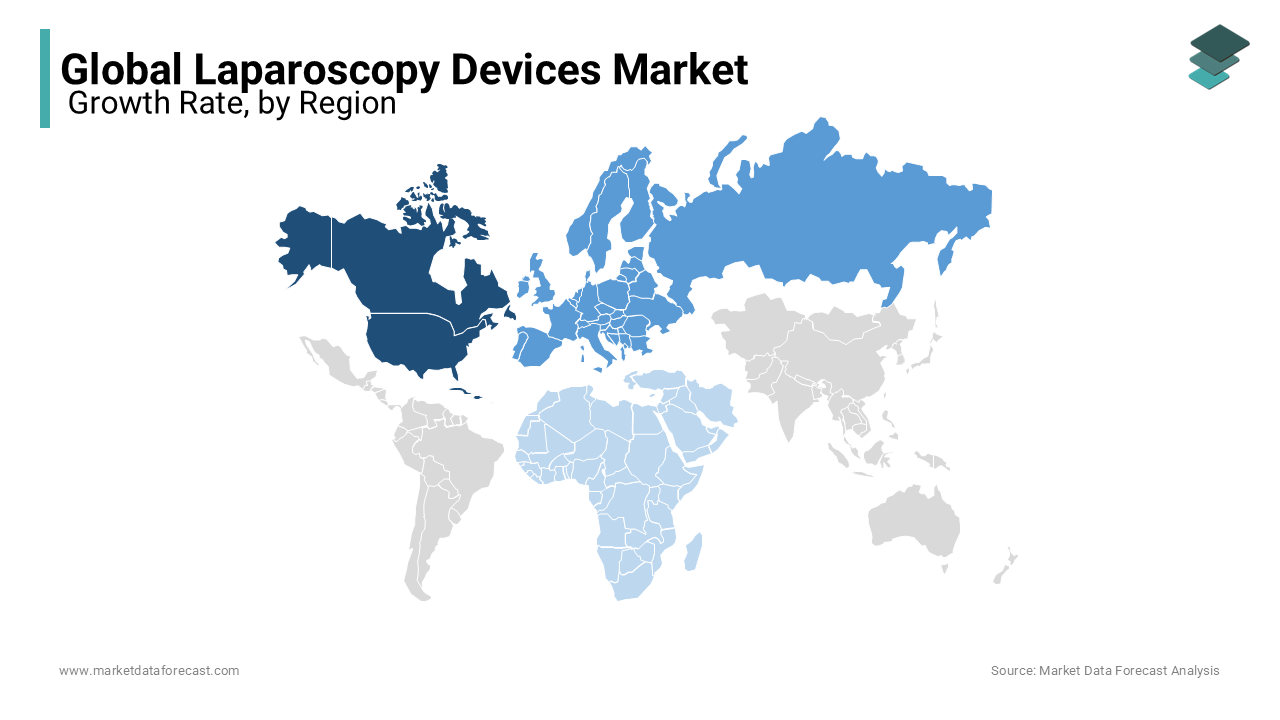
North America was the top performer in the global laparoscopy devices market by holding 40.3% of share in 2025 with the advanced healthcare infrastructure high adoption of robotic surgery and favorable reimbursement policies. The United States was the largest contributor of the laparoscopy devices market in this region. Medicare covers a wide range of laparoscopic procedures encouraging widespread adoption. The United States has the highest density of robotic surgical systems globally facilitating complex laparoscopic interventions. Canada also contributes with its universal healthcare system supporting equitable access to surgical care. The region benefits from strong regulatory frameworks ensuring device safety and efficacy. High healthcare expenditure allows for investment in cutting edge technologies.
Europe Laparoscopy Devices Market Analysis
Europe was ranked second in the laparoscopy devices market by holding 32.1% of share in 2025 with the stringent regulatory standards universal healthcare coverage and a strong focus on cost effective minimally invasive treatments. Countries like Germany, France, and the United Kingdom, are key markets with well-established surgical traditions. The Medical Device Regulation ensures high quality and safety standards for laparoscopic equipment. Initiatives to reduce waiting lists have increased the volume of day case laparoscopic surgeries. The region has a high prevalence of lifestyle diseases driving demand for bariatric and gastrointestinal surgeries. Government funding supports the adoption of robotic systems in major hospitals. Cross border collaboration facilitates knowledge sharing and best practices. Eastern European countries are emerging markets with increasing investment in healthcare infrastructure.
Asia Pacific Laparoscopy Devices Market Analysis
Asia Pacific laparoscopy devices market is deemed to grow at a fastest CAGR in coming years with the rapid economic development expanding healthcare infrastructure and rising medical tourism. Countries like China, India, Japan, and South Korea are leading the growth of the market. According to the study, healthcare spending in the region is growing at double digit rates enabling hospitals to purchase advanced surgical equipment. Government schemes are increasing access to affordable laparoscopic surgeries for the masses. Japan has a highly aging population driving demand for minimally invasive procedures with faster recovery. China is investing heavily in domestic manufacturing of medical devices reducing costs. Medical tourism in Thailand and Singapore attracts international patients seeking high quality laparoscopic care. The large population base offers immense growth potential.
Latin America Laparoscopy Devices Market Analysis
Latin America laparoscopy devices market growth is likely to grow with the improving healthcare access growing middle class and increasing adoption of minimally invasive techniques in private hospitals. The efforts to strengthen primary and secondary care are expanding surgical capacity in the region. As per the Brazilian Ministry of Health, public private partnerships are facilitating the acquisition of laparoscopic equipment for state hospitals. The rising prevalence of obesity and chronic diseases drives demand for bariatric and general surgeries. Private insurance coverage is expanding allowing more patients to afford advanced procedures. Medical tourism is growing in countries like Costa Rica and Mexico. Local distributors are partnering with global manufacturers to improve supply chain efficiency.
Middle East And Africa Laparoscopy Devices Market Analysis
The Middle East and Africa laparoscopy devices market growth is driven by government investments in healthcare modernization and medical tourism in Gulf countries. The United Arab Emirates Saudi Arabia and South Africa are the primary contributors. As per the Saudi Vision 2030 initiative the kingdom is building world class medical cities equipped with advanced surgical technologies. South Africa has a well-developed private healthcare sector that adopts latest laparoscopic techniques. The rest of Africa faces challenges related to infrastructure and funding but NGOs and international aid are improving access to basic surgical care. Rising awareness of minimally invasive benefits is driving demand in urban centers. Local training programs are increasing the number of skilled surgeons.
COMPETITIVE LANDSCAPE
The competition in the global laparoscopy devices market is characterized by intense rivalry between established medical technology giants and emerging innovators specializing in robotic and digital surgical solutions. Large multinational corporations leverage their extensive product portfolios global distribution networks and strong brand recognition to maintain dominance in traditional laparoscopic instruments. However, they face increasing pressure from specialized companies that offer advanced robotic platforms and artificial intelligence driven visualization tools. Price competition is moderate in premium segments, where clinical efficacy and technological superiority drive purchasing decisions but intensifies in commodity items like trocars and graspers. Regulatory compliance and patent protection serve as significant barriers to entry protecting incumbent players while challenging smaller firms. Mergers and acquisitions are common strategies used to acquire innovative technologies and expand geographic reach. Customer loyalty is influenced by surgeon preference training availability and after sales support services. The shift toward outpatient care and cost containment pressures providers to seek efficient and affordable solutions creating opportunities for disruptors.
KEY MARKET PLAYERS
Some of the companies that are playing a dominating role in the Global Laparoscopy Devices Market include
- Boston Scientific Corporation
- Karl Storz
- ConMed
- Aesculap
- Covidien
- Olympus
- Intuitive Surgical
- Stryker
- Medtronic
- B. Braun Melsungen AG
- Ethicon US LLC
- Smith & Nephew
Top Players in the Global Laparoscopy Devices Market
Intuitive Surgical Inc
Intuitive Surgical Inc dominates the robotic assisted laparoscopy segment through its da Vinci surgical systems, which provide surgeons with enhanced precision and dexterity. The company continuously expands its portfolio by introducing new instruments and software updates that improve clinical outcomes and workflow efficiency. Recently, Intuitive Surgical Inc launched the da Vinci 5 system featuring advanced haptic feedback and artificial intelligence capabilities to strengthen its technological. They also expanded their training centers globally to certify more surgeons in robotic techniques. These initiatives reinforce their position as the premier provider of minimally invasive surgical solutions.
Medtronic plc
Medtronic plc contributes significantly to the laparoscopy devices market through its comprehensive range of energy based instruments staplers and visualization systems under the Hugo robotic platform. The company leverages its global distribution network to deliver cost effective solutions to hospitals and ambulatory surgical centers. Recently, Medtronic plc received regulatory approvals for the Hugo robotic assisted surgery system in multiple international areas strengthening its competitive stance against established players. They also introduced next generation Sealant technologies to enhance vessel sealing safety during procedures. These actions demonstrate commitment to expanding access to minimally invasive surgery.
Karl Storz SE & Co KG
Karl Storz SE & Co KG is a leading manufacturer of high quality endoscopic equipment, including rigid and flexible laparoscopes imaging towers and insufflators. The company is renowned for its optical expertise and durable instruments used in general gynecological and urological surgeries. Recently, Karl Storz SE & Co KG introduced the IMAGE1 S Rubina camera system with enhanced fluorescence imaging capabilities to improve tissue visualization. They also partnered with technology firms to integrate augmented reality features into their visualization platforms. These innovations strengthen their reputation for superior image quality and reliability.
Top Strategies Used by Key Market Participants
Key participants in the laparoscopy devices market prioritize continuous innovation in robotic assistance and artificial intelligence integration to enhance surgical precision and reduce operative times. Companies invest heavily in research and development to create single port and flexible endoscopic systems that minimize patient trauma and improve cosmetic outcomes. Strategic partnerships with healthcare providers and training institutions facilitate surgeon education and adoption of new technologies. Expansion into emerging markets through localized manufacturing and distribution agreements helps capture growing demand in Asia Pacific and Latin America. Diversification of product portfolios to include disposable instruments addresses infection control concerns and generates recurring revenue streams. These combined strategies enable vendors to differentiate their offerings navigate regulatory complexities and sustain long term growth in the competitive global laparoscopy devices sector.
RECENT MARKET HAPPENINGS
- In 2021, Olympus Corporation announced the launch of the SIF-H190 single balloon enteroscopy in Japan, which is used to advance deep into the small intestine with a smoother passage.
- In 2021, Genesis MedTech started a partnership with LivsMed to distribute the ArtiSential™ line of products for the Chinese market. The ArtiSential articulating laparoscopic instruments are designed to provide the user with fully articulating, wristed motion during laparoscopic surgery.
- In 2020, VirtaMed and STAN Institute announced an agreement for conducting laparoscopic training solution that brings a new generation of technology to surgical training.
MARKET SEGMENTATION
This research report on the global laparoscopy devices market has been segmented and sub-segmented based on the product type, therapeutic application, end-users, and region.
By Product Type
- Internal Closure Devices
- Hand Access Instruments
- Robotic-Assisted Surgical System
- Laparoscopes
- Direct Energy Systems
- insufflation Devices
By Therapeutic Application
- Colorectal Surgery
- Gynecological Surgery
- General Surgery
- Bariatric Surgery
- Urological Surgery
By End Users
- Hospitals
- Ambulatory Surgical Centers
- Clinics
By Region
- North America
- Europe
- Asia-Pacific
- Latin America
- Middle East and Africa