- Product Description Description
- Table of Contents TOC
- List of Table & Figure LOT
- Get Free Sample PDF Sample PDF
Market Size, 2025
$963.55 MnMarket Estimate, 2026
$1043.2 MnMarket Forecast, 2034
$1969.9 MnCAGR, 2026–2034
8.27%Executive Summary: Global Medical Suction Devices Market
- Market Scope: Comprehensive global market analysis covering medical suction devices (aspirators), evaluating portability configurations, power types, clinical applications, healthcare end-users, and regional dynamics across North America, Europe, Asia Pacific, Latin America, and the Middle East & Africa.
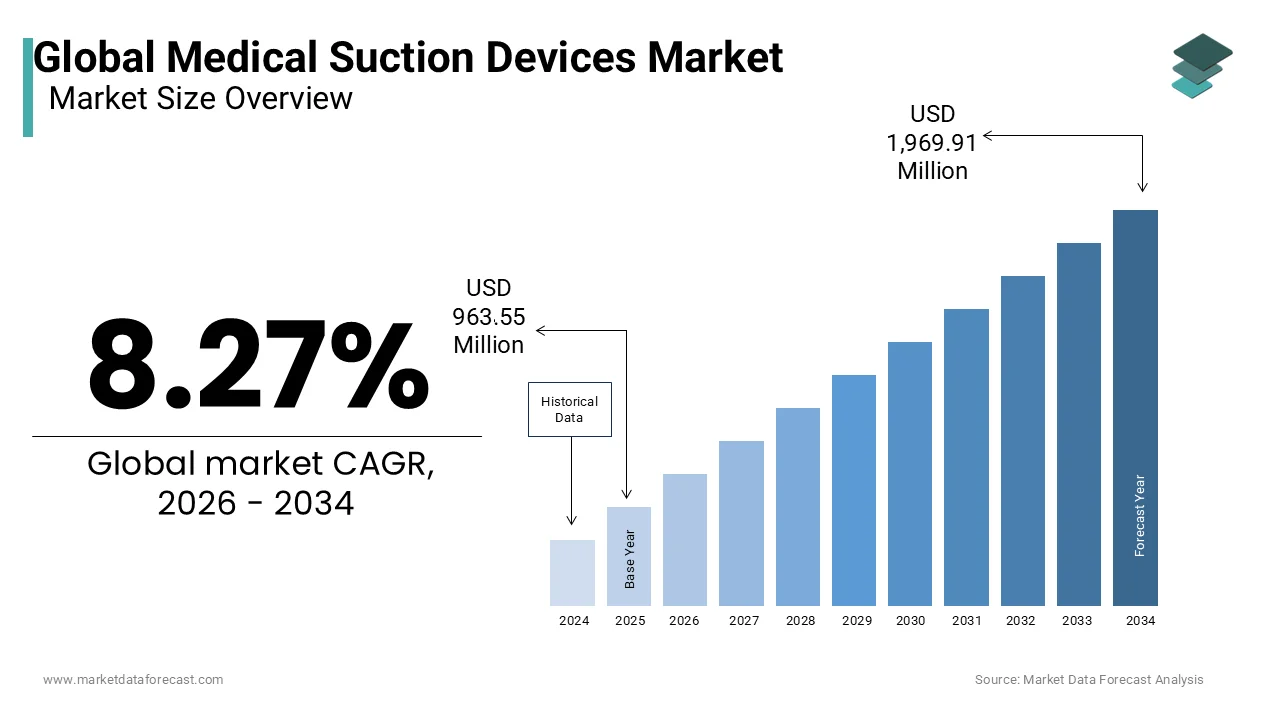
- Market Valuation: Valued at USD 963.55 million in 2025, estimated at USD 1,043.23 million in 2026, and projected to reach USD 1,969.91 million by 2034, registering a healthy CAGR of 8.27% from 2026 to 2034.
- Primary Growth Drivers: Rising prevalence of chronic respiratory diseases (such as COPD and asthma), increasing volumes of global surgical procedures, and rapid technological advancements shifting care toward compact, portable, and home-healthcare-friendly devices.
Key Market Segment Metrics (2026–2034)
| Category | Leading Segment Position | Fastest-Growing / Key Growth Segment |
|---|---|---|
| By Portability | Wall-Mounted Suction Devices (held the largest market share, driven by high-quality equipment requirements in surgical and hospital settings) | Handheld / Portable Devices (projected to register a healthy CAGR due to the rise of home healthcare and chronic respiratory disease management) |
| By Type | AC-Powered Devices (commanded the major market share, anchored by high clinical adoption in acute care and surgical workflows) | Dual-Powered Devices (predicted to register the fastest CAGR, propelled by flexibility, high-vacuum capabilities, and wireless connectivity) |
| By Application | Surgical Applications (captured the largest market share, backed by expanding global surgical volumes and high-vacuum efficiency needs) | Research and Diagnostics (fastest-growing segment supported by rising investments in medical R&D and advanced laboratory diagnostic technologies) |
| By End User | Hospitals and Clinics (dominant end-user segment holding the major market share due to intensive care and high surgical concentrations) | Home Care (expected to grow at a healthy CAGR driven by aging populations, patient preference, and portable device availability) |
| By Region | North America (leading regional market with the largest share, supported by prominent industry players, advanced healthcare infrastructure, and high chronic disease incidence) | Asia-Pacific (predicted to witness the fastest CAGR, driven by rising healthcare expenditures, government infrastructure upgrades, and growing aging populations) |
Major Market Players & Market Structure
Market Structure: Highly competitive landscape featuring established global medical equipment manufacturers focusing on product innovation, portability, regulatory compliance, and expansion across home healthcare and clinical channels.
Key Companies: Allied Healthcare Products Inc., ATMOS MedizinTechnik GmbH & Co. KG, Drive Medical, INTEGRA Biosciences, Medela Holding AG, Medicop, Precision Medical, Inc., SSCOR, Inc., ZOLL Medical Corporation, Weinmann Geräte für Medizin GmbH + Co. KG, Laerdal Medical, MG Electric Ltd, Labconco Corporation, Welch Vacuum, Amsino International Inc., and Olympus Corporation.
 Download Free Sample Report
Global Medical Suction Devices Market Size
The global medical suction devices market was valued at USD 963.55 million in 2025, is estimated to reach USD 1,043.23 million in 2026, and is projected to reach USD 1,969.91 million by 2034, growing at a CAGR of 8.27% from 2026 to 2034.
Medical suction devices, also called suction machines or aspirators, are tools used to clear unwanted fluids, blockages, or body materials from a person's airway or a surgical site. These devices range from portable battery-operated units for emergency response to large central vacuum systems in hospitals and specialised suction catheters for delicate procedures. According to the World Health Organisation, the official Surgical Safety Checklist does not explicitly list "suction equipment" within its standard 19 items, although the accompanying implementation manual addresses standard operating room preparations. As per AHRQ PSNet, surgical site infections occur in 2% to 4% of all patients undergoing inpatient surgical procedures. These statistics highlight the indispensable role of reliable suction technology in maintaining sterile environments and ensuring patient survival during critical interventions. The market operates under stringent regulatory frameworks such as those enforced by the Food and Drug Administration, which mandate rigorous performance and safety standards for these life-supporting tools. As healthcare facilities expand outpatient services and home care capabilities, the demand for compact and efficient suction solutions grows. Technological advancements in noise reduction and filtration efficiency further drive adoption in sensitive clinical settings. This convergence of clinical necessity and technological refinement defines the current operational landscape for manufacturers and healthcare providers.
MARKET DRIVERS
Rising Volume of Surgical Procedures and Trauma Cases
The increasing volume of surgical procedures and trauma cases significantly drives the expansion of the medical suction devices market. This creates consistent demand for intraoperative and postoperative fluid management. Surgeries, whether elective or emergency, require continuous removal of blood and irrigation fluids to maintain visibility for surgeons and prevent aspiration in patients. According to national hospital data tracking frameworks, hospitals in the United States perform over 26 million total surgeries annually, consisting of 9 million inpatient procedures and 17 million outpatient procedures. This high procedural volume ensures steady consumption of disposable suction canisters, tubing and reusable pump systems across hospital networks. According to the World Health Organisation 2018 Global Status Report on Road Safety, road traffic injuries result in an estimated 1.35 million deaths globally each year, with tens of millions more sustaining non-fatal injuries. Trauma centres must maintain robust suction infrastructure to handle sudden influxes of critical patients. The ageing population contributes to higher rates of orthopaedic and cardiovascular surgeries, which often involve significant fluid loss. Healthcare facilities invest in redundant suction systems to ensure uninterrupted service during power outages or equipment failure. This structural increase in surgical activity provides a stable foundation for market growth independent of economic fluctuations.
Expansion of Home Healthcare and Chronic Wound Management
The rapid expansion of home healthcare services and the growing prevalence of chronic wounds fuel the growth of the medical suction devices market. This shifts care delivery from hospitals to residential settings. Patients with conditions such as pressure ulcers, diabetic foot ulcers, and post-surgical drains require regular wound cleaning and fluid extraction to promote healing and prevent sepsis. According to the National Institute on Ageing, the number of Americans aged 65 and older is projected to reach 95 million by 2060, representing a fundamental structural shift in long-term geriatric and home-based care needs. This demographic shift drives demand for portable and quiet suction devices that are easy for caregivers to operate in domestic environments. As per studies, chronic wounds affect an estimated 6.5 million people in the United States. Home care agencies increasingly procure lightweight, battery-powered units to support visiting nurses and family caregivers. Reimbursement policies for home health services often cover durable medical equipment, including suction pumps when medically necessary. The convenience of managing complex wound care at home reduces hospital readmissions and improves patient quality of life. This transition to decentralised care creates new distribution channels and product requirements for manufacturers.
MARKET RESTRAINTS
High Maintenance Costs and Operational Complexity
High maintenance costs and operational complexity hamper the growth of the medical suction devices market. This strains hospital budgets and requires specialised technical support. Central vacuum systems and advanced electric suction pumps require regular calibration, filter replacements, and sterilisation to function safely and effectively. According to sources, preventive maintenance protocols for critical care equipment require regular testing, calibration, and documentation within a hospital's biomedical engineering program to ensure patient safety and device longevity. This financial burden forces smaller healthcare facilities to delay upgrades or rely on outdated, less efficient devices. The complexity of modern digital suction units with integrated sensors and alarms demands trained personnel for troubleshooting and repair. As per The Joint Commission, hospitals must strictly comply with equipment safety standards, including maintaining written inventories and documented maintenance strategies, which increases the administrative and labour costs associated with device management. Frequent breakdowns due to improper use or lack of maintenance can lead to clinical delays and patient safety risks. Spare parts for proprietary systems are often expensive and have long lead times. These ongoing operational expenses discourage investment in premium features and limit market penetration in resource-constrained settings. Healthcare providers may opt for cheaper manual alternatives despite their lower efficiency.
Risk of Cross-Contamination and Infection Control Issues
The risk of cross-contamination and challenges in infection control hinder the expansion of the medical suction devices market. These issues restrict growth by raising concerns about patient safety and regulatory compliance. Improper cleaning of reusable suction catheters and canisters can harbour pathogens, leading to healthcare-associated infections. According to the World Health Organisation, exposure to contaminated respiratory equipment is a known vector for acquiring hospital-acquired pneumonia and transmitting multidrug-resistant microorganisms in intensive care units. This risk necessitates rigorous sterilisation protocols, which are time-consuming and costly for healthcare facilities. The emergence of single-use disposable suction systems helps mitigate this risk but increases waste generation and procurement costs. Regulatory bodies enforce strict guidelines on reprocessing medical devices, which adds layers of complexity to hospital workflows. Incidents of infection linked to faulty suction equipment can result in legal liabilities and reputational damage for manufacturers. Healthcare workers face exposure risks when handling contaminated fluids if safety features fail. The need for closed suction systems to protect staff and patients increases the cost per procedure. These safety concerns slow the adoption of new technologies until extensive clinical validation proves their superiority in preventing contamination.
MARKET OPPORTUNITIES
Integration of Smart Technology and IoT Connectivity
The integration of smart technology and Internet of Things connectivity offers a significant opportunity for the medical suction devices market. This technological shift drives advancement by enhancing monitoring precision and operational efficiency. Modern suction devices equipped with sensors can track fluid volume, pressure levels, and blockage status in real time, transmitting data to central nursing stations. According to research, connected medical devices enhance clinical workflows by automating documentation, standardising data logs, and improving the responsiveness of real-time clinical alert systems. This technological advancement reduces the cognitive load on nurses who no longer need to manually check canister levels frequently. The Food and Drug Administration has cleared several smart suction platforms that provide predictive maintenance alerts, reducing unexpected equipment downtime. Hospitals can analyse usage data to optimise inventory management and identify training needs for staff. Remote monitoring capabilities allow biomedical engineers to diagnose issues without physical inspection, saving time and resources. Integration with electronic health records ensures accurate billing and clinical documentation. Manufacturers can offer subscription-based software services for data analytics, creating recurring revenue streams. This digital transformation aligns with the broader trend of smart hospitals and value-based care.
Development of Portable and Battery-Operated Units
The development of portable and battery-operated suction units provides a major prospect for the medical suction devices market. This innovation directly addresses the unique operational needs of emergency responders and mobile care teams. Paramedics, disaster relief workers, and military medics require lightweight, durable devices that function independently of power grids in austere environments. According to the National Association of Emergency Medical Technicians (NAEMT), emergency medical practitioners perform thousands of airway management interventions globally using evidence-based trauma protocols where immediate portable suction is mandatory to clear obstructions. Advances in lithium-ion battery technology have extended run times while reducing device weight, making them ideal for transport ambulances and field hospitals. The World Health Organization emphasizes the importance of basic emergency care equipment in low-resource settings driving global demand for affordable portable units. Manufacturers are designing ruggedised devices with intuitive controls for use in high-stress situations. Home healthcare providers also benefit from cordless options that allow patients greater mobility during therapy sessions. The versatility of these units expands their application beyond traditional hospital walls. Innovations in noise reduction make them suitable for use in residential areas without disturbing neighbours. This portability trend opens new market segments in defence, emergency services and home care.
MARKET CHALLENGES
Supply Chain Disruptions for Critical Components
Supply chain disruptions for critical components are a significant limitation to the medical suction devices market. These vulnerabilities restrict market health by causing severe production delays and inventory shortages. The manufacturing of suction pumps relies on specialised motors, sensors and medical-grade plastics, which are often sourced from a limited number of global suppliers. According to studies, disruptions in semiconductor and electronic component availability have created severe bottlenecks and prolonged lead times for medical device manufacturers in recent years. These bottlenecks lead to extended lead times for hospitals trying to replace ageing equipment or expand capacity. Geopolitical tensions and trade restrictions further complicate the sourcing of raw materials and finished goods. The reliance on just-in-time inventory models leaves little buffer for unexpected shocks in the supply network. Shortages of disposable canisters and tubing force healthcare facilities to ration supplies or revert to less optimal alternatives. Increased freight costs and logistics delays erode profit margins for manufacturers and distributors. Hospitals struggle to maintain adequate stock levels of backup devices, ensuring continuity of care. This volatility undermines confidence in supply reliability and forces procurement teams to seek multiple vendors, increasing administrative complexity.
Stringent Regulatory Compliance and Approval Processes
Stringent regulatory compliance and prolonged approval processes are a major challenge to the medical suction devices market. These rigorous oversight demands hinder the sector by increasing time to market and development costs. Manufacturers must navigate complex regulatory landscapes, including Food and Drug Administration approvals in the United States and Conformité Européenne marking in Europe. According to the FDA, the average review time for a Class II medical device evaluated via the standard 510(k) pathway has a statutory MDUFA performance goal of 90 days for a decision. This regulatory burden delays the introduction of innovative features and increases the financial risk for small and medium-sized enterprises. Changes in international standards such as ISO 13485 require continuous updates to quality management systems and documentation. Post-market surveillance obligations mandate rigorous tracking of adverse events and device performance, which adds to operational overhead. Inconsistent regulatory requirements across different regions force companies to maintain separate product configurations and testing protocols. The cost of compliance can be prohibitive for startups attempting to enter the market with novel suction technologies. Regulatory uncertainty regarding software as a medical device further complicates the approval of smart suction features. These hurdles slow down innovation and limit the diversity of available products in the market.
REPORT COVERAGE
| REPORT METRIC | DETAILS |
| Market Size Available | 2025 to 2034 |
| Base Year | 2025 |
| Forecast Period | 2026 to 2034 |
| Segments Covered | By Portability, Type, Application, End-User, and Region |
| Various Analyses Covered | Global, Regional & Country Level Analysis, Segment-Level Analysis, Drivers, Restraints, Opportunities, Challenges, PESTLE Analysis, Porter’s Five Forces Analysis, Competitive Landscape, Analyst Overview on Investment Opportunities |
| Regions Covered | North America, Europe, Asia Pacific, Latin America, Middle East & Africa |
| Market Leaders Profiled | Allied Healthcare Products Inc. (U.S.), ATMOS MedizinTechnik GmbH & Co. KG (Germany), Drive Medical (U.S.) |
SEGMENTAL ANALYSIS
By Portability Insights
The wall-mounted suction devices segment was the largest in 2025 and occupied a commanding share of the medical suction devices market. This prominence was supported by its extensive integration into hospital infrastructure, where it serves as the standard for critical care and surgical suites. According to the American Hospital Association, there are over 6000 registered hospitals in the United States, with the vast majority equipped with centralised vacuum systems that rely on wall-mounted units for consistent performance. This widespread installation base ensures that wall-mounted devices remain the preferred choice for high-acuity environments such as intensive care units and operating rooms. The reliability of these systems is crucial for continuous patient monitoring and intervention. The Joint Commission emphasises that facility infrastructure must support uninterrupted medical gas and vacuum services, which wall-mounted systems provide through direct connection to central pumps. This regulatory and operational requirement solidifies their position as the leading segment. Furthermore, the high volume of inpatient admissions, which exceeded 35 million annually in recent years according to the Agency for Healthcare Research and Quality, necessitates robust and permanently installed suction solutions. These devices offer superior power and continuous operation capabilities compared to portable alternatives, making them indispensable for complex surgical procedures and long-term critical care. The capital investment in hospital construction and renovation continues to prioritise these integrated systems, ensuring their sustained market leadership through institutional procurement cycles and infrastructure upgrades.
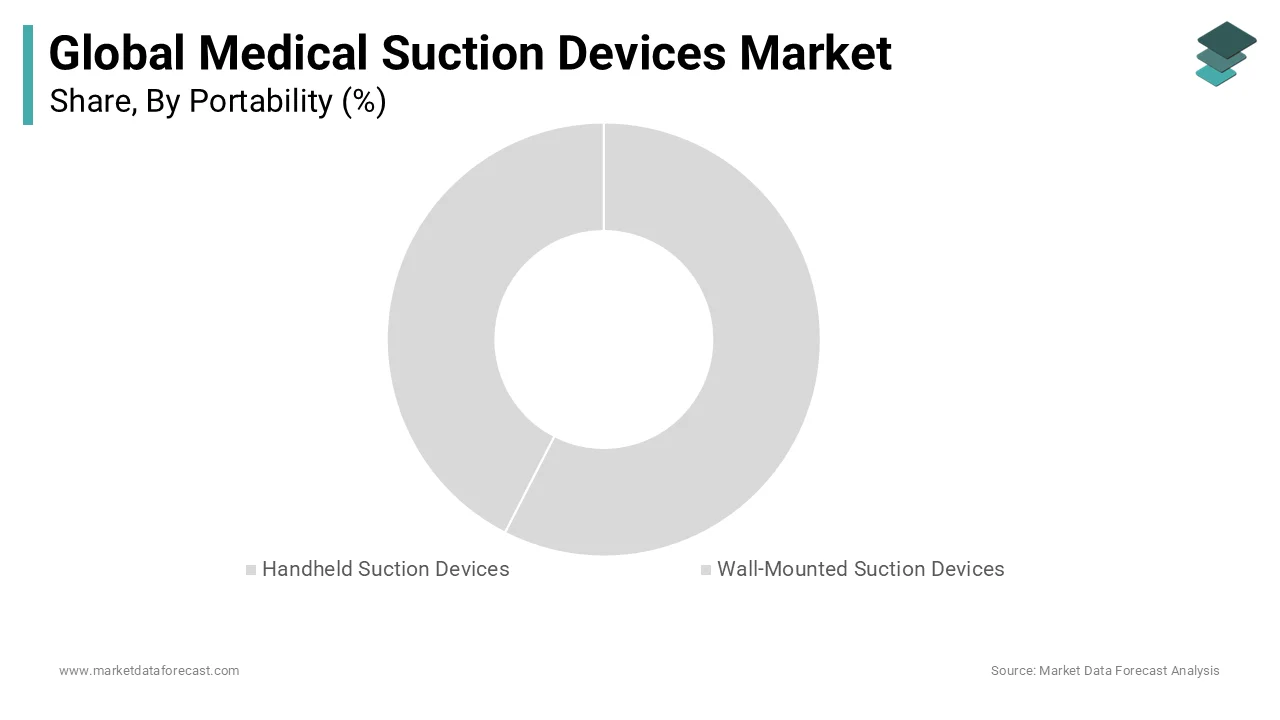
Wall-mounted suction devices maintain their leading position due to their ability to deliver consistent high vacuum levels required for demanding medical procedures. According to the Association of PeriOperative Registered Nurses, managing the accumulation of fluids at the surgical site is mandatory to maintain clear visibility and mitigate contamination risks, making high-capacity wall-mounted units suitable for continuous operating room environments. These devices can handle viscous fluids and large volumes without the battery limitations or motor strain associated with portable units. As per the Centres for Medicare and Medicaid Services, hospital reimbursement structures factor in relative weight and procedural complexity, implicitly penalising inefficiencies or clinical delays caused by equipment malfunction. According to the American College of Surgeons National Surgical Quality Improvement Program, the nationwide initiative tracks prospective outcomes for surgeries performed at participating accredited facilities. The reduced risk of mechanical failure during critical moments makes these devices the gold standard in emergency departments and trauma centres. Additionally, the ease of sterilisation and maintenance of fixed components aligns with strict infection control protocols mandated by the Centres for Disease Control and Prevention. Hospitals prefer these systems because they reduce the logistical burden of managing multiple portable units and charging stations. The long-term cost-effectiveness of centralised systems, combined with their proven track record in life-saving interventions, ensures that wall-mounted suction devices continue to command the largest share of the market despite the emergence of portable alternatives.
The handheld suction devices segment is estimated to register the fastest CAGR of 6.8% from 2026 to 2034 due to the expanding need for immediate airway management in emergency and pre-hospital settings. According to sources, ambulance units in the United States handle more than 30 million annual dispatches and responses, requiring portable on-scene airway clearance devices. The portability and battery-operated nature of handheld devices make them ideal for paramedics and first responders who operate outside traditional healthcare facilities. As per the World Health Organisation, early, structured stabilisation of acute respiratory distress and airway obstruction significantly lowers mortality rates, demanding rapidly accessible clearing solutions. Furthermore, the increase in mass casualty incidents and natural disasters has prompted governments to stockpile portable medical equipment. According to research, the Federal Emergency Management Agency allocates specific disaster response and preparedness funds to expand municipal mobile medical stockpiles, which encompass hand-powered or battery-operated portable suction tools. These devices allow for rapid deployment in chaotic environments where wall-mounted systems are unavailable. The growing emphasis on out-of-hospital cardiac arrest protocols also drives adoption, as rescuers need immediate access to airway clearance tools. Manufacturers are responding by developing lighter, more durable units with longer battery life, catering to the specific needs of emergency medical services. This shift toward decentralised emergency care ensures that handheld suction devices will continue to grow at an accelerated pace.
The rapid expansion of home healthcare services is a key driver for the growth of handheld suction devices, as patients increasingly manage chronic conditions outside hospital settings. According to sources, shifting demographics have accelerated home-based nursing care deployment, requiring regular respiratory care and mechanical airway suctioning for chronic tracheostomy or pulmonary disease maintenance. Handheld devices offer the convenience and ease of use necessary for non-clinical caregivers to perform suctioning safely at home. As per studies, proactive home respiratory therapies and structural transition planning lower acute hospital readmissions among patients suffering from chronic respiratory failure, validating insurer coverage models for mobile medical equipment. This reimbursement support lowers financial barriers for patients, boosting demand for user-friendly handheld models. Additionally, the ageing population contributes to this trend, as elderly individuals prefer ageing in place rather than institutional care. According to the U.S. Census Bureau and cited by ageing research frameworks, older adults will represent roughly one in five Americans by 2030, which directly drives the expansion of long-term home respiratory equipment needs. Manufacturers are designing intuitive interfaces and lightweight designs to accommodate elderly users and their caregivers. The shift toward patient-centred care models further validates the need for portable solutions that empower individuals to manage their health independently. This demographic and policy-driven shift ensures sustained high growth for the handheld segment.
By Type Insights
In 2025, the AC-powered devices segment held the majority share in the medical suction devices market because of its ability to provide uninterrupted suction power, which is critical for lengthy surgical procedures and intensive care monitoring. According to the American Society of Anesthesiologists, prolonged surgical operations frequently last four hours or longer, which necessitates continuous fluid extraction solutions that bypass the exhaustion risks of internal batteries or manual mechanisms. Hospitals prioritise AC-powered units for their consistent performance and lower operational complexity compared to battery-dependent alternatives. The Healthcare Facilities Accreditation Program mandates that critical care areas have reliable backup power sources, which AC-powered devices integrate seamlessly with hospital generator systems. This infrastructure support ensures that suction remains available even during power fluctuations, enhancing patient safety. Furthermore, the high volume of daily procedures in large medical centres, as per the American Hospital Association, necessitates equipment that can withstand continuous use without frequent recharging or maintenance. AC-powered devices typically have longer lifespans and lower total cost of ownership, making them economically attractive for institutional buyers. The standardisation of electrical outlets in healthcare facilities also simplifies the deployment and relocation of these units within hospitals. As healthcare systems focus on efficiency and reliability, the preference for AC-powered suction devices remains strong, securing their position as the leading segment in the market.
The economic advantage of AC-powered devices contributes significantly to their market leadership, as they eliminate the recurring costs associated with battery replacement and charging infrastructure. According to the Association for the Advancement of Medical Instrumentation, industrial battery management and failure mitigation rank among the top ten persistent hurdles facing hospital engineering departments. Hospitals operating on tight budgets prefer these devices for their predictable expense profiles and reduced technical support needs. The Veterans Health Administration, one of the largest healthcare systems in the United States, prioritises procurement of low-maintenance equipment to optimise resource allocation across its numerous facilities. AC-powered devices also offer higher suction power capabilities, which are essential for removing thick secretions and blood clots during complex interventions. The National Institutes of Health supports research indicating that effective suction pressure reduces the risk of postoperative complications, reinforcing the clinical value of high-performance AC units. Additionally, the simplicity of their design allows for easier cleaning and sterilisation, aligning with strict infection control standards. These factors combine to make AC-powered devices the most practical and economical choice for high-volume healthcare settings, ensuring their continued dominance in the market.
The battery-powered devices segment is anticipated to witness the fastest CAGR of 7.2% during the forecast period, owing to significant improvements in lithium-ion battery technology that enhance runtime and reduce weight. According to sources, ongoing improvements in lithium-cell chemical matrices have steadily boosted the continuous runtime and charge retention of clinical medical device battery arrays under heavy procedural loads. This technological leap addresses previous concerns about reliability, encouraging broader adoption in both hospital and pre-hospital settings. As per research, the International Electrotechnical Commission develops and updates standardised safety parameters for electrical cell networks embedded in medical devices to guarantee high performance and risk mitigation. Manufacturers are integrating smart battery management systems that provide real-time status updates, preventing unexpected power failures during critical procedures. The U.S. Department of Defence invests heavily in portable medical technologies for field medicine, driving innovation in compact and powerful battery-operated suction units. These advancements enable healthcare professionals to move freely between patient rooms without being tethered to wall outlets, improving workflow efficiency. The growing trend toward mobile healthcare teams and rapid response units further fuels demand for lightweight, high-performance battery-powered devices. As battery technology continues to evolve, these devices are becoming increasingly competitive with AC-powered alternatives, driving rapid market growth.
The rise of ambulatory surgical centres and remote care clinics is propelling the growth of battery-powered suction devices, as these facilities often lack centralised vacuum systems. According to the Ambulatory Surgery Centre Association, there are over 5,000 certified ambulatory surgery centres operating in the United States, which utilise versatile portable equipment to optimise surgical floor configurations and minimise overhead costs. Battery-powered devices offer the autonomy needed in these decentralised settings, where installing wall-mounted systems may be prohibitively expensive or structurally challenging. As per the Rural Health Information Hub, isolated clinical outposts care for millions of geographically dispersed individuals who depend heavily on transportable diagnostic and intervention devices to manage treatments across distant hubs. Battery-powered suction units allow these facilities to provide comprehensive care without significant infrastructure investment. Additionally, the global expansion of telemedicine and mobile health units creates new opportunities for portable medical devices. According to the World Bank, reducing healthcare disparities in developing or remote communities requires deploying highly mobile, modular medical systems, including battery-powered airway clearing tools. These trends are particularly relevant in developing regions where healthcare infrastructure is still evolving. The versatility and independence of battery-powered devices make them ideal for these emerging care models, driving their rapid adoption and market growth.
By End User Insights
The hospitals and clinics segment dominated the medical suction devices market and accounted for a substantial share in 2025. This dominance was driven by the high volume of surgical and critical care procedures that require reliable suction equipment. According to the American Hospital Association, hospitals across the United States execute millions of surgical interventions annually, each requiring active suction deployments to perform airway maintenance, clear anatomical fields, and safely handle bodily secretions. The concentration of specialised medical staff and advanced infrastructure in these facilities ensures consistent demand for high-performance suction systems. According to the Centres for Medicare & Medicaid Services, the national mean length of stay for an acute care hospital inpatient admission is approximately 4.5 days, during which complex respiratory or post-operative cohorts may require localised airway suctioning to manage respiratory care. This prolonged exposure increases the utilisation rate of suction devices within hospital settings. Furthermore, teaching hospitals and tertiary care centres handle complex cases that demand sophisticated suction technologies, driving premium product sales. According to The Joint Commission, participating medical facilities are required to operate precise equipment maintenance, inventory tracking, and quality testing systems, which systematically drive the lifecycle replacement and modernisation of institutional suction apparatuses. The sheer scale of hospital operations, combined with the critical nature of the procedures performed, solidifies their position as the primary end users. As healthcare utilisation rates remain high, hospitals continue to drive the bulk of market revenue through large-scale procurement contracts and infrastructure investments.
Strict regulatory mandates and infection control standards compel hospitals and clinics to maintain high-quality suction equipment, reinforcing their dominance in the market. According to the Centres for Disease Control and Prevention, healthcare-associated infections pose a significant risk, prompting hospitals to adopt closed suction systems and disposable components to minimise contamination. These compliance requirements drive regular purchases of new devices and consumables, creating a steady revenue stream for manufacturers. As per research, the Occupational Safety and Health Administration (OSHA) enforces clear bloodborne pathogen and hazardous waste handling standards, which directly mandate that institutional fluid-collection equipment minimise splashes and leaks to protect frontline personnel. Hospitals must also adhere to the Food and Drug Administration regulations for device safety and efficacy, ensuring that only approved products are used in clinical settings. The National Quality Forum emphasises the importance of standardised care protocols, which often specify the use of particular suction technologies for certain procedures. These regulatory pressures force hospitals to stay updated with the latest equipment innovations, preventing market stagnation. The institutional commitment to patient safety and regulatory compliance ensures that hospitals remain the largest and most stable segment of the medical suction devices market.
The home care segment is on the rise and is expected to be the fastest-growing segment in the market, witnessing a CAGR of 8.1% between 2026 and 2034. This growth is fuelled by the ageing population and a strong preference for receiving medical treatment in familiar home environments. According to the U.S. Census Bureau, the number of Americans aged 65 and older is projected to reach 95 million by 2060, creating a vast demographic requiring chronic disease management at home. Many of these individuals suffer from respiratory conditions that necessitate regular suctioning, driving demand for portable and user-friendly devices. As per studies, nearly 90% of older adults prefer to remain in their own homes as they age, generating a significant structural pull for expanded home and community-based healthcare support systems. This shift reduces the burden on hospitals and lowers overall healthcare costs, making home care an attractive option for payers and providers alike. Medicare coverage for home medical equipment has expanded, making suction devices more accessible to elderly patients. The convenience of home care allows for personalised attention and improved quality of life, further encouraging its adoption. As the senior population grows, the need for home-based respiratory support will continue to rise, fueling rapid growth in this segment.
Technological advancements in portable suction devices and favourable reimbursement policies are accelerating the growth of the home care segment. According to research, the Centres for Medicare & Medicaid Services periodically adjust structural coding and remote monitoring parameters to control the administrative barriers that impact how home medical equipment suppliers deploy assistive respiratory technologies. Modern portable units are lighter, quieter, and easier to operate, making them suitable for non-clinical users such as family caregivers. According to sources, implementing intuitive interfaces and ergonomic designs on portable therapeutic devices facilitates consumer compliance, which reduces acute disease exacerbations. Insurance providers are increasingly recognising the cost-effectiveness of home care, offering broader coverage for durable medical equipment, including suction devices. The Patient Protection and Affordable Care Act encourages value-based care models that reward providers for keeping patients healthy at home, further supporting this trend. Manufacturers are responding by developing devices with intuitive controls and long battery life, catering specifically to the home care market. These innovations, combined with supportive financial policies, are driving rapid adoption of suction devices in home settings, establishing it as the fastest-growing end-user segment.
COUNTRY LEVEL ANALYSIS
North America Medical Suction Devices Market Analysis
North America led the global medical suction devices market and captured the largest share in 2025. This leading position was attributed to its advanced healthcare infrastructure and the high prevalence of chronic respiratory diseases. According to the CDC, chronic lower respiratory diseases (CLRD), including COPD, are the sixth leading cause of death in the United States. The region benefits from robust reimbursement policies under Medicare and private insurance plans, which facilitate the adoption of advanced suction technologies in both hospital and home care settings. As per the American Hospital Association, total U.S. health care spending has surpassed $4 trillion annually, reflecting massive capital flows that support extensive procurement and facility modernisations. Furthermore, the presence of major market players and stringent regulatory standards enforced by the Food and Drug Administration ensure high product quality and safety. The growing trend toward outpatient surgeries and ambulatory care centres also contributes to market growth, as these facilities require compact and efficient suction solutions. The region’s emphasis on technological innovation and patient safety continues to drive the adoption of smart and connected suction devices, maintaining its leadership position in the global market.
Europe Medical Suction Devices Market Analysis
Europe followed closely behind in the global medical suction devices market in 2025. This position was supported by a well-established healthcare system and an increasing focus on cost-effective medical solutions. According to the European Centre for Disease Prevention and Control (ECDC), respiratory tract infections represent a major category of healthcare-associated infections inside long-term care facilities, reinforcing the persistent need for clinical airway clearance protocols among vulnerable elderly populations. The region is witnessing a shift toward home healthcare services, supported by government initiatives aimed at reducing hospital overcrowding. As per Eurostat (European Commission), current healthcare expenditure across the European Union is equivalent to approximately 10.0% of its Gross Domestic Product (GDP). Strict regulatory frameworks under the Medical Device Regulation ensure high safety standards, influencing product design and market entry strategies. The ageing demographic in countries such as Germany and Italy further amplifies the need for respiratory care devices. Additionally, the rise in minimally invasive surgical procedures across the region boosts demand for precise and reliable suction equipment. The combination of regulatory rigour, demographic trends, and healthcare policy reforms sustains steady market growth in Europe.
Asia Pacific Medical Suction Devices Market Analysis
The Asia Pacific region is experiencing rapid growth within the medical suction devices market, fueled by improving healthcare infrastructure and rising awareness of respiratory health. According to the World Health Organisation, the region bears a disproportionate burden of tuberculosis and chronic obstructive pulmonary disease, necessitating widespread availability of suction devices. Governments in countries such as China and India are investing heavily in hospital construction and modernisation, increasing the demand for medical equipment. The expanding middle class and rising disposable incomes enable more patients to afford advanced medical treatments, including those requiring suction support. Additionally, the proliferation of medical tourism in countries like Thailand and Singapore drives the adoption of international quality standards in healthcare facilities. Local manufacturing hubs are also emerging, reducing costs and improving supply chain efficiency. These economic and healthcare developments position Asia Pacific as a high-growth market with significant potential for future expansion.
Latin America Medical Suction Devices Market Analysis
Latin America shows moderate growth in the medical suction devices market, driven by gradual improvements in healthcare access and government health initiatives. According to the Pan American Health Organisation, respiratory diseases are among the top causes of morbidity in the region, creating a baseline demand for suction equipment. Countries such as Brazil and Mexico are expanding their public healthcare systems, leading to increased procurement of medical devices for public hospitals. Economic challenges and currency fluctuations can hinder market growth, but the increasing prevalence of chronic diseases continues to drive demand. The rise in private healthcare sectors in urban areas also contributes to market expansion, as these facilities seek to offer high-quality care. Additionally, international aid and partnerships are helping to improve medical equipment availability in rural areas. While the market faces economic headwinds, the underlying need for respiratory care ensures steady, albeit slower, growth in the region.
The Middle East and Africa Medical Suction Devices Market Analysis
The Middle East and Africa region offers emerging opportunities in the medical suction devices market, supported by government healthcare reforms and infrastructure development. According to regional economic infrastructure data, member states within the Gulf Cooperation Council (GCC) are investing tens of billions of dollars to construct hospitals, clinics, and smart health facilities. These initiatives drive demand for modern medical equipment, including advanced suction devices. In Africa, the burden of infectious diseases such as pneumonia and tuberculosis creates a critical need for basic respiratory support tools. The African Union states that efforts to strengthen primary healthcare systems are increasing access to essential medical devices. However, limited healthcare budgets and supply chain challenges remain significant barriers. International NGOs and donor agencies play a crucial role in supplying medical equipment to underserved areas. The growing medical tourism sector in countries like Dubai and South Africa also stimulates demand for high-quality medical devices. Despite challenges, the region’s focus on improving healthcare outcomes and expanding access creates a foundation for future market growth.
COMPETITIVE LANDSCAPE
The competition in the Medical Suction Devices Market is characterized by the presence of established multinational corporations and specialized niche players who strive to differentiate through technological innovation and service quality. Leading companies compete primarily on product reliability, ease of use, and integration with existing healthcare infrastructure. The market sees intense rivalry in the development of portable and smart suction devices that cater to the growing home care and ambulatory surgery segments. Price competition is moderate, as healthcare providers prioritize quality and regulatory compliance over cost alone. However, emerging manufacturers from Asia Pacific regions are gaining traction by offering cost effective alternatives without compromising essential features. Strategic collaborations with hospitals and research institutions help key players validate clinical efficacy and accelerate product adoption. Intellectual property protection plays a crucial role, with firms securing patents for novel designs and functionalities. The competitive landscape is further shaped by regulatory hurdles that favor experienced players with robust compliance frameworks. Continuous investment in customer support and training programs serves as a key differentiator, ensuring long term loyalty among healthcare professionals and institutions.
KEY MARKET PLAYERS
Companies playing a noteworthy role in the global medical suction devices market profiled in this report are
- Allied Healthcare Products Inc. (U.S.)
- ATMOS MedizinTechnik GmbH & Co. KG (Germany)
- Drive Medical (U.S.)
- INTEGRA Biosciences (Switzerland)
- Medela Holding AG (Switzerland)
- Medicop (Slovenia)
- Precision Medical, Inc. (U.S.)
- SSCOR, Inc. (U.S.)
- ZOLL Medical Corporation (U.S.)
- Weinmann Geräte für Medizin GmbH + Co. KG (Germany)
- Laerdal Medical (Norway)
- MG Electric Ltd (Colchester)
- Labconco Corporation (U.S.)
- Welch Vacuum (U.S.)
- Amsino International Inc. (U.S.)
- Olympus Corporation (Japan).
TOP LEADING PLAYERS IN THE MARKET
- Medtronic plc stands as a global leader in medical technology with a robust portfolio of suction devices designed for surgical and critical care applications. The company focuses on integrating advanced engineering with clinical expertise to deliver reliable airway management solutions. Medtronic actively invests in research and development to enhance product safety and efficiency, ensuring compliance with stringent international standards. Recent initiatives include the launch of innovative closed loop suction systems that minimize infection risks and improve patient outcomes. The company collaborates with healthcare providers to refine device usability and address specific clinical needs. By leveraging its extensive distribution network and strong brand reputation, Medtronic continues to expand its presence in both developed and emerging markets. Their commitment to quality and innovation strengthens their position as a preferred partner for hospitals and ambulatory surgery centers worldwide.
- Stryker Corporation is a prominent player in the medical suction devices market, known for its high performance surgical equipment and integrated healthcare solutions. The company emphasizes durability and precision in its product design, catering to the demanding requirements of operating rooms and emergency departments. Stryker recently introduced advanced portable suction units featuring smart connectivity and enhanced battery life to support mobile healthcare teams. These innovations align with the growing trend toward decentralized care and improved workflow efficiency. The company also focuses on strategic partnerships with healthcare institutions to provide comprehensive training and support services. Stryker’s dedication to sustainability and environmental responsibility influences its manufacturing processes and product lifecycle management. Through continuous product enhancement and customer centric strategies, Stryker maintains a competitive edge and drives adoption of its suction technologies across diverse clinical settings.
- Koninklijke Philips N.V. leverages its expertise in health technology to offer sophisticated suction devices that integrate seamlessly with broader patient monitoring systems. The company prioritizes user friendly designs and intelligent features that assist clinicians in delivering timely and effective care. Philips has recently expanded its portfolio with compact and quiet suction units suitable for home care and neonatal intensive care units. These products reflect the company’s focus on addressing the needs of vulnerable patient populations and supporting home based treatment models. Philips actively engages in digital health initiatives, connecting its devices to cloud platforms for remote monitoring and data analysis. This approach enhances clinical decision making and operational efficiency for healthcare providers. By combining technological innovation with a strong emphasis on patient comfort and safety, Philips reinforces its leadership in the global medical suction devices market.
TOP MAJOR STRATEGIES USED BY KEY PLAYERS
Key players in the Medical Suction Devices Market employ several strategic initiatives to maintain competitiveness and drive growth. Product innovation remains a primary strategy, with companies investing heavily in research and development to create smarter and more efficient devices. Manufacturers focus on integrating Internet of Things capabilities to enable real time monitoring and predictive maintenance. Strategic acquisitions and partnerships are also common, allowing firms to expand their product portfolios and enter new geographic markets. Companies frequently collaborate with healthcare providers to gather clinical insights and refine product designs. Regulatory compliance and quality assurance are prioritized to meet stringent global standards and build trust with customers. Additionally, manufacturers emphasize sustainability by developing eco friendly materials and energy efficient technologies. Marketing efforts target both institutional buyers and home care users, highlighting ease of use and patient safety. These multifaceted strategies help companies adapt to evolving healthcare demands and secure long term success in the dynamic medical device landscape.
GLOBAL MEDICAL SUCTION DEVICES MARKET NEWS
-
In May 2019, Serres launched a new vacuum source protector. It protects the hospital's central vacuum system and suction pump from contamination in the event of a fluid collection system breakdown. The vacuum source protector is intended to turn off the vacuum to keep suctioned fluids from accessing the vacuum line, thus avoiding expensive clean-up and downtime.
-
In March 2015, ZOLL medical company stated that its ResQCPR system had received approval for its pre-marketization by FDA. The system consists of two devices that are used in conjunction during CPR, especially in adult patients. The ResQCPR system is a suction pump that has a double grip handle. This system is invented to make better changes in the circulation of oxygenated blood to the heart and blood during CPR.
MARKET SEGMENTATION
This research report on the global medical suction devices market has been segmented and sub-segmented based on the portability, type, application, end-user, and region.
By Portability
- Handheld Suction Devices
- Wall-Mounted Suction Devices
By Type
- Ac-Powered Devices
- Battery-Powered Devices
- Dual-Powered Devices
- Manually Operated Devices
By Application
- Airway Clearing
- Surgical Applications
- Research and Diagnostics
By End User
- Hospitals and Clinics
- Home Care
- Pre-hospitals
- Other End Users
By Region
- North America
- Europe
- Asia-Pacific
- Latin America
- Middle East and Africa