- Product Description Description
- Table of Contents TOC
- List of Table & Figure LOT
- Get Free Sample PDF Sample PDF
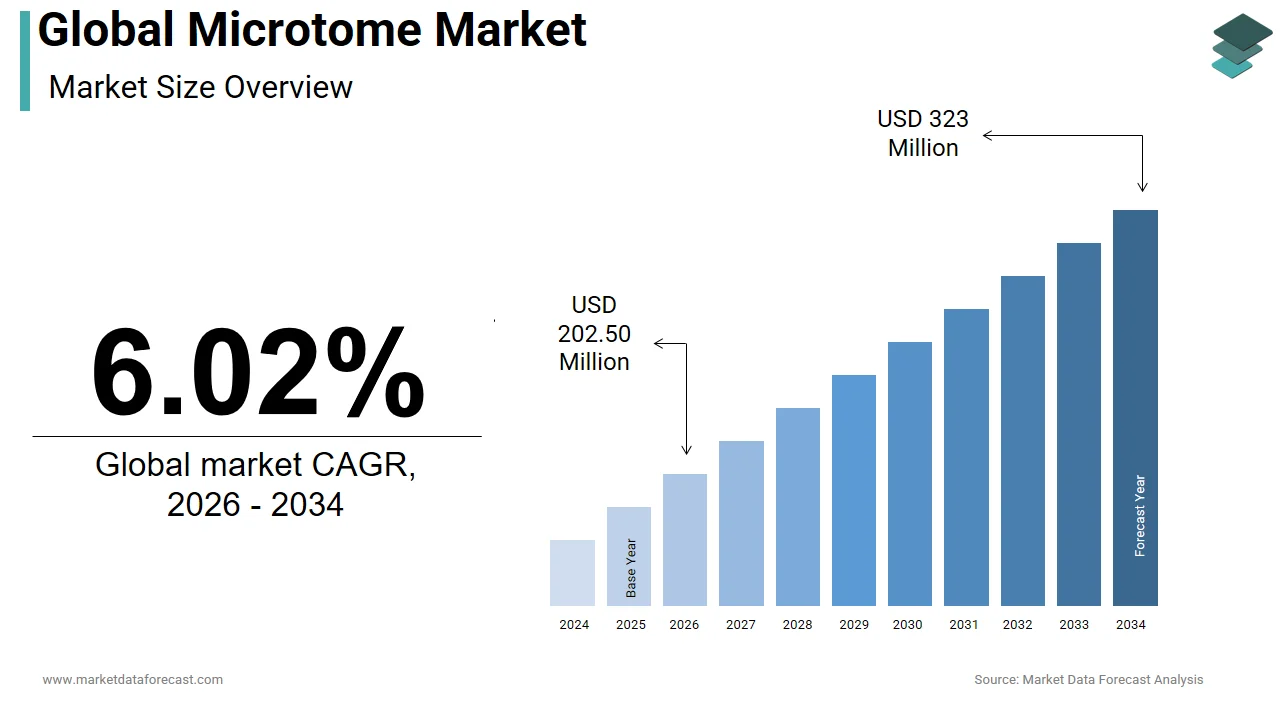
Market Size, 2025
$191 MnMarket Estimate, 2026
$202.50 MnMarket Forecast, 2034
$323 MnCAGR, 2026–2034
6.02%Global Microtome Market Report Summary
The global microtome market was valued at USD 191 million in 2025 and is projected to grow from USD 202.50 million in 2026 to USD 323 million by 2034, registering a CAGR of 6.02% from 2026 to 2034. Market growth is driven by the increasing demand for histopathology and pathology diagnostics, rising prevalence of cancer and chronic diseases, and growing investments in life sciences research. Advancements in tissue sectioning technologies, automation in laboratory workflows, and expanding adoption of precision diagnostic techniques are further supporting market expansion.
Key Market Trends
- Increasing demand for histopathology and tissue diagnostics.
- Growing adoption of semi-automated and automated microtome systems.
- Rising investments in cancer diagnostics, pathology laboratories, and biomedical research.
- Expansion of digital pathology and precision medicine applications.
- Continuous innovation in high-precision tissue sectioning technologies and laboratory automation.
Segmental Insights
- Based on technology, the semi-automated microtomes segment dominated the global microtome market in 2025, driven by its balance of operational efficiency, precision, affordability, and ease of use in routine laboratory applications.
- Based on product, the rotary microtomes segment accounted for the largest market share in 2025, owing to their versatility, reliability, and widespread use in routine histopathology for preparing paraffin-embedded tissue sections.
- Based on end user, the hospitals segment held the leading market share in 2025, supported by the high volume of surgical procedures, increasing biopsy testing, and the growing need for in-house pathology services to enable accurate diagnosis and treatment planning.
Regional Insights
The global microtome market continues to expand across major regions, supported by advancements in pathology services, increasing healthcare investments, and growing biomedical research activities.
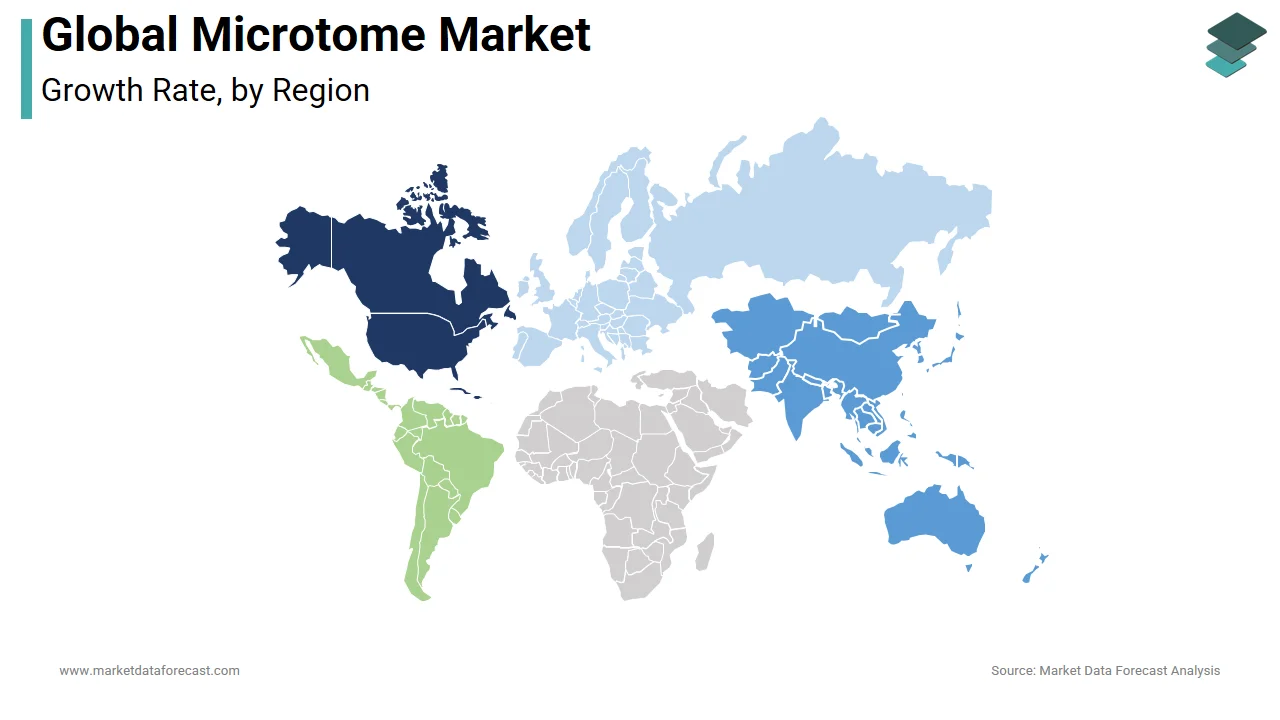
- North America dominated the global microtome market in 2025, driven by advanced healthcare infrastructure, strong adoption of digital pathology technologies, extensive research activities, and high demand for precision diagnostic equipment.
- Europe held the second-largest market position, supported by well-established pathology laboratories, increasing investments in medical research, and widespread adoption of advanced histopathology technologies.
- Asia-Pacific is projected to register the fastest growth during the forecast period, driven by expanding healthcare infrastructure, increasing cancer screening programs, rising investments in laboratory modernization, and growing demand for diagnostic services across emerging economies.
Competitive Landscape
The global microtome market is moderately competitive, with leading manufacturers focusing on precision engineering, laboratory automation, digital pathology integration, and product innovation. Market participants are investing in research and development, strategic partnerships, and expansion into emerging healthcare markets to strengthen their competitive position. Continuous advancements in automated tissue sectioning systems and pathology workflow optimization continue to shape the competitive landscape.
Prominent companies operating in the global microtome market include SLEE Medical, Histo-Line Laboratories, BMS Microscopes, Leica Biosystems, Thermo Fisher Scientific, Auxilab, Orion Medic, Medite, TBS, MICROS, Bright Instruments, MicroTec, Amos Scientific, Boeckeler Instruments, Lupetec, Zenith Lab, Sakura Finetek USA Inc., Medimeas Instruments, AGD Biomedicals, Scientific Instruments, and Ana-Med.
Global Microtome Market Size
The size of the global microtome market was worth USD 191 million in 2025. The global market is anticipated to grow at a CAGR of 6.02% from 2026 to 2034 and be worth USD 323 million by 2034 from USD 202.50 million in 2026.
A microtome is a precision cutting instrument used to slice extremely thin sections of organic or inorganic materials. These devices are indispensable in histopathology, cytology, and materials science, enabling the preparation of specimens that reveal cellular structures and tissue architecture at a microscopic level. The global burden of disease continues to drive the necessity for accurate diagnostic procedures, with cancer remaining a leading cause of mortality worldwide. According to the World Health Organization, nearly 10 million people died from cancer in 2020, underscoring the critical role of histological analysis in diagnosis and treatment planning. Projections from the International Agency for Research on Cancer (IARC) outline that annual new cancer diagnoses are on track to approach 30 million by 2040, driving substantial demand for clinical diagnostic laboratory infrastructure. The aging global population further amplifies this demand, as older individuals are more susceptible to chronic diseases requiring detailed pathological assessment. The United Nations Department of Economic and Social Affairs states that the number of people aged 65 years or older is expected to double from 727 million in 2020 to 1.5 billion by 2050. This demographic shift places immense pressure on healthcare systems to enhance diagnostic throughput and accuracy. Consequently, laboratories are increasingly adopting automated and semi-automated microtomes to improve efficiency and reduce human error. The integration of digital pathology and whole slide imaging also relies on high-quality sectioning, making microtomes a foundational component of modern diagnostic workflows. Regulatory standards for laboratory accreditation continue to tighten, prompting facilities to invest in reliable and precise instrumentation to maintain compliance and ensure patient safety.
MARKET DRIVERS
Rising Prevalence of Chronic Diseases and Cancer Diagnoses
The escalating global incidence of chronic diseases, particularly cancer, fuels the adoption of these devices in clinical and research laboratories, which in turn contributes to the growth of the microtome market. Accurate histopathological diagnosis is essential for determining the stage and type of cancer, which directly influences treatment decisions and patient outcomes. According to the Centers for Disease Control and Prevention, chronic diseases such as heart disease, cancer, and diabetes are the leading causes of death and disability in the United States, accounting for 90 percent of the nation’s 4.1 trillion dollars in annual health care expenditures. As per the World Health Organization, cancer is the second leading cause of death globally, with approximately 19.3 million new cases diagnosed in 2020. This vast volume of patients requires extensive tissue sampling and analysis, driving the demand for high-throughput sectioning equipment. Laboratories must process thousands of biopsy samples annually, necessitating robust and efficient microtomes that can handle heavy workloads without compromising precision. The shift toward personalized medicine further increases the need for detailed molecular and histological analysis, requiring thinner and more consistent sections. Automated microtomes reduce variability and improve reproducibility, which is critical for reliable diagnostic results. The growing awareness of early detection and screening programs also contributes to the increased volume of specimens processed. Consequently, the relentless rise in disease prevalence ensures a steady and expanding demand for microtomes across hospital laboratories, diagnostic centers, and research institutions worldwide.
Expansion of Histopathology Laboratory Infrastructure
The significant expansion of histopathology laboratory infrastructure in both developed and emerging economies is a major driver for the microtome market. Governments and private healthcare providers are investing heavily in upgrading diagnostic facilities to meet the growing demand for accurate and timely medical testing. According to the Organisation for Economic Co-operation and Development, health spending as a share of gross domestic product has increased in most member countries, reflecting a commitment to improving healthcare quality and accessibility. As per the Ministry of Health in India, the government has launched initiatives to establish new medical colleges and upgrade existing district hospitals, which include the provision of modern pathology laboratories. These expansions require the procurement of essential equipment, including microtomes, to enable comprehensive diagnostic services. The establishment of reference laboratories and centralized testing facilities further drives bulk purchases of advanced sectioning instruments. Accreditation bodies such as the College of American Pathologists mandate strict standards for laboratory equipment performance, encouraging facilities to replace outdated manual microtomes with automated or semi-automated models. The trend toward outsourcing diagnostic services to specialized laboratories also contributes to market growth, as these entities operate at scale and require high-capacity equipment. Additionally, the increasing number of private diagnostic chains in Asia Pacific and Latin America is creating new revenue streams for microtome manufacturers. This infrastructural development ensures a broad and sustained base of demand for precision sectioning tools across diverse geographic regions.
MARKET RESTRAINTS
High Cost of Advanced Automated Microtomes
The substantial capital investment required for acquiring advanced automated microtomes is a significant barrier to the penetration of the global microtome market. This trend is particularly true for small laboratories and healthcare facilities in resource-constrained settings. High-end automated microtomes, equipped with features such as motorized sectioning, digital thickness control, and integrated safety systems, often cost significantly more than manual or semi-automated alternatives. As per the Healthcare Financial Management Association, the total cost of ownership for sophisticated laboratory equipment includes not only the initial purchase price but also ongoing expenses for maintenance, calibration, and specialized training. Budgetary constraints force many smaller clinics and rural hospitals to rely on older, manual instruments that may lack the precision and efficiency of modern automated systems. This financial burden restricts the availability of high-quality diagnostic services in underserved areas, exacerbating healthcare disparities. Additionally, reimbursement policies in many countries do not fully cover the costs associated with advanced diagnostic equipment, shifting the financial burden to healthcare providers. Thus, the high economic threshold for entry slows the widespread adoption of automated microtomes, confining their use to well-funded institutions and limiting market growth in emerging economies where the need for improved diagnostic capacity is often greatest.
Shortage of Skilled Histotechnologists and Pathologists
The effective operation of microtomes, particularly advanced automated models, requires specialized training and expertise, yet there is a global shortage of qualified histotechnologists and pathologists capable of handling these instruments, which hinders the expansion of the microtome market. Histotechnology involves precise tissue processing, embedding, and sectioning skills that are critical for producing high-quality slides for diagnosis. According to the American Society for Clinical Pathology, there is a significant workforce gap in laboratory sciences, with many laboratories struggling to recruit and retain skilled technologists. As per the World Health Organization, there is a global deficit of 10 million health workers, with the greatest shortages in low- and middle-income countries where laboratory infrastructure is expanding. This lack of skilled personnel limits the adoption of advanced microtomes, as facilities hesitate to invest in complex equipment they cannot operate effectively. Manual microtomes require considerable practice to master, and even automated systems need trained operators to troubleshoot issues and maintain quality control. High staff turnover rates result in continuous retraining needs, adding to operational burdens. The complexity of newer microtomes with digital interfaces and programmable settings further intensifies the training requirement. Without a robust pipeline of trained professionals, the potential benefits of advanced microtomes remain unrealized, hindering market growth and patient access. Addressing this challenge requires collaborative efforts between manufacturers, educational institutions, and healthcare providers to develop comprehensive training programs and certification pathways.
MARKET OPPORTUNITIES
Integration with Digital Pathology and Whole Slide Imaging
The convergence of microtomy with digital pathology and whole slide imaging offers a transformative opportunity for the Microtome Market. High-quality sectioning remains an essential prerequisite for effective digital scanning and analysis. Digital pathology involves the conversion of glass slides into digital images that can be viewed, managed, and analyzed on computer screens, facilitating remote diagnosis and artificial intelligence applications. According to the College of American Pathologists, the adoption of digital pathology is accelerating, with many laboratories implementing whole slide scanners to improve workflow efficiency and collaboration. As per the Journal of Pathology Informatics, the quality of digital images is directly dependent on the uniformity and thickness of the tissue sections, making precision microtomes essential for this technology. Manufacturers can capitalize on this trend by developing microtomes that produce consistently thin and flat sections, minimizing artifacts that interfere with digital scanning. Integration of microtomes with laboratory information systems allows for tracking and traceability of samples throughout the digital workflow. Furthermore, the rise of artificial intelligence in pathology requires large datasets of high-quality images for algorithm training, driving the need for standardized sectioning protocols. By positioning microtomes as critical components of the digital pathology ecosystem, manufacturers can offer bundled solutions that include sectioning, staining, and scanning capabilities. This strategic alignment with digital transformation trends opens new revenue channels and strengthens customer relationships through comprehensive workflow solutions.
Growth in Veterinary Diagnostics and Research
The expanding veterinary diagnostics sector creates a pathway for manufacturers within the microtome market. This is driven by the increasing companion animal population and rising expenditure on pet healthcare. Pet owners are increasingly willing to invest in advanced medical care for their animals, including diagnostic procedures such as biopsies and histopathology. As per the European Pet Food Industry Federation, the pet population in Europe continues to grow, with millions of households owning dogs and cats that require regular medical attention. Veterinary laboratories are increasingly adopting human-grade diagnostic standards, necessitating the use of precision microtomes for tissue analysis. The rise of specialty veterinary hospitals and diagnostic reference labs creates a demand for high-throughput and reliable sectioning equipment. Additionally, agricultural and livestock sectors require histopathological analysis for disease monitoring and food safety, further expanding the addressable market. Manufacturers can develop specialized microtomes tailored for veterinary applications, such as those capable of handling larger or harder tissue samples. Partnerships with veterinary associations and diagnostic networks can enhance market visibility and adoption. This growing segment provides a diversified revenue stream and reduces dependence on the human healthcare market, offering stability and growth potential for microtome suppliers.
MARKET CHALLENGES
Technical Complexity and Maintenance Requirements
The technical complexity of modern microtomes, particularly automated and cryostat models, poses a significant challenge regarding maintenance, repair, and operational reliability, which impedes the growth of the microtome market. These instruments contain precise mechanical components, sensitive electronics, and cooling systems that require regular calibration and servicing to maintain performance. According to the Biomedical Engineering Society, downtime due to equipment failure can severely disrupt laboratory workflows, leading to delayed diagnoses and increased operational costs. As per the International Organization for Standardization, strict guidelines govern the performance and safety of laboratory equipment, requiring manufacturers to provide robust support and spare parts availability. However, in remote or resource-limited settings, access to trained service engineers and genuine spare parts can be difficult, leading to prolonged periods of inactivity. The intricate nature of microtome mechanics means that even minor misalignments can result in poor section quality, necessitating frequent adjustments by skilled technicians. Laboratories face the challenge of balancing preventive maintenance schedules with high daily throughput demands. Additionally, the rapid pace of technological innovation means that older models may become obsolete quickly, complicating long-term support commitments. Manufacturers must invest in durable designs and comprehensive service networks to address these challenges. Failure to provide reliable maintenance support can damage brand reputation and lead to customer churn, making technical reliability a critical factor in market success.
Regulatory Compliance and Quality Standardization
Navigating the regulatory landscape is a major challenge for manufacturers within the microtome market. Each region enforces distinct requirements for safety, performance, and quality assurance. Compliance with regulations such as the Medical Device Regulation in Europe and the Food and Drug Administration guidelines in the United States requires extensive documentation, clinical validation, and quality management systems. As per the International Electrotechnical Commission, specific standards apply to the electrical safety and electromagnetic compatibility of laboratory equipment, adding another layer of compliance complexity. Changes in regulatory frameworks, such as the transition to the new European Medical Device Regulation, require manufacturers to update their technical files and conduct additional testing, straining resources. Small and medium-sized enterprises often lack the regulatory expertise and financial capacity to manage these burdens, limiting their market access. Furthermore, varying standards for material biocompatibility and software validation complicate the design and manufacturing process. Noncompliance can result in product recalls, fines, and loss of market authorization, posing significant business risks. Manufacturers must maintain agile regulatory affairs teams and invest in quality assurance processes to ensure continuous compliance. This regulatory burden acts as a persistent challenge, requiring constant vigilance and adaptation to evolving global standards.
REPORT COVERAGE
| REPORT METRIC | DETAILS |
| Market Size Available | 2025 to 2034 |
| Base Year | 2025 |
| Forecast Period | 2026 to 2034 |
| Segments Covered | By Product, Technology, End-user & Region. |
| Various Analyses Covered | Global, Regional and Country-Level Analysis, Segment-Level Analysis, Drivers, Restraints, Opportunities, Challenges; PESTLE Analysis; Porter’s Five Forces Analysis, Competitive Landscape, Analyst Overview of Investment Opportunities |
| Regions Covered | North America, Europe, Asia Pacific, Latin America, Middle East & Africa |
| Market Leaders Profiled | SLEE Medical, Histo-Line Laboratories, BMS Microscopes, Thermo Fisher Scientific, Auxilab, Orion Medic, Medite, TBS, MICROS, Bright Instruments, MicroTec, Amos Scientific, Boeckeler Instruments, Lupetec, Zenith Lab, Medimeas Instruments, AGD Biomedicals, Scientific Instruments, and Ana-Med
|
SEGMENTAL ANALYSIS
By Technology Insights
The semi-automated microtomes segment was the largest in the global microtome market and occupied a commanding share in 2025. This supremacy of the segment was credited to its optimal balance between cost efficiency, operational precision, and ease of use for routine histopathology workflows. These instruments combine manual control with motorized features such as automatic specimen retraction and coarse feed mechanisms, reducing operator fatigue while maintaining affordability compared to fully automated systems. Research establishes that semi-automated microtomes remain heavily utilized in cost-conscious laboratory ecosystems, providing routine diagnostic precision without the steep acquisition cost of fully automated units. Studies show that mid-sized diagnostic facilities frequently adopt semi-automated models to minimize specialized operator training while maintaining high-quality tissue sectioning output. The versatility of these machines allows them to handle a wide variety of tissue types and embedding media, making them suitable for general pathology labs that process diverse samples. Furthermore, the lower maintenance costs and easier repairability of semi-automated microtomes appeal to facilities with limited technical support resources. The widespread availability of spare parts and service networks for these established technologies further reinforces their market dominance. Laboratories seeking to upgrade from manual instruments often choose semi-automated options as a stepping stone, ensuring a steady replacement cycle. This combination of functional adequacy, economic viability, and operational simplicity solidifies the leading status of semi-automated microtomes in the current market landscape.
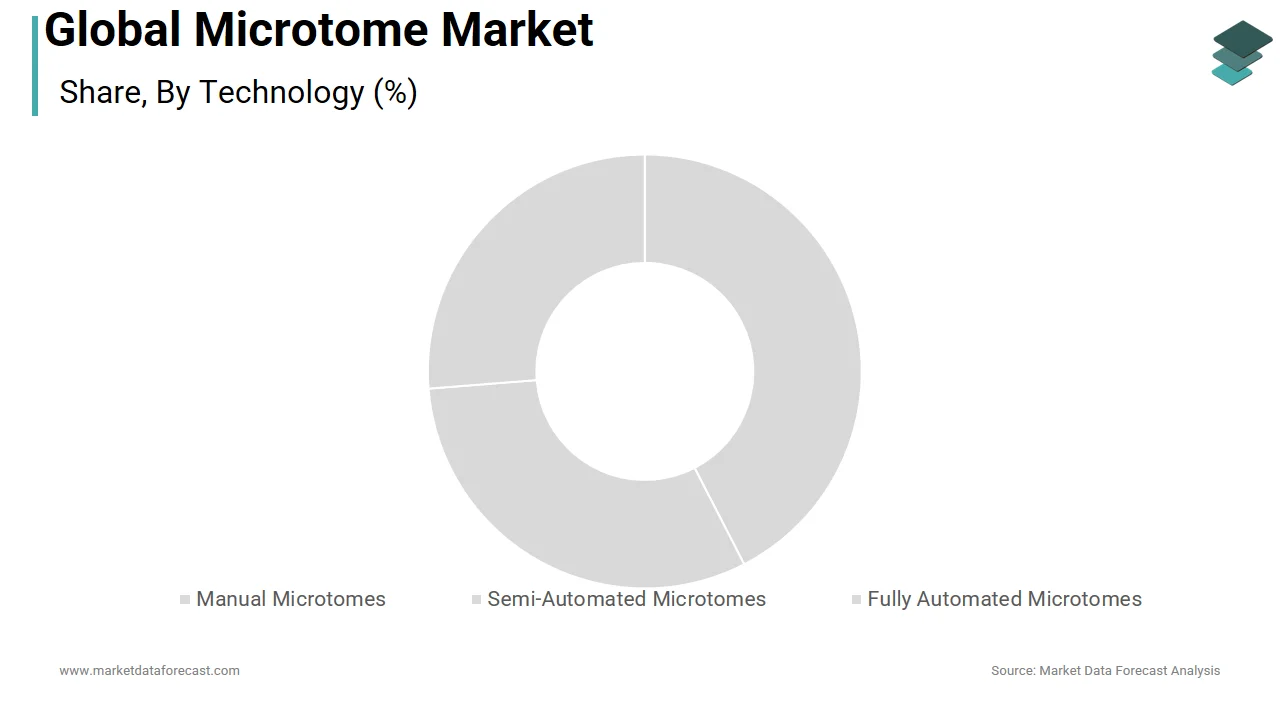
However, the fully automated microtomes segment is experiencing the fastest growth rate in the global market, due to the increasing need for high throughput, reproducibility, and integration with digital pathology workflows. These advanced instruments feature motorized sectioning, programmable thickness settings, and automated blade orientation, minimizing human error and ensuring consistent sample quality essential for quantitative analysis. According to the Journal of Digital Imaging, the adoption of whole slide imaging requires uniform tissue sections to prevent scanning artifacts, a requirement best met by fully automated systems. As per the European Society of Pathology, laboratories implementing lean management principles are increasingly investing in automation to reduce turnaround times and improve staff productivity. The rising volume of biopsy samples, particularly in oncology, necessitates equipment that can operate continuously with minimal supervision. Fully automated microtomes also enhance laboratory safety by reducing direct contact with sharp blades and hazardous specimens. The integration of these devices with laboratory information systems allows for traceability and data logging, which is critical for accreditation and quality assurance. Although the initial investment is higher, the long-term benefits of reduced waste, improved diagnostic accuracy, and labor savings justify the cost for large reference laboratories and academic institutions. Technological advancements in artificial intelligence and machine learning are further enhancing the capabilities of these systems, attracting early adopters and driving rapid market expansion.
By Product Insights
In 2025, the rotary microtomes segment held the majority share of the microtome market because of its versatility, reliability, and widespread application in routine histopathology for paraffin-embedded tissues. These instruments use a rotating wheel to advance the specimen block toward the blade, allowing for precise and consistent sectioning of soft to moderately hard tissues. Research shows that rotary microtomes serve as the standard hardware across global clinical pathology facilities for creating high-quality paraffin-embedded tissue sections. As per the World Health Organization, the majority of pathological diagnoses rely on light microscopy of paraffin sections, sustaining the dominant demand for rotary cutting technology. The mechanical simplicity and robustness of rotary microtomes make them easy to maintain and operate, appealing to both high-volume commercial labs and smaller hospital departments. Their ability to produce serial sections is crucial for three-dimensional reconstruction of tissues in research applications. The extensive installed base ensures a steady demand for accessories such as blades and holders, creating a recurring revenue stream for manufacturers. Continuous improvements in ergonomics and safety features, such as guarded blades and easy cleaning designs, keep rotary microtomes relevant despite the emergence of newer technologies. The universal acceptance of this technology in medical education and training further cements its position as the foundational instrument in histology.
On the other hand, the cryostat microtomes segment is expected to exhibit a noteworthy CAGR from 2026 to 2034 owing to the critical need for rapid intraoperative diagnosis and the preservation of labile antigens for immunohistochemistry. Cryostats are refrigerated microtomes that cut frozen tissue sections at sub-zero temperatures, preventing ice crystal formation and preserving cellular morphology and enzyme activity. As per the Journal of Histochemistry and Cytochemistry, the growing importance of molecular pathology and proteomics requires high-quality frozen sections for DNA, RNA, and protein analysis, driving demand in research and specialized clinical labs. Advances in cooling technology have improved temperature stability and reduced frost buildup, enhancing section quality and ease of use. The rise in complex surgical procedures, particularly in neurosurgery and oncology, necessitates quick and accurate pathological assessment, which cryostats facilitate. Additionally, the expansion of biobanking initiatives for personalized medicine relies heavily on properly preserved frozen tissues, further boosting equipment sales. Manufacturers are introducing compact and user-friendly models suitable for smaller operating rooms and satellite labs. The ability to provide rapid diagnostic results that directly influence surgical decisions makes cryostats an indispensable tool, propelling their rapid adoption in modern healthcare settings.
By End User Insights
The hospitals segment led the microtome market and captured a significant share in 2025. This leading position of the segment was attributed to the high volume of surgical procedures and the inherent need for in-house pathological services to support patient care. Most large hospitals have dedicated pathology departments that process thousands of tissue samples annually from biopsies, resections, and autopsies. According to the American Hospital Association, there are over 6,000 registered hospitals in the United States alone, each requiring robust histology infrastructure to meet accreditation standards and regulatory requirements. As per the Organisation for Economic Co-operation and Development, hospital-based diagnostic services account for the majority of pathological examinations globally, ensuring a consistent and substantial demand for microtomes. The trend toward centralized laboratories within hospital networks further consolidates purchasing power and drives the acquisition of high-capacity equipment. Hospitals prioritize reliability and speed to minimize patient wait times for diagnosis, favoring established brands with strong service support. The integration of pathology services with electronic health records also encourages the adoption of modern microtomes that can interface with digital systems. Government funding for public healthcare infrastructure in emerging economies is expanding hospital capacities, creating new opportunities for equipment suppliers. The critical role of histopathology in determining treatment protocols ensures that hospitals remain the primary consumers of microtome technology, sustaining their dominant market position.
But the clinical laboratories segment is predicted to witness the highest CAGR during the forecast period. This rapid expansion of the segment is fueled by the outsourcing of diagnostic services and the expansion of independent reference laboratories. Healthcare providers are increasingly partnering with specialized labs to reduce operational costs and access advanced diagnostic technologies without significant capital investment. Reference laboratories operate at scale, necessitating high-throughput automated microtomes to process large batches of samples efficiently. The consolidation of small labs into larger regional chains creates economies of scale that support the purchase of premium equipment. Additionally, the rise of telepathology allows these laboratories to serve remote areas, expanding their customer base and sample volume. Regulatory pressures for quality and consistency favor large laboratories that can invest in standardized automated workflows. The flexibility and scalability of independent labs make them agile adopters of new technologies, driving rapid growth in this segment. This shift towards centralized diagnostic hubs is reshaping the market dynamics, positioning clinical laboratories as a key growth engine for microtome manufacturers.
REGIONAL ANALYSIS
North America Microtome Market Analysis
North America dominated the global microtome market and accounted for a substantial share in 2025. This dominance of the North American market was driven by advanced healthcare infrastructure, high healthcare expenditure, and early adoption of innovative technologies. The United States serves as the primary hub, hosting major manufacturers and research institutions that drive technological advancements. Moreover, the Centers for Medicare & Medicaid Services (CMS) indicate that U.S. national health expenditure climbed to $4.5 trillion, representing vast economic capital available for cutting-edge laboratory procurement. The presence of stringent regulatory frameworks such as those from the Food and Drug Administration ensures high safety and efficacy standards, fostering trust among healthcare providers. As per the College of American Pathologists, the widespread adoption of digital pathology and personalized medicine in North America drives the demand for high-precision automated microtomes. The region benefits from a well-established reimbursement landscape for diagnostic procedures, encouraging hospitals and laboratories to invest in state-of-the-art equipment. Additionally, the high prevalence of chronic diseases such as cancer drives the uptake of advanced histopathology tools. The concentration of key market players facilitates rapid commercialization of new products, while robust distribution networks ensure wide availability. Consumer awareness regarding the benefits of early and accurate diagnosis further supports market growth. North America’s leadership is reinforced by continuous investment in research and development, positioning it at the forefront of microtome innovation and adoption globally.
Europe Microtome Market Analysis
Europe followed closely behind in the global microtome market and occupied a significant share in 2025, because of a strong focus on healthcare quality, aging demographics, and supportive regulatory environments. It is a mature and significant market for microtomes. Countries such as Germany, France, and the United Kingdom are key contributors, boasting advanced medical facilities and high standards of patient care. Eurostat predicts that individuals aged 65 and older will constitute nearly 28.5% of the total European Union population by 2050, widening requirements for histopathology screening networks. The implementation of the European Union Medical Device Regulation has standardized safety and performance requirements, enhancing market confidence and facilitating cross-border trade. As per the European Society of Pathology, Europe is a leader in adopting digital pathology workflows, which necessitates high-quality sectioning equipment to ensure optimal image capture. The region’s strong emphasis on research and development, supported by government funding and academic collaborations, fosters innovation in microtome technology. Additionally, the presence of renowned medical tourism destinations attracts international patients seeking high-quality diagnostic services. Government-funded healthcare systems in many European countries provide coverage for essential diagnostic procedures, ensuring accessibility for a broad patient base. These factors combine to maintain Europe’s strong position in the global microtome market, with steady growth supported by demographic trends and technological excellence.
Asia-Pacific Microtome Market Analysis
The Asia-Pacific microtome market is rapidly expanding. Furthermore, it is outpacing all other regions. The regional market is propelled by rapid economic development, expanding healthcare infrastructure, and rising medical awareness. China, India, Japan, and South Korea are leading this growth, with increasing investments in hospital modernization and specialized diagnostic centers. According to the Asian Development Bank, healthcare spending in Asia is expected to grow significantly, driven by rising incomes and government initiatives to improve health outcomes. The large population base and increasing prevalence of lifestyle-related diseases create a vast demand for diagnostic services, including histopathology. As per the Indian Council of Medical Research, the number of pathology laboratories in India is increasing rapidly to meet the diagnostic needs of the growing population. Government initiatives in countries like China and India to promote universal health coverage are accelerating the establishment of new healthcare facilities. The rising medical tourism industry in countries like Thailand and Singapore also contributes to market growth by demanding high-quality diagnostic services. Local manufacturing capabilities are improving, reducing costs and increasing accessibility of microtomes. Furthermore, the growing middle class is increasingly willing to spend on advanced healthcare services, driving demand for precision diagnostic equipment. These dynamic factors position Asia-Pacific as a critical growth engine for the global microtome industry, with substantial potential for future expansion.
Latin America Microtome Market Analysis
Latin America is a promising player in the microtome market due to growing healthcare access and increasing focus on improving diagnostic capabilities. Brazil and Mexico are the primary markets in the region, with established healthcare systems and growing private sectors. According to the Pan American Health Organization, efforts to strengthen primary healthcare systems in the region are gradually improving access to specialized services including histopathology. The rising incidence of cancer and other chronic diseases is driving the need for better diagnostic infrastructure. As per the Brazilian Ministry of Health, the government is investing in upgrading public hospitals and expanding the network of diagnostic centers. The private healthcare sector is also expanding, catering to the growing middle class who seek higher quality and faster diagnostic services. Economic challenges and currency fluctuations can impact purchasing power, but the essential nature of diagnostic equipment ensures steady demand. International aid and partnerships are helping to improve laboratory standards and training in the region. The adoption of digital pathology is beginning to take root in major urban centers, driving demand for compatible microtomes. While infrastructure gaps remain in rural areas, urban centers are witnessing rapid expansion of modern laboratory facilities, indicating positive momentum for the microtome market in Latin America.
Middle East and Africa Microtome Market Analysis
The Middle East and Africa region shows gradual but steady growth in the microtome market owing to healthcare modernization initiatives and increasing investment in medical infrastructure. Countries in the Gulf Cooperation Council such as the United Arab Emirates and Saudi Arabia are leading this growth, with significant investments in state-of-the-art medical facilities. According to the World Bank, healthcare expenditure in the Middle East and North Africa region is increasing as governments prioritize health sector development to meet the needs of growing populations. The high prevalence of diabetes and other chronic conditions in the region drives demand for diagnostic services. As per the Saudi Ministry of Health, the kingdom is undergoing significant transformation in its healthcare system, including the adoption of advanced technologies to improve patient outcomes. In Africa, South Africa and Kenya are emerging as key markets, with improving laboratory infrastructure and growing private healthcare sectors. International organizations and non-governmental agencies are supporting the development of pathology services in sub-Saharan Africa to combat infectious diseases and cancer. Challenges such as limited skilled personnel and infrastructure deficits persist, but training programs and equipment donations are helping to bridge these gaps. The region’s potential is underscored by ongoing infrastructure projects and increasing awareness of the importance of accurate diagnosis, laying the foundation for future growth in the microtome market.
COMPETITIVE LANDSCAPE
The competition in the microtome market is intense and characterized by the presence of established multinational corporations alongside specialized niche manufacturers. Large companies leverage their extensive resources, broad product portfolios, and global distribution networks to dominate the high-end segment of automated and integrated histology systems. These giants compete on technology leadership, reliability, and comprehensive service support. Specialized firms often focus on specific applications such as cryotomy or ultra microtomy, offering differentiated solutions that address unique research needs. The market sees frequent consolidation as larger entities acquire innovative startups to expand their technological capabilities and geographic reach. Price competition is moderate in premium segments but intensifies in entry-level categories where numerous suppliers exist. Intellectual property rights play a crucial role, with companies vigorously defending patents related to mechanical precision and automation technologies. Customer loyalty is driven by instrument durability, section quality, and responsive technical assistance. As digital pathology gains traction, competitors must demonstrate compatibility with scanning and analysis software. The shift toward value-based healthcare encourages manufacturers to prove cost-effectiveness and improved diagnostic outcomes, adding another layer to the competitive landscape requiring constant adaptation and innovation.
KEY MARKET PLAYERS
Some of the companies that are playing a dominating role in the global microtome market include
- SLEE Medical
- Histo-Line Laboratories
- BMS Microscopes
- Leica Biosystems
- Thermo Fisher Scientific
- Auxilab
- Orion Medic
- Medite
- TBS
- MICROS
- Bright Instruments
- MicroTec
- Amos Scientific
- Boeckeler Instruments
- Lupetec
- Zenith Lab
- Sakura Finetek USA Inc
- Medimeas Instruments
- AGD Biomedicals
- Scientific Instruments
- Ana-Med
TOP PLAYERS IN THE MARKET
- Leica Biosystems stands as a global leader in histology equipment with a comprehensive portfolio of manual and automated microtomes. The company leverages its expertise in precision engineering to produce high-quality instruments that ensure consistent sectioning for diagnostic accuracy. Recently, Leica has integrated digital connectivity features into its automated microtomes to facilitate seamless data exchange with laboratory information systems. They have expanded their service network in emerging markets to provide faster technical support and maintenance. By focusing on ergonomic design and safety features, Leica enhances user experience and reduces operator fatigue. Their commitment to innovation drives the development of advanced cryostats and rotary microtomes tailored for modern pathology workflows. This strategic approach solidifies their reputation as a trusted partner for laboratories worldwide seeking reliability and precision in tissue preparation.
- Thermo Fisher Scientific contributes significantly to the microtome market through its extensive range of histology solutions under the Microm brand. The company offers robust rotary and sliding microtomes designed for high-throughput environments in clinical and research settings. Thermo Fisher recently launched new automated models with enhanced motor control and intuitive touchscreen interfaces to improve operational efficiency. They have strengthened their market position by bundling microtomes with staining and scanning systems to provide end-to-end workflow solutions. The corporation invests heavily in research and development to optimize section quality for digital pathology applications. By leveraging its global distribution channels, Thermo Fisher ensures wide availability of instruments and consumables. Their focus on integrating hardware with software analytics supports the transition toward digitized laboratories and reinforces their leadership in the life sciences sector.
- Sakura Finetek USA Inc is a prominent player known for its innovative histopathology equipment, including advanced automated microtomes and cryostats. The company focuses on delivering precise and reliable instruments that meet the stringent requirements of clinical diagnostics. Sakura recently introduced next-generation microtomes with improved blade stability and automated specimen retraction to enhance section uniformity. They have expanded their manufacturing capabilities to meet growing global demand and reduce lead times. The company actively collaborates with pathologists to gather feedback and refine product designs for better usability. By offering comprehensive training programs, Sakura ensures that laboratory staff can maximize the potential of their equipment. Their dedication to quality and customer support has built strong loyalty among healthcare providers. This customer-centric strategy enables Sakura to maintain a competitive edge and drive adoption of their advanced sectioning technologies in diverse medical facilities.
TOP STRATEGIES USED BY KEY MARKET PARTICIPANTS
Key players in the microtome market primarily focus on technological innovation and product differentiation to enhance precision and automation. Companies invest heavily in research and development to create smart microtomes with digital interfaces and connectivity features for seamless integration into laboratory workflows. Strategic partnerships with healthcare providers and research institutions facilitate clinical validation and accelerate the adoption of new technologies. Expansion into emerging markets through local manufacturing and distribution networks helps companies capture growth opportunities in regions with expanding healthcare infrastructure. Mergers and acquisitions are frequently employed to acquire specialized technologies and broaden product portfolios. Sustainability initiatives drive the development of energy-efficient and durable equipment to reduce environmental impact. Additionally, manufacturers emphasize comprehensive after-sales support and training programs to ensure optimal equipment performance and customer satisfaction. These strategies enable companies to address evolving diagnostic needs and maintain competitiveness in a rapidly advancing industry.
MARKET SEGMENTATION
This global microtome market research report is segmented and sub-segmented into the following categories.
By Technology
- Manual Microtomes
- Semi-Automated Microtomes
- Fully Automated Microtomes
By Product
- Microtome Instruments
- Rotary Microtomes
- Cryostat Microtomes
- Vibrating Microtomes
- Other Microtome Instruments
- Microtome Accessories
By End-user
- Hospitals
- Clinical Laboratories
- Other End Users
By Region
- North America
- Europe
- Asia Pacific
- Latin America
- The Middle East and Africa