- Product Description Description
- Table of Contents TOC
- List of Table & Figure LOT
- Get Free Sample PDF Sample PDF
Market Size, 2025
$27.51 BnMarket Estimate, 2026
$28.95 BnMarket Forecast, 2034
$43.60 BnCAGR, 2026–2034
5.25%Executive Summary: Global Spices Market
- Market Scope: In-depth assessment of the global spices market covering product types, application verticals, retail distribution channels, and regional dynamics.
- Market Valuation: Valued at USD 27.51 billion in 2025, estimated at USD 28.95 billion in 2026, and projected to reach USD 43.60 billion by 2034, expanding at a steady CAGR of 5.25% from 2026 to 2034.
- Primary Growth Drivers: Rising health consciousness regarding functional and natural spices (e.g., turmeric and ginger), growing consumer demand for ethnic and global cuisines, and expansion of clean-label packaged foods.
Key Market Segment Metrics (2026–2034)
| Category | Leading Segment (Base Position) | Fastest-Growing / High-Growth Segment |
|---|---|---|
| By Product Type | Whole Spices (captured ~45.5% market share, favored for superior flavor retention and commercial cooking) | Spice Blends (projected at a 7.5% CAGR, driven by urban consumer demand for pre-mixed, time-saving global seasoning formulas) |
| By Application | Food & Beverage (held ~40.4% market share, anchored by use in clean-label formulations, sauces, and condiments) | Ready-to-Eat Meals (projected at a rapid 8.2% CAGR, fueled by busy lifestyles and pre-packaged culinary demand) |
| By Distribution Channel | Supermarkets & Hypermarkets (top retail channel capturing ~45.3% share due to broad product availability and brand trust) | Online Retail (projected at an impressive 9.1% CAGR, driven by e-commerce adoption and direct-to-consumer specialty spice platforms) |
| By Region | Asia-Pacific (dominant regional leader capturing over 33% of the market share, led by India, Vietnam, and China) | North America & Europe (high-growth hubs for organic, sustainably sourced, and exotic ethnic spice imports) |
Major Market Players & Industry Landscape
Market Structure: Highly fragmented yet competitive ecosystem featuring global heritage brands, multinational agri-commodity powerhouses, and regional producers focusing on supply chain traceability and sustainable farming certifications.
Key Companies: McCormick & Company, Olam International, Ajinomoto Co., Inc., Everest Spices, Sensient Technologies Corporation, Givaudan, Kerry Group plc, DS Group (Catch Spices), Bart Ingredients Company Ltd, and SHS Group (Schwartz Spices).
 Download Free Sample Report
Global Spices Market Size
The global spices market size was valued at USD 27.51 billion in 2025 and is anticipated to reach USD 28.95 billion in 2026 from USD 43.60 billion by 2034, growing at a CAGR of 5.25% during the forecast period from 2026 to 2034.
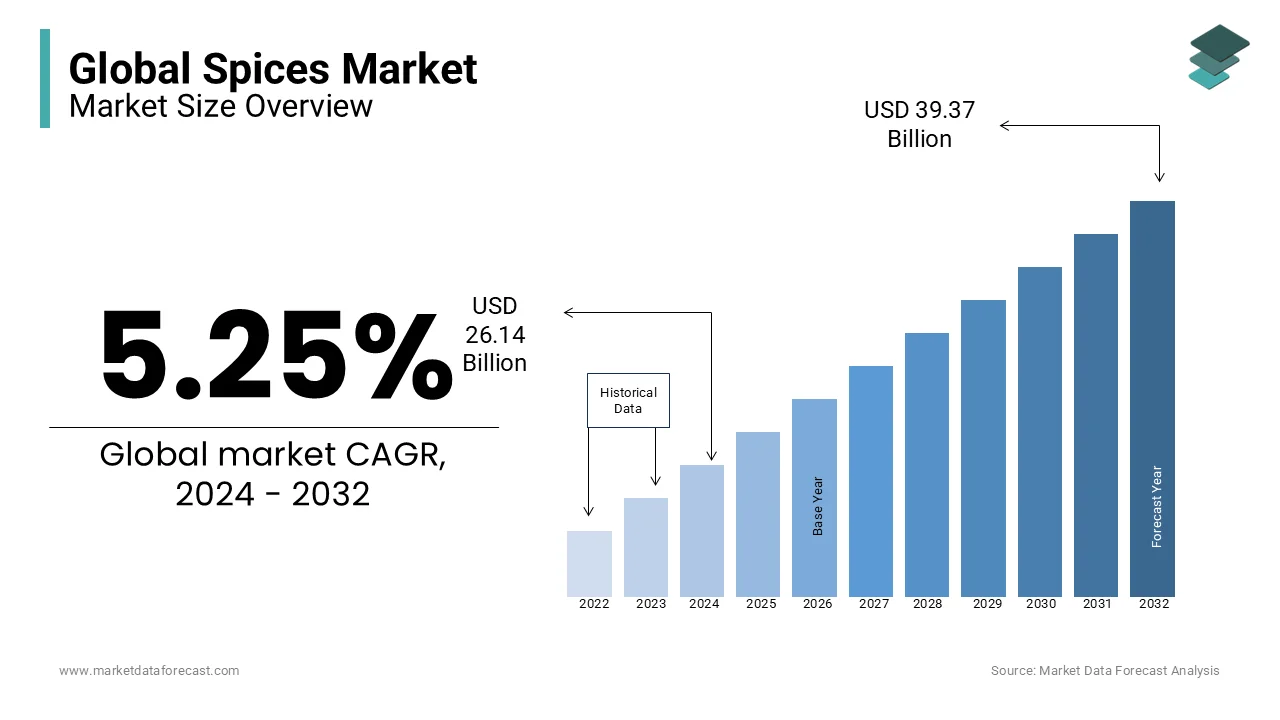
Spices like turmeric, ginger, and cinnamon are gaining popularity due to their well-documented health benefits. For instance, turmeric, known for its anti-inflammatory properties, is linked to improved joint health and better immune system function, supported by clinical studies showing reduced inflammation markers after regular consumption. In agriculture, spice crops are significant, and India produces around 70% of the world's spices and exports to over 180 countries. Notably, this industry employs millions of farmers globally, with India alone supporting over 6 million families. Environmental concerns also influence the market, as climate change affects crop yields. For example, rising temperatures have reduced black pepper production in Vietnam, which is the leading exporter worldwide, by approximately 15% in recent years.
MARKET DRIVERS
Growing Consumer Preference for Natural and Functional Ingredients
The increasing focus on health and wellness is a key driver of the spices market. Consumers are shifting away from artificial additives because they are favoring natural ingredients with functional health benefits. Spices like turmeric, being rich in curcumin, have been shown to reduce inflammation and improve cardiovascular health. Studies indicate that global turmeric consumption has increased by 10% annually over the past decade and is fuelled by its inclusion in functional foods, beverages, and supplements. The widely used Ginger for digestive health has seen similar growth due to the rising demand for the herbal tea and natural remedy sectors. This trend boosts the market for health-driven spice products.
Rising Global Demand for Ethnic and Exotic Cuisines
Consumers are seeking authentic flavors from diverse cuisines owing to the expansion of globalization and cultural exchanges. This has increased the demand for spices like cumin, cardamom, and paprika. For example, cumin exports from India grew by 20% in 2022, largely influenced by rising consumption in the Middle East, Europe, and the U.S. Similarly, paprika is increasingly used in global snacks and processed foods, with its export volume rising by 15% over the past five years. The growing popularity of street food, ethnic restaurants, and fusion cooking underscores the vital role of spices in enhancing culinary experiences worldwide.
MARKET RESTRAINTS
Impact of Climate Change on Spice Production
Climate change is a significant restraint affecting spice cultivation globally. Unpredictable weather patterns, rising temperatures, and water scarcity are reducing crop yields. For instance, black pepper production in Vietnam declined by 15% between 2020 and 2023 due to extreme heat and drought. Likewise, saffron yields in Iran have dropped as water availability dwindles, leading to higher prices and supply shortages. These environmental factors not only disrupt global supply chains but also increase production costs, challenging market growth and affordability for consumers and manufacturers reliant on these spices.
Volatility in Spice Prices
Price volatility caused by supply-demand imbalances, geopolitical tensions, and logistical challenges poses a restriction on the spices market. For example, turmeric prices surged by 25% in 2024 owing to lower production in India caused by erratic rainfall. Transportation costs are exacerbated by rising fuel prices, which further add to the instability. Such fluctuations create difficulties for businesses in planning procurement and pricing strategies, which potentially lead to decreased demand from cost-sensitive buyers. Export-dependent markets are particularly vulnerable because price instability affects their competitiveness in global trade, challenging the market’s ability to sustain consistent growth.
MARKET OPPORTUNITIES
Expansion of Organic and Sustainable Spice Farming
The rising consumer demand for organic and sustainably sourced spices presents a significant opportunity for growth. According to industry reports, organic spice demand has increased by over 12% annually as consumers prioritize environmental sustainability and pesticide-free products. India and Sri Lanka are expanding organic certification programs for spices like cinnamon and turmeric, which are boosting their global appeal. Certifications such as Fair Trade and Rainforest Alliance further enhance marketability. For instance, organic ginger exports from India grew by 18% in 2024 to highlight the potential for premium pricing and market differentiation through sustainable farming practices that appeal to eco-conscious consumers.
Innovation in Spice-Based Products
Innovation in spice-derived products, such as spice blends, extracts, and essential oils, is creating new market opportunities. These value-added products cater to both culinary and non-culinary industries, including cosmetics and pharmaceuticals. For example, the demand for curcumin supplements grew by 14% in 2024 due to its recognized anti-inflammatory benefits. Similarly, chili pepper extract is extensively used in pain relief creams and functional beverages, and is gaining traction globally. Spice companies can capitalize on these trends by developing innovative offerings that meet evolving consumer preferences in diverse market segments.
MARKET CHALLENGES
Adulteration and Quality Control Issues
The prevalence of adulteration in the spices market is a significant challenge, undermining consumer trust and market reputation. Studies show that approximately 25% of spices tested globally fail quality checks due to contamination or the presence of unauthorized additives. For instance, adulteration in turmeric with synthetic colorants like lead chromate has raised health concerns. Stricter regulatory enforcement and advanced testing methods are needed to combat this issue. Businesses face additional costs to ensure compliance with global quality standards, such as those set by the FDA and European Food Safety Authority, which create financial and operational burdens for spice producers.
Fragmented Supply Chains
The spices market is heavily reliant on fragmented and complex supply chains, which pose logistical challenges. Many spices are sourced from smallholder farmers in developing regions, making standardization and efficient transportation difficult. For example, India accounts for nearly 70% of global spice production, yet fragmented distribution channels result in delays and increased costs. These inefficiencies are exacerbated by geopolitical tensions and disruptions like the COVID-19 pandemic, which exposed vulnerabilities in international trade. Addressing these challenges requires investment in infrastructure, digital tracking systems, and stronger collaborations between producers, distributors, and governments to ensure a streamlined and reliable supply chain.
REPORT COVERAGE
| REPORT METRIC | DETAILS |
| Market Size Available | 2025 to 2034 |
| Base Year | 2025 |
| Forecast Period | 2026 to 2034 |
| CAGR | 5.25% |
| Segments Covered | By Product Type, Application & Distribution Channel, and Region |
| Various Analyses Covered | Global, Regional, & Country Level Analysis; Segment-Level Analysis, DROC. PESTLE Analysis, Porter’s Five Forces Analysis, Competitive Landscape, Analyst Overview of Investment Opportunities |
| Regions Covered | North America, Europe, APAC, Latin America, Middle East & Africa |
| Market Leaders Profiled | McCormick & Company, Olam International, Ajinomoto Co., Inc., Everest Spices, Sensient Technologies Corporation, Givaudan, Kerry Group plc, DS Group (Catch Spices), Bart Ingredients Company Ltd, SHS Group (Schwartz Spices). |
SEGMENT ANALYSIS
By Product Type Insights
The whole spices segment led the market and accounted for 45.5% of the global spices market share in 2024. Whole spices like black pepper, cloves, and cardamom are highly preferred in both home cooking and commercial food preparation because they retain their natural flavour and aroma longer than processed spices. For example, India is the largest spice producer with significant quantities of whole spice, which contributes to nearly 70% of its total spice export revenue. Their importance is further underscored by demand from the food service and retail sectors, where freshness and authenticity are prioritized.
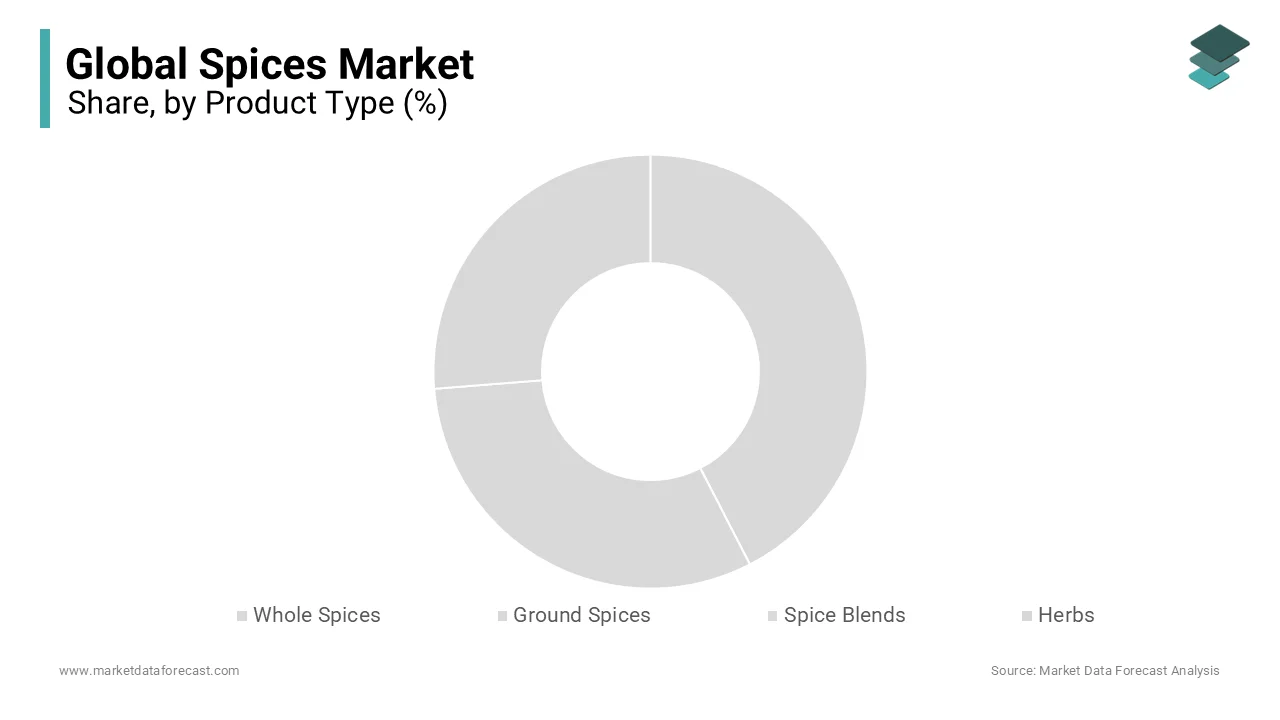
The spice blends segment is estimated to be the fastest-growing segment and is predicted to witness a CAGR of 7.5% over the forecast period. This rapid growth is driven by the increasing popularity of ready-to-use products that save time while delivering authentic flavors. Consumers, especially in urban areas, show interest in spice blends for international cuisines, such as garam masala, Cajun mix, and Italian seasoning. For example, the demand for spice blends in the U.S. rose 12% year-over-year in 2024 due to the growing interest in home cooking during the pandemic. Their importance lies in convenience, consistency, and the ability to cater to diverse culinary preferences globally.
By Application Insights
The Food and Beverage segment occupied 40.4% of the global market share in 2024. This dominance is due to the extensive use of spices in culinary applications for flavor enhancement, preservation, and health benefits. Key spices like turmeric, black pepper, and cumin are staples in traditional and modern cuisines worldwide. The rising trend of clean-label and natural food products further boosts spice usage in the industry. For example, the inclusion of spices in functional foods and beverages, such as turmeric lattes, is growing steadily, with global turmeric drink consumption increasing by 15% annually. This segment is critical due to its integral role in food processing and the global demand for diverse and authentic flavors.
The ready-to-eat meals segment is swiftly emerging in the spices market and is projected to witness the fastest CAGR of 8.2% over the forecast period. This rapid growth is driven by the increasing demand for convenient and flavourful meal options among busy consumers. Spices are essential in creating authentic taste profiles for pre-packaged meals such as Indian curries or Mediterranean dishes. For instance, the ready-to-eat food industry in the U.S. expanded by 10% year-on-year in 2024, with spice-infused products driving a significant portion of this growth. This segment's importance lies in addressing consumer convenience while ensuring high-quality taste and innovation in meal offerings globally.
By Distribution Channel Insights
Supermarkets and hypermarkets are the top distribution channels in the global spices market, and this segment captured 45.3% of the global market share in 2024. These stores dominate due to their wide reach, convenience, and ability to offer a wide variety of spice products, which include branded, private-label, and bulk options. Supermarkets provide consumers with the opportunity to compare products and access promotions, making them a preferred choice for household spice purchases. For example, in the U.S., over 70% of consumers purchase their spices from supermarkets due to accessibility and trust in established brands. This segment's importance lies in its capacity to cater to both mass-market and premium customer demands efficiently.
The online retail segment is growing rapidly and is expected to register a promising CAGR of 9.1% over the forecast period. The growth is fuelled by increasing e-commerce adoption, particularly among millennials and urban populations. Online platforms like Amazon, Instacart, and specialty spice e-retailers provide convenience, product variety, and easy access to exotic and organic spices that may not be available locally. The pandemic accelerated this trend, with online spice sales in India growing by 25% in 2024, reflecting a global shift toward digital purchasing. The importance of this segment lies in its ability to reach geographically dispersed consumers and offer personalized purchasing experiences through recommendations and reviews.
REGIONAL ANALYSIS
Asia Pacific Spices Market Analysis
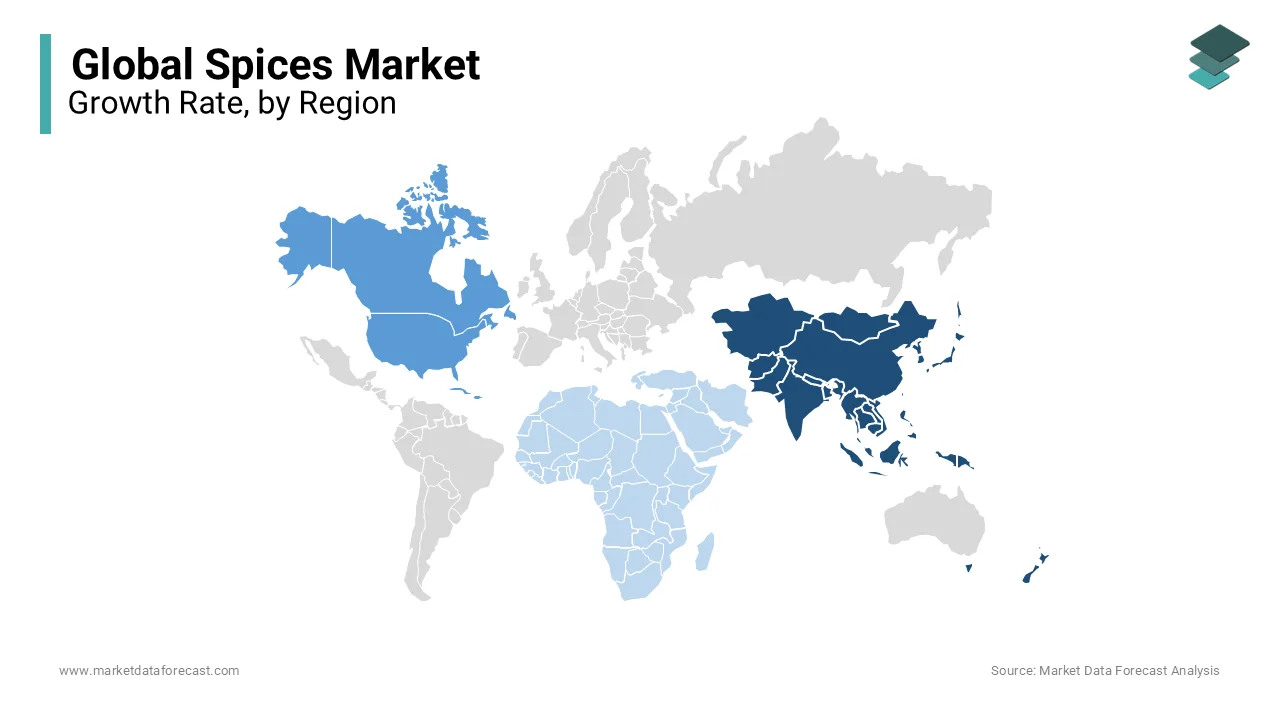
Asia-Pacific is the most dominating region in the global spices market and captured more than one-third of the global market share in 2024. The dominance of the Asia-Pacific region is mainly attributed to countries like India, Vietnam, and China, which are leading producers and exporters of spices. India, for example, supplies 75% of the world's turmeric and over 50% of its cumin. The region is expected to maintain a high growth trajectory because of rising domestic consumption and strong export demand. Also, the increasing adoption of processed food and rising global interest in Asian cuisines further boost the market. This region is forecast to grow at a steady CAGR, driven by innovation in spice-based products.
North America Spices Market Analysis
North America is a notable regional market for spices worldwide. North America is led by the United States and holds a prominent position in the spices market due to high imports and increasing demand for ethnic and organic spices. The U.S. is a major importer of black pepper and paprika, which reflects the growing popularity of international cuisines. The demand for spices like turmeric and ginger for their medicinal properties is increasing due to consumers prioritizing health and wellness. The region’s spices market is projected to grow at a CAGR of 5-6%, fuelled by consumer interest in clean-label products and convenience.
Europe Spices Market Analysis
Europe is a significant market for spices, with countries like Germany, the Netherlands, and the UK leading imports. European consumers value organic and sustainably sourced spices, creating opportunities for certifications like Fair Trade. The rising interest in diverse global cuisines and the shift toward plant-based diets are driving demand for flavourful, natural ingredients. Steady growth is expected as companies innovate in spice blends and extracts to cater to health-conscious consumers.
Latin America Spices Market Analysis
Latin America is an emerging player, with countries like Brazil and Mexico leading the region’s spice production and consumption. Spices such as chili, coriander, and oregano are widely cultivated and integrated into traditional cuisines. Brazil has recently expanded its export of processed spice products. The region’s spices market is forecast to grow steadily due to the increasing focus on spice cultivation for international trade and the growth of the local food industry.
Middle East And Africa Spices Market Analysis
The Middle East and Africa hold a smaller share of the global spices market but present untapped potential. Ethiopia and Nigeria are expanding their spice production capacities, particularly for chili and ginger. The region's spice market growth is supported by increasing investments in agriculture and infrastructure. Moreover, the traditional use of spices in Middle Eastern cuisine ensures a consistent domestic demand. Future growth is anticipated as these countries strengthen their export capabilities.
COMPETITIVE LANDSCAPE
The spices market is highly competitive and is characterized by the presence of numerous global, regional, and local players. Major multinational companies like McCormick & Company, Olam International, and Everest Spices dominate the global market with strong supply chains, extensive product portfolios, and innovative offerings. These companies focus on quality control, branding, and value-added products such as pre-mixed spice blends, extracts, and organic spices to differentiate themselves.
Regional players, particularly in spice-producing nations like India, Vietnam, and Indonesia, cater to local markets while also exporting significant volumes globally. India, for instance, dominates the production of spices like turmeric, cumin, and black pepper, while Vietnam leads in pepper exports. Local companies often compete on pricing and availability but face challenges in maintaining consistent quality and adhering to international standards.
The competition is also intensifying due to rising demand for organic and sustainably sourced spices, pushing companies to invest in certification programs and sustainable farming practices. Start-ups and niche players are entering the market with innovative, health-focused products such as curcumin supplements and spice-based beverages, challenging traditional players.
E-commerce has further heightened competition, enabling small brands to reach global customers. As consumer preferences evolve, companies must continually innovate and adapt to maintain a competitive advantage.
KEY MARKET PLAYERS
These are some of the notable companies dominating the global spices market.
- McCormick & Company
- Olam International
- Ajinomoto Co., Inc.
- Everest Spices
- Sensient Technologies Corporation
- Givaudan
- Kerry Group plc
- DS Group (Catch Spices)
- Bart Ingredients Company Ltd
- SHS Group (Schwartz Spices)
Top Players in the Spices Market
McCormick & Company is a global leader in spices, herbs, and flavor solutions, serving both retail consumers and food manufacturers across more than 170 countries. Known for trusted brands like McCormick®, Lawry’s®, and Zatarain’s®, the company delivers consistent quality, traceability, and culinary innovation. Recently, McCormick expanded its clean-label and organic spice lines, invested in sustainable sourcing partnerships with farming communities, and launched AI-driven flavor trend forecasting tools. It enhanced e-commerce capabilities and introduced region-specific blends to cater to local palates. Through vertical integration, digital engagement, and sustainability commitments like its “Forward Together” plan, McCormick strengthens consumer loyalty and reinforces its role as a global flavor authority shaping modern culinary experiences.
Olam International is a global agri-business powerhouse with deep involvement in the sourcing, processing, and distribution of spices, including pepper, chili, turmeric, and cumin. Operating across 60+ countries, Olam connects farmers with global food manufacturers and retailers through its “At Source” traceability platform. Recently, Olam expanded its spice processing facilities in India and Vietnam, launched sustainability-certified spice programs, and introduced blockchain-enabled supply chain transparency. It also developed value-added spice extracts and blends for industrial food customers.
Kerry Group is a global taste and nutrition leader that supplies customized spice blends, seasonings, and flavor systems to food manufacturers, QSR chains, and retail brands worldwide. Its expertise lies in creating differentiated, clean-label, and functional spice solutions that meet evolving consumer trends. Recently, Kerry launched plant-based and umami-enhancing spice systems, expanded its clean-label portfolio, and invested in sustainable sourcing through its “Beyond Nature” initiative. It acquired regional seasoning specialists to enhance local flavor authenticity and expanded co-creation centers for rapid product development.
Top Strategies Used by Key Market Participants
Key players invest in sustainable and traceable sourcing to ensure quality and ethical compliance. Strategic acquisitions of regional brands expand local flavor authenticity and distribution. Companies develop clean-label, organic, and functional spice blends to meet health-conscious demand. Digital platforms for supply chain transparency and flavor trend forecasting enhance agility. Product innovation includes global fusion blends and plant-based seasonings. E-commerce and D2C channels boost retail reach. Partnerships with food manufacturers and QSRs drive B2B growth. Investment in processing tech improves shelf life and food safety. Sustainability certifications and farmer empowerment programs build brand trust. Flavor co-creation studios accelerate customer-specific innovation in a dynamic, culturally driven global market.
COMPETITION OVERVIEW
The global spices market is fiercely competitive, blending heritage consumer brands like McCormick and Schwartz with agri-commodity giants like Olam and flavor innovators like Kerry Group. Competition centers on quality consistency, flavor authenticity, supply chain transparency, and sustainability credentials. While consumer-facing brands compete on brand trust and culinary innovation, B2B players differentiate through customized blends, clean-label solutions, and speed-to-market. Emerging trends, such as plant-based eating, global fusion cuisine, and demand for traceability, are reshaping product development. Digitalization, from AI-driven trend forecasting to blockchain traceability, is becoming a key battleground. Regional players leverage local sourcing and cultural relevance, while multinationals scale through acquisitions and global sourcing networks. Sustainability, ethical sourcing, and flavor customization are critical differentiators.
RECENT MARKET NEWS
- In August 2024, the Spices Board under the Indian Government initiated an extensive scheme for improving the export of spices and value-added spice items, along with enhancing the productivity of cardamom. The board released several programs as part of the scheme, including Sustainability in the Spice Sector through Progressive, Innovative, and Collaborative Interventions for Export Development (SPICED). This will be put into effect over the remaining time of the 15th Finance Commission cycle, up to FY 2025-26, with an overall sanctioned outlay of 422.30 crore rupees.
- In May 2024, the ICAR-National Research Centre for Grapes (NRCG) and Agilent Technologies reported the signing of a strategic partnership to co-develop modern analytical workflows and resolve vital gaps or loopholes in emerging food safety protocols.
MARKET SEGMENTATION
This research report on the global spices market is segmented and sub-segmented into the following categories.
By Product Type
- Whole Spices
- Ground Spices
- Spice Blends
- Herbs
By Application
- Food and Beverage
- Meat and Poultry
- Sauces and Condiments
- Snacks
- Bakery Products
- Ready-to-Eat Meals
- Pharmaceuticals
- Cosmetics and Personal Care
- Others (e.g., animal feed)
By Distribution Channel
- Online Retail
- Supermarkets/Hypermarkets
- Specialty Stores
- Convenience Stores
By Region
- North America
- Europe
- Asia Pacific
- Latin America
- Middle East And Africa