- Product Description Description
- Table of Contents TOC
- List of Table & Figure LOT
- Get Free Sample PDF Sample PDF
Market Size, 2025
$27.53 BnMarket Estimate, 2026
$28.9 BnMarket Forecast, 2034
$43.2 BnCAGR, 2026–2034
5.13%Global Organic Spices Market Summary
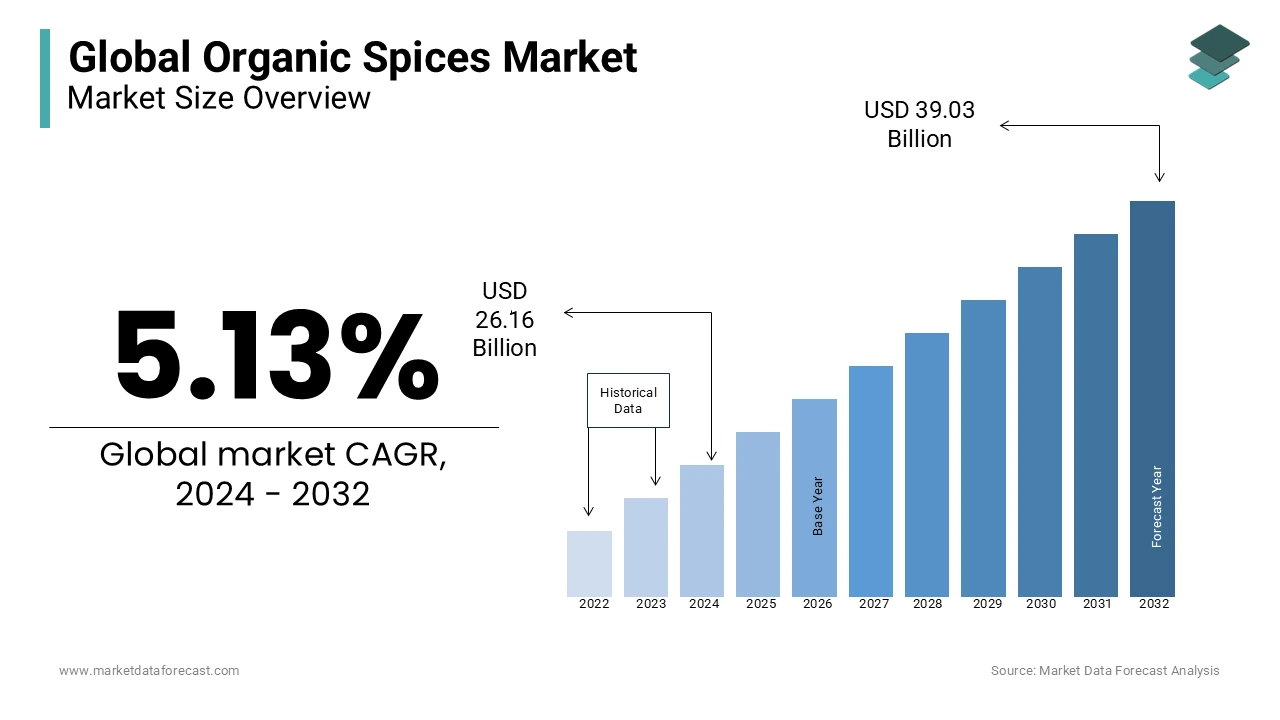
The global organic spices market was valued at USD 27.53 billion in 2025, is projected to reach USD 28.94 billion in 2026, and is expected to grow significantly to USD 43.18 billion by 2034, registering a CAGR of 5.13% from 2026 to 2034. Growth is driven by rising consumer preference for chemical-free, clean-label spices, increasing awareness of the health benefits of organic herbs and seasonings, and the rapid expansion of global culinary trends. The growing popularity of natural food ingredients, expansion of retail distribution channels, and the influence of healthy lifestyle choices continue to strengthen the market’s global demand.
Key Market Trends
- Growing demand for clean-label and chemical-free spices across the food processing and household segments.
- Rising global interest in functional spices such as turmeric, ginger, and cinnamon due to their medicinal benefits.
- Expansion of organic farming practices and increasing certification standards supporting high-quality spice production.
- Rapid growth of powdered and ready-to-use spice blends, influenced by convenience-focused consumers.
- Modern retail and e-commerce platforms accelerating the availability of premium organic spices.
Segmental Insights
- Based on product, turmeric emerged as the most in-demand organic spice due to growing consumer awareness of its health benefits and strong use in functional foods and beverages.
- Based on form, the powder segment led the market, followed by the granular segment, driven by convenience, ease of blending, and widespread culinary applications.
- Based on distribution channel, the indirect segment captured the maximum share, supported by supermarkets, hypermarkets, and online retail platforms.
Regional Insights
- Asia Pacific is the most lucrative region, driven by changing food habits, high spice consumption, and strong agricultural production capabilities.
- North America and Europe continue to witness increasing demand for organic, clean-label spices in both retail and food service sectors.
- Emerging markets in Latin America and the Middle East are experiencing rising adoption due to growing culinary diversification.
Competitive Landscape
The global organic spices market is moderately consolidated, with companies focusing on product purity, supply chain traceability, organic certifications, and expansion into high-growth markets. Manufacturers are enhancing production capabilities, developing premium blends, and strengthening global distribution networks.
Key players in the organic spices market include:
UK Blending LTD, Organic Spices Inc., Daarnhouwer & Co, Spice Chain Corporation, The Watkins Co., Sabater Spices, Pacific Spice Company, Inc., Husarich GmbH, AKO GmbH, and SunOpta Inc.
Global Organic Spices Market Size
The global organic spices market size was valued at USD 27.53 billion in 2025, and the global market size is expected to reach USD 43.18 billion by 2034 from USD 28.94 billion in 2026. The market's promising CAGR for the predicted period is 5.13%.
The organic spices is dedicated to the cultivation processing and distribution of aromatic plant substances that are certified free from synthetic pesticides fertilizers and genetically modified organisms. Organic spices, include a wide variety of products such as turmeric cumin black pepper cinnamon and ginger which are valued not only for their flavor enhancing properties but also for their purported medicinal benefits. As per the study, the global area under organic agricultural management has expanded significantly with spices representing a high value crop category that incentivizes farmers to transition away from conventional farming methods. Furthermore, data from the Food and Agriculture Organization of the United Nations indicates that the demand for natural flavorings is rising as consumers seek to reduce their intake of artificial additives in processed foods. The market is characterized by complex supply chains that often originate in developing nations where smallholder farmers play a pivotal role in production. These farmers must adhere to international certification standards to access premium markets in North America Europe and Asia Pacific.
MARKET DRIVERS
Escalating Consumer Awareness Regarding Health Benefits and Therapeutic Properties Drives Demand for Organic Variants
The growing recognition of the health promoting attributes associated with various spices is escalating the growth of organic spices market. Consumers are increasingly informed about the anti-inflammatory antioxidant and digestive benefits of spices, such as turmeric ginger and cinnamon leading to a preference for organic versions that guarantee purity and potency. According to the study, the bioactive compounds in these spices, which contribute to improved immune function and chronic disease prevention. As per the recent survey, significant shoppers actively seek out functional foods that offer health advantages beyond basic nutrition. The rise of wellness trends such as Ayurveda and holistic healing has further integrated spices into daily routines as supplements rather than mere culinary ingredients. Organic certification assures buyers that the spices have been grown in nutrient rich soil without synthetic interventions preserving their natural phytochemical profile. The demographic shift towards preventive healthcare among millennials and baby boomers amplifies this trend as individuals prioritize long term well being over immediate convenience.
Stringent Regulatory Frameworks and Certification Standards Enhance Consumer Trust and Market Credibility
The implementation of robust regulatory frameworks and standardized certification is another factor escalating the growth of organic spices market. Governments and international bodies have established comprehensive guidelines to define organic agriculture ensuring that products labeled as organic meet specific environmental and safety criteria. According to the European Commission, the organic logo guarantees that products comply with strict rules on production processing transport and storage which reassures consumers about the authenticity of their purchases. In the United States, the United States Department of Agriculture oversees the National Organic Program, which mandates regular inspections and detailed record keeping for all entities involved in the organic supply chain. These measures mitigate the risk of fraud and mislabeling which are prevalent concerns in the global spice trade. The harmonization of standards across different regions facilitates international trade allowing producers to access multiple markets with consistent compliance requirements. This regulatory clarity encourages investment in organic farming infrastructure and technology as stakeholders recognize the long-term viability and profitability of certified operations. Furthermore, the presence of third-party certifiers adds an additional layer of verification enhancing the credibility of the organic claim.
MARKET RESTRAINTS
High Production Costs and Limited Availability of Raw Materials Restrict Market Accessibility
The elevated costs associated with organic farming practices and the limited availability of certified raw materials is restricting the growth of organic spices market. Organic cultivation requires labor intensive methods, such as manual weeding composting and crop rotation, which are more expensive than conventional mechanized farming techniques. According to the Rodale Institute organic farming systems typically require more labor input which translates to higher production costs that are ultimately passed on to consumers. This price premium limits the accessibility of organic spices to higher income demographics thereby restricting mass market adoption. The lengthy conversion period required to achieve organic certification further discourages farmers as they must adhere to organic standards without receiving the premium prices associated with certified products during this interim phase. Additionally, the yield gap between organic and conventional farming can be substantial particularly in the initial years of transition reducing the overall volume of available organic spices. Supply chain inefficiencies and logistical challenges in sourcing regions exacerbate these issues leading to inconsistent availability and fluctuating prices. Retailers and manufacturers struggle to maintain steady stock levels which can disrupt consumer loyalty and hinder market growth. The scarcity of certified organic inputs such as seeds and fertilizers also poses a challenge forcing producers to rely on limited suppliers.
Susceptibility to Climate Change and Environmental Volatility Impacts Crop Yields and Quality
The high adverse effects of climate change and environmental volatility, which directly impact crop yields and product quality is additionally degrading the growth of organic species market. Spices are predominantly grown in tropical and subtropical regions that are increasingly experiencing extreme weather events, such as droughts floods and unseasonal temperatures. According to the Intergovernmental Panel on Climate Change, changing precipitation patterns and rising temperatures pose significant risks to agricultural productivity for sensitive crops like cardamom vanilla and pepper. Organic farming systems, while generally more resilient to certain stresses still suffer from reduced yields when exposed to severe climatic shocks due to the prohibition of synthetic resilience boosting chemicals. The reliance on rain fed agriculture in many spice producing regions exacerbates this vulnerability as farmers lack access to advanced irrigation infrastructure. Pests and diseases are also becoming more prevalent and aggressive due to warmer climates threatening organic crops that cannot be treated with conventional pesticides. This biological pressure necessitates innovative integrated pest management strategies which may not always be effective against new threats. The unpredictability of harvests makes it challenging for manufacturers to plan production and manage inventory leading to operational inefficiencies.
MARKET OPPORTUNITIES
Expansion into Emerging Markets with Rising Disposable Incomes Presents Significant Growth Potential
The emergence of middle-class populations in developing economies to expand its geographical footprint and customer base is likely to enhance the growth of organic species market. Countries in Asia Pacific, Latin America, and Eastern Europe, are witnessing rapid urbanization and increasing disposable incomes which are driving changes in dietary habits and consumption patterns. According to the research, the growing middle class in Asia is increasingly adopting westernized diets and showing greater interest in premium and health-oriented food products including organic spices. This demographic shift creates a new segment of consumers, who are willing to pay for quality and sustainability attributes associated with organic labels. The retail sales of organic food and beverages are growing at a faster rate than in mature markets reflecting untapped potential. Local retailers and e commerce platforms are expanding their offerings to cater to this demand providing easier access to organic products for urban consumers. The rise of modern trade formats such as supermarkets and hypermarkets in these regions facilitates the distribution of packaged organic spices enhancing visibility and convenience. Furthermore, government initiatives in countries like India and China are promoting organic farming to boost exports and improve domestic food safety standards. These policy supports create a favorable environment for market entry and expansion. International brands are strategically partnering with local distributors to navigate regulatory landscapes and cultural preferences.
Innovation in Value Added Products and Convenient Packaging Formats Attracts Modern Consumers
The development of value-added spice products and innovative packaging solutions is also to enhance the growth of organic spices market. Modern consumers, particularly those in urban areas seek convenience and versatility in their cooking ingredients leading to increased demand for ready to use spice blends marinades and pastes. According to the study, there is a growing preference for ethnic and global flavors among home cooks, who desire restaurant quality meals without the complexity of sourcing individual spices. Organic spice manufacturers are responding by creating curated blends that cater to specific cuisines, such as Indian, Mexican, and Mediterranean, thereby simplifying the cooking process. As per the study, sales of seasoned and blended spices are outperforming single ingredient spices driven by the desire for convenience and experimentation. Packaging innovations, such as resealable pouches single serve sachets and grinder bottles enhance product usability and freshness appealing to busy lifestyles. These formats also reduce waste and improve portion control aligning with sustainability goals. The integration of digital technologies such as QR codes on packaging allows consumers to access information about sourcing recipes and certification details enhancing transparency and engagement. Collaborations with chefs and culinary influencers help promote these new products and educate consumers on their usage.
MARKET CHALLENGES
Complexity of Supply Chain Traceability and Risk of Adulteration Undermine Brand Integrity
The intricate challenge of maintaining supply chain traceability and preventing adulteration, which can severely damage brand reputation and consumer trust is also one of the challenges for the growth of organic species market. Spices often pass through multiple intermediaries from smallholder farms to processors exporters and importers before reaching the final consumer creating numerous opportunities for fraud and contamination. According to the United States Pharmacopeia, spices are among the most frequently adulterated food products globally with common practices, including the addition of fillers artificial colors and undeclared allergens. Ensuring the integrity of organic claims throughout this fragmented supply chain requires robust tracking systems and rigorous testing protocols which are costly and technically demanding. However, many small scale producers lack the resources to implement advanced technologies such as blockchain or isotopic testing which are essential for verifying origin and purity. Instances of fraudulent labeling have led to recalls and legal actions damaging the credibility of entire categories and eroding consumer confidence. The lack of standardized global enforcement mechanisms further complicates efforts to police the market allowing bad actors to exploit regulatory gaps. Manufacturers must invest heavily in supplier audits and third party verification to mitigate these risks but complete assurance remains elusive.
REPORT COVERAGE
| REPORT METRIC | DETAILS |
| Market Size Available | 2025 to 2034 |
| Base Year | 2025 |
| Forecast Period | 2026 to 2034 |
| CAGR | 5.13% |
| Segments Covered | By Product, Form, Distribution Channel, And Region |
| Various Analyses Covered | Global, Regional and Country Level Analysis; Segment-Level Analysis; DROC; PESTLE Analysis; Porter’s Five Forces Analysis; Competitive Landscape; Analyst Overview of Investment Opportunities |
| Regions Covered | North America, Europe, APAC, Latin America, Middle East & Africa |
| Market Leaders Profiled | UK Blending LTD, Organic Spices Inc, Daarnhouwer & Co, Spice Chain Corporation, The Watkins Co, Sabater Spices, Pacific Spice Company, Inc, Husarich GmbH, AKO GmbH, SunOpta Inc |
SEGMENTAL ANALYSIS
By Product Insights
The pepper segment was the largest by holding 28.3% of the organic spices market share in 2025 due to its status as a universal culinary staple across diverse cultures. Black pepper often referred to as the king of spices is an essential ingredient in households restaurants and food processing industries worldwide ensuring consistent and high-volume demand. According to the International Pepper Community, global production of pepper remains robust with organic variants gaining traction as consumers seek cleaner label options for this everyday condiment. The versatility of pepper allows it to be used in savory dishes marinades rubs and even some sweet applications making it indispensable in commercial and domestic kitchens. The widespread availability of organic pepper in various forms such as whole black white and green peppercorns caters to specific culinary needs further driving its market leadership. Additionally, the relatively lower price premium of organic pepper compared to more exotic spices makes it an accessible entry point for consumers transitioning to organic products. Retailers prioritize shelf space for organic pepper due to its high turnover rate and broad consumer appeal.
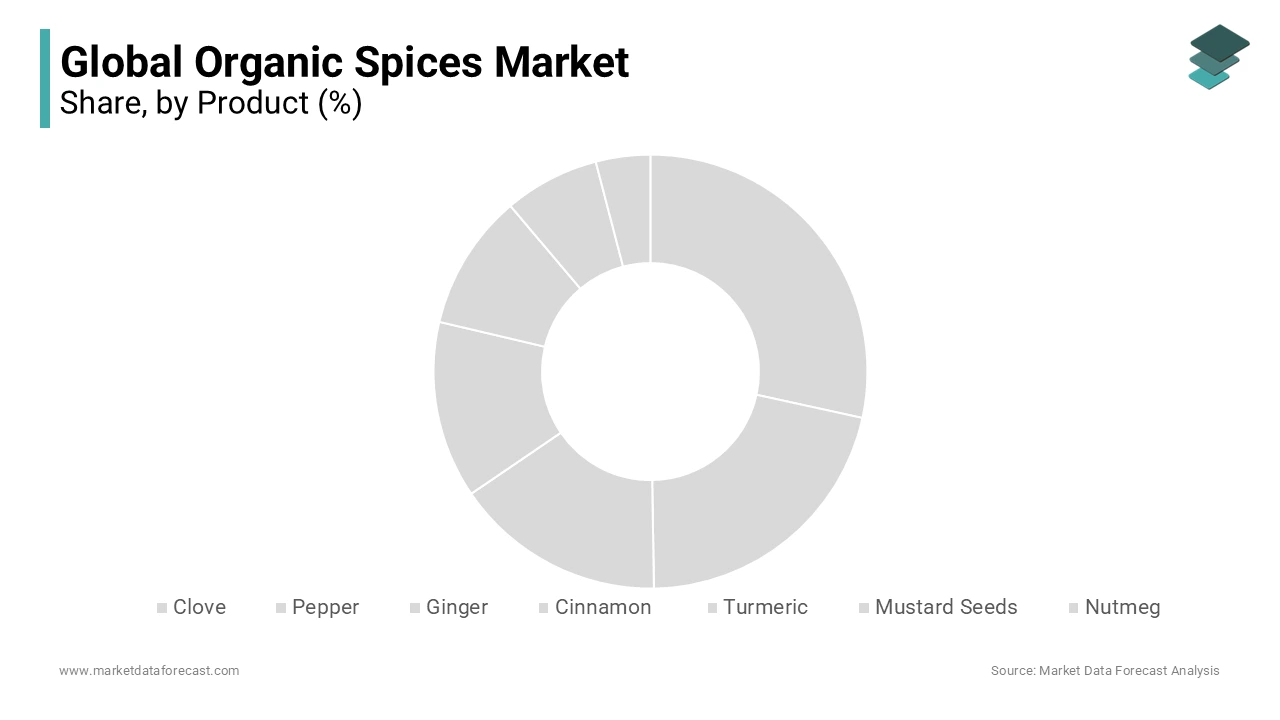
The turmeric segment is expected to witness a fastest CAGR of 9.5% during the forecast period with the surging demand for its potent anti inflammatory and antioxidant properties. Curcumin the primary bioactive component in turmeric has gained significant attention in the medical and wellness communities for its potential to alleviate chronic conditions such as arthritis and metabolic syndrome. This therapeutic association has transformed turmeric from a mere culinary spice into a vital wellness supplement driving substantial growth in the organic sector. Consumers perceive organic turmeric as safer and more effective due to the absence of synthetic contaminants that might interfere with its biological activity. The rise of golden milk lattes and turmeric infused beverages in cafes and retail outlets has further normalized its consumption in Western markets. Social media influencers and health experts frequently promote turmeric recipes amplifying its visibility and appeal among younger demographics.
By Form Insights
The powder segment held a dominant share of the organic spices market in 2025 due to its unparalleled convenience and ease of integration into various culinary applications. Ground spices are ready to use eliminating the need for grinding or processing which appeals to busy consumers and professional chefs alike. The uniform texture of powder ensures consistent flavor distribution in dishes making it ideal for baking seasoning blends and marinades. The availability of organic spice powders in standardized packaging sizes facilitates portion control and reduces waste further enhancing their appeal. Retailers favor powder formats as they occupy less shelf space and allow for efficient inventory management. The familiarity of using powdered spices in traditional recipes reinforces consumer habits making it the default choice for most home cooks.
The extract segment is projected to register a fastest CAGR of 10.2% from 2026 to 2034 with the increasing demand for high potency supplements and pharmaceutical applications. Organic spice extracts offer concentrated levels of active compounds, such as curcumin from turmeric or piperine from pepper making them highly effective for therapeutic purposes. According to the Council for Responsible Nutrition, the dietary supplement industry continues to grow with botanical extracts representing a significant and expanding category. Consumers seeking targeted health benefits prefer extracts over raw spices due to their standardized dosage and enhanced bioavailability. The pharmaceutical industry also utilizes organic spice extracts in the development of natural medicines and nutraceuticals leveraging their proven efficacy in treating various ailments. Advanced extraction technologies such as supercritical CO2 extraction preserve the integrity of sensitive compounds while removing impurities ensuring high quality and purity. This technological advancement appeals to health professionals and consumers who prioritize safety and effectiveness. The ability to formulate extracts into capsules tablets and liquids enhances convenience and compliance for users. Furthermore, the growing interest in personalized nutrition drives demand for customized extract blends tailored to individual health needs.
By Distribution Channel Insights
The indirect distribution channel segment was accounted in holding a dominant share of the Organic Spices Market in 2025. These retail outlets provide consumers with convenient access to a wide variety of organic spice brands and products under one roof facilitating comparison and impulse purchases. The established logistics and distribution networks of large retailers enable efficient stocking and replenishment of inventory ensuring consistent product availability. Data from NielsenIQ shows that packaged organic spices perform well in mainstream retail environments, where promotional activities and shelf placement influence purchasing decisions. The trust associated with reputable retail chains reassures consumers about the authenticity and quality of organic certifications. Additionally, the presence of dedicated organic sections in supermarkets helps educate consumers and highlights the premium nature of these products. Private label offerings from major retailers also contribute to the dominance of the indirect channel by providing affordable organic options. The ability of retailers to bundle spices with other organic ingredients creates cross selling opportunities that drive sales volume.
The direct distribution channel is projected to expand at an anticipated CAGR of 11.5% from 2025 to 2034 with the rapid adoption of e commerce platforms and direct to consumer business models. Online sales allow specialty spice brands to bypass traditional retail intermediaries and establish direct relationships with customers offering greater control over branding and customer experience. Direct channels enable manufacturers to offer a wider variety of exotic and hard to find organic spices that may not be available in mainstream stores. Subscription services for regular spice deliveries are gaining popularity offering convenience and predictable revenue streams for businesses. Social media marketing and influencer collaborations drive traffic to direct websites where consumers can access detailed product information sourcing stories and usage tips. The ability to personalize orders and receive fresh products directly from the source enhances customer satisfaction and loyalty. Furthermore, direct channels allow for faster feedback loops enabling brands to innovate and adapt quickly to changing consumer preferences.
REGIONAL ANALYSIS
North America Organic Spices Market Analysis
North America was the largest contributor in the global Organic Spices Market by accounting for 35.3% of the share in 2025 with the high consumer awareness stringent regulatory standards and a well developed retail infrastructure. According to the Organic Trade Association, sales of organic food in the United States have reached record highs with spices being a key growth category within the pantry staples segment. The prevalence of health and wellness trends such as clean eating and plant based diets drives consumers to seek out organic spices free from synthetic additives. Canada also contributes significantly to the regional market with consumers showing a strong preference for sustainably sourced and ethically produced food items. The presence of major retail chains and specialized organic stores ensures wide availability and visibility of organic spice products. E-commerce platforms are expanding rapidly offering consumers convenient access to a diverse range of international and artisanal brands. The region benefits from advanced supply chain technologies that ensure product freshness and traceability. Furthermore, the high disposable income of consumers allows for premium pricing of organic products sustaining market growth. Regulatory support from agencies such as the Food and Drug Administration and the Canadian Food Inspection Agency reinforces consumer trust in organic labels.
Europe Organic Spices Market Analysis
Europe organic spices market was ranked second by holding 30.3% of share in 2025 with strong emphasis on sustainability and environmental stewardship. According to the Research Institute of Organic Agriculture, Europe leads the world in organic farmland area and consumption driven by supportive government policies and consumer advocacy. The European Union’s strict regulations on pesticide residues and organic labeling create a favorable environment for the growth of organic spices. Data from Eurostat indicates that household spending on organic food has increased steadily with spices being a popular category for health-conscious shoppers. Countries such as Germany France and the United Kingdom are key markets where organic products are widely available in supermarkets and specialty stores. The rise of veganism and vegetarianism in Europe further boosts demand for flavorful organic spices that enhance plant based meals. Local artisanal producers are gaining prominence by offering unique and heritage spice blends that appeal to culinary enthusiasts. The region also benefits from strong trade links with organic spice producing countries ensuring a steady supply of high quality products. Consumer education campaigns and labeling initiatives have raised awareness about the benefits of organic agriculture fostering long term loyalty.
Asia Pacific Organic Spices Market Analysis
Asia Pacific organic spices market growth is likely to be driven by the increasing urbanization rising disposable incomes and a growing middle class. India as a major producer of spices is seeing increased domestic consumption of organic varieties as local brands improve quality and certification standards. Urban consumers in metropolitan areas are adopting western lifestyle trends including health consciousness and premium product preferences. The expansion of modern retail formats such as supermarkets and e commerce platforms facilitates access to organic spices for a broader audience. Government initiatives in several countries are promoting organic farming to reduce chemical usage and improve export competitiveness. The rich culinary heritage of the region ensures a baseline demand for spices which is now being upgraded to organic standards. Younger demographics are particularly receptive to organic brands that emphasize transparency and sustainability.
Latin America Organic Spices Market Analysis
Latin America organic spices market growth is propelled with the strong agricultural base and increasing export orientation towards organic products. According to the Inter American Institute for Cooperation on Agriculture, several countries in Latin America are expanding their organic farming areas to meet international demand for spices such as cinnamon vanilla and pepper. Domestic consumption is also rising as middle class populations in countries like Brazil and Mexico become more aware of health and environmental issues. The region benefits from favorable climatic conditions for spice cultivation allowing for year round production and diverse varieties. Export driven growth is supported by international certifications that enable access to premium markets in Europe and North America. Local governments are implementing policies to support organic agriculture including technical assistance and financial incentives for farmers. The tourism industry also contributes to market growth by introducing visitors to local organic spice products and culinary traditions. Challenges include infrastructure limitations and supply chain inefficiencies, which are being addressed through investment and collaboration.
Middle East and Africa Organic Spices Market Analysis
The Middle East and Africa organic spices market growth is likely to grow with traditional spice usage in cuisine and a growing interest in premium and imported organic products. In the Middle East particularly in Gulf Cooperation Council countries high disposable incomes drive demand for luxury and organic food items including spices. Domestic awareness of organic benefits is gradually increasing among urban populations leading to gradual growth in retail sales. Local production is limited by water scarcity and technical constraints but initiatives are underway to promote sustainable agriculture. The cultural significance of spices in traditional medicine and cuisine provides a strong foundational demand. Strategic partnerships between local distributors and global suppliers are helping to overcome logistical challenges.
COMPETITIVE LANDSCAPE
The Organic Spices Market features a fragmented competitive landscape characterized by the presence of multinational corporations regional players and small artisanal producers. Large companies leverage economies of scale extensive distribution networks and strong brand recognition to maintain market leadership. However niche brands gain traction by offering specialized products such as single origin spices and unique blends that appeal to discerning consumers. Competition is intense on factors such as product quality certification authenticity and price. Companies differentiate themselves through sustainable sourcing practices transparent supply chains and innovative packaging solutions. The threat of private label products from major retailers adds pressure on branded players to justify premium pricing through superior value propositions. Digital marketing and direct to consumer channels have lowered barriers to entry allowing smaller entities to compete effectively. Consolidation through mergers and acquisitions is common as larger firms seek to expand their organic portfolios. Trust and brand reputation are paramount given concerns over adulteration and fraud in the spice industry.
KEY MARKET PLAYERS
Some of the notable companies in the global organic spices market are
- UK Blending LTD
- Organic Spices Inc.
- Daarnhouwer & Co
- Spice Chain Corporation
- The Watkins Co.
- Sabater Spices
- Pacific Spice Company, Inc.
- Husarich GmbH
- AKO GmbH
- SunOpta Inc.
Top Players in the Market
- McCormick and Company stands as a global leader in the flavor industry with a significant presence in the organic spices sector. The company leverages its extensive supply chain network to source high quality organic ingredients from certified farms worldwide. Recent initiatives include the expansion of its Simply Organic brand portfolio to include new single origin spices and blends that cater to evolving consumer tastes. McCormick invests heavily in sustainable agriculture programs to support farmers in transitioning to organic practices ensuring long term supply stability. The company utilizes advanced digital platforms to engage consumers with recipes and usage ideas driving brand loyalty. Their strategic acquisitions of niche organic brands further diversify their product offerings and strengthen their competitive position in the premium segment of the global spice market.
- Frontier Co op is a prominent player in the organic spices market known for its commitment to ethical sourcing and community empowerment. As a cooperative owned by natural food retailers and consumers it prioritizes fair trade practices and environmental sustainability in its operations. The company offers a wide range of certified organic spices herbs and seasonings sourced directly from smallholder farmers. Recent actions include enhancing its regenerative agriculture initiatives to improve soil health and biodiversity in sourcing regions. Frontier Co op actively educates consumers about the benefits of organic farming through transparent labeling and storytelling. The company has expanded its bulk and retail packaging options to meet diverse customer needs.
- Simply Spices Ltd is a specialized manufacturer and supplier of organic spices focusing on premium quality and innovative product development. The company serves both business to business and business to consumer markets with a diverse portfolio of single spices and custom blends. Recent strategies include the launch of ready to use organic spice pastes and marinades that align with the demand for convenience in modern cooking. Simply Spices Ltd invests in state of the art processing facilities to preserve the potency and flavor of organic ingredients. The company emphasizes strict adherence to international organic certification standards to maintain credibility in global markets. Collaborations with chefs and culinary experts help create unique flavor profiles that differentiate its offerings.
Top Strategies Used by the Key Market Participants
Key players in the Organic Spices Market prioritize vertical integration to secure reliable supplies of high quality raw materials. Companies invest in direct partnerships with farmers to ensure adherence to organic standards and improve traceability. Product innovation is central to strategy with firms developing convenient formats such as blends pastes and extracts. Branding efforts emphasize transparency and sustainability to appeal to ethically conscious consumers. Expansion into e commerce platforms enables direct engagement and broader market reach. Strategic acquisitions of niche brands help companies diversify portfolios and access new customer segments. Regulatory compliance and certification maintenance are critical to building trust and avoiding fraud. Marketing campaigns highlight health benefits and culinary versatility to drive demand. These strategies collectively enhance competitiveness and support sustainable growth in the dynamic organic spices industry.
MARKET SEGMENTATION
This research report on the global organic spices market has been segmented and sub-segmented based on product, form & region.
By Product
- Clove
- Pepper
- Ginger
- Cinnamon
- Turmeric
- Mustard Seeds
- Nutmeg
By Form
- Powder
- Extract
- Raw
- Granular
By Distributional Channel
- Direct
- Indirect
By Region
- North America
- Europe
- Asia Pacific
- Latin America
- Middle East and Africa