- Product Description Description
- Table of Contents TOC
- List of Table & Figure LOT
- Get Free Sample PDF Sample PDF
Market Size, 2025
$3.09 BnMarket Estimate, 2026
$3.25 BnMarket Forecast, 2034
$4.85 BnCAGR, 2026–2034
5.14%Executive Summary: Global Hair Styling Products Market
- Market Scope: Comprehensive global assessment of the hair styling products industry covering product types, distribution channels, gender segments, commercial applications, and regional landscapes.
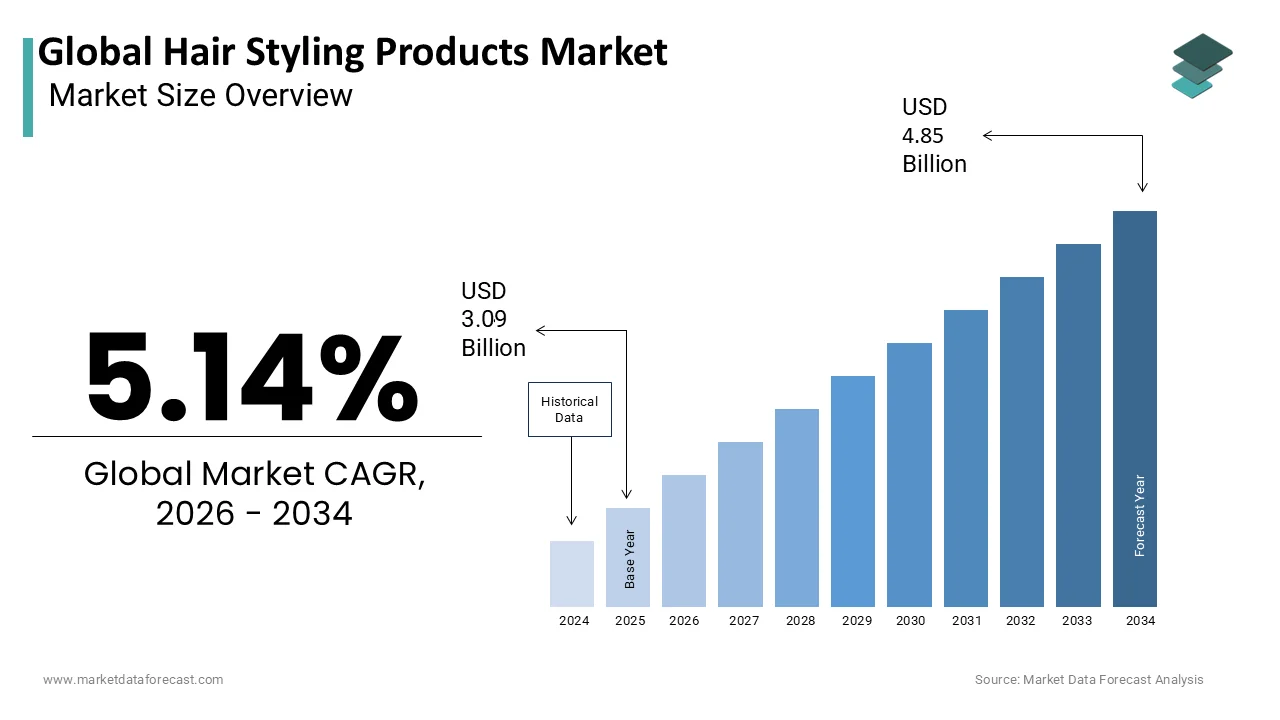
- Market Valuation: Valued at USD 3.09 billion (2025), estimated at USD 3.25 billion (2026), and projected to reach USD 4.85 billion by 2034, registering a steady CAGR of 5.14% from 2026 to 2034.
- Primary Growth Drivers: Rising personal care and grooming awareness, increasing disposable incomes, evolving global fashion trends, higher demand for natural and organic formulations, and the proliferation of e-commerce channels.
Key Market Segment Metrics (2026–2034)
| Category | Leading Segment (2025 Position) | Fastest-Growing Segment |
|---|---|---|
| By Product Type | Hair Gels & Waxes (widespread utility among male consumers for hair and beard styling) | Advanced specialized styling formulations and natural options |
| By Distribution Channel | Hypermarkets, Supermarkets & Specialty Stores (traditional brick-and-mortar strength) | Online Retailers (driven by digital convenience, time savings, and exclusive e-commerce deals) |
| By Gender | Unisex / Female Segments (high overall consumption driven by general beauty trends) | Male Grooming Segment (accelerating due to rising demand for beard and hair maintenance products) |
| By Application | Households (primary volume consumer base) | Salons & Spas / Fashion Industry (driven by professional application standards) |
| By Region | North America (occupied the largest market share backed by high disposable income and beauty spending) | Asia-Pacific (registering significant CAGR growth due to rising urban middle-class disposable income and fashion awareness) |
Major Market Players & Market Structure
Market Structure: Highly competitive global beauty and personal care market featuring multinational conglomerates and specialized cosmetic brands competing through product innovation, organic/natural line expansions, and aggressive digital marketing strategies.
Key Companies: Schwarzkopf Professional, Amway, Johnson & Johnson, L'ORÉAL, Kao Corporation, Oriflame Cosmetics, Procter & Gamble, OLVEA Group, Revlon, Shiseido Company, Shandong Baisheng Biotechnology, and Unilever plc.
 Download Free Sample Report
Global Hair Styling Products Market Size
The global hair styling products market size was valued at USD 3.09 billion in 2025. The global market size is expected to grow at a CAGR of 5.14% from 2026 to 2034 and be worth USD 4.85 billion by 2034, up from USD 3.25 billion in 2026.
Hair styling products are topical substances applied to wet or dry hair to help shape, hold, texture, and finish a desired hairstyle. These products include gels, mousses, sprays, waxes, and pomades that provide hold, texture, volume,e and shine while protecting strands from environmental stressors. Consumer behaviour in Europe demonstrates a strong preference for multifunctional items that offer styling benefits alongside hair care properties such as hydration and damage repair. According to Cosmetics Europe, the cosmetics and personal care industry in Europe is a flagship market, with retail sales valued at €110 billion in 2025, where hair-care products represent a major category valued at €20.3 billion. This financial magnitude underscores the critical role styling aids play in daily grooming routines across the continent. Moreover, as per studies, hair care and styling products experience steady baseline consumer purchase volumes across major European markets, though exact monthly styling acquisition rates vary across individual regional demographics. The market dynamics are heavily influenced by evolving beauty standards and the rising demand for sustainable packaging solutions. Brands are increasingly innovating to meet these expectations by introducing bio-based ingredients and recyclable containers. The integration of digital platforms for product discovery further accelerates market growth as consumers seek personalised recommendations. This landscape requires manufacturers to balance performance efficacy with ethical sourcing practices to maintain competitive advantage in a saturated yet vibrant industry.
MARKET DRIVERS
Rising Demand for Natural and Organic Formulations
The shift toward natural and organic ingredients significantly contributes to the growth of the hair styling products market. Consumers prioritise health-conscious choices without compromising on aesthetic results. Modern buyers are increasingly aware of the potential adverse effects of synthetic chemicals such as sulfates, parabens, ns and silicones commonly found in traditional styling aids. According to the Soil Association Certification, the organic-certified beauty and wellbeing sector reached a valuation of £136 million, though it experienced an overall decline of 8% following periods of historical double-digit growth. This trend drives manufacturers to reformulate their offerings using plant-derived polymers and essential oils that provide hold and texture while nourishing the scalp. Moreover, as per research, transparency and clean formulations have become top priorities for cosmetic buyers, with a substantial portion of younger demographics reviewing product ingredient lists before making personal care purchases. This scrutiny forces brands to adopt clean label strategies, which often command premium pricing and foster brand loyalty. The availability of raw materials such as aloe vera, shea butter, and argan oil has improved supply chain stability for natural product lines. Consequently, companies investing in research and development for bio-based alternatives gain a distinct competitive edge. The alignment with broader wellness movements ensures sustained demand as individuals view hair care as an integral part of holistic self-care routines rather than mere cosmetic enhancement.
Influence of Social Media and Digital Beauty Trends
The pervasive influence of social media platforms also propels the hair styling products market. This accelerates trend adoption and expands consumer awareness globally. Visual-centric networks such as Instagram, TikTok,k and Pinterest serve as powerful catalysts for viral styling techniques ranging from beach waves to sleek buns, ns which require specific product types for execution. According to sources, there were 5.79 billion social media user identities globally at the start of April 2026, making active digital platforms a dominant avenue for brand content. This digital exposure reduces the barrier to entry for new brands and allows niche players to reach targeted demographics effectively. Furthermore, as per the Global Web Index, approximately 54% of internet users utilise social media platforms specifically for product research before buying. Brands leverage this dynamic by collaborating with content creators who showcase real-time results, thereby building credibility and trust. The immediacy of feedback loops enables companies to adjust marketing strategies rapidly based on consumer preferences. Moreover, the rise of short-form video content has democratised professional styling knowledge, empowering everyday users to experiment with complex looks. This cultural shift transforms hair styling from a routine task into a creative expression, driving higher consumption rates and frequent product trials among digitally engaged consumers.
MARKET RESTRAINTS
Stringent Regulatory Compliance and Safety Standards
Strict regulatory frameworks primarily restrain the hair styling products market. These factors impose rigorous testing requirements and limit the use of certain chemical compounds. The European Union operates under the Cosmetic Regulation EC No 1223 2009, which mandates comprehensive safety assessments for all cosmetic products before they enter the market. According to Global Cosmetic Regs, the European Union prohibits over 1,700 substances in cosmetic formulations under Annex II of Regulation (EC) No 1223/2009 to protect human health. Compliance with these regulations necessitates substantial investment in clinical trials and documentation, increasing operational costs for manufacturers, particularly small and medium enterprises. Additionally, the Scientific Committee on Consumer Safety regularly updates its opinions on ingredient safety, requiring companies to reformulate products frequently to remain compliant. This continuous adaptation disrupts production schedules and delays product launches, affecting revenue streams. Furthermore, national authorities in member states conduct random market surveillance checks, leading to product recalls if non-compliance is detected. Such incidents damage brand reputation and erode consumer confidence. The complexity of navigating varying national interpretations of EU laws adds another layer of difficulty for international brands. Thus, the high burden of regulatory adherence acts as a significant barrier to innovation and market entry, slowing down the introduction of novel styling technologies and limiting portfolio diversity.
Environmental Concerns Regarding Packaging Waste
Growing environmental consciousness regarding plastic waste greatly hinders the hair styling products market expansion. This slowdown occurs as consumers and regulators demand sustainable packaging solutions. Traditional styling products often come in single-use plastic containers, aerosol cans, and non-recyclable tubes, which contribute substantially to global landfill accumulation. According to the European Commission, the packaging sector accounts for approximately 40% of total plastic usage in the European Union, which works in tandem with broad environmental directives to manage waste. This shows the urgent need for industry-wide transformation toward circular economy principles. Consumers are increasingly boycotting brands that fail to demonstrate genuine commitment to sustainability, leading to lost sales opportunities. Moreover, the European Green Deal sets ambitious targets for reducing plastic waste and promoting reusable or compostable alternatives, forcing companies to redesign their packaging infrastructure. Transitioning to glass, aluminium, or biodegradable materials involves higher initial costs and logistical challenges, such as increased weight for transportation. Additionally, the lack of standardised recycling facilities across different regions complicates waste management efforts for multinational corporations. Misleading eco-friendly claims also attract regulatory scrutiny and consumer backlash, further complicating market operations. Therefore, the pressure to minimise environmental footprint acts as a considerable constraint, requiring significant capital expenditure and strategic realignment, which may deter smaller players from entering or expanding within the market.
MARKET OPPORTUNITIES
Expansion into Emerging Economies with Rising Disposable Incomes
The expansion into emerging economies offers a major opportunity for the hair styling products market. This potential arises as rising disposable incomes fuel increased spending on personal grooming and beauty products. Countries in Asia Pacific, Latin America, and Eastern Europe are experiencing rapid urbanisation and a growing middle class that prioritises appearance and self-presentation in professional and social contexts. According to studies, rising household final consumption expenditures and structural disposable income improvements in developing regions have consistently enhanced the long-term consumer purchase capacity for discretionary and premium consumer goods. This economic shift enables consumers to upgrade from basic shampoos to specialised styling solutions such as serums, heat protectants, and texturising sprays. Furthermore, the penetration of modern retail formats and e-commerce platforms in these regions improves product accessibility and awareness. As per research, e-commerce beauty distribution networks in major emerging markets are capturing massive growth velocity, creating highly agile channels to target digitally native regional sub-demographics. Localised marketing campaigns that resonate with cultural beauty ideals further enhance brand relevance and acceptance. Additionally, the increasing participation of women in the workforce drives demand for quick and effective styling options that suit busy lifestyles. Aligning product formulations with the unique hair textures and environmental climates of specific regions offers a robust path to market acquisition. Ultimately, this strategic differentiation allows manufacturers to build sustained customer retention within rapidly expanding markets.
Innovation in Multifunctional and Hybrid Product Formats
Innovation in multifunctional and hybrid product formats opens the door for the hair styling products market expansion. This development succeeds by addressing consumer desire for convenience and efficiency in daily routines. Modern lifestyles demand products that deliver multiple benefits such as styling hold, UV protection, hydration, and heat defence in a single application, reducing the number of steps required for hair care. According to the Personal Care Products Council, multifunctional cosmetic applications and moisturisers continue to lead segment volume due to their capacity to deliver active skin benefits and multiple results in a single formulation. This preference drives research and development efforts toward creating advanced formulations that combine polymers for structure with active ingredients for hair health. For instance, leave-in conditioners with styling properties or dry shampoos that add volume and absorb oil simultaneously appeal to busy professionals and travellers. The integration of smart technologies such as pH-balanced formulas and microencapsulated fragrances enhances product performance and user experience. Moreover, the rise of gender neutral marketing opens new avenues for product positioning, attracting male consumers who are increasingly interested in grooming but prefer streamlined routines. Collaborations between cosmetic chemists and dermatologists ensure that these hybrid products meet safety and efficacy standards. By focusing on versatility and added value, brands can differentiate themselves in a crowded marketplace and justify premium pricing strategies. This positioning thereby boosts profitability and customer retention.
MARKET CHALLENGES
Volatility in Raw Material Prices and Supply Chain Disruptions
Volatility in raw material prices and supply chain disruptions are a major challenge to the hair styling products market. These factors severely affect production costs and product availability. Key ingredients such as natural oils, resins, and synthetic polymers are subject to fluctuating costs due to geopolitical tensions, climate change impacts on agriculture, and logistical bottlenecks. According to the International Monetary Fund, global agricultural commodities experienced price swings driven by temporary supply adjustments, bad weather in major exporters, and export restrictions, which tightened international supply. This unpredictability makes it difficult for manufacturers to maintain consistent profit margins and plan long-term procurement strategies. Additionally, the reliance on specific geographic regions for raw material sourcing increases vulnerability to local disruptions such as extreme weather events or political unrest. For example, droughts in key olive oil producing areas directly impact the cost and availability of this common ingredient in premium styling products. Supply chain complexities are further exacerbated by transportation delays and port congestion, which increase lead times and inventory holding costs. Small and medium sized enterprises often lack the bargaining power to secure favorable contracts or absorb sudden cost increases making them particularly susceptible to market shocks. Consequently, companies must invest in diversified supplier networks and hedging mechanisms, which require additional resources and expertise. This financial pressure limits the ability to innovate and compete on price, challenging overall market stability and growth potential.
Intense Competition and Market Saturation
Intense competition and market saturation are a significant obstacle to the hair styling products market. This dynamic intensifies as numerous established and emerging brands vie for limited consumer attention and shelf space. The low barriers to entry in certain segments allow private label brands and indie labels to flood the market with similar offerings, creating confusion and diluting brand differentiation. According to studies, the highly competitive global hair care market sees continuous portfolio adjustments and brand updates from major beauty conglomerates and mass market players seeking to capture shifting consumer expectations. This overcrowding forces companies to engage in aggressive pricing strategies and promotional discounts, which erode profit margins and devalue brand equity. Moreover, the proliferation of direct-to-consumer models bypasses traditional retail channels, intensifying the battle for digital visibility and customer acquisition. High marketing expenditures are required to stand out amidst the noise, leading to diminished returns on investment for many players. Consumer loyalty remains fragile as individuals readily switch brands in search of better value or novel experiences. The constant need for innovation to stay relevant strains research and development budgets, while failure to keep pace with trends results in rapid obsolescence. Additionally, consolidation activities among major corporations reduce the number of independent competitors but increase the scale and resources of remaining rivals, raising the stakes for survival. This hyper-competitive environment demands exceptional agility and strategic foresight to navigate successfully.
REPORT COVERAGE
| REPORT METRIC | DETAILS |
| Market Size Available | 2025 to 2034 |
| Base Year | 2025 |
| Forecast Period | 2026 to 2034 |
| Segments Covered | By Type of Product, Distribution Channel, Gender, Application, and Region |
| Various Analyses Covered | Global, Regional & Country-Level Analysis, Segment-Level Analysis, DROC, PESTLE Analysis, Porter’s Five Forces Analysis, Competitive Landscape, Analyst Overview of Investment Opportunities |
| Regions Covered | North America, Europe, Asia Pacific, Latin America, Middle East & Africa |
| Market Leaders Profiled | Schwarzkopf Professional, Amway, Johnson & Johnson, L'OREAL, Kao Corporation, Oriflame Cosmetics, Procter & Gamble, OLVEA Group, Revlon, Shiseido Company, Shandong Baisheng Biotechnology and Unilever plc |
SEGMENTAL ANALYSIS
By Product Type Insights
In 2025, the hair sprays segment dominated the hair styling products market. This dominance was due to its versatility and widespread adoption across diverse consumer demographics. The foremost driver for this dominance is the product's ability to provide long-lasting hold while offering protection against humidity and environmental factors, which is crucial for maintaining styled looks throughout the day. According to studies, hair sprays remain a foundational element within regional styling product portfolios across North America and Europe, sustaining steady retail volume driven by routine consumer adoption. This high market share is sustained by continuous innovation in nozzle technology and formulation chemistry that allows for fine mist application without residue or stiffness. The prominence of this segment is further reinforced by the integration of hair care benefits such as UV filters and heat protectants into spray formulations, which appeals to health-conscious consumers. As per sources, new hair spray product development increasingly integrates added hair care, hydration, and dual-benefit claims to capture shifting consumer demand for multifunctionality. This trend aligns with consumer preferences for efficiency and value, driving repeat purchases. Furthermore, the availability of hair sprays in various hold strengths, from flexible to super strong, ensures that the product caters to a wide range of hair types and styling needs. The ease of use and portability of aerosol and non-aerosol formats also contribute to their popularity among travellers and professionals who require quick touch-ups. These combined factors solidify the leading position of hair sprays in the global market landscape.
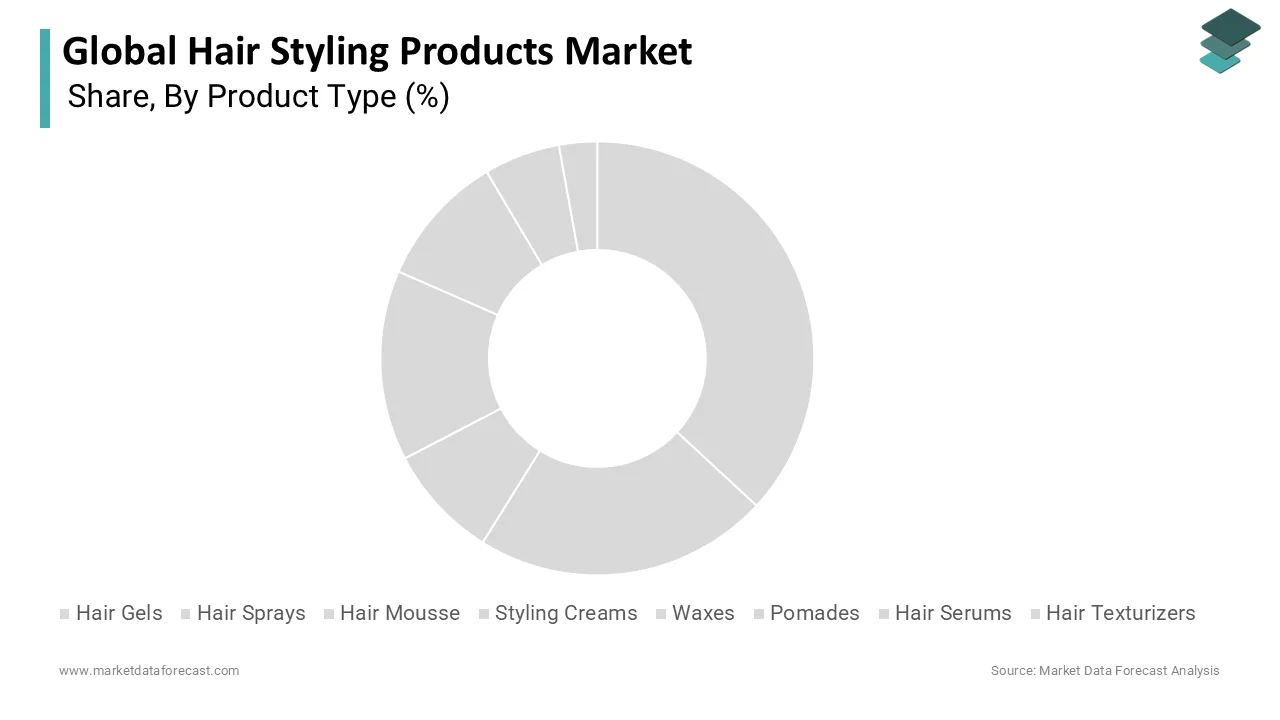
The hair serums segment is anticipated to witness the fastest CAGR of 6.8% over the forecast period. This rapid expansion is mainly propelled by the increasing consumer focus on hair health and damage repair alongside aesthetic styling. Modern serums often contain high concentrations of nourishing ingredients such as argan oil, keratin, and silicones that smooth frizz, add shine, and protect against thermal styling tools. According to research, consumer selection of leave-in hair treatments and hair serums focuses heavily on protective properties designed to counteract thermal damage and structural chemical wear. This scientific backing enhances consumer trust and drives premiumization within the serum category. Additionally, the rise of social media tutorials showcasing glossy healthy hair as a beauty ideal has significantly boosted serum popularity. As per the Global Web Index, approximately 42% of consumers express a preference for beauty and wellness convergence, explicitly wanting to see more vitamins and supplements introduced by the industry. The versatility of serums, allowing them to be used on wet or dry hair and layered with other styling products, further accelerates adoption. Brands are also introducing lightweight formulas suitable for fine hair, addressing previous concerns about heaviness. These innovations, coupled with strong marketing narratives around hair wellness, ensure that hair serums continue to outpace other product categories in growth momentum.
By Application Insights
The households segment led the hair styling products market and captured a significant share in 2025. This leading position of the segment was attributed to the routine nature of personal grooming and the convenience of at-home styling. Consumers increasingly prefer the cost-effectiveness and privacy of managing their hair care needs at home rather than visiting professional salons for every styling occasion. According to sources, household expenditure allocations for personal care items in major developed economies remain stable, showing consistent multi-year baseline tracking across essential styling segments. This stability is reinforced by the widespread availability of high-quality retail products that mimic professional results, enabling users to achieve salon-like styles independently. The proliferation of online tutorials and digital beauty communities has empowered individuals with the skills to use advanced styling tools and products effectively. As per studies, online sales networks for hair care products have registered noticeable growth as home users utilise the expanded variety and convenience of digital checkout channels. Furthermore, the busy lifestyles of modern consumers favour quick and efficient at-home solutions that fit into morning routines. The development of user-friendly packaging and clear instructions by manufacturers also lowers the barrier to entry for complex styling techniques. As a result, the household segment remains the cornerstone of market revenue supported by high volume sales and broad demographic reach across all age groups and income levels.
The salons and spas segment is witnessing swift growth in the hair styling products market due to the rising demand for professional expertise and premium service experiences. Consumers are increasingly willing to invest in specialised treatments and expert styling for special occasions or regular maintenance, which drives higher-value transactions. According to sources, professional beauty establishment revenues continue to evolve, fueled by a rising interest in personalised in-salon treatment rituals and experiential services. This growth is propelled by the perception that professional products used in salons offer superior performance and safety compared to retail alternatives. Stylists often recommend specific professional-grade styling aids during services, creating a direct channel for product education and sales. As per a report, approximately 67% of salon and beauty clients prefer having an in-person consultation with a professional over online shopping when considering cosmetic products and treatments. This endorsement model builds strong brand loyalty and encourages repeat visits. Additionally, salons are expanding their service offerings to include holistic hair wellness programs that incorporate advanced styling techniques and therapeutic products. The integration of luxury amenities and personalised consultations further enhances the appeal of salon visits. As disposable incomes rise and self-care becomes a priority, the salon and spa segment continues to expand rapidly, capturing a larger portion of the premium market through high-margin services and exclusive product lines.
COMPETITIVE LANDSCAPE
The competition in the Hair Styling Products Market is characterized by intense rivalry among multinational corporations,s regional brands, ds and indie labels vying for consumer attention. Established players leverage extensive research capabilities and global distribution networks to maintain dominance, while agile newcomers disrupt with niche offerings and digital-first marketing. Price wars are common in mass market segments, whereas premium tiers compete on ingredient transparency and clinical efficacy. Innovation cycles have accelerated due to social media-driven trend volatility, forcing rapid product launches and reformulations. Sustainability claims serve as key differentiator,s though greenwashing accusations create reputational risks requirinthird-partyty certifications. Private label growth pressures branded margins, prompting value-added services and loyalty programs. Mergers and acquisitions consolidate market power, yet antitrust scrutiny limits mega deals. Regional variations in regulation and cultural preferences necessitate localized strategies, complicating global standardization. E-commerce platforms democratize access but increase customer acquisition costs. Overall, the competitive landscape demands continuous adaptation,n balancing scale with agility, ty authenticity with compliance,nce and performance with purpose to capture and retain discerning consumers across diverse geographies and demographics worldwide.
KEY MARKET PLAYERS
Some of the companies that are playing a dominating role in the Global Hair Styling Products Market include:
- Schwarzkopf Professional
- Amway
- Johnson & Johnson
- L'Oréal
- Kao Corporation
- Oriflame Cosmetics
- Procter & Gamble
- OLVEA Group
- Revlon
- Shiseido Company
- Shandong Baisheng Biotechnology
- Unilever plc
TOP LEADING PLAYERS IN THE MARKET
- L’Oréal SA actively shapes the Hair Styling Products Market through its extensive portfolio of professional and consumer brands. The company continuously innovates by integrating sustainable ingredients into styling formulations to meet evolving consumer demands for eco-friendly products. Recently, L’Oréal launched a new line of biodegradable hair sprays under its Garnier brand, reinforcing its commitment to environmental responsibility. The firm also invests heavily in digital beauty tools and personalized recommendations through artificial intelligence, enhancing customer engagement. Its research and development centers focus on creating multifunctional styling aids that combine hold with hair health benefits. These strategic initiatives strengthen its presence across diverse global markets while addressing regulatory and consumer expectations for safer and more effective styling solutions without relying on traditional chemical-heavy formulas.
- Unilever PLC contributes significantly to the Hair Styling Products Market by leveraging its vast distribution network and brand equity across multiple price segments. The company has recently reformulated several styling products to eliminate sulfates and paraben,s aligning with clean beauty trends. Unilever introduced a new texturizing spray under its TRESemmé brand specifically designed for humidity resistance, catering to tropical climates. It also partners with influencers and stylists to showcase real-world product performance on social media platforms, boosting visibility among younger demographics. Furthermore,e Unilever integrates circular economy principles into packaging design using recycled plastics for styling product containers. These actions demonstrate its adaptive strategy to maintain relevance and trust in a rapidly changing market landscape focused on sustainability and efficacy.
- Procter and Gamble Company maintains a strong influence in the Hair Styling Products Market through science-backed innovation and premium positioning. The company recently expanded its Pantene styling range with heat protectant serums developed using advanced polymer technology to minimize thermal damage. Procter and Gamble collaborates with professional stylists to co-create products that address specific styling challenges, ensuring salon-quality results at home. It also enhances supply chain resilience by diversifying raw material sourcing to mitigate volatility risks. Additionally, the firm utilizes data analytics to identify emerging consumer preferences,s enabling rapid product iteration. These efforts reinforce its reputation for reliability and performance while adapting to modern demands for multifunctional and protective styling solutions that support long-term hair health.
TOP STRATEGIES USED BY KEY MARKET PARTICIPANTS
Key players in the Hair Styling Products Market prioritize sustainable formulation and packaging innovation to align with environmental regulations and consumer values. Companies invest in bio-based polymers and recyclable materials to reduce ecological footprint while maintaining product performance. Digital transformation is another critical strategy, as brands leverage artificial intelligence and augmented reality for virtual try-ons and personalized recommendations, enhancing online shopping experiences. Strategic collaborations with professional stylists and influencers build credibility and drive trend adoption across social media platforms. Portfolio diversification through multifunctional products that combine styling with care benefits addresses consumer demand for convenience and efficiency. Geographic expansion into emerging markets allows companies to tap into rising disposable incomes and untapped demographics. Supply chain optimization through localized manufacturing and diversified sourcing mitigates risks from raw material volatility. Premiumization strategies justify higher price points through superior ingredients and scientific validation. Direct-to-consumerr channels bypass traditional retail barriers, fostering deeper customer relationships and data collection. These integrated approaches enable market leaders to navigate competitive pressures and sustain growth amid evolving industry dynamics and shifting consumer expectations globally.
GLOBAL HAIR STYLING PRODUCTS MARKET NEWS
- In March 2024, L’Oréal SA launched a new biodegradable hair spray line under Garnier to enhance sustainability credentials and strengthen the Hair Styling Products Market.
- In May 2024, Unilever PLC introduced a humidity-resistant texturizing spray under TRESemmé to address tropical climate needs and strengthen the Hair Styling Products Market.
- In June 2024, Procter and Gamble Company expanded Pantene styling range with heat protectant serums using advanced polymers to improve product efficacy and strengthen the Hair Styling Products Market.
- In February 2024, Henkel AG partnered with professional stylists to co-create salon-grade styling creams, ensuring authentic performance and strengthening the Hair Styling Products Market.
- In July 2024, Shiseido Company Limited integrated AI-powered hair analysis tools into its e-commerce platform to personalize recommendations and strengthen the Hair Styling Products Market.
MARKET SEGMENTATION
This research report on the global hair styling products market has been segmented and sub-segmented by product type, distribution channel, and region.
By Product Type
- Hair Gels
- Hair Sprays
- Hair Mousse
- Styling Creams
- Waxes
- Pomades
- Hair Serums
- Hair Texturizers
By Distribution Channel
- Hypermarkets & Supermarkets
- Specialty Stores
- Online Retailers
- Salons
- Pharmacies & Drugstores
By Gender
- Male
- Female
- Unisex
By Application
- Households
- Salons & Spas
- Fashion Industry
- Others
By Region
- North America
- Europe
- Asia Pacific
- Latin America
- Middle East and Africa