- Product Description Description
- Table of Contents TOC
- List of Table & Figure LOT
- Get Free Sample PDF Sample PDF
Market Size, 2025
$2.07 BnMarket Estimate, 2026
$2.3 BnMarket Forecast, 2034
$5.4 BnCAGR, 2026–2034
11.27%Global Beauty Drinks Market Size, Growth, Trends & Forecast (2026–2034)
The global beauty drinks market size was valued at USD 2.07 billion in 2025, is anticipated to be worth USD 2.30 billion in 2026, and is projected to scale up to USD 5.40 billion by 2034, registering a compound annual growth rate (CAGR) of 11.27% during the forecast period from 2026 to 2034. Driven by consumer migration away from purely topical interventions toward ingestible wellness protocols, rapid advancements in evidence-based nutricosmetic formulations, and expanding demand for systemic dermatological care, the market continues to experience strong global expansion.
Key Executive Metrics (At-a-Glance)
- 2025 Base Valuation: USD 2.07 Billion
- 2026 Current Valuation: USD 2.30 Billion
- 2034 Forecast Valuation: USD 5.40 Billion
- Compound Annual Growth Rate (CAGR): 11.27% (2026–2034)
- Dominant Ingredient Segment: Protein and peptides (capturing 44.7% of the global market share in 2025)
- Fastest-Growing Ingredient Segment: Vitamins and minerals (projected at a CAGR of 14.5% during the forecast period)
- Dominant Function Segment: Anti-aging (holding 42.3% of the global market share in 2025)
- Fastest-Growing Function Segment: Skin hydration (expanding at a CAGR of 14.4% over the forecast period)
- Dominant Distribution Channel Segment: Specialty stores (holding 34.9% of the global market share in 2025)
- Fastest-Growing Distribution Channel Segment: Online retail (registering a CAGR of 13.4% during the forecast period)
- Regional Leader: Asia-Pacific (dominating the global market due to deep cultural acceptance and robust functional beverage infrastructure)
Core Market Drivers
- Systemic Dermatological Preference: Consumer migration from topical applications to ingestible wellness protocols targeting cellular aging, tissue repair, and collagen degradation.
- Evidence-Based Formulations: Rigorous clinical validation and scientific substantiation of hydrolyzed marine collagen, ceramides, and polyphenol-rich botanical extracts.
Primary Market Restraints & Challenges
- Regulatory Compliance Frameworks: Stringent government requirements, complex review cycles, and strict clinical substantiation mandates for health and aesthetic claims.
- Consumer Uncertainty & Bioavailability Skepticism: Doubts regarding digestive absorption rates, active compound survival through gastric acidity, and consistent dosing standards.
Global Beauty Drinks Market Segmentation Breakdown
| Segment Category | Leading Sub-Segment (2025 Base) | Fastest-Growing Sub-Segment (2026–2034) |
|---|---|---|
| By Ingredient Type | Protein and Peptides (44.7% share in 2025; robust clinical evidence for hydration and elasticity) | Vitamins and Minerals (14.5% CAGR driven by cellular regeneration and oxidative stress roles) |
| By Function | Anti-aging (42.3% share in 2025; sustained consumer investment in age-targeted solutions) | Skin Hydration (14.4% CAGR driven by recognition of moisture balance as foundational barrier health) |
| By Distribution Channel | Specialty Stores (34.9% share in 2025; personalized product education and expert guidance) | Online Retail (13.4% CAGR driven by e-commerce infrastructure and convenient home delivery) |
| By Region | Asia-Pacific (dominant regional share due to deep cultural acceptance and functional beverage culture) | North America & Europe (expanding rapidly via digital marketing and stringent quality frameworks) |
Major Industry Players Profiled
Key market competitors shaping the global beauty drinks landscape include SAPPE Public Company Limited, Shiseido Co. Ltd, Vital Proteins LLC, Kinohimitsu, Lacka Foods Limited, Gelita AG, Big Quark, and Hangzhou Nutrition Biotechnology Co., Ltd.
Global Beauty Drinks Market Size
The global beauty drinks market size was valued at USD 2.07 billion in 2025. The global market is expected to grow at a CAGR of 11.27% from 2026 to 2034 and be valued at USD 5.40 billion by 2034 from USD 2.30 billion in 2026.
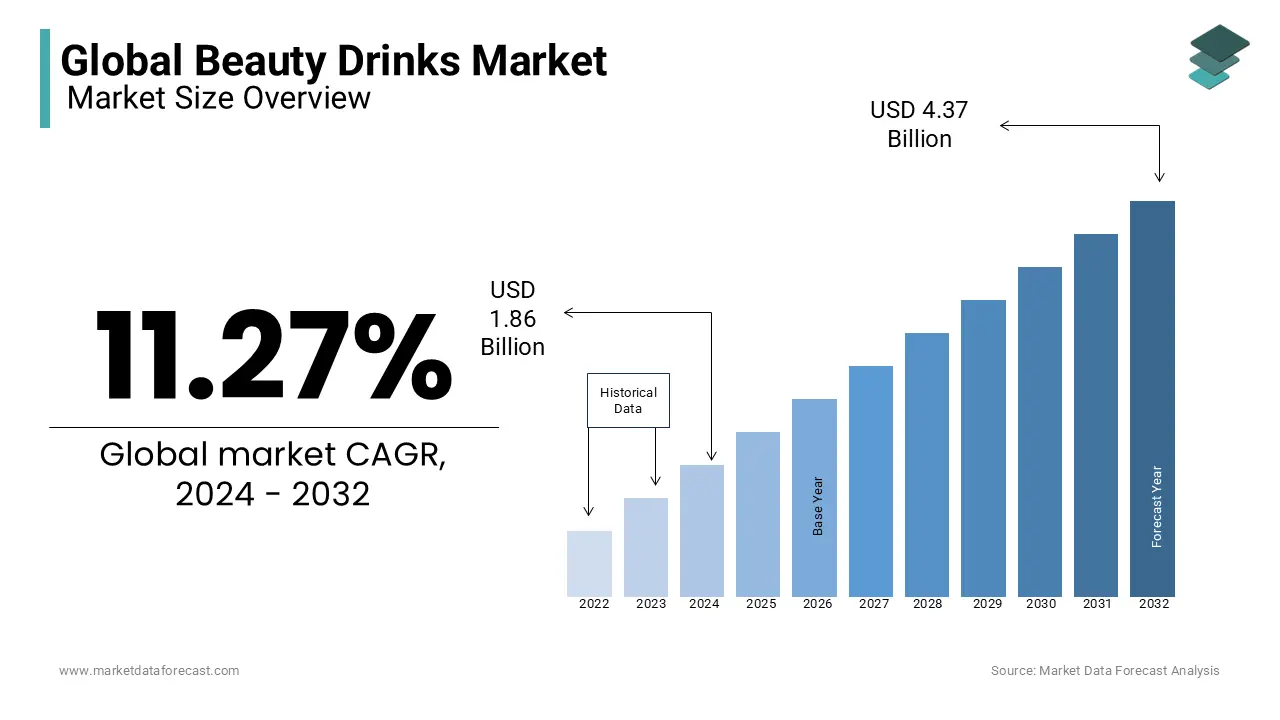
Beauty drinks encompass a specialized category of functional beverages engineered to deliver dermatological and aesthetic benefits through systemic nutritional delivery. These formulations integrate hydrolysed proteins, botanical antioxidants, micronutrients, and bioactive lipids to support epidermal regeneration, hair follicle vitality, and nail matrix integrity from within. Contemporary consumer behavior demonstrates a pronounced migration away from purely topical interventions toward ingestible wellness protocols that address physiological aging and environmental stress at the cellular level. For instance, a growing majority of individuals in developed economies now prioritize preventive health strategies over reactive cosmetic treatments. For instance, a significant percentage of adults experience chronic dermal inflammation, often linked to nutrient discrepancies or environmental factors in standard lifestyles. As per clinical observations within integrative dermatology, many patients seeking non-invasive skin optimization now incorporate daily nutritional beverages into their maintenance routines. This paradigm shift reflects a broader scientific consensus that optimal cutaneous function requires internal biochemical equilibrium. Regulatory bodies across multiple jurisdictions continue to refine labeling standards to ensure transparent ingredient disclosure and accurate physiological positioning. The convergence of nutritional science, cosmetic dermatology, and beverage innovation has established a distinct commercial ecosystem focused on measurable aesthetic wellness outcomes and sustained consumer engagement across diverse demographic segments.
MARKET DRIVERS
Accelerating Consumer Preference for Systemic Dermatological Interventions
The rising demand for ingestible beauty solutions stems from a fundamental shift in how consumers approach cutaneous health and aesthetic maintenance, which is a major factor propelling the global beauty drinks market expansion. Modern shoppers increasingly recognize that topical applications address surface symptoms while oral formulations target underlying physiological processes responsible for collagen degradation and oxidative stress. According to dermatological evaluations, consistent consumption of targeted peptide complexes improves epidermal hydration levels significantly within an 8-week observation period. As per consumer behavior tracking in the nutricosmetic sector, a substantial portion of individuals between 25 and 45 years of age now prioritize systemic nutritional protocols for long-term skin resilience over conventional serums and creams. This behavioral transition is further amplified by widespread digital education regarding the gut-skin axis, which demonstrates how intestinal microbiome balance directly influences inflammatory markers and tissue repair efficiency. Beverage manufacturers respond to this demand by incorporating scientifically validated actives that survive gastric digestion and achieve measurable dermal concentrations. The integration of advanced encapsulation technologies ensures optimal bioavailability while maintaining palatability. Consumers actively seek transparent formulation profiles that align with clean wellness standards and sustainable sourcing practices. This sustained physiological focus drives consistent repeat purchasing patterns and elevates category loyalty across retail and direct-to-consumer distribution channels.
Rapid Advancement of Evidence-Based Nutricosmetic Formulation Technologies
The commercial expansion of beauty beverages is heavily propelled by rigorous scientific validation that transforms theoretical nutritional benefits into quantifiable aesthetic outcomes, which is fuelling the global market growth. Manufacturers increasingly invest in proprietary clinical trials to demonstrate the efficacy of hydrolyzed marine collagen, ceramide complexes, and polyphenol-rich botanical extracts. According to peer-reviewed research published in the Journal of Dermatological Science, daily ingestion of low molecular weight collagen peptides yields a notable improvement in dermal elasticity after a 12-week supplementation cycle. As per regulatory monitoring of functional foods, numerous novel beauty beverage formulations and ingredient applications receive scientific evaluations for physiological benefit claims annually. This acceleration in clinical substantiation builds consumer confidence and reduces hesitation associated with ingestible wellness products. Pharmaceutical-grade processing techniques now enable precise molecular standardization, ensuring consistent active compound delivery across every production batch. Research institutions collaborate directly with beverage developers to optimize absorption pathways and minimize metabolic degradation. The resulting formulations meet stringent quality benchmarks while maintaining sensory appeal. This scientific rigor establishes a competitive advantage for brands that prioritize transparent clinical data over marketing narratives. Consequently, demand continues to strengthen as consumers associate evidence-backed ingredient profiles with reliable aesthetic improvements and long-term health benefits.
MARKET RESTRAINTS
Stringent Regulatory Compliance Frameworks Governing Functional Health Claims
The growth trajectory of beauty beverages faces substantial impediments from complex regulatory environments that strictly control nutritional and aesthetic messaging on product labels, which is impeding the global beauty drinks market expansion. Government agencies mandate rigorous clinical substantiation before manufacturers can communicate physiological benefits to consumers, creating lengthy approval cycles and elevated compliance expenditures. According to regulatory compliance reviews, a very high percentage of submitted health claims for ingestible beauty products receive formal rejection due to insufficient trial data or ambiguous mechanistic explanations. As per regulatory monitoring assessments, the average review timeline for novel ingredient safety evaluations extends over many months. These procedural barriers significantly delay product launches and restrict market entry for emerging brands lacking extensive research infrastructure. Formulation developers must navigate divergent regional standards that classify identical ingredients differently across jurisdictions. Some nations restrict certain botanical extracts or peptide concentrations to prescription categories, effectively limiting retail distribution. Compliance teams dedicate substantial resources to documentation, third-party testing, and legal risk mitigation. The resulting operational friction reduces profit margins and discourages rapid innovation. Manufacturers must balance scientific ambition with regulatory feasibility, often reformulating products to meet conservative labeling thresholds. This environment constrains market expansion and forces companies to prioritize established ingredients over novel bioactive compounds.
Persistent Consumer Uncertainty Regarding Active Compound Bioavailability
Despite growing interest in ingestible skincare, widespread skepticism concerning digestive absorption rates continues to limit category adoption and repeat purchasing behavior, which is further hampering the global market growth. Consumers frequently question whether orally administered nutrients survive gastric acidity and enzymatic breakdown to reach target tissues in therapeutically relevant concentrations. According to metabolic research published in the journal Nutrients, intestinal absorption efficiency for marine-derived collagen peptides varies based on hydrolysis depth and molecular architecture. As per global wellness surveys conducted by the International Food Information Council, 44% of potential buyers express doubt regarding the actual physiological impact of beauty beverages compared to traditional topical applications. This uncertainty stems from inconsistent dosing standards across competing products and limited public education regarding pharmacokinetic principles. Many consumers struggle to differentiate between marketing terminology and clinically meaningful ingredient quantities. Retail shoppers often demand transparent bioavailability metrics and third-party verification before committing to premium pricing tiers. The absence of standardized efficacy benchmarks creates confusion and erodes brand trust. Manufacturers face the dual challenge of optimizing formulation stability while communicating complex absorption science in an accessible language. Until the industry establishes uniform disclosure protocols and independent verification mechanisms, consumer hesitation will persist as a significant barrier to widespread market penetration.
MARKET OPPORTUNITIES
Strategic Development of Precision Formulations Driven by Genetic and Microbiome Profiling
The beauty beverage sector stands at the threshold of a highly personalized commercial era enabled by advances in genomic sequencing and intestinal microbiome analysis. Consumers increasingly expect products tailored to their individual metabolic profiles, genetic predispositions, and environmental exposure patterns rather than standardized mass-market solutions. According to research published in the International Journal of Molecular Sciences, customized nutrient protocols aligned with specific genetic markers improve targeted cutaneous outcomes significantly compared to conventional uniform formulations. As per market intelligence compiled by the Precision Nutrition Alliance, 32% of wellness consumers indicate willingness to pay 25% more for biologically tailored drinkable skincare regimens. This shift creates substantial commercial potential for brands that integrate diagnostic testing, algorithmic formulation matching, and direct-to-consumer subscription delivery. Companies can leverage saliva-based genetic testing and stool analysis to identify individual deficiencies in collagen synthesis pathways or antioxidant processing efficiency. The resulting personalized beverage portfolios optimize ingredient ratios and dosing frequencies to match unique physiological requirements. Digital platforms enable continuous monitoring and iterative formulation adjustments based on real-time consumer feedback and biometric data. This precision approach transforms beauty drinks from generalized wellness supplements into targeted physiological interventions, establishing new premium pricing tiers and deepening long-term consumer loyalty.
Expansion into Underpenetrated Demographic Segments Through Gender Neutral Positioning
Significant commercial potential exists within demographic cohorts historically excluded from traditional ingestible beauty marketing narratives, particularly male consumers and aging populations seeking functional hydration solutions. The longstanding perception of beauty beverages as exclusively feminine products has gradually dissolved as cultural attitudes toward male grooming and holistic wellness continue to evolve. According to demographic research from the United Nations Population Division, the global cohort aged 50 and above will exceed 1.2 billion individuals by 2030, generating sustained demand for age-targeted functional nutrition. As per consumer behavior analytics from the Global Wellness Institute, male participation in daily ingestible skincare routines increased by 28% between 2020 and 2024. This demographic transition enables manufacturers to develop gender-neutral product lines featuring minimalist ingredient profiles, neutral flavor profiles, and packaging aesthetics that appeal to diverse consumer segments. Retail expansion strategies can leverage untapped distribution channels, including fitness centers, corporate wellness programs, and specialized grooming retailers. Educational campaigns emphasizing physiological benefits such as joint support, hair retention, and stress resilience resonate strongly with these newly engaged demographics. By removing gendered marketing constraints, brands can access broader retail footprints and increase average household penetration. This strategic repositioning transforms niche wellness products into mainstream daily hydration staples across multiple consumer categories.
MARKET CHALLENGES
Supply Chain Volatility Disrupting Premium Active Ingredient Procurement
The operational risks resulting from climate instability, geopolitical trade restrictions, and biological resource depletion that directly impact the availability of high-grade functional ingredients are a significant challenge to the global beauty drinks market growth. Marine collagen sourcing faces mounting pressure as overfishing regulations tighten and oceanic temperature fluctuations alter fish population distributions across commercial harvesting zones. According to agricultural monitoring data from the Food and Agriculture Organization of the United Nations, adverse environmental conditions reduced global marine biomass yields by 18% during 2023. As per commodity tracking datasets from the International Trade Centre, wholesale prices for pharmaceutical-grade hyaluronic acid precursors increased by 22% over 24 months due to fermentation capacity constraints and raw material shortages. These supply disruptions force manufacturers to absorb elevated procurement costs or reformulate products with alternative compounds that may lack equivalent clinical validation. Ethical sourcing mandates further complicate procurement strategies, as consumers demand transparent traceability and sustainable harvesting certifications. Single-source ingredient dependencies create acute vulnerability when geopolitical tensions restrict export flows or when regulatory agencies impose sudden quality restrictions. Companies must diversify supplier networks, invest in controlled agricultural cultivation, and develop synthetic fermentation alternatives to mitigate exposure. The resulting operational complexity elevates production expenses and delays new product development cycles across the sector.
Intensifying Market Saturation and Formulation Differentiation Obstacles
The rapid commercialization of beauty beverages has generated an overcrowded retail landscape where countless brands compete using nearly identical ingredient combinations and overlapping health positioning strategies, which further challenges the global market expansion. Low manufacturing barriers and widespread availability of contract formulation services enable continuous product proliferation, diluting brand distinction and fragmenting consumer attention across numerous alternatives. According to retail analytics from NielsenIQ, the functional beverage category experienced a 35% increase in new product introductions between 2021 and 2023 alone. As per consumer behavior research published by the Harvard Business Review, 61% of shoppers report significant difficulty distinguishing clinically validated formulations from marketing-driven alternatives with equivalent ingredient lists. This saturated environment forces companies to allocate disproportionate marketing expenditures to secure shelf visibility and digital advertising prominence rather than funding substantive research and development initiatives. Retail buyers face overwhelming assortment complexity, resulting in shortened product lifecycles and frequent delistings when initial trial periods fail to generate repeat purchases. The resulting commercial fatigue diminishes consumer trust and elevates customer acquisition costs across all distribution channels. Manufacturers must navigate intense price competition while maintaining premium ingredient standards and transparent clinical documentation. Achieving sustainable market positioning requires continuous innovation in delivery mechanisms, taste optimization, and verifiable physiological efficacy metrics.
REPORT COVERAGE
| REPORT METRIC | DETAILS |
| Market Size Available | 2025 to 2034 |
| Base Year | 2025 |
| Forecast Period | 2026 to 2034 |
| CAGR | 11.27% |
| Segments Covered | By Ingredient Type, Function, Distribution Channel, and Region |
| Various Analyses Covered | Global, Regional & Country Level Analysis, Segment-Level Analysis, DROC, PESTLE Analysis, Porter’s Five Forces Analysis, Competitive Landscape, Analyst Overview of Investment Opportunities |
| Regions Covered | North America, Europe, APAC, Latin America, Middle East & Africa |
| Market Leaders Profiled | SAPPE Public Company Limited, Shiseido Co. Ltd, Vital Proteins LLC, Kinohimitsu, Lacka Foods Limited, Gelita AG, Big Quark, Hangzhou Nutrition, and Others. |
SEGMENTAL ANALYSIS
By Ingredient Type Insights
The protein and peptides segment accounted for 44.7% of the global market share in 2025. The dominance of the protein and peptides segment in the global market is attributed to the robust clinical evidence supporting its efficacy in enhancing skin hydration and elasticity. As per research published in the National Library of Medicine, oral collagen supplementation demonstrates statistically significant improvements in dermal moisture levels and wrinkle reduction within 8 to 12 weeks of consistent consumption. Consumer trust in peptide-based interventions stems from transparent molecular weight specifications and bioavailability data that differentiate premium formulations from generic alternatives. Manufacturers leverage hydrolysis technologies to ensure optimal absorption while maintaining palatability across diverse flavor profiles. The integration of marine-sourced collagen peptides appeals to sustainability-conscious shoppers seeking ethically derived ingredients with minimal environmental impact. Retail partnerships with dermatology clinics and wellness centers further validate product credibility through professional endorsement channels.
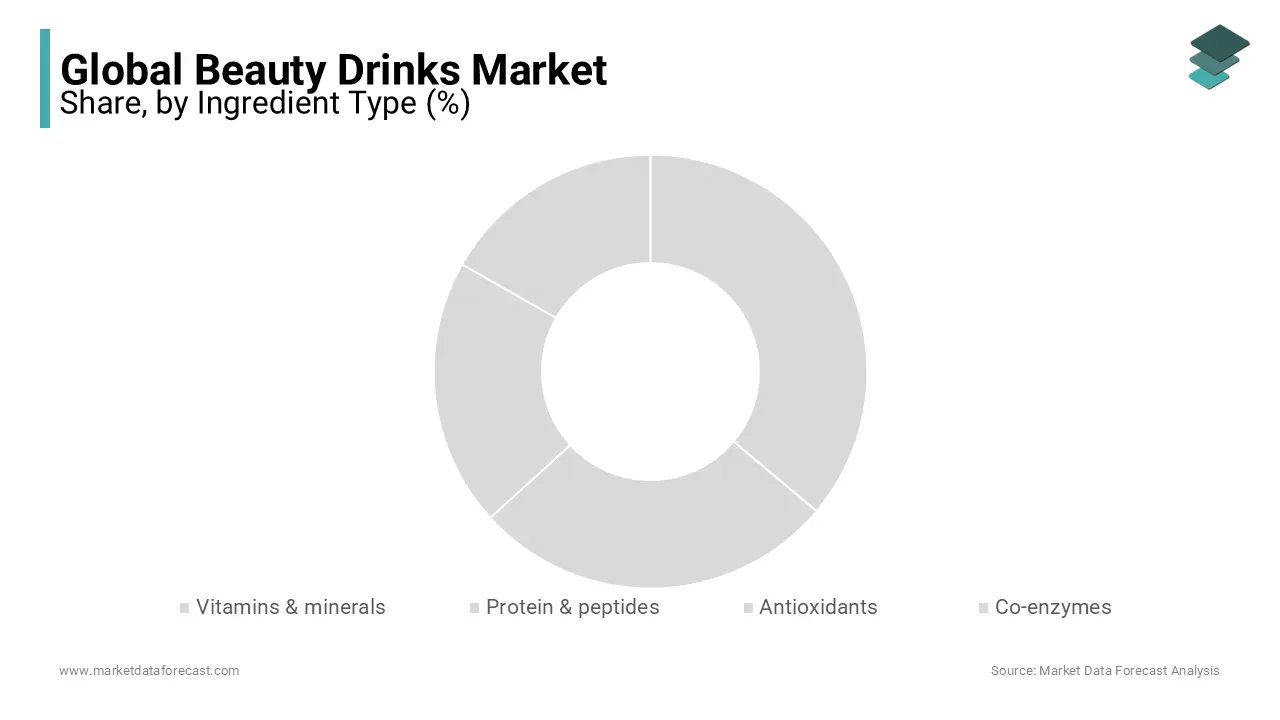
The vitamins and minerals segment demonstrates the highest growth trajectory within the beauty drinks market and is estimated to showcase a CAGR of 14.5% during the forecast period, owing to the increasing consumer preference for comprehensive nutritional support that addresses multiple wellness dimensions simultaneously and the rising awareness of micronutrient roles in cellular regeneration and oxidative stress mitigation. As per the World Health Organization, approximately 2 billion individuals globally experience micronutrient deficiencies that compromise skin barrier function and accelerate visible aging markers. Modern formulations strategically combine vitamin C for collagen synthesis enhancement with biotin for keratin production support, creating synergistic effects that amplify perceived value. Consumers increasingly seek transparent labeling that specifies bioavailable forms such as methylated B vitamins and chelated minerals to ensure optimal physiological utilization. Digital education campaigns through social media platforms amplify ingredient literacy, enabling shoppers to make informed purchasing decisions based on scientific rationale rather than marketing narratives. The versatility of vitamin and mineral blends allows manufacturers to target diverse demographic segments, including aging populations seeking anti-aging benefits and younger consumers prioritizing preventive skincare protocols.
By Function Insights
The anti-aging segment maintained market dominance and held 42.3% of the global market share in 2025 due to the sustained consumer investment in interventions that preserve youthful appearance and skin resilience. As per the World Health Organization, the global population aged 60 and older is projected to increase from 1.1 billion in 2023 to 1.4 billion by 2030, creating an expanding demand for age-targeted nutritional solutions. Modern anti-aging beverages incorporate advanced peptide complexes, antioxidant polyphenols, and mitochondrial support compounds that address multiple aging pathways simultaneously. Consumers prioritize products with clinically documented efficacy in reducing wrinkle depth, improving skin firmness, and enhancing radiance metrics through objective measurement protocols. The segment benefits from premium pricing tolerance as shoppers associate anti-aging benefits with long-term value and quality of life improvements. Retail distribution through specialty wellness channels reinforces product credibility through expert consultation and personalized recommendation frameworks that build consumer confidence in purchase decisions.
On the other side, the skin hydration segment is estimated to register a CAGR of 14.4% over the forecast period in the global market, owing to the increasing consumer recognition of moisture balance as foundational to overall cutaneous health and barrier integrity. As per dermatological research published in the Journal of Clinical and Aesthetic Dermatology, optimal epidermal hydration levels correlate with enhanced barrier function, reduced inflammatory markers, and delayed appearance of fine lines and texture irregularities. Modern hydration-focused beverages integrate hyaluronic acid precursors, ceramide complexes, and electrolyte blends that support systemic moisture retention and cellular hydration mechanisms. Consumers increasingly seek products that deliver measurable improvements in skin suppleness and comfort without compromising sensory appeal or daily routine compatibility. The segment benefits from cross-demographic appeal as both aging populations seeking moisture restoration and younger consumers prioritizing barrier maintenance find relevant value propositions. Digital marketing emphasizing visible hydration metrics and before-and-after documentation strengthens consumer engagement and repeat purchasing behavior across retail and direct-to-consumer channels.
By Distribution Channel Insights
The specialty stores segment held 34.9% of the global market share in 2025 and captured the leadership position by delivering personalized product education and expert guidance that justifies premium pricing for scientifically validated beauty beverages. As per retail analytics from NielsenIQ, consumers purchasing beauty drinks through specialty channels demonstrate 35% higher repeat purchase rates compared to mass retail environments, reflecting the value of consultative selling approaches. These retail environments curate assortments based on clinical evidence and ingredient transparency, filtering out products with unsubstantiated claims that could erode category credibility. Staff training programs ensure accurate communication of bioavailability data, dosing protocols, and expected outcome timelines that build consumer confidence in purchase decisions. The physical retail experience allows product sampling and sensory evaluation that reduces hesitation associated with premium-priced functional beverages. Specialty stores also serve as testing grounds for innovative formulations before broader distribution, enabling manufacturers to refine products based on direct consumer feedback. This channel benefits from strong relationships with dermatology professionals and wellness practitioners who refer clients seeking evidence-backed ingestible skincare solutions.
On the other side, the online retail segment is predicted to register a promising CAGR of 13.4% during the forecast period, owing to the expanding e-commerce infrastructure and consumer preference for convenient home delivery of wellness products. As per the International Trade Centre, global e-commerce sales of health and wellness products increased by 28% between 2022 and 2024, reflecting broader digital shopping migration across demographic segments. Modern online platforms leverage algorithmic personalization to recommend formulations based on consumer profiles, purchase history, and stated wellness goals that enhance discovery and conversion rates. Subscription services enable automatic replenishment with flexible frequency options that improve compliance and customer lifetime value. Digital marketing through social media influencers and user-generated content builds authentic product narratives that resonate with younger demographics seeking peer-validated recommendations. Online channels also facilitate direct consumer feedback loops that inform product development and formulation refinements based on real-time usage data. The elimination of physical retail markups allows competitive pricing strategies that broaden accessibility while maintaining premium ingredient standards and clinical validation commitments.
REGIONAL ANALYSIS
Asia Pacific Beauty Drinks Market Analysis
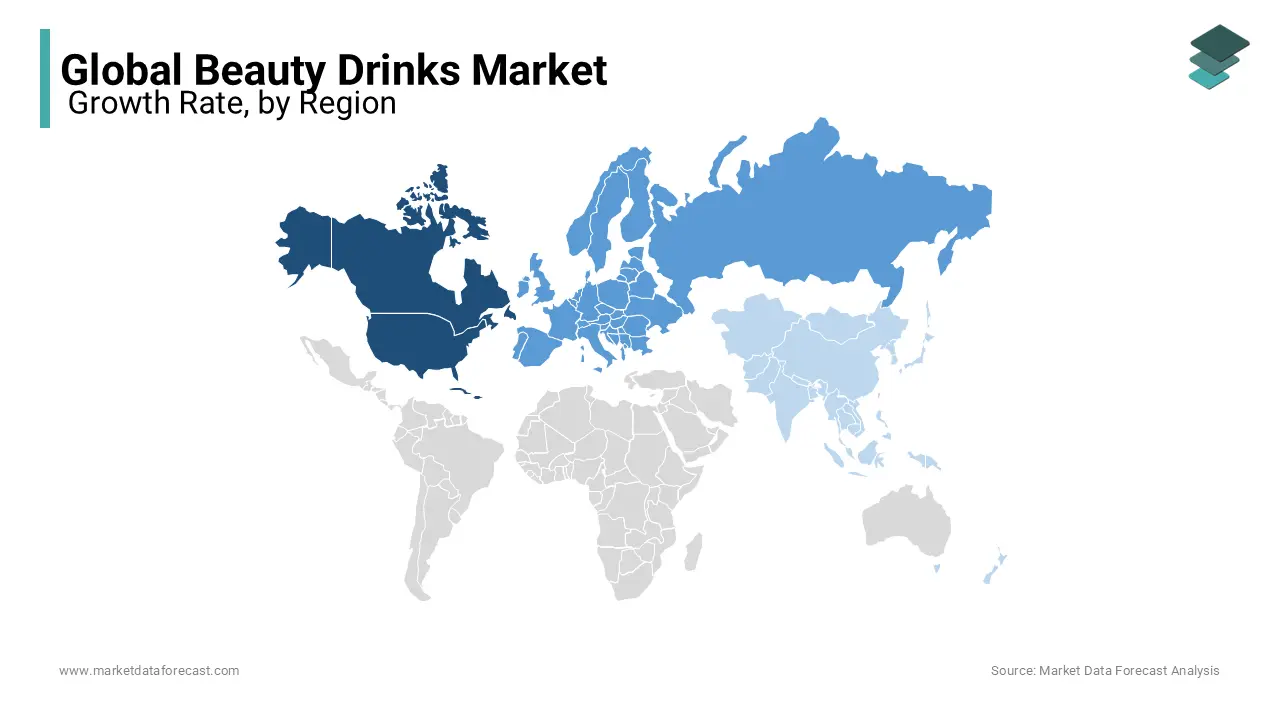
The Asia Pacific region is expected to further strengthen its dominant position in the global beauty drinks market over the next few years due to deep cultural acceptance of functional beverages and robust regulatory frameworks that support product innovation. As per the United Nations Economic and Social Commission for Asia and the Pacific, rising disposable incomes across emerging economies, including China, India, and Southeast Asian nations, have expanded the addressable consumer base for premium wellness products. Local manufacturers leverage indigenous botanical ingredients with documented dermatological benefits to create differentiated formulations that resonate with regional preferences while meeting international quality standards. The convergence of K-beauty and J-beauty influences amplifies global demand for Asian-developed beauty drink concepts that emphasize gentle efficacy and holistic wellness philosophies. E-commerce infrastructure development enables direct-to-consumer distribution that bypasses traditional retail constraints and accelerates product adoption across urban and rural markets. Government initiatives promoting preventive healthcare and wellness tourism further strengthen category legitimacy and consumer confidence in ingestible beauty solutions.
Europe Beauty Drinks Market Analysis
European countries are projected to register steady expansion and enhanced product diversification in the coming years, sustaining a prominent market position through comprehensive regulatory frameworks that ensure product quality and transparent ingredient disclosure that builds consumer trust in beauty drink efficacy claims. As per the European Food Safety Authority, stringent evaluation protocols for health claims create a competitive environment where only scientifically substantiated products achieve market access, elevating category credibility. Consumers in Germany, France, and the United Kingdom demonstrate sophisticated ingredient literacy that rewards brands investing in clinical research and transparent supply chain documentation. The region benefits from strong pharmacy distribution channels that position beauty drinks alongside evidence-backed health supplements, reinforcing therapeutic positioning. Sustainability commitments regarding marine collagen sourcing and eco-conscious packaging align with European consumer values regarding environmental responsibility. Cross-border e-commerce within the European Union enables efficient market expansion while maintaining regulatory compliance across diverse national frameworks.
North America Beauty Drinks Market Analysis
The North American market is anticipated to witness substantial growth and higher retail integration over the next few years, exhibiting strong market performance through rapid adoption of innovative beauty drink formulations and effective digital marketing strategies that amplify brand visibility among target demographics. As per the American Academy of Dermatology, increasing awareness of the gut-skin axis and systemic nutritional approaches to dermatological health has accelerated category adoption among health-conscious consumers. The region benefits from advanced e-commerce infrastructure and social media marketing ecosystems that enable direct consumer engagement through influencer partnerships and user-generated content campaigns. Premium positioning strategies resonate with consumers willing to invest in clinically validated formulations that deliver measurable aesthetic outcomes. Retail partnerships with specialty wellness stores and dermatology clinics provide credible distribution channels that reinforce product legitimacy. The convergence of fitness culture and beauty wellness creates cross-category opportunities for functional beverages that support both physical performance and aesthetic goals.
Latin America Beauty Drinks Market Analysis
The Latin American market is poised to see promising development and a gradual expansion in specialty wellness sales in the near future, presenting growing opportunities for beauty drinks expansion through increasing urbanization and rising consumer awareness of preventive skincare protocols among middle-class demographics. According to regional market assessments, Latin American beauty drinks adoption is accelerating as urban consumers gain access to international brands through expanding e-commerce platforms and specialty retail networks. As per the United Nations Population Division, the region's urban population is projected to reach 85% by 2030, creating concentrated consumer markets with improved distribution accessibility. Local manufacturers are developing formulations that incorporate indigenous botanical ingredients with traditional wellness credentials to differentiate offerings and resonate with cultural preferences. Rising disposable incomes among younger demographics enable premium product adoption as consumers prioritize long-term skin health over reactive cosmetic interventions. Social media influence from global beauty trends accelerates category awareness and drives trial among early adopters seeking innovative wellness solutions. Government initiatives promoting healthy aging and preventive healthcare create supportive policy environments for functional beverage development and distribution.
COMPETITION OVERVIEW
The beauty drinks market exhibits moderate fragmentation with strategic opportunities for both established multinational corporations and emerging specialized brands. Competition increasingly favors companies that provide robust clinical evidence to support efficacy claims as regulatory frameworks and consumer sophistication demand scientific validation rather than marketing promises. New market entrants leverage direct-to-consumer channels and social media marketing, particularly through user-generated content on platforms like TikTok, to connect with younger consumers seeking beauty from within solutions. The competitive environment rewards brands that implement omnichannel retail strategies combining physical expertise with digital accessibility, creating advantages against pure online competitors. Technology adoption enables personalized nutrition approaches and subscription-based business models that increase customer lifetime value and foster brand loyalty. Companies differentiate through specialized formulations targeting specific demographic groups and functional benefits while maintaining premium ingredient standards and transparent supply chain documentation. Strategic partnerships and acquisitions merge expertise, expand portfolios, and accelerate market penetration across diverse geographic regions and consumer segments.
KEY MARKET PLAYERS
A few major players in the global beauty drinks market include
- SAPPE Public Company Limited
- Shiseido Co. Ltd
- Vital Proteins LLC
- Kinohimitsu
- Lacka Foods Limited
- Gelita AG
- Big Quark
- Hangzhou Nutrition Biotechnology Co., Ltd
Top Strategies Used by Key Market Participants
Key market participants prioritize clinical validation and transparent efficacy communication to build consumer trust in beauty drink formulations. Companies invest significantly in research partnerships with academic institutions to advance ingredient delivery technologies and substantiate health claims through rigorous scientific protocols. Strategic acquisitions enable established players to integrate specialized collagen expertise and innovative formulation capabilities into broader wellness portfolios. Omnichannel distribution strategies combine premium retail partnerships with direct-to-consumer digital platforms that enable personalized consumer engagement and subscription model implementation. Sustainability commitments regarding ingredient sourcing and eco-conscious packaging align with evolving consumer values regarding environmental responsibility. Digital marketing through social media influencers and user-generated content amplifies brand visibility among target demographics seeking peer-validated wellness solutions. Product innovation focuses on convenient, ready-to-drink formats and clean-label formulations that resonate with modern consumer preferences for on-the-go health and transparent ingredient disclosure.
Leading Players in the Market
- Shiseido Co Ltd maintains a prominent position in the global beauty drinks market through its scientifically formulated collagen beverage portfolio that leverages decades of dermatological research and ingredient innovation. The company's strategic focus on clinical validation and transparent efficacy communication builds consumer trust across diverse international markets. Recent product launches in Japan and China demonstrate Shiseido's commitment to regional preference adaptation while maintaining global quality standards. The organization invests significantly in research partnerships with academic institutions to advance peptide delivery technologies and bioavailability optimization. Shiseido's omnichannel distribution strategy integrates premium retail partnerships with direct-to-consumer digital platforms that enable personalized consumer engagement. The company's sustainability initiatives regarding marine collagen sourcing and eco-conscious packaging align with evolving consumer values regarding environmental responsibility. Continuous innovation in flavor profiles and functional ingredient combinations ensures product relevance across diverse demographic segments seeking evidence-based ingestible skincare solutions.
- Nestlé SA strengthens its beauty drinks market presence through the Vital Proteins brand acquisition and subsequent integration of collagen expertise into its global wellness portfolio. The company leverages extensive distribution networks and manufacturing capabilities to scale premium beauty beverage formulations across international markets. Recent product innovations focus on convenient, ready-to-drink formats that align with modern consumer preferences for on-the-go wellness solutions. Nestlé invests in clinical research to substantiate efficacy claims and differentiate offerings through scientifically validated ingredient combinations. The organization's commitment to clean label formulations and transparent sourcing practices resonates with health-conscious consumers seeking trustworthy beauty drink options. Strategic partnerships with dermatology professionals and wellness influencers amplify brand credibility and drive consumer trial across target demographics. Nestlé's digital marketing capabilities enable personalized consumer engagement and subscription model implementation that enhances customer retention and lifetime value within the competitive beauty drinks landscape.
- Kinohimitsu establishes market distinction through specialized collagen beverage formulations that emphasize premium ingredient quality and targeted aesthetic benefits for discerning Asian consumers. The company's focus on marine-sourced collagen peptides and antioxidant botanical extracts creates differentiated value propositions that resonate with beauty-conscious demographics seeking visible results. Recent product launches incorporate innovative delivery technologies that enhance ingredient stability and bioavailability while maintaining appealing sensory profiles. Kinohimitsu leverages strong e-commerce capabilities and social media marketing to engage younger consumers through authentic brand narratives and user-generated content campaigns. The organization's commitment to clinical validation and transparent efficacy communication builds consumer trust in a competitive market environment. Strategic retail partnerships with specialty wellness stores and beauty boutiques provide credible distribution channels that reinforce premium positioning. Continuous investment in research and development ensures product innovation that addresses evolving consumer preferences for clean-label, sustainably sourced, and scientifically substantiated beauty drink solutions.
DETAILED SEGMENTATION OF THE GLOBAL BEAUTY DRINKS MARKET IS INCLUDED IN THIS REPORT
This research report on the global beauty drinks market has been segmented and sub-segmented based on the following categories.
By Ingredient Type
- Vitamins & minerals
- Protein & peptides
- Antioxidants
- Co-enzymes
By Function
- Anti-aging
- Detoxication
- Radiance
- Vitality
By Distribution Channel
- Supermarket & hypermarket
- Specialty stores
- Online
By Region
- North America
- Europe
- The Asia Pacific
- Latin America
- The Middle East and Africa