- Product Description Description
- Table of Contents TOC
- List of Table & Figure LOT
- Get Free Sample PDF Sample PDF
Market Size, 2025
$23.84 BnMarket Estimate, 2026
$26.58 BnMarket Forecast, 2034
$63.5 BnCAGR, 2026–2034
11.5%Executive Summary: Flavored Water Market
- Market Scope: Global flavored water market analysis covering product types, regional leadership frameworks, retail channels, and consumer adoption metrics.
- Market Valuation: Valued at USD 23.84 billion (2025), estimated at USD 26.58 billion (2026), and projected to reach USD 63.50 billion by 2034, growing at a robust CAGR of 11.50% (2026–2034).
- Primary Growth Drivers: Health-conscious hydration preferences, low-sugar beverage demand, functional ingredients, and active lifestyles (global per-capita consumption of non-caloric beverages, including flavored water, increasing 18% over the past five years). Key operational metrics include changing consumer behaviors (average daily sugar intake from American beverages declining 25% between 2003–2021 and 68% of U.S. consumers preferring beverages with five or fewer ingredients), alongside ongoing sustainability challenges (~300 million tons of annual plastic waste generated globally, with bottled beverages contributing nearly 20% of urban plastic litter).
Key Market Segment Metrics (2026–2034)
| Category | Leading Segment (2025 Position) | Fastest-Growing Segment |
|---|---|---|
| By Product / Type | Conventional flavored water (held the prominent product-type share in 2025, supported by simple, low-calorie beverage demand) | Functional water (projected to grow at a 10.7% CAGR driven by added electrolytes, vitamins, antioxidants, and wellness ingredients) |
| By Region | North America (dominated the global market with 44.3% share in 2025, with U.S. per-capita consumption reaching 5.8 liters annually in 2023), followed by Europe at 26.3% | Asia-Pacific / Emerging Markets (identified as a fast-growing regional territory fueled by rising per-capita bottled-water consumption, such as India doubling consumption between 2015–2022) |
Major Market Players & Market Structure
Market Structure: Highly competitive global flavored water landscape featuring major multinational beverage corporations and specialized health-focused brands competing on functional formulations, natural flavor profiles, complete ingredient transparency, sustainable packaging initiatives, regional customization, and extensive digital distribution.
Key Companies: Sunny Delight Beverage Company, Hint Water, Kraft Foods, Balance Water Company, Nestlé Water, Herbal Water, PepsiCo, The Coca-Cola Company, Groupe Danone, and New York Spring Water.
Global Flavored Water Market Size
The global flavored water market size was worth USD 23.84 billion in 2025. The global market size is expected to grow at a CAGR of 11.50% from 2026 to 2034 and be worth USD 63.50 billion by 2034 from USD 26.58 billion in 2026.
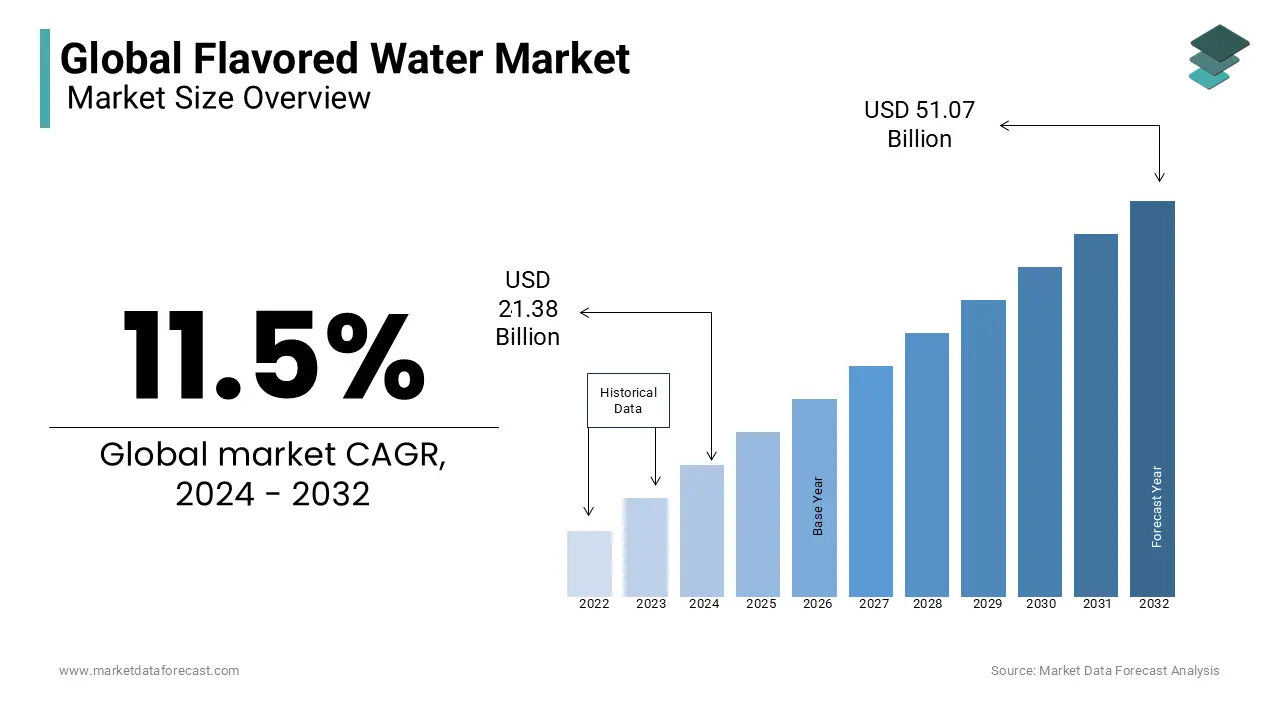
Flavored water is a non-carbonated or carbonated beverages infused with natural or artificial taste enhancers, typically free from added sugars or with minimal caloric content. As per the Beverage Marketing Corporation, global per capita consumption of non-caloric beverages, including flavored water, has increased by 18% over the past five years.
MARKET DRIVERS
Rising Health Consciousness and Demand for Low-Calorie Hydration
The growing consumer emphasis on health and wellness with the avoidance of excessive sugar and artificial ingredients is accelerating the growth of the Flavored Water Market. According to the National Health and Nutrition Examination Survey (NHANES), the average American’s daily sugar intake from beverages declined by 25% between 2003 and 2021, with flavored water emerging as a preferred substitute. Consumers increasingly perceive flavored water as a guilt-free hydration solution that aligns with active lifestyles and dietary goals. Brands like Essentia, Hint, and Bai have capitalized on this sentiment by emphasizing natural ingredients and functional benefits such as electrolyte enhancement or antioxidant infusion.
Expansion of On-the-Go and Active Lifestyles
The proliferation of fast-paced, mobile-centric lifestyles has significantly boosted demand for convenient, portable hydration solutions, with flavored water occupying a strategic niche. As per the U.S. Bureau of Labor Statistics, Americans spend an average of 1.2 hours per day commuting, creating a sustained need for ready-to-drink beverages that support hydration without compromising taste or health. Flavored water, often packaged in lightweight, recyclable bottles, fits seamlessly into daily routines, from gym sessions to workplace commutes. Fitness centers, yoga studios, and boutique gyms frequently stock flavored water as a premium hydration choice, reinforcing its association with vitality.
MARKET RESTRAINTS
Consumer Skepticism Toward Artificial Ingredients and Flavorings
The resistance due to consumer distrust of synthetic additives, even in low concentrations is restricting the growth of the Flavored Water Market. This skepticism persists even when products are labeled “low-calorie” or “sugar-free,” as consumers increasingly scrutinize ingredient lists for terms like “natural flavors” or “preservatives.” The Clean Label Project, a non-profit advocating for transparent food and beverage labeling, found that 40% of flavored water products tested contained trace levels of contaminants such as arsenic or chromium, undermining perceptions of purity. This erosion of trust has led to backlash against certain brands, particularly those using chemical solvents in flavor extraction.
Environmental Impact of Single-Use Plastic Packaging
The reliance on single-use plastic bottles for flavored water distribution poses a significant sustainability challenge for the growth of the Flavored Water Market. As per the United Nations Environment Programme, approximately 300 million tons of plastic waste are generated annually, with bottled beverages contributing nearly 20% of plastic litter in urban areas. Flavored water, often marketed as a healthy choice, faces criticism for contradicting eco-conscious values due to its packaging footprint. In response, cities like San Francisco and countries such as Canada have introduced restrictions on single-use plastics, directly impacting flavored water distribution.
MARKET OPPORTUNITIES
Innovation in Functional and Enhanced Flavored Waters
The transformative shift toward functional enhancement, where products are fortified with vitamins, electrolytes, adaptogens, or probiotics to deliver targeted health benefits is greatly influencing the growth of the Flavored Water Market. Brands like Smartwater Mind and Core Hydration have introduced pH-balanced and mineral-enriched variants that appeal to neurocognitive and metabolic wellness trends. Consumers, particularly in urban Asia-Pacific markets, are embracing beverages with added collagen, B-vitamins, or L-theanine for stress reduction.
Penetration in Emerging Markets with Rising Disposable Incomes
The urbanization and increasing disposable incomes in emerging countries is eventually to level up the growth of the Flavored Water Market. In India, per capita bottled water consumption doubled between 2015 and 2022, according to the Indian Brand Equity Foundation, which is signaling readiness for value-added variants like flavored and functional waters. In Brazil, flavored water sales grew by 12% in 2023, as reported by ABIA, the Brazilian Association of the Food Industry, fueled by youth demand for trendy, Instagrammable beverages.
MARKET CHALLENGES
Ingredient Sourcing and Supply Chain Volatility for Natural Flavors
The shift toward clean-label and naturally flavored products is attributed in hindering the growth of the Flavored Water Market. Natural flavor extracts such as citrus oils, berry concentrates, or herbal infusions depend on seasonal harvests and geographic stability by making supply chains prone to disruption. As per the Food and Agriculture Organization, extreme weather events reduced global citrus production by 8% in 2022, which is directly impacting the availability of key flavoring agents. Additionally, geopolitical tensions and export restrictions, such as India’s 2023 curbs on certain essential oil exports, have driven up input costs.
Regulatory Divergence in Health and Flavor Claims Across Regions
The fragmented regulatory landscape, where claims related to health benefits, natural ingredients, or flavor authenticity are likely to degrade the growth of the flavored water market. In the European Union, Regulation (EC) No 1924/2006 strictly governs nutrition and health claims, requiring scientific substantiation before any labeling. Conversely, the U.S. FDA permits broader use of terms like “natural flavors” without full disclosure of composition. As per the Global Food Regulators Summit 2023 report, over 60% of multinational beverage companies face delays in product launches due to inconsistent regional approvals.
REPORT COVERAGE
| REPORT METRIC | DETAILS |
| Market Size Available | 2025 to 2034 |
| Base Year | 2025 |
| Forecast Period | 2026 to 2034 |
| CAGR | 11.5% |
| Segments Covered | By Product Type and Region |
| Various Analyses Covered | Global, Regional & Country Level Analysis, Segment-Level Analysis, DROC, PESTLE Analysis, Porter’s Five Forces Analysis, Competitive Landscape, Analyst Overview on Investment Opportunities |
| Regions Covered | North America, Europe, APAC, Latin America, Middle East & Africa |
|
Market Leaders Profiled | Sunny Delight Beverage Company, Hint Water, Kraft Foods, Balance Water Company, Nestle Water, Herbal Water, PepsiCo, The Coca-Cola Company, Groupe Danone, New York Spring Water and Others. |
SEGMENTAL ANALYSIS
By Product Type Insights
The conventional flavored water segment was accounted in holding a prominent share of the flavored water market in 2025 with its broad consumer appeal as a simple, refreshing, and low-calorie alternative to sugary beverages. According to the International Food Information Council, 68% of U.S. consumers prefer beverages with five or fewer ingredients, a criterion that plain flavored water often meets. Its accessibility and affordability further enhance adoption across age groups, particularly among health-conscious millennials and parents seeking healthier options for children.
The aggressive marketing and wide retail distribution by major beverage companies is also attributed in propelling the growth of the flavored water market. Brands such as AQUAhydrate, Fiji Water with its flavored line, and PepsiCo’s Lifewtr have invested heavily in premium branding and shelf placement in supermarkets, convenience stores, and gyms.
The functional water segment is lucratively growing with an expected CAGR of 10.7% in the next coming years with the rising consumer interest in beverages that offer measurable health benefits beyond hydration. Functional waters are fortified with electrolytes, vitamins, antioxidants, CBD, or adaptogens, catering to specific wellness needs such as immune support, mental clarity, and post-exercise recovery. The integration of the nutrition and lifestyle medicine, with younger generation viewing beverages as tools for proactive health management is solely propel the growth of the segment. Brands like Smartwater Mind, Core Hydration, and Flow Alkaline+ have capitalized on this trend by emphasizing pH balance, trace minerals, and cognitive enhancement.
REGIONAL ANALYSIS
North America Flavored Water Market Insights
North America was the largest contributor of the global flavored water market by capturing 44.3% of the share in 2025 with the high health awareness, advanced retail infrastructure, and early adoption of premium beverage formats. The United States witnessed with per capita flavored water intake reaching 5.8 liters annually in 2023, as per the Beverage Marketing Corporation.
The proliferation of fitness culture and clean-eating trends has elevated flavored water to a lifestyle staple. Retail giants like Walmart, Kroger, and Whole Foods have expanded dedicated sections for enhanced and flavored waters, while e-commerce platforms such as Amazon and Thrive Market report double-digit growth in subscription-based flavored water deliveries. Regulatory clarity and strong intellectual property protection also encourage innovation by enabling brands to differentiate through proprietary blends and packaging.
Europe Flavored Water Market Insights
Europe's flavored water market growth is likely to grow with 26.3% of the share in 2025 with the stringent labeling regulations and a preference for natural, sustainably sourced products. Consumer skepticism toward artificial additives has pushed brands to reformulate with organic flavors and recyclable packaging. Additionally, the rise of private-label flavored waters in retailers such as Tesco and Carrefour has increased affordability and accessibility.
Asia Pacific Flavored Water Market Insights
Asia Pacific flavored water market growth is likely to have a significant growth opportunities throughput the forecast period. Japan and South Korea are pioneering functional variants, with products containing collagen, probiotics, and B-vitamins gaining popularity among aging populations and beauty-conscious consumers. Meanwhile, in China, brands like Burnol and Nongfu Spring’s Vitamin Water line are leveraging e-commerce and social media marketing to target urban millennials.
Latin America Flavored Water Market Insights
Latin America flavored water market growth is attributed in witnessing steady growth throughout the forecast period with the increasing awareness of obesity and diabetes. Retail modernization and digital payment adoption are improving distribution, while social media influencers promote flavored water as part of fitness and detox regimens. Brazil and Mexico are major contributors for the growth of the flavored water market in this region.
Middle East & Africa Flavored Water Market Insights
The Middle East and Africa flavored water market with the Gulf Cooperation Council (GCC) countries leading adoption. Saudi Arabia’s Vision 2030 includes a national wellness strategy that promotes healthy lifestyles, indirectly boosting demand for non-sugary beverages. Dubai’s retail landscape features international brands like Hint and Voss, while local startups introduce regionally inspired flavors such as pomegranate, dates, and hibiscus.
LEADING PLAYERS IN THE FLAVORED WATER MARKET AND THEIR CONTRIBUTION TO THE ASIA PACIFIC MARKET
Nestlé Waters
Nestlé Waters has significantly expanded its presence in the Asia Pacific flavored water market through localized innovation and strategic distribution partnerships. The company has introduced region-specific variants under its Pure Life and Resource brands, incorporating flavors such as lychee, yuzu, and jasmine to align with local palates in markets like Thailand, Japan, and India. In 2023, Nestlé launched a vitamin-enhanced flavored water line in Singapore, targeting urban professionals seeking functional hydration. The company has also invested in sustainable packaging, introducing 100% recycled PET bottles across its flavored water portfolio in Australia and New Zealand.
Coca-Cola Company
The Coca-Cola Company has intensified its focus on the Asia Pacific flavored water segment by repositioning its portfolio toward low- and no-sugar hydration solutions. Through its Smartwater and Vitaminwater brands, the company has introduced vapor-distilled and nutrient-enhanced variants tailored for health-conscious consumers in urban centers such as Seoul, Sydney, and Mumbai. In 2023, Coca-Cola partnered with Japanese retailer Aeon to launch limited-edition botanical-flavored waters infused with matcha and sakura, reflecting cultural preferences. The company also rolled out aluminum-packaged Vitaminwater in Australia to address environmental concerns. Additionally, Coca-Cola’s investment in digital marketing and influencer campaigns across TikTok and Instagram has strengthened engagement with younger demographics.
Danone (via its subsidiary Evian and Other Brands)
Danone has strategically positioned its Evian brand as a premium player in the Asia Pacific flavored water market, emphasizing purity, sustainability, and lifestyle branding. In 2022, Evian launched a line of naturally flavored sparkling waters in China and South Korea, featuring notes of lemon, cherry blossom, and cucumber, packaged in recyclable glass and rPET bottles. The brand has aligned itself with wellness events, fitness festivals, and high-end hospitality chains across Southeast Asia, reinforcing its premium image. Danone has also collaborated with local influencers in Thailand and Indonesia to promote hydration as part of a balanced lifestyle. In 2023, the company introduced a carbon-neutral distribution initiative for Evian in Japan, reducing logistical emissions by 30% through optimized routing and electric delivery vehicles.
TOP STRATEGIES USED BY KEY MARKET PARTICIPANTS
Key players in the flavored water market are deploying product innovation, regional customization, sustainable packaging, strategic partnerships, and digital engagement to consolidate their positions. Companies are launching functional variants fortified with vitamins, electrolytes, or plant-based extracts to meet rising wellness demands. Investment in recyclable and alternative packaging, including aluminum and biodegradable materials, addresses environmental concerns. Partnerships with retailers, fitness brands, and e-commerce platforms improve distribution and visibility. Digital marketing, influencer collaborations, and direct-to-consumer subscription models strengthen brand loyalty. These strategies collectively enable companies to differentiate in a crowded market, respond to regulatory and consumer pressures, and capture growth in both mature and emerging economies.
KEY MARKET PLAYERS AND COMPETITION OVERVIEW
Major Players of the Flavored Water Market include Sunny Delight Beverage Company, Hint Water, Kraft Foods, Balance Water Company, Nestle Water, Herbal Water, PepsiCo, The Coca-Cola Company, Groupe Danone and New York Spring Water are playing a major role in the global market.
The flavored water market is characterized by intense competition driven by shifting consumer preferences toward health, wellness, and sustainability. Multinational giants like Nestlé, Coca-Cola, and Danone compete with regional players and agile startups offering niche, clean-label, or functional variants. Differentiation hinges on flavor innovation, ingredient transparency, packaging sustainability, and brand storytelling. While established companies leverage scale and distribution, smaller brands gain traction through digital-first models and targeted wellness claims. The Asia Pacific region has become a battleground for market share, with localization and cultural relevance determining success. Regulatory scrutiny on labeling and environmental impact further intensifies the competitive pressure.
RECENT HAPPENINGS IN THE MARKET
- In June 2023, Nestlé Waters launched a new line of vitamin-infused flavored water under the Pure Life brand in India by targeting urban consumers seeking functional hydration with locally preferred flavors like mango and mint.
- In February 2025, The Coca-Cola Company introduced aluminum-bottled Vitaminwater in Australia, enhancing its sustainability profile and expanding distribution through major retail chains and online platforms.
- In September 2023, Danone launched a limited-edition Evian sparkling water range in South Korea featuring cherry blossom and yuzu flavors, supported by a digital campaign targeting wellness-oriented millennials.
- In January 2025, PepsiCo expanded its Bubly brand into Thailand with region-specific flavors such as lemongrass and coconut by leveraging e-commerce partnerships with GrabMart and Shopee to accelerate market penetration.
DETAILED SEGMENTATION OF THE GLOBAL FLAVORED WATER MARKET INCLUDED IN THIS REPORT
This research report on the global flavored water market has been segmented and sub-segmented based on the product type and region.
By Product Type
- Conventional Flavored Water
- Functional Water
By Region
- North America
- Europe
- Asia Pacific
- Latin America
- Middle East and Africa