- Product Description Description
- Table of Contents TOC
- List of Table & Figure LOT
- Get Free Sample PDF Sample PDF
Market Size, 2025
$84.26 BnMarket Estimate, 2026
$85.47 BnMarket Forecast, 2034
$95.83 BnCAGR, 2026–2034
1.44%Executive Summary: Global Heliport Market Analysis
- Market Scope: Comprehensive analysis of the global heliport market covering surface and elevated configurations, medical and transport applications, end-user categories, and regional infrastructure dynamics.
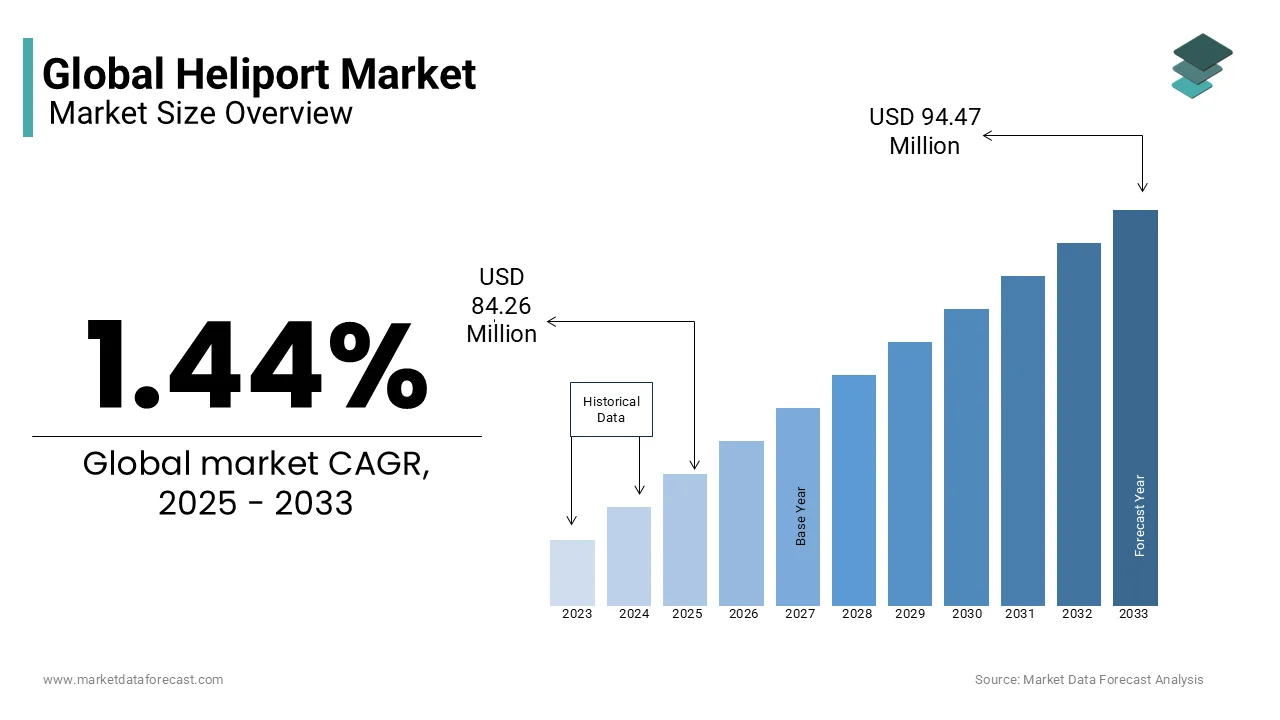
- Market Valuation: Valued at USD 84.26 billion in 2025, estimated at USD 85.47 billion in 2026, and projected to reach USD 95.83 billion by 2034, growing at a compound annual growth rate (CAGR) of 1.44% during the forecast period from 2026 to 2034.
- Primary Growth Drivers: Expansion of Emergency Medical Services (EMS) and air ambulance networks, surging demand for offshore wind and oil/gas exploration transport support, and upcoming integration with Urban Air Mobility (UAM) and eVTOL ecosystems.
Key Market Segment Metrics (2026–2034)
| Category | Leading Segment (2025 Position) | Fastest-Growing / Prominent Segment |
|---|---|---|
| By Type | Ground-Level Heliports (held a dominant 55.5% share in 2025 due to low construction costs and structural simplicity) | Rooftop Heliports (projected to experience the fastest CAGR of 4.2% driven by urban space constraints and verticalized city planning) |
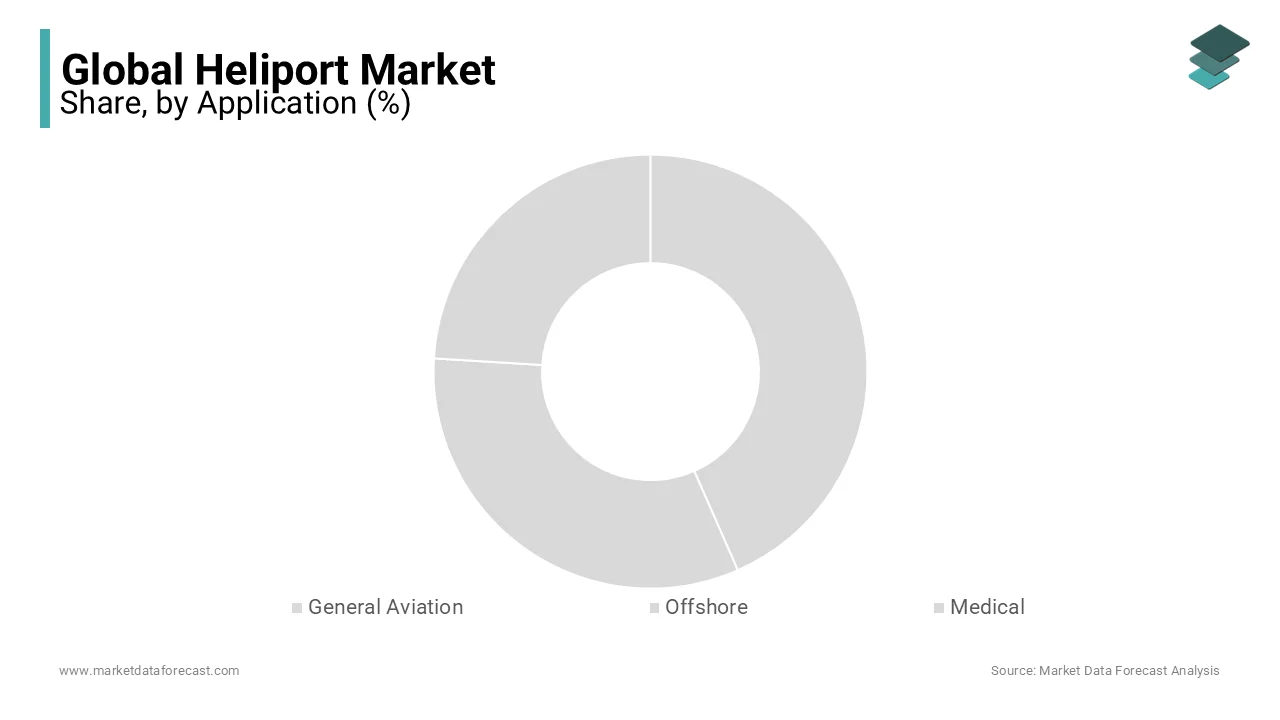
| By Application | Medical Services Heliports (largest segment with 44.5% share in 2025, supported by critical trauma care and HEMS networks) | Transport Heliports (set to register a remarkable 52.5% CAGR propelled by executive travel, tourism, and UAM networks) |
| By End-User | Medical Services (captured 46.5% share in 2025 as air ambulances remain vital to pre-hospital care and hospital accreditations) | Commercial (expected to showcase a prominent CAGR of 57.6% fueled by corporate aviation and emerging UAM operations) |
| By Region | North America (outperformed other regions, holding a 36.7% share in 2025 backed by advanced U.S. aviation and healthcare infrastructure) | Asia-Pacific & Europe (experiencing steady demand due to healthcare expansions, offshore wind logistics, and strict regulatory safety frameworks) |
Major Market Players & Industry Structure
Market Structure: Specialized and fragmented infrastructure market featuring civil engineering firms, specialized lighting/safety equipment providers, and modular pad manufacturers catering to healthcare networks and offshore energy operators.
Key Companies: Calzoni, Downing Heliport Systems, Technokontrol Technologies, Flight Light, Aluminum Offshore Pte Ltd., Helipad Company, BNN Aviation, FEC Heliports, and Helitecnica.
Global Heliport Market Size
The global heliport market size was valued at USD 84.26 billion in 2025 and is anticipated to reach USD 85.47 billion in 2026 to USD 95.83 billion by 2034, growing at a CAGR of 1.44% from 2026 to 2034.
MARKET OVERVIEW
A heliport is a dedicated area of land, water, or a structure (like a roof) designed for the takeoff, landing, and parking of helicopters. These specialized zones include ground level heliports, elevated heliports on building rooftops, and offshore platforms situated on oil rigs or wind farms. The primary function of a heliport is to facilitate vertical takeoff and landing operations in areas where conventional runway space is unavailable or impractical. The Federal Aviation Administration airport facility data reveals that while there are over 5,000 public-use airports in the United States, the vast majority of the country's ~6,000 heliports are private-use facilities (such as hospital or corporate pads), with only a very small fraction designated for general public use. The International Civil Aviation Organization emphasizes that proper heliport design is essential for ensuring safety standards, particularly in dense urban environments where air traffic congestion is high. According to the CDC-funded National Study on the Costs and Outcomes of Trauma (NSCOT), severely injured patients treated at Level I Trauma Centers have a 25% lower mortality rate compared to those treated at non-trauma centers, a survival benefit that air ambulances help realize by rapidly bridging the distance to these specialized facilities. In Europe, the European Union Aviation Safety Agency has implemented stricter regulations regarding noise abatement and environmental impact, influencing the construction and operation of new facilities. The integration of advanced lighting systems, fire suppression units, and navigational aids into modern heliports enhances operational reliability during adverse weather conditions. The growing demand for urban air mobility solutions is prompting city planners to reconsider existing infrastructure, leading to the retrofitting of skyscrapers and transportation hubs with dedicated vertical lift ports. This evolution reflects a broader shift towards multimodal transportation networks that prioritize speed and accessibility in metropolitan regions.
MARKET DRIVERS
Expansion of Emergency Medical Services and Air Ambulance Networks
The expansion of Emergency Medical Services (EMS) and air ambulance networks is the main reason behind the growth of the heliport market. This growth is driven by the critical need for rapid patient transport in life-threatening situations. Helicopters provide unmatched speed and accessibility, allowing medical teams to reach remote areas or bypass heavy urban traffic to deliver patients to specialized trauma centers. The Association of Air Medical Services (AAMS) estimates that approximately 400,000 to 500,000 patients are transported by air annually in the U.S., providing critical time savings in rural trauma cases where ground transport times would exceed clinical windows. This efficiency significantly improves survival rates for stroke, heart attack, and severe trauma victims. The European Helicopter Association (EHA) reports that HEMS operations are a primary driver of the European rotorcraft sector, with the industry currently focused on safety initiatives to reduce accident rates by 80% and supporting steady demand growth in cross-border medical transport. Governments are increasingly investing in healthcare infrastructure, recognizing that accessible air medical transport is a vital component of public health systems. Furthermore, the aging population in developed nations is driving higher demand for emergency care, as elderly individuals are more prone to accidents and acute medical events. The ability of heliports to support 24/7 operations ensures continuous availability of life saving services. Healthcare systems are prioritizing reduced mortality and improved quality of care. Therefore, the strategic placement and modernization of heliports have become essential, fueling sustained growth in this sector.
Growth in Offshore Energy Exploration and Wind Farm Maintenance
The growth in offshore energy exploration, particularly in oil and gas and renewable wind sectors, significantly fuels the demand for specialized offshore heliports, which further contributes to the expansion of the heliport market. These structures are essential for transporting personnel, equipment, and supplies to remote platforms located far from shore, where maritime transport is often too slow or impractical. According to the International Energy Agency, global offshore wind capacity is projected to increase by 15 percent annually through 2030, creating a substantial need for reliable crew transfer solutions. Offshore heliports on wind turbine installation vessels and service operation vessels enable technicians to perform maintenance tasks efficiently, minimizing downtime and maximizing energy production. The rigorous safety standards mandated by regulatory bodies such as the UK Health and Safety Executive require heliports to be equipped with advanced firefighting systems, crash resistant structures, and precise navigation aids. As energy companies expand operations into deeper waters and harsher environments, the durability and functionality of offshore heliports become critical. The transition towards green energy is also prompting the retrofitting of existing oil platforms for decommissioning or conversion, which involves extensive logistical support via air. The economic imperative to maintain continuous operations in remote locations ensures that offshore heliports remain a vital infrastructure component. So, the expansion of offshore energy projects globally sustains robust demand for the construction and maintenance of these specialized facilities.
MARKET RESTRAINTS
Stringent Environmental Regulations and Noise Pollution Concerns
Stringent environmental regulations and concerns regarding noise pollution are significant restraints to the heliport market. These challenges are particularly acute in densely populated urban areas. Helicopter operations generate high decibel levels that can disturb residential communities, leading to strict zoning laws and operational restrictions. In cities like New York and London, municipal governments have enacted ordinances that restrict night time flights and limit the number of daily operations at existing heliports. The European Environment Agency highlights that exposure to aircraft noise is linked to adverse health effects, including sleep disturbance and cardiovascular issues, which has intensified public opposition to new heliport constructions. Consequently, obtaining permits for new facilities has become a lengthy and complex process, often requiring extensive environmental impact assessments and community consultations. The International Civil Aviation Organization has introduced stricter noise certification standards for new helicopter models, but existing fleets often fail to meet these criteria, limiting their operational windows. Furthermore, environmental groups frequently challenge heliport projects in court, citing potential harm to local wildlife and ecosystems. These legal and regulatory hurdles increase project costs and delay timelines, discouraging private investors and developers. The inability to expand or modify existing heliports due to noise constraints limits the capacity for growth in key markets. Urban populations are growing and sensitivity to environmental impacts is rising. These factors create regulatory pressures that continue to hinder the expansion of heliport infrastructure.
High Construction and Maintenance Costs
The high construction and maintenance costs associated with heliports are a serious barrier to the heliport market. This limits their widespread adoption, especially among smaller operators and municipalities. Building a compliant heliport requires significant investment in specialized materials, safety equipment, and engineering expertise to meet rigorous aviation standards. These upfront costs are prohibitive for many potential users, particularly in developing regions where budget constraints are acute. Additionally, ongoing maintenance expenses for lighting, fire suppression systems, and surface repairs add to the financial burden. The Federal Aviation Administration mandates regular inspections and certifications, which require specialized personnel and equipment, further increasing operational costs. In the offshore sector, the harsh marine environment accelerates corrosion and wear, necessitating frequent and expensive repairs. For hospital based heliports, funding often relies on grants or charitable donations, which are inconsistent and insufficient to cover long term upkeep. The lack of standardized funding models for public heliports creates financial uncertainty, discouraging investment. Furthermore, the limited revenue generation potential of many heliports, which often serve non commercial purposes like emergency services, makes it difficult to justify the high capital expenditure. These economic barriers restrict the development of new facilities and the modernization of existing ones, slowing market growth.
MARKET OPPORTUNITIES
Integration with Urban Air Mobility and Vertiport Infrastructure
The integration of heliports with emerging Urban Air Mobility (UAM) ecosystems opens the door for the heliport market expansion. This comes as cities prepare for the arrival of electric vertical takeoff and landing (eVTOL) aircraft. Existing heliports can be retrofitted or upgraded to serve as vertiports, providing the necessary infrastructure for next generation air taxis and autonomous aerial vehicles. According to the Vertical Flight Society (VFS), the global momentum for electric vertical takeoff and landing aircraft has surged, with over 1,100 distinct eVTOL concepts cataloged in their directory as developers advance toward phased commercial deployments and type certifications in global metropolitan sectors. This transition requires minimal structural changes to existing heliports, such as the installation of charging stations and updated communication systems, making it a cost effective way to repurpose underutilized assets. Cities like Los Angeles and Singapore are already initiating pilot programs to integrate eVTOLs into their public transport networks, leveraging existing heliport locations in downtown areas and near transportation hubs. The Federal Aviation Administration is working on new certification standards for vertiports, which will facilitate the legal operation of these aircraft. By positioning heliports as multi modal transit nodes, operators can attract private investment and public partnerships. The ability to serve both traditional helicopters and future eVTOLs enhances the utility and revenue potential of these facilities. The demand for efficient aerial transport solutions will grow as urban congestion worsens. Consequently, there is a strong business case for upgrading heliport infrastructure to support the next wave of aviation innovation.
Development of Smart Heliports with IoT and Automation
The development of smart heliports equipped with Internet of Things (IoT) sensors and automation technologies offers significant opportunities for enhancing operational efficiency and safety, which is expected to boost the heliport market. Smart heliports utilize real time data monitoring to manage weather conditions, aircraft status, and ground operations, reducing the risk of accidents and improving turnaround times. IoT sensors can detect surface conditions, such as ice or debris, and automatically alert maintenance crews or activate heating systems to ensure safe landing conditions. The Federal Aviation Administration is promoting the adoption of digital twin technology, which creates virtual replicas of physical heliports to simulate scenarios and optimize design. In offshore environments, smart heliports can monitor structural integrity and predict maintenance needs, preventing costly failures. The Global Helicopter Safety Team highlights that automated lighting and guidance systems improve visibility during night operations, enhancing safety in low visibility conditions. Furthermore, integrated software platforms can coordinate flight schedules with air traffic control, reducing congestion and improving airspace management. The rise of 5G connectivity enables faster data transmission, supporting real time decision making and remote monitoring. By adopting smart technologies, heliport operators can offer premium services to corporate and emergency clients, differentiating themselves in a competitive market. The trend towards digitalization in aviation infrastructure creates a strong demand for upgraded, intelligent heliport solutions that offer greater reliability and performance.
MARKET CHALLENGES
Limited Urban Space and Zoning Restrictions
Limited urban space and restrictive zoning laws slow down the growth of the Heliport Market. This is particularly true in densely populated metropolitan areas where land is scarce and expensive. Finding suitable locations for new heliports is difficult due to competing land uses such as residential housing, commercial buildings, and public parks. High real estate valuations in major international metros like New York and Tokyo place a premium on dense vertical space, prompting developers to focus on retrofitting existing skyscraper rooftops and parking structures rather than trying to acquire raw, expensive land parcels for new ground-level aviation infrastructure. Zoning regulations often prohibit the construction of heliports in certain districts due to safety concerns, noise pollution, and aesthetic considerations. Existing heliports face pressure to close or relocate as urban development expands into surrounding areas. In Europe, the European Union Aviation Safety Agency imposes strict obstacle limitation surfaces, which restrict the height of nearby buildings and limit the availability of suitable sites. The lack of available space forces operators to consider expensive elevated or rooftop solutions, which require complex engineering and higher construction costs. Furthermore, community opposition to new heliports often leads to prolonged legal battles and project cancellations. The inability to secure appropriate locations hinders the expansion of heliport networks, limiting accessibility and growth potential. The challenge of finding viable sites for vertical aviation infrastructure will intensify as cities continue to densify. So, innovative planning and policy adjustments will be required.
Safety Risks and Liability Issues
Safety risks and associated liability issues are a significant challenge to the heliport market. Accidents involving helicopters can result in severe consequences and legal repercussions. Helicopter operations are inherently riskier than fixed wing aircraft due to their complexity and susceptibility to weather conditions. Data from the National Transportation Safety Board (NTSB) shows that the overall accident rate for civil helicopters is historically lower than the broader general aviation (GA) aircraft category per 100,000 flight hours, with pilot error, spatial disorientation, and in-flight loss of control remaining the leading causes of incidents. Heliport operators face substantial liability in the event of an accident, particularly if inadequate maintenance or poor design is implicated. Strict safety standards mandated by the Federal Aviation Administration and international bodies require continuous investment in training, equipment, and compliance measures. Failure to meet these standards can result in fines, license revocation, and reputational damage. In offshore operations, the risk of fire and explosion is heightened, requiring specialized firefighting capabilities and emergency response plans. The International Helicopter Safety Team emphasizes that human factors, such as fatigue and communication errors, contribute significantly to incidents. Managing these risks requires robust safety management systems and regular audits, which add to operational costs. The fear of liability discourages some property owners and municipalities from hosting heliports, limiting infrastructure availability. Regulatory scrutiny and public awareness of safety issues are increasing. As a result, operators must navigate complex legal and insurance landscapes to maintain viability, posing a persistent challenge to market expansion.
REPORT COVERAGE
| REPORT METRIC | DETAILS |
| Market Size Available | 2025 to 2034 |
| Base Year | 2025 |
| Forecast Period | 2026 to 2034 |
| Segments Analysed | By Type, Application, End-User, Capacity, and Region. |
| Various analyses covered | Global, Regional & Country Level Analysis, Segment-Level Analysis, DROC, PESTLE Analysis, Porter’s Five Forces Analysis, Competitive Landscape, Analyst Overview on Investment Opportunities |
| Regions Analysed | North America, Europe, Asia Pacific, Latin America, the Middle East, and Africa |
| Key Market Players | Calzoni, Downing Heliport Systems, Technokontrol Technologies, Flight Light, Aluminum Offshore Pte Ltd., Helipad Company, BNN Aviation, FEC Heliports, and Helitecnica |
SEGMENTAL ANALYSIS
By Type Insights
Ground Level Heliport
In 2025, the ground level heliports segment held the majority share of 55.5% of the heliport market. This supremacy of the segment was credited to its lower construction costs and structural simplicity compared to elevated or offshore alternatives. These facilities are typically situated on open land near hospitals, fire stations, or police headquarters, requiring minimal engineering reinforcement. This affordability allows rural hospitals and smaller municipalities to invest in air ambulance infrastructure without straining limited budgets. Furthermore, ground level sites offer easier access for ground ambulances to transfer patients directly to helicopters, reducing turnaround time. The World Health Organization emphasizes that efficient patient transfer protocols are critical for improving survival rates in trauma cases. Ground level heliports also facilitate easier maintenance and inspection, as technicians can access equipment without specialized lifting gear. Ground-level heliports remain the preferred choice for initial infrastructure development in expanding healthcare systems, thanks to their cost-effective nature. This preference drives their continued market leadership in developing regions.
Furthermore, the versatility of ground level heliports in serving rural and remote areas further cements their dominant position in the market. In regions with limited infrastructure, such as vast agricultural lands or mountainous terrains, ground level heliports provide essential connectivity for medical evacuations and supply transport. These facilities can be constructed on existing clearings or modified sports fields, minimizing land acquisition costs and environmental impact. Ground level heliports are also crucial for disaster response, as they can be rapidly deployed in temporary locations following earthquakes or floods. The United Nations Office for the Coordination of Humanitarian Affairs highlights that temporary ground helipads are often the first aviation infrastructure established in crisis zones, enabling the delivery of aid and evacuation of injured persons. Their ability to operate without complex power supplies or structural supports makes them ideal for off grid locations. Regulatory scrutiny and public awareness of safety issues are increasing. As a result, operators must navigate complex legal and insurance landscapes to maintain viability, posing a persistent challenge to market expansion.
Rooftop Heliport
But the rooftop heliports segment is likely to experience the fastest CAGR of 4.2% over the forecast period due to severe space constraints in densely populated urban centers where land is scarce and expensive. Verticalizing cities require new, innovative infrastructure solutions. Utilizing rooftops for aviation is necessary to maintain aerial connectivity. These facilities allow helicopters to bypass ground traffic congestion, offering rapid transit options for high net worth individuals and critical medical transports. Furthermore, the integration of rooftop heliports into mixed use developments enhances property value and attractiveness for tenants seeking premium amenities. Rooftop heliports are the fastest-growing segment in the infrastructure market. This expansion is driven by accelerated global urbanization and the urgent need to maximize vertical transportation space.
Moreover, the integration of rooftop heliports with corporate transport networks and luxury real estate developments significantly accelerates their growth. High net worth individuals and corporations prioritize time efficiency, leading to increased demand for private helicopter services that utilize rooftop landing pads. Luxury residential developments in cities like London and Dubai increasingly feature private rooftop helipads as exclusive amenities, attracting affluent buyers. Furthermore, hotels and convention centers are installing rooftop heliports to offer seamless connectivity for international guests and event attendees. The ability of rooftop heliports to provide direct access to city centers without the hassle of airport security and ground transport enhances their appeal. The construction of rooftop heliports in commercial and residential sectors is surging, driven by an expanding wealthy population and rising demand for premium mobility solutions. Therefore, this is driving the segment’s rapid growth.
By Application Insights
Medical Services Heliport
The medical services heliports segment was the largest by occupying a 44.5% share of the heliport market in 2025. This prominence of the segment was supported by its critical role in trauma care and the necessity for rapid emergency response. Helicopters equipped with advanced medical teams can reach accident scenes or remote locations much faster than ground ambulances, significantly improving patient outcomes. The landmark National Study on the Costs and Outcomes of Trauma (NSCOT) demonstrates that severely injured patients treated at Level I Trauma Centers, frequently accessed via rapid air medical transport, have a 25% lower mortality rate than those treated at non-trauma centers. Data compiled by the Association of Air Medical Services (AAMS) indicates that air ambulances conduct approximately 400,000 critical care transports annually across the United States, utilizing a specialized network of private, community, and hospital-based helipads. These facilities are strategically located to ensure coverage within a 30 minute radius, a standard mandated by many healthcare regulators. Hospitals are investing in dedicated heliports to meet accreditation standards and enhance their emergency capabilities. The demand for specialized medical services heliports remains robust as healthcare systems prioritize reducing pre-hospital times and improving survival rates. Consequently, this secures their dominant position in the market.
In addition, substantial government funding and healthcare infrastructure initiatives further drive the dominance of medical services heliports. Governments worldwide recognize air medical transport as a vital public service, allocating budgets for the construction and maintenance of heliports at public hospitals and rural clinics. The Indian Ministry of Health and Family Welfare has launched initiatives to establish air ambulance networks in remote states, supporting the development of ground level heliports at district hospitals. These financial incentives lower the barrier for healthcare providers to invest in aviation infrastructure. The World Bank highlights that investments in emergency medical infrastructure yield significant economic benefits by preserving workforce productivity and reducing long term healthcare costs. Furthermore, public private partnerships are emerging, where private operators manage heliports while providing services to public hospitals. The Federal Aviation Administration offers technical assistance and safety guidelines to help hospitals comply with regulatory standards, facilitating smoother project implementation. Sustained funding and policy support are driving the continued leadership of medical services heliports in the global market. These efforts come as governments prioritize public health and emergency preparedness.
Transport Heliports
On the contrary, the transport heliports segment is on the rise and is expected to be the fastest growing segment in the market by witnessing a CAGR of 52.5% over the forecast period owing to the rise of urban air mobility and increasing demand for executive travel. High net worth individuals and corporate entities are seeking faster alternatives to congested ground transport, driving the installation of private and semi private heliports. The Vertical Flight Society reports that the development of urban air mobility networks is prompting the conversion of existing transport heliports into multi modal nodes for future electric vertical takeoff and landing aircraft. Cities like Los Angeles and Singapore are expanding their transport heliport networks to accommodate growing demand for air taxi services. The Federal Aviation Administration is working on new regulations to facilitate safe and efficient urban air transport, encouraging investment in infrastructure. Furthermore, the tourism sector is leveraging transport heliports for scenic flights and quick transfers to remote resorts. The demand for rapid and luxurious transport solutions is accelerating the growth of transport heliports due to worsening urban congestion and shifting wealth distribution. Hence, this has made it the fastest-expanding segment.
Furthermore, the expansion of offshore energy projects and industrial logistics also contributes significantly to the rapid growth of transport heliports. Offshore oil rigs and wind farms rely heavily on helicopters for crew changes and equipment transport, necessitating robust heliport infrastructure. According to the International Energy Agency, offshore wind capacity is projected to grow by 15 percent annually, creating a surge in demand for personnel transport facilities. These operations require specialized transport heliports equipped with advanced safety and navigation systems. The Oil and Gas UK organization highlights that efficient crew transport is essential for maintaining operational continuity in remote offshore locations. Additionally, mining and construction industries in remote areas utilize transport heliports for logistical support, moving workers and supplies quickly. The need for reliable transport heliports is intensifying as energy and industrial sectors expand into harder to reach locations. Thus, this is driving the segment’s fast growth rate in the global market.
By End Use Insights
Medical Services
The Medical Services end use segment led the Heliport Market and captured a 46.5% share in 2025 because air ambulance services are an essential component of modern healthcare systems, particularly for trauma and critical care. Also, the ability to rapidly transport patients to specialized facilities saves lives and reduces long term disability. The World Health Organization (WHO) actively promotes the development of comprehensive emergency care systems to achieve universal health coverage, emphasizing that structured pre-hospital care and timely transport are critical to reducing global mortality rates in acute trauma cases. These facilities are integral to trauma center verification processes, with the American College of Surgeons mandating immediate air transport availability for Level I and II trauma centers. Hospitals invest in dedicated heliports to enhance their emergency response capabilities and attract patients seeking high quality care. The reliance on medical air transport is growing, driven by rising healthcare standards and aging populations. This trend has solidified the dominance of the medical services end-use segment.
In addition, public policy and regulatory support for emergency care further reinforce the leading position of the Medical Services segment. Governments worldwide implement policies that mandate or strongly encourage the availability of air medical transport, providing funding and regulatory frameworks for heliport development. The World Bank highlights that public investment in emergency infrastructure yields high social returns by improving health outcomes and economic productivity. Regulatory bodies such as the European Union Aviation Safety Agency enforce strict safety standards for medical heliports, ensuring high quality operations. These policy measures create a stable and supportive environment for the growth of medical service heliports. The medical services end-use segment is expected to maintain its dominance in the global heliport market. This trend is driven by sustained policy support as governments prioritize public health and emergency preparedness.
Commercial
But the commercial end use segment is expected to exhibit a noteworthy CAGR of 57.6% between 2026 and 2034. This quick surge of the segment is supported by the expansion of corporate aviation and luxury tourism. Businesses and high net worth individuals are increasingly using helicopters for time sensitive travel, avoiding ground traffic and enhancing productivity. The luxury tourism sector is also expanding, with operators offering scenic flights and quick transfers to exclusive destinations. Hotels and resorts are installing helipads to attract affluent guests, enhancing their service offerings. The Federal Aviation Administration is streamlining regulations for commercial operations, facilitating easier entry for new operators. The global economy is recovering and wealth is accumulating, which accelerates the demand for premium commercial aviation services. This trend makes the commercial segment the fastest-growing end-use category.
Moreover, the emergence of urban air mobility (UAM) services is another key driver for the rapid growth of the Commercial segment. UAM promises to revolutionize urban transport with electric vertical takeoff and landing aircraft, requiring a network of commercial vertiports and heliports. Cities are partnering with private companies to develop UAM networks, converting existing commercial heliports into multi modal hubs. Ride sharing platforms are exploring helicopter services for urban commuters, further boosting commercial demand. The International Air Transport Association highlights that short haul urban flights will become a significant part of the commercial aviation mix. UAM technologies are maturing and regulatory frameworks are evolving, causing the commercial segment to be poised for exponential growth. This growth is driven by innovative transport solutions and new business models.
REGIONAL ANALYSIS
North America Market Analysis
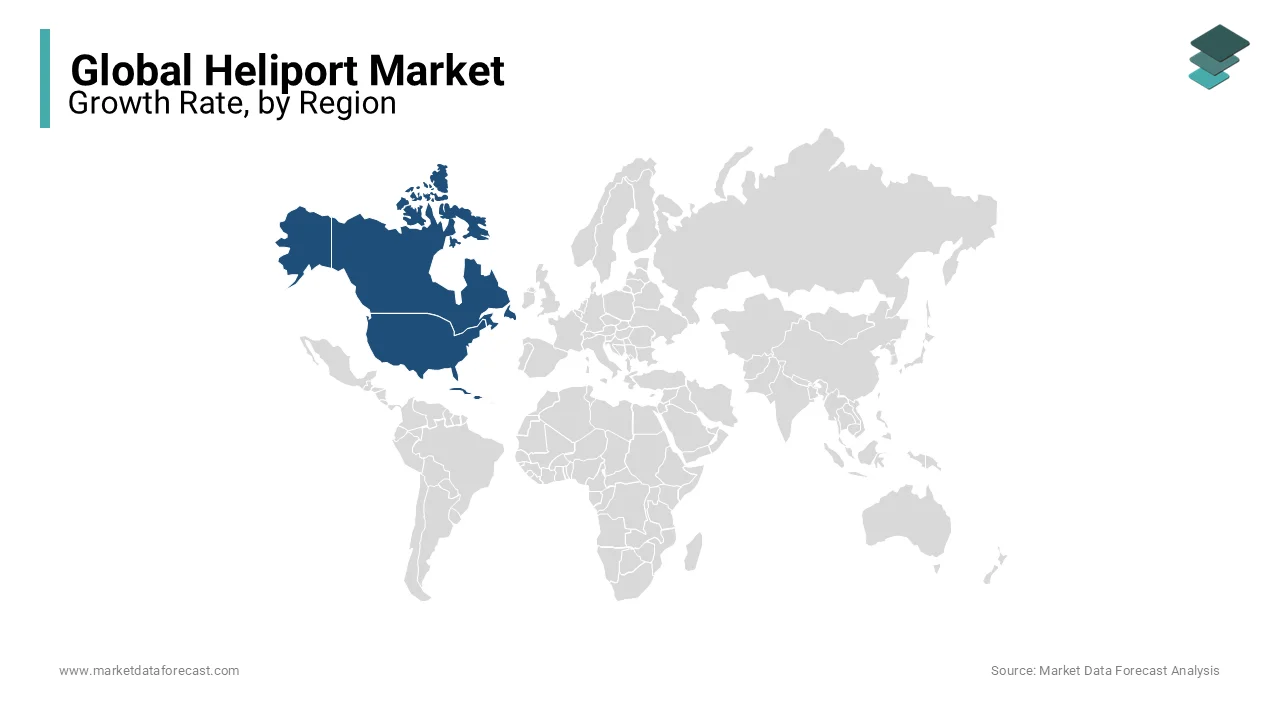
North America outperformed other regions in the global Heliport Market and accounted for a 36.7% share in 2025. This dominance of the region was driven by a well-established aviation infrastructure and high demand for emergency medical services. The United States is home to thousands of public and private heliports, supported by robust regulatory frameworks and significant healthcare investment. According to the Federal Aviation Administration (FAA), while the U.S. has over 5,000 public-use airports, the vast majority of the nation's ~6,000 heliports are private-use facilities (such as hospital or corporate pads), with fewer than 100 designated for general public use. The Association of Air Medical Services (AAMS) estimates that approximately 400,000 rotary and fixed-wing air medical transports are conducted annually in the U.S., utilizing a specialized network of hospital-based and independent helipads. Canada also contributes significantly, with the royal flying doctor service providing critical care to remote communities. The Canadian Ministry of Health supports the maintenance of hundreds of helipads in northern regions. The presence of major helicopter manufacturers and service providers in the region fosters innovation and infrastructure development. Government initiatives to improve rural healthcare access further stimulate market growth. North America maintains its dominant position in the global heliport market. This is because the region continues to lead in aviation technology and healthcare standards.
Europe Market Analysis
Europe was the second largest region in the global Heliport Market and captured a 21.4% share in 2025. This position of the European market was propelled by stringent safety regulations and a strong focus on emergency medical services. Countries like Germany, France, and the United Kingdom have extensive networks of hospital based and community heliports. The European Helicopter Association (EHA) highlights that Helicopter Emergency Medical Services (HEMS) are a critical driver of rotorcraft activity in the region, with fleet data showing a high density of dedicated medical helicopters compared to other global markets, though they share airspace with robust law enforcement and commercial sectors. The European Union Aviation Safety Agency enforces strict standards for heliport design and operation, ensuring high levels of safety and efficiency. The German Ministry of Health has funded the construction of new helipads to enhance emergency coverage in rural areas. The United Kingdom’s National Health Service relies on air ambulances for rapid trauma response, supporting the maintenance of existing facilities. The offshore energy sector in the North Sea also contributes to market growth, with numerous offshore heliports supporting oil and gas operations. Environmental regulations regarding noise pollution influence heliport locations and operations, prompting innovations in noise reduction technologies. The European healthcare market remains stable and mature, driven by a priority on accessibility and safety. Steady growth is further fueled by regulatory compliance and service expansion.
Asia Pacific Market Analysis
Asia Pacific is the fastest growing region in the global Heliport Market due to rapid urbanization, increasing healthcare investments, and expanding offshore energy projects. China and India are leading the growth, with governments investing heavily in emergency medical infrastructure and urban aviation. The Indian Ministry of Health is promoting air ambulance services to improve healthcare access in remote areas, driving heliport construction. Japan and South Korea have mature markets with advanced rooftop heliports in urban centers, supporting corporate and medical transport. The Japanese Ministry of Land Infrastructure Transport and Tourism supports the integration of heliports into urban planning. Australia contributes with its extensive royal flying doctor service network, maintaining hundreds of helipads in remote locations. The Australian Department of Health provides ongoing funding for these critical services. Southeast Asian countries are also emerging, with tourism and offshore energy sectors driving demand. Asia Pacific presents substantial opportunities for heliport market growth, driven by expanding regional economies and infrastructure development. This growth is further supported by diverse end-use applications and government support.
Latin America Market Analysis
Latin America is moving ahead steadfastly in the global Heliport Market owing to the offshore oil and gas sector and urban corporate transport in major cities. Brazil and Mexico are the key markets, with significant helicopter fleets supporting energy operations and executive travel. According to the Brazilian National Civil Aviation Agency, Brazil has one of the largest helicopter fleets in the world, necessitating a robust network of heliports. The offshore oil industry in the Campos Basin relies heavily on helicopter transport for crew changes, driving demand for offshore and coastal heliports. In Mexico City, rooftop heliports are common for corporate executives seeking to bypass severe traffic congestion. The Mexican Ministry of Communications and Transportation regulates urban heliport operations to ensure safety and noise control. Chile and Peru also contribute through mining operations in remote areas, where heliports facilitate worker transport and supply logistics. Economic volatility and regulatory challenges can hinder growth, but the strategic importance of aviation for key industries sustains demand. Latin America's infrastructure is improving and its economic stability is increasing. Consequently, the region offers gradual growth opportunities for the heliport market.
Middle East and Africa Market Analysis
The Middle East and Africa region is likely to grow notably in the global Heliport Market from 2026 to 2034 due to the oil and gas industry and luxury tourism in the Gulf states. Countries like the United Arab Emirates and Saudi Arabia are investing in advanced aviation infrastructure to support economic diversification and tourism. According to the General Civil Aviation Authority of the UAE, Dubai and Abu Dhabi have numerous rooftop and ground heliports serving corporate and tourist sectors. The Saudi Arabian General Investment Authority supports the development of aviation infrastructure under Vision 2030, including heliports for remote industrial projects. The offshore oil and gas sector in the Persian Gulf relies on heliports for crew transport. In Africa, South Africa and Nigeria have emerging markets driven by mining and energy sectors. The Minerals Council South Africa highlights the use of helicopters for remote mining operations. However, limited infrastructure and economic challenges in some African countries restrict widespread adoption. The United Nations Office for the Coordination of Humanitarian Affairs uses temporary heliports for aid delivery in crisis zones. The Middle East is investing heavily in luxury and industrial aviation, creating demand for specialized heliport solutions. Meanwhile, Africa’s developing resource sectors offer similar growth opportunities.
COMPETITIVE LANDSCAPE
The competition in the global Heliport Market is characterized by a mix of specialized manufacturers and large engineering firms, creating a moderately fragmented landscape. Leading companies compete on the basis of product quality, safety certifications, and customization capabilities. The market sees intense rivalry in terms of developing innovative materials and smart technologies that enhance operational efficiency and safety. Price competition remains significant in standard ground level heliport segments, particularly from regional manufacturers who offer cost effective alternatives. However, differentiation through specialized expertise in offshore or rooftop installations is becoming increasingly important for premium positioning. Strategic partnerships with healthcare providers and urban developers are common as firms seek to secure long term contracts and expand their geographic reach. Regulatory compliance and safety standards also influence competitive dynamics, favoring companies with robust quality assurance systems. The entry of new players focusing on urban air mobility infrastructure further intensifies competition. Overall, the market is evolving towards greater technological sophistication and integration as demand for reliable and efficient vertical aviation facilities grows across diverse industries worldwide.
KEY MARKET PLAYERS
These are a few of the major players in the global heliport market.
- Calzoni
- BLR Aerospace
- Airstar Aerospace
- VertiPort Infrastructure LLC
- Downing Heliport Systems
- Technokontrol Technologies,
- Flight Light
- Aluminum Offshore Pte Ltd.
- Helipad Company
- BNN Aviation
- FEC Heliports
- Helitecnica
Top Players In the Market
- BLR Aerospace is a leading global provider of heliport design and manufacturing services, specializing in lightweight and durable landing systems. The company offers a comprehensive range of products including fold down heliports, offshore decks, and hospital based solutions. BLR Aerospace actively collaborates with architects and engineers to integrate heliports into modern building designs seamlessly. Recent actions include the launch of advanced composite materials that reduce structural load while enhancing safety standards. The company has expanded its certification capabilities to meet rigorous international aviation regulations, ensuring compliance for clients worldwide. By focusing on innovation and customization, BLR Aerospace strengthens its market position as a preferred partner for complex infrastructure projects. Its commitment to quality and safety drives widespread adoption in both commercial and emergency medical sectors globally.
- Airstar Aerospace is a prominent player known for its innovative prefabricated heliport solutions and lighting systems. The company provides turnkey installations for rooftop, ground level, and offshore applications, emphasizing rapid deployment and minimal disruption. Airstar Aerospace recently introduced smart lighting technologies that improve visibility and safety during night operations. The company has strengthened its presence in the Asia Pacific region by establishing local manufacturing partnerships to reduce lead times. Airstar focuses on sustainable materials and energy efficient designs, aligning with global environmental standards. Its modular heliport systems allow for easy relocation and expansion, appealing to temporary and permanent operators. Airstar Aerospace enhances its competitive edge and supports the growing demand for versatile aviation infrastructure across diverse markets. It achieves this by delivering high-quality and cost-effective solutions.
- VertiPort Infrastructure LLC specializes in the development and management of urban vertiports and heliports for emerging air mobility networks. The company focuses on integrating traditional helicopter operations with future electric vertical takeoff and landing aircraft requirements. VertiPort Infrastructure actively partners with city planners and technology firms to create multi modal transportation hubs. Recent initiatives include the deployment of automated charging stations and digital booking platforms at key urban locations. The company advocates for regulatory frameworks that support safe and efficient urban air traffic management. By positioning itself at the forefront of the urban air mobility revolution, VertiPort Infrastructure strengthens its market position as a pioneer in next generation aviation infrastructure. Its strategic investments in technology and location acquisition drive long term growth and relevance in the evolving vertical aviation landscape.
Top Strategies Used By Key Market Participants
Key players in the Heliport Market primarily employ strategies focused on technological innovation and strategic partnerships to strengthen their competitive position. Companies are increasingly investing in research and development to create lightweight and durable materials that reduce construction costs and enhance safety. Collaborations with urban planners and healthcare providers enable the integration of heliports into existing infrastructure seamlessly. Expansion into emerging markets through local manufacturing and distribution agreements is another critical strategy to capture growth opportunities. Additionally, market participants focus on sustainability by developing energy efficient lighting and noise reduction technologies. These approaches help companies differentiate their offerings and address evolving regulatory and environmental requirements. By aligning with trends in urban air mobility and emergency medical services, key players enhance their relevance and drive widespread adoption of advanced heliport solutions across various sectors globally.
MARKET SEGMENTATION
This research report on the global heliport market has been segmented and sub-segmented into the following categories.
By Type
- Ground Level Heliport
- Offshore Heliport
- Rooftop Heliport
- Others
By Application
- General Aviation
- Transport Heliports
- Medical Services Heliport
- Airport Heliport
By End User
- Commercial
- Medical Services
- Government
- Military
By Capacity
- Small Heliports
- Medium Heliports
- Large Heliports
By Region
- North America
- Europe
- Asia-Pacific
- Latin America
- Middle East and Africa