- Product Description Description
- Table of Contents TOC
- List of Table & Figure LOT
- Get Free Sample PDF Sample PDF
Global Hyperspectral Imaging Systems Market Size
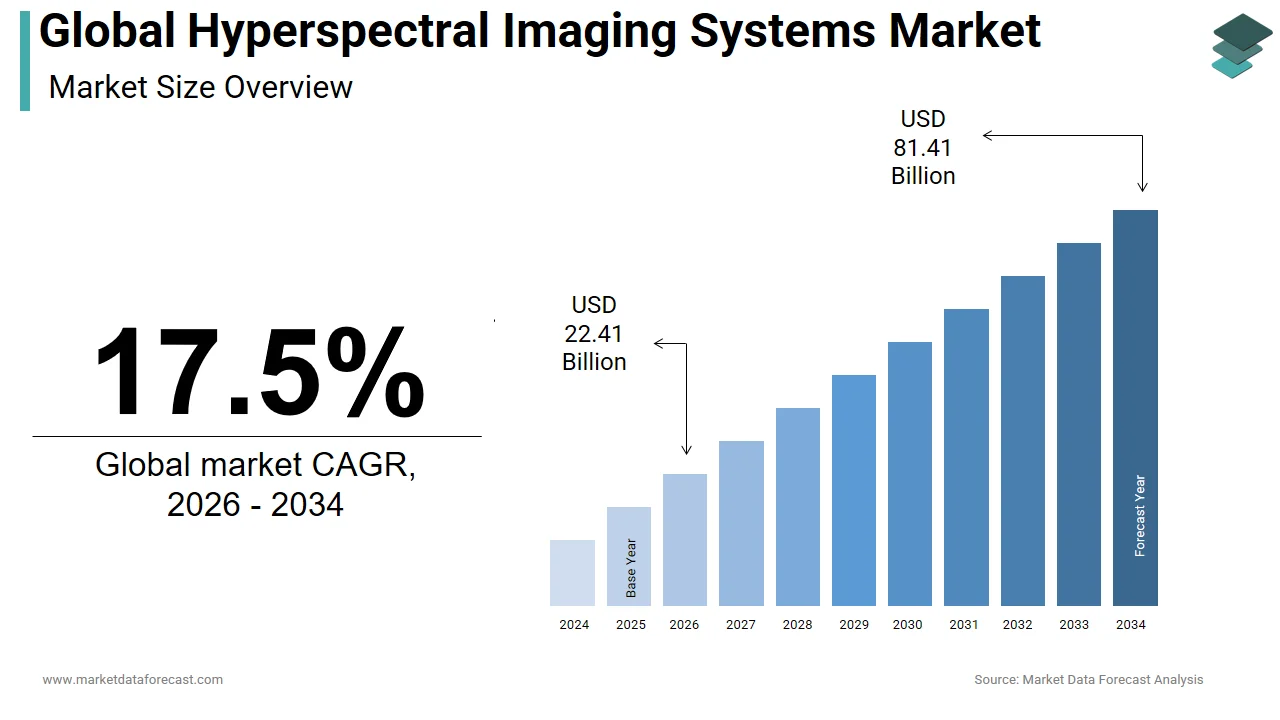
The size of the global hyperspectral imaging systems market was worth USD 19.07 billion in 2025. The global market is anticipated to grow at a CAGR of 17.5% from 2026 to 2034 and be worth USD 81.41 billion by 2034 from USD 22.41 billion in 2026.
Hyperspectral imaging systems are advanced optical sensing technologies that capture and process information across hundreds of contiguous spectral bands, enabling detailed material identification and analysis. Unlike traditional imaging techniques that rely on a few broad spectral channels, hyperspectral imaging provides fine-grained spectral data for each pixel in an image, allowing for precise differentiation of materials based on their unique spectral signatures.
According to the National Aeronautics and Space Administration (NASA), hyperspectral imaging is increasingly used in environmental monitoring, agriculture, mineral exploration, defense, and medical diagnostics due to its ability to detect subtle variations in surface composition and health indicators. As per the European Space Agency (ESA), satellite-based hyperspectral sensors are playing a critical role in assessing climate change impacts by tracking vegetation stress, oceanic conditions, and atmospheric pollutants with high precision.
Universities and research institutions are also leveraging these systems to develop new applications in food safety, pharmaceuticals, and forensic science.
MARKET DRIVERS
Expansion of Remote Sensing and Earth Observation Programs
A major driver of the Hyperspectral Imaging Systems Market is the growing reliance on remote sensing and earth observation initiatives for environmental monitoring, agricultural planning, and natural resource management. Governments and space agencies worldwide are launching satellites equipped with hyperspectral sensors to collect high-resolution spectral data for long-term ecological assessments and disaster response strategies.
As per NASA’s Earth Science Division, over 20 new earth observation missions incorporating hyperspectral imaging were either launched or under development between 2020 and 2023, reflecting increased strategic focus on climate monitoring and planetary health. Moreover, as per the European Space Agency (ESA), the Copernicus program has expanded its Sentinel satellite constellation with enhanced hyperspectral capabilities to improve land use mapping, crop monitoring, and water quality assessments.
Furthermore, according to the Indian Space Research Organisation (ISRO), India’s HySIS satellite mission has significantly improved crop forecasting accuracy by analyzing plant health through hyperspectral signatures, aiding national food security efforts. In parallel, private companies such as Planet Labs and Satellogic are deploying microsatellite constellations integrated with compact hyperspectral imagers to provide frequent and affordable earth imaging services to commercial clients.
These developments underscore the increasing importance of hyperspectral imaging in global environmental intelligence and reinforce its role as a key growth engine in the market.
Rising Adoption in Precision Agriculture and Food Safety Applications
The adoption of hyperspectral imaging in precision agriculture and food safety is another significant driver propelling the Hyperspectral Imaging Systems Market. These systems enable real-time detection of crop stress, soil nutrient levels, pest infestations, and post-harvest contamination, offering farmers and agribusinesses data-driven insights for optimized yield management and sustainability.
According to the Food and Agriculture Organization (FAO), nearly 40% of global crop yields are lost annually due to pests, diseases, and inefficient farming practices. Hyperspectral imaging offers a solution by detecting early signs of plant distress invisible to the human eye, allowing for targeted interventions. As per the University of Wageningen, field trials using airborne hyperspectral sensors demonstrated up to a 25% reduction in pesticide use through precision application guided by spectral data.
Also, as per the U.S. Department of Agriculture (USDA), hyperspectral imaging is being increasingly deployed in food processing plants to detect contaminants such as bacteria, foreign particles, and spoilage indicators in meat, dairy, and packaged foods. The technology’s non-invasive nature ensures compliance with hygiene standards while improving efficiency and reducing waste.
Moreover, startups like Gamaya and Cubert GmbH have introduced compact, drone-mounted hyperspectral cameras tailored for agricultural use, making the technology more accessible to mid-sized farms and cooperatives. These trends indicate a strong upward trajectory for hyperspectral imaging in agri-food applications, driving sustained market expansion.
MARKET RESTRAINTS
High Cost and Complexity of System Development
One of the primary restraints limiting the widespread adoption of hyperspectral imaging systems is the high cost and technical complexity involved in system design, manufacturing, and deployment. Developing high-performance hyperspectral sensors requires specialized optics, advanced signal processing algorithms, and integration with sophisticated platforms such as satellites, drones, or industrial inspection lines—each adding to the overall expense.
Moreover, as per the Fraunhofer Institute for Applied Optics and Precision Engineering, custom-built systems tailored for specific applications often require extensive calibration and software development, further increasing costs and time-to-deployment.
In addition, as noted by the Massachusetts Institute of Technology (MIT) Lincoln Laboratory, maintaining consistent spectral accuracy and spatial resolution across varying environmental conditions presents a significant engineering challenge. This necessitates continuous R&D investments to refine sensor performance and reduce operational limitations.
These financial and technical barriers hinder broader accessibility and slow down market penetration despite the technology's high analytical value across multiple industries.
Limited Availability of Skilled Personnel and Data Interpretation Expertise
Another major restraint affecting the Hyperspectral Imaging Systems Market is the limited availability of skilled personnel capable of operating these complex systems and interpreting the vast volumes of spectral data they generate. Unlike conventional imaging technologies, hyperspectral data requires specialized knowledge in spectroscopy, remote sensing, and machine learning to extract meaningful insights.
According to the International Society for Photogrammetry and Remote Sensing (ISPRS), less than 15% of universities worldwide offer dedicated courses in hyperspectral data analysis, resulting in a shortage of trained professionals who can effectively utilize this technology. Furthermore, as per the IEEE Geoscience and Remote Sensing Society, even among existing practitioners, there is a steep learning curve associated with handling large datasets and applying appropriate classification models.
This skills deficit not only limits the effective utilization of hyperspectral systems but also increases dependency on external consultants and proprietary software, raising operational costs for end-users and slowing down market adoption.
MARKET OPPORTUNITIES
Integration with Artificial Intelligence and Machine Learning
A major opportunity within the Hyperspectral Imaging Systems Market lies in the integration of artificial intelligence (AI) and machine learning (ML) to enhance data interpretation, automate classification, and improve decision-making capabilities. Hyperspectral imaging generates vast amounts of multidimensional data, which can be overwhelming for manual analysis. AI-powered algorithms help streamline this process by identifying patterns, anomalies, and correlations that would otherwise be difficult to detect.
According to MIT Computer Science & AI Lab, deep learning models trained on hyperspectral datasets have demonstrated up to 90% accuracy in identifying crop diseases, mineral compositions, and tissue abnormalities. .
Moreover, as per the German Aerospace Center (DLR), machine learning integration has significantly improved the speed and accuracy of land cover classification in satellite-based hyperspectral data, supporting environmental monitoring and urban planning efforts. With increasing collaboration between AI developers and imaging hardware manufacturers, the convergence of these technologies is expected to drive broader adoption across agriculture, defense, medicine, and industrial inspection, unlocking new avenues for market expansion.
Growth in Defense and Surveillance Applications
The expanding use of hyperspectral imaging in defense and surveillance operations represents a significant growth opportunity for the Hyperspectral Imaging Systems Market. Military forces worldwide are increasingly adopting these systems for target detection, camouflage identification, chemical agent recognition, and battlefield reconnaissance due to their ability to distinguish materials based on unique spectral fingerprints.
According to the Defense Advanced Research Projects Agency (DARPA), hyperspectral sensors mounted on unmanned aerial vehicles (UAVs) have been successfully used to detect hidden explosives, improvised weapons, and underground facilities by analyzing spectral deviations in terrain surfaces. Additionally, as per the U.S. Army Research Laboratory, hyperspectral imaging has proven effective in identifying chemical and biological threats in real time, enhancing situational awareness for frontline troops.
In Europe, as per the European Defence Agency (EDA), several NATO member states are investing in airborne hyperspectral systems to strengthen border monitoring and maritime domain awareness. With ongoing modernization of defense technologies and rising geopolitical tensions, demand for advanced surveillance and threat detection capabilities is expected to surge, positioning hyperspectral imaging as a critical asset in next-generation defense systems.
MARKET CHALLENGES
Technical Limitations in Real-Time Processing and Data Management
One of the foremost challenges facing the Hyperspectral Imaging Systems Market is the difficulty in managing and processing the immense volume of data generated in real-time applications. Hyperspectral images contain hundreds of spectral bands per pixel, resulting in massive datasets that require high-speed computing resources and efficient storage solutions to be analyzed effectively.
According to the Rochester Institute of Technology (RIT), a single airborne hyperspectral survey can generate terabytes of data in just a few hours, posing significant challenges for onboard processing and transmission. As per NASA’s Jet Propulsion Laboratory, even advanced satellites struggle to downlink and analyze full-resolution hyperspectral data in real-time due to bandwidth constraints.
Moreover, as per the IEEE Signal Processing Society, many existing software tools lack the capability to handle real-time streaming of hyperspectral data without compromising accuracy or latency. This limitation hampers applications in fast-paced environments such as autonomous vehicles, drone-based inspections, and industrial inline quality control.
To address these issues, researchers are exploring edge computing, compressed sensing, and GPU-accelerated processing methods. However, widespread implementation remains in progress, highlighting the ongoing technical hurdles in real-time hyperspectral data utilization.
Regulatory and Policy Barriers in Commercial Deployment
Regulatory and policy-related challenges pose a significant obstacle to the commercial deployment of hyperspectral imaging systems, particularly in civilian and cross-border applications. Many governments impose restrictions on the acquisition, transmission, and usage of high-resolution spectral data due to national security concerns, especially when applied in defense, infrastructure monitoring, and environmental assessment.
According to the U.S. Department of Commerce, export controls governed by the International Traffic in Arms Regulations (ITAR) and Export Administration Regulations (EAR) limit the sale of advanced hyperspectral imaging equipment to certain countries without prior approval.
Additionally, as per the United Nations Office for Outer Space Affairs (UNOOSA), satellite-based hyperspectral imaging faces regulatory scrutiny regarding data privacy, airspace sovereignty, and dual-use implications, particularly when deployed for agricultural or urban monitoring purposes.
Furthermore, as per the European Commission’s Joint Research Centre, inconsistent legal frameworks across jurisdictions create uncertainty for businesses seeking to deploy hyperspectral imaging in precision agriculture, insurance, and smart city projects.
These regulatory complexities hinder seamless market expansion and necessitate greater policy harmonization to unlock the full potential of hyperspectral imaging technologies across commercial domains.
REPORT COVERAGE
| REPORT METRIC | DETAILS |
| Market Size Available | 2025 to 2034 |
| Base Year | 2025 |
| Forecast Period | 2026 to 2034 |
| Segments Covered | By Product, Application, and Region |
| Various Analyses Covered | Global, Regional, and Country-Level Analysis, Segment-Level Analysis, Drivers, Restraints, Opportunities, Challenges; PESTLE Analysis; Porter’s Five Forces Analysis, Competitive Landscape, Analyst Overview of Investment Opportunities |
| Regions Covered | North America, Europe, Asia Pacific, Latin America, the Middle East, and Africa |
| Market Leaders Profiled | Norsk Elektro Optikk AS, Surface Optics Corporation, Bayspec Inc., Chemimage Corporation, Headwall Photonics Inc., Resonon, Telops Inc., Corning Incorporated, and Applied Spectral Imaging. |
SEGMENTAL ANALYSIS
By Product Type Insights
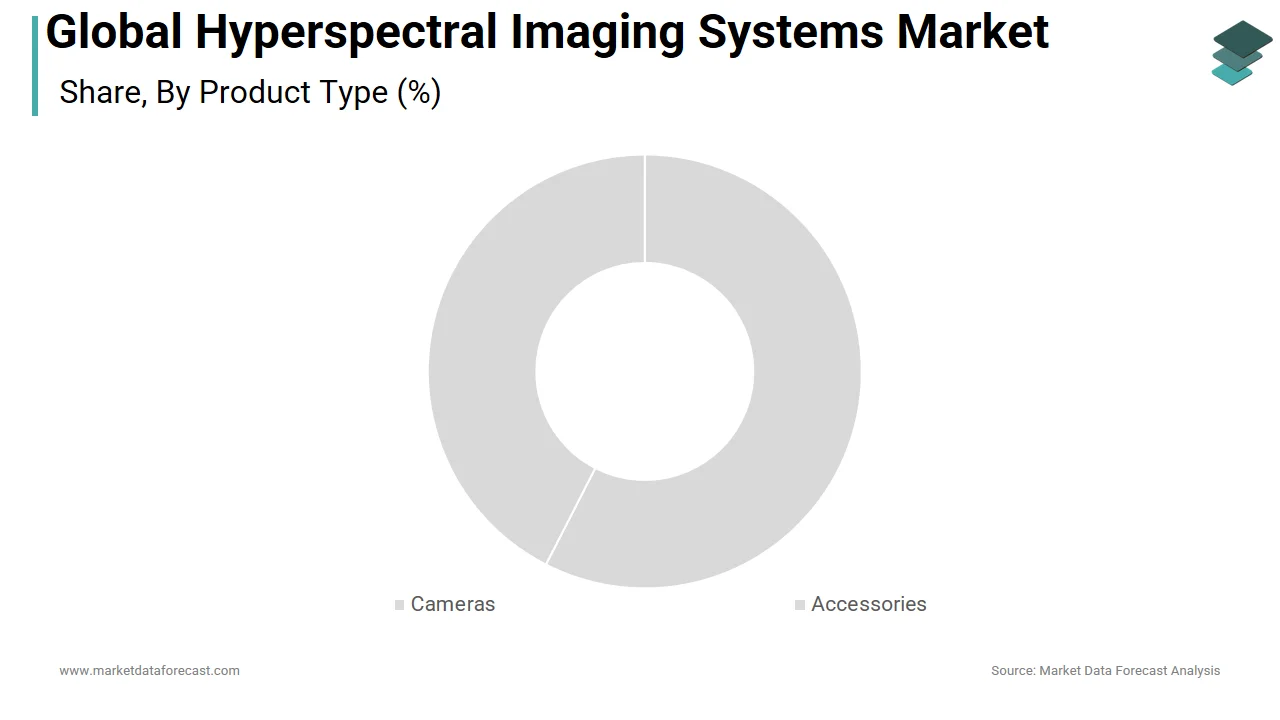
Cameras represented the largest segment in the Hyperspectral Imaging Systems Market, accounting for approximately 68% of total market revenue in 2024. This dominance is primarily attributed to the critical role that hyperspectral cameras play in capturing high-resolution spectral data across a wide range of applications, including defense, agriculture, environmental monitoring, and industrial inspection.
According to SPIE, the International Society for Optics and Photonics, hyperspectral cameras are the core component of any imaging system, responsible for acquiring detailed spectral signatures from target objects. Their integration with drones, satellites, and industrial conveyor systems has significantly expanded their applicability across commercial sectors.
Moreover, as per the Fraunhofer Institute for Applied Optics and Precision Engineering, the miniaturization of hyperspectral camera modules has enabled their use in compact airborne platforms and handheld devices , making them more accessible to SMEs and academic institutions. Companies like Headwall Photonics and Cubert GmbH have introduced lightweight, drone-compatible models that enhance field deployment capabilities.
Additionally, according to the Massachusetts Institute of Technology (MIT) Lincoln Laboratory, advancements in CMOS and InGaAs sensor technologies have improved spectral resolution while reducing manufacturing costs, contributing to wider adoption.
These technological innovations, combined with growing demand across industries, reinforce the leading position of the cameras segment in the Hyperspectral Imaging Systems Market.
Accessories are emerging as the fastest-growing segment in the Hyperspectral Imaging Systems Market, projected to expand at a CAGR 13.7%. This rapid growth is driven by increasing demand for complementary components such as lenses, filters, calibration tools, mounting hardware, and software solutions that enhance system performance and usability.
As hyperspectral datasets become larger and more intricate, the need for specialized calibration equipment and visualization tools has surged.
Furthermore, as per the IEEE Geoscience and Remote Sensing Society, the integration of AI-powered analytics with hyperspectral imaging requires robust computing accessories and cloud-based storage infrastructure, especially for real-time processing in agricultural and defense applications.
Additionally, modern food safety inspection systems rely on advanced lighting and filter assemblies to optimize spectral contrast, ensuring accurate detection of contaminants in processed foods.
With the expansion of hyperspectral imaging into new markets and the rising emphasis on precision and automation, accessory demand is expected to outpace camera sales, making this segment one of the most dynamic areas of growth.
By Application Insights
The military application segment spearheaded the Hyperspectral Imaging Systems Market, capturing 35.6% of total revenue in 2024. This lead position stems from the technology’s ability to detect hidden threats, identify materials based on spectral signatures, and enhance battlefield reconnaissance capabilities.
According to the Defense Advanced Research Projects Agency (DARPA), hyperspectral imaging is being used extensively for detecting improvised explosive devices (IEDs), camouflaged targets, and underground bunkers by analyzing subtle differences in terrain reflectance.
Moreover, as per the European Defence Agency (EDA), several NATO countries have deployed hyperspectral sensors on unmanned aerial vehicles (UAVs) for border patrol and maritime domain awareness, enhancing national security operations.
With ongoing geopolitical tensions and increased defense spending globally, the demand for advanced surveillance and reconnaissance capabilities is expected to sustain the dominance of the military segment in the Hyperspectral Imaging Systems Market.
Medical diagnostics is emerging as the fastest-growing application segment in the Hyperspectral Imaging Systems Market, projected to expand at a CAGR of nearly 14%. This rapid growth is fueled by the increasing adoption of non-invasive diagnostic techniques, early disease detection capabilities, and advancements in biomedical imaging technologies.
According to MIT Computer Science & AI Lab, hyperspectral imaging is being explored for early cancer detection by identifying biochemical changes in tissues without requiring biopsies, offering a safer and faster alternative to traditional methods.
With growing investment in healthcare innovation and increasing integration of AI and robotics in medical diagnostics, the sector is poised for substantial expansion within the Hyperspectral Imaging Systems Market.
REGIONAL ANALYSIS
North America Hyperspectral Imaging Systems Market Analysis
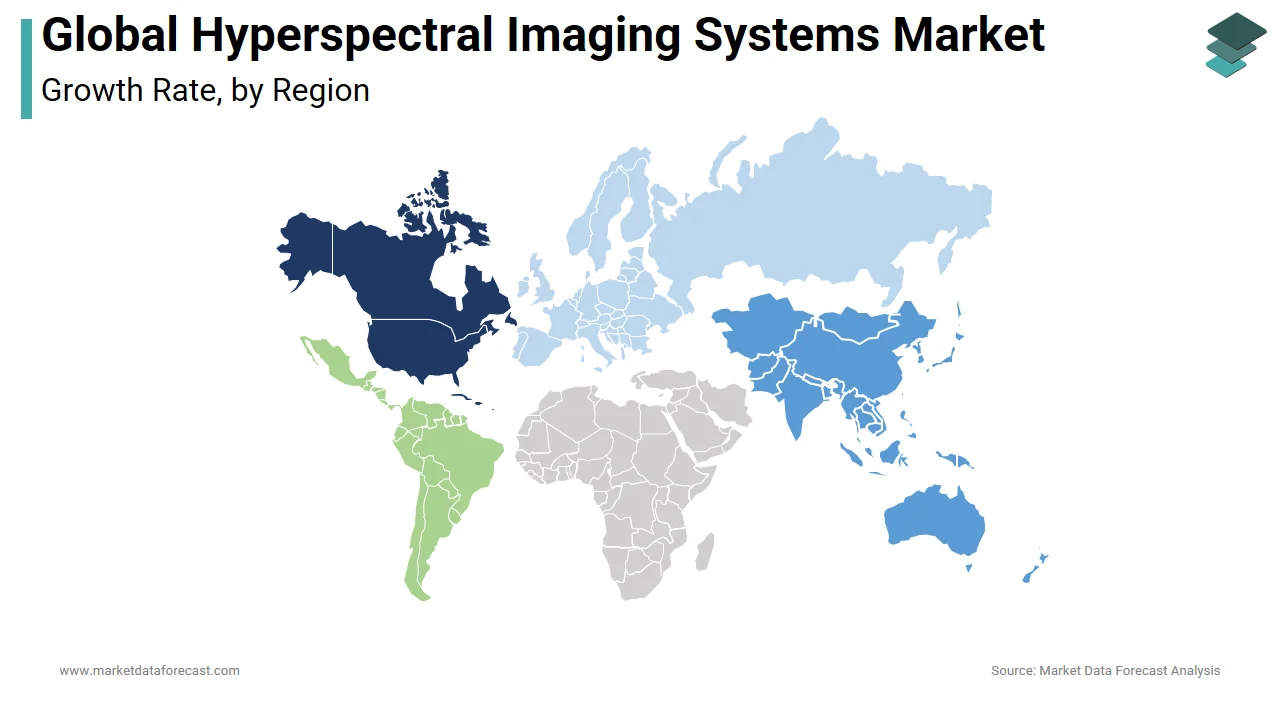
North America holds the largest regional share of the Hyperspectral Imaging Systems Market at 37.7% in 2024, driven by strong defense spending, extensive R&D initiatives, and widespread adoption across commercial and scientific sectors. The United States, in particular, serves as the global epicenter of hyperspectral technology development and deployment.
According to NASA, the U.S. leads global efforts in satellite-based hyperspectral imaging, with multiple missions focused on climate change monitoring, vegetation health assessments, and disaster response.
Additionally, as per the U.S. Department of Defense (DoD), military expenditure on hyperspectral imaging systems for UAVs, reconnaissance satellites, and ground-based surveillance platforms has increased significantly over the past decade , strengthening national security capabilities.
With robust government funding, a mature defense ecosystem, and a thriving tech sector, North America remains the dominant force in shaping the future of hyperspectral imaging technologies.
Europe Hyperspectral Imaging Systems Market Analysis
Europe is another key player in the global Hyperspectral Imaging Systems Market, supported by a well-established research infrastructure, active participation in space programs, and strong collaboration between academia and industry. Countries such as Germany, France, the UK, and Sweden lead the region’s demand, leveraging hyperspectral imaging for environmental monitoring, agriculture, and defense applications.
According to the European Space Agency (ESA), the Copernicus program continues to expand its hyperspectral satellite capabilities , enhancing land use mapping, water quality assessments, and urban heat island monitoring. The launch of the Environmental Mapping and Analysis Program (EnMAP) satellite by Germany marked a major milestone in Earth observation capabilities.
Europe’s commitment to scientific excellence, coupled with regulatory support and international partnerships, ensures its continued prominence in the Hyperspectral Imaging Systems Market.
Asia-Pacific Hyperspectral Imaging Systems Market Analysis
Asia-Pacific has a rapidly expanding technological infrastructure, with China, India, Japan, and South Korea spearheading growth due to increasing investments in aerospace, defense, and smart agriculture. The region is witnessing a surge in government-backed remote sensing initiatives aimed at improving resource management and environmental sustainability.
According to the Chinese Academy of Sciences, China has launched several hyperspectral satellites under its Gaofen Earth observation program, significantly enhancing its capabilities in mineral exploration, oceanography, and atmospheric monitoring. The country is also investing heavily in AI-driven hyperspectral image analysis for industrial and agricultural applications.
In India, as per the Indian Space Research Organisation (ISRO), the HySIS satellite mission has been instrumental in improving crop forecasting and soil moisture assessments, aiding national food security strategies. ISRO’s collaborations with state agricultural departments are expanding the reach of hyperspectral imaging into rural economies.
With improving technological infrastructure and increasing public-private collaboration, Asia-Pacific is emerging as a key growth engine in the Hyperspectral Imaging Systems Market.
Latin America Hyperspectral Imaging Systems Market Analysis
Latin America is seeing emerging but steady progress, with Brazil, Mexico, and Argentina leading the way. Though still in an early phase of development compared to North America and Europe, the region is gradually strengthening its capabilities in agricultural monitoring, environmental studies, and defense-related applications.
Also, Brazil is increasingly using hyperspectral imaging for deforestation tracking and biodiversity assessments, particularly in the Amazon rainforest. Satellite data from the China-Brazil Earth Resources Satellite (CBERS) program plays a crucial role in these efforts.
Mexico, as per CONACYT, has seen rising interest in hyperspectral imaging for agricultural monitoring and food safety inspections, particularly in the agro-industrial sector. Universities such as UNAM are conducting research on spectral analysis for pest detection and irrigation optimization.
While institutional capacity and funding remain limited, Latin America presents untapped potential for future expansion in the Hyperspectral Imaging Systems Market.
Middle East and Africa Hyperspectral Imaging Systems Market Analysis
The Middle East and Africa collectively account for descent portion of the global Hyperspectral Imaging Systems Market, with Saudi Arabia, UAE, and South Africa emerging as key contributors. Although the region lags behind in terms of volume compared to other markets, it is showing gradual progress in environmental monitoring, mineral exploration, and defense applications.
In the UAE, Vision 2030 includes strategic goals for space technology development, prompting investments in satellite-based hyperspectral imaging. According to the Mohammed bin Rashid Space Centre, DubaiSat-2 and KhalifaSat have provided valuable multispectral data, laying the foundation for future hyperspectral missions.
Saudi Arabia, under its Vision 2035 initiative, is expanding its geospatial intelligence capabilities, with the King Abdulaziz City for Science and Technology (KACST) exploring hyperspectral imaging for desertification monitoring and agricultural planning.
South Africa, being the most developed scientific hub in the African continent, is expanding its capacity for remote sensing and earth observation. With ongoing improvements in space infrastructure and environmental governance, the MEA region presents niche but growing opportunities in the Hyperspectral Imaging Systems Market.
COMPETITIVE LANDSCAPE
The competition in the Hyperspectral Imaging Systems Market is characterized by rapid technological evolution, strategic alliances, and an increasing number of players entering both established and emerging application areas. Leading firms dominate due to their strong R&D capabilities, proprietary sensor technologies, and extensive industry partnerships, particularly in defense, aerospace, and industrial automation. However, a growing number of startups and mid-sized companies are gaining traction by introducing cost-effective, portable, and AI-integrated imaging solutions tailored for specific verticals such as agriculture, healthcare, and food safety. Innovation remains a central battleground, with companies investing heavily in sensor design, edge computing, and spectral data interpretation tools to differentiate themselves in a highly specialized market. Strategic acquisitions and product diversification are also shaping competitive dynamics, as firms aim to strengthen their portfolios and expand into new geographic regions. As demand for real-time, non-invasive material analysis grows across industries, the market is witnessing heightened competition not only in product development but also in ease of use, affordability, and integration with digital ecosystems.
KEY MARKET PARTICIPANTS
Prominent players included in the hyperspectral imaging systems market are
- Norsk Elektro Optikk AS
- Surface Optics Corporation
- BaySpec, Inc.
- ChemImage Corporation
- Headwall Photonics Inc.
- Resonon
- Telops Inc.
- Corning Incorporated
- Applied Spectral Imaging
TOP LEADING PLAYERS IN THE MARKET
Headwall Photonics is a leading innovator in hyperspectral imaging solutions, known for its high-performance spectral sensors and optical components tailored for defense, agriculture, and industrial applications. The company offers compact, high-resolution imaging systems designed for integration with drones, satellites, and inspection equipment. Headwall’s expertise lies in precision optics and spectral data acquisition, enabling clients to extract detailed material insights from remote sensing platforms. Its commitment to research and development has resulted in advanced pushbroom and snapshot hyperspectral technologies that cater to evolving industry demands across multiple sectors.
Specim is a pioneer in industrial and scientific hyperspectral imaging, offering robust and scalable solutions for real-time material analysis. Widely recognized for its FX-series cameras, Specim provides reliable imaging systems used in food safety, recycling, pharmaceuticals, and environmental monitoring. The company's integration into Konica Minolta has enhanced its global reach and technological capabilities, allowing broader access to hyperspectral imaging across commercial industries. Specim continues to lead in developing application-specific spectral imaging systems that deliver actionable insights with high accuracy and repeatability.
Cubert GmbH specializes in compact and fast hyperspectral imaging systems, particularly for agricultural, environmental, and industrial use. Known for its groundbreaking snapshot technology, Cubert delivers full hyperspectral images in a single exposure, significantly improving speed and usability compared to traditional scanning methods. This innovation has made hyperspectral imaging more accessible to field researchers and small-scale enterprises. With a focus on lightweight, drone-compatible designs, Cubert plays a crucial role in expanding the practical deployment of hyperspectral systems beyond laboratory settings and into real-world applications.
TOP STRATEGIES USED BY KEY MARKET PARTICIPANTS
A key strategy employed by market leaders in the Hyperspectral Imaging Systems Market is product miniaturization and portability enhancement allowing for deployment in mobile and airborne platforms such as drones and handheld devices. Companies are focusing on developing compact, lightweight systems that maintain high spectral resolution while being adaptable to diverse environments.
Another prevalent approach is strategic partnerships and academic collaborations, where companies work closely with universities, government agencies, and research institutions to drive innovation and expand application-specific use cases. These collaborations help refine technology performance and accelerate adoption in niche markets.
A third major strategy involves integration with artificial intelligence (AI) and machine learning (ML) to enhance data processing capabilities. By embedding intelligent algorithms within imaging systems, companies improve real-time analytics, automate classification, and reduce reliance on external software, thereby increasing overall system efficiency and user accessibility across commercial and industrial domains.
GLOBAL HYPERSPECTRAL IMAGING SYSTEMS MARKET NEWS
- In February 2023, Headwall Photonics launched a new line of ultra-compact hyperspectral sensors specifically designed for UAV-based environmental monitoring, enhancing its presence in the rapidly growing drone imaging sector.
- In July 2023, Specim introduced an AI-powered software suite integrated with its FX-series cameras, enabling automated spectral classification and real-time decision-making for industrial quality control and food sorting applications.
- In November 2023, Cubert GmbH partnered with a German agricultural research institute to develop a hyperspectral drone platform aimed at optimizing crop health assessments and irrigation planning in precision farming.
- In March 2024, Corning Incorporated acquired a startup specializing in AI-driven hyperspectral image analytics, strengthening its capabilities in autonomous detection and material classification for defense and security applications.
- In June 2024, Surface Optics Corp. expanded its manufacturing facility in California to increase production capacity for custom-built hyperspectral imaging systems tailored for medical diagnostics and pharmaceutical research.
MARKET SEGMENTATION
This research report on the global hyperspectral imaging systems market has been segmented and sub-segmented into the following categories.
By Product Type
- Cameras
- Accessories
By Application
- Military
- Remote sensing
- Medical diagnostics
- Machine vision and optical sorting
- Others
By Region
- North America
- Europe
- Asia Pacific
- Latin America
- The Middle East and Africa