- Product Description Description
- Table of Contents TOC
- List of Table & Figure LOT
- Get Free Sample PDF Sample PDF
Market Size, 2025
$7.03 BnMarket Estimate, 2026
$7.54 BnMarket Forecast, 2034
$13.21 BnCAGR, 2026–2034
7.26%Global Industrial Absorbents Market Report Summary
The global industrial absorbents market was valued at USD 7.03 billion in 2025, is estimated to reach USD 7.54 billion in 2026, and is projected to reach USD 13.21 billion by 2034, growing at a CAGR of 7.26% during the forecast period. Market growth is driven by increasing industrial activities, stringent environmental regulations, and rising demand for effective spill management solutions across industries. Industrial absorbents are widely used for controlling oil, chemical, and hazardous liquid spills, ensuring workplace safety and environmental protection. The expansion of manufacturing, oil and gas, and chemical industries is further supporting steady market growth globally.
Key Market Trends
- Rising focus on workplace safety and environmental protection is driving demand for industrial absorbents.
- Increasing regulatory compliance requirements are supporting market growth.
- Growing industrialization and manufacturing activities are boosting product adoption.
- Expansion of oil and gas operations is contributing to higher demand for spill control solutions.
- Technological advancements in absorbent materials are improving efficiency and performance.
Segmental Insights
- Based on product, the pads segment was the largest and held 36.3% of the global industrial absorbents market share in 2025. This dominance is attributed to ease of use, versatility, and effectiveness in handling various types of spills.
- Based on type, the universal segment accounted for 44.7% of the global industrial absorbents market share in 2025. The segment’s growth is driven by its ability to absorb a wide range of liquids, including oil, water based fluids, and chemicals.
- Based on end use, the oil and gas segment dominated with 31.3% of the global industrial absorbents market share in 2025, supported by high demand for spill control and environmental safety in upstream and downstream operations.
Regional Insights
- The global industrial absorbents market is experiencing strong growth across regions, supported by industrial expansion and regulatory frameworks.
- North America was the largest contributor, accounting for 36.3% of the global industrial absorbents market share in 2025, driven by strict environmental regulations, advanced industrial infrastructure, and strong adoption of safety practices.
Competitive Landscape
The global industrial absorbents market is moderately competitive, with key players focusing on product innovation, sustainability, and expansion of distribution networks to strengthen their market position. Companies are investing in advanced absorbent technologies, eco friendly materials, and compliance solutions. Prominent players in the global industrial absorbents market include 3M Company, Brady Corporation, Decorus Europe Ltd, Johnson Matthey Plc, Kimberly Clark Professional, Meltblown Technologies Inc, Monarch Green Inc, New Pig Corporation, and Oil Dri Corporation of America.
 Download Free Sample Report
Global Industrial Absorbents Market Size
The global industrial absorbents market size was valued at USD 7.03 billion in 2025, and the market size is expected to reach USD 13.21 billion by 2034 from USD 7.54 billion in 2026. The market is growing at a CAGR of 7.26% during the forecast period.

Industrial absorbents comprise specialized materials engineered to contain, control, and clean up hazardous and non-hazardous liquid spills in industrial, commercial, and environmental settings. These products include pads, rolls, socks, booms, and pillows manufactured from polypropylene, cellulose, clay, or natural fibers, such as cotton and wool. The primary function is to mitigate safety risks, prevent environmental contamination, and ensure regulatory compliance during accidental releases of oils, chemicals, and water-based fluids. According to the United States Environmental Protection Agency, oil spills and chemical leaks remain a significant threat to water quality, with thousands of reportable incidents occurring annually in industrial facilities. The Occupational Safety and Health Administration mandates strict workplace safety standards, requiring immediate spill response capabilities to protect worker health. As per the International Maritime Organization, marine pollution regulations necessitate the availability of efficient absorbent materials on vessels and in port facilities to prevent ecological damage. The market definition extends beyond simple cleanup to include proactive spill prevention strategies and waste management solutions. Sustainability concerns are driving a shift towards biodegradable and reusable absorbents, reducing the volume of hazardous waste sent to landfills. The industry is characterized by stringent performance standards, where absorption capacity, retention, and compatibility with specific liquids are critical metrics. Regulatory frameworks, such as the Resource Conservation and Recovery Act in the United States, influence disposal practices and material selection. This landscape positions industrial absorbents as essential components of environmental health and safety protocols across manufacturing, energy, and transportation sectors.
MARKET DRIVERS
Stringent Environmental Regulations and Compliance Mandates
Governments worldwide are implementing rigorous environmental regulations that mandate effective spill management and containment strategies, which is driving demand for industrial absorbents and is a key market driver. Facilities handling hazardous substances are legally required to maintain spill response kits and adhere to strict cleanup protocols to avoid severe penalties. According to the United States Environmental Protection Agency, the Clean Water Act imposes substantial fines for unauthorized discharges of oil and hazardous substances into navigable waters. In Europe, the European Union’s Industrial Emissions Directive requires operators to prevent and minimize emissions, including accidental spills, through best available techniques. As per the Occupational Safety and Health Administration, workplaces must provide adequate resources for immediate spill response to ensure employee safety and environmental protection. Non-compliance can result in operational shutdowns, legal liabilities, and reputational damage, prompting companies to invest in high-quality absorbent solutions. The Resource Conservation and Recovery Act further regulates the disposal of saturated absorbents classified as hazardous waste, encouraging the adoption of efficient materials that minimize waste volume. These regulatory pressures create a consistent baseline demand for industrial absorbents across sectors, such as oil and gas, manufacturing, and transportation. Companies are increasingly prioritizing compliance-driven procurement, ensuring that absorbent products meet certified standards for performance and safety. This regulatory framework acts as a powerful catalyst for market growth, as organizations seek to mitigate legal risks and uphold environmental stewardship commitments.
Increasing Industrialization and Expansion of Manufacturing Activities
The global expansion of industrial activities, particularly in emerging economies is further boosting the expansion of the global industrial absorbents market. Rapid industrialization leads to increased handling of lubricants, hydraulic fluids, and coolants, which elevates the risk of accidental spills in manufacturing facilities. According to the World Bank, the manufacturing sector contributes significantly to global GDP, with developing nations experiencing robust growth in automotive, aerospace, and heavy machinery production. As per the International Energy Agency, industrial energy consumption continues to rise, reflecting expanded operational capacities that require extensive maintenance and fluid management. Each industrial machine requires regular lubrication and maintenance, creating a continuous need for spill control measures to maintain workplace safety and operational efficiency. The automotive industry, a major consumer of industrial absorbents, is expanding production capacities globally to meet rising vehicle demand. As per the International Organization of Motor Vehicle Manufacturers, global motor vehicle production exceeds 90 million units annually, each requiring extensive use of oils and fluids. This scale of operation necessitates robust spill management systems to prevent workplace accidents and environmental contamination. Furthermore, the growth of the oil and gas sector, involving exploration, refining, and distribution, increases the potential for large-scale spills requiring specialized absorbent booms and pads. The correlation between industrial output and spill risk ensures that demand for industrial absorbents grows in tandem with manufacturing expansion.
MARKET RESTRAINTS
High Costs Associated with Disposal of Hazardous Waste
The significant costs involved in the disposal of used industrial absorbents is a major restraint on market growth, particularly for small and medium-sized enterprises. Once absorbents soak up hazardous liquids, they are often classified as hazardous waste, requiring specialized handling, transportation, and disposal methods. According to the United States Environmental Protection Agency, the cost of disposing hazardous waste can be several times higher than general waste, due to strict regulatory requirements and limited treatment facilities. As per the Resource Conservation and Recovery Act, generators of hazardous waste must comply with cradle-to-grave tracking systems, increasing administrative and logistical burdens. The Environmental Protection Agency estimates that proper disposal of hazardous materials involves rigorous testing, labeling, and documentation, which adds to operational expenses. Many companies face budget constraints that limit their ability to purchase premium absorbents or manage waste efficiently. The lack of affordable disposal infrastructure in developing regions further exacerbates this issue, leading to improper disposal practices. As per the World Bank, inadequate waste management infrastructure in low-income countries results in environmental contamination and health risks. These financial barriers discourage some industries from maintaining adequate spill response stocks or opting for cheaper, less effective alternatives. The economic burden of compliance and disposal reduces the overall attractiveness of investing in high-quality industrial absorbents. Consequently, cost sensitivity remains a persistent challenge, limiting market penetration in price-sensitive segments.
Volatility in Raw Material Prices and Supply Chain Disruptions
The fluctuations in the prices of key raw materials such as polypropylene and natural fibers is further hindering the expansion of the global industrial absorbents market. Polypropylene, a dominant material in synthetic absorbents, is derived from petroleum, making its price susceptible to global oil market volatility. According to the International Energy Agency, crude oil prices have experienced significant swings, due to geopolitical tensions and supply chain disruptions affecting downstream plastic manufacturers. As per the United States Bureau of Labor Statistics, producer price indices for plastics and rubber products show considerable variability, impacting production costs for absorbent manufacturers. Natural fiber absorbents made from cotton or wool are also subject to agricultural uncertainties, such as droughts, pests, and trade policies. According to the Food and Agriculture Organization of the United Nations, climate change impacts crop yields, leading to inconsistent supply and price spikes for natural fibers. These raw material cost fluctuations squeeze profit margins for manufacturers, who may struggle to pass increased costs to price-sensitive customers. Supply chain disruptions further complicate procurement, which is leading to delays and inventory shortages. As per the World Trade Organization, global trade tensions and logistical bottlenecks have hindered the smooth flow of raw materials. This instability makes long-term planning difficult for both producers and buyers. The unpredictability of input costs and availability creates a challenging operating environment that restrains market expansion and investment in new capacities.
MARKET OPPORTUNITIES
Development of Biodegradable and Eco-Friendly Absorbents
The growing emphasis on sustainability and circular economy principles is a significant opportunity for the global industrial absorbents market. Consumers and corporations are increasingly seeking alternatives to traditional polypropylene-based products, which contribute to plastic pollution and landfill waste. According to the United Nations Environment Programme, millions of tons of plastic waste end up in landfills annually, driving demand for compostable and recyclable solutions. As per the European Commission, the European Green Deal aims to make Europe the first climate-neutral continent by 2050, promoting the use of sustainable materials in industrial applications. Manufacturers are innovating with absorbents made from recycled paper, corn husks, sawdust, and other organic materials that decompose naturally after use. These bio-based absorbents offer comparable performance to synthetic options, while reducing environmental impact. The Federal Trade Commission guidelines on environmental marketing claims encourage transparency and authenticity in green product labeling. As per the Biodegradable Products Institute, certification programs help validate the compostability of industrial absorbents, enhancing consumer trust. Companies adopting sustainable practices can differentiate themselves in a competitive market and appeal to environmentally conscious buyers. Government incentives and subsidies for green technologies further support this transition. The shift towards eco-friendly absorbents aligns with corporate social responsibility goals and regulatory trends. This innovation opens new market segments and drives long-term growth in the industrial absorbents sector.
Expansion into Emerging Markets with Growing Industrial Bases
Emerging markets in Asia Pacific, Latin America, and the Middle East offer substantial opportunities for the global industrial absorbents market due to rapid industrialization and infrastructure development. Countries such as China, India, and Brazil are expanding their manufacturing sectors, increasing the demand for spill management solutions. According to the World Bank, industrial value added in developing economies has grown steadily, reflecting increased production activities and foreign investment. As per the Asian Development Bank, infrastructure projects in Southeast Asia are boosting construction and manufacturing activities, requiring robust safety and environmental measures. The rise in automotive and electronics manufacturing in these regions creates a steady demand for industrial absorbents to manage lubricants and coolants. Local governments are strengthening environmental regulations to address pollution concerns, driving compliance-driven purchases. The International Labour Organization emphasizes the importance of occupational safety in developing nations, encouraging industries to adopt better spill response practices. Multinational absorbent manufacturers can expand their presence through partnerships with local distributors and establishing regional production facilities. As per the United Nations Conference on Trade and Development, foreign direct investment flows into emerging markets support technology transfer and capacity building. The growing middle class and urbanization further stimulate industrial growth. By tapping into these high-growth regions, companies can diversify their revenue streams and reduce dependence on mature markets. This geographic expansion represents a strategic avenue for sustained market development.
MARKET CHALLENGES
Lack of Awareness and Proper Training in Spill Management
The lack of awareness and adequate training regarding proper spill management procedures among industrial workers is one of the major challenges to the global industrial absorbents market growth. Many employees are unfamiliar with the correct selection and application of absorbent materials, leading to inefficient cleanup and increased safety risks. According to the Occupational Safety and Health Administration, inadequate training is a leading cause of workplace accidents and environmental incidents involving hazardous substances. As per the National Safety Council, many small and medium enterprises lack comprehensive spill response plans and regular training programs for their staff. This knowledge gap results in the misuse of absorbents, such as using oil-only pads for chemical spills, which can cause dangerous reactions. The Environmental Protection Agency notes that improper spill response can exacerbate contamination and lead to higher cleanup costs. Without proper training, workers may fail to recognize the severity of a spill or delay reporting it, allowing the situation to escalate. As per the International Labour Organization, occupational safety standards are often poorly enforced in developing regions, contributing to unsafe practices. Companies hesitate to invest in training due to perceived costs and operational disruptions. This lack of preparedness undermines the effectiveness of industrial absorbents and compromises workplace safety. Addressing this challenge requires coordinated efforts from regulators, industry associations, and manufacturers to promote education and best practices. Until awareness improves, the full potential of industrial absorbents in mitigating risks remains unrealized.
Complexity of Regulatory Compliance across Different Regions
Navigating the complex and varied regulatory landscape for industrial absorbents and hazardous waste disposal poses a significant challenge for the global industrial absorbents market expansion. Regulations differ significantly between countries and even within regions, creating compliance burdens for multinational corporations. According to the United Nations Environment Programme, harmonizing waste management regulations remains a global challenge, due to differing national priorities and capabilities. In the United States, the Environmental Protection Agency sets federal standards, but state agencies may impose stricter requirements, leading to a fragmented regulatory environment. As per the European Chemicals Agency, the Registration, Evaluation, Authorization and Restriction of Chemicals regulation imposes detailed obligations on the use and disposal of chemical-containing absorbents. Companies must stay updated on changing laws regarding material composition, labeling, and disposal methods, to avoid legal penalties. The Basel Convention on the Control of Transboundary Movements of Hazardous Wastes further complicates international trade in used absorbents. As per the World Customs Organization, inconsistent classification of hazardous waste hinders cross-border shipments and increases logistical costs. Small businesses often lack the resources to manage this complexity, leading to non-compliance risks. The dynamic nature of environmental legislation requires continuous monitoring and adaptation. This regulatory uncertainty increases operational costs and creates barriers to market entry. Manufacturers must invest in legal expertise and compliance systems to navigate this challenging landscape effectively.
REPORT COVERAGE
| REPORT METRIC | DETAILS |
| Market Size Available | 2025 to 2034 |
| Base Year | 2025 |
| Forecast Period | 2026 to 2034 |
| CAGR | 7.26% |
| Segments Covered | By Product, Type, End-use, and Region. |
| Various Analyses Covered | Global, Regional & Country Level Analysis, Segment-Level Analysis, DROC, PESTLE Analysis, Porter’s Five Forces Analysis, Competitive Landscape, Analyst Overview of Investment Opportunities |
| Regions Covered | North America, Europe, Asia Pacific, Latin America, Middle East & Africa. |
| Market Leaders Profiled | 3M Company (US), Brady Corporation (US), Decorus Europe Ltd. (UK), Johnson Matthey Plc, Kimberly-Clark Professional, Meltblown Technologies Inc. (US), Monarch Green, Inc. (US), New Pig Corporation (US), and Oil-Dri Corporation of America (US), and Others. |
SEGMENTAL ANALYSIS
By Product Insights
The pads segment led the market by accounting for 36.3% of the global market share in 2025. The dominance of pads segment in the global market is primarily driven by the versatility and ease of deployment of absorbent pads in various industrial settings. Pads are designed to be placed directly under leaking machinery or spread over spill areas, making them ideal for routine maintenance and emergency response. According to the Occupational Safety and Health Administration, immediate containment of spills is critical to preventing workplace accidents and environmental contamination. Pads offer a quick and efficient solution for absorbing oils, coolants, and solvents on flat surfaces. As per the United States Environmental Protection Agency, facilities handling hazardous materials must maintain adequate spill response supplies, and pads are a staple in most spill kits due to their convenience. The manufacturing sector, which accounts for a significant portion of industrial activity, relies heavily on pads for daily cleanup tasks. The International Labour Organization emphasizes the importance of maintaining clean and safe work environments to reduce slip and fall hazards, which are common causes of workplace injuries. Pads are available in various sizes and absorption capacities, catering to different needs, from small leaks to larger spills. Their lightweight nature facilitates easy storage and transport within facilities. Retailers and distributors prioritize pads due to their high turnover rate and broad applicability. The standardization of pad dimensions and performance metrics ensures consistent quality across brands. This combination of practicality, regulatory compliance, and widespread acceptance ensures that pads remain the cornerstone of the industrial absorbents market.
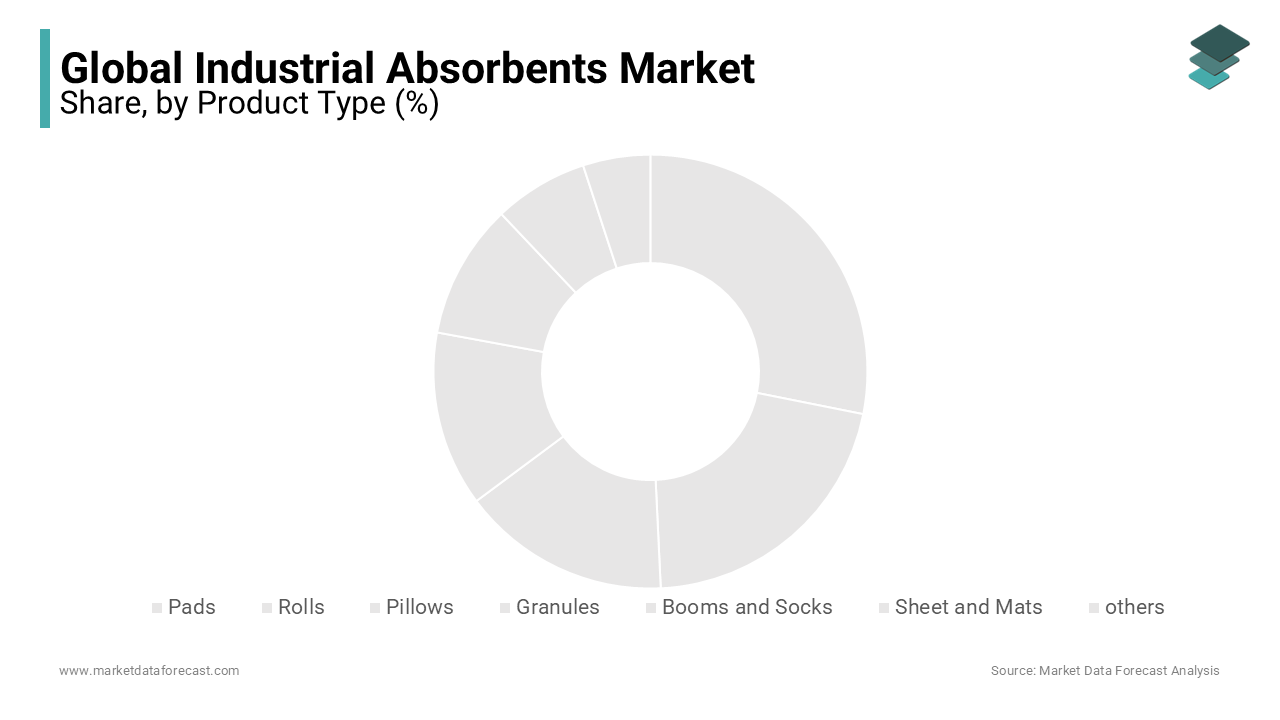
However, the booms and socks segment is a promising segment and is estimated to record a CAGR of 7.2% over the forecast period in the global market owing to the increasing need for effective containment solutions in marine and outdoor environments, where spills can spread rapidly. Booms and socks are flexible, tubular absorbents used to encircle and contain spills, preventing them from reaching water bodies or sensitive ecosystems. According to the International Maritime Organization, oil pollution from ships and offshore platforms remains a significant environmental threat, requiring robust containment strategies. As per the United States Coast Guard, thousands of oil spills occur annually in US waters, necessitating the use of booms for immediate response. The growing emphasis on environmental protection and stricter regulations regarding water quality drive demand for these specialized products. According to the National Oceanic and Atmospheric Administration, the devastating impact of oil spills on marine life and coastal communities, which is prompting investments in preventive measures. Industries, such as oil and gas, shipping, and power generation, utilize booms and socks to comply with environmental mandates. The flexibility of these products allows them to conform to irregular shapes and surfaces, enhancing their effectiveness. Manufacturers are innovating with durable and reusable materials to reduce waste and costs. The rise in offshore drilling activities and maritime trade further boosts demand. This alignment with environmental sustainability and regulatory compliance positions booms and socks as the fastest-growing product segment.
By Type Insights
The universal segment dominated the market by accounting for 44.7% of the global market share in 2025. The growth of the universal segment in the global market is driven by the ability of universal absorbents to handle a wide range of liquids, including oils, water-based fluids, and mild chemicals. This versatility makes them a cost-effective solution for facilities that deal with multiple types of potential spills. According to the Environmental Protection Agency, many industrial sites generate mixed waste streams, requiring flexible response capabilities. Universal absorbents simplify inventory management, by reducing the need for multiple specialized products. As per the Occupational Safety and Health Administration, workplaces must be prepared for various hazard scenarios, and universal absorbents provide a comprehensive first line of defense. The manufacturing and automotive sectors, which use diverse fluids, such as hydraulic oils, coolants, and cleaning agents, rely heavily on universal pads and rolls. The National Safety Council reports that slip and fall accidents are among the most common workplace injuries, driving the need for immediate cleanup of any liquid spill. Universal absorbents are typically gray in color, distinguishing them from oil-only white and hazmat yellow variants. Their widespread availability and competitive pricing make them accessible to small and medium enterprises. Retailers stock universal absorbents in large volumes, due to their high demand and broad utility. This combination of functionality, economic efficiency, and regulatory alignment ensures that universal absorbents remain the preferred choice for general industrial applications.
On the other hand, the HAZMAT/chemical segment is estimated to exhibit a CAGR of 8.5% over the forecast period in the global market owing to the stringent regulations governing the handling and cleanup of hazardous substances. Industries dealing with aggressive acids, bases, and solvents require specialized absorbents that resist chemical degradation and prevent dangerous reactions. According to the United States Environmental Protection Agency, the Resource Conservation and Recovery Act mandates strict management of hazardous waste, including saturated absorbents. As per the Occupational Safety and Health Administration, employers must provide appropriate personal protective equipment and spill response materials for hazardous operations. The chemical manufacturing, pharmaceutical, and laboratory sectors are major consumers of HAZMAT absorbents, due to the nature of their operations. The American Chemistry Council reports that the chemical industry continues to expand globally, increasing the volume of hazardous materials in transit and storage. Yellow-colored HAZMAT absorbents are easily identifiable, ensuring proper usage during emergencies. Manufacturers are developing advanced formulations with higher chemical resistance and absorption capacity. The rise in safety audits and inspections prompts companies to upgrade their spill response kits with certified HAZMAT products. Training programs emphasizing the correct selection of absorbents for specific chemicals further drive adoption. This focus on safety compliance and risk mitigation ensures sustained high growth for the HAZMAT/Chemical segment.
By End Use Insights
The oil and gas segment dominated the market by accounting for 31.3% of the global market share in 2025. The growth of the oil and gas segment in the global market is attributed to the extensive use of lubricants, hydraulic fluids, and crude oil throughout exploration, drilling, refining, and distribution processes. The industry operates in environments with high spill risks, requiring robust and reliable absorbent solutions. According to the International Energy Agency, global oil production exceeds 100 million barrels per day, creating substantial potential for accidental releases. As per the United States Environmental Protection Agency, oil spills from pipelines and refineries pose significant environmental threats, necessitating immediate containment and cleanup. The Occupational Safety and Health Administration mandates strict safety protocols for handling flammable and hazardous materials in the energy sector. Offshore platforms and refineries utilize large quantities of absorbent booms, pads, and pillows to manage leaks and maintain operational safety. The Bureau of Safety and Environmental Enforcement oversees rigorous inspection regimes, ensuring compliance with spill prevention standards. Major oil companies invest heavily in spill response infrastructure, to mitigate reputational and financial risks. The complexity of upstream and downstream operations requires diverse absorbent products tailored to specific applications. The global expansion of shale gas and offshore drilling activities further amplifies demand. This critical need for environmental protection and operational continuity ensures that the oil and gas sector remains the largest consumer of industrial absorbents.
On the other side, the food processing segment is anticipated to showcase a promising CAGR of 7.6% over the forecast period due to the stringent hygiene standards and food safety regulations, that require immediate cleanup of spills to prevent contamination. Food processing facilities handle various liquids, including oils, fats, juices, and cleaning agents, which pose slip hazards and sanitation risks. According to the Food and Drug Administration, the Food Safety Modernization Act emphasizes preventive controls, including sanitary conditions in processing plants. As per the United States Department of Agriculture, food establishments must maintain clean floors and equipment to avoid bacterial growth and cross-contamination. Absorbents used in this sector must be non-linting and often FDA-approved, to ensure they do not introduce foreign materials into food products. The National Sanitation Foundation sets standards for equipment and materials used in food processing, influencing absorbent selection. The rise in processed food consumption globally drives expansion of processing facilities, increasing demand for hygiene-focused spill control. Manufacturers are developing white-colored absorbents that clearly show contamination levels, aiding in quality control. The emphasis on worker safety and slip prevention further supports adoption. Retailers and distributors are expanding their offerings of food-grade absorbents to meet this specialized demand. This alignment with food safety and operational efficiency ensures sustained growth for the segment.
REGIONAL ANALYSIS
North America Industrial Absorbents Market Analysis
North America accounted for the major share of 36.3% of the global market in 2025. The region is characterized by strict environmental regulations and a mature industrial base. The United States is the primary driver, with comprehensive laws, such as the Clean Water Act and Oil Pollution Act, mandating spill preparedness. According to the United States Environmental Protection Agency, thousands of reportable oil spills occur annually, requiring immediate response capabilities. The Occupational Safety and Health Administration enforces rigorous workplace safety standards, driving demand for compliant absorbent products. Canada also contributes significantly, with its robust oil and gas sector in Alberta and offshore operations in Newfoundland. The presence of major manufacturers and distributors ensures wide availability and innovation. The region leads in the adoption of eco-friendly and biodegradable absorbents, due to strong environmental consciousness. Retail channels are well developed, with extensive online and offline distribution networks. Investment in infrastructure maintenance and upgrades further supports market growth. The high level of industrial automation and safety awareness ensures consistent demand. North America serves as a trendsetter for regulatory compliance and product innovation, influencing global market dynamics.
Europe Industrial Absorbents Market Analysis
Europe held a significant position in the global industrial absorbents market in 2025. The region is driven by stringent environmental directives and a strong commitment to sustainability. The European Union’s Industrial Emissions Directive and Waste Framework Directive impose strict requirements on spill management and waste disposal. According to the European Environment Agency, industrial accidents involving hazardous substances are closely monitored and regulated. Countries such as Germany, the United Kingdom, and France are leading consumers, due to their advanced manufacturing and chemical industries. The region is a pioneer in developing biodegradable and reusable absorbent technologies. As per the European Chemicals Agency, regulations on hazardous substances drive the use of specialized HAZMAT absorbents. The maritime sector in Northern Europe also contributes to demand for marine spill response products. Retailers focus on certified and eco-labeled products, appealing to environmentally conscious buyers. The mature industrial landscape ensures steady demand for maintenance and safety supplies. Government initiatives promoting circular economy principles support the shift towards sustainable absorbents. Europe remains a key market for high-quality and innovative industrial absorbent solutions.
Asia Pacific Industrial Absorbents Market Analysis
Asia Pacific represents the fastest growing market for industrial absorbents in the global market. The region is driven by rapid industrialization and expanding manufacturing sectors in countries like China, India, and Japan. According to the World Bank, industrial value added in Asia has grown significantly, reflecting increased production activities. The rise in automotive, electronics, and chemical manufacturing creates substantial demand for spill control solutions. As per the International Labour Organization, improving occupational safety standards in developing nations drives adoption of industrial absorbents. Governments are strengthening environmental regulations to address pollution concerns, prompting companies to invest in compliance. The oil and gas sector in Southeast Asia and Australia also contributes to market growth. Local manufacturers are emerging to cater to domestic demand, offering cost-effective solutions. E-commerce platforms facilitate access to absorbent products in remote areas. The region benefits from a large labor force and expanding infrastructure projects. Challenges include varying regulatory enforcement and awareness levels. However, the sheer scale of industrial expansion ensures robust market growth. Asia Pacific is poised to become a dominant force in the global industrial absorbents landscape.
Latin America Industrial Absorbents Market Analysis
Latin America is estimated to account for a notable share of the global industrial absorbents market during the forecast period. The region is characterized by a strong oil and gas sector, particularly in Brazil, Mexico, and Venezuela. According to the Economic Commission for Latin America and the Caribbean, the energy sector is a key driver of industrial activity. Environmental regulations are evolving, with governments implementing stricter spill response requirements. As per the Inter-American Development Bank, infrastructure development and industrial modernization are boosting demand for safety products. The mining industry in Chile and Peru also contributes to market growth, requiring effective spill management. Local distributors are expanding their portfolios to include international brands.
COMPETITIVE LANDSCAPE
The competition in the Industrial Absorbents Market is characterized by a mix of established multinational corporations and numerous regional manufacturers. Large players leverage their extensive distribution networks brand recognition and research capabilities to dominate the global landscape. They compete on product quality innovation and comprehensive service offerings including spill response training and compliance support. Smaller regional firms often differentiate themselves through localized service rapid delivery and competitive pricing. The market sees intense rivalry in standard product categories such as universal pads and rolls where price sensitivity is high. Innovation in eco friendly and specialized absorbents serves as a key differentiator for premium segments. Regulatory compliance drives demand for certified products creating barriers to entry for non compliant manufacturers. Strategic partnerships with industrial safety distributors enhance market penetration and visibility. Digital platforms facilitate direct to consumer sales allowing brands to bypass traditional intermediaries. Customers increasingly prioritize sustainability and reliability influencing purchasing decisions. Companies must continuously adapt to changing regulations and environmental standards to maintain competitiveness. This dynamic environment requires ongoing investment in technology and customer engagement to sustain growth and market share.
KEY MARKET PLAYERS
Companies playing a major role in the global industrial absorbents market include
- 3M Company
- Brady Corporation
- Decorus Europe Ltd.
- Johnson Matthey Plc
- Kimberly-Clark Professional
- Meltblown Technologies Inc.
- Monarch Green, Inc.
- New Pig Corporation
- Oil-Dri Corporation of America
Top Players in the Market
- New Pig Corporation is a global leader in the industrial absorbents market renowned for its innovative spill control solutions and comprehensive safety products. The company offers a vast portfolio including pads rolls socks and specialized containment systems designed for diverse industrial applications. Recent actions include expanding its digital platform to provide enhanced customer support and customized spill response plans. New Pig actively invests in research and development to create eco friendly and high performance absorbent materials. The company strengthens its market position through extensive educational resources and training programs for industrial safety professionals. By focusing on customer centric innovation and sustainable practices New Pig maintains its reputation as a trusted partner in workplace safety. Its robust distribution network ensures timely delivery of critical spill response supplies globally. This commitment to quality and service excellence drives long term growth and brand loyalty in the competitive industrial safety sector.
- Brady Corporation is a prominent player in the industrial absorbents market providing integrated safety and compliance solutions worldwide. The company specializes in identifying protecting and managing workplace hazards including chemical spills and environmental risks. Recent actions involve launching advanced absorbent products with superior retention capabilities and chemical resistance. Brady leverages its expertise in labeling and identification to offer comprehensive spill management kits that ensure regulatory compliance. The company expands its global footprint through strategic acquisitions and partnerships with local distributors. By integrating digital tools for inventory management and safety auditing Brady enhances operational efficiency for its clients. Its focus on innovation and sustainability drives the development of biodegradable absorbent options. Brady’s strong brand recognition and technical expertise solidify its position as a key contributor to global industrial safety standards. This holistic approach ensures sustained relevance and growth in the evolving market landscape.
- SpillTech Environmental Inc is a leading manufacturer of industrial absorbents dedicated to providing effective and environmentally responsible spill control solutions. The company produces a wide range of products including universal oil only and hazardous material absorbents made from recycled and natural materials. Recent actions include enhancing production capacity to meet growing demand for sustainable spill response products. SpillTech actively promotes its eco friendly initiatives by developing biodegradable and compostable absorbent options. The company strengthens its market position through direct engagement with industrial clients offering tailored solutions for specific spill scenarios. SpillTech prioritizes quality assurance and regulatory compliance ensuring its products meet rigorous industry standards. By focusing on innovation and environmental stewardship the company appeals to organizations seeking green alternatives. Its commitment to customer service and product reliability fosters strong relationships with distributors and end users. This strategic focus on sustainability and performance drives continuous improvement and market expansion in the industrial absorbents sector.
Top Strategies Used by the Key Market Participants
Key players in the Industrial Absorbents Market primarily focus on product innovation by developing biodegradable and high efficiency absorbent materials to meet environmental regulations. Companies invest heavily in expanding distribution networks through strategic partnerships and e commerce platforms to enhance global reach. Sustainability initiatives including the use of recycled content and reusable products differentiate brands in a competitive landscape. Regulatory compliance services and customer education programs build trust and loyalty among industrial buyers. Mergers and acquisitions allow larger firms to consolidate market presence and acquire specialized technologies. Pricing strategies balance cost effectiveness with premium features to cater to diverse customer segments. These strategies collectively enable participants to address evolving safety needs and drive sustainable growth in the global market.
MARKET SEGMENTATION
This research report on the global industrial absorbents market has been segmented and sub-segmented based on product, type, end-user, and region.
By Product
- Pads
- Rolls
- Pillows
- Granules
- Booms and Socks
- Sheets and Mats
- Others
By Type
- Universal
- Oil-only
- HAZMAT/Chemical
By End-use
- Oil And Gas
- Chemical
- Food Processing
- Healthcare
- Others
By Region
- North America
- Europe
- Asia-Pacific
- Latin America
- Middle East & Africa