- Product Description Description
- Table of Contents TOC
- List of Table & Figure LOT
- Get Free Sample PDF Sample PDF
Market Size, 2025
$15.66 BnMarket Estimate, 2026
$16.74 BnMarket Forecast, 2034
$28.48 BnCAGR, 2026–2034
6.87%Global Industrial Boilers Market Size, Growth Drivers, and Forecast (2026–2034)
- Market Scope: Comprehensive global industry analysis of the industrial boilers market covering types, fuel categories, application verticals, product capacity ranges, and regional dynamics.
- Market Valuation: Valued at USD 15.66 billion in 2025, estimated at USD 16.74 billion in 2026, and projected to reach USD 28.48 billion by 2034, registering a dynamic growth trajectory through the forecast period.
- Primary Growth Drivers: Stringent environmental emissions regulations (such as EU Directive 2015/2193), strong emphasis on energy optimization and energy-efficient heating systems, and the development of ultra-mega power projects in emerging economies.
Global Industrial Boilers Market Segment Metrics (2026–2034)
| Category | Leading Segment (Base Position) | Fastest-Growing Segment |
|---|---|---|
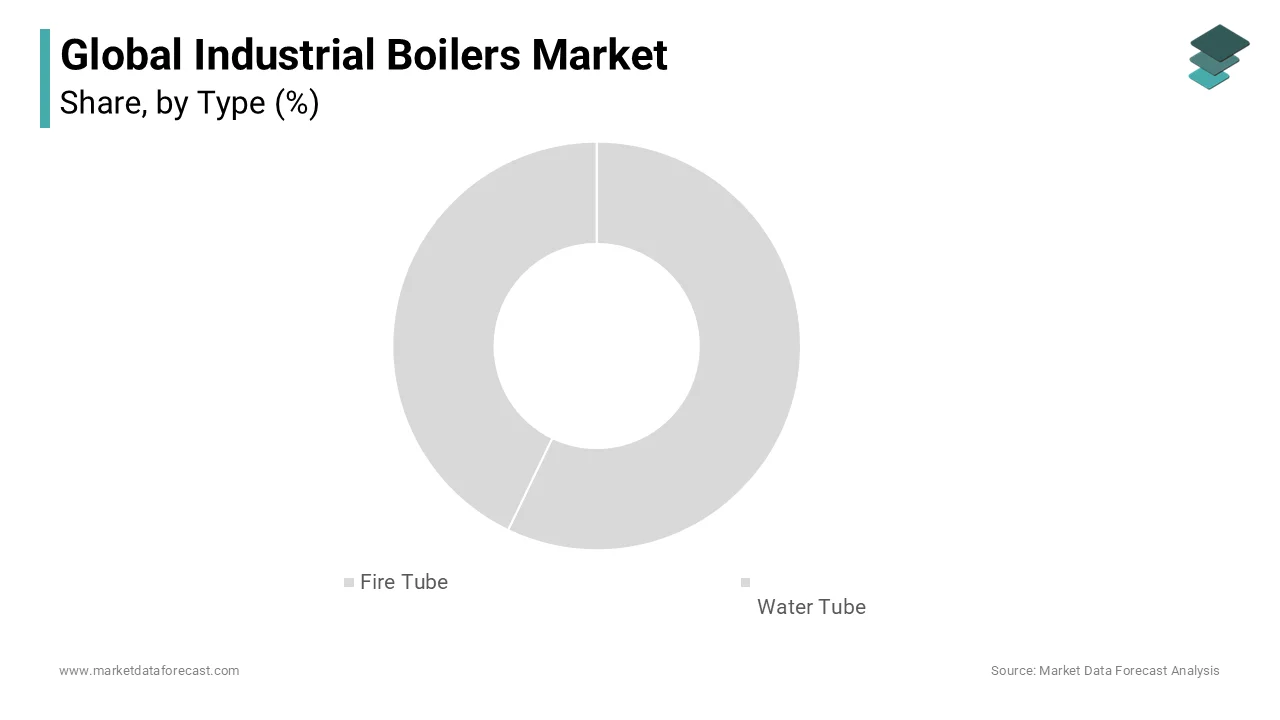
| By Type | Water Tube Boilers (widely utilized for high-pressure and high-capacity industrial applications) | Fire Tube & Advanced Biomass Combustion Boilers |
| By Fuel | Gas & Coal-fired Industrial Boilers | Biomass & Eco-friendly Alternative Fuel Boilers |
| By Application | Refineries, Chemical, Primary Metal, & Food Processing Sectors | Petrochemicals & Specialized Manufacturing Applications |
| By Product Capacity | 10BHP-150BHP & 151BHP-300BHP Ranges | High-Capacity 301BHP-600BHP Units |
| By Region | North America (leads through a large industrial base and heavy government investments) | Asia-Pacific (fastest-growing regional market driven by expanding petrochemical sectors in China and India) |
Global Industrial Boilers Market Players & Industry Structure
Market Structure: Highly competitive global landscape characterized by heavy engineering firms and energy equipment manufacturers delivering high-performance, low-emission combustion solutions.
Key Companies: Babcock & Wilcox Enterprises, Inc. (U.S.), Dongfang Electric Corporation Ltd. (China), Siemens AG (Germany), General Electric (U.S.), AC Boilers S.p.a. (Europe), Bharat Heavy Electricals Limited (India), Harbin Electric Group (China), IHI Corporation (Japan), Mitsubishi Hitachi Power Systems, Ltd. (Japan), and Thermax Limited (India).
 Download Free Sample Report
Global Industrial Boilers Market Size
The global industrial boilers market was valued at USD 15.66 billion in 2025 and is anticipated to reach USD 16.74 billion in 2026 from USD 28.48 billion by 2034, growing at a CAGR of 6.87% during the forecast period from 2026 to 2034.
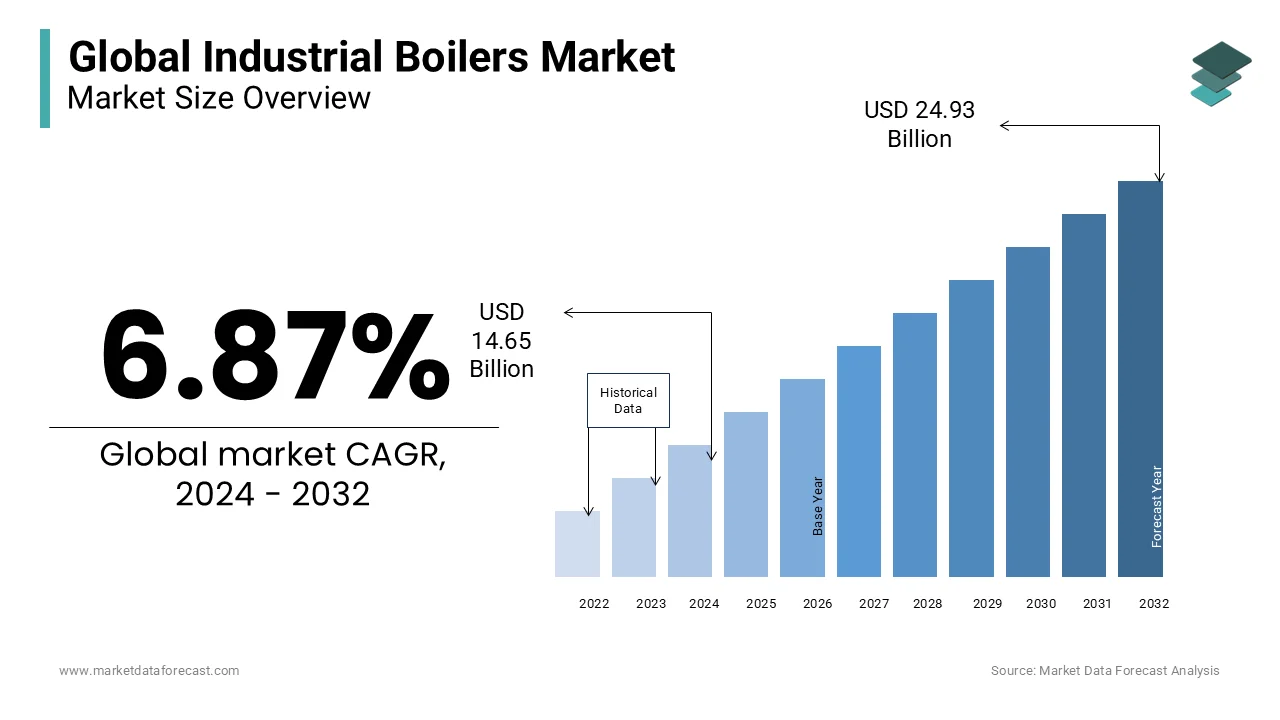
Regulations imposed by the foremost environmental regulatory bodies encourage numerous industries to check their emissions. As a result, companies are implementing measures to generate energy while decreasing emissions. Measures towards strength optimization, coupled with increasing adoption of energy-efficient heating systems,s will propel the Industrial boilers market. In November 2015, the European Union introduced Directive (European) 2015/2193 with the intention to reduce emissions from combustion devices.
MARKET DRIVERS
The development of ultra-mega power projects in emerging economies will drive the growth prospects for the global commercial boiler marketplace over the next few years. The use of new materials in biomass beow not only increases the performance of the waste but also reduces the value of biomass boilers. Also, the distribution of oxygen in the boiler will enhance the performance and uniformity of combustion.
REPORT COVERAGE
| REPORT METRIC | DETAILS |
| Market Size Available | 2025 to 2034 |
| Base Year | 2025 |
| Forecast Period | 2026 to 2034 |
| CAGR | 16.73% |
| Segments Covered | By Type, Application, Product, Fuel, and Region. |
| Various Analyses Covered | Global, Regional & Country Level Analysis, Segment-Level Analysis, DROC, PESTLE Analysis, Porter’s Five Forces Analysis, Competitive Landscape, Analyst Overview of Investment Opportunities |
| Regions Covered | North America, Europe, APAC, Latin America, Middle East & Africa |
| Market Leaders Profiled | Babcock & Wilcox Enterprises, Inc. (U.S.), Dongfang Electric Corporation Ltd. (China), Siemens AG (Germany), General Electric (U.S.), AC Boilers S.p.a. (Europe), Bharat Heavy Electricals Limited (India), Harbin Electric Group (China), IHI Corporation (Japan), Mitsubishi Hitachi Power Systems, Ltd. (Japan), Thermax Limited (India) and Others. |
SEGMENT ANALYSIS
By Type
REGIONAL ANALYSIS
North America Market
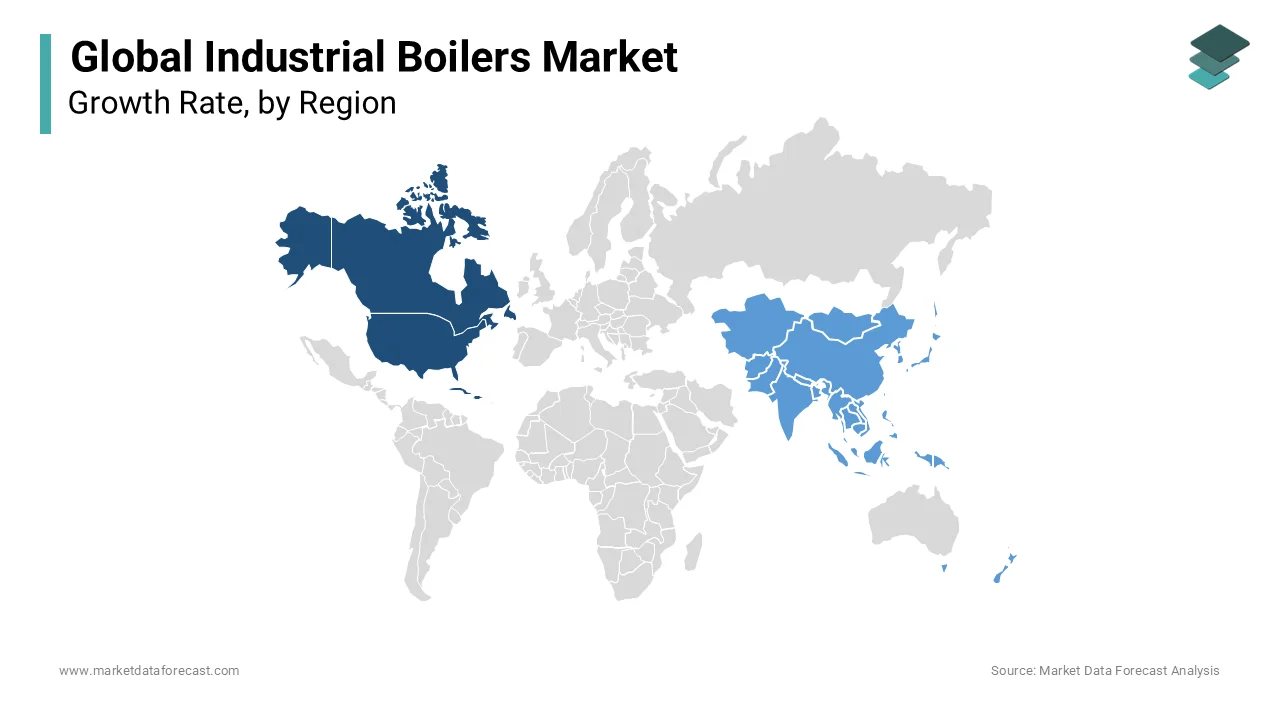
North America leads the industrial boiler market due to the presence of a large number of companies in the industry and the increasing investments from the government. Asia Pacific is the fastest-growing market segment due to the growing petrochemical industries and increasing collaborations with Western companies in countries such as India and China.
KEY MARKET PLAYERS
Some of the market players dominate the global Industrial boilers market.
- Babcock & Wilcox Enterprises, Inc. (U.S.)
- Dongfang Electric Corporation Ltd. (China)
- Siemens AG (Germany)
- General Electric (U.S.)
- AC Boilers S.p.a. (Europe)
- Bharat Heavy Electricals Limited (India)
- Harbin Electric Group (China)
- IHI Corporation (Japan)
- Mitsubishi Hitachi Power Systems, Ltd. (Japan)
- Thermax Limited (India).
MARKET SEGMENTATION
This research report on the global industrial boilers market is segmented and sub-segmented into the following categories.
By Type
- Fire Tube
- Water Tube
By Application
- Refineries
- Primary Metal
- Chemical
- Food
By Product
- 301BHP-600BHP
- 151BHP-300BHP
- 10BHP-150BHP
By Fuel
- Gas
- Coal
- Oil
By Region
- North America
- Europe
- Asia Pacific
- Latin America
- Middle East and Africa