- Product Description Description
- Table of Contents TOC
- List of Table & Figure LOT
- Get Free Sample PDF Sample PDF
Market Size, 2025
$697.10 BnMarket Estimate, 2026
$867.19 BnMarket Forecast, 2034
$4,974 BnCAGR, 2026–2034
24.4%Global Internet of Behavior (IoB) Market Report Summary
The global Internet of Behavior (IoB) market was valued at USD 697.10 billion in 2025 and is projected to grow from USD 867.19 billion in 2026 to USD 4,974 billion by 2034, registering a CAGR of 24.4% from 2026 to 2034. Market growth is driven by the increasing use of behavioral analytics, artificial intelligence, Internet of Things (IoT) devices, and big data technologies to understand and influence consumer behavior. Organizations across industries are leveraging IoB solutions to improve customer engagement, personalize services, enhance operational efficiency, and strengthen decision-making. The growing adoption of digital platforms, connected devices, and predictive analytics is further accelerating market expansion.
Key Market Trends
- Increasing adoption of AI-driven behavioral analytics and predictive intelligence.
- Growing use of IoT devices to collect and analyze consumer behavior data.
- Rising demand for personalized customer experiences across digital platforms.
- Expansion of behavior-based cybersecurity, fraud detection, and risk management solutions.
- Growing emphasis on ethical data governance, privacy compliance, and responsible AI practices.
Segmental Insights
- Based on application, the digital marketing segment dominated the global Internet of Behavior market in 2025, driven by its critical role in improving customer engagement, delivering personalized marketing campaigns, and maximizing return on investment through behavioral insights.
- Based on enterprise size, the large enterprises segment accounted for the largest market share in 2025, supported by substantial investments in digital transformation, advanced analytics platforms, and customer intelligence solutions.
- Based on industry, the retail and e-commerce segment led the market in 2025, driven by increasing adoption of behavioral analytics to optimize customer experiences, improve product recommendations, enhance pricing strategies, and strengthen customer retention.
Regional Insights
The global Internet of Behavior market is witnessing strong growth across major regions, supported by rapid digital transformation, increasing adoption of artificial intelligence, and expanding use of connected technologies.
- North America dominated the global market in 2025, driven by advanced digital infrastructure, widespread adoption of AI and analytics technologies, and the strong presence of leading technology companies.
- Europe held the second-largest position, supported by stringent data privacy regulations, strong emphasis on ethical AI deployment, and increasing enterprise adoption of behavioral analytics solutions.
- Asia-Pacific is projected to register the fastest growth during the forecast period, driven by rapid digitalization, a large technology-savvy population, expanding e-commerce ecosystems, and increasing investments in AI, IoT, and smart city initiatives.
Competitive Landscape
The global Internet of Behavior market is highly competitive, with technology companies focusing on artificial intelligence, behavioral analytics, cloud computing, and data-driven decision intelligence. Market participants are investing in advanced analytics platforms, machine learning algorithms, customer intelligence solutions, and cybersecurity technologies to strengthen their market position. Strategic partnerships, acquisitions, and continuous innovation in AI and behavioral analytics continue to shape the competitive landscape.
Prominent companies operating in the global Internet of Behavior market include Aware, Inc., Riverbed Technology LLC, IBM Corporation, Vertica Systems, Capillary Technologies, CognitiveScale Inc., Trifacta, Inc., NICE Ltd., Accenture plc, Sweet Analytics Limited, Qubit Technology, Palantir Technologies Inc., and NuData Security Inc.
Global Internet of Behavior Market Size
The global internet of behavior market was valued at USD 697.10 billion in 2025. This market is expected to grow at a CAGR of 24.4% from 2026 to 2034 and be worth USD 4,974 billion by 2034 from USD 867.19 billion in 2026.
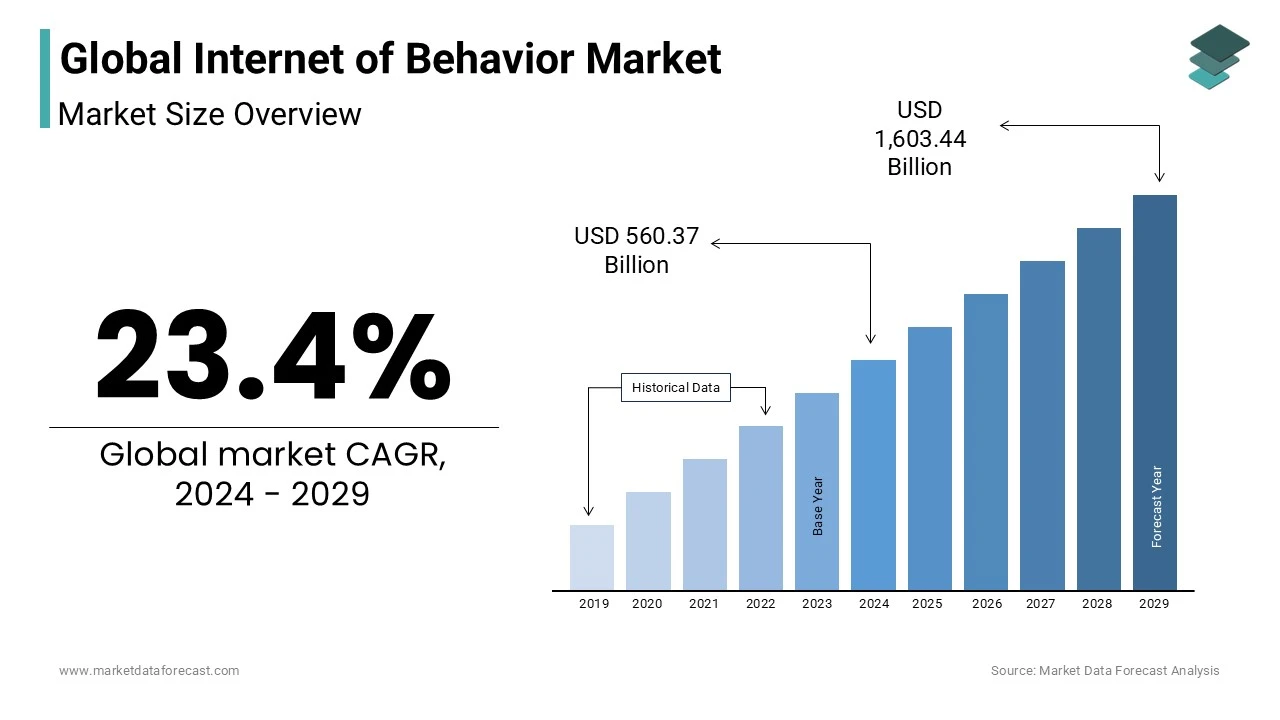
The Internet of Behavior (IoB) is the technological ecosystem that collects your digital data (from browsing, smart devices, and social media) and interprets it through behavioral psychology to predict and influence your actions. This ecosystem collects data from digital footprints, physical sensors, and social interactions to create comprehensive psychographic profiles that predict future behaviors with high accuracy. Unlike traditional data collection, which focuses on what users do on the Internet, the Internet of Behavior seeks to understand why they act as they do by analyzing emotional states, cognitive patterns, and contextual triggers. According to a study, the Internet of Behavior (IoB) combines behavioral science with data analytics to create targeted behavioral feedback loops, allowing organizations to influence and guide human actions based on digital footprints. The proliferation of connected devices has created an unprecedented volume of behavioral data. Research shows that the global datasphere surged to 175 zettabytes, driven predominantly by massive enterprise cloud migrations, IoT endpoints, and real-time processing networks. The World Economic Forum (WEF) emphasizes that leveraging machine learning alongside ethical behavioral science can optimize structural delivery models across healthcare ecosystems, commercial platforms, and public services. The European Commission has highlighted the ethical implications of such technologies, emphasizing the need for transparency and consent in data processing activities. This market is not merely about observation but about active engagement, where algorithms nudge individuals towards specific outcomes, whether it is purchasing a product, adopting a healthier lifestyle, or complying with safety regulations. The convergence of biometric data, location tracking, and online activity creates a holistic view of human behavior that was previously unattainable, thereby redefining the relationship between technology and human agency.
MARKET DRIVERS
Proliferation of Connected Devices and Sensor Technologies
The exponential growth in the deployment of Internet of Things devices and advanced sensor technologies is driving the expansion of the Internet of Behavior market. These devices act as the sensory organs of the digital ecosystem, capturing granular data on physical movements, physiological responses, and environmental interactions, which are essential for constructing accurate behavioral models. According to research, the number of Internet of Things connections worldwide is projected to reach 30 billion by 2025, creating a vast network of data points that reflect human behavior in both digital and physical spaces. Smart wearables such as fitness trackers and smartwatches monitor heart rate, sleep patterns, and activity levels, providing insights into health-related behaviors and stress responses. Hardware standards established by engineering bodies like the Institute of Electrical and Electronics Engineers (IEEE) ensure high-speed mobile network capabilities, enabling continuous, low-latency data loops between edge sensors and cloud analytical systems. The integration of cameras with computer vision capabilities in retail stores and public spaces enables the tracking of gaze direction, dwell time, and facial expressions, which reveal subconscious preferences and emotional reactions. This wealth of data allows organizations to move beyond self reported surveys which are often biased to objective behavioral metrics that provide a clearer picture of actual user actions. The miniaturization of sensors and the reduction in their cost have made it feasible to embed them in everyday objects from clothing to home appliances, thereby expanding the scope of behavioral monitoring. This ubiquitous connectivity ensures that every interaction leaves a digital trace which can be analyzed to identify patterns, predict trends, and influence future behaviors effectively.
Advancements in Artificial Intelligence and Predictive Analytics
The rapid advancement of artificial intelligence and machine learning algorithms is further escalating the growth of the Internet of Behavior market. These technologies provide the computational power necessary to process and interpret the massive volumes of complex behavioral data generated by the IoB. Traditional statistical methods are insufficient for handling the unstructured and high-velocity nature of behavioral data, requiring sophisticated AI models that can identify subtle correlations and causal relationships. A study estimates that generative AI could inject up to $4.4 trillion annually into the global economy, optimizing diverse operations ranging from software engineering to tailored customer interactions. Deep learning techniques allow systems to analyze video, audio, and text data simultaneously to detect sentiment, intent, and context, which are critical for understanding the underlying motivations behind human actions. Predictive modeling publications from labs at the Massachusetts Institute of Technology (MIT) highlight that applying advanced machine learning algorithms to digitized footprints allows researchers to map out structural consumer behaviors and micro-trends. These predictive capabilities enable organizations to anticipate needs and intervene at the optimal moment to influence decision-making. For instance, in healthcare, AI-driven platforms can predict patient noncompliance with medication regimens and trigger personalized reminders or incentives to improve adherence. In marketing, dynamic pricing and personalized recommendations are adjusted in real time based on predicted purchase probability and price sensitivity. The ability of AI to learn and adapt from new data ensures that behavioral models remain accurate and relevant even as human preferences evolve. This technological synergy between data collection and intelligent analysis is the core engine driving the value proposition of the Internet of Behavior market.
MARKET RESTRAINTS
Stringent Data Privacy Regulations and Compliance Requirements
The implementation of rigorous data privacy laws and regulatory frameworks is limiting the widespread adoption and operational flexibility of the Internet of Behavior market. Governments worldwide are enacting legislation to protect individual privacy and prevent the misuse of personal data, which directly impacts the ability of organizations to collect and analyze behavioral information. According to the European Union General Data Protection Regulation, organizations must obtain explicit consent from individuals before processing their personal data and must provide clear options for opting out of data collection activities. Noncompliance can result in severe penalties, with fines reaching up to 4 percent of global annual turnover or 20 million euros, whichever is higher. As per the California Consumer Privacy Act, residents have the right to know what personal information is being collected and to request its deletion, which complicates the long-term storage of behavioral data required for trend analysis. These regulations require companies to implement robust data governance structures and privacy by design principles, which increase operational costs and slow down innovation. The concept of behavioral data often falls into a gray area where it is unclear whether it constitutes personal information, leading to legal uncertainties and risk aversion among businesses. Additionally, the requirement for data minimization limits the amount of information that can be collected, restricting the depth and breadth of behavioral insights that can be derived. The fragmented nature of global privacy laws means that multinational corporations must navigate a complex web of conflicting requirements, further hindering the scalability of Internet of Behavior solutions. This regulatory pressure forces companies to balance the desire for detailed behavioral insights with the need to maintain consumer trust and legal compliance.
Ethical Concerns Regarding Manipulation and Consent
The ethical implications of using behavioral data to influence and potentially manipulate human decisions are also restricting the acceptance and growth of the Internet of Behavior market. Critics argue that the subtle nudging and persuasion techniques enabled by behavioral analytics infringe upon individual autonomy and free will, raising serious moral questions. According to the United Nations Educational, Scientific and Cultural Organization, the use of algorithms to shape behavior without transparent disclosure undermines democratic values and individual agency. The lack of informed consent is a central issue, as most users are unaware of the extent to which their behavior is being monitored and analyzed. As per research, a majority of internet users feel that they have little or no control over how their data is used by companies, leading to distrust and resistance against behavioral tracking technologies. The potential for exploitation is particularly concerning in vulnerable populations such as children or individuals with mental health issues who may be more susceptible to manipulative tactics. High-profile scandals involving the misuse of psychological profiling for political advertising have heightened public awareness and skepticism regarding behavioral data practices. This backlash can lead to brand damage and loss of customer loyalty for companies perceived as intrusive or unethical. Furthermore, the difficulty in defining the boundary between helpful personalization and coercive manipulation creates ambiguity for developers and marketers. Without clear ethical guidelines and industry standards, companies face reputational risks that can outweigh the benefits of behavioral insights. This ethical dilemma necessitates a careful approach to design and implementation, prioritizing transparency and user empowerment to mitigate societal pushback.
MARKET OPPORTUNITIES
Integration with Healthcare and Personalized Wellness Solutions
The integration of IoB technologies with healthcare and wellness sectors paves the way for improving patient outcomes and promoting healthy lifestyles, which promotes the growth of the Internet of Behavior market. By analyzing behavioral patterns related to diet, exercise, sleep, and medication adherence, healthcare providers can develop highly personalized intervention strategies that are more effective than generic advice. According to the World Health Organization (WHO), non-communicable diseases are heavily driven by modifiable behavioral risk factors, emphasizing the role that digital wellness monitoring can play in preemptive healthcare interventions. Wearable devices and mobile applications equipped with behavioral analytics can monitor real-time health metrics and provide immediate feedback and encouragement to users. Insurance companies are also leveraging these insights to offer dynamic premiums based on actual health behaviors rather than historical data, incentivizing policyholders to adopt healthier habits. The ability to predict health risks before they manifest allows for preventive care, which reduces healthcare costs and improves quality of life. Additionally, mental health applications can use behavioral data to detect early signs of anxiety or depression by analyzing changes in speech patterns, social interaction, and activity levels. This proactive approach enables timely support and intervention, preventing crises. The growing focus on value-based care models encourages healthcare providers to adopt technologies that demonstrate measurable improvements in patient behavior and health outcomes. This alignment of economic incentives with health goals creates a fertile ground for the expansion of Internet of Behavior applications in the medical field.
Enhancement of Customer Experience in Retail and E-Commerce
The application of IoB principles in retail and e-commerce offers a substantial opportunity to revolutionize customer experience and drive sales through hyper personalization, which boosts the expansion of the Internet of Behavior market. By understanding the psychological drivers behind purchasing decisions, retailers can tailor their offerings, marketing messages, and store layouts to match individual preferences and contexts. Research confirms that 91% of consumers are more likely to shop with brands that recognize, remember, and provide relevant offers or recommendations tailored to their preferences. In physical stores, computer vision and sensor technologies track customer movement and interaction with products, allowing retailers to optimize shelf placement and staffing levels. Online platforms use behavioral data to dynamically adjust website content, product suggestions, and pricing in real time, maximizing conversion rates. The ability to predict churn and identify loyal customers enables targeted retention campaigns that enhance customer lifetime value. Furthermore, augmented reality tools powered by behavioral insights allow customers to visualize products in their own environment, reducing uncertainty and return rates. The integration of social media behavior with shopping data provides a holistic view of consumer interests, enabling more effective influencer marketing and community building. This deep understanding of customer behavior allows retailers to create seamless and engaging experiences across all touchpoints, fostering brand loyalty and advocacy. As competition intensifies, the ability to leverage behavioral insights for superior customer experience becomes a key differentiator in the retail landscape.
MARKET CHALLENGES
Complexity of Data Integration and Interoperability Issues
The technical challenge of integrating diverse data sources and ensuring interoperability among disparate systems is a significant hurdle for the effective implementation of IoB solutions, which is challenging the expansion of the Internet of Behavior market. Behavioral data is generated from a wide variety of devices, platforms, and applications, each with its own data formats, protocols, and standards. According to IBM, data silos remain a major obstacle for organizations, with over 80 percent of enterprise data being unstructured and difficult to access for analysis. The lack of standardized APIs and common data models makes it difficult to combine online digital footprints with offline physical behaviors into a unified profile. The fragmentation requires significant investment in custom integration solutions and data cleaning processes, which increases complexity and cost. Additionally, the real-time nature of behavioral data demands high-performance computing infrastructure capable of processing and correlating streams from multiple sources simultaneously. Latency issues can render behavioral insights obsolete if they are not delivered in time to influence the desired action. The difficulty in maintaining data consistency and accuracy across different systems further complicates the analysis, leading to potential errors in prediction and recommendation. Organizations often struggle to find skilled personnel who can manage these complex integration tasks requiring expertise in both data engineering and behavioral science. Without seamless integration, the full potential of the Internet of Behavior remains unrealized. This happens because insights are fragmented and incomplete, which limits their actionable value.
Risk of Data Breaches and Security Vulnerabilities
The accumulation of vast amounts of sensitive behavioral data creates a lucrative target for cybercriminals, which is a severe security challenge for the Internet of Behavior market. Behavioral profiles contain intimate details about individuals' habits, preferences, and vulnerabilities, which can be exploited for identity theft fraud or blackmail if compromised. Verizon underscores that the human element and financial extortion remain the primary drivers behind global data breaches, threatening sensitive corporate networks. The centralized storage of behavioral data in cloud environments increases the risk of large-scale leaks if security measures are inadequate. As per the Identity Theft Resource Center, the number of data compromises reached record highs in recent years, exposing millions of records, including personal and behavioral information. The sophistication of cyberattacks such as ransomware and phishing requires continuous investment in advanced security technologies and employee training. Additionally, the Internet of Things devices that collect behavioral data often have weak security features, making them easy entry points for attackers to infiltrate broader networks. The consequences of a breach extend beyond financial loss to include reputational damage and loss of consumer trust, which can be devastating for companies relying on behavioral insights. Regulatory requirements for breach notification add to the operational burden and potential liability. Ensuring end-to-end encryption, secure authentication, and regular security audits is essential but challenging given the scale and complexity of behavioral data ecosystems. The constant evolution of threat landscapes requires vigilance and adaptability to protect sensitive behavioral information from unauthorized access and misuse.
REPORT COVERAGE
| REPORT METRIC | DETAILS |
| Market Size Available | 2025 to 2034 |
| Base Year | 2025 |
| Forecast Period | 2026 to 2034 |
| Segments Covered | By Application, Enterprise size, Industry, and Region. |
| Various Analyses Covered | Global, Regional, and Country-Level Analysis, Segment-Level Analysis, Drivers, Restraints, Opportunities, Challenges; PESTLE Analysis; Porter’s Five Forces Analysis, Competitive Landscape, Analyst Overview of Investment Opportunities |
| Regions Covered | North America, Europe, APAC, Latin America, Middle East & Africa |
| Market Leaders Profiled | Aware, Inc., Riverbed Technology LLC, IBM Corporation, Vertica Systems, Capillary Technologies, CognitiveScale Inc., Trifacta, Inc., NICE Ltd., Accenture plc, Sweet Analytics Limited, Qubit Technology, Palantir Technologies Inc, NuData Security Inc. |
SEGMENTAL ANALYSIS
By Application Insights
In 2025, the Digital Marketing segment held the majority share of the global Internet of Behavior Market because of its critical role in enhancing customer engagement and optimizing return on investment for businesses. This supremacy is also credited to the ability of digital marketing platforms to leverage behavioral data for hyperpersonalization, which significantly improves conversion rates and customer retention. According to McKinsey and Company, companies that excel at personalization generate 40 percent more revenue from those activities than average players, highlighting the economic value of behavioral insights. The integration of Internet of Behavior technologies allows marketers to understand not just what customers buy but why they buy, enabling them to craft messages that resonate with individual psychological triggers. Adobe notes that organizations optimizing advanced first-party customer analytics achieve significantly stronger customer retention, conversion, and long-term satisfaction metrics. The shift from broad demographic targeting to psychographic profiling enables brands to deliver relevant content at the right time and through the preferred channels of each user. This precision reduces marketing waste and increases the efficiency of ad spend. Furthermore, the rise of programmatic advertising relies heavily on real-time behavioral data to bid for ad impressions, ensuring that ads are shown to users who are most likely to engage. The continuous feedback loop provided by digital marketing campaigns allows for constant refinement of behavioral models, making this application segment the primary driver of market adoption and revenue generation in the Internet of Behavior ecosystem.
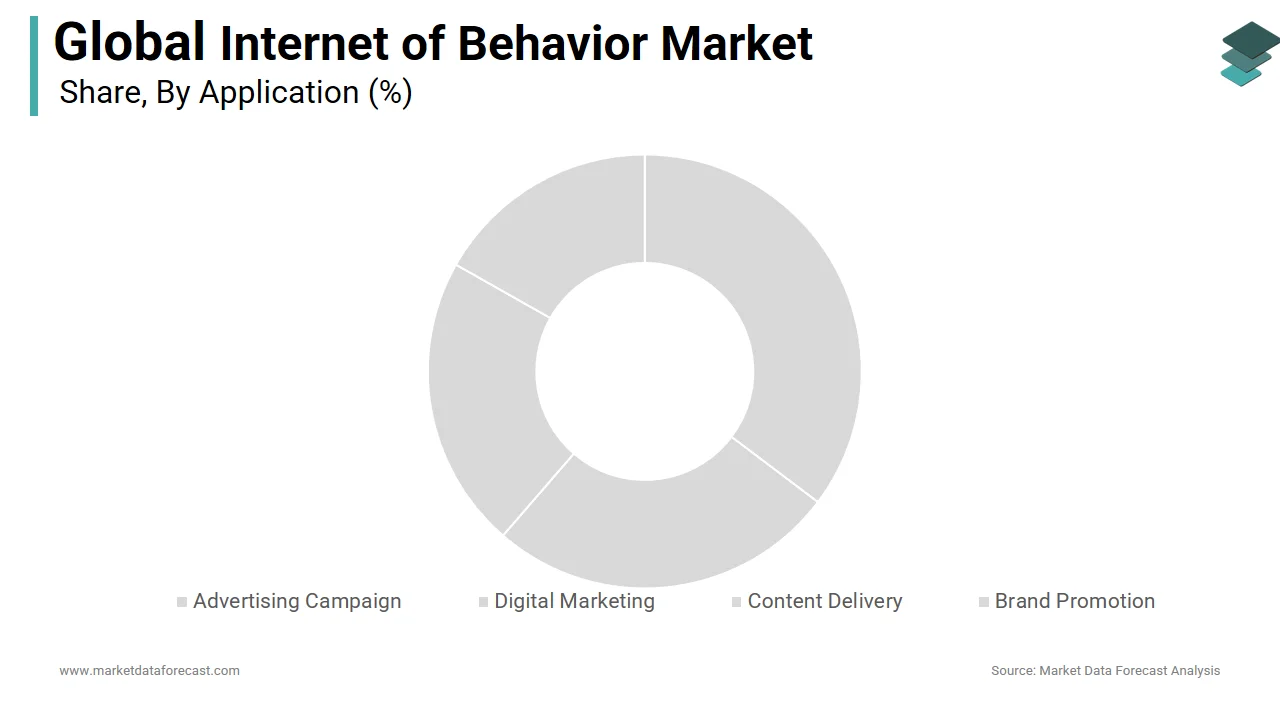
The Advertising Campaign segment is projected to register the highest CAGR during the forecast period. This rapid expansion of the segment is fueled by the increasing demand for measurable and accountable advertising solutions that can demonstrate clear impact on consumer behavior. The ability to track user interactions across multiple touchpoints allows advertisers to attribute conversions accurately and optimize their strategies in real time. As per the Interactive Advertising Bureau, connected TV and audio advertising are increasingly utilizing behavioral data to target audiences based on viewing habits and listening preferences rather than just demographics. The development of privacy-preserving technologies such as clean rooms enables advertisers to collaborate on behavioral insights without sharing raw data, thereby addressing regulatory concerns while maintaining effectiveness. Additionally, the rise of influencer marketing leverages behavioral analytics to identify influencers whose audiences align closely with brand values and consumer psychographics. Programmatic platforms are integrating artificial intelligence to predict which ad creatives will perform best for specific behavioral segments, automating the optimization process. These advancements enable advertisers to reach consumers with unprecedented precision and relevance, driving higher engagement rates and justifying increased investment in behaviorally driven advertising campaigns.
By Enterprise Size Insights
The Large Enterprises segment was the largest in the global Internet of Behavior Market and occupied a significant share in 2025. Its substantial financial resources, extensive data assets, and complex operational needs have contributed to the prominence of this segment. These organizations have the capacity to invest in sophisticated infrastructure required to collect, process, and analyze vast amounts of behavioral data from diverse sources. According to sources, large enterprises account for the majority of spending on advanced analytics and artificial intelligence technologies, which are foundational to Internet of Behavior implementations. The scale of operations in large corporations generates massive volumes of customer interaction data, which provides a rich foundation for building accurate behavioral models. As per research, large organizations are more likely to have dedicated data science teams and chief data officers who drive the strategic adoption of behavioral analytics across various business functions. The need to maintain competitive advantage in saturated markets pushes large enterprises to adopt hyper personalization strategies that rely on deep behavioral insights. Additionally, large enterprises often operate in multiple regions and sectors, requiring robust and scalable Internet of Behavior solutions that can handle complex regulatory environments and diverse customer bases. Their established relationships with technology vendors and ability to negotiate favorable contracts further facilitate the adoption of cutting-edge behavioral tools. The focus on customer experience management and brand loyalty initiatives in large corporations also drives the demand for comprehensive behavioral analysis platforms that can integrate with existing customer relationship management systems.
The Small and Medium Enterprises segment is anticipated to witness the fastest CAGR from 2026 to 2034 due to the democratization of technology and the availability of affordable cloud-based Internet of Behavior solutions tailored for smaller businesses. According to the Organisation for Economic Co-operation and Development, small and medium enterprises represent over 90 percent of businesses worldwide and are increasingly recognizing the value of data-driven decision-making. The proliferation of software as a service platforms has lowered the barrier to entry, allowing SMEs to access powerful behavioral analytics tools without significant upfront investment. The competitive pressure from larger firms forces SMEs to differentiate themselves through personalized customer experiences, which can be achieved through behavioral insights. Social media platforms and e-commerce marketplaces provide built-in analytics tools that offer basic behavioral data, enabling SMEs to start their journey with minimal complexity. The growing awareness of digital marketing best practices among small business owners further fuels demand for user-friendly behavioral tools. Additionally, government initiatives supporting digital transformation in the SME sector provide funding and training that encourage the adoption of advanced technologies. These factors collectively contribute to the rapid uptake of Internet of Behavior solutions among small and medium enterprises globally.
By Industry Insights
The Retail and E-commerce segment led the global Internet of Behavior Market and captured a noteworthy share in 2025. This leading position of the segment was attributed to the intense competition and the critical importance of understanding consumer purchasing decisions. This industry relies heavily on behavioral data to optimize product recommendations, personalize shopping experiences, and reduce cart abandonment rates. Studies show that global retail e-commerce sales successfully crested the $6.3 trillion milestone, intensifying the commercial push for advanced predictive optimization engines. Retailers use Internet of Behavior technologies to track online browsing patterns, click-through rates, and dwell times to infer intent and preference. As per Boston Consulting Group, retailers that use advanced personalization techniques see a 10 to 15 percent increase in revenue lift. In physical stores, the integration of sensors and cameras allows retailers to analyze foot traffic heat maps and product interactions, providing a holistic view of the shopper journey. The ability to predict demand and manage inventory based on behavioral trends improves operational efficiency and reduces costs. Furthermore, the rise of omnichannel retailing requires seamless integration of online and offline behavioral data to provide a consistent customer experience. Loyalty programs equipped with behavioral analytics enable retailers to reward high-value customers and re-engage lapsed ones with targeted offers. The direct correlation between behavioral insights and sales performance makes this industry the primary adopter and driver of the Internet of Behavior market.
The Healthcare segment is likely to experience the fastest CAGR over the forecast period owing to the shift towards value-based care and the increasing focus on preventive health and patient engagement. According to the World Health Organization, non-communicable diseases account for 74 percent of all deaths globally, many of which are linked to modifiable lifestyle behaviors. Internet of Behavior technologies enable healthcare providers to monitor patient adherence to medication, exercise routines, and dietary habits through wearable devices and mobile applications. Insurance companies are leveraging behavioral data to design dynamic policies that reward healthy behaviors, reducing claims and lowering costs. The integration of mental health monitoring through speech and activity analysis allows for early intervention in conditions such as depression and anxiety. Telehealth platforms use behavioral insights to personalize patient interactions and improve satisfaction. The aging population in developed countries increases the demand for remote monitoring and assisted living solutions that rely on behavioral data to ensure safety and well-being. Regulatory support for digital health innovation and the growing acceptance of remote care models further accelerate the adoption of Internet of Behavior technologies in the healthcare sector.
Regional Analysis
North America Internet of Behavior Market Analysis
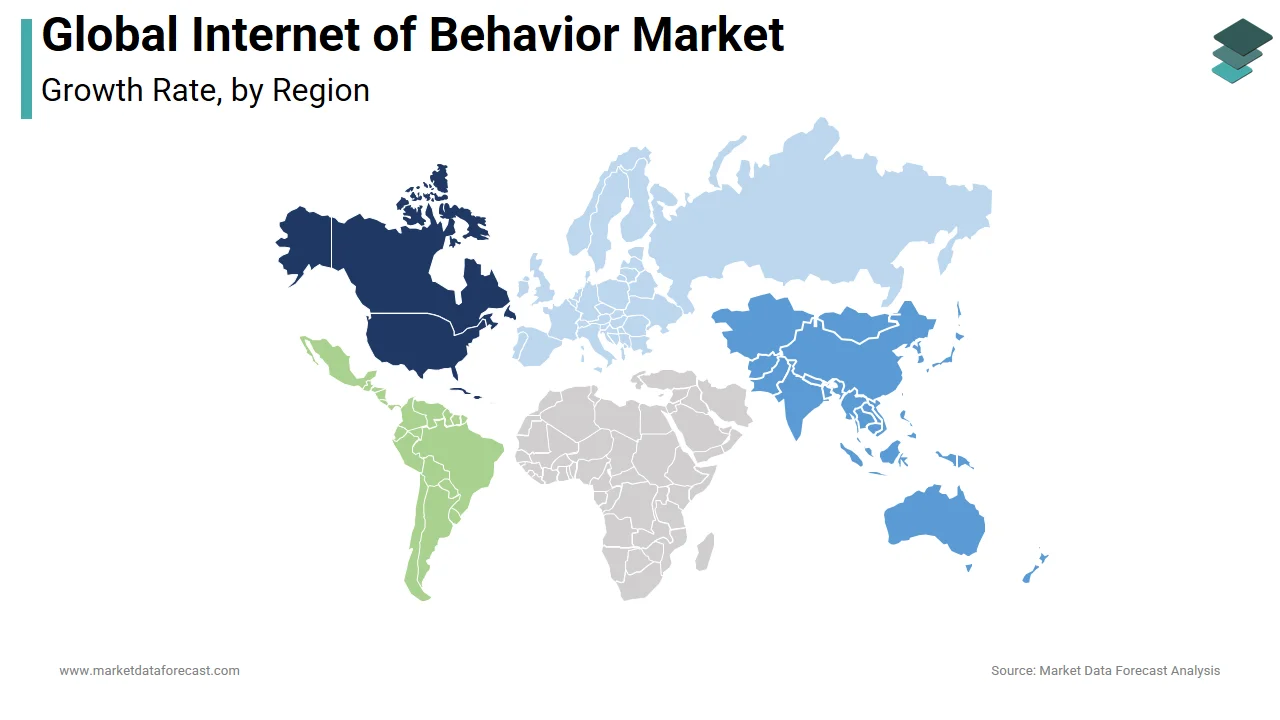
North America dominated the global Internet of Behavior Market and accounted for the largest share in 2025. This dominance of the region’s market was driven by the presence of major technology giants, early adoption of advanced analytics, and a mature digital advertising ecosystem. The Interactive Advertising Bureau (IAB) highlights that U.S. digital advertising revenue surged to nearly $300 billion, driven heavily by performance marketing, retail media, and AI-powered optimization tools. Also, the region benefits from a highly skilled workforce in data science and artificial intelligence, which supports the development and implementation of sophisticated Internet of Behavior solutions. Studies verify near-ubiquitous smartphone ownership and broadband internet adoption in North America, highlighting an ecosystem characterized by continuous digital connectivity. The presence of leading healthcare institutions and retail chains that prioritize customer experience further drives demand for behavioral insights. Although privacy concerns are rising, the regulatory framework in the United States remains more fragmented compared to Europe, allowing for greater flexibility in data utilization. Venture capital investment in tech startups focusing on behavioral analytics is robust in Silicon Valley and other tech hubs, fostering innovation. The strong intellectual property protection laws encourage companies to invest in proprietary algorithms and technologies. These factors collectively establish North America as the primary hub for the Internet of Behavior market with a focus on innovation and commercial application.
Europe Internet of Behavior Market Analysis
Europe followed closely behind in the Internet of Behavior market because of strict regulatory standards and a strong emphasis on ethical data usage. The General Data Protection Regulation has set a global benchmark for privacy, influencing how behavioral data is collected and processed across the region. According to Eurostat, digital skills and internet usage are high in Northern and Western European countries, driving demand for personalized services. Companies in Europe are focusing on privacy-preserving technologies such as federated learning and differential privacy to comply with regulations while still leveraging behavioral insights. Official mandates from the European Commission push for structural digital sovereignty through rigid privacy guardrails, ensuring that data processing architectures respect European fundamental rights and user consent laws. The healthcare sector in countries like Germany and France is increasingly adopting behavioral analytics for patient monitoring and preventive care. The retail sector is also embracing omnichannel strategies that rely on behavioral data to enhance customer experience. Despite regulatory hurdles, the market is growing as businesses recognize the competitive advantage of understanding consumer behavior. The emphasis on transparency and consent builds trust with consumers who are more willing to share data when they feel in control. This balanced approach positions Europe as a leader in ethical and sustainable Internet of Behavior practices.
Asia Pacific Internet of Behavior Market Analysis
Asia Pacific is the fastest-growing region in the global Internet of Behavior Market due to rapid digitalization, a large young population, and expanding e-commerce sectors. Countries like China, India, and South Korea are at the forefront of adopting mobile-first strategies that generate immense volumes of behavioral data. According to the International Telecommunication Union, internet penetration in Asia Pacific has grown significantly, with billions of new users coming online in recent years. The super app ecosystem in China integrates social media, payments, and shopping, creating a rich source of behavioral data for analysis. Case studies from Alibaba Group showcase the application of deep machine learning and automated algorithms to streamline supply chain routing and personalize digital retail interfaces within their platforms. The gaming and entertainment industries in the region heavily utilize behavioral analytics to engage users and monetize content. Government initiatives in countries like Singapore and Japan promote smart city projects that incorporate behavioral data for urban planning and public services. The rising middle class in Southeast Asia is driving demand for personalized financial and healthcare services. While privacy regulations are developing, the pace of technological adoption often outstrips regulatory frameworks, creating opportunities for rapid market expansion. The presence of major technology manufacturers and a vibrant startup ecosystem further accelerates growth in this dynamic region.
Latin America Internet of Behavior Market Analysis
Latin America is an emerging player in the Internet of Behavior market owing to increasing internet access and the expansion of digital banking and e-commerce. Brazil and Mexico are the largest markets in the region, benefiting from high smartphone penetration and a growing appetite for digital services. The fintech sector is a key driver, using behavioral data for credit scoring and fraud detection in populations with limited traditional credit histories. As per sources, e-commerce sales in Latin America have grown double-digit percentages annually, creating demand for personalized marketing and recommendation engines. Social media usage is extremely high in the region, providing valuable behavioral data for advertisers. However, challenges such as economic volatility and varying levels of digital literacy can hinder widespread adoption. Local companies are increasingly partnering with global technology providers to access advanced behavioral analytics tools. Government efforts to improve digital infrastructure and education are supporting market growth. The youthful demographic profile of the region ensures a steady supply of digital natives who are comfortable sharing data for personalized experiences. These factors indicate a positive trajectory for the Internet of Behavior market in Latin America.
Middle East and Africa Internet of Behavior Market Analysis
The Middle East and Africa region is a developing region in the Internet of Behavior market, with opportunities driven by government-led digital transformation initiatives and increasing mobile connectivity. Countries in the Gulf Cooperation Council such as the United Arab Emirates and Saudi Arabia are investing heavily in smart city projects and artificial intelligence strategies. The World Bank underlines that expanding foundational broadband access and establishing secure national digital infrastructure are crucial steps to building resilient regional digital economies. The tourism and hospitality sectors in the region utilize behavioral analytics to personalize guest experiences and optimize pricing. Fintech solutions are gaining traction in Africa using alternative data sources for financial inclusion. However, infrastructure limitations and regulatory uncertainties in some African countries pose challenges. The region is seeing increased interest from global technology firms looking to tap into emerging markets. Local startups are developing innovative solutions tailored to regional needs and cultural contexts. The focus on economic diversification away from oil in Gulf countries is driving investment in technology and data sectors. These developments suggest a gradual but steady growth path for the Internet of Behavior market in the Middle East and Africa.
COMPETITIVE LANDSCAPE
The competition in the Internet of Behavior Market is characterized by the presence of established technology giants, specialized analytics firms, and emerging startups that compete based on algorithmic sophistication, data integration capabilities, and ethical standards. Large multinational corporations leverage their extensive resources and existing client relationships to offer comprehensive end-to-end solutions that integrate seamlessly with enterprise systems. Smaller specialized firms often differentiate themselves through niche expertise in specific industries or behavioral domains such as health or finance. Competitive dynamics are driven by the need to balance powerful predictive capabilities with strict adherence to privacy regulations and ethical guidelines. Innovation in privacy-enhancing technologies such as federated learning and differential privacy is becoming a key differentiator as companies seek to address growing consumer concerns about data misuse. Price competition is moderate as the value proposition lies in the strategic insights rather than just the software license. Customer trust and brand reputation play a crucial role in winning contracts, particularly in sensitive sectors like healthcare and finance. The market sees frequent collaborations between data providers, analytics platforms, and consulting firms to create holistic offerings. Barriers to entry are high due to the need for significant investment in technology, talent, and compliance infrastructure. This environment favors companies that can demonstrate both technical excellence and a strong commitment to responsible data stewardship.
KEY MARKET PLAYERS
- Aware, Inc.
- Riverbed Technology LLC
- IBM Corporation
- Vertica Systems
- Capillary Technologies
- CognitiveScale Inc.
- Trifacta, Inc.
- NICE Ltd.
- Accenture plc
- Sweet Analytics Limited
- Qubit Technology
- Palantir Technologies Inc.
- NuData Security Inc.
TOP PLAYERS IN THE MARKET
- IBM Corporation is a global leader in the Internet of Behavior market, leveraging its extensive expertise in artificial intelligence and data analytics. The company provides robust platforms that integrate behavioral data from various sources to deliver actionable insights for enterprises. IBM has recently strengthened its position by enhancing its Watson AI capabilities to better interpret complex human behaviors and predict future actions. Their focus on ethical AI and privacy-preserving technologies ensures compliance with global regulations while maintaining trust. IBM actively collaborates with industry partners to develop customized solutions for healthcare, retail, and finance sectors. This strategic approach allows IBM to offer comprehensive behavioral analytics tools that help organizations optimize customer experiences and operational efficiency. Their commitment to innovation and responsible data usage solidifies their reputation as a trusted provider in the evolving landscape of behavioral intelligence.
- Accenture plc plays a pivotal role in the global Internet of Behavior market by combining technological prowess with deep behavioral science expertise. The company helps organizations design and implement strategies that leverage behavioral data to drive engagement and transformation. Accenture has recently expanded its digital studios and innovation hubs to accelerate the development of personalized customer experiences powered by behavioral insights. Their recent acquisitions of specialized analytics firms have enhanced their capability to process and interpret large volumes of unstructured data. Accenture emphasizes the importance of human-centric design, ensuring that behavioral interventions are ethical and effective. By integrating advanced analytics with creative storytelling, Accenture enables clients to connect with customers on a deeper emotional level. This holistic approach strengthens their market position as a premier consultant and implementer of Internet of Behavior solutions across diverse industries.
- Palantir Technologies Inc contributes significantly to the global Internet of Behavior market through its powerful data integration and analysis platforms. The company specializes in helping organizations make sense of complex datasets, including behavioral information, to support critical decision-making. Palantir has recently focused on expanding its commercial offerings beyond government contracts, targeting industries such as manufacturing and healthcare. Their Foundry platform enables users to build models that predict human behavior based on historical and real-time data. Palantir emphasizes data sovereignty and security, which is crucial for handling sensitive behavioral information. The company continues to invest in machine learning algorithms that improve the accuracy of behavioral predictions. By providing intuitive interfaces for non-technical users, Palantir democratizes access to behavioral insights. This focus on usability and powerful analytics reinforces their position as a key enabler of data-driven behavioral strategies in the global market.
TOP STRATEGIES USED BY KEY MARKET PARTICIPANTS
Key players in the Internet of Behavior Market primarily focus on developing advanced artificial intelligence and machine learning algorithms to enhance the accuracy of behavioral predictions. Companies invest heavily in research and development to create privacy-preserving technologies that comply with stringent global data protection regulations. Strategic partnerships with technology providers and industry-specific firms are essential to expand data sources and application scenarios. Manufacturers also prioritize building trust with consumers by emphasizing transparency and ethical data usage practices in their marketing and operations. Expansion into emerging markets through localized solutions helps companies capture new opportunities and diversify revenue streams. Additionally, key participants engage in mergers and acquisitions to acquire specialized talent and proprietary technologies that strengthen their competitive advantage. Cloud-based deployment models are increasingly adopted to offer scalable and flexible solutions to clients of all sizes. These strategies collectively enable companies to navigate the complex regulatory and ethical landscape while delivering value through actionable behavioral insights.
MARKET SEGMENTATION
This global internet of behavior market research report is segmented and sub-segmented into the following categories.
By Application
- Advertising Campaign
- Digital Marketing
- Content Delivery
- Brand Promotion
- Others
By Enterprise size
- Small & Medium Enterprises
- Large Enterprises
By Industry
- BFSI
- Telecom & IT
- Media & Entertainment
- Tourism & Travel
- Retail & E-commerce
- Healthcare
- Manufacturing
- Others
By Region
- North America
- Europe
- Asia-Pacific
- Latin America
- The Middle East and Africa