- Product Description Description
- Table of Contents TOC
- List of Table & Figure LOT
- Get Free Sample PDF Sample PDF
Market Size, 2025
$4.37 BnMarket Estimate, 2026
$4.60 BnMarket Forecast, 2034
$6.92 BnCAGR, 2026–2034
5.24%Executive Summary: Global Jelly Market
- Market Scope: Comprehensive global jelly market analysis covering product types, packaging formats, distribution channels, consumer demographics, flavor profiles, and regional leadership frameworks.
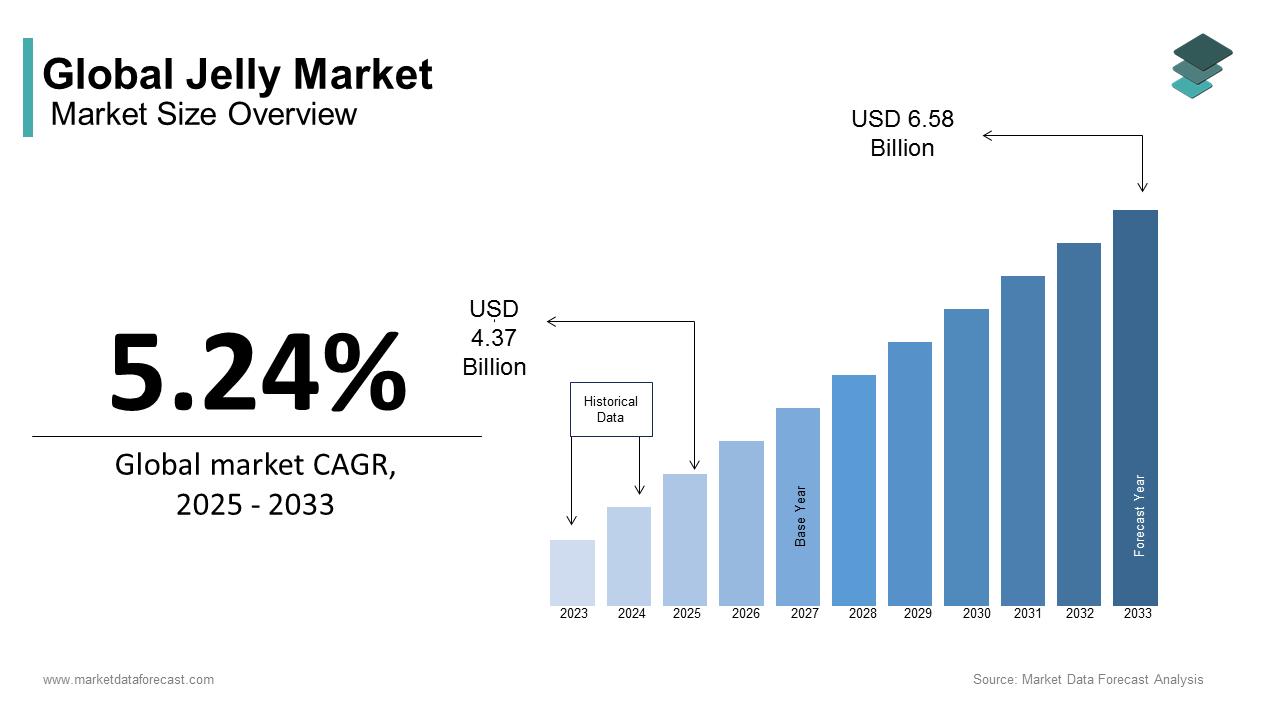
- Market Valuation: Valued at USD 4.37 billion (2025), estimated at USD 4.60 billion (2026), and projected to reach USD 6.92 billion by 2034, registering a CAGR of 5.24% (2026–2034).
- Primary Growth Drivers: Rising demand for functional confectionery and wellness supplements, and the rapid expansion of plant-based and vegan product offerings. Additional context includes the European Union producing over 1 million metric tons of fruit preparations annually and 73% of Europeans being willing to change consumption habits to reduce environmental impact.
Key Market Segment Metrics (2026–2034)
| Category | Leading Segment (2025 Position) | Fastest-Growing Segment |
|---|---|---|
| By Product Type | Fruit Jelly (held the highest share of the global market in 2025) | Sugar-Free Jelly (projected to record a promising CAGR) |
| By Packaging Type | Glass Jars (captured the leading share of the global market in 2025) | Single-Serve Packs (predicted to register the fastest CAGR) |
| By Distribution Channel | Supermarkets (held the dominant share of the global market in 2025) | Online Retail (fastest-growing channel with a 10.4% CAGR) |
| By Region | North America (captured 34.5% of the global market share in 2025) | Asia-Pacific (emerging as a high-growth, dynamic market frontier) |
Major Market Players & Market Structure
Market Structure: Highly competitive global confectionery and food landscape featuring established brands and artisanal producers competing on ingredient transparency, functional wellness benefits, sustainable packaging, and clean-label formulations.
Key Companies: American Spoon, Bonne Maman, Braswell's, Crofters, Dickinson's, Duerr's, Hartley's, Hero Group, Knott's Berry Farm, and Mackays.
Global Jelly Market Size
The global jelly market size was calculated to be USD 4.37 billion in 2025 and is anticipated to be worth USD 6.92 billion by 2034 from USD 4.60 billion in 2026, growing at a CAGR of 5.24% during the forecast period.
Jelly comprises a diverse segment of the confectionery and food industry characterized by gelatinous or pectin-based semi-solid products derived from fruit juices, sugar, and gelling agents. This category includes traditional fruit jellies, gummy candies, and functional wellness formulations that have transcended their origins as simple sweets to become vehicles for nutritional supplementation and culinary innovation. In Europe, the consumption patterns reflect a deep cultural appreciation for fruit preserves alongside a growing demand for convenient snack formats. As per Eurostat, the European Union produces over 1 million metric tons of fruit preparations annually, with a significant portion utilized in jelly and jam manufacturing. The sector is influenced by shifting dietary preferences, where consumers seek transparency in ingredient sourcing and reduced sugar content. According to the European Food Safety Authority, public health initiatives promoting reduced sugar intake have prompted manufacturers to reformulate products using natural sweeteners and high fiber alternatives. The market operates within a stringent regulatory framework ensuring food safety and labeling accuracy, particularly regarding allergen declarations and additive usage. Retail channels range from traditional grocery stores to specialized health food outlets and online platforms, reflecting broad accessibility. Innovation in texture, flavor profiles, and functional benefits, such as vitamin enrichment, drives product differentiation. This market continues to evolve as producers balance indulgence with health consciousness, adapting to sustainability mandates and consumer demands for clean label products while maintaining the sensory appeal that defines the category.
MARKET DRIVERS
Rising Demand for Functional Confectionery and Wellness Supplements
The integration of functional ingredients into jelly products is majorly fuelling the global jelly market expansion. Consumers increasingly seek convenient delivery systems for vitamins, minerals, and botanicals, with gummy and jelly formats offering superior palatability compared to pills or powders. According to the Council for Responsible Nutrition, gummy supplements are a rapidly expanding category within the broader supplement market, driven by high compliance rates among children and adults. The ease of consumption and enjoyable taste profile encourage regular intake, addressing adherence issues common with traditional supplements. In Europe, vitamin D deficiency remains a prevalent public health concern, affecting a significant portion of the population as per the European Food Safety Authority, which has spurred demand for fortified jelly products. Manufacturers are incorporating ingredients such as collagen for skin health, melatonin for sleep support, and probiotics for gut health, appealing to specific wellness needs. This trend is amplified by social media influencers and healthcare professionals who endorse these formats for their convenience and efficacy. The global shift toward preventive healthcare further supports this driver, with consumers willing to pay premium prices for products that offer tangible health benefits. By leveraging the inherent appeal of jelly textures, brands can effectively market functional benefits to a broad demographic, driving volume growth and value expansion in the sector.
Expansion of Plant-Based and Vegan Product Offerings
The growing adoption of plant-based diets and vegan lifestyles is further contributing to the jelly market growth globally. Gelatin, derived from animal collagen, is incompatible with vegetarian and vegan diets, prompting manufacturers to innovate with plant-based gelling agents such as pectin, agar agar, and carrageenan. According to the Good Food Institute, sales of plant-based foods in Europe grew by 22% in 2023, with confectionery representing a notable segment of this expansion. Consumers associate plant-based ingredients with ethical sourcing, environmental sustainability, and cleaner labels, making them attractive to health-conscious buyers. Pectin, extracted from fruit peels, offers a firm texture and clean taste that mimics gelatin while aligning with clean label trends. The European Commission’s Farm to Fork Strategy supports sustainable food systems, encouraging the use of plant-derived ingredients and reducing reliance on animal products. Retailers have responded by expanding their vegan sections, dedicating shelf space to certified plant-based jellies. As per a survey by Nielsen, 73% of Europeans are willing to change their consumption habits to reduce environmental impact, a sentiment that directly benefits vegan jelly brands. This alignment with broader ethical and environmental values reinforces the market position of plant-based jellies as a preferred choice for modern consumers, driving sustained growth and innovation in formulation technologies.
MARKET RESTRAINTS
Stringent Regulations on Sugar Content and Health Claims
Strict regulatory frameworks governing sugar content and health claims are hampering the jelly market expansion worldwide. Governments across Europe are implementing sugar taxes and mandatory front-of-pack labeling to combat obesity and related health issues. According to the World Health Organization, noncommunicable diseases linked to poor diet remain a primary health challenge in the European Region, prompting aggressive policy interventions. The European Union’s regulation on nutrition and health claims requires scientific substantiation for any benefit asserted on packaging, a process that is time-consuming and costly for small and medium-sized enterprises. Many traditional jelly products exceed recommended daily sugar limits, forcing manufacturers to replace sugar with alternative sweeteners that may alter taste and texture. As per the European Food Safety Authority, only a portion of functional health claims meet strict authorization criteria, restricting the ability of brands to differentiate based on functional benefits. Reformulation efforts often result in higher production costs due to expensive ingredients like stevia or monk fruit, which may be passed on to consumers, potentially reducing demand. Additionally, negative public perception of high sugar snacks persists despite reformulation efforts, limiting market penetration among health-conscious demographics. These regulatory hurdles increase operational complexity and reduce profit margins, constraining the industry’s ability to innovate freely and respond rapidly to consumer trends while maintaining compliance with evolving legal standards.
Volatility in Raw Material Prices and Supply Chain Disruptions
Fluctuations in the prices of key raw materials such as fruit concentrates, sugar, and pectin are further hindering the global jelly market growth. Fruit crops are highly susceptible to weather conditions, pests, and climate change, leading to inconsistent yields and price volatility. According to the Food and Agriculture Organization of the United Nations, extreme weather events have increasingly disrupted global fruit harvests, driving up input costs for manufacturers. Sugar prices are also influenced by global trade policies, energy costs, and geopolitical tensions, creating uncertainty for long-term planning. The European Central Bank reports that food inflation has remained a persistent challenge for manufacturers, squeezing margins as they struggle to pass costs onto price-sensitive consumers. Supply chain disruptions, exacerbated by logistical bottlenecks and labor shortages, further complicate procurement and distribution. As per industry reports, transportation lead times have faced significant volatility, affecting inventory management and product availability. Small and medium-sized producers lack the bargaining power to secure stable supply contracts, making them vulnerable to market shocks. These economic pressures force companies to compromise on quality or reduce pack sizes, potentially damaging brand reputation. The cumulative effect of raw material instability and logistical challenges restricts market growth and limits the ability of manufacturers to invest in innovation and expansion.
MARKET OPPORTUNITIES
Innovation in Sustainable and Eco-Friendly Packaging
The development of sustainable and eco-friendly packaging presents a major opportunity for the jelly market to enhance brand value and meet consumer expectations for environmental responsibility. Traditional plastic packaging contributes significantly to waste, prompting shoppers to seek alternatives such as biodegradable films, compostable pouches, and recyclable materials. According to the European Environment Agency, packaging waste remains a critical concern in Europe, driving urgent demand for circular solutions. Manufacturers can leverage this trend by adopting mono-material structures that are easier to recycle or by using plant-based plastics derived from corn or sugarcane. The European Green Deal aims to make all packaging reusable or recyclable by 2030, providing regulatory support and incentives for sustainable innovation. Brands that transparently communicate their packaging improvements can differentiate themselves in crowded retail spaces and build loyalty among eco-conscious consumers. As per a study by McKinsey, 60% of consumers are willing to pay more for products with sustainable packaging, offering a premium pricing opportunity. Partnerships with packaging technology startups enable access to cutting-edge materials that maintain product freshness while reducing environmental impact. By leading the transition to circular packaging, jelly manufacturers can mitigate regulatory risks, enhance brand image, and capture a growing segment of environmentally aware shoppers who prioritize planetary health alongside personal enjoyment.
Expansion into Adult-Oriented Gourmet and Artisanal Segments
The emergence of adult-oriented gourmet and artisanal jelly products offers a lucrative avenue for the global jelly market expansion. Consumers are increasingly seeking sophisticated flavor profiles and high-quality ingredients that elevate jelly from a childhood snack to a culinary experience. According to consumer insights, a significant percentage of adults are interested in trying new and exotic flavors in confectionery, driving demand for innovations such as wine-infused jellies, spicy chili blends, and herbal botanical infusions. Artisanal producers can leverage local sourcing and traditional recipes to create unique products that appeal to discerning palates. The rise of food tourism and specialty gift markets supports this trend, with consumers purchasing premium jellies as souvenirs or luxury gifts. Social media platforms amplify visibility for visually striking and creatively packaged artisanal products, driving viral interest and brand discovery. For instance, the premium confectionery segment continues to outperform the mass market, indicating strong potential for high-margin products. Collaborations with chefs and mixologists can further validate gourmet credentials, positioning jelly as a versatile ingredient in cocktails and desserts. By targeting adults with refined tastes and disposable income, manufacturers can escape the price competition of the mass market and establish niche brands that command loyalty and higher profitability through exclusivity and quality.
MARKET CHALLENGES
Negative Perception of Artificial Additives and Clean Label Demands
The persistent negative perception of artificial colors, flavors, and preservatives poses a significant challenge to the jelly market as consumers increasingly demand clean-label products. Many traditional jelly formulations rely on synthetic additives to achieve vibrant colors and stable textures, which are now viewed with suspicion by health-conscious shoppers. According to the European Food Information Council, approximately 36% of Europeans express concern regarding the use of additives in food and beverages, leading them to seek natural alternatives. Regulatory bodies such as the European Food Safety Authority have tightened restrictions on certain synthetic dyes, requiring warning labels that deter purchases. Replacing synthetic additives with natural sources like beetroot juice or spirulina often results in less intense colors and shorter shelf lives, complicating production and logistics. Manufacturers face the dual challenge of maintaining visual appeal and product stability while adhering to clean label standards. As per market analysis, brands that fail to transparently list ingredients risk losing trust and market share to competitors who prioritize simplicity. The cost of natural ingredients is significantly higher, squeezing margins in a price-sensitive category. Educating consumers about the safety and necessity of certain additives remains difficult amidst widespread misinformation. This shift forces companies to completely overhaul formulations, risking alienation of loyal customers accustomed to traditional tastes and appearances, thereby threatening brand equity and sales volume.
Intense Competition from Alternative Snack Categories
Intense competition from alternative snack categories such as protein bars, dried fruits, and yogurt bites challenges the jelly market by fragmenting consumer spending and attention. Health-focused snacks offer perceived nutritional benefits that traditional jellies lack, attracting consumers who prioritize satiety and macronutrient balance over simple sweetness. According to market research, the healthy snacking sector has consistently outpaced traditional confectionery growth, reflecting shifting consumer priorities. Protein bars and nut mixes provide sustained energy and muscle support, appealing to fitness enthusiasts and busy professionals who view jelly as an empty-calorie indulgence. The convenience of single-serve packs in these categories matches the portability of jelly, removing its primary advantage. Additionally, the rise of fresh fruit consumption, promoted by public health campaigns, offers a natural sweet alternative that aligns with clean eating trends. As per the World Health Organization, increasing fruit and vegetable intake is a key recommendation for disease prevention, influencing household purchasing decisions. Jelly manufacturers struggle to compete with the functional benefits of these alternatives, often resulting in declined frequency of purchase. Marketing efforts must work harder to justify jelly consumption as a treat rather than a staple, limiting growth potential. Without significant innovation in functionality or health benefits, the jelly market risks stagnation as consumers shift their snack budgets toward more nutrient-dense options.
REPORT COVERAGE
| REPORT METRIC | DETAILS |
| Market Size Available | 2025 to 2034 |
| Base Year | 2025 |
| Forecast Period | 2026 to 2034 |
| CAGR | 5.24% |
| Segments Covered | By Product Type, Packaging Type, Distribution Channel, Consumer Demographics, Flavor Profile, and Region |
|
Various Analyses Covered | Global, Regional & Country Level Analysis; Segment-Level Analysis; DROC, PESTLE Analysis; Porter’s Five Forces Analysis; Competitive Landscape; Analyst Overview of Investment Opportunities |
| Regions Covered | North America, Europe, APAC, Latin America, Middle East & Africa |
| Market Leaders Profiled | American Spoon, Bonne Maman, Braswell's, Crofters, Dickinson's, Duerr's, Hartley's, Hero Group, Knott's Berry Farm, and Mackays |
SEGMENTAL ANALYSIS
By Product Type Insights
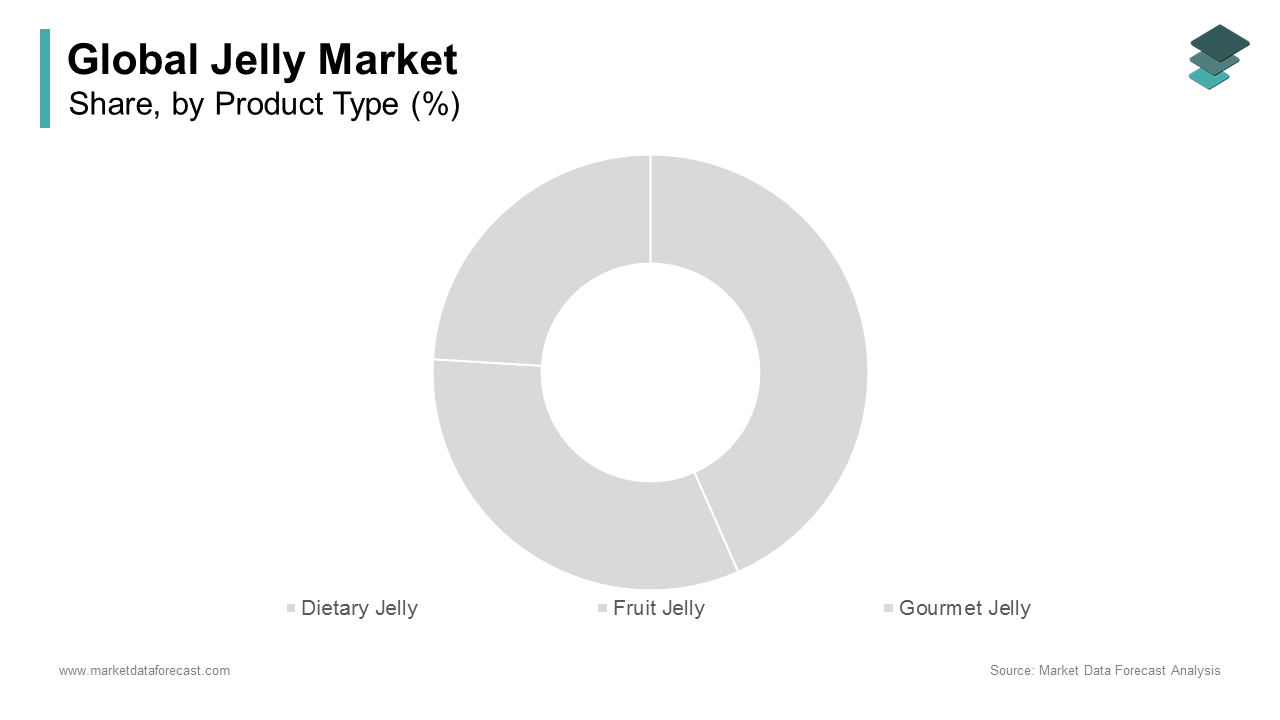
The fruit jelly segment dominated the market by holding the highest share of the global market in 2025 and is expected to maintain its popularity throughout the forecast period as households continue to value versatile fruit-based snacks over the next few years. Fruit jelly holds the leading position in the global jelly market due to its universal appeal, traditional consumption patterns, and versatility as both a spread and a standalone snack. This segment encompasses jellies made from common fruits such as apples, grapes, and strawberries, which are staples in households across North America and Europe. According to the United States Department of Agriculture, fruit-based spreads account for over 60% of total jelly and jam sales in the United States, reflecting deep cultural integration into breakfast and snack routines. A primary driver is the perception of fruit jelly as a natural and wholesome option compared to synthetic confectionery, appealing to parents seeking healthier choices for children. As per the data from the European Food Information Council, a majority of consumers prefer products with recognizable fruit ingredients, driving demand for high fruit content jellies. The second driving factor is the widespread availability and affordability of fruit jellies in mainstream retail channels. Major manufacturers leverage economies of scale to offer competitive pricing, ensuring consistent household penetration. Additionally, the adaptability of fruit jelly in culinary applications, from sandwiches to glazes, sustains its relevance in diverse diets. The established supply chains for major fruits ensure stable production volumes and consistent quality, reinforcing consumer trust. This combination of tradition, perceived health benefits, and accessibility solidifies fruit jelly as the dominant product type in the global market.
On the other side, the sugar-free jelly segment is predicted to record a promising CAGR in the global market over the forecast period, and is likely to see robust adoption as health-conscious consumers seek lower-calorie alternatives over the coming years. Sugar-free jelly is emerging as the fastest-growing segment in the jelly market, projected to expand at a healthy CAGR in the coming years. This accelerated growth is fueled by rising health consciousness and the increasing prevalence of diabetes and obesity, which drive consumers to seek low-calorie alternatives. According to the International Diabetes Federation, over 537 million adults worldwide live with diabetes, creating a substantial addressable market for sugar-free products. Consumers are actively reducing sugar intake to manage weight and metabolic health, prompting manufacturers to innovate with sweeteners such as stevia, erythritol, and monk fruit. As per the World Health Organization, guidelines recommending reduced free sugar consumption have influenced public policy and consumer behavior, accelerating the shift toward sugar-free options. The second factor is the improvement in taste profiles of sugar substitutes, which now closely mimic the sweetness and texture of sucrose without the caloric load. Advances in food technology have addressed previous issues with aftertastes and texture instability, making sugar-free jellies more palatable. Retailers are expanding their diabetic friendly and health-focused aisles, providing greater visibility for these products. Marketing campaigns emphasizing guilt-free indulgence resonate with health-conscious demographics, driving trial and repeat purchases. This convergence of medical necessity, technological innovation, and changing dietary preferences positions sugar-free jelly as the most dynamic growth engine in the sector.
By Packaging Type Insights
The glass jars segment led the market by capturing the leading share of the global market in 2025 and is likely remain the preferred choice for premium segments seeking sustainable packaging in the coming years. Glass jars hold the leading position in the jelly market packaging segment due to their superior preservation qualities, premium aesthetic appeal, and consumer preference for recyclable materials. Glass is impermeable to oxygen and moisture, ensuring longer shelf life and maintaining the freshness and flavor integrity of jelly products. According to the Glass Packaging Institute, glass containers retain 100% of their material value during recycling, aligning with circular economy goals and appealing to environmentally conscious consumers. A primary driver is the perception of glass as a high-quality and safe packaging material that does not leach chemicals into food products. According to the data from the European Container Glass Federation, the collection rate for glass packaging in Europe has reached 82.2% as of 2024, which is reinforcing its sustainability credentials. The second driving factor is the visual appeal of glass jars, which allow consumers to see the product color and texture, enhancing purchase confidence. Premium and artisanal jelly brands heavily favor glass packaging to convey quality and authenticity, commanding higher price points. Traditional household usage patterns also support glass dominance, as many consumers prefer storing leftovers in glass containers for reuse. The durability of glass ensures product protection during transport and storage, reducing damage rates. This combination of functional superiority, environmental benefits, and brand positioning solidifies glass jars as the preferred packaging choice for the majority of jelly products globally.
However, the single-serve packs segment is predicted to register the fastest CAGR in the global market during the forecast period, owing to the rising demand for on-the-go convenience over the next few years. This growth is driven by the increasing demand for convenience, portability, and portion control among busy consumers and families. Single-serve formats eliminate the need for utensils and reduce mess, making them ideal for school lunches, office snacks, and on-the-go consumption. According to consumer market research, 45% of consumers prioritize convenience when purchasing snack items, fueling demand for easy-to-open and disposable packaging solutions. The second factor is the rise in health awareness regarding portion sizes, as single-serve packs help consumers manage calorie intake and prevent overconsumption. Parents prefer single-serve jellies for children to ensure controlled sugar intake and reduce waste from partially used jars. Manufacturers are innovating with eco-friendly materials such as biodegradable films and recyclable plastics to address environmental concerns associated with single-use packaging. As per the Ellen MacArthur Foundation, brands adopting sustainable single-serve solutions gain a competitive advantage among eco-conscious shoppers. The expansion of retail channels, including vending machines and convenience stores, further supports this format, offering impulse purchase opportunities. The combination of convenience, health management, and sustainability innovation positions single-serve packs as the most rapidly evolving packaging segment in the jelly industry.
By Distribution Channel Insights
The supermarkets segment held the dominant share of the global market in 2025 and is likely to maintain its dominant position as the primary point of purchase for most consumers in the upcoming years. Supermarkets hold the leading position in the jelly market distribution channel due to their extensive reach, wide product assortment, and one-stop shopping convenience for consumers. Most households purchase jelly products during regular grocery trips, making supermarkets the primary touchpoint for sales. According to Eurostat, over 70% of household food and beverage purchases in Europe occur in supermarket chains, reflecting their dominance in retail traffic. A primary driver is the strategic placement of jelly products in prominent aisles near bread, breakfast cereals, and snacks, ensuring high visibility and impulse purchases. Supermarkets leverage their bargaining power to secure competitive pricing and promotional deals, attracting price-sensitive shoppers. The second driving factor is the trust consumers place in established retail brands for product quality and safety. Major chains like Tesco, Carrefour, and Walmart dedicate significant shelf space to both private label and branded jelly products, offering diverse options for different budget segments. As per Kantar, private label jellies account for 30% of supermarket sales, driven by improved quality and lower prices. Loyalty programs and digital coupons further incentivize repeat purchases. Supermarkets also facilitate the introduction of new flavors and brands through sampling campaigns and end-cap displays. This combination of accessibility, variety, and trust solidifies supermarkets as the primary channel for jelly distribution globally.
However, the online retail segment is the fastest-growing distribution channel in the global jelly market and is predicted to showcase a CAGR of 10.4% over the forecast period, owing to the increasing penetration of e-commerce platforms and the convenience of home delivery. Consumers appreciate the ability to browse extensive catalogs, read reviews, and compare prices from the comfort of their homes. According to the United Nations Conference on Trade and Development, global e-commerce sales have experienced significant growth since 2020, with specialty food items like gourmet and organic jellies benefiting significantly from this shift. A key driver is the availability of niche and premium brands that are not stocked in local supermarkets. Online retailers offer access to artisanal, international, and dietary-specific jellies, catering to discerning customers seeking unique products. The second factor is the rise of subscription services that deliver curated jelly boxes monthly, ensuring convenience and discovery. These models build customer loyalty and provide predictable revenue streams for sellers. As per industry analysis, personalization algorithms on e-commerce sites enhance user experience by recommending products based on past purchases and preferences. Social media integration allows brands to engage directly with consumers, driving traffic to online stores. The ease of return policies and secure payment gateways further reduces purchase hesitation. This digital transformation enables smaller brands to compete with giants, fostering a vibrant and diverse online marketplace for jelly products.
REGIONAL ANALYSIS
North America Jelly Market Analysis
North America captured 34.5% of the global market share in 2025 and is likely to maintain its market leadership through continued innovation and premiumization, its deep-rooted cultural tradition of peanut butter and jelly sandwiches, and high per capita consumption of fruit spreads. The market is characterized by a strong preference for conventional fruit jellies alongside a rapidly growing demand for sugar-free and organic variants. According to the United States Department of Agriculture, the United States produces over 20,0,000 metric tons of grape jelly annually, reflecting the dominance of Concord grape varieties in the region. A major driving factor is the well-established retail infrastructure and high disposable income, which support premium product adoption. The second factor is the rising prevalence of lifestyle-related health conditions, prompting consumers to seek healthier alternatives such as low-sugar and plant-based jellies. Major brands like Smucker’s and Welch’s continue to innovate with clean-label formulations and sustainable packaging to maintain market leadership. The region also sees significant demand for single-serve packs in schools and offices, driven by convenience trends. Regulatory support for transparent labeling and reduced sugar content further shapes product development. Despite market saturation, innovation in functional ingredients and exotic flavors sustains growth. North America remains a trendsetter in the global jelly industry, influencing product standards and consumer expectations worldwide.

Europe Jelly Market Analysis
Europe is expected to experience steady growth focused on sustainability and clean label standards over the next few years. Europe represents a mature and sophisticated market for jelly products, distinguished by a strong preference for high-fruit-content preserves and artisanal qualities. European consumers prioritize quality, origin, and sustainability, driving demand for organic and locally sourced jellies. According to Eurostat, the European Union is a leading producer of soft fruits such as strawberries and raspberries, providing a robust raw material base for premium jelly manufacturing. A primary driver is the stringent regulatory framework regarding sugar content and food additives, which encourages manufacturers to adopt clean-label practices and natural sweeteners. The European Green Deal promotes sustainable packaging, leading to increased adoption of glass jars and recyclable materials. The second factor is the diverse culinary traditions across countries, with variations in fruit preferences and consumption habits. For instance, berry jellies are popular in Northern Europe, while citrus and fig jellies are favored in the Mediterranean. The rise of health consciousness has spurred growth in sugar-free and functional jellies enriched with vitamins. Retailers emphasize ethical sourcing and fair trade certifications, appealing to socially conscious buyers. Europe’s focus on quality and sustainability ensures a stable and high-value market for premium jelly products.
Asia Pacific Jelly Market Analysis
Asia Pacific is likely to emerge as the most dynamic market for jelly products as urbanization and modern snacking habits expand over the next few years. The Asia Pacific region is emerging as a high-growth frontier in the global jelly market due to the rising disposable incomes, urbanization, and changing dietary habits. While traditional fruit preserves are less common than in Western markets, the demand for gummy-style jellies and convenient snack formats is surging. According to the Food and Agriculture Organization of the United Nations, fruit production in Asia has increased significantly in the last decade, supporting local jelly manufacturing. A key driver is the growing middle class in countries like China, India, and Indonesia, who are adopting Western snacking habits and seeking convenient, ready-to-eat options. The second factor is the influence of global brands entering the market with localized flavors such as lychee, mango, and green tea. E-commerce platforms play a crucial role in distributing niche and premium jelly products to urban consumers. The region’s young demographic is particularly receptive to innovative textures and functional benefits, driving demand for collagen-infused and vitamin-enriched jellies. Government initiatives promoting food safety and quality standards are enhancing consumer trust in packaged goods. Despite lower per capita consumption compared to Western regions, the sheer population size and rapid economic development create immense potential for market expansion.
Latin America Jelly Market Analysis
Latin America is expected to see volume growth driven by the expansion of modern retail and local fruit utilization in the next few years. Latin America holds a modest but growing share of the global jelly market, characterized by a strong preference for tropical fruit flavors and affordable pricing. Countries like Brazil and Mexico are key contributors, leveraging abundant local fruit supplies such as guava, passion fruit, and mango. According to the Inter-American Development Bank, the processed food sector in Latin America has grown steadily, driven by urbanization and the expansion of modern retail channels. A primary driver is the increasing penetration of supermarkets and hypermarkets, which improves access to packaged jelly products for a broader consumer base. The second factor is the cultural affinity for sweet spreads and desserts, where jelly is often used in traditional baked goods and snacks. Economic challenges and inflation have made private label and budget-friendly brands more popular, driving volume growth in the mass market segment. Local manufacturers are innovating with cost-effective formulations and attractive packaging to compete with international brands. The rise of health awareness is slowly influencing demand for lower-sugar options, although price sensitivity remains a dominant factor. Latin America’s rich biodiversity offers unique opportunities for exotic fruit jelly innovations, distinguishing the region in the global market.
Middle East and Africa Jelly Market Analysis
Middle East and Africa will likely see gradual growth influenced by rising urbanization and tourism in the coming years. The Middle East and Africa region represents a nascent but promising segment of the global jelly market, driven by urbanization, tourism, and increasing exposure to global food trends. In the Middle East, high disposable incomes and a strong hospitality sector drive demand for premium and imported jelly products. According to the World Bank, urbanization rates in the Gulf Cooperation Council countries exceed 80%, fostering a culture of convenience food consumption. A key driver is the influence of expatriate populations and international tourism, which introduces diverse culinary preferences and increases demand for familiar Western brands. The second factor is the growing retail infrastructure in African nations like South Africa and Nigeria, where modern supermarkets are expanding access to packaged goods. Local production is limited, leading to reliance on imports, but there is growing interest in utilizing indigenous fruits for local jelly production.
COMPETITION OVERVIEW
Competition in the global jelly market is intense and characterized by a mix of established multinational corporations and agile regional manufacturers vying for consumer attention. Major players compete on brand recognition, product quality, and sustainability credentials rather than price alone. The shift toward health-conscious consumption has intensified rivalry in the sugar-free and organic segments as companies race to reformulate products. Innovation in flavors and textures serves as a key differentiator, attracting younger demographics and adventurous eaters. Regional players often compete by offering unique local fruit varieties and artisanal qualities that resonate with cultural preferences. Supply chain stability and raw material costs influence competitive positioning as firms strive to maintain margins amidst volatility. Brand loyalty is driven by trust in ingredient safety and ethical sourcing practices. Private label offerings from major retailers pose a significant threat by providing affordable alternatives with comparable quality. Overall, market participants must continuously adapt to changing dietary trends, regulatory requirements, and sustainability expectations to sustain growth and profitability in this fragmented yet vibrant sector.
KEY MARKET PLAYERS
A few major players of the global jelly market include
- American Spoon
- Bonne Maman
- Braswell's
- Crofters
- Dickinson's
- Duerr's
- Hartley's
- Hero Group
- Knott's Berry Farm
- Mackays
Top Strategies Used by Key Market Participants
Key players in the jelly market prioritize product innovation focused on health and wellness by reducing sugar content and incorporating natural sweeteners. They invest heavily in clean label formulations to meet consumer demand for transparency and minimal processing. Sustainable sourcing of fruits and eco-friendly packaging materials are central strategies to align with environmental regulations and consumer values. Companies expand their geographic reach through strategic partnerships and acquisitions in emerging markets to capture growing middle-class demand. Digital marketing and social media engagement are used to build brand loyalty and educate consumers about product benefits. Diversification into functional jellies with added vitamins or collagen offers new revenue streams. Private label collaborations with major retailers help maintain volume sales during economic downturns. These strategies collectively enable participants to navigate regulatory complexities, meet evolving consumer preferences, and maintain competitive advantage in a dynamic global industry.
Leading Players in the Global Jelly Market
- The J.M. Smucker Company stands as a global leader in the jelly and fruit spread sector, renowned for its iconic brands such as Smuckers and Welch’s. The company maintains a strong presence in North America and is expanding into international markets through a diverse portfolio of conventional and organic products. Recent actions include reformulating core product lines to reduce sugar content and introduce clean label ingredients, aligning with evolving consumer health preferences. The firm has also invested in sustainable sourcing initiatives for fruits and packaging materials to enhance environmental responsibility. By leveraging its extensive distribution network and brand heritage, Smucker continues to dominate retail shelves. Strategic marketing campaigns emphasizing family traditions and quality ingredients strengthen consumer loyalty. These efforts ensure the company remains competitive amidst rising demand for healthier and transparent food options while maintaining its position as a trusted household name in the global confectionery and spread market.
- Cargill Incorporated plays a pivotal role in the global jelly market as a major supplier of pectin and fruit preparations used by manufacturers worldwide. The company provides essential ingredients that enable the production of high-quality jellies with consistent texture and flavor. Recent actions involve expanding its pectin production facilities in Europe and Asia to meet growing demand for plant-based gelling agents. Cargill has also developed innovative fruit blend solutions that cater to regional taste preferences and functional benefits. The firm actively collaborates with food producers to create customized formulations for sugar-reduced and organic jelly products. By focusing on supply chain resilience and sustainable agricultural practices, Cargill strengthens its position as a key enabler of the industry. Its commitment to innovation and quality assurance supports manufacturers in meeting regulatory standards and consumer expectations for natural and safe ingredients across diverse global markets.
- Hero Group is a significant player in the global jelly and preserves market, known for its premium quality fruit spreads and innovative product offerings. Based in Switzerland, the company operates in over thirty countries and emphasizes sustainable sourcing and ethical business practices. Recent actions include launching new organic and low-sugar jelly varieties under its Hero and Pomona brands to address health-conscious consumer demands. The firm has expanded its production capacity in emerging markets to improve local availability and reduce logistical costs. Hero Group actively engages in corporate social responsibility initiatives supporting local farmers and environmental conservation. By prioritizing transparency and quality, the company builds strong brand trust among discerning consumers. Its strategic focus on premiumization and sustainability differentiates it from mass market competitors. These initiatives reinforce Hero Group’s reputation as a leader in high-value fruit preparations, driving growth and loyalty in both established and developing regions of the global jelly market.
MARKET SEGMENTATION
This research report on the global jelly market has been segmented and sub-segmented based on product type, packaging type, Distribution Channel, Consumer Demographics, Flavor profile, and region.
By Product Type
- Dietary Jelly
- Low-sugar Jelly
- Organic Jelly
- Sugar-free Jelly
- Fruit Jelly
- Berry Jelly
- Citrus Jelly
- Mixed Fruit Jelly
- Gourmet Jelly
- Exotic Fruits Jelly
- Specialty Flavors Jelly
By Packaging Type
- Glass Jars
- Plastic Containers
- Single-serve Packs
- Squeeze Bottles
By Distribution Channel
- Convenience Stores
- Online Retail
- Specialty Stores
- Supermarkets
By Consumer Demographics
- Age Group
- Adults
- Kids
- Seniors
- Teenagers
- Health Consciousness
- Casual Consumers
- Dieters
- Health Enthusiasts
- Income Level
- High Income
- Low Income
- Middle Income
By Flavor Profile
- Bitter
- Sour
- Spicy
- Sweet
- Umami
By Region
- North America
- Europe
- The Asia Pacific
- Latin America
- The Middle East and Africa