- Product Description Description
- Table of Contents TOC
- List of Table & Figure LOT
- Get Free Sample PDF Sample PDF
Market Size, 2025
$3.47 BnMarket Estimate, 2026
$3.95 BnMarket Forecast, 2034
$11.18 BnCAGR, 2026–2034
13.88%Executive Summary: Global Kitchen Robotics and Automation Market
- Market Scope: Comprehensive global analysis of the kitchen robotics and automation sector, detailing types, end-user categories, technological drivers, supply chain challenges, and regional adoption trends across North America, Europe, Asia-Pacific, Latin America, and MEA.
- Market Valuation: Valued at USD 3.47 billion in 2025, reaching USD 3.95 billion in 2026, and projected to expand to USD 11.18 billion by 2034, growing at a robust CAGR of 13.88% from 2026 to 2034.
- Primary Growth Drivers: Acute shortage of restaurant and hospitality manpower, rising labor wages, increasing demand to minimize food waste, and the rapid expansion of QSRs, cloud kitchens, and automated meal preparation technologies.
Key Market Segment Metrics
| Category | Leading Segment (Base Position) | Fastest-Growing / High-Growth Segment |
|---|---|---|
| By Type | Software (dominated the market, fueled by the integration of artificial intelligence, machine learning, and IoT for autonomous kitchen workflows) | Hardware / Control Systems (experiencing high growth driven by advancements in robotic arms, automated fry cooks, and smart dispensing units) |
| By End-User | Commercial (commands the global market due to high restaurant labor costs, staffing shortages, food waste reduction goals, and QSR scaling) | House / Residential (growing steadily as automated cooking bots and smart domestic appliances become more affordable and feature-rich) |
| By Region | North America (market leader in 2024 and 2025, anchored by the US and Canada through rapid culinary engineering, QSR automation, and venture investments) | Europe (notable high-growth regional market driven by energy/food inflation, labor scarcity, and innovative robotic startups in the UK, Netherlands, and beyond) |
Major Market Players & Industry Landscape
Market Structure: Highly dynamic and evolving technology-driven ecosystem where robotics developers, AI platforms, and commercial automation providers collaborate to transform restaurant operations and smart home cooking.
Key Companies: Moley, Samsung, HeroX, NVIDIA, Sony, Miso Robotics, QSR Automations, Spyce, Seraphim, Sense, Robolink, Suvie, Picnic, and Markov Corporation.
 Download Free Sample Report
Global Kitchen Robotics and Automation Market Size
The size of the global kitchen robotics and automation market reached USD 3.47 billion in 2025, and the global market size is anticipated to be worth USD 11.18 billion by 2034, from USD 3.95 billion in 2026, growing at a CAGR of 13.88% from 2026 to 2034.
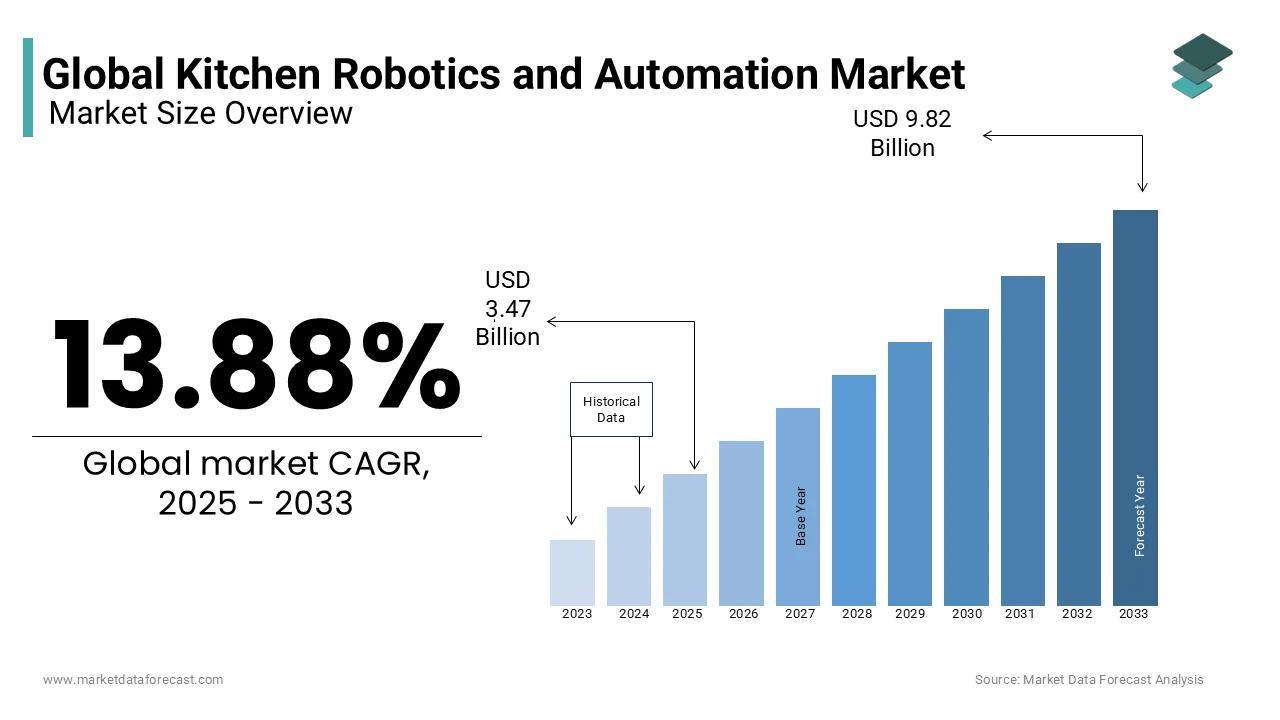
Robotics and automation are making their way across different industries to increase efficiency and performance. This trend has already started to make strides in the kitchen robotics and automation market and is in the initial phases of the robot revolution. In addition, AI technologies are improving cooking processes and kitchen management while transforming the manner we purchase groceries and go dining out. Also, AI undertakes to address the persistent problem of food wastage by automating superior cooking options, augmenting the market growth rate. Moreover, as labor wages or salaries have surged, systems and appliances have become more attractive as initial expenditures. The evidence of acceptance persuades investors and stakeholders to support robotics companies. Thus, currently, the market is in a feedback cycle, one in which robots have shifted to standard colleagues from semi-cost-effective connections. Apart from this, progressively more restaurant humanoids and automation are transforming the market in means great and small.
MARKET DRIVERS
Technological advancements and the need to reduce food wastage and to achieve better management by chiefs
Moreover, the cloud kitchen model resulted in the advent of kitchen automation. Similarly, in India, the modern way of living assisted by the readily available to smartphone internet users has modified or altered the way individuals look upon their upcoming meal. This transition in living culture has caused fresh business models like quick-service restaurants (QSRs), cloud kitchens and food delivery aggregators that give a broad range of options in cuisines coupled with the ease of ordering food at their immediate disposal.
The absence of quality and sufficient restaurant staff
According to the survey, it was discovered that 50% of restaurant proprietors plan to implement automation technology over the upcoming 24 to 36 months. A portion of the adoption is propelled by an incapability to find manpower. Also, the National Restaurant Association published that 4 in 5 handlers are undermanned, and total employment in the leisure and hospitality sector, which involves restaurant recruitment, has been the greatest difficulty since COVID-19, as per the information released by the Bureau of Labor Statistics.
MARKET RESTRAINTS
High investments and technical issues associated with robotics and automation
The field of robots and automation is still at its initial stage, so, hardware failures, software glitches, or technical malfunctions are believed to lead to unanticipated downtime. Apart from the financial expenditure of maintaining and repairing robotic systems, there is the hidden expense related to time off. Production delays often resulted in unsatisfied customers, higher lead times and missed deadlines. Considering the availability of different types of robots for cooking, the costs incurred in research & development, manufacturing, integrated smart features, material quality, customization options, industry demand and production scale play a crucial role in elevating the final cost of kitchen robotics and automation. On average, the entry-level robots are priced around 300 and 500 dollars, mid-range ones cost between 500 to 1000 dollars and the high-end robots are valued at more than 3000 dollars.
MARKET OPPORTUNITIES
Desire to Revolutionize Meal Preparation
The core reason behind the slated expansion of the kitchen robotics and automation market is the desire to revolutionize meal preparation, ensuring higher productivity, security and enjoyment. The future of automated kitchens exhibits a compelling landscape in the domain of home technology. The market will likely witness further innovations including greater human-machine interaction, sustainability, advanced artificial intelligence and accessibility and its integration with modern technologies like the Internet of Things (IoT), blockchain and surface computing. Besides this, robotic fry cooks, reasoning and finishing robots, new automated tortilla chip maker, robots for cooking wings, automated coffee systems and service stations for monitoring volume and temperature with an alerting facility for staff, automated tray on wheels like Servi, robotic bar along with entertainment and crowd handling, etc presents a huge potential for the market to expand further.
MARKET CHALLENGES
Time-Consuming Process of Discovering the Right Supplier
The difficulties and time-consuming process of discovering the right supplier, working out the correct production approach, and the reluctance or unwillingness of vendors to execute low-quantity manufacturing are some of the major challenges to the growth of the kitchen robotics and automation market. Moreover, the market is also constrained by the absence of transparency in pricing, lower trust levels and the lack of technical competence in product making. For instance, the production facilities in India are formed in millions and it is a tiresome and lengthy procedure to find out the right supplier for the business.
REPORT COVERAGE
| REPORT METRIC | DETAILS |
| Market Size Available | 2024 to 2034 |
| Base Year | 2025 |
| Forecast Period | 2026 to 2034 |
| CAGR | 13.88% |
| Segments Covered | By Type, End User and Region |
|
Various Analyses Covered | Global, Regional & Country Level Analysis, Segment-Level Analysis, DROC, PESTLE Analysis, Porter’s Five Forces Analysis, Competitive Landscape, Analyst Overview on Investment Opportunities |
| Regions Covered | North America, Europe, APAC, Latin America, Middle East & Africa |
|
Market Leaders Profiled | Moley, Samsung, HeroX, NVIDIA, Sony, Miso Robotics, QSR Automations, Spyce, Seraphim, Sense, Robolink, Suvie, Picnic and Markov Corporation |
SEGMENTAL ANALYSIS
By Type Insights
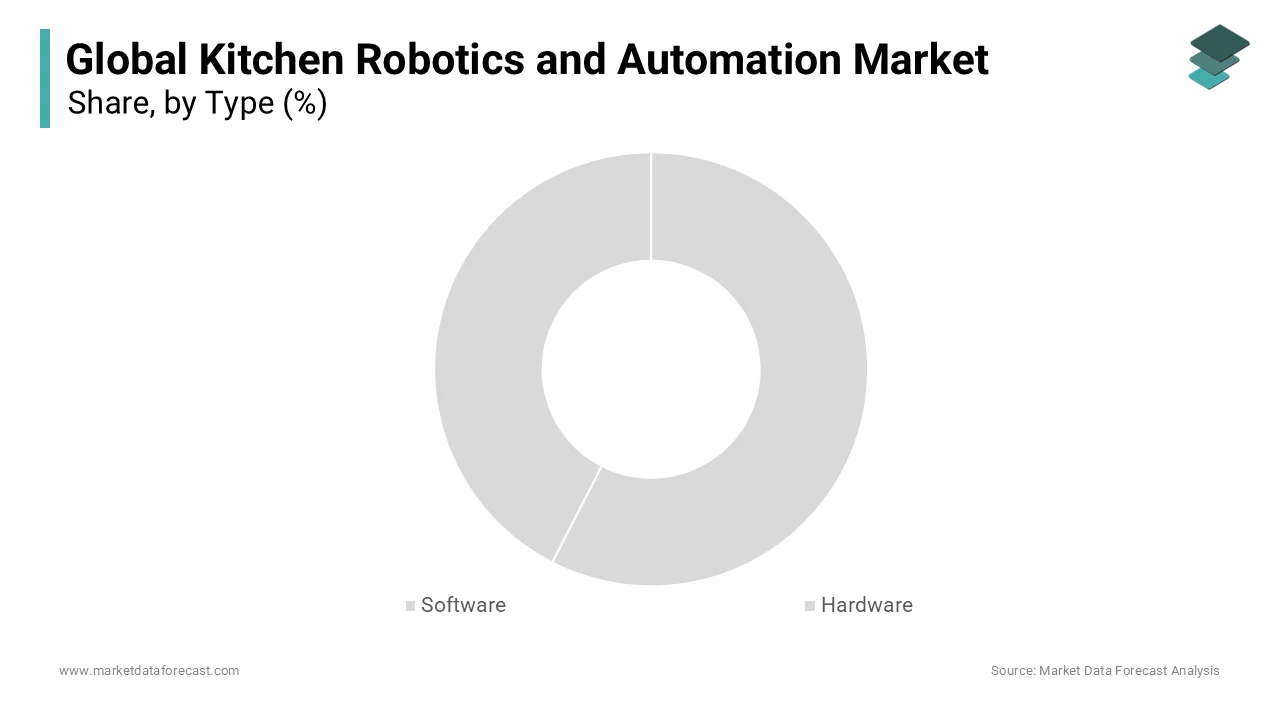
The software segment dominated the market in 2023 and is predicted to remain at the top in the global kitchen robotics and automation market throughout the forecast period. The rising implementation of advanced technology for example artificial intelligence, machine learning and the Internet of Things (IoT) in robot software is fuelling the segment’s market share. Furthermore, technical breakthroughs to manage different jobs like autonomous activities and inter-device communication will accelerate demand for the software segment, ultimately elevating the market expansion.
By End-user Insights
The commercial segment, presently, commands the kitchen robotics and automation market globally and is foreseen to expand much further over the projection period. In the current dynamic and progressive business landscape, the development of robots in the industry is growing substantially for several industrial end-user purposes. Lower human intervention, higher labor productivity, automatic controls throughout cooking environments, modifications based on consumer needs, consistency and other advantages are associated with the launch and availability of commercial robots. In addition, the increasing concerns in business end-user usage for chef and labor availability, higher food wastage, growing carbon dioxide discharge and other problems have surged the need for robot installation, further promoting the segmental expansion.
REGIONAL ANALYSIS
North America captured the largest share of the kitchen robotics and automation market in 2024. North America is also likely to continue to lead in the global market during the forecast period. The regional market is dominated by the United States and followed by Canada. For instance, in November 2023, REMY Robotics introduced its fast-fine restaurant called Better Days in New York City (United States) which completely revolutionized restaurants by producing superior quality with healthy, cost-effective and accessible food. Similar to McDonald's utilization of the commercial automated assembly line to transform the sector and build the trillion-dollar fast food category, Remy Robotics leverages the strength of culinary engineering, robotics and AI to produce high-quality nutritious food approachable and budget-friendly. Additionally, the kitchen robotics and automation industry in Canada is noticing considerable growth, propelled by various elements. One major factor is the rising scarcity of labor or manpower encountered by the food service sector. With limited skilled or trained personnel and staff available for kitchen jobs, companies are switching to implementing automation and robotics to bridge the gap.
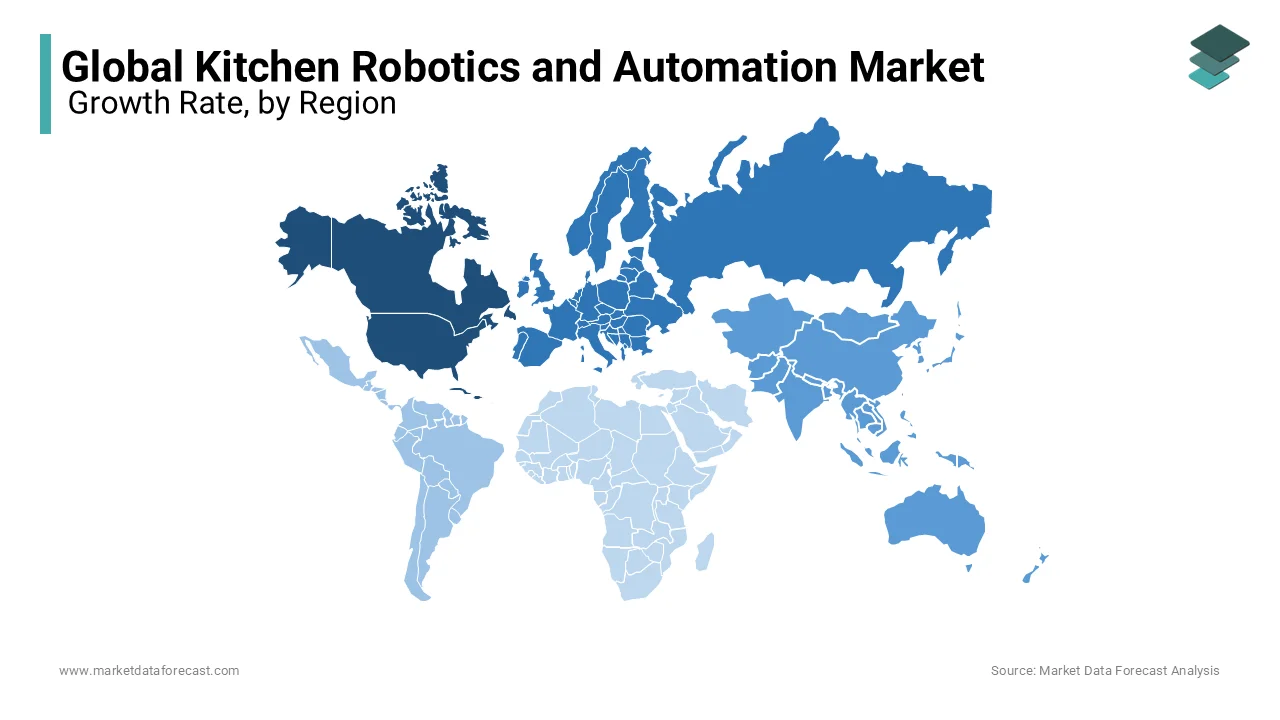
Europe is another notable regional market for kitchen robotics and automation worldwide. The region is an extremely influential industry as it embraces various cooking robot designers and vendors. Eatch which is a Dutch star-tup, has innovated a robot for cooking that can produce close to 5000 meals every day. Likewise, in 2023, A robotics company based in the UK, Moley introduced cooking robots or automated chefs to be applied in residential environments. The company adjusted its current range of business robots to suit the food and budget demands of domestic robots for robots. Apart from this, the European economy is in a dicey situation due to COVID-19, the Russia-Ukraine war and high energy and food prices have elevated the demand for smart kitchens with low-cost automation.
KEY MARKET PLAYERS
Moley, Samsung, HeroX, NVIDIA, Sony, Miso Robotics, QSR Automations, Spyce, Seraphim, Sense, Robolink, Suvie, Picnic and Markov Corporation are a few of the noteworthy players in the global kitchen robotics and automation market.
RECENT MARKET HAPPENINGS
- In June 2024, Wonderchef expanded its cutting-edge product range by revealing Chef Magic which is an all-in-one kitchen bot with more than 200 pre-installed recipes and completely automated cooking. This was done at the Consumer Electronics World Expo in Delhi (India).
MARKET SEGMENTATION
This research report on the global kitchen robotics and automation market has been segmented and sub-segmented based on type, end-user and region.
By Type
- Software
- Hardware
- Sensors
- Actuators
- Control systems
- Power Sources
- Others
By End-User
- Commercial
- House
- Others
By Region
- North America
- Europe
- Asia-Pacific
- Latin America
- Middle East and Africa